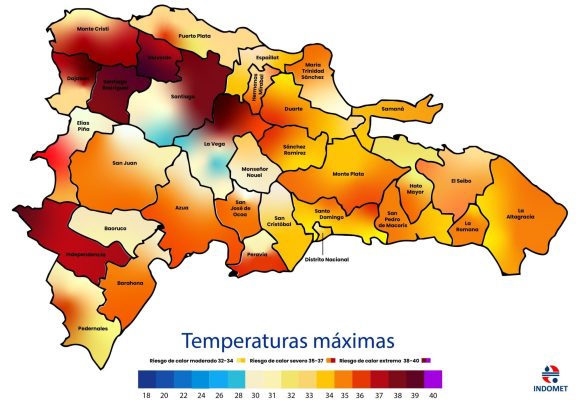
The Dominican Republic is bracing for an extended stretch of record-breaking intense heat, with official forecasts predicting temperatures and combined heat indexes will climb above 37°C across much of the country through September 22, the Dominican Institute of Meteorology (Indomet) has confirmed. The extreme heat event, classified as ranging from severe to exceptional intensity, will hit the nation’s northwestern region hardest, where the mercury is projected to hold above 37°C for no fewer than three consecutive days.
Meteorologists have linked this extreme heat event to a combination of overlapping climatic factors: the Dominican Republic’s annual warm seasonal peak, a mass of unusually dry and stable atmospheric conditions, and an incoming plume of Saharan dust that is expected to settle over the region over the weekend. This confluence of conditions has amplified temperatures beyond typical seasonal averages, creating a dangerous public heat risk.
Data from the U.S. National Oceanic and Atmospheric Administration (NOAA)’s September 16–22 heat risk map aligns with Indomet’s assessments, marking the northwestern Dominican Republic as an area of significant extreme heat risk. Other major regions, including the central, eastern, and southeastern parts of the country, are forecast to face moderate to severe heat hazards through the end of the period. In these areas, temperatures and combined heat indexes will range between 33°C and 37°C, levels that are sufficient to trigger dangerous heat stress for vulnerable populations.
In response to the looming hazard, Indomet has issued urgent public guidance urging heightened precautions, particularly for people at higher risk of heat-related illness: pregnant people, young children, older adults, and individuals living with chronic underlying health conditions. The institute has outlined clear, actionable steps for residents to stay safe during the heatwave, including maintaining consistent water intake to stay hydrated, wearing lightweight, loose-fitting garments in light, sun-reflective colors, avoiding unprotected exposure to direct sunlight between the peak heat hours of 11 a.m. and 4 p.m., and taking proactive steps to keep companion pets cool and protected from high temperatures. National authorities have additionally advised all residents to curtail extended outdoor activities during the hottest hours of the day to reduce the risk of heat exhaustion or heat stroke as the extreme conditions persist.