博客

  • Dominican Republic and Azerbaijan agree to visa-free travel for ordinary passport holders

    Dominican Republic and Azerbaijan agree to visa-free travel for ordinary passport holders

    Amid the bustling diplomatic activities of the 81st United Nations General Assembly High-Level Week in New York, two nations from different hemispheres have taken a significant step forward in deepening bilateral ties. The Dominican Republic and Azerbaijan have formally signed a landmark agreement that abolishes visa requirements for citizens of both countries holding valid ordinary passports, opening the door to enhanced people-to-people connectivity and closer cooperation across multiple sectors.

    The visa-free agreement was sealed by Dominican Foreign Minister Víctor “Ito” Bisonó and Azerbaijan’s Foreign Minister Jeyhun Bayramov on the sidelines of the UN gathering. Under the terms of the newly struck deal, citizens from both nations can enter, exit, or transit through the other country without first obtaining a travel visa, and are permitted to stay for a maximum of 90 days within any rolling 180-day period. This new policy is expected to remove a key barrier that has long hindered travel, business exchanges, and cultural interactions between the two countries.

    Beyond the visa waiver agreement, the two foreign ministers also put their signatures to a separate Memorandum of Understanding. This document establishes a formal mechanism for regular political consultations between the two governments, creating a structured channel for ongoing dialogue on issues of mutual interest. During their bilateral meeting held alongside the signing ceremony, the ministers explored a wide range of opportunities to expand collaboration, covering political engagement, economic and trade partnerships, and cooperation in emerging areas that hold mutual benefit for both nations.

    This round of diplomatic agreements aligns with the Dominican Republic’s broader strategic goal of diversifying its international partnerships. By forging closer ties with nations across the globe, the country aims to unlock new opportunities for trade growth, attract foreign investment, boost tourism development, and strengthen multilateral cooperation across a variety of fields. For Azerbaijan, the agreement represents another step forward in expanding its diplomatic footprint in the Americas and building new economic and political bridges outside of its traditional regional partnerships. Analysts note that this kind of people-centered diplomatic agreement lays the groundwork for deeper long-term engagement, as increased travel and exchange often pave the way for stronger business ties and more robust political cooperation in the future.


  • Ministry says Abaco clinic safe as air-conditioning repairs continue

    Ministry says Abaco clinic safe as air-conditioning repairs continue

    A days-long controversy over unsafe working conditions at the Marsh Harbour Healthcare Centre in The Bahamas has come to a new turn, with environmental health authorities confirming the facility is safe for both patients and medical staff after completing official air quality testing that detected no dangerous mould contamination.

    The official announcement of the test results was shared publicly via a social media notice posted to the Ministry of Health and Wellness’ official Facebook page on Thursday, coming three days after the entire facility’s staff walked off the job to protest what they described as persistent, hazardous structural and systemic failures at the clinic.

    Workers who participated in the sick-out raised multiple urgent concerns about the centre’s conditions, including widespread mould growth on overhead ceilings, a completely broken air conditioning system that has been non-functional for an extended period, and plumbing failures that left multiple toilets out of service. Video footage obtained exclusively by The Tribune corroborates these claims, showing extensive dark mould covering large sections of ceiling surfaces, standing water on clinical floors, and dozens of buckets placed throughout patient care areas to catch constant water leaks from the failing infrastructure.

    In initial comments shortly after the protest, Health and Wellness Minister Dr. Michael Darville acknowledged the issues, linking most of the problems to the facility’s aging air conditioning infrastructure, which has been pushed beyond its design limits by recent extreme heat waves in the region. After nurses reported that the poor conditions were already causing negative health impacts for on-duty staff, Darville ordered a specialized assessment team from New Providence to travel immediately to Abaco to inspect the site and conduct formal environmental testing. Prior to the release of test results, the minister noted that he would not make a decision on potential temporary closure of the clinic until he received the official air quality report, emphasizing that protecting both staff and the surrounding community was his top priority.

    “ That’s very important for me because I don’t want to put my staff or the community in harm’s way,” Darville said earlier this week.

    Contrary to workers’ reports of visible mould, the Ministry of Health confirmed Thursday that tests conducted by the Department of Environmental Health Services found no traces of harmful mould in the facility’s air, clearing the clinic to remain open for regular operations. The ministry explained that the visible water damage and damp conditions staff observed stemmed directly from the malfunctioning air conditioning system, which has produced excess condensation that led to standing water build-up across the facility. Repair work on the faulty system is already underway to address the immediate safety concerns raised by staff.

    For the longer term, the ministry confirmed it is moving forward with a permanent full replacement of the clinic’s aging HVAC units, funded through an infrastructure development loan programme administered by the Inter-American Development Bank.

  • Cooper sees cruise-and-stay potential in Sandals deal

    Cooper sees cruise-and-stay potential in Sandals deal

    A transformative $3 billion deal that sees Royal Caribbean Group acquire a 50% shareholding in Caribbean hospitality giant Sandals Resorts International has emerged as a potential game-changer for the stalled redevelopment of a closed resort in the Bahamas’ Exuma region, according to the country’s tourism minister. Cheste Cooper, who also serves as the Member of Parliament for Exuma, told local media this week that the fresh capital injection from the major global cruise operator is set to unlock long-awaited progress on the conversion of the shuttered Sandals Emerald Bay property into the new Beaches Exuma family resort.

    Royal Caribbean’s widely reported agreement to purchase half of Sandals Resorts International, first announced in recent weeks, is on track to finalize in early 2027. Once completed, the transaction will bring all 20 of Sandals’ existing Caribbean resorts into a new joint venture between the two travel and leisure leaders. For the Exuma project, which has remained idle since the original Sandals Emerald Bay closed its doors in August 2024, Cooper said the deepened financial backing from Royal Caribbean makes the full redevelopment all but certain.

    The overhaul project is projected to require more than $100 million in total investment to transform the property into a premium family-friendly Beaches-branded destination. Planned upgrades include expanded and updated guest accommodations, new specialty dining outlets, a large-scale water park, new recreational sports facilities, and a range of modern visitor amenities that align with the Beaches brand’s family-focused value proposition. Cooper emphasized that the new capital from the joint venture is expected to flow directly into this project, and could also unlock additional tourism-focused investment across the Bahamas in the coming years.

    Beyond direct financial support, the MP and tourism minister laid out a compelling strategic case for the partnership, highlighting a unique opportunity to create integrated cruise-and-stay vacation packages that leverage Royal Caribbean’s industry-leading cruise operations and Sandals’ reputation for premium all-inclusive resort hospitality. As one of the world’s largest cruise line operators, Royal Caribbean already brings more cruise passengers to Bahamian ports than almost any other competitor, creating a natural synergy with the company’s new resort holdings.

    “This pairing of Royal Caribbean’s global transportation network with Sandals’ world-class hospitality creates a true win-win outcome that will benefit not just Exuma, but also New Providence and every Bahamian island that hosts Sandals properties,” Cooper noted. He added that as the representative for Exuma, he welcomes the agreement and is optimistic about the economic and employment gains it will deliver for local residents.

    Cooper also reflected on Sandals’ long-standing legacy as a homegrown Caribbean brand that has grown into a global hospitality leader. Founded in 1981 by the late Gordon “Butch” Stewart, Sandals now operates a portfolio of all-inclusive properties across the Caribbean under both its flagship Sandals adults-only brand and the family-focused Beaches brand, with locations spanning Jamaica, the Bahamas, Saint Lucia, Grenada, Barbados and multiple other regional destinations. “This is a Caribbean-born brand that has gone global, and that’s something to be proud of,” Cooper said. “I’ve seen firsthand how much it has contributed to the Exuma community over decades, and I’m excited to see what this next chapter brings.”

  • Works steps up drainage maintenance as rains continue

    Works steps up drainage maintenance as rains continue

    As the Bahamas enters its extended rainy season, the Ministry of Works has ramped up proactive drainage maintenance efforts across flood-vulnerable zones of New Providence, while highlighting a host of structural and human-caused factors that are worsening recurrent flooding across the island.

    Francis Clarke, a senior highway engineer overseeing the ministry’s road maintenance and construction division, outlined that his department pre-deploys work teams ahead of both the annual rainy season and Atlantic hurricane season to clear clogged drainage networks in areas with a long history of flooding. High-priority locations repeatedly targeted for these upkeep efforts include downtown Bay Street, York Street, and the residential community of Pinewood Gardens. Clarke emphasized that drain maintenance is a year-round priority for the department, rather than a seasonal reactive measure. Residents who encounter persistent flooding in their neighborhoods are encouraged to report issues via the department’s dedicated public hotline for rapid assessment.

    For Pinewood Gardens, which faces frequent flood disruptions, the ministry has launched a data collection initiative to inform a long-term flood mitigation project. Ordered lift stations, a core component of the upgraded drainage system, have not yet cleared customs and arrived in the country. Under the project’s design-build contract, the lead contractor is currently gathering detailed hydrogeological data to finalize engineering blueprints. In the interim, maintenance crews continue regular cleaning and upkeep of existing drainage assets in Pinewood Gardens and adjacent flood-prone areas to reduce temporary flood risk.

    Clarke also shared an update on ongoing infrastructure work in Coral Harbour, where sidewalk rehabilitation is progressing alongside drainage system upgrades. Like the lift stations for Pinewood Gardens, new mechanical pumps required for the Coral Harbour project are still awaiting shipment to the island. Clarke noted that Coral Harbour saw significant flooding during this year’s rainy season after private actors dumped two large loads of construction fill in natural drainage corridors, blocking water flow and forcing excess runoff onto surrounding roads and properties. While the project has faced minor delays, Clarke confirmed full construction will resume imminently. Once completed, the upgraded Coral Harbour drainage system will use mechanical pumps to move excess stormwater from detention ponds into the nearby canal, and a dedicated long-term maintenance program will be put in place to keep the pumps fully operational during storm events.

    Beyond these two high-profile project sites, Clarke drew attention to systemic challenges facing New Providence’s entire flood management network. Many existing drainage lines were installed decades ago, he explained, and were never engineered to meet modern hydrological standards that account for increased urban development and shifting rainfall patterns linked to climate change. While the current network is sufficient to handle baseline runoff from public roadways, heavy storms frequently wash large volumes of debris into drains, causing clogs that reduce system capacity. Clarke partially attributed this debris buildup to uncovered trucks hauling construction aggregate and other materials from unpaved access roads to paved public corridors, with loose material spilling out onto roads to be washed into drains during downpours.

    Unregulated private development is another major contributor to systemic flooding, Clarke stressed. Under the Bahamas’ Control Act, private property owners are required to manage stormwater runoff generated on their own land. However, many private commercial parking lots and new residential developments route their excess runoff directly onto public roadways, overloading the public drainage network that was only designed to handle runoff from the road right-of-way itself.

    “Our public drainage infrastructure is sized to handle the exact footprint of the roadway. When additional runoff from private developed properties pours into the system, it pushes the network past its capacity, and that leads to widespread flooding,” Clarke said.

    He added that the steady conversion of natural wetlands for new development has also eroded New Providence’s natural flood defenses, as wetlands act as natural sponges and provide unobstructed pathways for stormwater to drain from inland areas to the ocean. The combination of outdated infrastructure, unregulated private development runoff, wetland loss, and growing urban density continues to create persistent flood management challenges for the entire island of New Providence, he concluded.

  • Cooper: School maintenance must be year-round effort

    Cooper: School maintenance must be year-round effort

    A recent falling ceiling fan incident at a Bahamian public primary school that left at least one student injured has prompted Education Minister Chester Cooper to confirm the accident was not linked to recent campus renovation work, while also pushing forward long-planned reforms to create a permanent, structured year-round school maintenance program. Though Minister Cooper declined to publicly name the affected campus in his official comments, local outlet Eyewitness News has identified the school as Albury Sayle Primary School, confirming that at least one student sustained injuries when the fixture collapsed.

    Affected family members have publicly raised pressing questions about the fan’s upkeep history, including when it underwent its most recent official safety inspection and whether other aging fixtures across the campus present similar unaddressed safety hazards to students and staff. Minister Cooper described the incident as deeply regrettable during a press briefing this week, noting that the accident laid bare critical flaws in the country’s current approach to public school maintenance, which has long concentrated all major repair and inspection work exclusively during summer break when students are off-campus.

    “Since I took on this role as education minister, I have consistently pushed for a more structured, ongoing maintenance framework,” Cooper stated. “We can no longer limit all repair and inspection work to the summer months. Going forward, preventative maintenance will be an ongoing, year-round exercise across all public education facilities.”

    When asked directly whether the Ministry of Education would assume financial responsibility for any medical or other costs stemming from the incident, Cooper did not provide a direct response. He did confirm that ministry leadership has remained in constant contact with the affected family, adding that student health and safety is the government’s top priority in the wake of the accident. “We are focused entirely on supporting the family and ensuring this matter is processed as smoothly as possible, doing everything in our power to assist,” he said, noting that senior ministry officials have a standard protocol of reaching out to impacted families immediately after any campus facility incident to offer government support.

    Cooper also revealed he has personally spoken with the family impacted by the falling fan, as well as the family of a 16-year-old 11th-grade student injured in an unrelated lightning strike incident on the grounds of RM Bailey Senior High School. Out of respect for the privacy of both families, Cooper declined to share further specific details about either incident, but confirmed that “thank God, the children are fine, and we continue to do everything in our power to ensure ongoing safety improvements across all schools.”

    Cooper reiterated that student safety and family welfare remain the ministry’s non-negotiable top priority in the wake of any campus incident, stating: “It’s always safety first. Our first concern will always be the well-being of the child and their family.”

  • COE places five provinces under green alert over potential river flooding

    COE places five provinces under green alert over potential river flooding

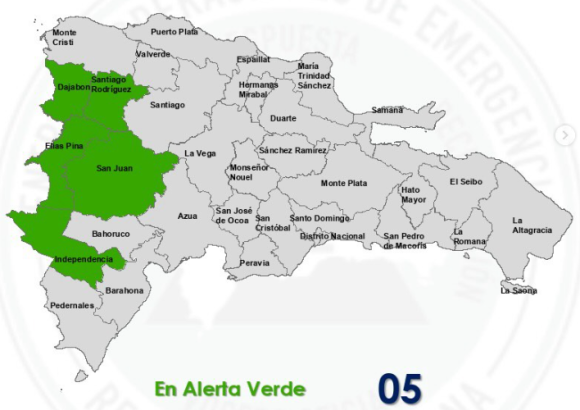
    Residents of five Dominican provinces along the nation’s border with Haiti are operating under new public safety warnings this week, after national emergency officials activated a green alert in response to early hydrological risks of sudden water level surges across regional waterways.

    The Emergency Operations Center, known locally by its Spanish acronym COE, rolled out the alert after the National Institute of Hydraulic Resources (INDRHI) issued a formal hydrological pre-alert. INDRHI’s notification highlighted the elevated probability of rapid increases in water volume and flow across the country’s rivers, smaller streams, and steep ravines, with the most pronounced risk concentrated in the border region shared with neighboring Haiti.

    Officials have issued clear guidance to communities in the impacted provinces: Elías Piña, San Juan, Dajabón, Independencia, and Santiago Rodríguez. Residents are instructed to maintain constant vigilance over changing water levels, with special attention directed to 12 high-risk river basins that include the Los Baos, Macasia, Tocino, Dajabón, Guayubín, Maguaca, Chacuey, San Juan, Arroyo Loro, Jimaní, and Masacre water systems.

    To prevent avoidable water-related accidents, the COE has urged locals to refrain from attempting to cross swollen rivers, streams, and ravines for the full duration of the active alert. The agency also added a warning against recreational use of rivers and public swimming areas, asking residents to prioritize personal safety until hydrological conditions return to stable, safe levels.

  • Three people injured during Ramón Orlando’s 50th Anniversary concert

    Three people injured during Ramón Orlando’s 50th Anniversary concert

    On Wednesday night, a sudden accident disrupted a major milestone celebration of Dominican music at the Félix Sánchez Olympic Stadium in Santo Domingo. An unexpected explosion of a confetti machine in the media section injured at least three reporters and photographers who were covering the highly anticipated “50 Years of Ramón Orlando and Friends” concert.

    Details released in the immediate aftermath indicate that one injured individual, whose identity remains undisclosed and who was wearing a shirt affiliated with the Reconocidos website, was rushed via ambulance to the UCE Medical Center to receive urgent medical care. A second injured person, Víctor Ramírez, a photographer working for prominent local newspaper Listín Diario, was also hurt in the blast but was able to exit the venue independently without requiring emergency transport. While authorities have confirmed a third media professional was affected by the incident, no further updates have been shared regarding their current condition. The unexpected incident created a wave of anxiety and tension among the entire pool of journalists and photographers on-site covering the landmark celebration.

    The sold-out concert, which kicked off at approximately 8:00 p.m., was designed to honor five decades of legendary Dominican musician Ramón Orlando’s artistic career, and featured a lineup of many of the most prominent names in Dominican music, including Juan Luis Guerra, Sergio Vargas, Fernando Villalona, and Eddy Herrera. Billed as a landmark tribute to both Orlando’s decades-long contribution and the broader cultural legacy of Dominican merengue, the event drew a full capacity crowd of enthusiastic fans. Prior to the concert’s start, organizers had publicly stated that a full team of emergency and security personnel would be deployed throughout the venue to address any potential incidents. To date, neither law enforcement authorities nor event organizers have released additional details regarding the root cause of the explosion, nor have they issued a comprehensive final report updating the public on the total number of people injured and their current medical conditions.

  • CEMDOE and INTEGRA host third International Health Quality and Safety Forum

    CEMDOE and INTEGRA host third International Health Quality and Safety Forum

    Leading Dominican healthcare and medical management organizations have convened hundreds of global and local stakeholders in Santo Domingo for the third edition of the International Health Quality and Safety Forum, an event focused on addressing systemic gaps in global and national healthcare while charting a path toward more patient-centered, safe, and innovative medical practice.

    The gathering was jointly organized by the Center for Diabetes, Obesity and Specialties (CEMDOE), a Dominican specialized medical institution, and INTEGRA, a regional healthcare asset management firm. The three-day event brought together senior government health officials, hospital and clinical system leaders, and top medical governance experts from across Latin America and North America to unpack pressing challenges and untapped opportunities for strengthening Dominican Republic’s national health ecosystem.

    Opening the forum, CEMDOE Director of Marketing and Communications Monika Harel underscored a core collective principle: advancing healthcare quality and patient safety cannot be the responsibility of a single institution, but requires sustained collaboration across every segment of the medical sector. Following her opening remarks, Dominican Republic Health Minister Víctor Atallah delivered a keynote address that reoriented the conversation around proactive patient safety. Atallah emphasized that building robust patient protection frameworks depends on intentional prevention and advance preparedness, rather than relying solely on reactive crisis response after adverse medical events occur.

    The forum featured a full slate of technical presentations and panel discussions led by internationally recognized health policy and quality improvement experts. Among the featured speakers were Dr. Ezequiel García-Elorrio from Argentina’s Institute for Clinical Effectiveness and Health Policy, and Paola Ortiz, Senior Director at the global Institute for Healthcare Improvement. Core discussion themes ranged from improving clinical outcomes and system-wide healthcare quality to strengthening institutional leadership and governance across public and private medical providers.

    One of the forum’s headline strategic panels, titled “Responsible Innovation: Building the Future of Clinical Research in the Dominican Republic,” explored the country’s growing potential to expand its domestic clinical research sector. Panelists, including senior representatives from global pharmaceutical leaders MSD, Roche, and Pfizer alongside CEMDOE leadership, delved into strategies to grow research capacity while upholding the strictest scientific, ethical, and patient safety standards.

    Beyond knowledge-sharing and policy dialogue, the event featured two major institutional announcements from CEMDOE: the official launch of the new RED CEMDOE clinical network, and plans for a new state-of-the-art outpatient care facility located on Santo Domingo’s John F. Kennedy Avenue. Scheduled to open its doors in November 2026, the new outpatient center is projected to dramatically expand CEMDOE’s annual patient reach, growing from the current 285,000 annual patients to more than 475,000 people across the Dominican Republic.

    Organizers noted that the annual forum has emerged as a key regional platform for cross-sector dialogue, with the third edition continuing CEMDOE and INTEGRA’s shared mission of fostering global knowledge exchange to support the development of safer, more innovative, and patient-focused healthcare institutions across the Dominican Republic.

  • Guatemalan exports to Dominican Republic could exceed US$2 billion, Agexport says

    Guatemalan exports to Dominican Republic could exceed US$2 billion, Agexport says

    A new collaborative agreement between Guatemala’s leading export body and the Dominican Republic’s national business organization is set to reshape bilateral trade ties, unlocking massive untapped growth potential for Guatemalan goods and services in the Caribbean market, according to official announcements from the business gathering in Santo Domingo.

    Currently, annual Guatemalan exports to the Dominican Republic hover around $282 million, but the Guatemalan Exporters Association (Agexport) projects that this figure could surge past $2 billion with targeted market development and improved trade connections. Six key sectors have been flagged as holding the greatest room for expansion: agribusiness, general agriculture, manufacturing, apparel and textiles, digital technology, and creative industries. Beyond growing existing trade flows, Agexport has also pinpointed a range of goods that the Dominican Republic currently sources from European nations, China, and other global suppliers that could be competitively provided by Guatemalan producers, opening new market share for Central American exporters.

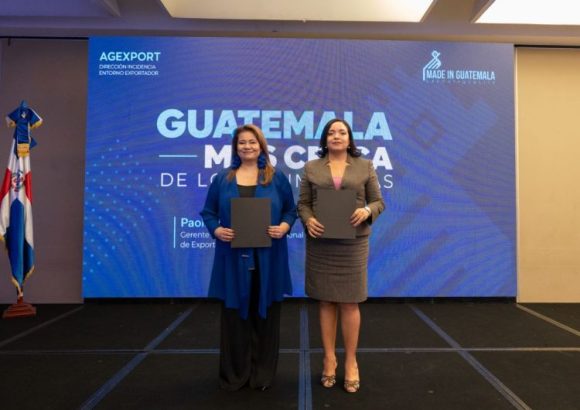
    To turn this potential into tangible economic gains, Agexport and the Dominican Republic’s National Organization of Commercial Enterprises (ONEC) have formalized a new partnership focused on three core goals: strengthening long-term business-to-business ties, streamlining connections between Guatemalan exporters and Dominican importers, and pinpointing specific, actionable opportunities for cross-border trade and direct investment.

    The partnership was officially launched during the “Guatemala Closer Than You Imagine” business forum hosted in Santo Domingo, an event designed to introduce Dominican industry leaders to the full scope of Guatemala’s export offerings and cross-border investment opportunities.

    Paola Álvarez, Agexport’s International Export Promotion Manager, emphasized that the Dominican Republic has been designated a priority market for Guatemala’s export expansion strategy, with plans to grow both existing product lines already available in the country and break into entirely new trade categories. For her part, ONEC Executive Director Jenniffer Troncoso noted that the alliance will give enterprises on both sides improved access to critical market data, professional networks, and potential partnership openings, while fostering ongoing, productive dialogue between the two countries’ business communities.

    The forum also featured additional programming to deepen bilateral engagement, including detailed presentations on investment incentives and opportunities across Guatemalan industrial sectors, and firsthand case studies from Dominican companies that have already established successful trade and operations with the Central American nation.

  • Two men killed in Lyford Cay construction site accident

    Two men killed in Lyford Cay construction site accident

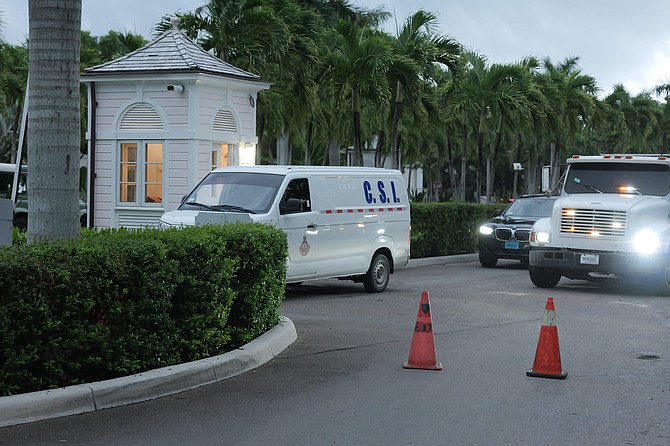
    A tragic industrial accident at a Lyford Cay construction site on Wednesday afternoon has claimed the lives of two workers, after unstable ground beneath their feet gave way and left them trapped under tons of displaced soil.

    Local law enforcement confirmed that emergency dispatch received reports of the incident just before 4 p.m., with first responders immediately redirected to the worksite located in western New Providence. Upon arrival at the location, uniformed officers were guided to the accident zone by on-site security staff, where they discovered the two trapped workers already unresponsive.

    Early findings from initial investigative work outline a clear sequence of events: the two employees were moving south along a newly poured foundation wall when the uncompacted adjacent soil suddenly collapsed. The collapse pulled both men downward into the void created by the sliding ground, burying them completely before they could escape.

    Fellow workers stationed at the site did not wait for emergency personnel to arrive, launching an immediate rescue effort to clear the fallen soil and pull the trapped men to the surface. Once the pair were recovered, regional Emergency Medical Services teams conducted on-site assessments, but could only confirm that both men had already lost their lives, with no detectable vital signs present.

    As of the latest update, law enforcement officials have stated that full investigations into the cause of the collapse remain ongoing, with inspectors set to assess site safety protocols and soil stability to determine what contributed to the fatal incident.