博客

  • Milling and paving work resumes on Highway 2A

    Milling and paving work resumes on Highway 2A

    A major infrastructure upgrade project is set to resume on one of Barbados’ key arterial roads this month, bringing short-term travel disruptions in exchange for long-term improvements to the island’s transportation network. The Ministry of Transport and Works (MTW), in collaboration with private construction partner B & R Infrastructure Limited, has announced the restart of paving works on a 4.2-kilometer stretch of Highway 2A – the Ronald Mapp Highway – spanning from the St Thomas Roundabout to the Bucks Road junction in the parish of St Thomas.

    Work is scheduled to kick off on Tuesday, September 22, with all construction activities limited to overnight hours to minimize disruption to peak commuter traffic. Crews will operate from 9 p.m. to 5 a.m. each night, and the entire project is projected to take three weeks to reach completion, provided favorable weather conditions hold.

    To accommodate the paving work, traffic on the affected stretch of highway will be restricted to a single lane during work hours. The southbound lane will be fully closed overnight, with all southbound vehicles redirected through the St Thomas Roundabout to alternate routes. The northbound lane will remain open to through traffic for the duration of the construction period.

    Project organizers have confirmed that critical access will be preserved throughout the work: emergency response vehicles, public transportation units, and local residents will retain unimpeded access to the area at all times.

    MTW and B & R Infrastructure have issued a series of safety advisories for motorists who still need to travel through the construction zone. Drivers are urged to reduce their speed when approaching the worksite, exercise extra caution when navigating the restricted area, and strictly follow directions posted on official road signs and communicated by on-site traffic control flag persons. Officials also recommend that commuters plan ahead and use alternate routes wherever possible to avoid potential delays.

    In a statement released Friday, MTW apologized in advance for the inevitable inconvenience the works will cause to local businesses, residents, and regular road users. The ministry emphasized that the project is a key part of ongoing efforts to upgrade and modernize Barbados’ national road network, and thanked the community for their patience and cooperation as works get underway.

  • ‘Smooth talkers’ undermining government’s agenda — Leacock

    ‘Smooth talkers’ undermining government’s agenda — Leacock

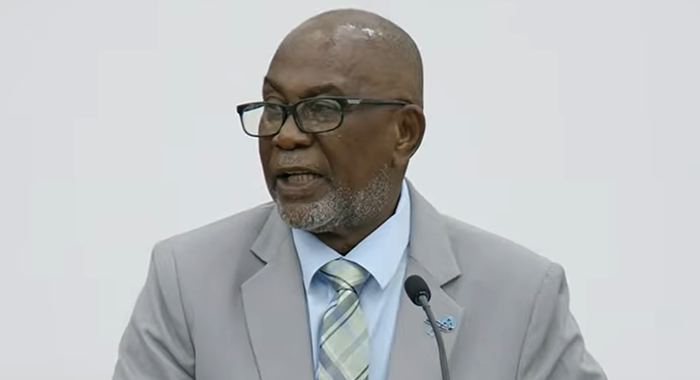
    In a candid on-air address to ruling party supporters on Monday, St. Vincent and the Grenadines’ Acting Prime Minister St. Clair Leacock has issued a stark warning: the newly installed New Democratic Party (NDP) administration is facing deliberate, hidden obstruction from public sector officials who are working covertly to derail the government’s policy goals.

    Speaking during *New Times*, the NDP’s weekly radio broadcast, Leacock — who also holds the national security portfolio — detailed what he calls systemic institutional resistance and internal sabotage across key state agencies. He described a pattern of behavior where public officials offer warm, agreeable words to sitting ministers to build trust, while quietly working to slow or block reforms out of a desire to see the new government fail.

    Leacock recounted a conversation with a fellow cabinet minister who had reached the same conclusion about one senior public servant: the official told the minister exactly what he wanted to hear to earn confidence, but their actions offstage pushed against the administration’s agenda. “You develop greater and greater belief in you. But underneath, the undercurrents are going in a different direction,” Leacock said, recounting the minister’s observation. He added that many officials still underestimate the new leadership, falsely believing they can mislead ministers, fake progress on policy priorities, and sabotage outcomes without consequence.

    Leacock’s accusations came during a broad discussion of the administration’s ongoing challenges: the government is working to stabilize the national economy, bring down a towering debt-to-GDP ratio, and meet international monitoring standards set by the World Bank, which recently completed a country assessment. Beyond these well-documented fiscal pressures, Leacock says the government is fighting an uphill battle against bureaucratic inertia and in many cases, intentional obstruction that keeps even basic government functions from moving forward.

    Going further, the acting prime minister claimed that the most effective opposition to the NDP is not the formal parliamentary opposition, which he describes as weak and directionless. Instead, he argued, the opposition vacuum is being filled by dissident voices within the government and ruling party itself — people who once campaigned for political change, but are now actively undermining the administration from within. “Some of our people, who you think would know better — because we are not void or afraid of criticism — instead of constructively advancing conversations favourable to an administration struggling with the situation, you have literally usurped the role of the opposition,” Leacock said. He added that even within NDP ranks, some partisans selectively back only favored party members while abusing others, deepening internal divisions.

    Much of the public criticism the administration currently faces, Leacock argued, is “unwarranted, impatient, unfounded, and in some cases totally nonsensical,” rooted in a toxic “dangerous cocktail” of ignorance and arrogance. It was this need for open, direct conversation with the public that led Leacock to take over the weekly *New Times* radio slot previously hosted by NDP leader and Prime Minister Godwin Friday. “I believe it is necessary that we have these conversations, and be open to the criticisms and for the explanations, because in the absence of that, people have a right sometimes to speculate,” he explained. “Governmental politics and opposition politics is two different politics. This is where the tyres hit the road, and we have to deal with the reality that’s in front of us.”

    Leacock saved his harshest rebuke for public officials using their government positions to quietly derail the administration’s agenda. While he declined to name specific agencies or individuals, he made clear that disciplinary and personnel changes are already in motion, with more decisive action coming once obstruction patterns are confirmed. “You’re going to find more and more that is going to happen, where we find that there are stumbling blocks, other hindrances to getting the government policies going forward,” he said. “When people cry foul, you have to say, ‘Well, too bad.’”

    The acting prime minister framed this crackdown on internal resistance as a core part of the administration’s broader push to overhaul long-entrenched government culture. He called out “a lot of BS” in state agencies, where even routine tasks are blocked by unnecessary red tape or deliberate foot-dragging. Leacock traced this harmful mindset to the previous administration, which he claimed prioritized holding political power “at all costs”, leaving remnants of that self-serving culture embedded across the public service.

    Leacock also linked internal obstruction to two key priorities of his national security brief: cutting violent crime and attracting foreign investment. He noted that some actors are still “playing games with the government” to prevent new ministers from succeeding in their portfolios, warning that ongoing public disorder — including recent violent incidents involving schoolchildren and persistent gun crime — damages the country’s investment climate. “When that happens, you are disturbing the investment climate in St. Vincent and the Grenadines, where people get the perception that this is a disorderly country in which my money is not safe, or which someone feels not safe to go there,” he said.

    Despite the array of challenges, Leacock emphasized that the NDP administration remains fully committed to delivering on its election mandate to the Vincentian people. He asked the public for “more time and more patience”, noting that the government is working to reverse 25 years of what he calls mismanagement by the previous government. The administration is committed to pursuing reform “the right way” even as it confronts massive debt pressure, urgent social demands, and hidden resistance across the state apparatus.

    “This is a government that is going to deliver in the shortest possible time the expectations of the people,” Leacock said. “But we are asking for more time and more patience as we do it the right way. We don’t want to mess up on it.”

  • National seminar highlights strategies to strengthen Dominica’s livestock sector

    National seminar highlights strategies to strengthen Dominica’s livestock sector

    On September 22, 2026, Dominica’s Ministry of Agriculture, Fisheries, Blue and Green Economy brought hundreds of livestock industry stakeholders together at Goodwill Parish Hall for a landmark national seminar focused on revitalizing the country’s domestic poultry and pig sectors. Under the guiding theme “Produce Local, Consume Local, Secure the Future,” the collaborative event was co-organized by the Ministry, the East Caribbean Group of Companies (ECGC), and regional local distributors, creating a shared space for cross-sector dialogue and actionable planning.

    Attendees spanned every segment of the local livestock ecosystem: small-scale and commercial farmers, veterinary and agricultural technical specialists, animal feed and input suppliers, and retail distribution representatives. Core discussions centered on updating outdated production practices, addressing persistent supply chain gaps, and building more integrated, mutually beneficial connections between producers, processors and local markets to support long-term sector growth.

    The seminar unfolded against a backdrop of major public investment in Dominica’s livestock infrastructure, anchored by the fully reconstructed National Abattoir at Layou Park. First destroyed when Hurricane Maria pummeled the island nation in 2017, the upgraded facility represents a transformative upgrade for the local meat industry. Built with more than EC$5 million in government investment, plus additional public funding earmarked for farmer preparedness and production support, the new abattoir boasts a processing capacity of 1,000 poultry birds per hour and up to 50 pigs per day. As of 2026, the facility has entered its final stages of completion and operational testing, with officials set to launch full operations in the coming months.

    Government leaders outlined three core goals for the new abattoir: creating a consistent, reliable formal market for local livestock farmers that eliminates inconsistent pricing and market access barriers, raising national meat processing and food safety standards to meet both domestic consumer demand and regional export requirements, and cutting Dominica’s heavy reliance on imported poultry and pork products to keep more food spending within the local economy.

    Seminar organizers reported strong engagement from all participating groups, noting that the event successfully created space for on-the-ground producers to voice challenges and collaborate with policymakers and industry leaders to identify practical, implementable solutions for building a more resilient, productive local livestock sector. The seminar and upcoming abattoir launch form part of a broader, ongoing government strategy to expand domestic agricultural output, upskill local farmers, and strengthen the country’s long-term food security by meeting growing consumer demand for locally raised poultry and pork.

  • Pedestrian killed in St George collision

    Pedestrian killed in St George collision

    A fatal traffic collision on Walkers Road in St. George has left one pedestrian dead, according to official police updates. The victim has been formally identified as 61-year-old Phillip Greaves, a resident of Thropes Cottage, St. George.

    The incident unfolded shortly after 6 p.m. on Tuesday, when the collision took place between a public service vehicle (PSV) and Greaves. At the time of the crash, both the PSV and Greaves were moving along Walkers Road, heading in the same direction from the Carmichael area toward Glebe.

    Emergency responders dispatched to the scene confirmed that Greaves succumbed to his injuries immediately, with death pronounced at the location of the crash. No further details about potential injuries to other individuals, including the operator of the public service vehicle, have been released in the initial update.

    As law enforcement officials launch a formal probe into the circumstances of the crash, the Royal Barbados Police Force is issuing a public appeal for assistance from anyone who may have seen the incident unfold. Investigators are asking any witnesses who have not yet given a statement to contact officers at the District ‘B’ Police Station directly via either of the published phone lines: 437-4311 or 430-7625. As of the latest update, the investigation remains active and ongoing, with authorities yet to release further findings on contributing factors such as road conditions, speed, or driver impairment.

  • Flow Customer Rose and Guest Enjoy CPL Finals Trip in Barbados

    Flow Customer Rose and Guest Enjoy CPL Finals Trip in Barbados

    A lucky cricket fan has turned their support for the Caribbean Premier League (CPL) into an unforgettable all-expenses-paid trip to the league’s championship decider in the tropical island paradise of Barbados.

    Rose Customer, a long-time CPL enthusiast who has followed the tournament across multiple seasons, was selected as the winner of a popular fan engagement competition held by the league organizers. The promotion, designed to deepen connections between the league and its global fanbase, offered the grand prize of a fully hosted trip to the CPL Finals, covering all travel, accommodation, and exclusive event access.

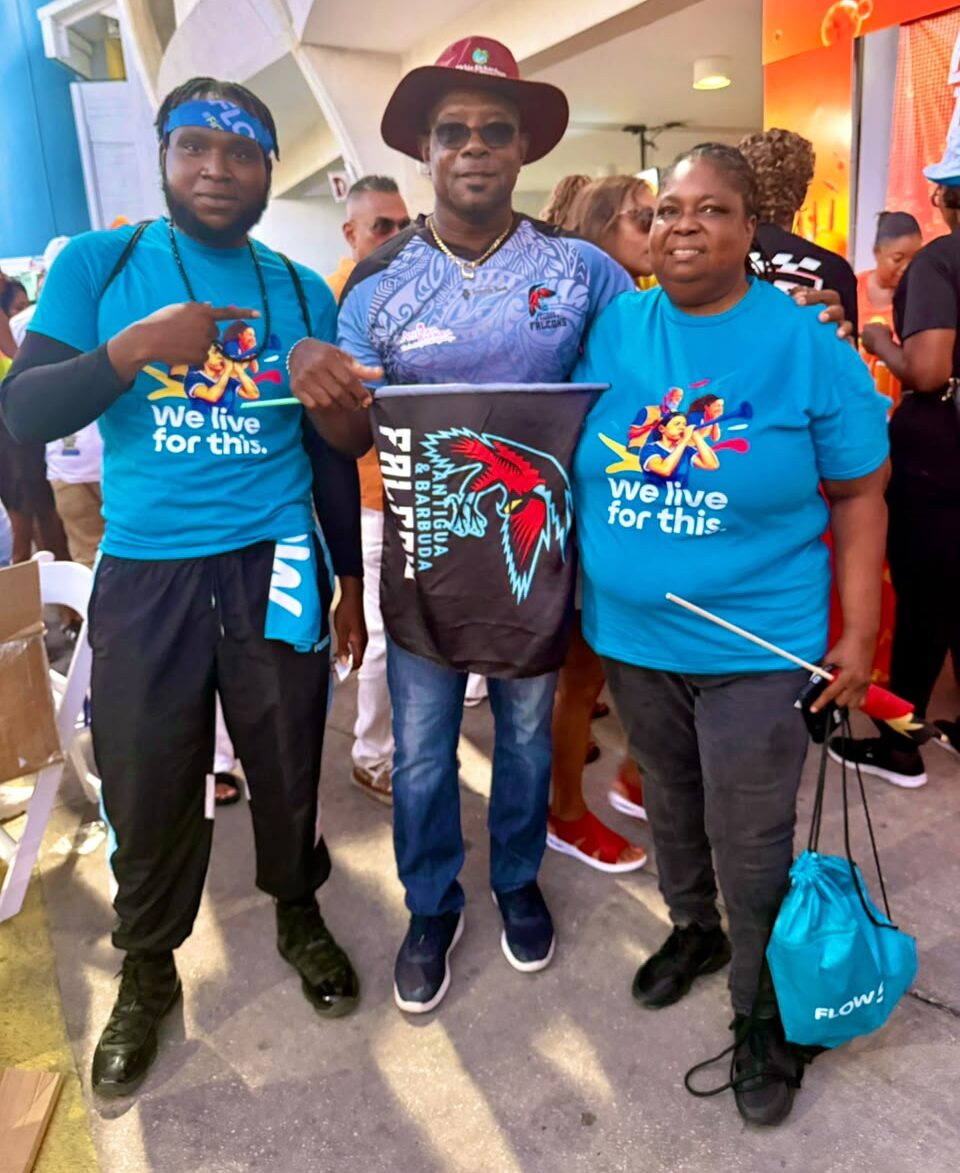
    Customer touched down in Barbados earlier this week, where she was greeted by event representatives and escorted to her beachfront accommodation. Over the course of her stay, she has enjoyed front-row access to all on-field action at the finals, behind-the-scenes tours of the stadium, meet-and-greet opportunities with star CPL players, and the chance to experience Barbados’ renowned local hospitality and tropical attractions. In comments shared on-site, Customer expressed her excitement at the opportunity, noting that watching a CPL final in the Caribbean had been a bucket-list goal for years.

    League officials confirmed that the fan experience initiative has been a major success, drawing tens of thousands of entries from cricket fans across the globe. The trip not only rewards a dedicated supporter but also highlights Barbados’ standing as a premier host for top-tier international cricket events, boosting the island’s profile as a sports tourism destination.

    As the CPL finals reach their climax, Customer is savoring every moment of her dream trip, from the electric atmosphere of the stadium on match day to the post-game celebrations that make Caribbean cricket famous around the world.

  • Trappas Owner Caroline Tranter Completes Everest Base Camp Trek for Antigua Charity

    Trappas Owner Caroline Tranter Completes Everest Base Camp Trek for Antigua Charity

    Against the thin, freezing air of the world’s highest mountain range, a Caribbean business owner has turned a personal milestone journey into a life-changing fundraiser for a beloved local disability support organization. Caroline Tranter, owner of Antigua and Barbuda’s popular Trappas Restaurant & Bar, has successfully finished a grueling 14-day trek to Everest Base Camp, an expedition that tests even the most experienced hikers’ physical and mental endurance.

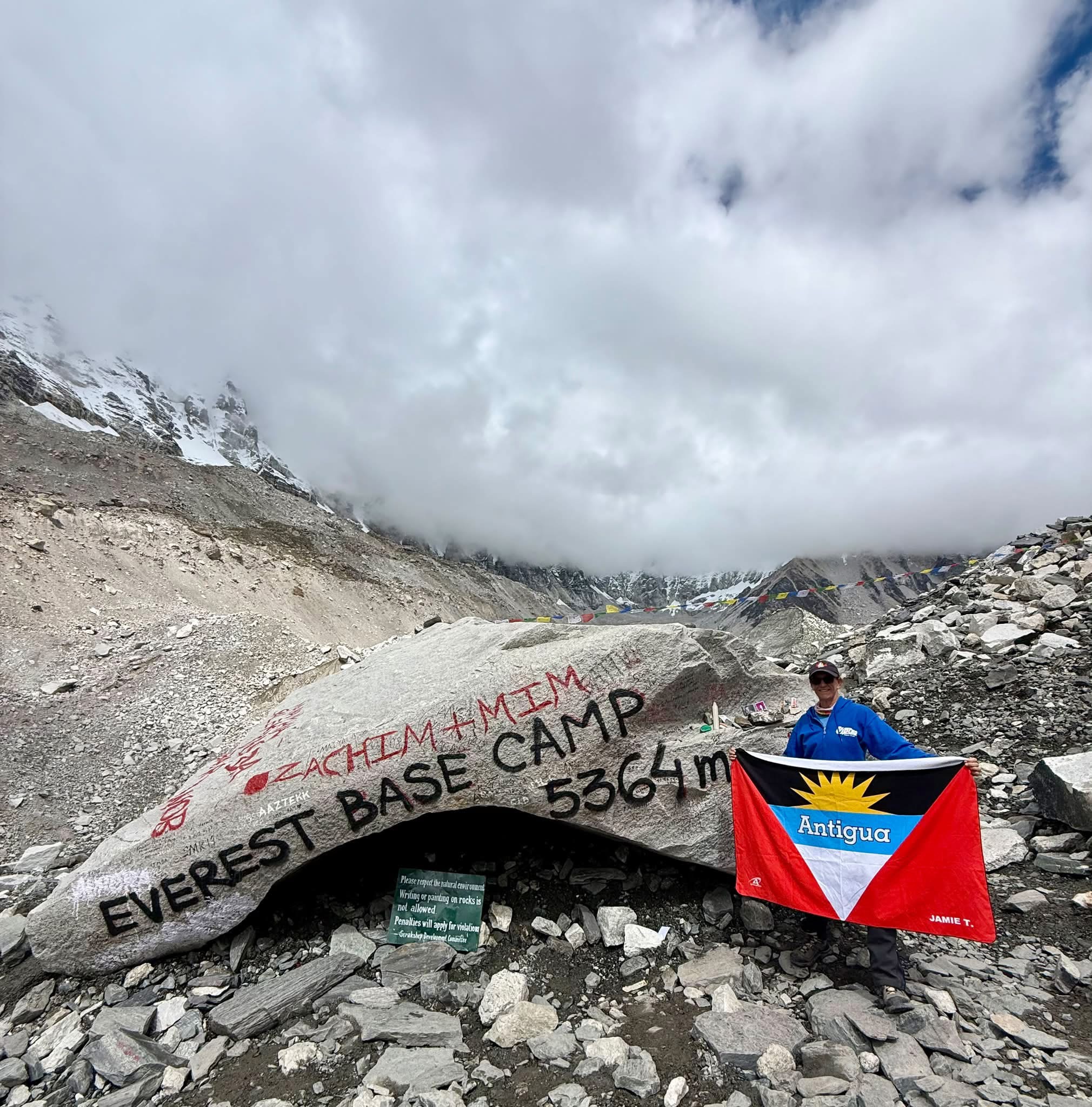
    At 5,364 meters (17,598 feet) above sea level, Tranter crossed the finish line and posted a jubilant announcement to her supporters: “The hardest hike of my life but I made it!” In a widely shared photo capturing the historic moment, Tranter stands tall at the base camp, holding aloft the flag of Antigua and Barbuda in a show of national pride for her home community.

    The ambitious trek was far more than a personal adventure for Tranter: it marked three major turning points in her life. She set out on the challenge to celebrate her 50th birthday, 25 years of operating Trappas Restaurant & Bar, and a full decade of what she calls a transformative spiritual recovery journey. Instead of accepting traditional gifts and celebrations for these milestones, Tranter chose to redirect public generosity toward a cause that holds deep personal meaning for her: the Friends of the Care Project, a Antigua and Barbuda-based charity that serves vulnerable people across the twin-island nation.

    Friends of the Care Project delivers targeted support to children and adults living with physical disabilities, mental disabilities, autism, and a wide range of other mental health challenges, filling critical gaps in local access to care and resources. Committed to full transparency, Tranter has pledged that 100 percent of all funds raised through her expedition will go directly to the organization, with no administrative fees or costs deducted from donations.

    Tranter extended a heartfelt appeal to her broad network of supporters, encouraging regular patrons, friends, and anyone who would have otherwise bought her a celebratory gift – from a meal out to flowers or chocolates – to redirect that money to the fundraiser instead. She also called on the thousands of customers who have dined at Trappas over its 25 years in business to “pay it forward” by contributing whatever they can afford.

    The fundraiser emphasizes that no donation is too small to make an impact: contributions as modest as £5 (EC$20) add up to meaningful support for the charity’s work. For those unable to give financially, Tranter asked that they help spread the word by sharing the official fundraising link. Donations are being accepted through a public GoFundMe page, and more information about the Friends of the Care Project and its ongoing programs is available on the organization’s official website.

  • IOM RELEASE: Dominica advances policy to strengthen integration of migrant labour in the agricultural sector

    IOM RELEASE: Dominica advances policy to strengthen integration of migrant labour in the agricultural sector

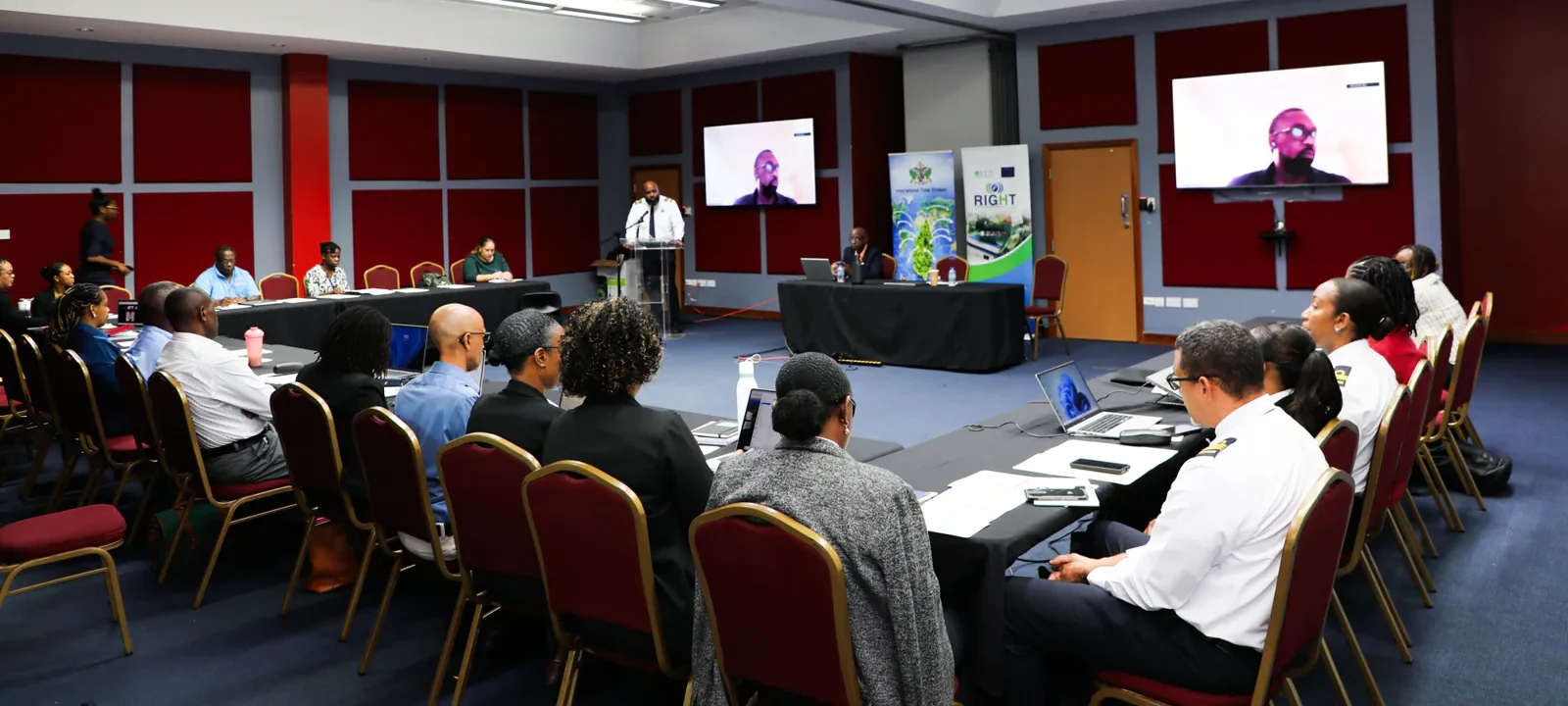
    Against a backdrop of persistent agricultural labour gaps and shifting demographic trends that threaten Dominica’s national food security goals, cross-sector stakeholders from government, industry, and civil society have convened to build a cohesive, inclusive framework for integrating migrant labour into the country’s farming sector. The International Organization for Migration (IOM) Mission in Dominica partnered with the Ministry of Agriculture, Fisheries, Blue and Green Economy to host the Technical Validation Workshop for the Policy and Action Plan for Integrating Migrant Labour into the Agricultural Sector of Dominica, held at the Prevost Cinemall.

    The two-day workshop brought together representatives from all affected groups to review the draft policy and accompanying implementation plan, flag unaddressed gaps, and submit actionable revisions to ensure the final framework aligns with the on-the-ground needs of local farmers, migrant workers, and public agencies tasked with regulating labour migration. This collaborative effort is a core component of the broader Development of the Agricultural Sector in Dominica by Strengthening Migration Governance initiative.

    In her opening address to attendees, Viola Pascal, Project Coordinator for IOM Dominica, outlined that the draft policy and action plan were developed following a gender-inclusive agricultural labour assessment that centered the lived experiences and input of stakeholders across all segments of the sector. Pascal explained that widespread labour shortages and ongoing demographic shifts have made migrant labour an increasingly critical pillar of sustaining agricultural output and upholding national food security. She stressed, however, that a well-functioning system depends on clear regulatory guidelines, improved inter-agency coordination, dignified working conditions, and robust legal protections for all migrant workers. “This policy and action plan, developed by the government with IOM’s support, marks a critical milestone toward streamlining and formalizing this process,” Pascal noted.

    Honourable Roland Royer, Minister for Agriculture, Fisheries, Blue and Green Economy, identified consistent access to a reliable agricultural workforce as one of the most pressing barriers holding back Dominican farmers and the country’s push to expand domestic food production. Minister Royer shared that through the government’s existing temporary migrant farm labour programme, 189 migrant workers have already entered the country to support agricultural operations, directly benefiting 47 local farming operations. He emphasized a key point that guides the government’s approach: migrant workers are not intended to displace Dominican workers, but rather fill critical labour gaps where local workers cannot meet current demand.

    Minister Royer also noted that migrant labour integration is only one part of a broader transformation of Dominica’s agricultural sector. Long-term resilience, he argued, requires expanded investment in mechanization, broader adoption of modern agricultural technologies, and targeted outreach to encourage young Dominican people to view farming as a viable, rewarding long-term career. “What we need is a system that is clear, coordinated, accountable, and responsive to the needs of all farmers while protecting the rights and welfare of workers,” Royer stated.

    The workshop structured discussion into two focused technical sessions to allow for deep, targeted review of the proposed framework. Dr. Schuyler Esprit, Head Consultant at Create Caribbean, led the first session, which centered on the overarching policy goals and regulatory structure for integrating migrant labour into Dominican agriculture. The second session, facilitated by Create Caribbean’s Project Manager and Research Assistant, gave attendees space to examine the step-by-step implementation action plan and contribute revisions to improve its feasibility and impact.

    For participating stakeholders, the workshop reinforced how critical cross-sector input is to building a policy that works for all groups. LeSean Peter, a delegate from the Dominica National Council of Women, called the convening insightful, noting the value of creating structured spaces where stakeholders can address challenging topics and contribute meaningfully to the policy development process. Emmanuel Joseph, Agriculture Officer for the East Agricultural Region, echoed this perspective, highlighting that migrant labour governance extends far beyond the agricultural sector alone. While agriculture remains the focus of the policy, Joseph noted that stakeholders from public health, labour regulation, and national security all have critical roles to play in successful implementation.

    The Technical Validation Workshop marks another key step toward establishing a formal, responsive system for managing migrant agricultural labour that meets the needs of farmers while upholding the rights and well-being of migrant workers. Moving forward, IOM Dominica will continue collaborating with the Government of Dominica and cross-sector stakeholders to finalize the policy and action plan. The overarching goal of the effort is to strengthen national migration governance while building a more productive, resilient agricultural sector that can support Dominica’s long-term food security goals.

  • Registration Open : Master’s in Public Policy Analysis (FDSE)

    Registration Open : Master’s in Public Policy Analysis (FDSE)

    Higher education opportunities in public policy have expanded in Haiti, as the State University of Haiti (UEH) has officially opened registration for the second intake of its Master’s in Public Policy Analysis (MAPP) hosted by the Faculty of Law and Economic Sciences (FDSE). The academic initiative, scheduled for the 2026–2027 academic year, will close applications on October 15, 2026, with clear eligibility requirements and a structured application process laid out for prospective students.

    To qualify for consideration, candidates must hold an undergraduate bachelor’s degree (or equivalent credential) in one of several eligible fields, including economic sciences, administrative sciences, engineering, and social sciences. All applicants are also required to hold a Unique Identification Number (NINU) issued by Haiti’s National Identification Office (ONI), and pay a non-refundable 5,000 HTG registration fee to complete the initial screening step.

    The application process follows five key steps designed to streamline review for university administrators. First, candidates must submit their registration fee payment to the official UEH/ADMISSION REQUEST account (account number: 706054558) at any branch of SOGEBANK. Next, applicants must fill out the official online application form hosted on UEH’s admissions portal at https://admission.ueh.edu.ht, where they will be required to input their transaction payment number and upload a digital copy of their payment slip. During the form completion process, candidates must explicitly indicate that they are applying for the Master’s in Public Policy Analysis. After submitting the form, applicants must print a copy of their completed registration slip, then bring this documentation to the Dean’s Office of the Faculty of Law and Economic Sciences to finalize application validation.

    A complete set of supporting documentation is required to validate an application at the FDSE Dean’s Office. Candidates must bring two recent passport-sized photographs (taken within the past six months), with their full name, phone number, and NINU written on the back of each photo. Additional required documents include the printed application registration form, official national photo identification, the original bank deposit slip proving registration fee payment, an original and copy of the applicant’s undergraduate degree (or a provisional certificate of completion if the official diploma has not yet been issued), full undergraduate academic transcripts, a personal letter of motivation, an updated professional curriculum vitae, and one official letter of recommendation.

    Admission to the competitive program is granted to applicants who submit a complete, compliant application package and agree to adhere to all the program’s official academic and administrative regulations. The university has also published key additional information for candidates, including an annual tuition rate of 130,000 HTG for the master’s program.

    University administration has emphasized strict rules to avoid application disqualification: no exceptions will be granted for late submissions, incomplete applications that do not meet eligibility criteria, incorrect registration steps, or payments made to an alternate bank or non-official account. Online registration through the official UEH admissions portal is mandatory for all candidates, with no offline-only applications accepted.

    Prospective applicants with questions about the program or application process can contact the UEH admissions office via email at admission@ueh.edu.ht, or by phone at +509 47 47 9553, +509 3248 9797, or +509 3704 1522. The UEH main administration is located at 21 Rue Rivière, Port-au-Prince, Haiti, and additional university information can be found on its official website at www.ueh.edu.ht.

  • VS en Iran hervatten diplomatiek contact tijdens VN-top

    VS en Iran hervatten diplomatiek contact tijdens VN-top

    Against the backdrop of the 81st United Nations General Assembly in New York, the United States and Iran launched indirect, multi-hour negotiations mediated by regional third parties on Tuesday, with discussions centered on ending regional hostilities and reopening the strategically critical Strait of Hormuz to commercial shipping. While both sides have described the initial round of talks as promising, no breakthrough has yet been announced, and core differences on priorities and sequencing of concessions remain unresolved.

    U.S. President Donald Trump initially stated that his special envoy Steve Witkoff and senior advisor Jared Kushner held three hours of direct discussions with Iranian officials, calling the session “very good” and “very productive”, noting significant momentum toward a final agreement. He later confirmed that talks would continue and expressed confidence that a final arrangement would be reached. The White House later clarified that Trump himself did not participate in the negotiations, and that mediators shuttled between the U.S. and Iranian delegations led by Witkoff and Iranian Foreign Minister Abbas Araghchi respectively. Witkoff characterized the completed first negotiating round as potentially “constructive and promising”, adding that mediators would continue their shuttle work in the coming days.

    At the heart of Iran’s negotiating position are its demands for the United States to roll back economic and military pressure in exchange for reopening the Strait of Hormuz. Iranian state media report that Tehran conveyed its formal terms to Washington via mediators: these include lifting the U.S. blockade on Iranian ports, unfreezing billions of dollars in Iranian assets held abroad, and ending U.S.-led military campaigns against Iran and its regional allied armed factions. A senior Iranian official told state media that Tehran would be willing to fully restore open shipping through the strait within seven days if Washington agrees to reduce military pressure and scale back economic sanctions.

    The Strait of Hormuz is one of the world’s most critical energy chokepoints, carrying roughly a fifth of global oil supplies and a large share of liquefied natural gas exports from Gulf producing states to global markets. Disruptions and uncertainty around shipping through the waterway have already roiled global energy markets, with Reuters market data showing Brent crude prices climbed above $100 per barrel on Tuesday following news of the negotiations.

    Washington’s priorities differ sharply from Tehran’s. Trump has repeatedly emphasized two non-negotiable U.S. red lines: Iran will not be permitted to develop a nuclear weapon, and unimpeded commercial shipping through the Strait of Hormuz must be restored immediately. This leaves the two sides’ core negotiating objectives directly opposed: Iran demands that relief from pressure come first, while the U.S. insists on tangible Iranian commitments on shipping security and nuclear limits before making any concessions.

    A notable dynamic of the current process is the gap between harsh public rhetoric and quiet diplomatic outreach. Just hours before the negotiations opened, Trump used his address to the UN General Assembly to deliver sharp criticism of Iran, saying he faced a “major decision” between a deal that would allow Iran’s economy to recover and further military escalation. He reaffirmed that the U.S. would never allow Iran to acquire a nuclear weapon, with the White House identifying Iran’s nuclear program as one of the administration’s top global security priorities.

    Iran responded in kind: the Iranian General Staff issued a warning that the country would deliver a stronger and more unpredictable response to any new U.S. attacks. Still, Iranian officials have left the door open to a diplomatic resolution, stating that talks can progress if Tehran’s core conditions are met. Analysts quoted by Al Jazeera note that the combative public language from both sides is a deliberate negotiating tactic: both governments face domestic political pressure, and neither wants to be seen as making concessions under duress to the other side.

    Qatar and Pakistan have taken on the lead role as mediators between the two governments, working to narrow gaps and bring the parties closer to an agreement. Qatari Prime Minister and Foreign Minister Sheikh Mohammed bin Abdulrahman Al Thani met with Araghchi in New York on Tuesday to discuss regional developments, de-escalation, and laying the groundwork for sustained dialogue. Qatar has also previously held exploratory talks on establishing a temporary shipping corridor through the Strait of Hormuz and practical cooperation to clear the waterway for commercial traffic, highlighting that diplomacy is not just focused on a high-level political agreement, but also on putting in place practical arrangements to resume global shipping.

    According to Reuters, negotiators are also exploring a broader regional security framework that would include Iran and the Cooperation Council for the Arab Gulf States. This proposal would tie negotiations on the Strait of Hormuz to wider agreements on long-term security across the Gulf region, though the text of the proposal has not yet been made public.

    Outside of the mediated bilateral talks, France has put forward a separate international initiative to protect shipping through the strait. Reuters reports that Paris is drafting a UN Security Council resolution to authorize an international maritime mission to guarantee free navigation through Hormuz, a proposal that is being coordinated with Washington. Previous attempts to launch such a mission stalled due to objections from China and Russia, which argued that the initiative would be disproportionately targeted at Iran. Paris is now working to revise the text to explicitly frame the mission as focused solely on protecting commercial shipping and global energy security, rather than confronting Tehran.

    Despite the opening of talks and signs of goodwill on both sides, key obstacles remain unaddressed. Beyond conflicting core priorities, the two sides cannot agree on the sequencing of concessions. Tehran refuses to give up its leverage over Hormuz shipping before it receives the economic and military relief it has demanded, while Washington insists on seeing concrete Iranian action on its core demands first. This impasse means any final agreement will likely require a carefully structured package of simultaneous or phased reciprocal steps from both sides.

    The ongoing UN General Assembly, which runs from September 22 to 28 in New York, provides a critical immediate diplomatic window for further talks, with senior officials from both sides already on location for the global summit.

  • DAA to host second road race of 2026 in Grand Bay

    DAA to host second road race of 2026 in Grand Bay

    One of Dominica’s leading amateur sports governing bodies, the Dominica Athletics Association Inc. (DAA Inc.), is preparing to host the second leg of its highly anticipated 2026 Road Race Series on Sunday, October 11. This year’s event will wind through scenic and populated stretches of the island’s Grand Bay region, bringing community-focused competitive running back to the area for another year.

    Organizers have issued a public call for both competitive and recreational athletes across all age groups to reserve the date, ramp up their training regimens, and gear up for a day of tight competition and community camaraderie on the island’s roads.

    To ensure fair competition matched to athletes’ physical capabilities, the event has structured race distances around distinct age categories, each with its own designated starting point along the Grand Bay corridor. The 5-kilometer race, open to open-level competitive runners and masters athletes aged 35 and older, will kick off from Bagatelle. Runners in this division will turn right at the Bagatelle junction before moving toward the core Grand Bay area.

    For younger emerging talent, the 3-kilometer race reserved for Under-17 athletes will get underway from the Stowe neighborhood. Athletes competing in the Under-13 and Under-15 age brackets will take on a 2-kilometer course that starts in Dubique. The youngest participants, spanning Under-7, Under-9 and Under-11 age groups, will contest a 1-kilometer sprint starting near the bridge adjacent to the Geneva Playing Field.

    After the separate starting points, all competitors will converge at the Geneva Playing Field junction, where they will turn left onto Pierre Charles Boulevard and follow the full stretch of the road to the finish line. The final endpoint for all race divisions is situated on Pierre Charles Boulevard, just a short distance from the local Catholic Church, where winners will be crowned at the end of the day’s racing action.