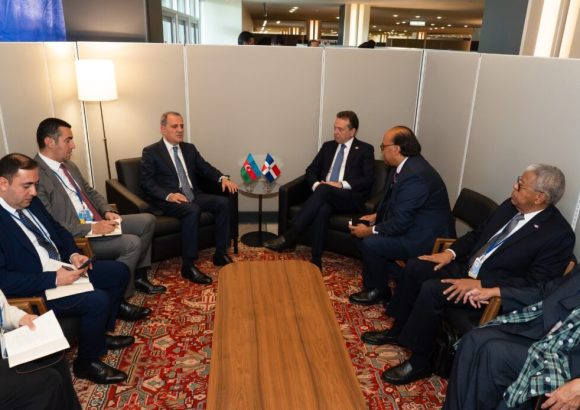
Amid the bustling diplomatic activities of the 81st United Nations General Assembly High-Level Week in New York, two nations from different hemispheres have taken a significant step forward in deepening bilateral ties. The Dominican Republic and Azerbaijan have formally signed a landmark agreement that abolishes visa requirements for citizens of both countries holding valid ordinary passports, opening the door to enhanced people-to-people connectivity and closer cooperation across multiple sectors.
The visa-free agreement was sealed by Dominican Foreign Minister Víctor “Ito” Bisonó and Azerbaijan’s Foreign Minister Jeyhun Bayramov on the sidelines of the UN gathering. Under the terms of the newly struck deal, citizens from both nations can enter, exit, or transit through the other country without first obtaining a travel visa, and are permitted to stay for a maximum of 90 days within any rolling 180-day period. This new policy is expected to remove a key barrier that has long hindered travel, business exchanges, and cultural interactions between the two countries.
Beyond the visa waiver agreement, the two foreign ministers also put their signatures to a separate Memorandum of Understanding. This document establishes a formal mechanism for regular political consultations between the two governments, creating a structured channel for ongoing dialogue on issues of mutual interest. During their bilateral meeting held alongside the signing ceremony, the ministers explored a wide range of opportunities to expand collaboration, covering political engagement, economic and trade partnerships, and cooperation in emerging areas that hold mutual benefit for both nations.
This round of diplomatic agreements aligns with the Dominican Republic’s broader strategic goal of diversifying its international partnerships. By forging closer ties with nations across the globe, the country aims to unlock new opportunities for trade growth, attract foreign investment, boost tourism development, and strengthen multilateral cooperation across a variety of fields. For Azerbaijan, the agreement represents another step forward in expanding its diplomatic footprint in the Americas and building new economic and political bridges outside of its traditional regional partnerships. Analysts note that this kind of people-centered diplomatic agreement lays the groundwork for deeper long-term engagement, as increased travel and exchange often pave the way for stronger business ties and more robust political cooperation in the future.