博客

  • CARICOM Relaunches Ten-Point Slavery Reparations Plan

    CARICOM Relaunches Ten-Point Slavery Reparations Plan

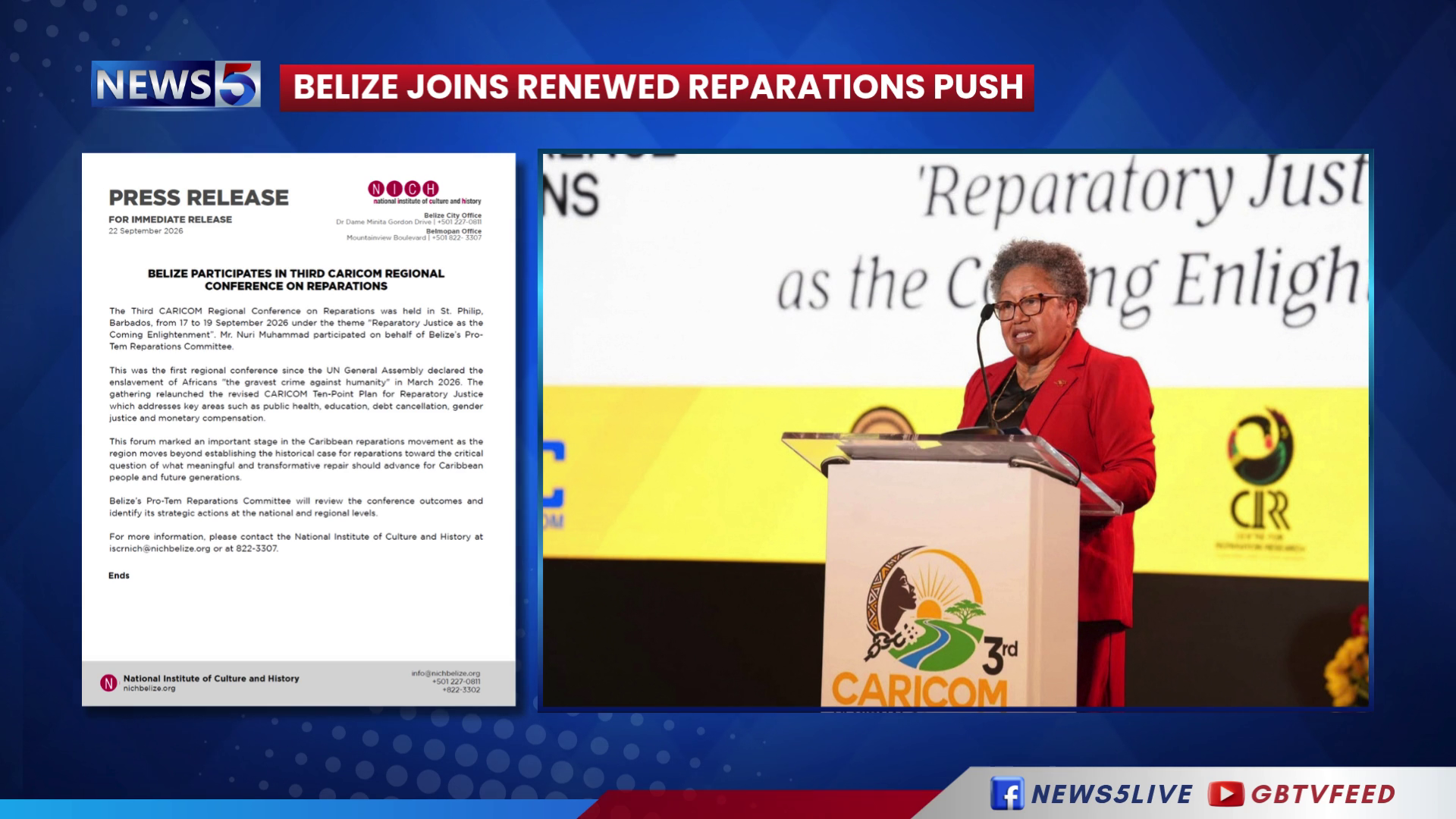
    In a landmark gathering marking a new phase of the Caribbean reparations movement, regional leaders and advocacy representatives have relaunched a revised, 10-point framework for slavery reparatory justice, just months after the United Nations General Assembly issued a historic declaration classifying the transatlantic enslavement of African people as “the gravest crime against humanity.”

    Hosted in St. Philip, Barbados, the Third CARICOM Regional Conference on Reparations ran from September 17 to 19, 2026, centered on the overarching theme “Reparatory Justice as the Coming Enlightenment.” Belize, one of the bloc’s member nations, joined the collective push for redress, sending a representative from its Pro-Tem Reparations Committee, Nuri Muhammad, to participate in the three days of deliberations.

    The conference marked a critical strategic shift for the decades-long reparations movement. For years, regional advocates centered their work on building a documented historical case proving the pervasive, intergenerational harm inflicted by centuries of chattel slavery and colonial exploitation. Today, that focus has evolved: movement leaders are now prioritizing the definition of what meaningful, transformative reparations should actually deliver for current and future Caribbean communities.

    A central outcome of the conference was the official relaunch of CARICOM’s updated Ten-Point Plan for Reparatory Justice. The revised framework expands on earlier iterations to directly address a range of pressing contemporary challenges facing Caribbean nations, including gaps in public health infrastructure, inequities in educational access, crippling regional sovereign debt, demands for gender justice, and direct monetary compensation for the ongoing harms of historical exploitation.

    For Belize specifically, the work of advancing reparations does not end with the conference’s conclusion. The country’s temporary reparations committee will next conduct a full review of the meeting’s outcomes, then map out targeted strategic actions that Belize can advance both independently at the national level and collaboratively as part of the broader CARICOM bloc. The gathering has reinvigorated regional momentum for reparatory justice, aligning the movement’s collective approach after the UN’s landmark global recognition of slavery’s unparalleled harm in March 2026.

  • Belmopan’s UDP Mayoral Hopeful Confronts Political Baggage

    Belmopan’s UDP Mayoral Hopeful Confronts Political Baggage

    As Belmopan’s 2026 municipal election approaches, one United Democratic Party (UDP) mayoral hopeful is facing a unique, high-stakes challenge: overcoming the shadow of his party’s troubled past to convince voters that he can deliver the fresh leadership the capital city needs. Isidoro “Richie” Galvez, a former deputy mayor of Belmopan, has launched his campaign for the city’s top local government post under the campaign slogan “A New Era”, framing his bid as a people-centered break from the partisan status quo that has long defined local politics.

    Galvez’s path to the nomination has not been without significant headwinds. Critics and political opponents have repeatedly tied him to the previous controversial UDP administration he served as a junior member of, an administration that faced widespread public criticism over reported financial mismanagement and persistent governance gaps. For Galvez, every campaign stop, every community outreach event, and every policy proposal doubles as an opportunity to address these lingering questions head-on, as he works to separate his personal political brand from the unpopular actions of the prior administration.

    In comments shared in a recent televised interview, Galvez pushed back against critics’ claims, framing his past time in municipal government as a learning experience rather than a mark against his candidacy. “I am more, Belmopan first, people first, community first, rather than putting any political party first. That is my belief and I am sticking to that,” he said. “The new era movement that we are pushing in Belmopan, the momentum is crazy. You have a lot of young people who had no interest in politics who wake up and are going to the elections and boundaries office getting ready.”

    Looking back at his entry into politics in 2018, Galvez noted that he joined the Belmopan City Council as a first-time rookie councilor with big ambitions for change, but quickly found that rank-and-file council members held little decision-making power to deliver on campaign promises. “Entering Belmopan City Council, you feel like you could get so much done, access to certain resources and it is not like that. Any of the councilors there presently or been there once can attest that you don’t have much say as the council,” he explained. His tenure as deputy mayor was further interrupted by unforeseen global events: just two weeks after he took up the deputy post, the COVID-19 pandemic upended local governance, leaving him with little opportunity to implement his policy goals. “I didn’t do much during that period. I hear the cries; I hear what the opponents are trying to sell that I am part of the Belmopan City Council back then and as a rookie councilor I can say a lot of what I wanted to do I never got done,” Galvez added.

    The race now hangs on a critical question: can Galvez convince fed-up Belmopan residents to look past his party’s past missteps and give him a chance to lead the city into a new era? Or will the long shadow of the prior UDP administration prove too heavy a burden to overcome on election day?

  • Is Belmopan’s Municipal Race Shaped by Scandal and Suspicion?

    Is Belmopan’s Municipal Race Shaped by Scandal and Suspicion?

    As the 2026 Belmopan municipal election campaign gains traction, two long-simmering political scandals have emerged as defining forces shaping voter sentiment and candidate strategy, with UDP mayoral hopeful Isidoro “Richie” Galvez pushing back against opposition claims that a vote for his campaign is a de facto vote for disgraced former UDP heavyweight John Saldivar.

    In a public address responding to growing voter questions, Galvez acknowledged that widespread voter frustration over the ongoing Mira Millions scandal, linked to his PUP opponents, has driven significant disillusioned support to his campaign. He noted that this trend aligns with a long-standing pattern in Belizean politics, where elections are more often driven by voters pushing out incumbent parties they are unhappy with than actively endorsing a new platform or candidate.

    “Many residents of Belmopan are fed up with the current string of scandals, and I can feel that frustration translating into support for my campaign,” Galvez stated. “While much of my current momentum comes from backlash against my opponents’ controversies, there is also a solid base of voters who are choosing to vote for me, not just against the other side.”

    But Galvez has not been able to escape his own association with political controversy. Opponents from the PUP have drawn a parallel between their own attacks: just as they frame a vote for PUP candidate Cawich as a vote tied to the Mira Millions scandal, they argue a vote for Galvez is a vote that lets Saldivar retain indirect political influence in Belmopan.

    Galvez pushed back against these claims, dismissing them as little more than partisan propaganda from hardline PUP supporters. He did not, however, deny his past relationship with the former party leader. Galvez confirmed that he respects Saldivar and acknowledges the former heavyweight’s past contributions to infrastructure and development in Belmopan, a sentiment shared by many long-time city residents. But he emphasized that political dynamics in the city have shifted significantly, and he is running to forge an independent path.

    “There is a cloud hanging over John Saldivar, and we cannot run from that reality,” Galvez said. “I am running my own campaign, on my own platform, to serve the people of Belmopan, not to advance anyone else’s political agenda.”

    So far, Galvez has unveiled four candidates for his municipal council slate, with the remaining two positions expected to be announced to the public in the coming days as the campaign officially enters its active phase. This report is a transcribed excerpt from an evening television broadcast original to the outlet.

  • Venezuela’s President tells UN General Assembly negotiated settlement of border dispute best option

    Venezuela’s President tells UN General Assembly negotiated settlement of border dispute best option

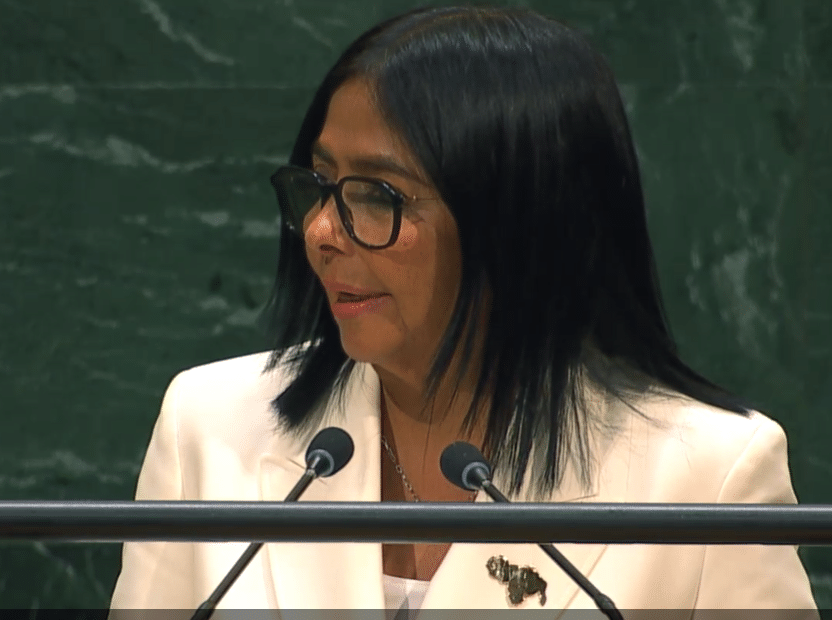
    With a landmark International Court of Justice ruling on the decades-long Guyana-Venezuela border dispute just months away, Venezuela’s acting President Delcy Rodriguez used her first address to the United Nations General Assembly (UNGA) on September 23, 2026, to publicly push for a negotiated bilateral settlement of the conflict over the resource-rich Essequibo Region.

    Addressing delegates at the 81st UNGA session – what she described as the global headquarters of international law – Rodriguez wore a controversial brooch depicting Venezuela’s territorial map that includes the entire Essequibo Region, a 55,000-square-mile territory that makes up two-thirds of Guyana’s total sovereign land area. In her remarks, Rodriguez reaffirmed Venezuela’s long-stated territorial claim to the region and extended an official appeal to Guyana to return to direct bilateral talks, aligned with the terms of the 1966 Geneva Agreement that governs the dispute.

    “Agreements that last the longest are those that emerge from bilateral negotiations,” Rodriguez told the assembly. “They last longer and function better than those imposed by external bodies.”

    This public address marks the first time Rodriguez has laid out her administration’s position on the dispute at a major global forum, coming nine months after former Venezuelan President Nicolas Maduro was ousted from power by U.S. military intervention in January 2026. In a notable shift from the rhetoric of the Maduro era, Rodriguez did not launch criticism of the United States or ExxonMobil – the energy giant that has discovered massive oil reserves in Guyana’s offshore waters adjacent to the dispute zone – a departure from her previous speaking appearances alongside Maduro.

    Instead, Rodriguez praised a newly signed bilateral cooperation agreement between Washington and Caracas, calling it “one of the most all-encompassing and significant ever signed” between the two nations. She added that the deal will support regional energy balance and strengthen Venezuela’s struggling economy, and publicly thanked U.S. President Donald Trump for his administration’s willingness to restore full diplomatic relations and cooperation with the new Venezuelan government.

    Venezuela has long held that the 1966 Geneva Agreement requires a negotiated settlement to the dispute and rejects the ICJ’s authority to rule on the validity of the 1899 Arbitral Tribunal Award that established the current Guyana-Venezuela border. Despite this objection, Caracas has participated fully in all procedural stages of the case that Guyana brought to the ICJ after decades of stalled progress through the UN Good Offices mediation process. The UN Secretary General formally referred the dispute to the ICJ in accordance with the Geneva Agreement, and the court previously ruled it has jurisdiction to hear Guyana’s challenge on the legality of the 1899 border award. A final ruling is expected in early 2027.

    The United States has already signaled it stands ready to support both nations in negotiating a final maritime boundary settlement once the ICJ issues its territorial ruling. Venezuela is not a party to the United Nations Convention on the Law of the Sea, meaning any maritime delimitation will require direct bilateral negotiation. For its part, ExxonMobil has indicated it plans to resume oil exploration activities in the Stabroek Block, located in waters closer to the Venezuelan border, once the World Court issues its final ruling.

    Notably, Guyana already maintains close strategic ties with the United States and is a participating member of the Trump administration’s Shield of the Americas anti-narcoterrorism initiative, adding an additional layer of geopolitical complexity to the ongoing dispute.

  • Garifuna Recognition Has Yet to Deliver Real Results

    Garifuna Recognition Has Yet to Deliver Real Results

    Dated September 23, 2026, a long-simmering debate over indigenous rights in Belize has reignited following a misstep by Prime Minister John Briceño, putting the unmet demands of the country’s Garifuna community back in the national spotlight. Though Garifuna culture is woven deeply into Belize’s national fabric — visible everywhere from local rhythms and traditional cuisine to national holiday celebrations — community leaders warn that symbolic recognition has not translated to the substantive policy changes and tangible support the group needs to thrive.

    The recent controversy began when Briceño made an offhand remark during a conversation with internationally known soca artist Machel Montano, claiming the entire Garifuna population of Belize numbered only between 3,000 and 4,000 people. In reality, official demographic data places the community at roughly four percent of Belize’s total population, a count that amounts to more than 16,000 people. After public pushback, the prime minister apologized for the statistical error and extended an invitation to meet with leadership from the National Garifuna Council (NGC) to discuss the community’s core concerns. But for NGC President Alex Nolberto, the inaccurate population count exposed a far deeper gap in how the Garifuna people are prioritized by the Belizean government.

    “Look at the value that the Garifuna or Garinagu bring to Belize, and these can be itemized, and it’s gonna take a couple pages. Now, you look at what has been lost from the same Garinagu. We look at the language, we look at the dance, we look at Garifuna dual, our way of life, which is the same thing that we cherish that bring economic value to Belize and bring prominence to Belize. We have to protect those things,” Nolberto explained in an interview with News Five reporter Britney Gordon.

    Decades after Garifuna culture gained widespread national recognition as a core part of Belizean identity, longstanding grievances remain unaddressed. The most critical demands center on legal recognition of the Garifuna as an indigenous people, protection of their traditional ancestral lands, expanded economic opportunity for community members, investment in youth development, and targeted support for language preservation. A memorandum of understanding outlining these priorities has been stuck in legislative limbo for years, leaving the community without formal legal standing or access to the government funding needed for community development.

    Nolberto emphasized that public celebrations and cultural showcases — while important for raising awareness of Garifuna heritage — only address the “soft aspects” of the community’s existence. What the group needs now is hard legal and policy change to secure its long-term survival. “These are the soft aspects of our existence. What we now need to be able to migrate and have these, these very difficult conversations, surrounding things like our memorandum of understanding, which is still in the pipeline, that will cement our place in our legislation, that would legally recognize us as indigenous people, and that will bring the resources that we so need to develop our people,” he said.

    Rather than rejecting cultural recognition entirely, Nolberto frames it as a strategic starting point to advance broader, more consequential goals. Garifuna music, art and cultural tourism already draw millions in annual revenue for Belize’s economy and boost the country’s global profile, a strength community leaders plan to leverage to open doors for conversations on more pressing policy issues. “We have to start with what works. We are renowned for our music and dance. We have prominent artists. We are global as a people. So we will work with that aspect of the culture to move the other areas that we think have been neglected, the areas that we think are critical. So we promote and we appreciate the recognition for our artistry, and so we continue to work on those things that will get our foot in the door to have these serious conversations,” Nolberto noted.

    To amplify their collective advocacy, Garifuna leaders have also joined forces with other indigenous groups across Belize through the revitalized Belize National Indigenous Council. Nolberto argues that cross-group unity is critical to amplifying indigenous voices and pushing for shared reforms, particularly around land rights and formal legal recognition. As the planned meeting between Prime Minister Briceño and NGC leadership approaches, the Garifuna community remains focused on turning decades of symbolic celebration into tangible, lasting progress that protects both their heritage and the livelihoods of current and future generations.

  • State to appeal High Court ruling on ex-CLICO boss

    State to appeal High Court ruling on ex-CLICO boss

    A decades-long high-profile fraud case involving a former top Caribbean insurance executive took a dramatic new turn this week, when a High Court judge struck down a lower court’s ruling that would have sent Leroy Parris, ex-chairman of defunct CLICO Life Insurance Company, to trial on multi-million-dollar theft and conspiracy charges.

    The legal battle stretches back to 2012, when state prosecutors first laid four separate charges against Parris. Prosecutors allege that between late 2008 and mid-2009, Parris stole $3.33 million from CLICO International Life Insurance Limited, conspired with others to defraud the company by inducing it to transfer the funds to law firm Thompson and Associates, laundered the stolen sum, and later conspired to evade tax authorities by failing to file 2009 income tax returns. The case moved slowly through the courts for more than a decade, until 2023, when Magistrate Manila Renee ruled there was enough evidence to warrant a High Court trial and committed Parris for judgment.

    Rather than proceeding to trial, Parris’s legal team, led by prominent King’s Counsel Hal Gollop and attorney Neil Marshall, challenged the committal via judicial review. They named Magistrate Renee, the Attorney General, and the Director of Public Prosecutions (DPP) as respondents in the challenge, and successfully secured an interim injunction to halt the indictment. On Wednesday, Justice Michelle Weekes delivered her final ruling on the challenge from the No. 8 Supreme Court, siding entirely with Parris and issuing a writ of certiorari — a legal order that allows a higher court to invalidate a lower court’s ruling — to quash Renee’s committal decision.

    In her ruling, Justice Weekes went further, barring the magistrate from sharing case documents with the DPP and the Supreme Court Registrar, and issued a permanent injunction blocking the DPP from moving forward with the indictment against Parris. She explicitly ruled that Magistrate Renee’s finding of sufficient evidence to try Parris was invalid, on the grounds that the lower court’s actions violated both the constitution and core principles of natural justice. The judge has stated that full written reasoning for the decision will be released at a later date. The case has been adjourned until February 23, 2027, to allow for legal submissions on claims for damages and court costs.

    Speaking to reporters immediately after the ruling was handed down, Gollop described the years-long legal fight as grueling, saying his team felt validated by the High Court’s decision. “It has been a long and arduous task and we feel vindicated by the decision and look forward to the further progress of the matter so that we may bring it to a final conclusion,” Gollop said. “My client is very happy that this act of injustice has been given the stamp of disapproval by the court and we are happy with the outcome.”

    State legal representatives, however, have made clear that the case is far from over. King’s Counsel Roger Forde, who led the government’s legal team alongside attorneys Justin Nurse and Rene Forde, told reporters that the government intends to file an appeal of the High Court’s ruling, insisting Parris must answer to the charges before a jury. “The matter is not yet over,” Forde said. “An appeal will be filed and at some point in time, Mr Parris will face a jury. There is no merit at all in the decision. In fact, no reasons have been given for the decision.”

    Forde also noted that the challenge to Parris’s committal had previously been dismissed by another judge, arguing that the ruling’s flaws made it a clear candidate for appellate review. He added that the state would file its appeal application as soon as Justice Weekes releases her full written reasons for the decision, setting the stage for another years-long round of legal proceedings in one of the Caribbean’s most high-profile corporate fraud cases.

  • Viral Carnival Video Triggers Official Condemnation

    Viral Carnival Video Triggers Official Condemnation

    In the wake of a widely circulated social media video capturing inappropriate, indecent gyrating dance movements by women performed on a young boy during the Orange Walk carnival, Belize has erupted in public and official outcry over failures to protect children from harm and sexual exploitation. The disturbing footage, which spread virally across platforms in recent days, has reignited long-simmering conversations about adult responsibility for safeguarding minors in public community events.

    Within days of the video going viral, two top government bodies released official statements condemning the incident and highlighting the urgent need for systemic changes to protect children. The Ministry of Religious Affairs emphasized in its official release that under no circumstances should children be placed in environments where inappropriate sexual conduct is promoted, accepted as normal, or framed as a form of entertainment. This principle, the ministry noted, holds true regardless of the event or setting, from large cultural celebrations to small private gatherings.

    Alongside the ministry, the Office of the Special Envoy for the Development of Families and Children echoed this condemnation, stressing that all public festivals and cultural gatherings must be safe, respectful spaces that uphold children’s right to dignity. The office also raised alarm about a secondary harm of the incident: the unregulated recording and mass sharing of the exploitative footage across social media. Officials warned that normalized inappropriate behavior by adults directly shapes what children learn and accept as acceptable conduct, creating long-term harmful norms for young people. To counter this, the Special Envoy has called on all parents and guardians to prioritize teaching children about personal bodily boundaries and appropriate social interactions from an early age.

    The official statements follow a forceful rebuke from the National Evangelical Association of Belize, which was one of the first major organizations to condemn the incident. The association issued an ultimatum for carnival organizers: implement meaningful reforms to root out inappropriate, exploitative content from future events, or risk losing public support and the right to host the celebration. The incident has now pushed child protection and event regulation to the top of the national agenda, with community leaders calling for new safety guidelines for all large public events involving minor participants in Belize.

  • Ice machine back in action ‘within days’

    Ice machine back in action ‘within days’

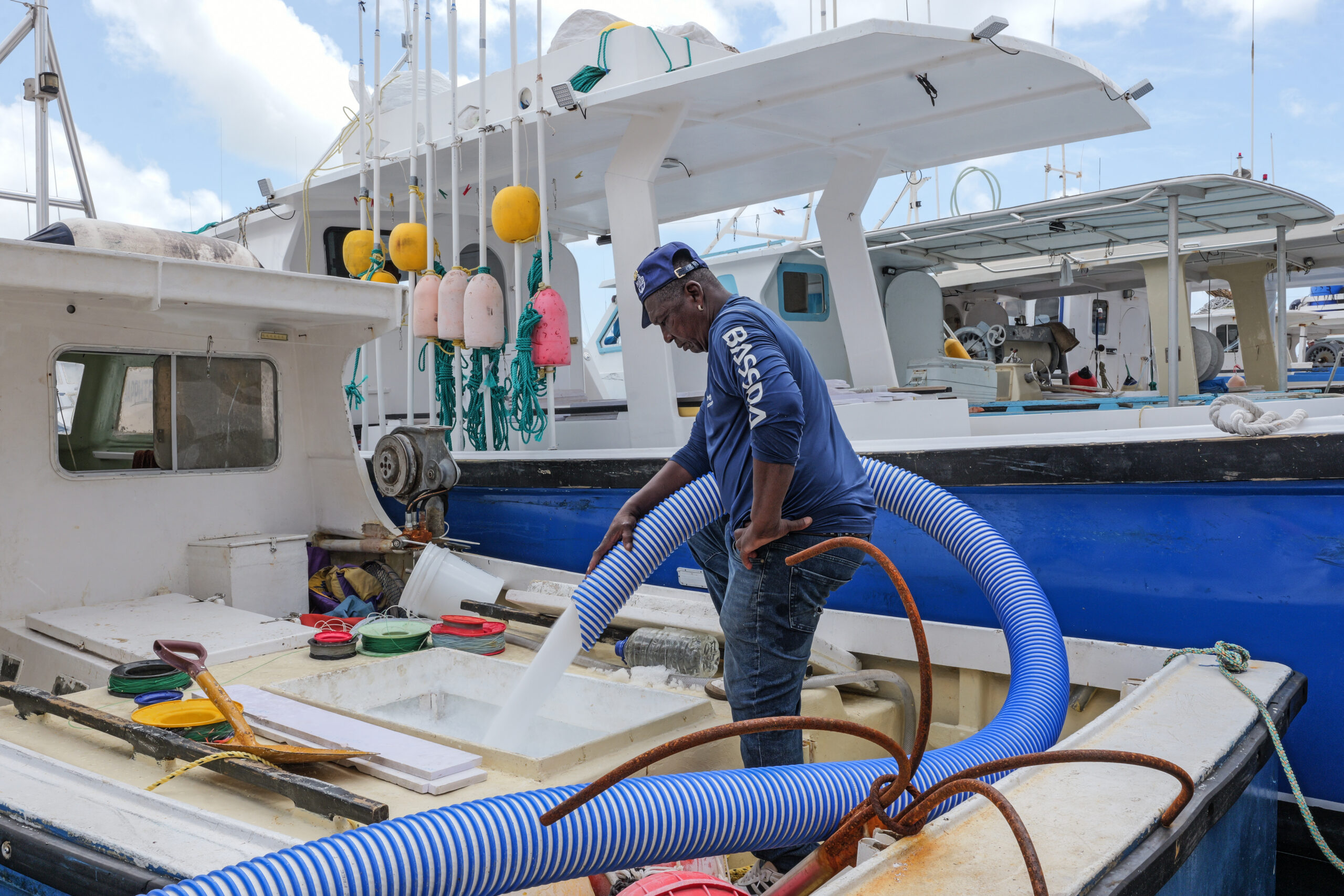
    Barbadian fisheries authorities are on track to restore full functionality to the decades-old ice machine at the Bridgetown Fisheries Complex within the next 48 to 72 hours, according to senior government officials, who have also outlined a long-term plan to fully replace the ageing infrastructure with a new high-capacity unit funded through an international development initiative.

    Deputy Prime Minister and Minister of Fisheries Santia Bradshaw shared the update Wednesday during a scheduled tour of several island markets, including the Millie Ifill market at Weston, Paynes Bay Market, the Berinda Cox market at Oistins, Speightstown Market and Half Moon Fort Market. During the tour, Bradshaw spoke with reporters about the dual challenges the government faces: advancing large-scale national development projects while addressing urgent day-to-day maintenance issues that directly impact the livelihoods of local fisherfolk. Among these ongoing challenges, the repeated breakdown of the 40-plus-year-old ice machine at the Bridgetown Complex has emerged as the most pressing concern for fishing operators.

    “This equipment at the Bridgetown location is more than 40 years old, and it breaks down with increasing frequency,” Bradshaw explained. “We have been forced to carry out constant emergency repairs just to keep it running. We previously announced our intention to replace core components of the system to get it working reliably, but the advanced age of the entire infrastructure has created ongoing issues even after a new compressor was installed.”

    To address the current crisis, Bradshaw said the government has taken two key steps: expanding the in-house technical maintenance team and contracting a private engineering firm to carry out urgent repairs. Many of the veteran technicians who long maintained the Bridgetown Fisheries Complex have retired or passed away in recent years, including a long-serving staff member, Mr. Boyce, who died just recently. That left gaps in on-site capacity that officials have moved quickly to fill, before bringing in Click Engineering to lead the complex repair work.

    Jason Best, Managing Director of Click Engineering, walked reporters through the scope of the repair work on the ice machine’s two independent systems. “The first system had low oil pressure caused by a mismatch between the new compressor and the original 40-year-old piping. All the small internal orifices kept getting clogged with debris, so we carried out an extensive full oil change and replaced all filters and strainers. We got that first system up and running yesterday, and it is operating normally as of now,” Best said.

    The second system presented more complicated challenges, he added. After the compressor was rebuilt, technicians found major leaks in the core shut-off valves. Teams attempted to reseat the old valves to fix the leaks, but the age of the components made that solution unworkable. “Right now, we are in the process of replacing those damaged valves,” Best said. “We have welders on site to install the new components, which should take another one to two days. Once that work is complete, we will recommission the system, and we expect it to be fully operational within another two days.”

    Bradshaw noted that while emergency repairs will resolve the immediate shortage, the government has been working for several months to secure a full replacement of the outdated machinery. The process requires first finalizing technical specifications for the new unit and securing dedicated funding before procurement can begin. Officials are also conducting a full audit of all existing equipment at the complex — from processing rakes to weighing scales — to ensure that all on-site infrastructure works reliably once the new ice machine is installed.

    To mitigate disruption for fisherfolk while repairs are ongoing, Bradshaw said the government has already established formal backup arrangements with two private ice producers, Wolverine and Glacier Ice, to supply ice to fishing operations. The temporary arrangement does require fisherfolk to coordinate transport of ice to their vessels, which is less convenient than accessing ice directly on site, but additional support is available to ease the process.

    Michelle Wiggins, Acting Manager of the Bridgetown Fisheries Market, confirmed the machine has been out of service for three weeks, and outlined the coordination process for fisherfolk needing ice. Operators can send requests via a dedicated WhatsApp account to her or the on-duty officer, who will arrange for supply. Fisherfolk also have the option to place orders directly with Wolverine for delivery to their boats. The government has also deployed Community Vacation (CV) workers from the Ministry of Fisheries to assist with loading ice onto vessels, so fisherfolk only need to confirm their timing and quantity to access support. For orders through Glacier Ice, the Fisheries Division takes care of placing the order and covering the cost of transport to the complex, Wiggins added. As of this week, four of the 15 registered boats that regularly require ice have confirmed their needs and delivery dates, with two more expected to submit requests shortly.

    Looking ahead to the permanent solution, Acting Chief Fisheries Officer Christopher Parker revealed that the government is already in the process of acquiring a 40-foot containerised ice machine, funded by the government of Japan and managed through the United Nations Development Programme (UNDP) as part of the national Coastal Resilience Project. The new unit will be installed at the Bridgetown Fisheries Complex, and officials are currently exploring whether the project’s budget can accommodate a second unit for the Oistins facility, though that additional purchase has not been finalized.

    The new containerised machine will have the capacity to produce up to 20 tonnes of ice per day, Parker said. It will supplement existing ice supply and act as a reliable fail-safe to prevent future disruptions to ice access for vendors and fishing vessels operating out of Bridgetown.

  • Delisha Estrada’s Family Struggles Through Heartbreak and Loss

    Delisha Estrada’s Family Struggles Through Heartbreak and Loss

    Five years from now, in a case that has shattered a tight-knit family in Belize’s Cayo District, an official autopsy has confirmed 21-year-old Delisha Estrada died by homicide — a finding that turned a family’s desperate search for answers into an active police murder probe. For Estrada’s mother, Locett Vanegas, the official ruling only validated the grim suspicion she had carried since her daughter’s sudden disappearance.

    As law enforcement continues working to identify the perpetrator and uncover the motive behind the killing, Estrada’s family is left picking up the pieces of a life violently torn apart. At the heart of their struggle is Estrada’s young son, who will now grow up without his mother’s guidance, love and presence. While investigators chase leads to deliver long-overdue justice for the young woman, Vanegas faces a far more personal, heart-wrenching challenge: helping her grandson process a tragedy no child should ever be forced to confront.

    In an exclusive interview with local outlet News Five, Vanegas opened up about the crippling heartache of losing her child, the lingering unanswered questions that continue to haunt her family, and the quiet strength they are clinging to amid overwhelming grief.

    “I really and truly am still not satisfied. I still can’t get any closure, because I knew from the beginning that my daughter was murdered,” Vanegas shared in a phone interview with the outlet. “It’s so hard. It’s still hard, especially because we have the baby to care for. Every day he asks for his mom, and we don’t know how to tell him what happened. How do you explain that to a child?”

    Vanegas noted that while she knows the person connected to her daughter’s death, she is focusing her energy on caring for her grandson alongside the rest of the family. “I can’t do anything to bring my daughter back. All I can do now is cherish her son,” she said. “This hurt will stay with me forever, but life goes on, and I have to keep going for him and for me. I just want the baby to be surrounded by love right now — that’s all I need or want.”

    She also issued a public plea to communities: “I just want everybody to know that once you see a child in an abusive situation, do your best to get them out of it. That’s all you can do.”

    Reporters reached out to the Williams family for comment in connection with the case. While the family requested privacy as they grieve their own loved one, they extended sincere condolences to the Estrada family and emphasized that supporting and caring for the young orphaned boy must be the top priority moving forward.

    This report is adapted from a transcript of an evening television newscast; all statements from Vanegas, originally delivered in Kriol, have been transcribed using a standardized spelling system for accessibility.

  • Zeer sterke El Niño kan komende maanden leiden tot 451.000 extra hittegerelateerde sterfgevallen

    Zeer sterke El Niño kan komende maanden leiden tot 451.000 extra hittegerelateerde sterfgevallen

    As an unusually intense El Niño event builds in the tropical Pacific Ocean, a groundbreaking new analysis from the University of Chicago’s Climate Impact Lab has delivered a stark warning: the natural climate phenomenon could lead to approximately 451,000 additional heat-related deaths across the globe over the coming six months. Researchers emphasize that this figure is a model-based risk assessment, not a precise prediction of exact fatalities, calculating excess mortality against baseline temperature averages for a typical year.

    The analysis currently focuses on the period from September 2026 through February 2027, but the team warns that the impacts of record-breaking heat may linger long after this window, particularly as spring and summer arrive in the Northern Hemisphere. The warning comes as leading meteorological bodies around the world confirm that El Niño is rapidly gaining strength.

    Early this month, the World Meteorological Organization (WMO) stated there is a near-certain chance the event will persist through February 2027, and is on track to intensify into a rare “strong event” that will peak by the end of 2026. The U.S. National Oceanic and Atmospheric Administration (NOAA) echoes this assessment, reporting that sea surface temperatures in parts of the equatorial Pacific are already more than 3 degrees Celsius above the long-term average. NOAA estimates the probability of this event ranking among the most intense El Niños on record reaching 75% for the October to December 2026 period.

    El Niño reshapes global atmospheric circulation patterns, leading to drastically different impacts across regions: some face deadly extreme heat and crippling drought, while others are hit by catastrophic heavy rainfall and flooding. For the upcoming event, Climate Impact Lab projects global average land temperatures will sit 1.2 degrees Celsius above non-El Niño baselines, with the number of extreme heat days rising by 44% compared to average years.

    The worst impacts are projected to fall disproportionately on low-income, warmer regions across Africa, Asia, and South America. The Sahel region is expected to see roughly 66,800 excess heat-related deaths, with Nigeria hit hardest at approximately 31,400 additional fatalities, followed by Sudan with 17,500. Other heavily impacted nations include Indonesia (19,300), India (15,800), and Brazil (13,300).

    Michael Greenstone, co-founder of the Climate Impact Lab and a co-author of the study, explained that vulnerability extends beyond raw temperature increases. “If you already live in a warm place, those extra couple of degrees are far more dangerous,” he said. Additional factors shaping mortality risk include population size, population exposure to unregulated high temperatures, access to healthcare, electricity and cooling, and governmental capacity to implement adaptive measures. Lower-resource nations face compounded risk, as extreme heat often overlaps with pre-existing crises in food security, energy access, and public health infrastructure.

    Notably, the 451,000 figure only accounts for excess heat-related mortality. The total health toll of the event could be far higher, as strong El Niños also trigger droughts, wildfires, extreme flooding, and disruptions to agricultural production that further strain food security across vulnerable parts of Asia and Africa. Earlier this month, the World Health Organization (WHO) warned that the 2026 El Niño will bring a wide range of interconnected health risks, urging nations to prioritize preparation for vulnerable communities and already overburdened health systems. The WHO notes that heat is already one of the leading causes of weather-related mortality globally, with an average of 489,000 heat-related deaths recorded annually between 2000 and 2019.

    While El Niño itself is a natural periodic cycle of ocean and atmospheric conditions in the tropical Pacific, not a direct product of anthropogenic climate change, it is unfolding on a planet already warmed significantly by human-caused greenhouse gas emissions. This means the baseline global temperature is already higher, amplifying the extreme heat impacts of even a natural El Niño event. The WHO confirms that combining El Niño with long-term climate change-driven warming significantly increases the probability of extreme heat events across most regions. Researchers stress they are measuring excess mortality against a baseline average year, rather than attributing every extreme temperature or death directly to El Niño.

    The 451,000 estimate carries important caveats: it is not an observed fact or a guaranteed outcome. Researchers produced the figure by combining historical temperature-mortality relationships across thousands of global regions with projected temperature trends for the coming months, leaving exact regional outcomes uncertain. External climate factors can either amplify or dampen El Niño’s impacts, and heat sensitivity varies across populations. The WMO adds that El Niño strength alone does not determine local weather, with conditions in the Indian and Atlantic Oceans also able to reshape regional impacts. As such, the study is framed primarily as a warning about the scale of potential risk, not an exact prediction of fatalities.

    Despite the grim projection, researchers note that there is still time for governments to act to reduce harm. Targeted preparedness measures including early extreme heat warnings, public cooling centers, improved workplace protections for outdoor laborers, and expanded healthcare capacity during heat events can cut mortality significantly. The WHO shares this conclusion, noting that most heat-related health impacts are predictable and preventable with timely, coordinated action. With El Niño projected to continue strengthening through the end of 2026 and persist at minimum through February 2027, the coming months are seen as a critical window for preparation to avoid preventable deaths.