博客

  • Wellness Week Pushes Healthier Everyday Choices

    Wellness Week Pushes Healthier Everyday Choices

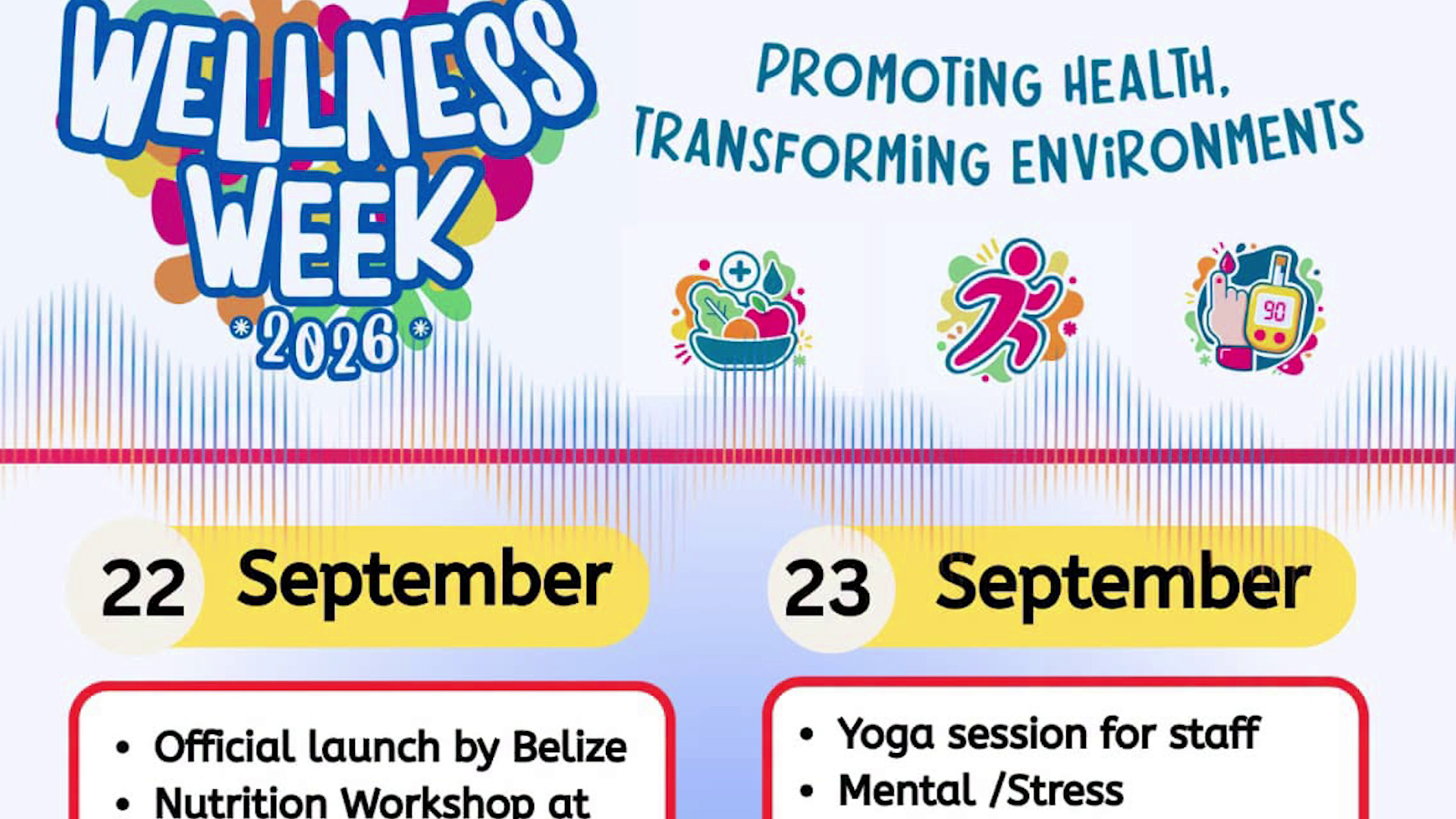
    Across Belize, the Ministry of Health and Wellness (MoHW) has kicked off its annual Wellness Week 2026, a nationwide campaign focused on redefining what wellness means for everyday life, going far beyond the walls of doctors’ offices and medical treatment. This year’s initiative centers on the understanding that long-term health is shaped by a combination of individual choices, daily habits, and the surrounding environments where people live, work, and connect with their communities.

    Kathleen Azueta Cho, Technical Advisor for Health Education at the MoHW, explained that sustainable public health cannot rely on treating illness alone. Instead, she argues that meaningful progress requires intentional work to embed wellness into daily routines and create spaces that make healthy choices easy and accessible for everyone. “Wellness isn’t just an individual responsibility,” Azueta Cho noted during the campaign launch. “Our homes, workplaces, and community spaces all shape the choices we can make. If these environments don’t support healthy habits, it becomes much harder for people to stick with them.” This year’s Wellness Week theme, “Promoting Health, Transforming Environments,” highlights that dual focus on individual action and systemic support.

    A key priority of this year’s campaign is expanding wellness access in workplaces, where most Belizean adults spend the majority of their waking hours. Health officials are calling on employers across all sectors to integrate small, sustainable wellness practices into regular workdays, rather than attempting costly overhauls. Simple changes like scheduled stretch breaks, guided yoga sessions, workplace health talks, and designated time for physical activity can create a culture that prioritizes both physical and mental health. Azueta Cho emphasized that these changes benefit employers as much as workers: healthy work environments reduce stress, cut down on unscheduled sick days, and boost overall productivity. “When workers feel supported, they are more focused, happier, and perform better,” she explained. “A culture of wellness doesn’t just help employees—it strengthens the entire organization.”

    Wellness Week features a full slate of free community activities hosted at public health centers across the country, including group yoga classes, interactive health fairs, and a soca jam session scheduled for Friday evening in Belmopan. A core event of the week is a national push for preventive screening, encouraging all Belizeans to get their key health numbers checked. Azueta Cho stressed that early detection through screening allows for earlier intervention, reduces the risk of long-term complications, and is a foundational part of preventive wellness.

    Unlike one-off health events, the ultimate goal of Wellness Week is to plant seeds for long-term change. Organizers want to encourage Belizeans to ask small, actionable questions about their own habits and surroundings: What small change can I make today to move closer to a healthier lifestyle? How can I adjust my space to better support my well-being? By framing wellness as an everyday journey rather than a single week of activities, the MoHW hopes to create lasting cultural change that improves public health across the nation for years to come.

  • Jehovah’s Witnesses Ease Blood Transfusion Rules

    Jehovah’s Witnesses Ease Blood Transfusion Rules

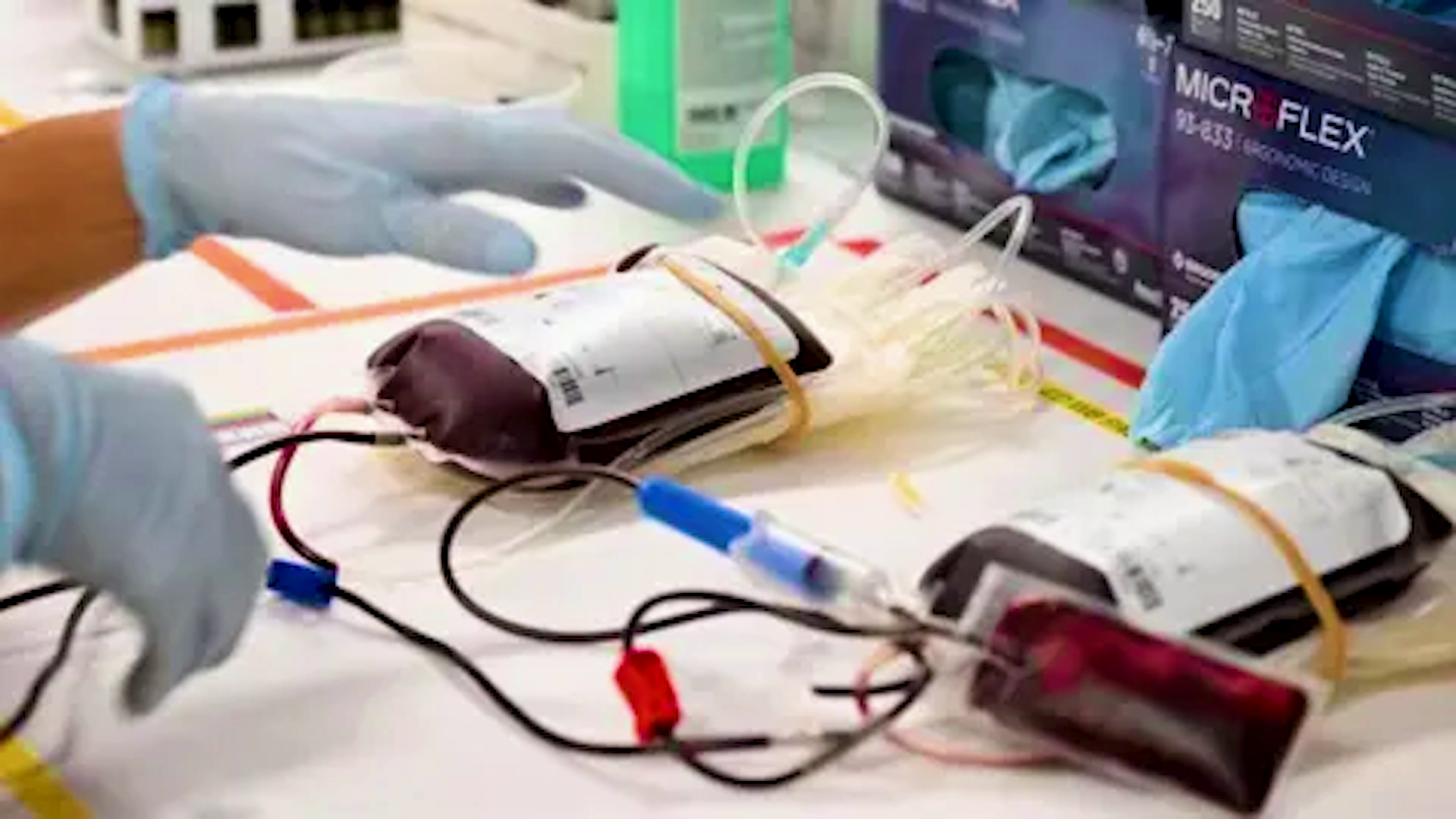
    After decades of binding religious prohibitions on blood transfusions for its global community, Jehovah’s Witnesses has announced a landmark shift to personal autonomy for members around four key blood components. The policy change, confirmed by the faith’s Governing Body earlier this month, leaves whole-blood transfusions banned, a core tenet the organization says remains unchanged. This update follows years of public debate around the intersection of religious conviction and life-saving medical care, sparked in part by a high-profile 2016 death in Belize that put the policy in the national spotlight.

    In that 2016 case, Emily Guy, a long-time public servant and Jehovah’s Witness missionary, suffered catastrophic injuries when she was struck by an SUV near Novelo’s Bus Terminal in Belize City, which required the amputation of her leg. Guy declined a life-saving blood transfusion in line with the faith’s former strict rules, and died less than 24 hours after emergency surgery. Then-Assistant Commissioner of Police Chester Williams noted at the time that while the driver of the vehicle retained full legal responsibility for the accident, Guy’s refusal of transfusion based on her beliefs was the direct factor that turned her injuries fatal. Guy’s death was far from an isolated incident: for years, believers have faced impossible choices between adhering to religious doctrine and accepting medical intervention that could save their lives during severe illness or traumatic injury.

    Under the updated guidance, members are now permitted to make individual decisions about accepting or donating the four primary blood components, even as the prohibition on whole-blood transfusions remains intact. International spokesperson for Jehovah’s Witnesses Paul Gillies emphasized that the core commitment to biblical instruction remains unchanged. “Jehovah’s Witnesses hold firmly to their understanding of the Bible’s command found in Acts fifteen verse twenty to abstain from blood,” Gillies explained. “In keeping with what is a deeply held conviction, we do not accept transfusions of whole blood, nor do we donate whole blood to be transfused to others.”

    Gillies clarified that the policy adjustment stems from the fact that the Bible does not explicitly address the separation of whole blood into its individual components, a development that aligns with incremental shifts the faith has made in recent decades around blood fractions and the use of an individual’s own blood during surgical procedures. “Each witness must decide whether or not to donate blood for the clearly expressed purpose of providing components or fractions for use by another person,” he said, adding that the change places the choice firmly in the hands of individual conscience rather than institutional mandate.

    For medical providers and patients alike, blood transfusions are often the critical dividing line between survival and death in emergency care, making the longstanding ban one of the most widely debated theological positions of Jehovah’s Witnesses. Gillies noted that the faith community remains appreciative of medical providers who have adapted care to respect their previous restrictions, pointing to ongoing medical advances that have created effective alternatives to full blood transfusions. Church leaders have stressed that the change was driven by scriptural interpretation, not external pressure from the medical community, but the shift opens new possibilities for believers facing life-or-death medical decisions. Where Emily Guy had no choice but to adhere to the full ban in 2016, modern believers in identical situations will now be able to make their own decision based on personal conscience. This report was delivered by Britney Gordon for News Five.

  • Belize’s Celebrates 50 Years of Dollar Stability!

    Belize’s Celebrates 50 Years of Dollar Stability!

    On September 23, 2026, Belize celebrates a landmark economic milestone: 50 years of maintaining its fixed currency peg, a policy that has kept two Belize dollars pegged at parity with one U.S. dollar. This decades-long arrangement has become a foundational pillar of daily life for all Belizeans, influencing everything from the sticker price of groceries at local markets to credit card transactions, cross-border travel, and international online purchases. What many casual observers may overlook, however, is that this consistent exchange rate did not happen by accident: it is the product of 50 years of deliberate fiscal discipline, tough policy tradeoffs, and consistent, steady macroeconomic management. To mark this golden anniversary, three of Belize’s top economic and political leaders have opened up about the work required to preserve the peg, its profound impact on ordinary citizens, and the steps that must be taken to protect this critical institution for future generations.

  • Young Filmmaker Brings Belizean Childhood to Screen

    Young Filmmaker Brings Belizean Childhood to Screen

    At only 22 years old, emerging Belizean creative Niya Villanueva is ready to share the nostalgic charm of her country’s childhood experiences with global audiences through her debut short comedy, *Nine Ninety-Nine*. What began as a concept rooted in the familiar rhythms of growing up in Belize has evolved into a heartfelt, locally rooted project that aims to celebrate national culture while creating collaborative opportunities for domestic businesses. Produced under Villanueva’s own production banner Good Gyal Productions, the 10- to 15-minute comedy follows two young siblings, Junior and Rella, on a wild, whimsical quest to earn enough cash to purchase their dream gaming console.

    The story opens with the pair glued to their screen, fully absorbed in their digital game, until their fed-up mother intervenes by destroying the console and ordering them outside to experience real life. What follows is a series of chaotic, silly childlike schemes to raise the needed funds, a journey that ultimately leads the siblings to discover that unstructured outdoor play and shared adventures hold far more joy than any digital pastime. For Villanueva, the project is far more than a simple comedy—it is a love letter to the childhood that generations of Belizean kids have experienced, a callback to days spent running outside, exploring local neighborhoods, and getting into harmless mischief far from the glow of a screen.

    In a unique twist that aligns the film with Belize’s local economic ecosystem, Villanueva is opening partnership opportunities for Belizean businesses of all sizes to integrate their brands organically into the production. Rather than reserving advertising space exclusively for large corporations with massive marketing budgets, she has structured three distinct partnership tiers tailored to different budget sizes and desired exposure levels, creating space for both small local shops and larger national companies to get involved. This collaborative model not only provides the production with much-needed funding but also gives businesses a chance to connect with audiences through a culturally resonant local project.

    Interested businesses can find full details about partnership opportunities on the production’s official website, or reach the team directly via WhatsApp at 606-2608. Currently, the project is in its active funding and pre-production phase, with casting scheduled to kick off across Belize in November 2026. Villanueva and her team are targeting a public release of the completed short film in March 2027, with plans to screen the work at regional film festivals and make it accessible to local audiences across the country first. For a young emerging filmmaker, *Nine Ninety-Nine* represents both a personal creative vision and a new model for how small independent productions can collaborate with local communities to bring authentic cultural stories to the screen.

  • Saint Lucia school sports season officially launched

    Saint Lucia school sports season officially launched

    On Wednesday, stakeholders from across Saint Lucia’s sports and education sectors gathered at the LOC Conference Room inside the Daren Sammy Cricket Ground to officially kick off the 2026-2027 national school sports season. The launch event, attended by senior officials from the Ministry of Education, Youth Development and Sports, marked a deliberate shift from the scheduling that has defined previous seasons, bringing the official opening forward weeks earlier than the traditional timeline.

    For years, schools, athletes and local communities have faced delays in receiving finalized schedules and season details, often long after the academic term had gotten underway. Ministry representatives framed this early kickoff as an intentional, positive step forward to improve planning and engagement for all participants. Alongside the opening announcement, officials also unveiled the full, finalized calendar of competitions for the upcoming season, giving teams and coaches ample time to prepare.

    A core strategic priority for the 2026-2027 season is amplifying the visibility of young student-athletes through targeted social media outreach. A new branded account, School Sports 758, has been launched to share personal stories, competition highlights and athlete achievements across digital platforms. Organizers hope the increased exposure will build wider public excitement for school sports, lift up emerging local talent, and draw in much-needed corporate sponsorships and long-term community partnerships.

    In another major update, the season will expand its athletic offerings beyond longstanding traditional competitions, which include fan favorites like cricket, football, and track and field. For the first time, esports will be added as an official competitive discipline. Organizers are also rolling out new developmental programs for lacrosse and teqball, two globally fast-growing sports that have gained increasing traction among young athletes in recent years.

    Speaking at the launch, Education, Youth Development and Sports Minister Kenson Casimir underscored the irreplaceable role of school sports in nurturing grassroots athletic talent across the island. He pointed to some of Saint Lucia’s most celebrated sports stars as proof of the system’s impact, noting, “The Daren Sammys of the world, the Jady Emmanuels of the world, the Julien Alfreds of the world, Johnson Charles; they all have this one thing in common: they came through our school sports programmes.”

    Casimir added that the foundational level of school sports is often underrecognized as a driver of national athletic success, emphasizing, “I dare say sometimes we forget that school sports is perhaps the most important level of sports development on our island. For us as a nation to see young people stay on the right track, to see them attracted to the right track, we need more involvement. Not just from corporate Saint Lucia, but we need more involvement from our communities.”

    The 2026-2027 launch comes on the heels of a landmark year for Saint Lucia’s youth athletes. The 2025-2026 season delivered historic results, including a victory at the Windward Islands School Games and new personal and national milestones at the CARIFTA Games, CARIFTA Aquatics Championships, and Central American & Caribbean Games.

    Competitive action for the new season will get underway on November 2, with the opening matches of the Inter-District Primary School Football tournament.

  • Jaquan Shaw Charged With Murder, Two Counts of Attempted Murder in Bathlodge Shooting

    Jaquan Shaw Charged With Murder, Two Counts of Attempted Murder in Bathlodge Shooting

    In a developing criminal investigation out of the Eastern Caribbean, law enforcement authorities in Antigua and Barbuda have secured formal charges against a 20-year-old local man connected to a deadly mass shooting that left one young person dead and two others injured earlier this week.

    The Royal Police Force of Antigua and Barbuda’s Office of Strategic Communications confirmed in an official media release Wednesday, September 23, 2026, that Jaquan Shaw, a resident of the Cashew Hill neighborhood, faces one count of murder and two counts of attempted murder for the September 21 incident in Bathlodge.

    According to preliminary investigative details, the violence unfolded just after 11:30 p.m. at a private residential property in the Bathlodge community. At the time of the attack, multiple people were gathered inside the home when three individuals wearing masks forced their way into the building and opened fire, releasing multiple rounds into the residence.

    First responding police officers arrived at the scene within minutes after receiving multiple emergency calls about the active shooting. Once on site, they found 20-year-old Saquania Anthony, also of Bathlodge, unresponsive with multiple apparent gunshot wounds. Emergency medical personnel pronounced Anthony dead at the scene.

    Two other victims—24-year-old Kelvin Samuel and 13-year-old Joshua Meade, both from Bathlodge—also suffered gunshot injuries during the attack. They were rushed by emergency transport to the Sir Lester Bird Medical Centre, the island nation’s main public hospital, to receive urgent medical care. As of the latest police update, no further information has been released on their current conditions.

    In the hours following the shooting, law enforcement launched an intensive manhunt for the suspects connected to the attack. Shaw was taken into police custody as investigators built their case against him, and he has now been formally charged with all three criminal offences connected to the incident.

    Police officials confirmed that Shaw is scheduled to make his first court appearance on the charges before the end of the week. The two other suspected masked intruders remain at large as of Wednesday, and investigations into the attack are still ongoing.

    In a statement accompanying the announcement of charges, the Police Administration of Antigua and Barbuda extended public gratitude to community members who have supported the investigation so far. Officials thanked the general public for their ongoing assistance, patience and cooperation as the case continues to move forward, and have asked that anyone with additional information about the attack or the whereabouts of the other two suspects contact local law enforcement immediately.

  • Prevention urged alongside school-fight discipline

    Prevention urged alongside school-fight discipline

    As the trend of staged, filmed school fights shared across social media continues to grow, a leading behavioural scientist has issued a critical warning: punitive discipline alone is not enough to curb this dangerous youth behaviour. Professor Dwayne Devonish, a researcher at the University of the West Indies, is urging education leaders to pair the Ministry of Education Transformation’s strict zero-tolerance policy with proactive early intervention, confidential student reporting systems, and targeted psychological support to tackle the root of the problem.

    His comments come in direct response to the ministry’s recent public statement condemning the spread of staged fight videos and threatening severe disciplinary action for all students involved – from the combatants to the organisers, videographers and users who upload content to social platforms. After confirming multiple instances of pre-planned, filmed altercations being shared online, ministry officials reaffirmed their hardline zero-tolerance stance, making clear that any student linked to these incidents will face formal disciplinary consequences.

    Professor Devonish argues that this emerging form of youth aggression is fundamentally different from traditional spontaneous school fights, reshaped entirely by the reach and dynamics of digital social media. “When school fights are filmed and circulated online, we’re not just dealing with a physical conflict between two students,” he explained in an interview with Barbados TODAY. “We have the physical harm, but we also have a built-in audience, the permanent recording, widespread sharing, public comments, and even social status gained from the viral content. Psychologically, that completely shifts the dynamics of the behaviour.”

    He points to the intersection of adolescent developmental stages and social media’s feedback loops as a particularly dangerous combination. Adolescents are still developing impulse control and emotional regulation, and social media platforms are structured to reward attention-grabbing content. When a staged fight video earns views, likes and comments from peers, it creates immediate social reinforcement that encourages repeat behaviour. Even minor conflicts rooted in perceived disrespect or embarrassment can be amplified by this digital system, turning a small disagreement into a pre-planned viral event.

    While Professor Devonish fully supports the ministry’s commitment to rejecting and de-normalising school violence and the recording of it, he stresses that zero tolerance does not mean zero understanding of why the behaviour occurs. Relying solely on increased school surveillance or policing of student behaviour will fall short, he argues, especially when most of the filming and sharing happens on personal student devices that schools cannot easily monitor or control.

    Instead, he advocates for a balanced approach that combines clear, enforceable rules with preventative measures. “We cannot police our way out of this problem. Strong policy and clear consequences are necessary, but prevention is just as critical. The most effective intervention happens before the first punch is ever thrown,” he said.

    To stop planned fights before they start, Professor Devonish recommends that schools create discreet, confidential reporting channels that let students safely share information about upcoming altercations without fear of being targeted or judged. “Schools can’t predict every planned fight, but they can create systems to respond fast when students come forward. If students know exactly who to contact and know their report will stay confidential, they are far more likely to speak up before violence occurs,” he explained.

    Ministry officials have noted that several initiatives to promote positive student behaviour are already in place across schools, including the Positive Vibe programme, Community Service Learning, and other character-building activities designed to boost student resilience. Officials also emphasized that the viral fight trend is not widespread, even as they reiterated that any single act of school violence remains unacceptable.

    Professor Devonish acknowledges that existing social-emotional learning programmes can be effective, but he says addressing the problem requires broader systemic action. “These programmes work to prevent violent behaviour, interrupt it when it starts, and replace it with positive alternatives. But this is a multifaceted issue, and these programmes alone can’t fix the whole problem. We need a whole-of-education, whole-country approach to make real change,” he said.

    He also issued a call to adults and parents to act responsibly on digital platforms, urging them not to share or repost staged fight videos. “Adults can amplify the harm just as much as teenagers can when they forward these clips. Beyond policy and enforcement, we have to be intentional about shaping positive behaviour, and we have to continuously collect data to check if our interventions are actually working.”

    For its part, the Ministry of Education Transformation has renewed its appeal to parents to partner with schools, noting that home-school cooperation is foundational to creating safe learning environments for all students. Officials also recognized the vast majority of Barbadian students who follow school rules and make positive contributions to their school communities.

  • WI Women hunt fourth straight ODI win

    WI Women hunt fourth straight ODI win

    A new chapter of women’s one-day international cricket gets underway in Harare on Thursday, as the West Indies Women take on Zimbabwe in the opening fixture of their six-point ICC Women’s Championship series, with the Caribbean side gunning for a fourth consecutive ODI victory.

    West Indies head into the contest riding high on momentum, having secured three straight wins during their tour of Ireland back in July. That run of form has left them fifth in the latest ICC ODI rankings, a solid position as they push for automatic qualification to the next 50-over World Cup. The hosts, by contrast, enter the series searching for their first win in five consecutive ODI outings against Pakistan and New Zealand, and sit 10th in the global rankings. This series marks a key milestone for Zimbabwe, which is competing in its first year as a full member of the ICC Championship.

    There have been several key changes to the West Indies squad ahead of the series. All-rounder Chinelle Henry has made a full recovery from the injury she sustained during the T20 World Cup in June and is available for selection, star all-rounder Deandra Dottin will miss the entire tour after being granted personal leave. Skipper Hayley Matthews will lead the side through the ODI leg of the tour before stepping away for the subsequent three-match T20 series to take planned leave.

    In pre-series press comments, Matthews emphasized her squad’s excitement to return to international action in Zimbabwe, and warned against underestimating the growing host side. “I think all the girls are happy to be back and are looking forward to the series. Zimbabwe are obviously a growing team in their first year within the ICC championship, so I know they’re certainly going to be coming out hard and playing some really good cricket,” Matthews said. “They are certainly a side that we can’t underestimate, even though they’re pretty new. We’re still going to need to be playing really well to get the results we want.”

    While a series win is the team’s immediate priority, Matthews highlighted that the six championship points on offer are critical to the side’s long-term goal of securing automatic World Cup qualification. A full series sweep would catapult West Indies into a far stronger qualifying position, putting them on track to lock in their spot with strong performances through the rest of 2024 and 2025. “The games here are going to be very important. I think when you look at where we are in the table, automatic qualification for that next World Cup will be very crucial for us. To try to come down here and be able to take all six points, that’s certainly the goal for us,” Matthews explained.

    Matthews also noted that transitioning from the shorter T20 format, which her side has played extensively in recent months, to 50-over cricket should pose no major issues for the experienced squad. “It’s obviously a longer format. You’ve got a bit more time at the crease, so you probably need to be more consistent in areas with the ball. I feel like we’ve certainly played enough ODI cricket as a team that we understand what we want to do and the way we want to go about playing, even though we’ve been on the back of a lot of T20 cricket,” she added.

    For Zimbabwe captain Josephine Nkomo, hosting the series is a momentous occasion, particularly with a young, hungry squad at her disposal. “We’ve got a bunch of youngsters and I’m super excited that I got the opportunity to lead them. What makes it more special is that it’s on home turf,” Nkomo said. The skipper framed her side’s goal simply: compete hard, play positive cricket, and prove that results can come down to performance, not reputation. “The goal is just to compete, just go out there, just be positive [because] at the end of the day, cricket is a game of bat and ball and not names or anything like that,” she explained.

    Nkomo added that the team has had plenty of recent competitive game time, which she believes will help the side turn around its current winless streak and deliver an improved performance in front of home fans. She also made a public appeal for local supporters to turn out in force, noting that fan energy lifted the team during recent matches in Bulawayo. “I would really appreciate it if we could have people coming out to support us. When we played in Bulawayo, we had quite a number of fans turning up, and that was quite a good atmosphere for us, which made us just continue pushing and fighting till the last ball. If we could have some numbers coming through, that would be great,” Nkomo said.

  • Justice Persaud’s US visa ‘sanction’ raises questions of judiciary’s independence- Justice Abel

    Justice Persaud’s US visa ‘sanction’ raises questions of judiciary’s independence- Justice Abel

    On Wednesday, September 23, 2026, a prominent Caribbean legal scholar with deep roots in Guyana delivered a stark warning to delegates at the Commonwealth Magistrates and Judges Association (CMJA) Annual Conference in Kingston, Jamaica. Retired Belize High Court judge Courtney Abel, who currently heads the University of Guyana’s Department of Law and has previously led two of the region’s most influential bar associations, argued that the recent United States decision to block serving Guyanese judge Gino Persaud from transiting through Florida en route to the conference has far-reaching ramifications for judicial independence across small and postcolonial states.

    The incident dates back to last Saturday, when Persaud was barred from boarding his connecting flight by commercial airline staff after his US visa was flagged as under active review. Persaud has remained silent on the episode, but context surrounding the visa move has sparked widespread concern among legal professionals.

    Persaud made a recent high-profile ruling against the Guyana Revenue Authority (GRA) in a tax evasion case centered on an under-reported luxury Lamborghini import connected to Azruddin Mohamed, Guyana’s current Opposition Leader and a vocal critic of the ruling People’s Progressive Party Civic. The Mohamed family, including Azruddin and his father Nazar “Shell” Mohamed, are already the target of US sanctions over allegations of unreported tax on gold exports to the US, and face an 11-count federal grand jury indictment in Florida on charges of wire fraud and mail fraud linked to the Lamborghini scheme. According to the indictment, the Mohameds arranged to falsify the vehicle’s value on customs documents, listing it at $75,300 instead of its actual $680,000 price tag to evade more than $1 million in Guyanese taxes. Persaud ruled against the GRA in the case, and the authority has since appealed the decision. Guyana’s Attorney General Anil Nandlall confirmed Tuesday that the government was dissatisfied with Persaud’s ruling.

    Abel framed the unexplained visa restriction as a de facto sanction against a sitting judge for a politically sensitive ruling. “The United States has not publicly called the measure a sanction. Yet an unexplained restriction imposed by a foreign power upon a serving judge, preventing him from travelling, operates as a sanction in practical effect. A sanction need not announce its name,” Abel told attendees during a panel session focused on growing pressures facing judicial independence and the rule of law.

    While Abel acknowledged that there is no concrete proof linking the visa review to Persaud’s ruling on the Mohamed case, he noted that the timing, political context, and lack of official explanation raise unavoidable questions. “Suspicion is not evidence, but silence is not an answer either,” he said. “The action affecting the judge therefore lies at the meeting point of domestic politics, judicial decision-making and American executive power.”

    In a press briefing Wednesday, US Ambassador to Guyana Nicole Theriot clarified that a visa marked “under review” means federal officials in Washington received new information prompting a re-evaluation of an applicant’s eligibility. When asked about the Persaud case, Theriot stated that the US Embassy in Georgetown was not aware of the specific action prior to it being reported.

    In his keynote presentation titled *Who writes the judgment. The Airport Gate The Acting Appointment The Algorithm*, Abel drew on decades of experience as a legal practitioner and judge across Caribbean jurisdictions to outline how subtle pressures on judicial independence operate. He noted that coercive power rarely announces itself openly: instead of overt threats or direct removal, actors often reshape contexts to erode judicial confidence, leaving formal structures of independence intact while quietly shifting outcomes. In the case of visa restrictions, he added, this form of pressure exposes a unique vulnerability for judges in small postcolonial states.

    “A constitution may protect a judge from the executive at home. Who protects the judge from the collateral power of an executive abroad?” Abel asked. He explained that small states operate within a deeply unequal global order, where their judges often rely on transit through major global hubs like the US to attend international legal conferences, professional development, or personal travel. While such immigration actions may be technically lawful under a country’s border rules, and judges do not receive diplomatic immunity for routine travel, the context and silence around the decision create a chilling effect that extends far beyond Persaud himself.

    “The question is larger than Justice Persaud. It concerns the judge who comes next. What message does the unexplained closing of one gate send to every judge who must later approach another?” he said. “When an unexplained exercise of foreign executive power materially affects a serving judge after politically sensitive decisions, at what point does a private immigration matter become a public question of judicial independence?”

    Abel’s remarks have sparked debate among conference delegates over how the global judicial community can protect judicial independence from transnational executive pressure, with many calling for a formal CMJA statement on the incident.

  • Senate passes anti-money laundering amendments ahead of 2027 review

    Senate passes anti-money laundering amendments ahead of 2027 review

    On a Wednesday sitting, the Barbados Senate advanced sweeping legislative changes designed to ramp up enforcement against transnational money laundering and terrorist financing, greenlighting two critical bills ahead of a high-stakes international evaluation scheduled for 2027. The two pieces of legislation—the Money Laundering and Financing of Terrorism Prevention and Control (Amendment) Bill and the Financial Services Commission (Amendment and Validation) Bill—were crafted to bring the Caribbean nation’s regulatory framework in line with evolving global anti-crime standards.

    Addressing the upper legislative chamber, Attorney General Wilfred Abrahams emphasized that falling short of meeting international compliance obligations could push Barbados back onto contentious global grey or blacklists, outcomes that would inflict lasting damage on the country’s financial standing. Abrahams outlined a key shift in the upcoming fifth round of assessments, which will include an on-site inspection by global regulators in June 2027. Unlike the previous evaluation cycle, which focused primarily on whether countries had established the required legal and institutional structures, the upcoming review will center on whether those existing systems deliver tangible, effective results.

    “The last evaluation only required us to have a formal structure in place. This time around, it is not about having the framework—it is about proving that the framework works,” Abrahams explained. “We successfully demonstrated we had the required structure last cycle. Now the global community wants to see just how effective our systems have been in practice.”

    Under the terms of the reform legislation, the country’s Compliance Unit will gain expanded enforcement authority. The bill formalizes the role of Chief Compliance Officer as the permanent head of the unit, granting the position direct oversight responsibility for designated high-risk non-financial businesses and professions. This group includes legal practitioners, accountants, real estate agents, precious metal and gem dealers, and gaming operators.

    Abrahams noted that current regulatory gaps leave authorities without a complete, accurate registry of all professionals operating in these high-risk sectors, a shortcoming that directly undermines enforcement effectiveness. “If you are required to register with the Chief Compliance Officer and you fail to do so, the unit will have the power to suspend your ability to practice,” he said. “Without a clear accounting of who is operating in these sectors, we cannot run an effective compliance regime. Failing to meet these obligations puts our access to international banking networks and foreign exchange markets at serious risk.”

    The revised regulatory framework also shifts supervisory resources to focus on high-risk operations, rather than spreading thin oversight across lower-risk practitioners. Penalties for violations including inadequate record-keeping and failure to report suspicious transactions to the Financial Intelligence Unit will be increased significantly. For unintentional, non-malicious violations, administrative fines will replace criminal prosecutions, streamlining enforcement and reducing unnecessary judicial backlogs.

    The companion Financial Services Commission (Amendment and Validation) Bill strengthens the regulatory body’s enforcement powers, eases compliance with international multilateral memoranda of understanding focused on cross-border information sharing, and retroactively validates fees collected by the commission under previous regulatory orders.

    The legislation did not pass without caution from independent legislators. Independent Senator Andrew Niles warned the chamber that increasingly strict regulations could carry unintended operational consequences for local businesses. He urged the Mia Mottley-led administration to ensure that broad compliance requirements do not lead to systemic gridlock that stifles domestic commercial activity.

    “When we put these strong compliance frameworks in place, they serve an important public purpose, and we understand why they are needed,” Niles said. “But the question remains: how do we translate these national-level rules into functional practice for small operators at the grassroots level? We do not want to see the entire economy paralyzed by overregulation, and we do not want legislation that blocks legitimate businesses from operating.”

    In response to Niles’ concerns, Abrahams moved to reassure the chamber that the government plans to roll out extensive public education campaigns and stakeholder consultations ahead of implementation to ensure a smooth transition. “We will hold wide-ranging consultations with every affected sector to address concerns about the impact and implementation of these new rules,” Abrahams said. “We will also roll out widespread public information campaigns to make sure all parties understand their new obligations. A core part of our preparation includes full, open discussions with all stakeholders, because when international assessors arrive, they will meet directly with these groups to assess our progress.”