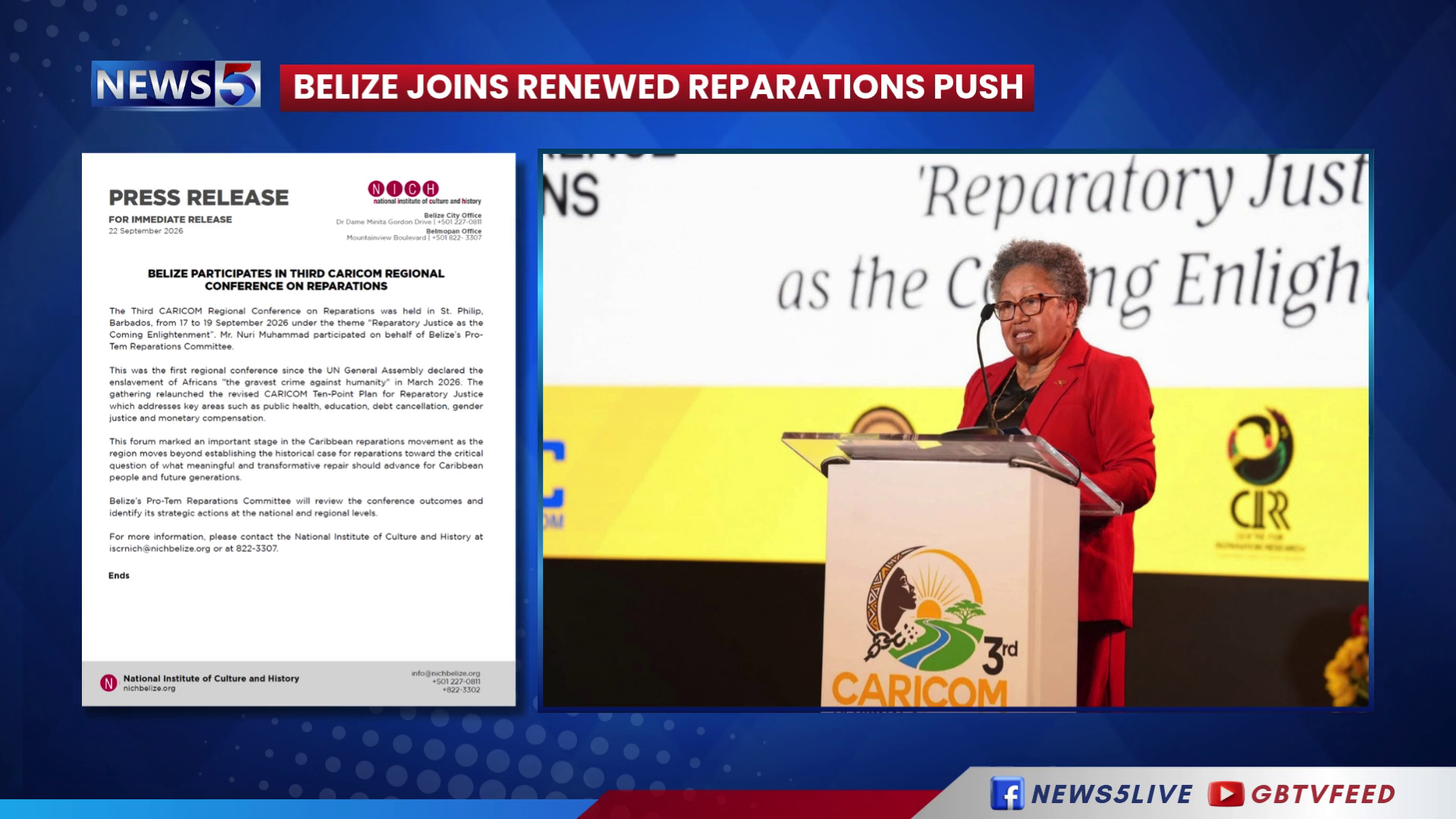
In a landmark gathering marking a new phase of the Caribbean reparations movement, regional leaders and advocacy representatives have relaunched a revised, 10-point framework for slavery reparatory justice, just months after the United Nations General Assembly issued a historic declaration classifying the transatlantic enslavement of African people as “the gravest crime against humanity.”
Hosted in St. Philip, Barbados, the Third CARICOM Regional Conference on Reparations ran from September 17 to 19, 2026, centered on the overarching theme “Reparatory Justice as the Coming Enlightenment.” Belize, one of the bloc’s member nations, joined the collective push for redress, sending a representative from its Pro-Tem Reparations Committee, Nuri Muhammad, to participate in the three days of deliberations.
The conference marked a critical strategic shift for the decades-long reparations movement. For years, regional advocates centered their work on building a documented historical case proving the pervasive, intergenerational harm inflicted by centuries of chattel slavery and colonial exploitation. Today, that focus has evolved: movement leaders are now prioritizing the definition of what meaningful, transformative reparations should actually deliver for current and future Caribbean communities.
A central outcome of the conference was the official relaunch of CARICOM’s updated Ten-Point Plan for Reparatory Justice. The revised framework expands on earlier iterations to directly address a range of pressing contemporary challenges facing Caribbean nations, including gaps in public health infrastructure, inequities in educational access, crippling regional sovereign debt, demands for gender justice, and direct monetary compensation for the ongoing harms of historical exploitation.
For Belize specifically, the work of advancing reparations does not end with the conference’s conclusion. The country’s temporary reparations committee will next conduct a full review of the meeting’s outcomes, then map out targeted strategic actions that Belize can advance both independently at the national level and collaboratively as part of the broader CARICOM bloc. The gathering has reinvigorated regional momentum for reparatory justice, aligning the movement’s collective approach after the UN’s landmark global recognition of slavery’s unparalleled harm in March 2026.