博客

  • Justice Now to Stage Peaceful Picket at Police Headquarters Thursday

    Justice Now to Stage Peaceful Picket at Police Headquarters Thursday

    An Antigua and Barbuda-based justice advocacy organization, Justice Now, has issued a public call for community members to join a peaceful demonstration outside the national Police Headquarters this month, pushing law enforcement authorities to deliver long-awaited clarity on a backlog of unsettled criminal cases.

    The planned picket is set to kick off at 4 p.m. on Thursday, September 24, at the Police Headquarters located on American Road in St. John’s — an address officially confirmed as the force’s central command by the Royal Police Force of Antigua and Barbuda. Under the rallying slogan “Justice Now — The Wait Has Gone On Long Enough,” the event is designed to shine a sustained spotlight on a wide range of unresolved cases that have left families without closure. These include uninvestigated or unsolved murders, unresolved missing person reports, suspicious deaths in custody, and other unaddressed criminal matters where victims and their loved ones continue to wait for formal police support and answers.

    In a public statement announcing the demonstration, representatives from Justice Now emphasized that far too many homicide cases remain closed without resolution across the country, while dozens of missing person cases have been left stagnant, leaving grieving families with no concrete information about their loved ones’ fates. The organization firmly holds that every family affected by these unresolved cases has a fundamental right to have their concerns heard by authorities, and no case should be pushed out of public consciousness and official priorities simply because months or years have passed since the incident.

    “Every life matters, every family deserves to be heard, and no case should simply fade from public memory because time has passed,” the group reiterated in its statement.

    The upcoming picket is the latest high-profile action from Justice Now, which has emerged as a prominent voice calling for reform in the country’s correctional system in recent weeks. The group has been openly critical of conditions inside His Majesty’s Prison, particularly around handling of inmate deaths in custody, and has repeatedly pushed for stronger institutional accountability and systemic changes to the treatment of incarcerated people living with mental health conditions. Organizers are urging all community members who support the call for justice for affected families to join the peaceful gathering next week.

  • Urgent action needed to protect sovereignty and survival of SIDS

    Urgent action needed to protect sovereignty and survival of SIDS

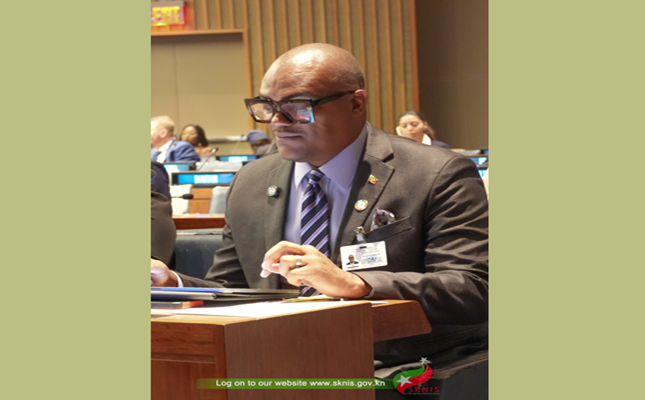
    As climate-driven sea level rise accelerates its destructive march across low-lying coastal regions, Small Island Developing States (SIDS) are facing an unprecedented crisis that threatens not just their daily livelihoods, but their core sovereignty and long-term national survival. Speaking at a high-profile UN meeting convened specifically to address this growing emergency, the acting prime minister of Saint Kitts and Nevis has issued a urgent call for the international community to turn rhetorical recognition of the crisis into tangible, actionable support for at-risk island nations.

  • ASPIRE Calls for Wider Contraceptive Access Ahead of World Contraception Day

    ASPIRE Calls for Wider Contraceptive Access Ahead of World Contraception Day

    Every September 26, global reproductive health advocates mark World Contraception Day (WCD), a coordinated campaign designed to shine a spotlight on the critical need for equitable access to reliable contraception, counter widespread misinformation, and ensure all people can make autonomous decisions about their reproductive futures. This year’s WCD theme, “No Barriers, Just Choices: Contraceptive Access Now,” amplifies a urgent demand to eliminate systemic and legal obstacles that leave millions without the resources they need to plan their families.

    For the past four years, regional advocacy group ASPIRE has worked to challenge the constitutionality of existing abortion laws across the Caribbean, building on a recent successful legal victory in Dominica. The organization now awaits a key court ruling on the challenge with cautious, measured optimism, framing the outcome as a make-or-break moment for reproductive rights in the region.

    At its core, WCD’s mission is straightforward: to educate the public on the full range of contraceptive options available today, breaking down misconceptions that often prevent people from accessing the method that best fits their needs. Options span five broad categories: barrier methods such as condoms and diaphragms; hormonal methods including oral pills and injectable contraceptives; long-acting reversible contraceptives like intrauterine devices (IUDs) and subdermal implants; permanent sterilization methods such as vasectomy for men and tubal ligation for women; and emergency contraception, which can prevent unplanned pregnancy up to 72 to 120 hours after unprotected intercourse.

    Advocates emphasize that expanding contraception access is not just a matter of individual autonomy—it is a proven strategy to reduce the number of unsafe abortions globally. The root of high abortion rates, they argue, is not demand for abortion itself, but unplanned pregnancy. By increasing access to reliable contraception and supporting consistent use, communities can cut rates of unintended pregnancy and, in turn, reduce the number of people seeking abortions.

    New regional data collected across the Caribbean paints a stark picture of the current reproductive health crisis. Among women seeking care at public health clinics across the region, 80% reported that their most recent pregnancy was unplanned. Nearly 40% of these unplanned pregnancies end in abortion, and a shocking analysis of abortion patient data reveals that 81% of people who received an abortion were teenagers when they had their first procedure. Of that group, 59% were under the age of 16—statistics that point to widespread child sexual abuse and statutory rape, a problem long overlooked by regional policymakers.

    These sobering numbers make clear that incremental changes to abortion law are not enough to address the region’s challenges, ASPIRE argues. Systemic change, including reform of outdated contraception access laws, is urgently needed. For example, nearly 40 years ago in 1984, the region amended the Age of Majority Act CAP 11, s.13 to legally allow 16-year-olds to access reproductive health care, including contraception, without parental consent. To this day, however, the law remains virtually unknown: adolescents, healthcare workers, health educators, and social workers are all largely unaware of the policy change, which has never been effectively disseminated to the public.

    That 1984 reform only closed one critical legal gap: it aligned the age of contraceptive access with the age of consent, which is set at 16, eliminating the previous absurd requirement that people who could legally engage in sexual activity still needed parental permission to access contraception until age 18. But ASPIRE argues that further reform is needed to address the reality of early sexual debut across the region. To meaningfully tackle the crisis of teen pregnancy and child exposure to unprotected sex, there should be no arbitrary age restrictions on contraceptive access, the group says. Instead, policymakers should trust the professional judgment of frontline healthcare workers to provide confidential, appropriate care to young people regardless of their age.

    The current reality across the Caribbean is dire: the region has the highest abortion rate in the world, and the second earliest average age of sexual debut globally. ASPIRE points to a glaring, unjust inconsistency in existing law to highlight the failures of current policy: the region holds children as young as 12 criminally responsible for their actions, yet denies them the ability to access confidential contraceptive care without parental consent until age 16. This four-year gap between criminal responsibility and reproductive autonomy makes no sense, advocates say, and puts countless young people at unnecessary risk of unintended pregnancy and abuse.

    As the world marks World Contraception Day 2024, ASPIRE is calling on regional governments to act immediately to remove all barriers to contraceptive access, educate the public about existing reproductive rights, and address the root causes of the Caribbean’s ongoing reproductive health crisis.

  • Column: Nieuw elan Natio

    Column: Nieuw elan Natio

    Suriname’s men’s national football team is set to launch its new 2026–2027 CONCACAF Nations League campaign this Friday, September 25, with an away fixture against Honduras. This edition of the Nations League acts as the official qualification pathway for the 2027 CONCACAF Gold Cup, which is scheduled to be hosted by Mexico this coming year.

    Drawn into Group B of League A, the highest tier of the competition, Suriname will face three other group opponents in sequence: Honduras, Martinique, and a home-and-away series against Guatemala. The top two teams from the group will advance to the quarterfinals, where they will meet pre-seeded heavyweights Canada, Mexico, Panama, and the United States. Given the tight competition structure, every fixture carries high stakes; a single misstep could end Suriname’s bid for an early quarterfinal spot. Even if Suriname fails to claim a top-two finish, a third or fourth place placement in the group still opens a secondary path to direct qualification for the 2027 Gold Cup, keeping the team’s regional tournament hopes alive.

    Past successes from earlier qualifying cycles are now in the rearview mirror, and the team is entering this campaign under a new leadership structure that includes a new head coach, an entirely new supporting technical staff, and a fresh team sponsor. These changes have laid the groundwork for a revitalized national squad, widely referred to locally as “Natio”. Despite recent off-field uncertainty and disruptions, a solid core of players has already traveled to Honduras for the opening match, a commitment that has drawn widespread praise for the courage and dedication the group has shown.

    In additional positive developments, several players who had previously been uncertain about committing to the national side have ultimately chosen to join the Natio campaign. This choice signals that the Suriname national team’s new operating model remains appealing to talent and has not veered off course. These late-joining players also deserve recognition for their commitment, and the team is working to fully integrate them into the squad to reinforce a collective team culture, where the group’s shared goals take priority over individual stardom.

    The willingness of these young talents to commit to the national program is particularly critical for long-term development. Their example is expected to make it easier to encourage other emerging young players to pursue an international career with Suriname in the future.

    For the Surinaamse Voetbal Bond (SVB), the national football governing body, this campaign represents a new opportunity to put the right structures in place to reach the team’s ultimate qualifying goals. This includes key administrative adjustments, such as avoiding the common past practice of booking early return flights for the team before group stage play has concluded, a practice rooted in premature assumptions that the side would fail to advance out of the group. The SVB has also committed to scheduling more regular friendly warm-up matches ahead of competitive fixtures, to help players build on-pitch chemistry and cohesion before they enter high-stakes competition.

    It is widely acknowledged that the road to qualification for the next men’s FIFA World Cup will be significantly more challenging than Suriname’s 2026 final cycle campaign. But organizers and team leadership stress that this increased difficulty should not dim the team’s ambition. In modern international football, there are no longer any easily beaten “weak teams”; a side’s performance ultimately depends on the belief and preparation it brings to every match. Many of Suriname’s top players currently compete at the professional club level in Europe, where they line up alongside and compete against top talent from the world’s biggest football nations on a weekly basis, and earn consistent success at that level. This context shows that international call-ups are not always selected purely on technical skill, and can sometimes be influenced by bias or external pressure. Suriname’s program is also emphasizing that there are multiple pathways to building a successful national side, and talent developed outside of Europe’s top leagues still has a major role to play in competing at the highest regional and international level.

  • IMF voorziet groeisprong Suriname bij start offshore olieproductie

    IMF voorziet groeisprong Suriname bij start offshore olieproductie

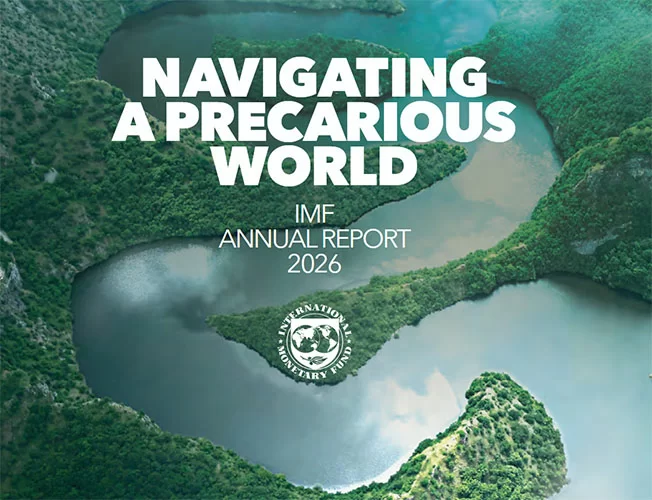
    International Monetary Fund analysts have projected a historic economic expansion for Suriname, with growth set to jump to roughly 30% in 2028 when the country’s new offshore oil fields begin commercial production, according to a dedicated country assessment published earlier this year. The forecast, which does not appear in the IMF’s 2026 Annual Report released this week, anticipates steady moderate growth of around 4% annually between now and the launch of oil output.

    Suriname’s non-resource economic sector is projected to grow 4.7% in 2026 alone, the Article IV assessment notes. Combined with ongoing development of offshore oil infrastructure and stable gold production, overall annual economic growth will hold near 4% through both 2026 and 2027 before the 2028 spike, the Fund predicts.

    While the incoming oil revenue represents a generational economic opportunity for Suriname, the IMF emphasizes that the country must strengthen its institutional frameworks before 2028 to turn resource wealth into broad-based improvements in living standards. To deliver long-term shared prosperity, the Fund says Suriname must shore up public financial management, deliver targeted infrastructure investments, and maintain consistent macroeconomic stability.

    A separate technical IMF report from May 2026 acknowledges that Suriname has already taken key legislative steps to prepare for oil revenue, including tightening public finance rules and updating the national Savings and Stabilization Fund. However, practical implementation of these new regulatory frameworks remains incomplete, the Fund adds, citing constrained institutional capacity and delays in finalizing supporting legislation.

    Alongside its country-specific guidance for Suriname, the IMF’s 2026 Annual Report highlights growing pressures on public finances across the globe. Global public debt is once again on the rise, and higher interest payments have eroded government budget space for critical priorities including education and infrastructure development. The report notes that global interest payments as a share of gross domestic product have climbed from roughly 2% to nearly 3% in just three years, forcing low-fiscal-space nations to make tough trade-offs on public spending.

    The Fund also stresses the value of multi-year budgeting and rigorous cost-benefit analysis for large-scale infrastructure projects, measures that can improve the efficiency of public spending and support sustained long-term growth. This guidance carries extra weight for Suriname as it approaches 2028: the country not only needs to maintain disciplined management of current public finances, but also build durable institutions capable of overseeing the much larger revenue streams that will flow from the new oil sector.

    The IMF’s latest assessment repeats a warning that policy missteps before production launches would pose significant risks to Suriname’s macroeconomic stability. Even with the prospect of massive new oil revenue, the Fund stresses, the country cannot afford to delay putting its public finances in order ahead of the sector’s launch.

  • NTUCB Blasts Government’s Dismissive Response to Demands

    NTUCB Blasts Government’s Dismissive Response to Demands

    A bitter standoff between Belize’s national government and the country’s leading trade union coalition has entered a new, more heated phase, after cabinet officials rejected nearly all of the 11 core demands put forward by the National Trade Union Congress of Belize (NTUCB).

    NTUCB President Ella Waight has publicly slammed Prime Minister for dismissing the coalition’s long-held concerns out of hand, with the future of state-linked telecommunications firm Belize Telemedia Limited (BTL) emerging as the central point of contention. The NTUCB has pushed for two key changes at BTL: the immediate removal of Chairman Markhelm Lizarraga and a full restructuring of the company’s board of directors. Both proposals were flatly rejected by the Prime Minister, who defended Lizarraga’s tenure by pointing to consistent profitability BTL has delivered under his leadership.

    But Waight pushed back against that justification in a recent press interview, arguing that strong financial results do not address the broader governance and workplace concerns the union coalition has raised. “Generating profit is the fundamental job of the BTL chairman, the entire board, and the company’s management team,” Waight explained. “That’s what they’re tasked to do — it’s not some extraordinary achievement that justifies brushing aside every other issue we’ve raised.”

    Waight specifically cited Lizarraga’s dismissive attitude toward union concerns and his aggressive push to acquire rival telecommunications firm Smart as unresolved red flags. She also noted that rank-and-file BTL staff broadly lack confidence in Lizarraga’s leadership, a sentiment that has not eased despite the company’s positive bottom line. “Whether that trust can be repaired at this point is an open question,” Waight added, deferring to the Belize Communication Workers Union for updates on shifting staff sentiment in recent weeks.

    Waight also pushed back on the Prime Minister’s claim that unions already have adequate representation on the BTL board via a proxy seat through the Belize Social Security Board. The NTUCB’s demand for board restructuring centers on implementing a formal tripartite governance structure that includes representation not only from the NTUCB, but also from the Belize Chamber of Commerce and Industry (BCCI) as the official employer representative, and the government as the controlling stakeholder.

    Waight emphasized that the existing informal union-linked seat is not a permanent, independent voice for the NTUCB. “The current representative appointed through the Social Security Board can be removed at any time, and she was never elected by the NTUCB to serve as our direct representative on the BTL board in the first place,” Waight clarified. “She was elected to represent our coalition on the Social Security Board, not the telecom firm’s governing body.”

    As the deadlock holds, both sides remain firm in their positions, leaving the future of the dispute uncertain with the NTUCB indicating it will continue pushing for concrete action to address its demands.

  • NTUCB Demands Overhaul of Public Utilities Commission

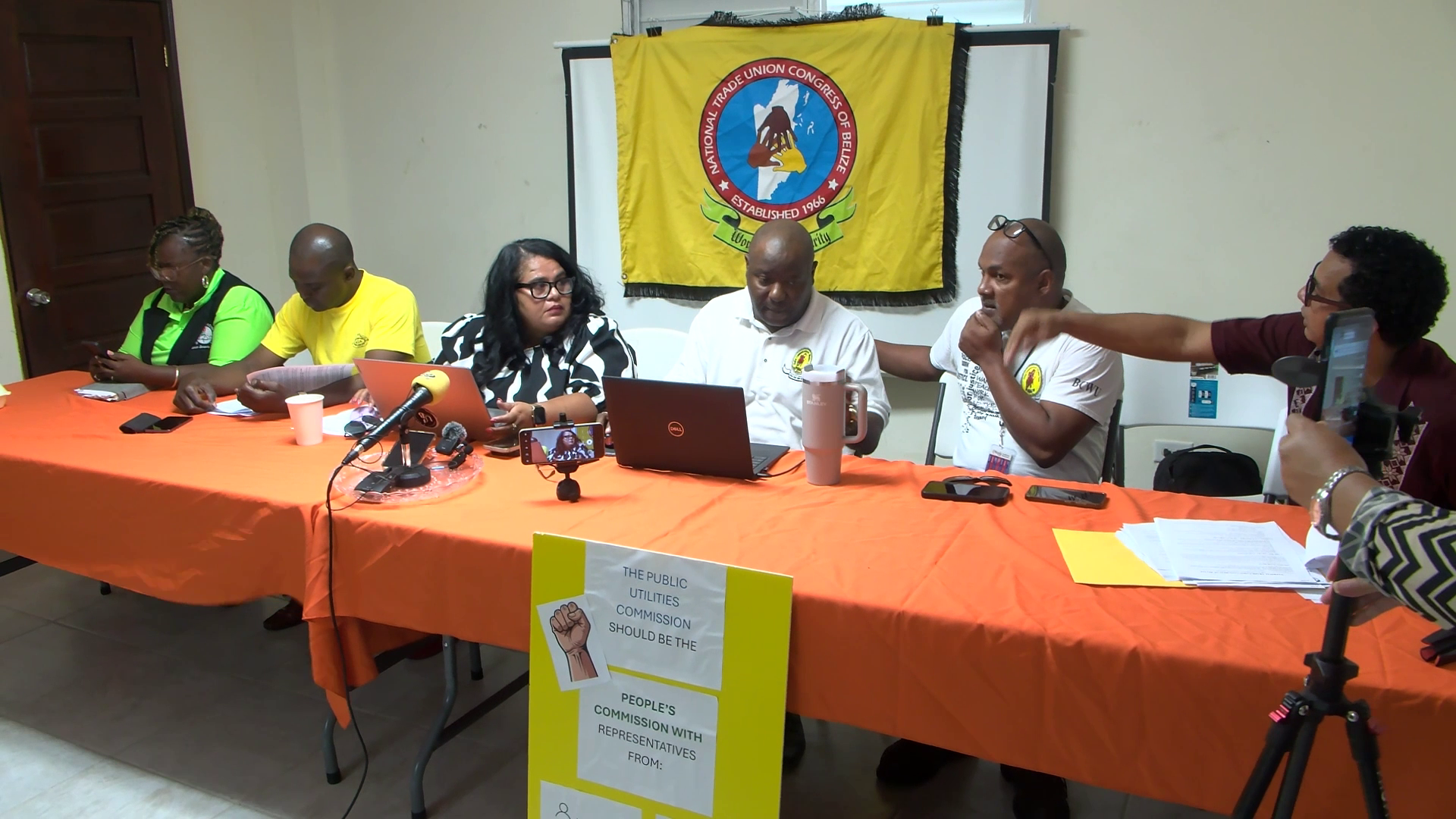
    NTUCB Demands Overhaul of Public Utilities Commission

    A public political disagreement has erupted between the National Trade Union Congress of Belize (NTUCB) and the administration of Prime Minister John Briceño, centered on long-simmering questions about the autonomy and governance structure of the country’s Public Utilities Commission (PUC).

    At the core of the conflict is the NTUCB’s formal demand for a comprehensive overhaul of the regulatory body, a proposal the prime minister has already rejected on legal grounds. Briceño has reiterated that the PUC is enshrined in law as an autonomous institution, meaning the sitting government has no authority to advance the union’s restructuring request. But union leadership has pushed back hard against that framing, arguing that the so-called independence of the commission is little more than a legal fiction under current rules.

    NTUCB President Ella Waight outlined her organization’s position in comments to local media, acknowledging that the group understands the current legal framework cited by the prime minister. From the start of the campaign for reform, Waight noted, union leaders have been clear that only the sitting government holds the power to amend existing legislation to reshape the PUC’s governance structure. The union’s ultimate goal, she explained, is to rewrite the law to expand representation on the commission to include workers’ representatives and other key social partners, ultimately shifting majority control of the regulatory body to ordinary Belizean citizens rather than political appointees.

    Waight emphasized that the push for reform aligns directly with the Briceño administration’s stated commitment to advancing good governance across Belize’s public institutions. “If this government says they are all about good governance, then we need to ensure that is the way we move forward,” she said, arguing that a legitimate independent PUC must be drawn from and accountable to the Belizean public, not the government. Under current rules, she pointed out, the prime minister retains the sole authority to appoint all commission members, turning the nominally autonomous body into an entity effectively controlled by the sitting government.

    The NTUCB is calling for the PUC’s membership to be restructured around the country’s four recognized social partners, a change that would embed public and worker representation at the core of the utilities regulator. Waight added that the union had hoped to open formal negotiations with the government to launch the reform process, allowing leaders to lay out in detail their rationale for shifting majority control away from political appointees. So far, however, the government has declined to engage, sticking to its position that the PUC’s current autonomous legal structure rules out any restructuring.

    The standoff is the latest public dispute between the Belizean government and the country’s largest trade union federation over institutional reform, with the NTUCB making clear it will not back down from its demand. Waight confirmed that the union will continue pressing its case for overhaul until the government agrees to enter talks on changing the PUC’s governing legislation.

    This report is adapted from a transcript of a televised evening news broadcast.

  • NTUCB Demands Direct Link to Prime Minister Briceño

    NTUCB Demands Direct Link to Prime Minister Briceño

    In a push to resolve longstanding communication breakdowns between organized labor and the national executive, the National Trade Union Congress of Belize (NTUCB) has formally requested the appointment of a dedicated union liaison directly embedded within the Office of Prime Minister John Briceño. The call comes after months of delayed responses, unfulfilled promises, and inconsistent access to top government leadership for NTUCB’s affiliated unions, according to NTUCB President Ella Waight.

    The Belizean government has pushed back on the demand, arguing that existing channels are already structured to accommodate union concerns. Specifically, officials from the Prime Minister’s office note that the Joint Union Negotiating Team (JUNT) was created to serve as the official bridge between labor groups and the executive branch. JUNT currently holds formal collaboration agreements with the Deputy Prime Minister and three senior cabinet ministers, a framework the government says should address all labor-related outreach.

    Waight, however, argues that the current structure leaves nearly half of NTUCB’s affiliates without consistent access to decision-makers. JUNT’s membership is limited to just three of NTUCB’s 12 total affiliate unions: the Public Service Senior Management Association (APSSM), the Belize National Teachers’ Union (BNTU), and the Public Service Union (PSU), all of which represent government workers and public service employees. This structure leaves the remaining nine affiliates — including the Communication Workers Union (CWU), the Belize Communications Workers Union (BCWU), the KHMHWU, and the University of Belize Faculty and Staff Union (UBFSU), among others — without a clear path to escalate national-level labor concerns directly to the Prime Minister’s office, Waight explained.

    The NTUCB leader emphasized that the organization does not seek to dismantle or replace the existing JUNT framework, which has delivered results for its three member unions. Instead, the congress is asking for an additional, dedicated point of contact that can streamline NTUCB-wide advocacy on cross-cutting national issues that fall outside JUNT’s narrow mandate.

    Waight outlined longstanding frustrations with the current ad-hoc communication process: NTUCB holds formal scheduled meetings with Prime Minister Briceño every six months, where the body raises concerns, secures commitments for legislative updates, policy documents, and the formation of new advisory committees, but follow-through from relevant ministries has been consistently lacking. When the union attempts to escalate unaddressed issues directly to the Prime Minister’s office via email, Waight said, responses can take months to arrive, if they come at all. In many cases, inquiries are misrouted to incorrect administrative staff, further delaying action on pressing labor matters.

    “A dedicated liaison embedded in the Prime Minister’s office is the simple, targeted solution we need,” Waight stated. “We do not need multiple cabinet ministers assigned to our work — we just need one dedicated person who can cut through bureaucratic red tape and connect our entire congress directly to the top when issues cannot be resolved at the ministry level.”

    As of September 23, 2026, the Prime Minister’s office has not issued a new formal response to the NTUCB’s formal request beyond the initial statement that existing communication channels are sufficient.

  • Impromptu NTUCB Protests Keep Government Under Pressure

    Impromptu NTUCB Protests Keep Government Under Pressure

    On September 23, 2026, the National Trade Union Congress of Belize (NTUCB) is maintaining steady pressure on the ruling People’s United Party (PUP) government through a series of spontaneous demonstrations and public outreach campaigns, after dismissing the administration’s formal responses to labor concerns as inadequate and disrespectful.

    NTUCB President Ella Waight made clear in a public address that while the labor body has no plans to call a full national general strike or mass protest at this stage, the rolling impromptu actions will continue to ensure that working people’s grievances remain at the top of the national political agenda. Waight pushed back hard against widespread public claims that the NTUCB’s actions are rooted in a plot to destabilize and bring down the sitting PUP government, a narrative that has circulated widely in public discourse in recent weeks.

    Waight emphasized that the PUP itself traces its founding origins to the Belizean labor movement, and the current administration holds power solely because of the votes of working-class people across the country. That history, she argued, obligates the government to show far greater respect for organized labor and demonstrate more willingness to collaborate with unions on the issues that matter most to their members. Contrary to critics who argue the NTUCB should enter electoral politics if it wants to push for policy change, Waight reiterated that the organization’s core mandate is unwavering: to advocate for the rights and interests of the workers it represents. Because national policy decisions of all kinds directly impact working Belizeans, she explained, the NTUCB has a responsibility to engage with broader national issues – a position that has been misrepresented by opponents to paint the union as an anti-government force.

    “That is not what we are doing,” Waight said, rejecting the narrative that the NTUCB seeks to undermine the current administration.

    Currently, the NTUCB is in ongoing consultation with a range of social partner organizations to map out its next formal steps. Waight argued that a carefully planned, sustained and targeted campaign will exert far more consistent and meaningful pressure on the government than a single one-day national protest, which would only deliver a temporary burst of attention. For the immediate future, the rolling impromptu demonstrations and public awareness campaigns will continue, keeping the government accountable to the working people that put it in power.

    This report is adapted from a transcribed evening television newscast, with original Kriol language commentary translated and transcribed per standard spelling conventions.

  • Belize Files Evidence in Sapodilla Sovereignty Case

    Belize Files Evidence in Sapodilla Sovereignty Case

    Nearly two decades after the Sapodilla Cayes territorial dispute first entered international legal proceedings, the long-simmering sovereignty conflict has advanced to a new critical phase at the International Court of Justice (ICJ), with Belize formally placing its full legal defense on the court’s official record this week.

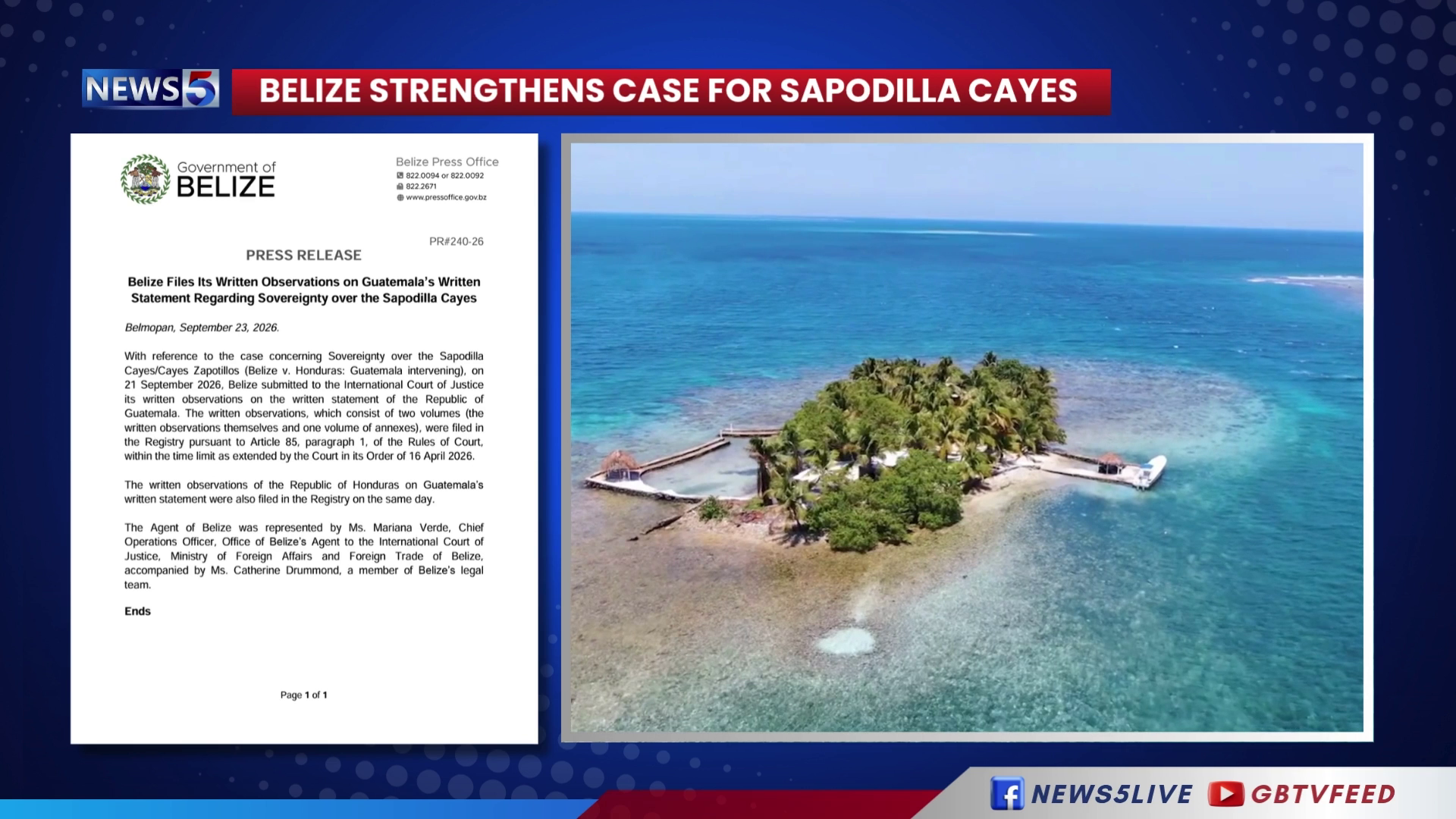
    On September 21, 2026, the Government of Belize submitted a two-volume set of written observations directly responding to Guatemala’s competing territorial claim over the southern Caribbean island archipelago. The first of the two documents lays out Belize’s formal legal arguments for its sovereignty over the Sapodilla Cayes, while the second volume compiles hundreds of pages of supporting evidence and archival documentation to underpin the country’s position. The submission was completed well within the extended deadline the ICJ set in an April 16, 2026 order, and followed all procedural requirements outlined in Article 85, Paragraph 1 of the ICJ’s Rules of Court.

    At the heart of the case is a decades-old unresolved question: which sovereign nation holds legal right to the Sapodilla Cayes, a string of remote unincorporated islands that sit along a strategically and commercially important maritime boundary in the western Caribbean. The proceedings were originally launched by Belize in a case against Honduras, but Guatemala was later granted intervenor status by the court, bringing all three Central American nations directly into the dispute with competing legal claims to the territory, which Belize currently administers as part of its southern maritime territory.

    Alongside Belize’s submission, Honduras also filed its own written observations responding to Guatemala’s claim on the same day, meaning all parties’ formal written positions are now before the ICJ for judicial review. Belize was represented at the time of filing by Mariana Verde, Chief Operations Officer of the Office of Belize’s Agent to the International Court of Justice, who was accompanied by Catherine Drummond, a senior member of Belize’s legal team for the case.

    While the government of Belize has opted not to release the full contents of its two-volume submission to the public to preserve procedural strategy, officials have confirmed that the filing marks a key milestone in the country’s multiyear effort to defend its territorial claims before the United Nations’ highest judicial body. In the coming months, ICJ justices will review all written arguments and evidence submitted by Belize, Guatemala and Honduras before scheduling oral arguments and moving toward a final binding ruling on the sovereignty of the archipelago. Local journalist Isani Cayetano contributed reporting on the latest developments for Belize’s News Five outlet.