Trinidad and Tobago is currently experiencing an unparalleled period of international diplomatic activity, delivering tangible economic and energy progress through deepened partnerships with global allies including the United States, according to the nation’s Minister of Foreign and Caricom Affairs Sean Sobers. In an interview with local outlet the Express, Sobers emphasized that the current level of global engagement with the twin-island nation has not been matched in the past 10 years, marking the emergence of a dynamic, results-driven new model of diplomacy that the administration is actively expanding.
博客
-

RJLSC to hold transparent and independent review
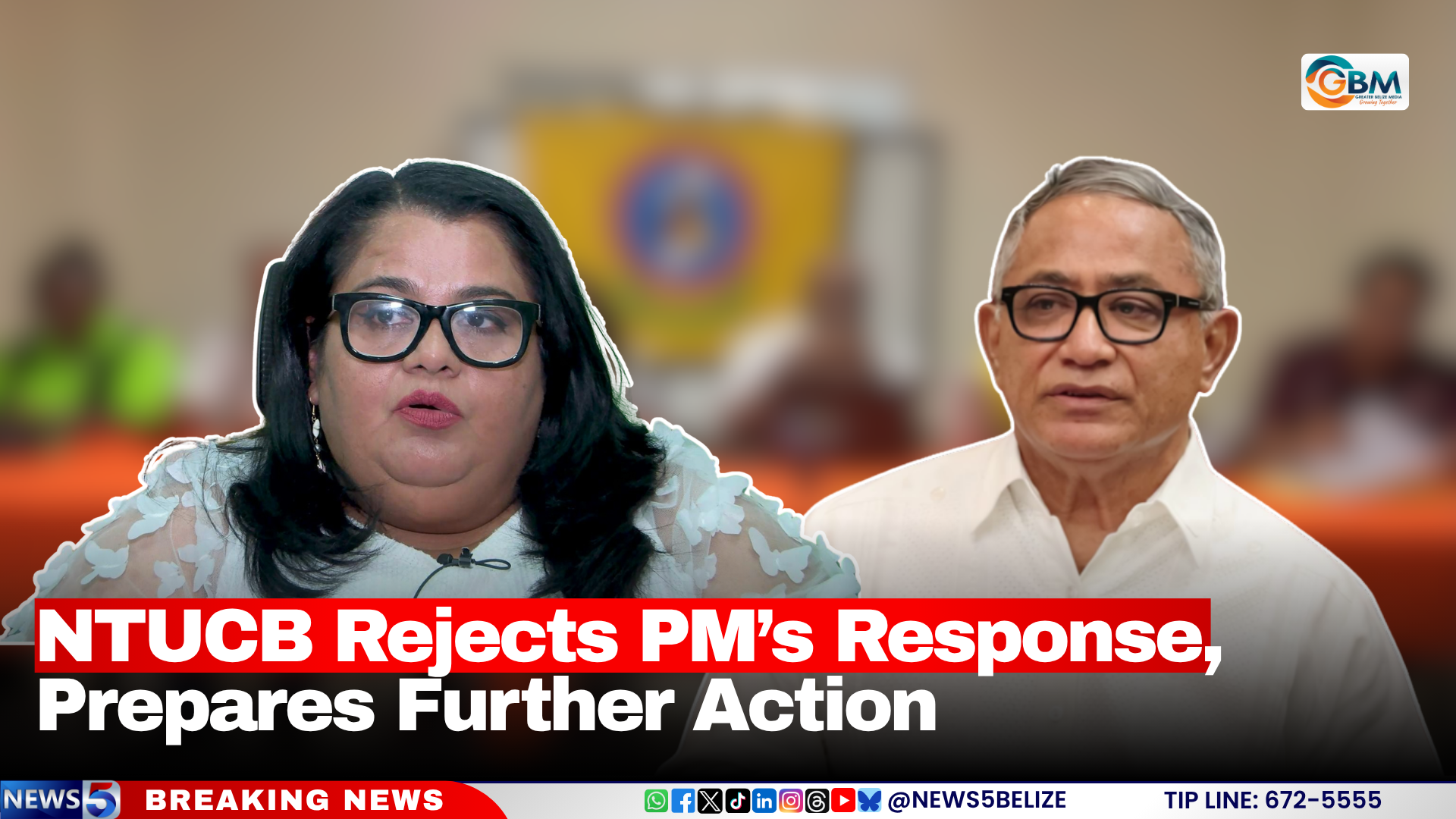
A growing scandal has shaken the Caribbean Court of Justice (CCJ) after multiple sitting judges brought explosive allegations against the court’s sitting president, Justice Winston Anderson, pushing the regional body tasked with court governance to launch a long-awaited transparent and independent review into the claims. The allegations, which first came to light in an exclusive scoop by the *Sunday Express* earlier this week, are far-reaching: they range from minor administrative overreach like imposing an unapproved judicial dress code to far more serious accusations of case panel manipulation and intentional efforts to sway the final outcomes of active court matters. Most notably, a majority of the CCJ’s own sitting judges have accused Anderson of running the regional tribunal in an overtly authoritarian, dictatorial style, according to internal email correspondence exchanged between the court’s presiding judges in June and July of this year that was obtained by the *Express*.
Overseeing the upcoming review is the Regional Judicial and Legal Services Commission (RJLSC), the statutory body created by the founding agreement of the CCJ to manage court appointments, employment terms, and disciplinary processes for all CCJ judges (excluding the president) and court staff. By statute, the RJLSC is structured to bring together experienced legal professionals, senior public service leaders, and civil society representatives to uphold institutional independence of the regional court. A quirk of the commission’s governance structure, however, places Justice Anderson himself as the formal chairman of the RJLSC – a detail that has sparked immediate calls for his recusal from the review process.
In an official statement issued to Caribbean media outlet CCN, the RJLSC acknowledged the grave nature of the allegations and committed to addressing the claims in a manner that upholds public trust in the CCJ and the broader Caribbean justice system. “The Commission recognises the seriousness of these matters and the importance of addressing them in a manner that protects public trust and confidence in the Court and the broader administration of justice throughout the Caribbean,” the statement read. The commission confirmed it would use its established internal governance frameworks to conduct a fully transparent and independent review, aligned with the best interests of the Caribbean region. The commission also reaffirmed its longstanding institutional autonomy, noting that in its 23 years of operation, it has never faced improper influence from either court leadership or external political actors, and has maintained a productive working relationship with the CCJ. “No conclusions should be drawn about the allegations until they have been examined fairly and objectively,” the statement added. Notably, the RJLSC declined to confirm whether Anderson would participate in the upcoming review, leaving that critical question unanswered.
Martin Daly, a former RJLSC member and prominent senior counsel, has become the most high-profile figure to weigh in on the unfolding controversy, saying that a full formal investigation is non-negotiable and that Anderson must step aside entirely from the process. Daly characterized the RJLSC’s initial statement as overly verbose and vague, but acknowledged that the commission had reaffirmed its autonomy and responsibility to oversee the CCJ’s effective, independent administration. He warned that the allegations, if left unaddressed, pose a severe threat to the CCJ’s legitimacy and effectiveness. “The matters alleged in the Express reports have the potential to seriously undermine the independence and effectiveness of the court. The commission should therefore have no difficulty in getting on with an investigation of the allegations,” Daly said.
Daly also questioned the RJLSC’s reference to its longstanding “open door policy” for judges and staff to raise internal concerns, asking if the statement amounted to a veiled push for complaining judges to file formal complaints, and arguing that the vague language does little to advance public interest in accountability. He emphasized that the RJLSC has clear jurisdiction to investigate the claims, as they center on administrative decisions that impact the court’s core functioning, noting that the commission must draw a clear line between administrative actions – which fall within its remit – and judicial decision-making, which it cannot interfere with.
Most critically, Daly insisted that Anderson, as the subject of the allegations and the RJLSC’s chairman, must recuse himself completely from any part of the investigation. “The president of the court is chairman of the RJLSC, but he must, of course, recuse himself from participating in an investigation of administrative decisions made by him,” Daly explained, adding that it was unfortunate the commission abandoned the past practice of appointing a formal deputy chairman. Even so, he noted that multiple sitting RJLSC commissioners have the experience and credibility to lead an impartial, competent investigation, and argued that the matter should remain within the commission’s purview rather than being passed to regional heads of government at this stage.
-

We welcome job opportunities
A landmark industrial milestone has arrived for Trinidad and Tobago, as the shuttered Point Lisas steel mill officially reopens its doors under new ownership, unlocking billions in planned investment, new job opportunities, and a potential strategic foothold in the global vanadium market. Two leading local business groups have thrown their full support behind the project, framing it as a catalyst for long-term economic growth and diversification across the country.
The facility, which first ceased operations in 2016 and eliminated 644 direct positions, now operates as Ibis Steel Company of T&T Ltd, a local subsidiary of U.S.-headquartered Pinnacle Steel and Vanadium Corporation. A formal ribbon-cutting ceremony held on Monday marked the official start of the project’s transition toward full production, a milestone that the Energy Chamber of Trinidad and Tobago has celebrated as a transformative opportunity for the nation’s industrial sector.
Per the Energy Chamber’s official statement, the project is slated to draw an initial $250 million in capital investment over the first two years of development. Total planned spending, covering future expansion and facility modernization, will climb to $750 million by project completion. After completing required refurbishment work, securing regulatory approvals, and obtaining all necessary permits, the plant is on track to launch its first commercial production by the end of 2027. Over time, officials expect the facility to restore all 644 direct jobs lost when the mill closed in 2016, alongside hundreds of additional indirect roles across the Point Lisas Industrial Estate and the plant’s national supply chain.
One of the most strategic long-term opportunities highlighted by the Energy Chamber is the plant’s potential to establish Trinidad and Tobago as a major global producer of vanadium, a high-demand critical metal with key applications in aerospace manufacturing, national defense systems, energy storage battery technology, and structural steel strengthening. Pinnacle Steel and Vanadium has publicly stated its goal to meet up to 50% of total U.S. vanadium demand from the Point Lisas facility, a target that would deliver outsized strategic and economic benefits to Trinidad and Tobago. The chamber emphasized that this goal creates a urgent opening for local engineering, environmental, and industrial service providers to secure early positions in the project’s growing supply chain.
“As an organization representing nearly 400 member companies across the entire national energy value chain, the majority of which are small and medium-sized local service providers and contractors, we welcome this investment and the direct and indirect employment it is expected to generate at Point Lisas,” the chamber said. “The reopening of a facility of this scale creates a range of opportunities, both for workers seeking direct employment and for local contractors and service companies across engineering, construction, maintenance, logistics and other supporting trades.”
The chamber also added that the project highlights the enduring value of Point Lisas as a pre-developed industrial estate with existing core infrastructure, reinforcing the principle that local content and local employment should remain central priorities as new investment flows into the country’s industrial sector. In terms of operations, the plant ranks among the largest steel mills in the Americas. It will initially restart steel production using an electric arc furnace, with plans to integrate natural gas-based direct reduced iron technology in later expansion phases.
Kiran Singh, president of the Greater San Fernando Area Chamber of Commerce, echoed the Energy Chamber’s optimism, noting that the mill’s reopening addresses longstanding unmet economic challenges facing Trinidad and Tobago, including high unemployment, limited foreign exchange inflows, and slow progress on economic diversification. For years, the high-value industrial site sat idle, a missed opportunity that the current project will reverse, Singh said.
Singh outlined that the initial $250 million capital injection will support 250 early roles at the facility, with a follow-up $100 million investment set to expand total on-site employment to 1,000 workers. “This is a significant boost to the local economy. The benefits can extend well beyond the plant itself. The reopening will create indirect employment while generating opportunities for SMEs, contractors, transport providers, maintenance companies, suppliers and other supporting businesses throughout the Central and southern regions,” Singh explained.
Singh also commended the national government’s focus on developing export-focused industries that generate foreign exchange, create sustainable long-term employment, and expand Trinidad and Tobago’s non-energy manufacturing base, calling the policy direction “on the right track.” Like the Energy Chamber, the Greater San Fernando Area Chamber of Commerce is urging both the government and facility operators to keep local content as a top priority, ensuring that local businesses and workers get meaningful opportunities to participate in the supply chain to spread economic benefits across local communities.
While Singh praised all stakeholders who brought the project across the finish line, he noted that the project’s long-term success will be measured by its ability to remain globally competitive and financially sustainable, while consistently delivering jobs, export revenue, foreign exchange, and new opportunities for the wider local business community. Even so, Singh emphasized that the mill’s reopening sends a powerful positive signal: that Trinidad and Tobago is once again ready to leverage its underused industrial assets, attract large-scale international investment, and rebuild confidence in its domestic manufacturing sector.
-

HELP THE PANYARDS
Trinidad and Tobago’s iconic steelpan tradition took center stage over the weekend as the country marked World Steelpan Day with the annual Ancestral Pan Walk, a celebratory procession that drew hundreds of cross-generational steelpan enthusiasts despite intermittent rainfall. At the heart of the festivities, however, was a pressing public call from Pan Trinbago President Beverley Ramsey-Moore for urgent government action to upgrade the country’s aging network of panyards — the community hubs where steelpan bands practice, perform, and gather.
In an exclusive phone interview with local outlet the Express following the walk, Ramsey-Moore reiterated a call she first made over a year prior, urging the national government to temporarily pause new community centre construction in order to redirect funding to panyard upgrades. She emphasized that panyards have become far more central to youth engagement than underused community centres, noting that young musicians spend countless hours at these hubs honing their craft. “The only modern, well-maintained panyards belong to a handful of commercially sponsored bands,” Ramsey-Moore explained. “Most unsponsored groups struggle with basic, urgent repairs — everything from outdated plumbing to dilapidated bathroom facilities that need complete overhauls.”
This year’s World Steelpan Day centered explicitly on cultivating youth participation in the steelpan tradition, with the Ancestral Pan Walk kicking off at the Massy Trinidad All Stars Steel Orchestra panyard in Port-of-Spain’s Duke Street before concluding at the bp Renegades Steel Orchestra pan theatre on Charlotte Street. Youth steel orchestras were featured as the lead attractions at both stops, framing the day as a handoff of the national cultural legacy to the next generation. Ramsey-Moore praised the enthusiastic turnout for the walk, but stressed that the steelpan community still lacks consistent, robust support from both government and corporate stakeholders.
Opening up about ongoing challenges securing funding, Ramsey-Moore expressed disappointment with the recent pullback from Trinidad and Tobago’s corporate sector. “For four years, Pan Trinbago has overhauled its governance, delivering full clean audits, complete transparency, and clear accountability to bring back corporate partners,” she noted. “While corporations returned to partnership over the last two years, their continued engagement always hinges on the signal the national government sends about the sector’s priority.” She also pushed back firmly against narrow framing of the steelpan as an exclusively Black cultural tradition, emphasizing that the national instrument was created to be unifying. “Every creed and race finds an equal place in the steelpan,” she said. “It is not ‘a Black people thing’ — it is a powerful tool for positive national social transformation for all Trinbagonians.”
One long-sought win for the community appears to be on the horizon, however: Ramsey-Moore voiced disappointment that the steelpan has not yet been added to the nation’s currency, but pointed to a recent statement from the Central Bank of Trinidad and Tobago confirming that the instrument will feature on the new $100 bill, set to be unveiled this August. She said she is hopeful the central bank will follow through on this commitment.
Minister of Culture Michelle Benjamin echoed Ramsey-Moore’s call for panyard upgrades during her address at the bp Renegades Pan Theatre, affirming the government’s recognition of the critical role panyards play in nurturing cultural talent. “It is undeniable: all of this incredible national talent comes straight from our panyards,” Benjamin said in response to Ramsey-Moore’s appeal. “She is entirely right that we need to support the renovation and refurbishment of these spaces, because that is where our young people are every single day.”
Even steady rainfall did little to dampen the festive spirit of the hundreds of attendees who turned out for the procession. As the Trinidad and Tobago Regiment Steel Orchestra played a rousing medley of classic and contemporary steelpan tracks, enthusiasts of all ages marched from the starting point at All Stars to the Renegades panyard, celebrating the legacy and future of the country’s most beloved cultural institution.
-

St. Kitts and Nevis Calls for Greater Recognition of Indigenous Peoples’ Rights
On August 12, 2026, ahead of the International Day of the World’s Indigenous Peoples, delegates from across the Western Hemisphere gathered in Washington, D.C. for a special convening of the Organization of American States (OAS) Permanent Council. Among the speakers, St. Kitts and Nevis made a forceful call for regional governments to move beyond symbolic recognition and deliver tangible, systemic protection for the inherent rights and enduring contributions of Indigenous peoples across the Americas.
Addressing the assembled council, Ambassador Jacinth Henry-Martin, St. Kitts and Nevis’ permanent representative to the OAS, pushed back against the common narrative that frames Indigenous communities as a relic of regional history. She emphasized that the knowledge, cultural traditions, and core values of Indigenous peoples remain deeply embedded in the present of the Americas, and are irreplaceable to building a just and sustainable future for the region.
While the large-scale Indigenous population that once inhabited St. Kitts and Nevis belongs to the islands’ ancestral history, Henry-Martin noted that the call for Indigenous rights carries profound meaning for the federation. Long before colonial powers renamed and claimed the islands, the Indigenous Kalinago people named St. Kitts *Liamuiga* – meaning “fertile land” – and Nevis *Oualie*, translating to “land of beautiful waters.”
Today, these original names continue to be used in St. Kitts and Nevis as a deliberate act of acknowledgment: the nation’s story does not begin with colonization, but with the Indigenous communities that first stewarded the land. Henry-Martin explained that these historic names act as a living bridge connecting past, present, and future generations to the islands’ natural heritage. They stand as proof that Indigenous language, culture, and collective memory can persist even through the upheaval and displacement of colonial rule.
The OAS special meeting was convened under the overarching theme “Roots that Sustain, Knowledge that Transforms, Rights, Water, Health, Culture and Innovation for a Shared Future.” Henry-Martin highlighted that this framing aligns perfectly with the symbolism of the Kalinago place names, which center the inherent connection between land, water, public health, cultural survival, and long-term sustainable innovation. She went on to celebrate the wide-ranging contributions of Indigenous peoples across the entire hemisphere, from preserving endangered languages and safeguarding global biodiversity to developing sustainable agricultural practices, passing down traditional health knowledge, and maintaining centuries-old systems of environmental stewardship.
Beyond recognition and celebration, however, the ambassador stressed that rhetorical commitment to Indigenous rights is insufficient. St. Kitts and Nevis formally backs expanded, enforceable protections for both individual and collective Indigenous rights across the Americas. These protections include the right to preserve cultural identity and heritage, meaningful participation in policy decisions that impact Indigenous communities, full freedom from systemic and social discrimination, and the self-determination to shape the future of Indigenous territories.
As the Western Hemisphere grapples with escalating crises including climate change, widespread water insecurity, and accelerating biodiversity loss, Henry-Martin argued that the generations of ecological and place-based knowledge held by Indigenous communities must be centered rather than sidelined or exploited without consent. She pointed to the American Declaration on the Rights of Indigenous Peoples as a critical foundational framework for the region, but added that governments must translate the declaration’s principles from formal policy statements into tangible improvements in the daily lives of Indigenous communities.
Closing her address, Henry-Martin issued a clear call to action for all OAS member states: to honor Indigenous peoples by upholding their inherent rights, centering their perspectives, and amplifying their voices in every decision that affects their communities and the future of the hemisphere.
-

St. Kitts & Nevis makes historic debut at the 30th Goodwill Swimming Championships
The dual-island Caribbean nation of St. Kitts & Nevis is poised to mark a groundbreaking milestone in its aquatic sports history, with its first-ever national delegation set to compete at the 30th edition of the Goodwill Swimming Championships. The three-day regional competition will run from August 14 to 16, 2026, hosted at the National Aquatics Centre in Balmain, Couva, Trinidad & Tobago, following an official invitation extended to the St. Kitts & Nevis Aquatics Federation (SKNAF) by the Aquatics Sports Association of Trinidad and Tobago (ASATT).
Established as a key developmental fixture for Caribbean youth swimming, the annual Goodwill Swimming Championships gathers emerging talent from across the region to compete across a full range of stroke and relay events. For the 2026 iteration, athletes will compete in age categories spanning from 8 years old and under through the 15–17 division, with events covering freestyle, breaststroke, backstroke, butterfly, individual medley, and team relays. The meet’s structure is intentionally designed to give up-and-coming swimmers exposure to high-quality regional competition, a critical stepping stone for long-term athletic growth.
After a selection process, SKNAF has confirmed its seven-member historic roster set to represent the nation in Trinidad. The delegation includes Gaj Leonce and Rhaejaan Jacobs competing in the boys’ 9–10 age group; Valentino Esposito, Teadrian Tross, and Saulo Sahely in the boys’ 11–12 division; and Jazzelle Connor in the girls’ 15–17 category. Greyson Burrell was also selected to the boys’ 11–12 team but will be unable to attend due to unforeseen personal circumstances; SKNAF has formally recognized Burrell as an honorary member of the inaugural squad and congratulated him on earning his selection. Leading the team are head coach and manager Kyle McEachnie, supported by assistant coach and chaperone Annelise Leibbrandt.
For SKNAF, this debut appearance is far more than a one-time competition entry: it represents a major milestone in the federation’s long-term strategy to grow competitive swimming across St. Kitts & Nevis. Competing against elite regional peers will give the nation’s young swimmers invaluable international race experience, helping them build the confidence, race craft, and resilience needed to progress to higher-level competitions down the line, including the CARIFTA Games and other global age-group championships. Beyond individual athlete development, the participation is expected to lift the profile of competitive swimming domestically and encourage more young people across the two islands to take up the sport.
The 30th Goodwill Swimming Championships will officially open with a opening ceremony at 4:30 p.m. local time on August 14, with preliminary competition kicking off 45 minutes later. Racing will resume at 9:00 a.m. on both August 15 and 16 to conclude the three-day meet.
In a statement following the roster announcement, SKNAF President Eldon Thomas highlighted the historic significance of the moment for the federation and the nation. “This is a proud moment for the St. Kitts & Nevis Aquatics Federation. Participating in the Goodwill Swimming Championships for the first time represents another important step in the development of aquatics in St. Kitts and Nevis. We are extremely proud of the athletes who have been selected to represent our Federation and our nation,” Thomas said.
“For these young swimmers, this is about more than competing. It is about gaining experience, building confidence, developing friendships across the region and laying the foundation for their future in the sport. We encourage each athlete to compete with determination, pride and sportsmanship and to make the most of this opportunity,” he added.SKNAF also extended formal gratitude to the athletes’ families, local club coaches, volunteers, and community supporters who have invested time, energy and resources into nurturing swimming talent across the nation. As the team makes final preparations to travel, the federation called on the entire nation of St. Kitts & Nevis to rally behind the young athletes as they wear the national colours and compete on the Caribbean regional stage.
-

CCJ leaks won’t sway Jamaica’s opposition PNP
Amid newly emerged public allegations over internal operations at the Caribbean Court of Justice (CCJ), Jamaica’s main opposition People’s National Party (PNP) has reaffirmed its longstanding commitment to replacing the UK-based Privy Council with the regional body as the country’s final court of appeal, party leader Mark Golding has confirmed.
The controversy stems from a series of leaked internal emails obtained and published by Trinidad and Tobago’s *Sunday Express*, which claimed to expose deep-seated friction among CCJ judges, strained interpersonal dynamics, and what one message described as a growing ‘toxic’ internal working environment at the regional appellate court. To date, Jamaica’s *The Gleaner*, the original outlet of this reporting, has not independently obtained or verified the content of the alleged leaked messages.
In an interview with *The Gleaner*, Golding pushed back against framing the leaks as evidence of institutional failure at the CCJ. He argued that the released correspondence instead demonstrates that CCJ judges feel comfortable voicing dissenting and independent perspectives directly to the court’s president, a level of open debate he calls a foundational strength for any robust judicial body.
“We remain convinced that Jamaica would derive substantial benefits from designating the CCJ as our final court of appeal,” Golding stated. “The court is geographically and procedurally accessible to Jamaican citizens, and it has built a robust global reputation for excellent, rigorous adjudication of the cases brought before it.” The PNP has long tied its support for broad national constitutional reform to Jamaica’s formal adoption of the CCJ as its highest appellate body, a position Golding confirmed remains unchanged by the current controversy.
Golding did note that the unauthorized public release of private judicial discussions is deeply regrettable, emphasizing that there is no indication any of the judges involved expected or agreed to have their internal communications disclosed.
Other prominent Jamaican legal and political figures have offered more critical perspectives on the leak. Marlene Malahoo Forte, former co-chair of Jamaica’s Constitutional Reform Committee, called the decision to leak internal correspondence a major failure of judgment. “It is deeply troubling that individuals who should understand the importance of confidentiality in institutional deliberations chose to disclose internal matters to the public,” she said. “I have to question what would lead someone to be so dissatisfied that they could not allow internal processes to run their course to resolve disagreements.”
Forte added that the controversy has already damaged public trust in the CCJ, a setback that comes at a particularly sensitive moment, as Jamaica and other CARICOM member states that have not yet adopted the CCJ as their final court actively debate the change. “This public airing of internal disputes does nothing to advance support for the court,” she noted. “When voters and policymakers weigh in on this issue, they will scrutinize every detail, and this leak only creates unnecessary uncertainty.”
Constitutional scholar and CCJ proponent Dr. Lloyd Barnett, who previously served as deputy chairman of the Regional Judicial and Legal Services Commission (RJLSC) — the independent body that oversees CCJ judge appointments and disciplinary processes — offered a measured take on the allegations. Barnett acknowledged that the claims will provide political ammunition to opponents of the CCJ, who he says will seize on the controversy while ignoring similar internal disputes that have long been part of other leading appellate courts, including the UK’s Privy Council.
Even so, Barnett characterized the allegations outlined in the leaked emails as much ado about nothing, describing the claims as ‘a lot of air, a lot of smoke without any true fire.’ He explained that many of the disputed issues raised in the messages are normal procedural realities for a small appellate body like the CCJ, which currently counts just seven judges including its president. For example, the court’s president is tasked with selecting judges for hearing panels, and the small size of the court means the same judges will frequently sit together on multiple cases. Changes to institutional rules such as judicial dress codes also require full consensus among judges, he added.
Barnett emphasized that differences of opinion are an inherent, healthy part of the appellate judicial process. ‘Judges will hold divergent views, they will advocate for their positions, and each stands firm on what they believe is right — that is how the system works,’ he said. He also noted that existing governance guardrails prevent institutional deadlock: while the CCJ president chairs the RJLSC, the president will recuse themselves from any proceedings involving a conflict of interest, leaving the deputy chairman to preside.
A lifelong supporter of the CCJ’s role as CARICOM’s leading appellate body, Barnett said he remains confident the regional court will resolve its internal differences through established internal processes. He pointed to a long history of resolved disputes within other leading global courts, noting that serious internal disagreements have long been recorded in the Privy Council and the UK Supreme Court, yet those disputes rarely draw the same level of public condemnation that the CCJ is currently facing. ‘We have inherited a colonial mindset where we tend to condemn our own regional institutions while excusing the same issues in older foreign bodies,’ he said. ‘In reality, internal disagreement is a normal part of any independent judiciary.’
In a statement carried by the *Sunday Express*, the CCJ has defended its track record, reaffirming its commitment to upholding independence, impartiality, and integrity in all its duties to maintain public confidence in its work.
-

US to help Guyana monitor airspace with high-tech system to tackle drug trafficking, strengthen border security
During a high-profile diplomatic visit to Guyana this week, senior U.S. and Guyanese officials have formalized an expansion of bilateral security cooperation, with Washington set to deliver $2 million in funding to help the South American nation build out advanced capabilities to monitor its sovereign airspace. The announcement, made public Tuesday by the U.S. Embassy in Georgetown, frames the new support as a targeted measure to crack down on transnational drug trafficking and shore up Guyana’s border protection frameworks, building on a broader security partnership first codified in a 2025 memorandum of understanding (MoU).
The commitment was unveiled during Deputy Secretary of State Christopher Landau’s official trip to the country, where he joined Guyana’s Foreign Affairs Minister Hugh Todd for a formal MoU signing ceremony that updates and expands the existing 2025 security cooperation agreement. President Irfaan Ali was in attendance for the signing, alongside other senior Guyanese cabinet members including Finance Minister Ashni Singh, Natural Resources Minister Vickram Bharrat, and senior foreign affairs officials. U.S. Ambassador to Guyana Nicole Theriot also participated in the event.
Per the embassy’s official statement, the $2 million investment will fund a new initiative focused on developing Guyana’s air domain awareness infrastructure and expand the country’s unmanned aerial system (UAS) capabilities. U.S. Department of Homeland Security guidance identifies air domain awareness as a foundational capability for a full spectrum of national security and defense operations, particularly critical for detecting and responding to unauthorized incursions and other illegal activity at a country’s points of entry.
The new security assistance directly addresses longstanding concerns raised by President Ali and his administration over unregulated illicit air traffic linked to the global drug trade. For years, drug trafficking organizations have used Guyana’s airspace and remote territory as a transit route for narcotics shipments, with multiple drug-carrying aircraft seized in Guyana and neighboring Suriname in recent years.
Beyond counternarcotics work, the upgraded air monitoring capabilities also come against a backdrop of persistent low-level tensions along Guyana’s western border with Venezuela. The two countries have maintained a decades-long territorial dispute over the resource-rich Essequibo Region, with sporadic armed incursions targeting Guyanese military personnel reported in recent months.
During Landau’s visit, the two sides also addressed priorities beyond security cooperation, holding discussions on expanding bilateral economic ties and attracting new foreign investment to key strategic sectors of Guyana’s economy, including offshore energy and critical mineral development. The U.S. Embassy emphasized that Landau’s trip reaffirms Washington’s commitment to deepening partnerships across the Western Hemisphere, advancing shared goals ranging from regional security and energy resilience to broad-based economic prosperity for the region.
In a social media post following the signing ceremony, President Ali noted that the updated MoU strengthens and deepens the long-standing bilateral security partnership between the two nations, building on years of existing collaboration in counternarcotics and cross-cutting security work. While he did not share additional details of the new funding package in the post, the announcement confirms the two countries’ shared commitment to tackling shared security threats in the region.
-

UNESCO: 2,4 miljoen Afghaanse meisjes uitgesloten van voortgezet onderwijs
Afghanistan stands alone in the 21st century as the only country on Earth that enforces a total ban on secondary and university education for girls and women, a growing humanitarian crisis that the United Nations Educational, Scientific and Cultural Organization (UNESCO) has warned is accelerating at an alarming rate.
In its latest assessment of the country’s collapsing education sector, UNESCO confirms that roughly 2.4 million Afghan girls are currently locked out of secondary education. That number has already risen by 200,000 over the past 12 months, and the agency projects that without an immediate reversal of Taliban restrictions, the total number of excluded girls will climb to nearly 4 million by 2030.
The sweeping education bans were implemented shortly after the Taliban retook full control of Afghanistan in 2021, following the full withdrawal of U.S. and allied international military forces. In March 2022, the group banned adolescent girls from accessing secondary schools, and just nine months later, in December that same year, it extended the ban to bar women from enrolling in universities.
These restrictions are part of a broader rollback of women’s rights across the country that the United Nations has formally labeled “gender apartheid”. The policy reach extends far beyond barring female students: the Taliban has also banned women from working as teachers for male students. UNESCO forecasts that this rule will create a shortage of more than 11,000 qualified female teachers by 2030, and the United Nations has already documented that the ban has left a shortage of qualified instructors that forces male students to learn from untrained male staff.
The education bans have compounded a long list of pre-existing crises that have left Afghanistan’s education system on the brink of collapse. Nearly half of all Afghan schools lack basic infrastructure including clean drinking water, functional sanitation facilities and heating, and more than 1,000 schools have been forced to close permanently over the past five years due to repeated natural disasters that have devastated communities across the country.
The damage already extends to primary education, where more than 2 million children of all genders remain out of school entirely. Currently, 90% of 10-year-old children in Afghanistan cannot read a simple, age-appropriate text, pushing the country’s national literacy rate down to just 37%.
Despite widespread global condemnation and repeated calls to reverse the ban – including appeals from a number of Muslim-majority nations – Taliban leaders have refused to roll back the policy, framing the restriction on girls’ education as an internal Afghan matter that is not open to international negotiation.
-

MESSAGE from CARICOM Secretary-General Dr Carla Barnett on International Youth Day – 12 August 2026
On August 12, 2026, as the global community observes International Youth Day, Caribbean Community (CARICOM) Secretary-General Dr. Carla Barnett has issued a formal message honoring young people across the region and affirming the bloc’s commitment to centering youth needs in regional development strategy.
This year’s International Youth Day theme, “Different Contexts, Common Aspirations”, frames the discussion around the diverse experiences of Caribbean youth. Young people across CARICOM’s 15 member states hail from distinct national, cultural and community backgrounds, yet Dr. Barnett notes that their core ambitions are largely universal: access to high-quality education, stable and dignified employment, personal safety, improved public health outcomes, equal opportunity to advance, and a meaningful seat at the table for policy decisions that shape their lives.
These shared aspirations are pursued against a backdrop of overlapping systemic challenges that disproportionately impact youth across the Caribbean. Rapid shifts in the global digital economy, the growing frequency and severity of climate-linked natural disasters, soaring regional living costs, persistent rates of violent crime, and rising public concern over youth mental health have all created headwinds for young people seeking to build their futures.
Despite these barriers, Dr. Barnett emphasizes that youth have long been foundational to progress across the Caribbean, driving growth and change in regional economies, cultural production, athletic excellence, public governance, and grassroots social movements. Today, that legacy continues through youth leadership in emerging sectors: from small business entrepreneurship and digital innovation to sustainable agriculture, community climate action, volunteer service, creative industries, and local civic leadership.
CARICOM formally recognizes that intentional youth investment is not an afterthought, but a core requirement for inclusive regional growth and long-term sustainable development. When young people’s lived experiences are excluded from policy design, Dr. Barnett argues, resulting initiatives fail to address the actual needs of the region’s largest demographic, leaving critical potential untapped.
To address this gap, CARICOM has updated its regional Youth Development Action Plan, a landmark framework that centers four priority areas where youth need targeted support: entrepreneurship development, environmental sustainability, digital transformation and technology access, and expanded mental health services. The revised plan also introduces clear, measurable milestones to track progress across member states and ensure accountability for regional action.
Beyond the strategic framework, CARICOM has leveraged existing regional initiatives to connect youth opportunities across borders. Through the CARICOM Single Market and Economy, the CARICOM Youth Ambassador Programme, the CARICOM Young Professionals Programme, and other targeted projects, the bloc is working to break down barriers between education, employment, entrepreneurship, cross-regional mobility, and public service. These efforts also create more consistent, structured channels for youth to engage directly with national governments and regional institutions, ensuring their voices shape policy from the earliest stages.
Dr. Barnett also highlighted a key equity reminder woven into this year’s theme: opportunity remains unevenly distributed across the region’s youth population. Marginalized groups including rural and hinterland youth, youth with disabilities, Indigenous youth, migrant youth, unemployed young people, young women and girls, and youth who are not enrolled in formal education or job training face disproportionate structural barriers that block them from accessing the same opportunities as their peers.
Closing her message, Dr. Barnett called on CARICOM’s young people to continue sharing their ideas, building cross-border collaboration, and leveraging their skills to strengthen local communities and the broader region, as the bloc works toward a shared Caribbean future defined by dignity, equal opportunity, and shared progress.
“CARICOM remains committed to working with you in shaping that future,” she wrote. “Happy International Youth Day!”
The message was published in full by regional news outlet SKNVibes.com, which noted that the text was run unedited as received from CARICOM, and that the views expressed do not necessarily reflect those of SKNVibes, its sponsors or advertisers.