博客

  • Chamber of Commerce cautious on calls for carnival holiday

    Chamber of Commerce cautious on calls for carnival holiday

    A renewed public debate over elevating Carnival’s status in Saint Lucia has reignited calls to designate Carnival Monday and Tuesday as official public holidays, but the island nation’s leading business advocacy group is pushing for a measured approach, warning that additional statutory time off would create unmanageable operational strains and disrupt the delicate balance of the country’s economy. Brain Louisy, Executive Director of the St. Lucia Chamber of Commerce, Industry and Agriculture, emphasized that the current regulatory framework for public holidays already strikes a functional balance that most local businesses have adjusted to over time, making a major shift unnecessary.

    The push for new public holidays stems from growing advocacy to recognize Carnival as a cornerstone of Saint Lucia’s national cultural identity. While Louisy confirms that the vast majority of local business owners actively support and participate in the annual cultural celebration, he argues that practical economic constraints cannot be sidelined in the debate. Adding two new public holidays, he explains, would place disproportionate pressure on sectors that cannot suspend operations even during major national events.

    The tourism industry, one of Saint Lucia’s core economic drivers, serves as a key example: hotels, resorts, restaurants, and excursion providers must remain open to serve both international and domestic visitors, even on public holidays. Requiring these businesses to operate while paying mandatory holiday overtime rates would impose unplanned, significant extra costs that many small and medium-sized enterprises cannot absorb. Beyond tourism, Louisy notes that the broader population relies on continuous access to essential goods and services throughout the festive period, meaning the national economy cannot grind to a halt for two additional days of public holiday.

    Louisy added that many local businesses already face operational disruptions from Carnival events even without official public holiday status, particularly when street parade route changes block access to storefronts and leave some enterprises unable to conduct transactions for full days. In these cases, businesses already must make costly adjustments to offset lost revenue. For Louisy, adapting existing operations rather than adding new public holidays is a far more sustainable solution that avoids imposing unnecessary financial burdens on the private sector.

    “The current status works,” Louisy stated, though he acknowledged that targeted improvements to holiday management can be made at both the national government and individual business levels. Turning to the broader landscape of public holidays in Saint Lucia, Louisy pointed out that the country already recognizes a robust number of statutory holidays spanning religious, cultural, and national observances, which local society has adapted to accommodate.

    Rather than framing the debate as a question of cutting or adding public holidays, Louisy argued that policymakers and stakeholders should redirect their focus toward improving how existing holidays are managed and coordinated. “We certainly do not believe that there is a really strong case for increasing the number of holidays as it stands,” he said. “We do not have a perspective that reducing or increasing holidays is the answer. We need to adjust to make it more effective for the society as a whole.”

    For the specific challenges posed by Carnival, Louisy said businesses and individual stakeholders bear shared responsibility for adapting to event-related disruptions. Practical adjustments, such as modifying opening hours, adjusting supply chain logistics, or reconfiguring customer access to storefronts, can mitigate disruptions without requiring the systemic change of adding new public holidays. While flexible adaptations will look different for every sector and individual business, Louisy emphasized that flexibility, rather than new regulation, is the key to balancing cultural celebration and economic continuity.

  • CTUSAB urges family-friendly workplaces, better support for women

    CTUSAB urges family-friendly workplaces, better support for women

    Barbados’ peak labor organization is calling for sweeping updates to the nation’s workplace rules, pushing policymakers and private sector employers to center women’s health, caregiving needs, and mental well-being in a new generation of people-first employment standards. At the organization’s monthly press briefing on Tuesday, Congress of Trade Unions and Staff Associations of Barbados (CTUSAB) President Ryan Phillips laid out the case for reform, noting that while women form the backbone of Barbados’ economic and social progress, they continue to navigate unnecessary, life-altering barriers in workplaces across the country.

    Phillips highlighted that a wide range of common reproductive health conditions—issues too often dismissed as private, personal matters—directly interfere with workers’ quality of life and on-the-job performance. From endometriosis and polycystic ovary syndrome (PCOS) to debilitating menstrual pain and heavy bleeding, these chronic health issues require systemic workplace accommodation, not stigmatization or silence. Acknowledging these widespread challenges, Phillips emphasized, is the first critical step toward building a modern, supportive working environment that values all employees.

    One of CTUSAB’s flagship proposals is the creation of a formal national breastfeeding policy, designed to remove barriers for nursing mothers transitioning back to work after childbirth. Under the policy, workplaces would be required to offer reasonable lactation breaks, dedicated private hygienic spaces for milk expression, flexible work arrangements where practical, and targeted training to build widespread awareness of maternal health needs and family-friendly work practices. Beyond private workplaces, Phillips also called on government-run day nurseries to revise their current storage policies to accommodate and encourage breast milk drop-offs, particularly for infants under six months old.

    Turning to overall worker well-being, Phillips stressed that mental health deserves the same level of attention and proactive support as physical safety in every workplace. A range of overlapping stressors—from heavy workloads and chronic pain to unpaid caregiving responsibilities and financial uncertainty—take a measurable toll on workers’ psychological health, he explained. To address this, employers must work to eliminate the stigma surrounding mental health struggles, build cultures of psychological safety, and put accessible support resources in place for employees who need them.

    Finally, Phillips called for systemic reform to Barbados’ health insurance sector, urging financial regulators, industry leaders, and insurance providers to update outdated rules that disproportionately block women with long-term reproductive and chronic health conditions from accessing fair, affordable coverage. Any equitable health insurance framework, he argued, should be transparent, rooted in up-to-date medical research, and structured to support early diagnosis, preventative care, and evidence-based treatment rather than penalize people for preexisting conditions.

    “A modern workplace must support the whole person,” Phillips told the briefing. “If we are serious about building a modern and resilient Barbados, our workplaces must reflect compassion, dignity, equality, and respect. Healthy workers build healthy workplaces, and healthy workplaces build a stronger Barbados.”

  • Business forum calls for greater public education on government budget, and national development

    Business forum calls for greater public education on government budget, and national development

    On August 8, 2026, the Dominica Business Forum Inc. (DBF) hosted a virtual public forum via Zoom to bring local business stakeholders together to deliberate on the government’s upcoming 2026/2027 national budget, and DBF leadership says they are heartened by the high level of participation from across the country’s private sector.

    Daryl Bobb, president of the DBF, noted that the 2.5 to 3-hour dialogue was far more than a routine stakeholder session: participants engaged in productive, solution-focused exchanges, raised critical pressing concerns, and mapped out actionable priority areas to support Dominica’s ongoing economic progress.

    One core takeaway that emerged from the collective discussion, Bobb explained, is the widespread recognition that Dominica needs expanded public education initiatives focused on national economic and development issues. Unlike traditional formal academic learning, this outreach would center on helping ordinary citizens grasp on-the-ground economic realities, clarify the distinct roles of government and the private sector, and highlight pathways for more effective collaboration between the two groups. To advance this goal, the DBF intends to organize additional public engagement activities designed to ensure that national policy decisions are rooted in factual, accessible information rather than ungrounded emotional reaction.

    Bobb highlighted that the forum drew participants from a diverse cross-section of Dominica’s business sectors, and he emphasized that interest in structured multi-stakeholder dialogue is growing steadily among business leaders, political representatives, and other community stakeholders. The DBF has committed to continuing to create dedicated, inclusive spaces for these critical conversations moving forward.

    Looking ahead, Bobb expressed optimism that the insights and perspectives shared during the August forum will reach top national policymakers. He revealed that the DBF is considering formalizing the collective input from the discussion into a structured recommendations document, which will be submitted to the government to inform budget drafting and support the development of a more robust, inclusive national economic environment.

    Closing his remarks, Bobb extended gratitude to every participant, including audience members who listened without contributing public comments during the session, and he encouraged ongoing active involvement from all groups in future national discussions on economic policy.

  • Investing in young people across the Caribbean

    Investing in young people across the Caribbean

    Despite the varied social and economic circumstances that shape young lives across the Eastern Caribbean, one unifying thread connects the region’s adolescent population: a widespread desire to access high-quality education, dependable healthcare, and the opportunity to build stable, prosperous futures. As the Caribbean prepares to observe 2026 International Youth Day, which carries the official theme ‘Different Contexts, Common Aspirations’, one regional initiative is turning that shared vision into tangible, on-the-ground change: the Reproductive Education and Adolescent Health Community (REACH) Project.

    Designed to address gaps in adolescent health support across four Eastern Caribbean nations — Dominica, Grenada, St Lucia, and St Vincent and the Grenadines — the 4-year regional initiative is focused on equipping young people with the tools, knowledge, and resources to make autonomous, informed decisions about their physical and mental well-being. Funded by Global Affairs Canada and implemented by Alinea International in partnership with the Organisation of Eastern Caribbean States (OECS) and the Caribbean Technical Assistance and Education Centre for Health (C-TECH), REACH works hand-in-hand with national health ministries across its member states to strengthen local health systems and expand youth-friendly services.

    In the lead-up to International Youth Day 2026, the REACH Project has rolled out a series of targeted programming to meet the diverse needs of Caribbean adolescents. Most recently, it launched a multi-part webinar series covering five critical, often underdiscussed topics for youth: reproductive health, mental wellness, balanced nutrition, healthy romantic and peer relationships, and constructive communication between teens and parents. These online sessions have intentionally cultivated judgment-free, safe spaces that bring together a cross-section of stakeholders — adolescents themselves, parents, teachers, healthcare providers, and local community leaders — to engage in open, honest dialogue about the most pressing challenges facing young people in the region.

    Between March and May 2026, the project also completed foundational orientation training for more than 138 representatives from national health ministries and local civil society organizations. Trainees gained practical skills and context in core areas including evidence-based sexual and reproductive health guidance, anti-stigma frameworks for working with marginalized youth, asset-based approaches that center adolescent strengths, and modern research on adolescent brain development to better understand young people’s decision-making processes.

    Recognizing that educational awareness alone cannot address the barriers young people face to maintaining good health, the REACH Project has also invested in practical, on-the-ground support to meet immediate needs. In partnership with St Lucia’s Ministry of Health, Wellness and Nutrition, the initiative funded the distribution of 500 hygiene kits to secondary schools across the island, guaranteeing hundreds of adolescents have consistent access to essential hygiene supplies that many otherwise struggle to afford.

    By combining capacity building for frontline stakeholders, expanded access to youth-centered health services, and direct support to address the daily practical needs of adolescents, the REACH Project is working to build more inclusive, supportive environments for young people across the region. Project organizers emphasize that investing in adolescent health and well-being today is not just a benefit for young people themselves: it is an investment in stronger, more resilient communities and a more prosperous future for the entire Caribbean. The initiative’s core mission remains centered on its founding promise: to ensure no adolescent is left behind in the region’s progress, empowering young people to advocate for their own health and build the futures they aspire to.

  • Massy explores supermarket network to boost Caribbean exports

    Massy explores supermarket network to boost Caribbean exports

    One of the Caribbean’s largest retail and logistics conglomerates is laying the groundwork for a transformative new initiative that could reshape regional trade dynamics, unlocking global market access for local Caribbean producers. Massy Group President and Chief Executive Officer James McLetchie recently announced the plans during the official reopening of the company’s Worthing branch Massy Stores in Christ Church, Barbados, where the proposal earned immediate backing from Barbadian Prime Minister Mia Mottley.

    For decades, Massy Group has built its reputation as a leading import-focused trading enterprise, operating a sprawling, robust supply chain and logistics network that spans the entire Caribbean. The company has honed its expertise in breaking bulk shipments, distributing goods across hard-to-reach regional locations, and connecting global suppliers to Caribbean consumers. Now, nine months into a strategic reevaluation of the company’s core capabilities, McLetchie says Massy is ready to flip its trade focus from north-to-south imports to a powerful new south-to-north export engine.

    “At its core, Massy is a supply and logistics machine that moves goods across this region,” McLetchie explained in remarks at the reopening event. “We already have strong, established partnerships outside the Caribbean, and we have the infrastructure to deliver goods to locations that larger international firms either cannot or will not service. For generations, we’ve used this capability to bring goods into the region — but we’ve started asking: how can this same infrastructure work for Caribbean producers?”

    The emerging project aims to build a interconnected trade ecosystem that leverages Massy’s existing distribution networks, logistics expertise, and global partnerships to create a clear pathway for Caribbean-made goods to reach international consumers. Unlike the traditional trading model that prioritizes moving goods from the Global North to the Global South, this new framework would center on growing regional exports, generating much-needed foreign exchange for Caribbean economies, and reducing long-standing dependency on imported goods.

    Prime Minister Mottley quickly threw her support behind the initiative, framing it as a critical step forward for the entire Caribbean region. She emphasized that reliable foreign exchange earnings are non-negotiable for sustaining economic growth, preserving employment, delivering inclusive development, and maintaining national stability across all Caribbean nations.

    “No Caribbean country can sustain its economy without consistent, reliable access to foreign exchange,” Mottley noted, pointing out that the proposal directly addresses a long-standing gap in regional economic strategy.

    The Massy initiative aligns with ongoing regional efforts spearheaded by the Caribbean Community (CARICOM) to boost local food production, expand intra-regional trade, cut the Caribbean’s substantial food import bill, and strengthen overall regional food security. It also comes at a moment when Caribbean economies are grappling with growing uncertainty: repeated global supply chain disruptions, skyrocketing import costs, and increased vulnerability to external economic shocks have pushed regional leaders and private sector actors to search for new ways to build economic resilience.

    McLetchie added that the project will deliver mutual benefits, allowing Massy to expand and strengthen its own logistics capabilities while creating tangible economic gains for producers and countries across the Caribbean. As planning progresses, the initiative is poised to become a landmark private sector-led effort to reorient Caribbean trade toward sustainable, export-led growth.

  • Antigua and Barbuda Wants to Become Conference Capital of the Caribbean

    Antigua and Barbuda Wants to Become Conference Capital of the Caribbean

    Against a backdrop of heavy reliance on traditional sun-and-sea leisure tourism across the Caribbean, the dual-island nation of Antigua and Barbuda is pursuing an ambitious economic repositioning. Government officials have laid out a clear strategic goal to cement the country’s status as the premier conference destination of the Caribbean, with long-term plans to expand that influence across the entire Western Hemisphere, as part of a broader push to diversify the national tourism economy.

    Carlon Knight, a senior member of the Commonwealth Heads of Government Meeting (CHOGM) Business Forum Task Force, outlined that hosting high-profile international gatherings sits at the core of the administration’s broader economic diversification agenda. “That’s the vision of the prime minister and the government of Antigua and Barbuda. We must become the conference capital of the Caribbean and the conference capital of the wider Western Hemisphere,” Knight confirmed in recent remarks.

    The nation has already built a solid track record of successful large-scale event hosting, laying critical groundwork for this expansion. In 2024, Antigua and Barbuda welcomed delegates for the fourth International Conference on Small Island Developing States, and followed that milestone by hosting the Organization of American States General Assembly in 2025. These events have allowed the country to steadily grow its infrastructure and operational capacity to accommodate major international summits.

    The next major test of this strategy will come in late 2025, when Antigua and Barbuda plays host to CHOGM, running from October 30 to November 6. The summit will draw official delegates from all 56 member nations of the Commonwealth to the twin islands, marking one of the highest-profile international events the region has hosted in recent years.

    Knight emphasized that conference tourism offers a unique competitive edge that traditional leisure tourism cannot match, while delivering widespread economic benefits across multiple local sectors. Hotels, private accommodation hosts on platforms like Airbnb, local restaurants, street vendors, entertainment providers, and transportation operators all stand to gain increased business from the steady flow of conference attendees.

    Notably, event organizers have implemented a rule requiring all delegates to book accommodation on-island, rather than staying on anchored cruise ships – a policy designed to ensure that the majority of economic revenue generated by the event circulates within the local community, rather than leaking out to international cruise operators.

    Knight pointed out that every Caribbean destination offers the same sun, sea, and sand leisure product, leaving little room for differentiation in a crowded regional market. By developing a robust conference tourism sector, Antigua and Barbuda can carve out a distinct niche that sets it apart from competing island nations. This strategy will not only expand the country’s overall tourism portfolio, but also create sustainable new revenue streams that support long-term, broad-based economic diversification for the nation.

  • Dominicans among nationalities exempt from English test for UK citizenship applications in 2026

    Dominicans among nationalities exempt from English test for UK citizenship applications in 2026

    New official guidance issued by the United Kingdom government has updated the roster of nationalities eligible for automatic exemption from the separate English language proficiency requirement for applicants seeking permanent settlement or British citizenship, and Dominica has been formally included on the approved list.

    The UK Home Office’s updated framework outlines that citizens from any qualifying nationality on the published list are immediately recognized as satisfying the English language mandate, eliminating the need to submit additional standardized test scores or language qualifications to prove proficiency. Dominica joins a broader group of majority English-speaking jurisdictions across the Caribbean, North America, Europe and the Pacific that already hold the exemption status. The full list of approved nationalities and territories currently includes Antigua and Barbuda, Australia, The Bahamas, Barbados, Belize, all British Overseas Territories, Canada, Dominica, Grenada, Guyana, Jamaica, Ireland (for citizenship application purposes), Malta, New Zealand, St Kitts and Nevis, St Lucia, St Vincent and the Grenadines, Trinidad and Tobago, and the United States.

    Under UK immigration rules, the exemption for Dominican nationals stems from the official classification of Dominica as a majority English-speaking nation. This classification directly removes the obligation to provide separate proof of English language skills for eligible applications. Crucially, the guidance clarifies a key distinction that many prospective applicants often misunderstand: recognition as an English official language in an applicant’s home country does not automatically grant an exemption. Only nations formally listed as majority English-speaking by the UK government qualify for this waiver, meaning even applicants from countries where English holds official status or is widely used in daily life are required to prove their language proficiency if their nationality is not included on the approved list. This distinction impacts numerous citizens from African and Asian nations where English is integrated into government, education and public life, but have not been added to the UK’s exemption roster.

    For citizenship applicants specifically, the exemption only applies to the English language segment of the mandatory Knowledge of Language and Life in the UK (KoLL) requirement. All other eligibility criteria remain in force: applicants from exempt nationalities must still pass the Life in the UK test to demonstrate their understanding of British society and governance, unless they qualify for an additional separate exemption.

    The UK government has announced upcoming changes to English language requirements for select permanent settlement routes, with higher mandated proficiency standards set to take effect for relevant applications starting March 26, 2027. These changes do not alter Dominica’s exempt status under the current classification framework, which will remain in place for the foreseeable future.

    For Dominican nationals currently residing in the UK and preparing to submit settlement or citizenship applications in 2026, the updated guidance provides much-needed formal clarification of their eligibility. While they are not required to submit a separate English language qualification to meet the language component of their application, officials still encourage all applicants to review the specific requirements for their chosen immigration or citizenship pathway carefully before submitting materials to the Home Office. The full updated guidelines are publicly available for reference on the UK government’s official website, GOV.UK.

  • International Youth Day 12 August 2026

    International Youth Day 12 August 2026

    As the global community prepares to mark International Youth Day on August 12, 2026, Gautam Karve, Editor-in-Chief of the World Media Organisation (WMO), has released a commemorative message centering the critical, present-day role of young people across every region of the world.

    Karve’s message emphasizes that young people are far more than just the future leaders of tomorrow — they are already active changemakers, innovators, and leaders driving progress in the present. Their unique perspectives, bold visions, and on-the-ground actions are already reshaping local communities, national policy landscapes, and the long-term trajectory of global society at large.

    Today, the world grapples with a cascade of interconnected, pressing challenges: escalating climate change and global warming, protracted armed conflicts that displace millions, systemic economic and social inequality, widespread youth unemployment, forced mass displacement, and growing threats to global peace and collective security. Karve stresses that these complex issues cannot be resolved by national governments and formal global institutions acting alone. To develop solutions that are inclusive, innovative, and built to last, meaningful and consistent youth participation in decision-making is not just beneficial — it is essential.

    For youth leadership to deliver meaningful impact, Karve argues, it must be anchored in core values of peace, open dialogue, environmental and social sustainability, inclusive participation, and universal humanity. In an era of unprecedented global interconnectedness, young people hold unique access to digital technology, expanded educational opportunities, independent media platforms, and innovative tools that let them connect across divides of borders, cultures, and community identities to build collaborative partnerships.

    To mark this year’s International Youth Day, Karve issued a call to action to young people across every corner of the globe: step forward with courage to amplify your voices, embrace collective and individual responsibility for global progress, pursue lifelong learning to deepen your impact, and turn bold ideas into tangible, positive action. He closed his message with a hopeful note, expressing his wish that the current young generation will continue to inspire inclusive positive change, strengthen cross-cultural peace and mutual understanding, and co-create a global future that is more inclusive, sustainable, prosperous, and peaceful for people of all generations.

  • Brathwaite powers Barbados to big U19 win

    Brathwaite powers Barbados to big U19 win

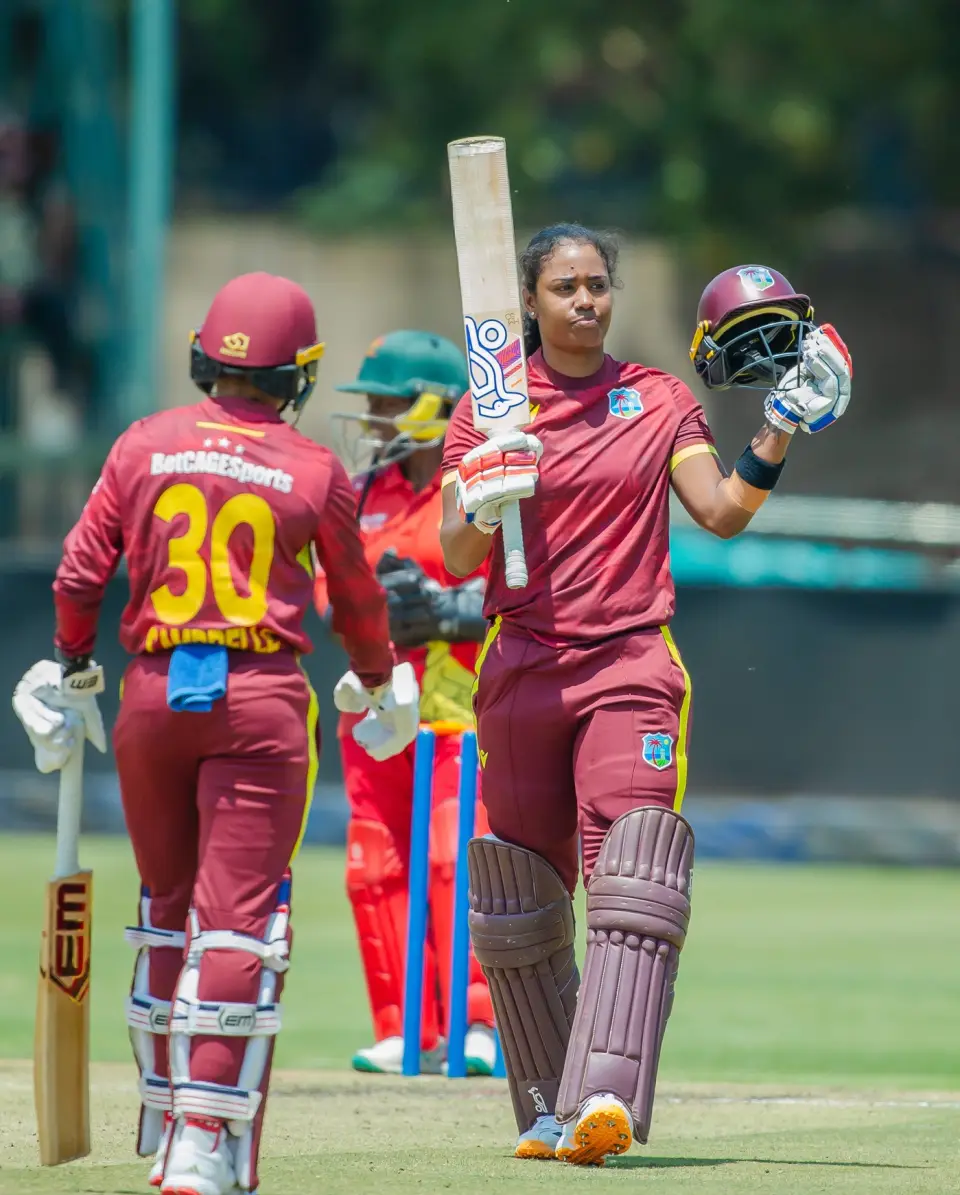
    In a dominant display of youth women’s cricket at the Cricket West Indies Rising Stars Women’s Under-19 competition on Monday, Barbados secured a commanding 90-run victory over the Leeward Islands, anchored by a career-defining Player-of-the-Match performance from opening batter Eboni Brathwaite.

    This third-round fixture marked Barbados’ second straight win in the tournament, after rain and poor conditions forced the abandonment of their opening-round clash, leaving them already with momentum heading into Monday’s matchup. Held at Antigua’s iconic Coolidge Cricket Ground, the match saw Barbados win the toss and elect to bat first, setting an imposing target for their opponents from the first ball.

    Brathwaite, opening the innings for Barbados, delivered a record-worthy knock that captivated the small on-site crowd and viewers watching the streamed match. Facing 76 deliveries, the teenage batter remained undefeated, smashing a staggering 135 runs, punctuated by 17 blistering fours and seven powerful sixes. Her innings yielded a remarkable strike rate of 178, setting the tone for a massive total that would prove out of reach for the Leeward Islands.

    Support came from the rest of Barbados’ batting line-up: Jadaeya Holder contributed five runs, Theanny Hebert-Mayers added eight, and Zaniyah Bruce rounded out the innings with an unbeaten 20. When the 20 allotted overs came to a close, Barbados had posted 206 runs for the loss of just two wickets, a dominant total that put enormous pressure on the Leeward Islands’ batting unit.

    In response, the Leeward Islands struggled to match Barbados’ aggressive intensity, despite solid contributions from their top-order batters. Zara Skerritt led the team’s scoring with an unbeaten 36 runs, while Innka Wilson chipped in with a useful 26. By the end of their 20 overs, the Leeward Islands had only managed 116 runs for the loss of three wickets, falling 90 runs short of the required target.

    Barbados’ bowlers shared the wickets evenly, with Zoe McCallister, Zaniyah Bruce, and Camia Matthew-Brome each claiming one wicket to keep the Leeward Islands’ run chase in check.

    Looking ahead, Barbados will turn their attention to their next fixture, where they are set to face Jamaica on Wednesday as they continue their push for a top position in the tournament standings.

  • Tyra Fenton Finishes Ninth in Women’s 200 Metres at World U20 Championships

    Tyra Fenton Finishes Ninth in Women’s 200 Metres at World U20 Championships

    In a landmark showing for small-island athletics on the global stage, Tyra Fenton of Antigua and Barbuda has secured ninth place overall in the women’s 200-meter final at the World Under-20 Championships, capping off a breakout competition for the rising young sprinter.

    Fenton defied expectations to navigate through the preliminary heats and semi-final rounds, punching her ticket to the final against a stacked field of the most promising junior sprint talent from across the globe. Throughout the tournament, she held her own against competitors who entered the event ranked among the top young sprinters in the world, turning in consistent, competitive performances that earned her a spot in the decisive final round.

    Following her historic final appearance, the Antigua and Barbuda Athletic Association (ABAA) released a statement celebrating Fenton’s performance, highlighting the grit, natural athleticism, and steady poise she demonstrated from the first qualifying heat through the final race. Association leaders commended the 19-and-under athlete for rising to the moment against elite international competition, noting that her run marked a major milestone in her burgeoning career.

    For both Fenton as an individual athlete and the Caribbean nation of Antigua and Barbuda, reaching the final of one of athletics’ most prestigious global junior events stands as a breakthrough achievement on an international stage. It is rare for athletes from the small dual-island nation to advance to the final round of a world championship-level event, making Fenton’s run a source of national pride in the country’s athletics community.