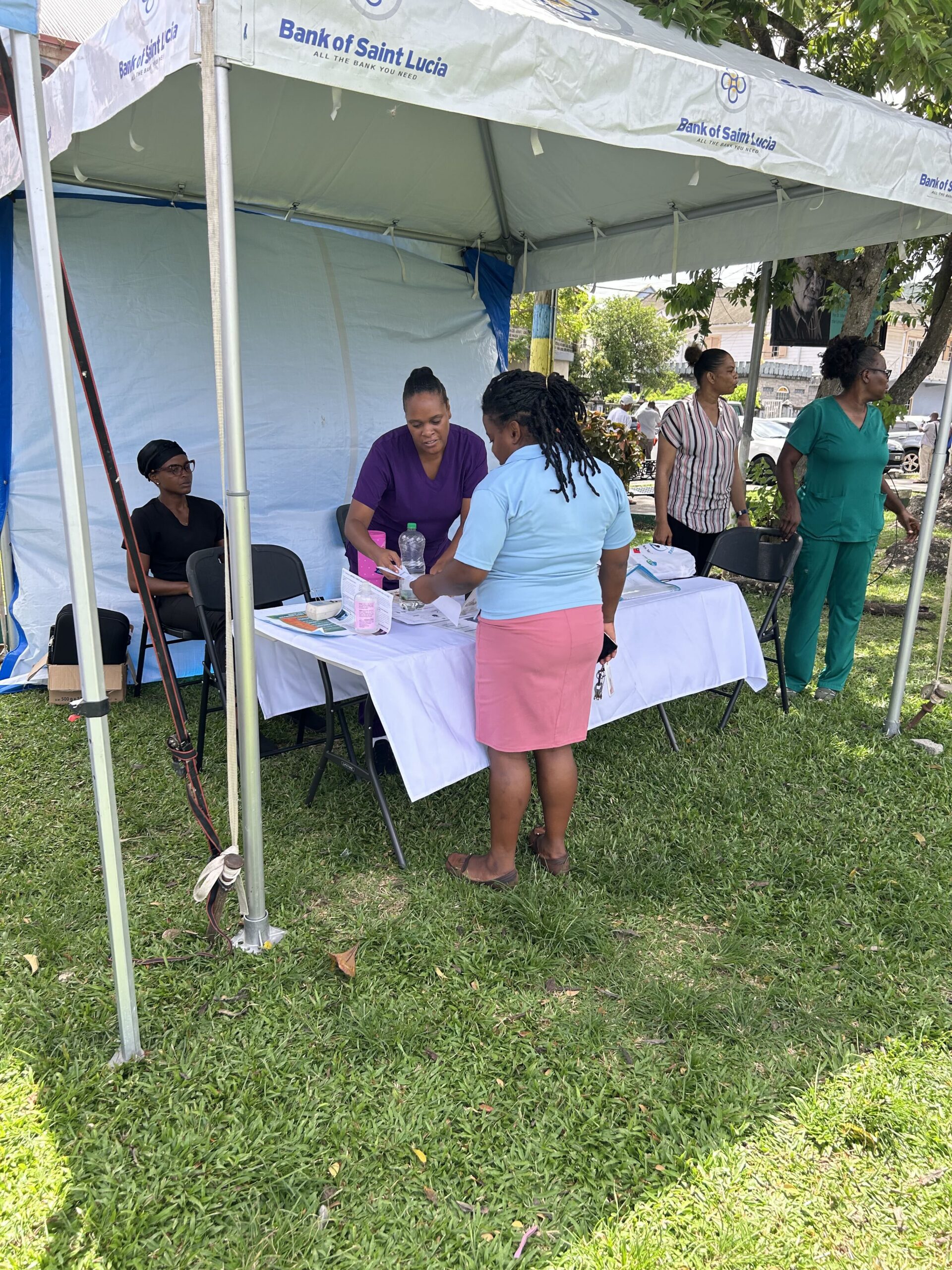
Hearing loss can impact people across all age groups and backgrounds, triggered by a wide range of causes. For some, it sets in suddenly after unprotected exposure to blaring concert speakers, while others are born with the condition, and many more experience a gradual, often unnoticeable decline as they age. To shine a spotlight on the challenges faced by deaf and hard-of-hearing Saint Lucians, the local Society for the Deaf hosted a community-focused Deaf Health Fair on September 24 at Castries’ Derek Walcott Square, kicking off a full week of targeted awareness-building activities.
Lyndell St Ville, president of the Society for the Deaf, outlined that the core mission of the event was twofold: to expand public access to critical hearing health services, and to bridge the gap in understanding between hearing communities and deaf residents. The one-day fair offered a range of free and low-cost resources to attendees, including professional hearing screenings and comprehensive assessments, official public health guidance from Saint Lucia’s Ministry of Health, and introductory workshops teaching basic conversational sign language. St Ville noted that participants left the workshops able to exchange simple everyday greetings, such as “hello” and “good morning”, using sign, a small step toward more inclusive daily interaction.
Beyond connecting attendees with immediate services, event organizers aimed to draw attention to a underrecognized public health risk: preventable hearing damage caused by unacknowledged exposure to excessive noise. St Ville emphasized that prolonged contact with loud sounds and music is a growing hazard for many Saint Lucians, pointing to common risky behaviors such as driving with excessively loud audio systems that emit deafening volumes. Repeated, unprotected exposure to these environments, he warned, gradually erodes hearing health over time, often leading to permanent loss that could have been avoided.
Natalie John, an audiologist who recently relocated back to Saint Lucia, was on hand at the fair to walk attendees through what a standard hearing assessment entails. She explained that evaluations begin with a simple physical examination of the ear canal to check for common, easily treatable issues such as excess wax buildup, perforated eardrums, or abnormal discharge. After the initial check, patients are tested across a range of sound frequencies to identify the quietest volume they can detect, with normal hearing defined as falling between 0 and 20 decibels, John confirmed.
John expanded on the multiple pathways that lead to hearing loss, echoing St Ville’s warning about noise-related damage. Congenital hearing loss affects some children from birth, but many more cases are acquired over a lifetime. Standing within close proximity to powerful concert speakers can inflict permanent damage on the delicate inner structures of the ear, she explained, while workers in high-noise industries such as construction face elevated risk if they fail to wear required hearing protection. Not all hearing issues are permanent, however: John noted that even a simple blockage from excess earwax can impair hearing, a problem that is easily resolved with professional removal.
For the Society for the Deaf, hearing screenings and awareness events are just the first step in creating a more inclusive nation. St Ville argued that Saint Lucia must continue working to remove barriers that exclude deaf and hard-of-hearing people from schools, workplaces, and public community spaces. He highlighted the Lady Gordon Opportunity Centre, formerly known as the School for the Deaf, as an important existing resource that provides tailored support to students across the full spectrum of hearing loss. Even with this support in place, St Ville stressed that much more needs to be done to meet the needs of the deaf community – and that ongoing outreach events like the Deaf Health Fair are a critical part of moving that goal forward.