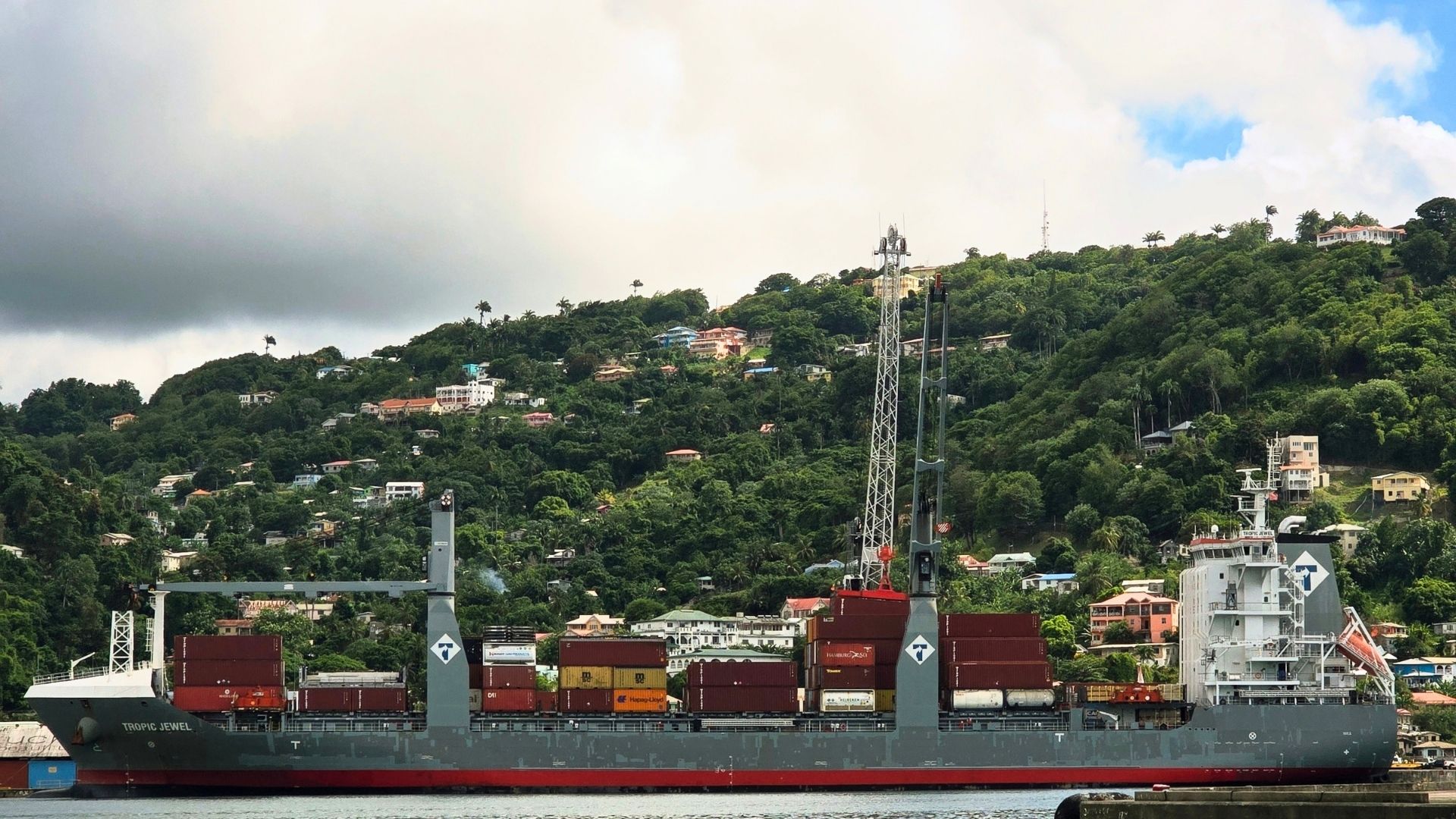
Two fatal boating collisions off Saint Lucia’s western coast in 2026 have pushed long-overlooked gaps in the island nation’s maritime regulation into public and policy focus, just days ahead of the annual global observance of World Maritime Day on September 24. In an interview with the St Lucia Times two days before the commemoration, Tariq Khan, chief executive officer of the still-young Saint Lucia Chamber of Shipping, outlined the organization’s urgent priorities, progress and actionable plans to strengthen the island’s maritime sector amid mounting global and local pressures.
Founded just seven months prior, the Chamber has rapidly gained traction among industry and government stakeholders, centering three core goals from its early days: boosting port operational efficiency, advancing environmentally sustainable shipping practices, and upgrading and enforcing rigorous maritime safety regulations. Reflecting on the outsized role that shipping plays in Saint Lucia’s daily function, Khan emphasized the urgency of upgrading national port infrastructure in the coming year. “We rely on shipping heavily to import most of our food items, construction materials, medicines and so on,” he explained, noting that every improvement to maritime operations ripples directly through the island nation’s entire economy and public welfare.
Today, global shipping networks face unprecedented strain driven by geopolitical instability, with one key flashpoint being the ongoing U.S.-Iran conflict that has left dozens of seafarers stranded in the Strait of Hormuz before the waterway was indefinitely closed. This closure has created a critical chokehold on global supplies of essential commodities, from crude oil to the fertiliser that forms the backbone of global agricultural production. For small island nations like Saint Lucia, which are almost entirely dependent on imported goods, the ripple effects of this disruption are already being felt. Earlier in September 2026, Prime Minister Philip J Pierre revealed that Saint Lucia has recorded an Eastern Caribbean dollar (EC$) 26 million revenue deficit between April and September, a shortfall driven primarily by skyrocketing global fuel prices that raise shipping and import costs across the board.
One underdiscussed cascading risk, Khan warned, is the coming impact of global fertiliser shortages on Saint Lucia’s food security. The Chamber publishes a weekly industry insight bulletin to alert stakeholders and the public of emerging risks, and recent editions have highlighted that fertiliser shortages will soon translate to constrained domestic and regional food supplies, driving up prices for basic staple goods that rely on fertiliser for production. Unlike large economies, small island developing states have little buffer to absorb these supply shocks, making proactive intervention critical.
To address this specific challenge, the Chamber is already developing targeted, homegrown solutions that reduce Saint Lucia’s dependence on imported fertiliser. The organization has allocated time and resources to support the expansion of local and regional organic fertiliser production capacity, including exploring large-scale use of sargassum, a locally abundant marine resource that has already been successfully commercialized by Saint Lucian producer Algas Organics. “If we can scale this production, we don’t have to rely too heavily on imported fertiliser, and in that we are able to make food supplies a bit more sustainable for us within the sector, within our region,” Khan explained.
Beyond securing fertiliser supplies, the Chamber is working to cut overall import costs for all goods by rethinking traditional trade routes and expanding regional and alternative global trade partnerships. For decades, most of Saint Lucia’s imports have been sourced from the United States, the United Kingdom and distant European markets, but shifting geopolitical and energy trends have made these long-haul routes increasingly expensive and unpredictable. To offset this, the organization is advancing plans for a regional Caribbean shipping network that would allow for more efficient movement of goods between Caribbean nations, cutting down on long-haul shipping costs. Khan confirmed that the Chamber has already secured commitments from two groups of private investors to back the initiative, meaning the project will move forward without adding financial burden to Saint Lucia’s national treasury or government. Brokers are currently assessing potential large-capacity cargo vessels to serve the regional trade route.
The organization is also exploring expanded direct trade with the African continent as a more cost-effective alternative to traditional suppliers. “We will see trade routes becoming more and more difficult to traverse and these challenges will have huge increases in costs for shipping,” Khan noted. “With the African continent, we have one straight shot across the Atlantic Ocean so we can see if our importers, our traders, our manufacturers can start accessing goods from that continent so that it becomes a bit more accessible and cheaper than what we’re experiencing right now.”
A further core priority for the Chamber is building a skilled local workforce for the growing maritime sector, investing in training programs, skills development, resource allocation and industry expertise to prepare more Saint Lucians for careers in the growing field.
Most notably, following a string of high-profile fatal maritime disasters across the Caribbean and along Saint Lucia’s own coast, the Chamber is pushing for urgent updates to national maritime regulations and enforcement mechanisms. Recent tragedies include the sinking of the MV Barima near Guyana that killed at least 72 people, and the two deadly collisions near Soufrière, Saint Lucia that claimed five lives earlier this year. “Those incidents …and all those things should not be happening. Overloading of vessels should not be happening. There would be regulations and enforcement to prevent those things from happening,” Khan said. The Chamber, working in partnership with Invest Saint Lucia, has already drafted a policy memo outlining proposed regulatory reforms that has been submitted to Minister of Investment Ernest Hilaire, who is set to present the plan to the Saint Lucian cabinet for approval.
This year’s World Maritime Day theme, “From Policy to Practice: Powering Maritime Excellence,” aligns directly with the Chamber’s work, highlighting the global imperative of translating international maritime safety and sustainability rules into actionable, enforced local policy. For Saint Lucia, that translation could not come soon enough, as the young organization works to address immediate supply chain risks and build a more resilient, safe and prosperous maritime sector for the island’s future.