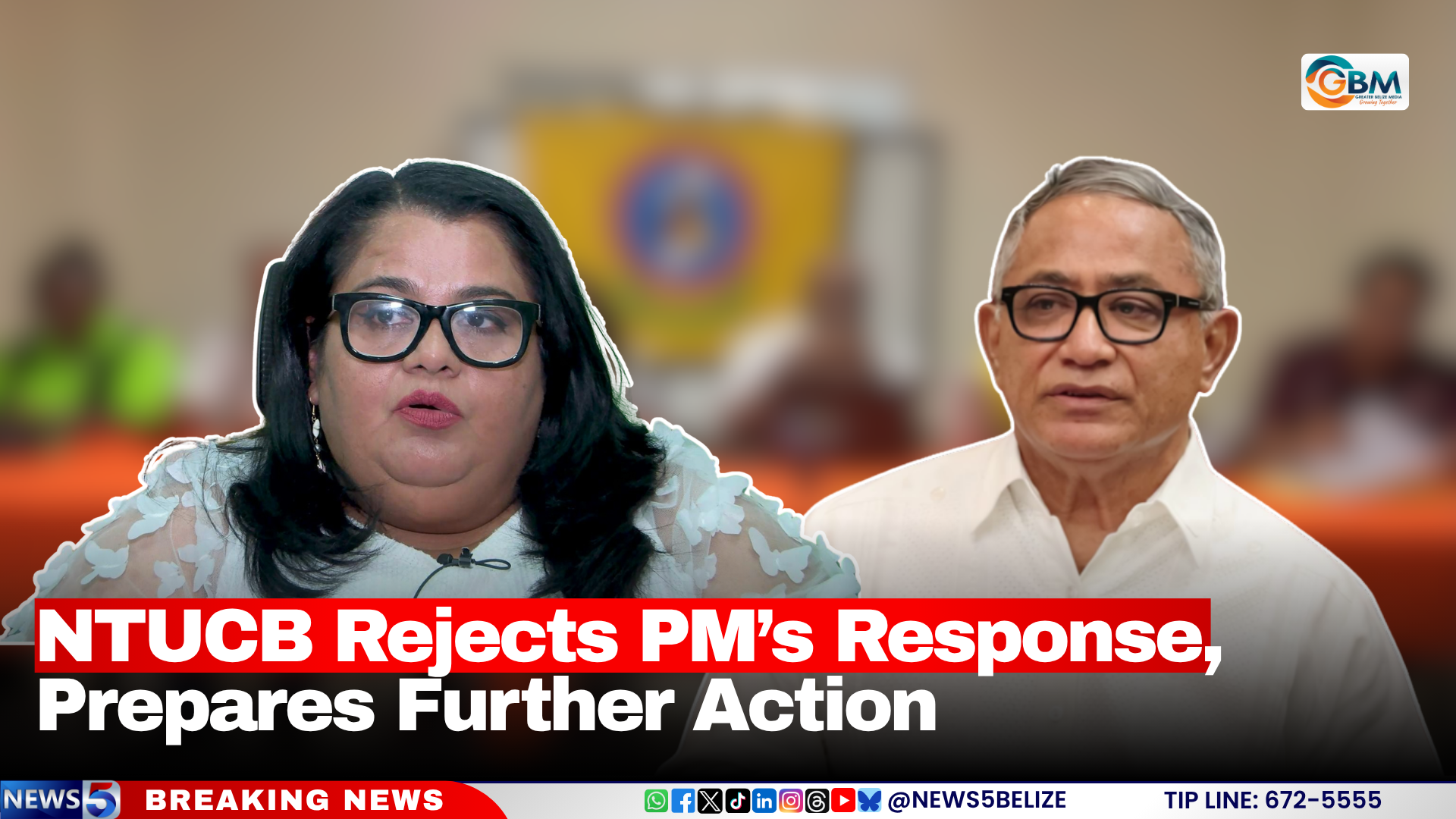
As Prime Minister John Briceño participates in the 81st United Nations General Assembly in New York, Belize’s largest trade union umbrella body has issued a firm rejection of the government’s response to its 11 core demands, announcing that escalated collective action is on the horizon.
The National Trade Union Congress of Belize (NTUCB) confirmed that none of the 11 demands put forward to the administration were resolved following Briceño’s September 15 formal reply. Multiple key demands were completely sidelined in the government’s response, the union says, including a long-sought adjustment to the Vo-Tech salary scale, two outstanding back-pay disputes affecting members of the Belize National Teachers Union (BNTU), and the establishment of a clear public timeline to fill the long-vacant Ombudsman position.
One of the most contentious points of disagreement centers on representation for organized labor on the board of Belize Telemedia Limited (BTL). Briceño’s administration has maintained that labor already holds a seat on the board through a representative from the Social Security Board. But the NTUCB has pushed back firmly against this framing, noting that the existing board seat is not a designated labor union position — it is occupied by an individual who was elected to serve on the Social Security Board, not to advocate explicitly for organized labor’s interests. The union adds that the government could bring BTL’s governance structure in line with long-standing tripartite principles through administrative adjustments to its own appointed representatives, with no need for time-consuming legislative overhauls.
The NTUCB also revealed that it is not alone in its positions on key governance and transparency reform issues. Both the Belize Chamber of Commerce and Industry and the Belize Network of NGOs have aligned with the union on priorities including dedicated labor representation on the BTL board, strengthened whistleblower protection frameworks, and revisions to the proposed Revenue Authority bill.
All these reforms are tied to legislation that would bring Belize into full compliance with the United Nations Convention against Corruption, the union explains. Implementing these measures would not only meet the country’s international obligations but also strengthen national transparency, improve government accountability, and reinforce the rule of law across all sectors.
Beyond the unmet individual demands, the NTUCB has criticized the Briceño administration’s overall approach to stakeholder consultation. The union says it has received no binding time-bound commitments from the government to address the demands, nor has it been given a confirmed date for a formal sitting to negotiate outstanding issues.
Following the release of the prime minister’s response, the NTUCB’s governing council has already convened to assess the government’s reply, and the union has also held talks with the Joint Social Partners coalition to coordinate next steps. In the coming days, the NTUCB says it will roll out a series of targeted collective actions, which will grow in scope and impact until all 11 of its original demands are fully addressed by the government.