Amid growing debate over artificial intelligence’s disruptive impact on higher education, a leading global education technology expert has issued a critical warning to faculty at the University of the West Indies Five Islands Campus: AI detection tool scores should never be treated as definitive proof that a student cheated on an assignment by using generative AI.
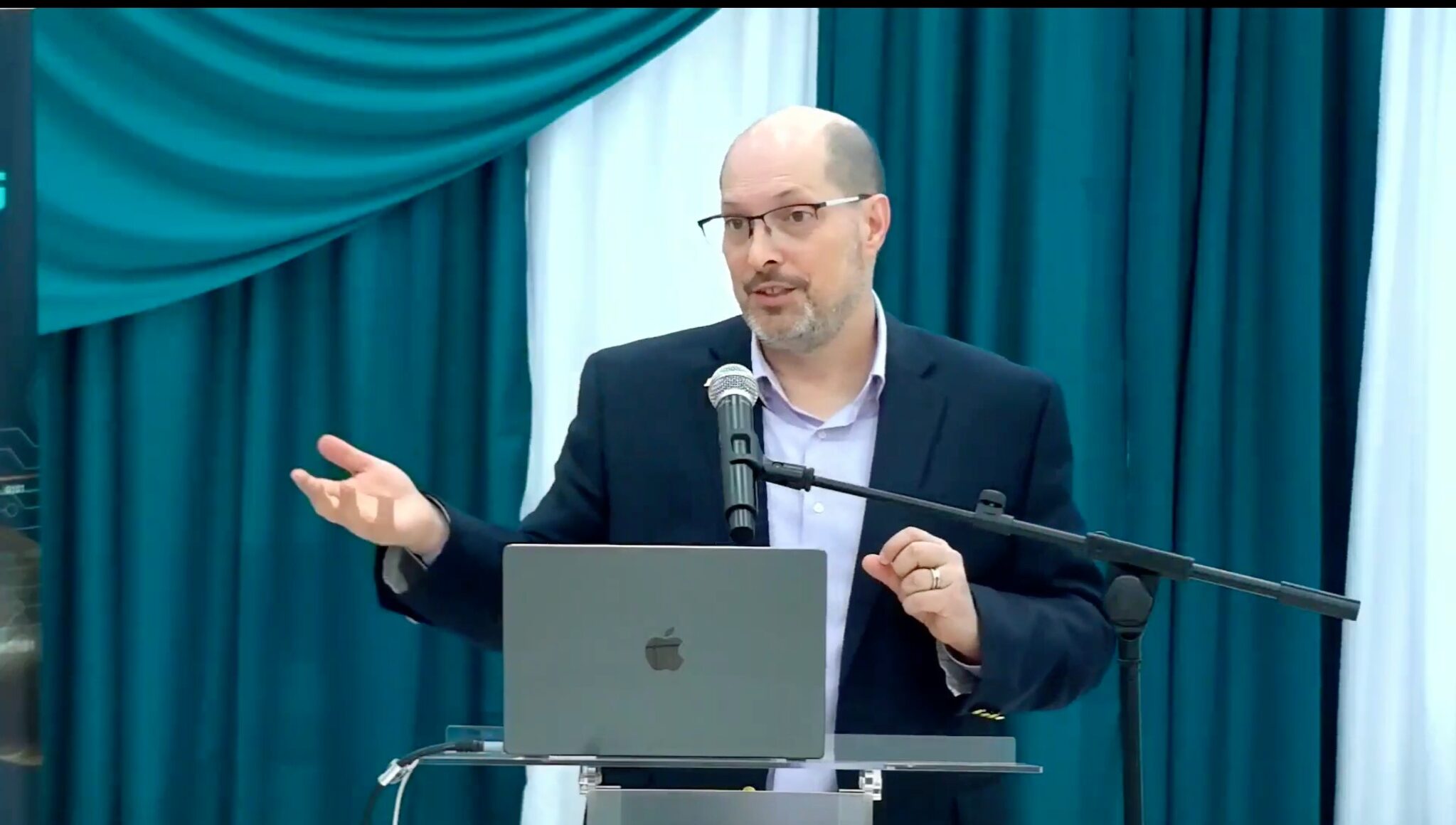
Dr. Joseph South, chief innovation officer at the International Society for Technology in Education (ISTE), shared this assessment during a recent public lecture and Q&A session hosted by the campus. When asked to outline evidence-based best practices for working with AI detection platforms, South cut through common misconceptions with a clear, uncompromising take: “They do not work. There’s no AI detector that’s been proven to work consistently.”
South’s warning was bolstered by an anecdote from UWI Five Islands principal Professor Justin Robinson, who shared a striking example of how unreliable these tools can be. Robinson told attendees that one of his colleagues had submitted an academic paper he wrote back in 2015 — years before the release of the large language models that power today’s mainstream generative AI writing tools — to popular detection platform Turnitin. Despite the paper being entirely human-written years before current AI tools even existed, the tool assigned it an AI-generated likelihood score above 80%.
South acknowledged that detection results can play a limited role in academic integrity processes: if a lecturer already has reasonable concerns about a student’s work, a high score can act as a first prompt for further investigation. But he emphasized that a single detector result should never be used to resolve the question of academic misconduct on its own, given the tools’ well-documented rate of false positives.
The discussion also touched on a deeper, growing rift of mistrust between students and faculty around AI use in academia. When one lecturer asked how universities can rebuild mutual trust when instructors suspect students of over-relying on AI to complete work, and students in turn suspect that lecturers themselves use AI to prepare course materials and assignments, South highlighted a fundamental shift AI has already brought to higher education assessment.
Generative AI makes it possible to produce polished, professional-looking final written work in a fraction of the time it once took a human to write the same assignment. This, South explained, undermines a decades-long core assumption of higher education assessment: that a finished, polished final assignment accurately reflects what a student has learned over the course of a class.
To adapt to this new landscape, South urged post-secondary institutions to fundamentally shift how they evaluate student learning. Instead of focusing the majority of assessment weight on the final written product students turn in at the end of a project or unit, universities should prioritize measuring the incremental work students complete throughout the learning process. This includes tracking how students develop their core arguments, refine their ideas over time, and explain their reasoning step by step.
“I think we need to shift our assessment methods to be more about the process than the product,” South said.
Beyond assessment reform, South also called for higher education communities to host open, transparent discussions about appropriate AI use for both faculty and students. Setting clear, shared expectations for how the technology can and cannot be used across all campus roles, he argued, will help ease the growing suspicion on both sides. More importantly, this open approach will give students the space to learn through practice: to understand when AI can act as a helpful learning tool, and when they need to complete critical thinking and analysis work independently.