博客

  • Emone Chloe Skai Hodge Arrives in St. Maarten to Represent Antigua and Barbuda in Regional Pageant

    Emone Chloe Skai Hodge Arrives in St. Maarten to Represent Antigua and Barbuda in Regional Pageant

    A new chapter of cultural representation and personal ambition has begun for Emone Chloe Skai Hodge, as the young delegate from Antigua and Barbuda has officially touched down on the island of St. Maarten to compete in one of the Caribbean’s most anticipated regional beauty pageants. The arrival marks the starting line of a weeks-long journey that will see Hodge go head-to-head with talented contestants from dozens of neighboring Caribbean nations, all vying for the prestigious regional title and the opportunities that come with it.

    Local pageant organizers greeted Hodge upon her arrival at Princess Juliana International Airport, where she expressed her excitement to connect with competitors from across the region, share the unique cultural heritage of her home country, and embrace the full experience of the competition. In a brief statement to press after clearing customs, Hodge noted that she has spent months preparing for this moment, working on public speaking skills, cultural presentations, fitness, and community outreach projects that align with the pageant’s core values of leadership and service.

    The regional pageant, a long-standing annual event in the Caribbean, is far more than a traditional beauty competition. It serves as a platform for young women across the region to amplify social causes, build cross-island professional networks, and advance personal and professional goals. Many past titleholders have gone on to launch careers in public service, non-profit leadership, education, and the entertainment industry, using the platform they gained through the pageant to create meaningful change in their home communities.

    As the countdown to the final competition begins, supporters back in Antigua and Barbuda have already rallied around Hodge, sharing messages of encouragement across local social media pages and community groups. The entire nation is now waiting to watch her represent their country on the regional stage, with many confident that she will make a lasting impression throughout the competition.

  • Caribbean strengthens access to climate finance through loss and damage funding workshop ahead of US$250M grant window

    Caribbean strengthens access to climate finance through loss and damage funding workshop ahead of US$250M grant window

    Small island developing states across the Caribbean have emerged from a landmark capacity-building workshop with enhanced skills and clear guidance to unlock millions in dedicated climate grant funding, designed to strengthen regional resilience and address the devastating climate impacts that have long held back development across the region.

    Hosted jointly by the Caribbean Development Bank (CDB) and the UN-hosted Fund for Responding to Loss and Damage (FRLD), the two-day workshop gathered senior government officials and national focal points from 15 eligible Caribbean nations in Bridgetown, Barbados, from May 12 to 13, 2026, according to an official CDB press statement. The gathering centered on preparing competitive funding proposals for the FRLD’s ground-breaking Barbados Implementation Modalities (BIM), a $250 million pilot grant program with a final application deadline of June 15, 2026.
    CDB President Daniel M. Best opened the workshop by emphasizing the urgent need for transformative investment in climate resilience across the region. For decades, major climate-driven disasters including hurricanes Maria, Irma, Dorian, Beryl, and Melissa have inflicted catastrophic damage on Caribbean economies, pushing small nations into development reversals where total losses often amount to multiple times a country’s entire annual gross domestic product. “The real lesson extends beyond the disaster itself; our response must evolve into bankable and scalable investment pipelines that reduce future losses,” Best noted.
    With regional climate financing needs estimated at roughly $14 billion per year to address ongoing and future climate impacts, the workshop moved beyond high-level dialogue to deliver hands-on technical support. Attendees walked through proposal development requirements, eligibility guidelines, and priority intervention frameworks, equipping national teams to submit strong, fundable applications ahead of the mid-June deadline. Participating countries spanned the entire Caribbean basin: Antigua and Barbuda, The Bahamas, Barbados, Belize, Cuba, Dominica, the Dominican Republic, Grenada, Guyana, Haiti, Jamaica, Saint Kitts and Nevis, Saint Lucia, Saint Vincent and the Grenadines, and Suriname.
    FRLD Executive Director Ibrahima Cheikh Diong reaffirmed the fund’s commitment to correcting the global climate injustice that has left the Caribbean — responsible for less than 1% of global greenhouse gas emissions — bearing a wildly disproportionate share of climate harm. “The FRLD was created precisely to address the critical gap in responding to loss and damage, and the Barbados Implementation Modalities opens a clear pathway to finance,” Diong explained. “We are committed to ensuring that Caribbean countries have the knowledge and support they need to access this fund. Workshops like this one, co-designed with CDB, are central to that mission.”
    The workshop also included input and collaboration from key regional climate and disaster institutions, including the Caribbean Community Climate Change Centre (CCCCC), the Caribbean Catastrophe Risk Insurance Facility Segregated Portfolio Company, and the Caribbean Disaster Emergency Management Agency. Their participation is expected to strengthen collaborative cross-border and regional funding proposals, unlocking greater collective impact for shared climate challenges.
    Notably, CDB and the CCCCC are the only two regional Caribbean institutions accredited to both the global Adaptation Fund and Green Climate Fund, a status that positions them as trusted, accessible intermediaries for countries seeking to access FRLD resources. The BIM initiative also aligns directly with CDB’s newly launched 10-year Strategic Plan 2026–2035, branded “Transforming the Caribbean for Resilience,” which identifies scaled climate action and expanded access to climate financing as top institutional priorities for the coming decade. By building national capacity to secure and deploy loss and damage funding, CDB officials say the institution is translating its regional resilience vision into direct, tangible support for the vulnerable communities on the front lines of climate change.
    As the application deadline approaches, eligible nations are being encouraged to maintain close coordination with CDB and their national focal points to refine priority intervention plans and submit robust, competitive proposals to access the transformational funding on offer.

  • LIVE on DNO FROM 6PM: Novena in honour of Holy Spirit night 1 – Called to be ambassadors to Christ

    LIVE on DNO FROM 6PM: Novena in honour of Holy Spirit night 1 – Called to be ambassadors to Christ

    The submission received for news processing only contains social media sharing controls (including share, tweet, share, and pin options) and a link to an image hosted on an external news server. No actual text-based news content, core event details, or contextual information about the reported story was included with the submission. Without the full body of the original news article, it is not possible to conduct a complete analysis, rewrite, or contextual breakdown of the reported event. Recipients of this incomplete submission require additional information including the full text of the original news story to carry out the requested processing tasks.

  • Dominica showcases tourism growth and major development plans at CHTA Marketplace 2026

    Dominica showcases tourism growth and major development plans at CHTA Marketplace 2026

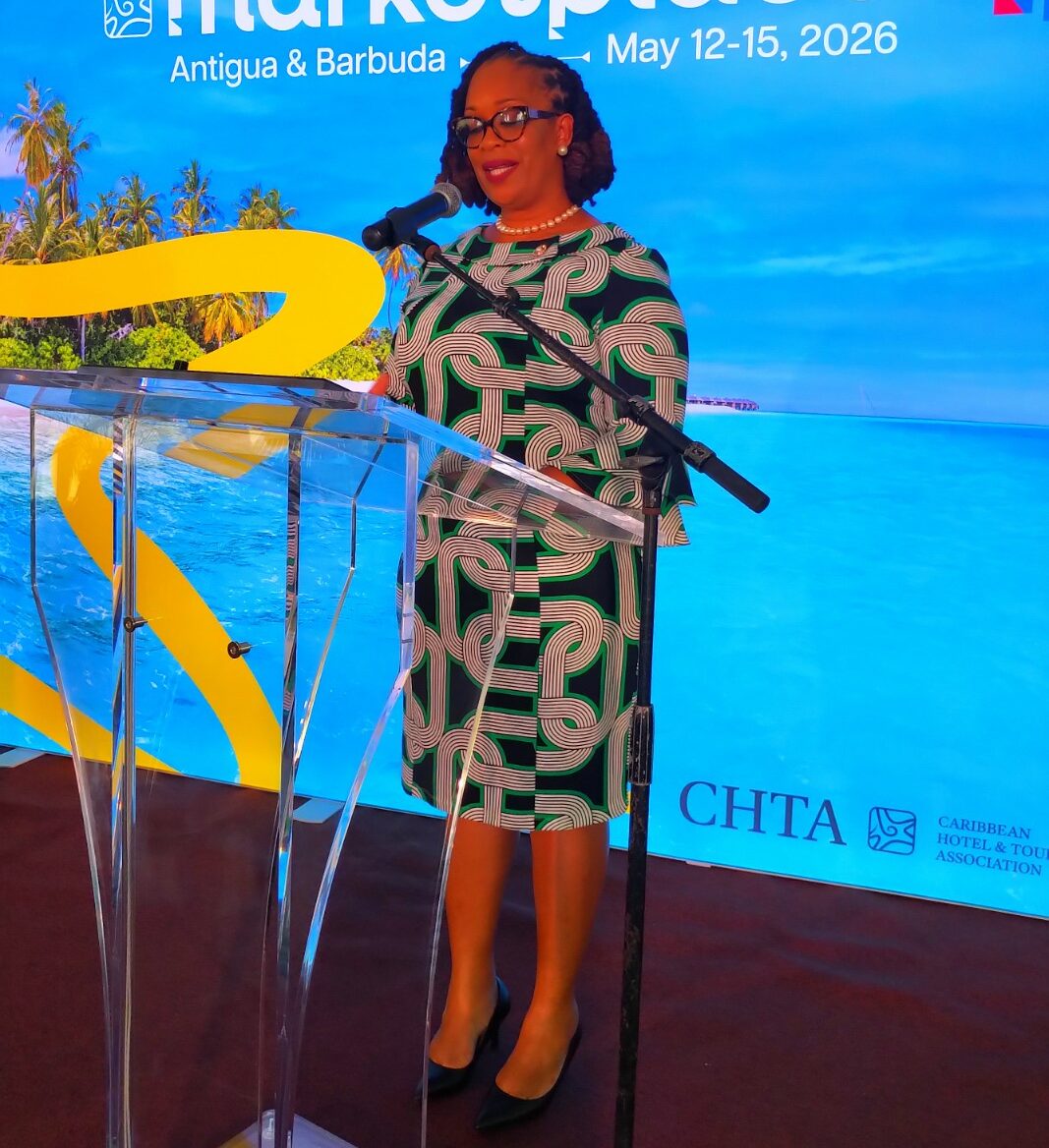
    At the 2026 Caribbean Hotel and Tourism Association (CHTA) Marketplace hosted in Antigua and Barbuda, the Caribbean island nation of Dominica has emerged as a standout high-performing travel destination, drawing industry-wide attention for its rapid tourism growth and long-term sustainable development strategy.

    As a Gold Sponsor of the region’s most influential tourism industry gathering, Dominica’s tourism leadership took center stage at an official press conference on May 14, where Marva Williams, CEO and Director of Tourism for the Discover Dominica Authority (DDA), delivered a comprehensive presentation to an audience of regional and international journalists, global travel industry partners, and cross-sector tourism stakeholders.

    Williams opened her address by framing Dominica’s current moment as an unprecedented era of transformation for its tourism sector, noting that global traveler preferences are shifting sharply toward authentic, eco-conscious, wellness-focused experiences that go beyond generic beach getaways. Positioned as the Caribbean’s premier “Nature Island,” Dominica is perfectly aligned to capture this growing global demand, she explained.

    Backing up that claim with official data, Williams revealed that total visitor arrivals to Dominica grew by an average of 15% year-over-year in 2025, climbing from 432,989 visitors in 2024 to 496,635 last year. The solid growth was driven by double-digit gains across both core segments of the island’s tourism industry: stayover travel and cruise tourism.

    Stayover arrivals, a key metric for long-term revenue generation, jumped 19% in 2025 to hit 99,846 visitors, a figure that officially surpasses Dominica’s pre-pandemic 2019 arrival numbers. Early 2026 data indicates this upward momentum is holding steady, with first-quarter stayover arrivals posting an additional 10% increase compared to the same three-month period in 2025.

    Cruise tourism, another cornerstone of Dominica’s visitor economy, also posted record-breaking results. For the 2025/2026 cruise season running from October 2025 through April 2026, the island welcomed 409,761 cruise passengers, marking a 23% increase over the prior season and delivering the strongest cruise performance Dominica has recorded since the 2010/2011 season.

    Alongside releasing the latest arrival data, Williams outlined the nation’s evolving marketing strategy designed to build on this momentum. Central to these efforts is the award-winning “Nature of Love” campaign, which frames Dominica as a top-tier destination for romantic getaways, wellness retreats, adventure travel, and immersive nature experiences that connect visitors to the island’s unspoiled ecosystems. She also launched a new seasonal push, inviting global travelers to “Summer the Nature Island Way,” highlighting the wide range of summer activities available on the island, from mountain hiking and deep-sea diving to farm-to-table culinary experiences and family-friendly cultural excursions.

    Williams also dedicated a portion of the presentation to updating attendees on the large-scale infrastructure and development projects that are set to reshape Dominica’s tourism offering in the coming year. Flagship projects highlighted include the ongoing construction of a new international airport, the development of a utility-scale geothermal energy plant to support sustainable energy access across the island, and the Dominica Cable Car project, which is on track to open in October 2026 as the world’s longest single-cable cable car system, granting visitors unprecedented access to the island’s interior mountain rainforests.

    Additional updates were shared on expansion across the marine and hospitality sectors, including plans for a new full-service marina to accommodate private yachting visitors, continued investment in luxury wellness tourism infrastructure, and the creation of the world’s first dedicated Sperm Whale Reserve, a pioneering conservation initiative that also offers ethical, low-impact whale watching experiences for visitors.

    Dominica’s growing global profile was also a key talking point: the island was recently named one of National Geographic’s Best Places to Travel in 2026, and was featured in *Caribbean Travel Trends 2026 Magazine* as one of the Caribbean’s fastest-growing tourism destinations, with the publication noting 22% year-over-year growth driven by surging demand for nature and adventure travel experiences.

    Throughout the presentation, Williams reaffirmed Dominica’s unwavering commitment to balancing tourism growth with environmental stewardship and community benefit. As the island continues to expand its tourism sector, all development is rooted in three core priorities: sustainable growth, climate resilience, and community-owned tourism initiatives that deliver broad economic benefits to local residents while protecting Dominica’s unique natural ecosystems and cultural heritage.

    Closing the presentation, the DDA expressed gratitude to the Caribbean Hotel and Tourism Association for the opportunity to participate in CHTA Marketplace 2026, and reaffirmed the authority’s commitment to deepening productive tourism partnerships across the Caribbean region and global travel markets.


  • Nighttime Detour and Single-Lane Traffic Planned for Section of All Saints Road

    Nighttime Detour and Single-Lane Traffic Planned for Section of All Saints Road

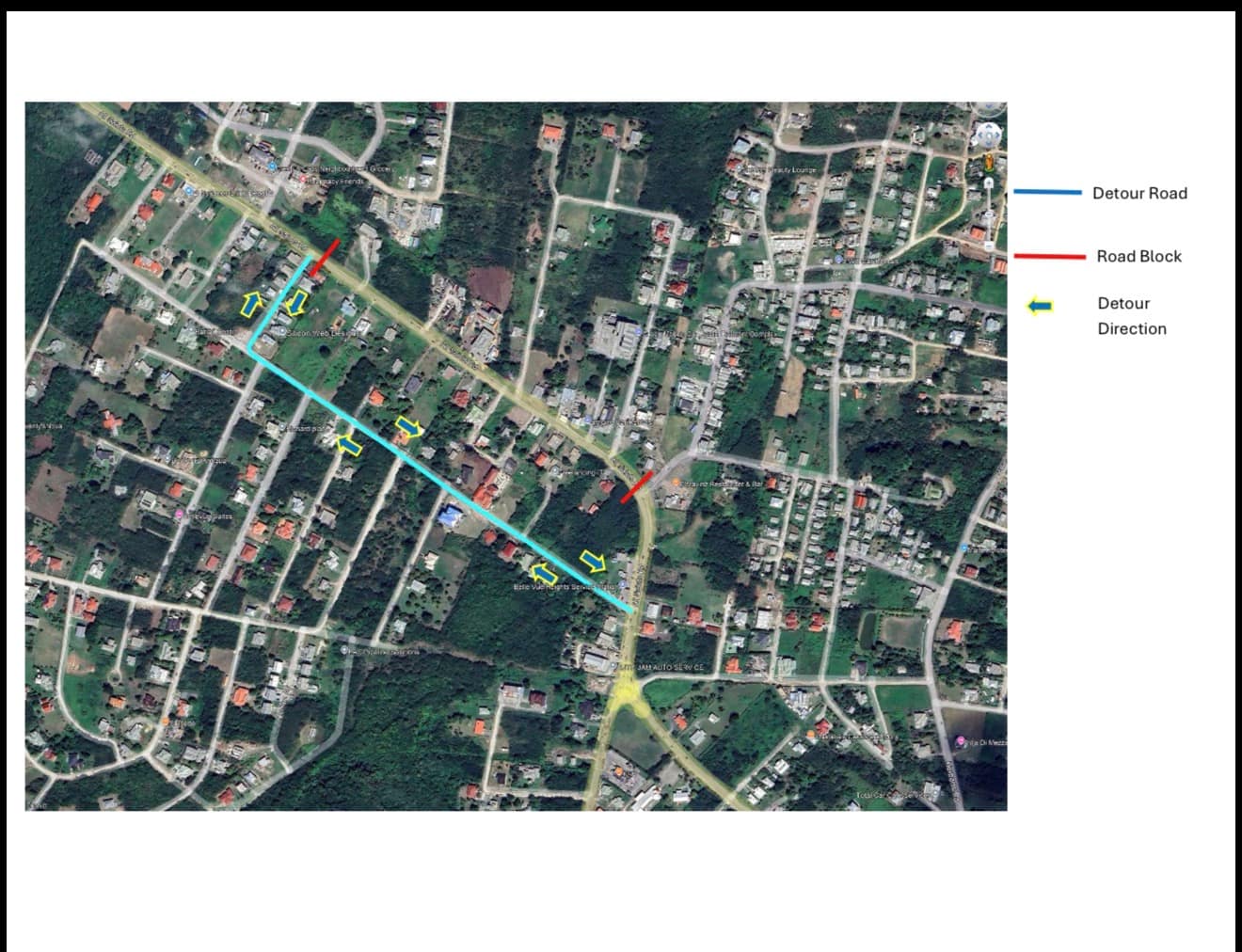
    The Government of Antigua and Barbuda’s Ministry of Works has issued a public advisory announcing major infrastructure upgrades along a key stretch of All Saints Road, set to trigger temporary traffic changes next decade. The works will take place between two prominent local landmarks – FADI Building Supplies and the Fresh and Eazy Supermarket – and follow a period of single-lane traffic operations on the corridor.

    Starting at 7:00 pm on Thursday, 14 May 2026, once single-lane access is suspended for the night, a full temporary detour will remain in effect until 7:00 am the following morning. The Ministry has outlined clear, direction-specific routes to guide motorists through the disruption. For drivers traveling out of town, the detour requires a right turn at Flex Hardware Store, then a return to All Saints Road via the route passing Heritage Preschool. Motorists heading into St. John’s town center will instead turn left at D’Cravinz, regaining access to the capital through the Herberts route.

    To minimize confusion and keep traffic moving, trained flag persons will be stationed at key points along the detour to assist commuters. Motorists are reminded that marked sections of the temporary route operate as one-way traffic zones, with all layout details clearly marked on official project maps. Directional signage has also been installed along the entire detour corridor to guide drivers traveling in both out-of-town and inbound directions.

    Local residents who live in the immediate area of the construction zone will retain limited access to their properties, though the Ministry has urged all road users to exercise extreme caution while traveling through the area. Heavy-duty construction machinery will be active in the work zone throughout the overnight closure, creating potential hazards for unaware passersby.

    Importantly, the advisory confirms that all commercial businesses located along the closed stretch of All Saints Road will remain open for operations during the works, meaning residents and customers can still access local shops and services. This overnight upgrade forms part of the broader, government-led All Saints Road Project, a long-term infrastructure initiative aimed at improving the corridor’s safety, capacity and longevity.

    Public works officials have urged all regular users of All Saints Road and stakeholders in the area to revise their travel plans ahead of the scheduled works, noting that short delays are inevitable during the overnight closure. Any members of the public with questions or concerns about the traffic changes or the project more broadly can contact the Project Implementation Management Unit directly at 562-9173 for further information.

  • Organisers gear up for busy Carnival season

    Organisers gear up for busy Carnival season

    Fresh off the successful conclusion of the 2026 Saint Lucia Jazz & Arts Festival, the Caribbean island of Saint Lucia has shifted its focus to one of its most anticipated annual cultural and entertainment spectacles: the 2026 edition of Lucian Carnival. Organized by the Carnival Planning and Management Committee (CPMC), the island’s premier celebration will unfold across June and early July, capping off with closing festivities on July 22, and a packed slate of activities is already underway to build excitement ahead of the main event. The schedule features everything from family-friendly Junior Carnival programming and national flagship competitions to a roster of private community and industry celebrations scattered across the island.

    One of the earliest key commitments to this year’s celebration came this Wednesday, when Heineken Saint Lucia – the local producer of the popular Piton Malta beverage – formalized its return sponsorship with an official cheque presentation, confirming it will once again back the 2026 Junior Carnival series. Tailored for young residents of the island, Junior Carnival will launch its 2026 programming this Friday, May 15, with the annual educational school tour, an initiative designed to introduce younger generations to the diverse cultural roots and modern traditions that define Lucian Carnival. The tour will make its first stop at the Gordon and Walcott Memorial School, located in the island’s capital city of Castries, before traveling to other campuses across Saint Lucia.

    Beyond preparations for youth-focused programming, the CPMC has also integrated community environmental stewardship into this year’s carnival lead-up. Last Thursday, the committee hosted a collaborative tree-planting activity at the Millet Bird Sanctuary alongside all delegates competing in the 2026 National Carnival Queen Pageant, tying the iconic cultural event to local conservation efforts.

    For musical artists across the region and the island, this week brought a major announcement: the CPMC has officially opened entries for the annual Groovy and Power Soca Competitions, one of the most high-profile segments of the Lucian Carnival lineup. Interested creators can submit their work through the official online entry form published by the committee. Updated competition rules for 2026 expand eligibility to both individual artists and group acts, though each participant or collective may only register, compete, and perform one track throughout all stages of the competition. The final deadline for all submissions is 10 p.m. local time on Thursday, May 28, 2026.

    Completing the preliminary carnival programming lineup, the beloved calypso segment of the celebration will launch its 2026 season next week, carrying forward a decades-long Lucian Carnival tradition. The first calypso tent opening will take place at South Calypso on Friday, May 22, with the KPT tent launching the following day on Saturday, May 23. Rounding out the opening slate, the Take Over Tent/Soca Village will kick off its 2026 schedule of events this Sunday, May 24.

  • WASCO steps up trucking, valving operations as drought continues

    WASCO steps up trucking, valving operations as drought continues

    One of the most intense prolonged dry periods in recorded history has pushed Saint Lucia’s public water system to a breaking point, forcing the national Water and Sewerage Company Inc. (WASCO) to maintain emergency water delivery and distribution protocols across the entire island to mitigate widespread shortages.

    In an official public update released Thursday, WASCO confirmed that months of dramatically below-average rainfall have pushed inflows at the country’s most critical water treatment facilities to dangerously low levels. Two major processing hubs, the Theobalds Water Treatment Plant — which serves populated communities stretching from Millet to Cap Estate — and the Hill 20 Water Treatment Facility, which supplies the Babonneau region, have both been hit particularly hard by the sustained drought conditions.

    The crisis is not isolated to northern and central parts of the island. Southern Saint Lucia’s water networks, which serve communities including Dennery, Beausejour, Patience, Soufrière and Choiseul, are also grappling with steep cuts to available supply. These reductions have forced lower production outputs across the board, adding unplanned strain to the island’s already overstretched distribution infrastructure.

    To address the immediate crisis, WASCO has ramped up emergency potable water trucking operations, prioritizing delivery to essential public services and the communities facing the most severe scarcity. The utility has also continued targeted community valving operations designed to create a more equitable distribution of remaining available water across all affected districts.

    Meteorological data confirms the severity of the dry spell that has gripped the island since June 2025. Speaking at a WASCO press briefing earlier this month, Director of Meteorological Services Vigil Saltibus explained that months of below-average rainfall have evolved into active developing drought conditions. The 2025 wet season finished with a 37% deficit in total rainfall compared to long-term averages, and the shortfall has carried over into the 2026 dry season with no meaningful relief.

    As of April 2026, accumulated rainfall between June 2025 and April 2026 ranks as the third driest such period on record, Saltibus confirmed. Dry, parched soils have absorbed any light scattered rainfall that has occurred, leaving almost no excess to replenish rivers, reservoirs and critical water catchment areas. This means natural water systems have had no opportunity to recover from months of depletion, keeping supply levels under constant pressure.

    Looking ahead, forecasts indicate that below-average rainfall will likely persist into the early stages of the 2026 hurricane season, a trend partially driven by a developing El Niño climate pattern. This extended dry forecast is expected to push demand for water even higher, worsening stress on already depleted reserves.

    Alongside emergency distribution efforts, WASCO has moved quickly to accelerate water quality testing across all affected distribution networks, working to uphold public safety standards even as inflows remain low. The utility is collaborating closely with the Water Resources Management Agency, the Ministry of Environmental Health, and both regional and international partners to ensure all water supplies remain fully compliant with World Health Organization safety protocols.

    In addition to short-term emergency response, WASCO highlighted long-term infrastructure projects aimed at boosting the water system’s resilience to future climate extremes. These include ongoing redevelopment works in the Patience region, designed to strengthen long-term supply reliability for the community.

    WASCO is urging all customers across the island to prioritize water conservation, store water supplies safely, and use existing reserves sparingly for the duration of the dry spell. The utility has also advised residents to monitor its official website and social media channels for the most up-to-date information on water trucking routes and valving schedule changes.

  • Kantonrechter wijst ontslagverzoek EBS tegen vakbondsleider Hellings af

    Kantonrechter wijst ontslagverzoek EBS tegen vakbondsleider Hellings af

    A Dutch-language Surinamese court ruling delivered on May 14 has delivered a major legal victory to organized labor in the country, turning down a request from state-owned utility N.V. Energie Bedrijven Suriname (EBS) to terminate the employment contract of Marciano Hellings, a long-serving EBS employee and leader of the company’s primary workers’ union. This latest decision marks the second time EBS has failed to secure judicial approval to remove Hellings from his role, with the full written judgment made public the day after the ruling.

    The legal battle is the most recent development in a years-long bitter conflict between EBS’ executive leadership and Hellings, who has worked at the state-run energy provider since 2011 and currently serves as president of the EBS workers’ union Organisatie van Werknemers Suriname (OWOS). Tensions between the two sides have flared repeatedly over the past several years, resulting in disciplinary action, multiple administrative suspensions, union-led work stoppages, and a series of overlapping legal disputes.

    The most recent chapter of the conflict began in July 2025, when EBS’ executive board fired Hellings on the spot. Company leadership justified the immediate dismissal by citing a series of Facebook posts and public comments Hellings made that harshly criticized EBS management, particularly its chief executive officer Leo Brunswijk. In one post, Hellings referred to Brunswijk as a “clown” — a description EBS classified as a severe personal insult that destroyed the professional trust required for the working relationship.

    However, Suriname’s Labor Inspectorate immediately challenged the dismissal. The regulatory body argued that Hellings’ critical comments were made in his formal capacity as a union president, not as an ordinary rank-and-file employee, and that union activity and protected speech within that role carry enhanced legal protections under Surinamese labor law. Following the Inspectorate’s objection, the national Dismissal Commission also rejected EBS’ application for a formal termination permit, ruling that the company had failed to provide sufficient credible evidence to justify ending Hellings’ employment.

    Unwilling to accept the prior rulings, EBS escalated the dispute to the cantonal court, filing a new petition to secure a court-ordered termination of Hellings’ employment contract. The company reiterated its claim that the professional trust between management and Hellings had been irreparably broken by his public criticism, social media activity, and alleged workplace-related incidents.

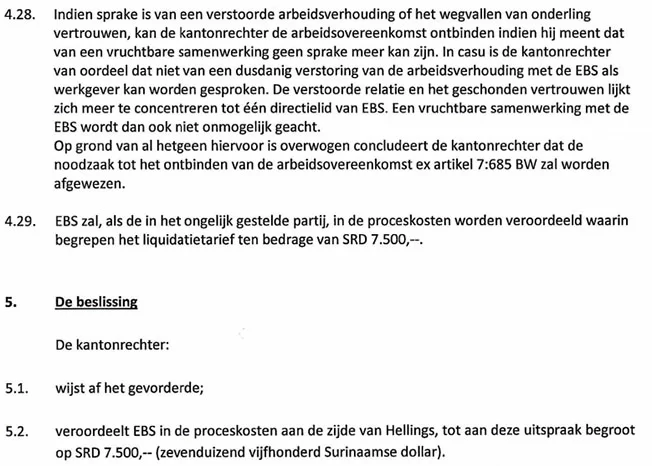
    In its final judgment, the cantonal court conducted a critical review of every element of EBS’ case, finding major flaws in the company’s argument. The judge noted that many of the historical incidents EBS cited to support termination were either too old to be considered valid grounds or had already been resolved through prior legal proceedings and mediation efforts. The court also emphasized that both sides contributed to the escalating conflict, not just Hellings.

    The ruling pointed out that EBS itself took a series of aggressive actions against Hellings that deteriorated the working relationship over time, including reassigning his job role, imposing multiple disciplinary penalties, restricting his access to company property, and placing him on repeated unpaid suspensions. Because of this, the court found that the current tense situation cannot be blamed solely on Hellings.

    The judge also weighed Hellings’ 15-year tenure at EBS, his valuable technical expertise in the energy sector, and his legitimate role as an elected workers’ representative in its final deliberation. The court concluded that EBS had failed to prove the existence of an urgent, compelling reason that would make continuing Hellings’ employment impossible.

    In the final outcome, the cantonal court ruled that terminating Hellings’ employment contract was not legally justified, rejected EBS’ petition in full, and ordered the state-owned energy company to cover all legal costs associated with the case.

    This ruling marks the second consecutive legal win for Hellings in his ongoing dispute with EBS management, and it underscores the persistent deep tensions between the OWOS union and the leadership of one of Suriname’s most critical state-owned infrastructure providers.

  • Should Retail Vendors Unite to Push for More Selling Days?

    Should Retail Vendors Unite to Push for More Selling Days?

    A growing debate over selling day restrictions at Belize’s Michael Finnegan Market has moved into the spotlight this week, as city authorities confirm they are willing to revise existing rules— but only if retail vendors band together to formally push for change.

    Currently, local retail vendors at the popular public market are only permitted to sell goods on Saturdays, a regulation that has sparked growing frustration among small-scale producers and street vendors who rely on the market for their primary income. The dispute boiled over earlier this week, when a routine regulatory enforcement operation turned away multiple retail vendors who attempted to set up their stalls outside of the allowed single weekend day.

    Delroy Herrera, the manager of Michael Finnegan Market, outlined the city council’s position in an interview with local outlet News 5 on Tuesday. He emphasized that the council does not reject the idea of expanding selling days, but any adjustment to existing policy must follow official legal and procedural channels.

    “Every organization, every public space operates with clear rules, right? It’s straightforward: you can follow the rule, work within the framework of the rule, or push to amend the rule. But that change has to happen respectfully, and it has to stay within the constraints of local law,” Herrera explained.

    For many retail farmers and small vendors, the current one-day restriction has already caused measurable financial harm. Multiple vendors reported that their weekly incomes have dropped significantly under the existing policy. Some producers, who travel multiple hours from outlying districts to reach the Belize City market, added that many of their regular customers only attend the market on Tuesdays and Fridays, forcing them to lose out on consistent sales that they depend on to cover living and production costs.

    Herrera reiterated that the Belize City Council is prepared to hear vendors’ concerns and negotiate potential changes, but collective organization from the vendor community is a non-negotiable prerequisite for moving forward.

    “Once vendors have organized themselves and presented a unified position, we can work through whatever amendments are needed to create a framework that works for all stakeholders: the city council, local farmers, and every person who relies on this market,” he said.

    The next step, Herrera explained, will be for organized vendors to collaborate with market leadership to draft a formal proposal outlining their requested changes, which will then be submitted to the Belize City Council for review and a final vote on whether to amend the existing market day regulations.

  • Rotary Club Donates Renovated Classroom to Police Youth Intervention Unit

    Rotary Club Donates Renovated Classroom to Police Youth Intervention Unit

    On Thursday, May 14, 2026, a landmark community partnership reached its completion in St. John’s, Antigua and Barbuda, as the Rotary Club of Antigua formally transferred a fully renovated classroom space to the Youth Intervention Unit of the Royal Police Force of Antigua and Barbuda. This project marks another milestone in the service organization’s long-standing dedication to nurturing youth growth and driving public good across the twin-island nation, building on a prior renovation of the same space the club completed back in 2016.

    Carrying an estimated total investment of Eastern Caribbean $28,000, the refurbishment covered a comprehensive suite of upgrades to bring the aging facility up to modern standards. Work crews carried out critical structural repairs to the roof and ceiling, installed new energy-efficient lighting systems, completely overhauled the on-site bathroom facilities, applied fresh coats of paint throughout the space, and completed general structural repairs to restore the building’s functionality and safety.

    Everton Jeffers, Commissioner of the Royal Police Force of Antigua and Barbuda, opened the handover ceremony by welcoming the ongoing collaboration between local community groups and law enforcement, and extended sincere praise to the Rotary Club for its targeted investment in the country’s younger generation. Jeffers stressed that modern policing extends far beyond traditional law enforcement activities, placing equal importance on proactive crime prevention, intentional youth mentorship, and creating pathways for vulnerable young people to access positive, constructive opportunities that keep them away from harmful paths.

    Going further, Commissioner Jeffers issued a call for expanded participation from across Antigua and Barbuda’s civil society to support the Youth Intervention Unit’s mission. He highlighted that the unit relies on community contributions ranging from volunteer mentorship and vocational training to professional counseling services to effectively support young people at risk of falling into delinquent behavior.

    Jeffers also took the opportunity to recognize the individual contributions that made the renovation project possible, singling out Inspector Claudina Nathaniel-Morgan, retired Sergeant Randy Christopher, the project’s contracted construction team, all participating Rotary Club members, and every other stakeholder who dedicated time, resources, or labor to bring the project to successful completion.

    The official handover ceremony closed with an opening prayer led by a local faith leader, followed by a guided tour of the newly upgraded facility for all attendees, who got to see firsthand the impact of the community’s collective investment in youth support.