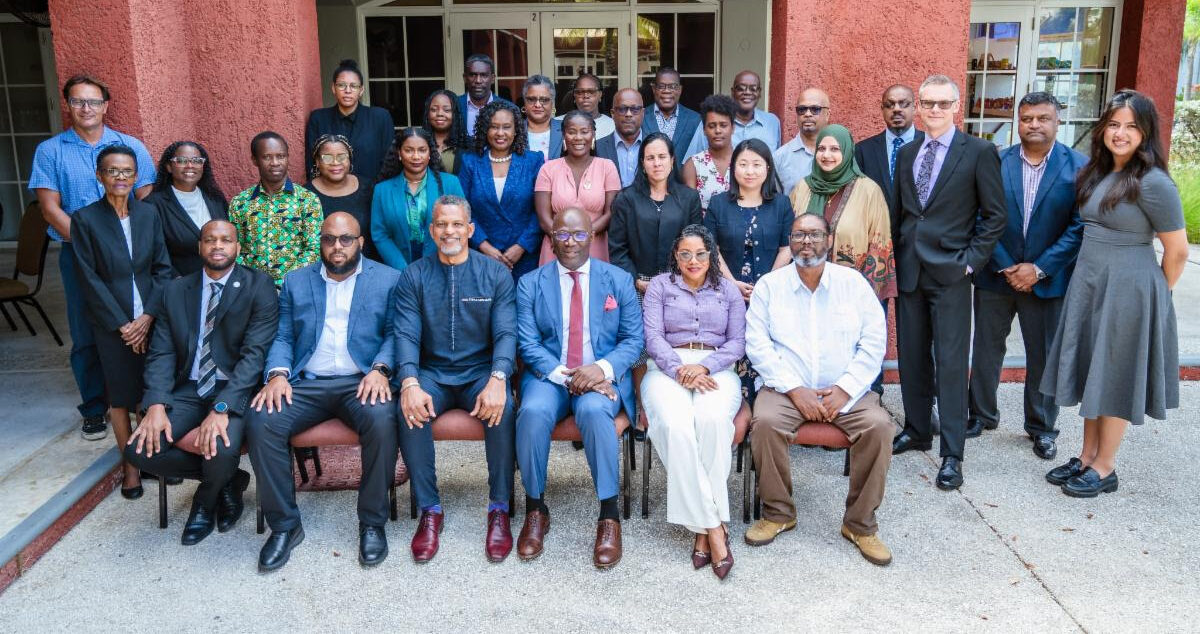
Small island developing states across the Caribbean have emerged from a landmark capacity-building workshop with enhanced skills and clear guidance to unlock millions in dedicated climate grant funding, designed to strengthen regional resilience and address the devastating climate impacts that have long held back development across the region.
Hosted jointly by the Caribbean Development Bank (CDB) and the UN-hosted Fund for Responding to Loss and Damage (FRLD), the two-day workshop gathered senior government officials and national focal points from 15 eligible Caribbean nations in Bridgetown, Barbados, from May 12 to 13, 2026, according to an official CDB press statement. The gathering centered on preparing competitive funding proposals for the FRLD’s ground-breaking Barbados Implementation Modalities (BIM), a $250 million pilot grant program with a final application deadline of June 15, 2026.
CDB President Daniel M. Best opened the workshop by emphasizing the urgent need for transformative investment in climate resilience across the region. For decades, major climate-driven disasters including hurricanes Maria, Irma, Dorian, Beryl, and Melissa have inflicted catastrophic damage on Caribbean economies, pushing small nations into development reversals where total losses often amount to multiple times a country’s entire annual gross domestic product. “The real lesson extends beyond the disaster itself; our response must evolve into bankable and scalable investment pipelines that reduce future losses,” Best noted.
With regional climate financing needs estimated at roughly $14 billion per year to address ongoing and future climate impacts, the workshop moved beyond high-level dialogue to deliver hands-on technical support. Attendees walked through proposal development requirements, eligibility guidelines, and priority intervention frameworks, equipping national teams to submit strong, fundable applications ahead of the mid-June deadline. Participating countries spanned the entire Caribbean basin: Antigua and Barbuda, The Bahamas, Barbados, Belize, Cuba, Dominica, the Dominican Republic, Grenada, Guyana, Haiti, Jamaica, Saint Kitts and Nevis, Saint Lucia, Saint Vincent and the Grenadines, and Suriname.
FRLD Executive Director Ibrahima Cheikh Diong reaffirmed the fund’s commitment to correcting the global climate injustice that has left the Caribbean — responsible for less than 1% of global greenhouse gas emissions — bearing a wildly disproportionate share of climate harm. “The FRLD was created precisely to address the critical gap in responding to loss and damage, and the Barbados Implementation Modalities opens a clear pathway to finance,” Diong explained. “We are committed to ensuring that Caribbean countries have the knowledge and support they need to access this fund. Workshops like this one, co-designed with CDB, are central to that mission.”
The workshop also included input and collaboration from key regional climate and disaster institutions, including the Caribbean Community Climate Change Centre (CCCCC), the Caribbean Catastrophe Risk Insurance Facility Segregated Portfolio Company, and the Caribbean Disaster Emergency Management Agency. Their participation is expected to strengthen collaborative cross-border and regional funding proposals, unlocking greater collective impact for shared climate challenges.
Notably, CDB and the CCCCC are the only two regional Caribbean institutions accredited to both the global Adaptation Fund and Green Climate Fund, a status that positions them as trusted, accessible intermediaries for countries seeking to access FRLD resources. The BIM initiative also aligns directly with CDB’s newly launched 10-year Strategic Plan 2026–2035, branded “Transforming the Caribbean for Resilience,” which identifies scaled climate action and expanded access to climate financing as top institutional priorities for the coming decade. By building national capacity to secure and deploy loss and damage funding, CDB officials say the institution is translating its regional resilience vision into direct, tangible support for the vulnerable communities on the front lines of climate change.
As the application deadline approaches, eligible nations are being encouraged to maintain close coordination with CDB and their national focal points to refine priority intervention plans and submit robust, competitive proposals to access the transformational funding on offer.