博客

  • Go back to the drawing board

    Go back to the drawing board

    Trinidad and Tobago’s ongoing state of emergency (SoE) to curb violent gang crime is facing growing backlash after more than 30 homicides were recorded across the country since the measure took effect last month, with a former top security official demanding the administration completely rewrite its approach to public safety.

    As of the most recent count, the national 2026 murder toll has reached 94. The latest fatality was identified as 38-year-old Ryan Morris, who was fatally stabbed in a public confrontation outside a Barataria bar on Saturday morning. While this year’s toll remains slightly lower than the 99 recorded by this point in 2025 and far below the 143 recorded in the same period of 2024, the sharp uptick in killings since the SoE was implemented has undermined the government’s justification for the extraordinary measure.

    Prime Minister Kamla Persad-Bissessar first announced the new SoE on March 2, 2026, with the measure entering into force the following day. At the time of its declaration, she argued the step was necessary in response to a documented surge in gang-related violence and credible intelligence confirming planned attacks against law enforcement and security personnel. Following the expiration of the previous SoE on January 31, Persad-Bissessar noted violent criminal activity had spread across the nation, with most incidents linked to organized criminal networks. She added that recent attacks included multiple mass shooting events with multiple fatalities, warning that unregulated retaliatory gang killings would spiral into widespread chaos if no action was taken.

    framing the SoE as a natural extension of her administration’s “zero-tolerance” policy on violent crime, the Prime Minister pointed to 10 months of successful joint operations conducted by the Trinidad and Tobago Police Service and the national armed forces, alongside new legislative measures and ongoing reforms to the criminal justice system. She emphasized that the core goal of reimposing the state of emergency was to protect hard-won progress in reducing murder rates and violent offenses, and to shield law-abiding residents from escalating gang violence.

    When the SoE took effect, the national murder tally stood at 63. In the month following its implementation, however, at least 31 additional people have been killed, a figure confirmed by Deputy Police Commissioner Suzette Martin late last week. Martin told reporters the current average rate of homicide is at least one killing per day.

    The victims of these post-SoE killings include people from all walks of life: prominent local businessman Danny Guerra, a teenage boy, two young men killed in a mass shooting at a family apartment, a female professional cricketer, and an 11-month-old infant who was shot and killed while sleeping next to his father. Joseph Sutton, shot in mid-March, ultimately died alongside his son Jayden Sutton in a March 31 incident that shocked the nation.

    Marvin Gonzales, who previously served as the country’s Minister of National Security, has emerged as a leading critic of the government’s handling of the crisis and its public justification for the SoE. Gonzales argues that administration officials have deliberately misrepresented the stated purpose of the measure to the public.

    “Our core concern is that the Prime Minister and the Attorney General keep lying to the Trinidad and Tobago people,” Gonzales said. “The presidential statement submitted to Parliament, which drew directly on intelligence from the National Security Council, stated the SoE was called to address specific, concrete gang threats. It was never framed as a measure to control the overall murder rate. But government spokespeople keep talking about the murder toll instead of the specific threats they claimed justified extraordinary measures.”

    Gonzales pointed to the killing of the 11-month-old infant as a stark illustration of how deeply violent crime has penetrated the country. “The murder of an 11-month-old child is a deeply disturbing development that shows how severe and entrenched violent crime and murder have become in Trinidad and Tobago. Criminals are not deterred by a perpetual state of emergency, and it is long past time for this government to do the hard work required to address crime at all levels – including its root causes, investment in social programs, education reform, overhauls to the judicial and prison systems, and rooting out corruption within the Trinidad and Tobago Police Service.”

    The former security minister added that the continuation of rampant homicide during the SoE raises serious questions both about the effectiveness of the measure and the government’s overall preparedness to tackle the national crime crisis.

    “Let us not fool ourselves: this government is completely out of its depth. This is an abysmal failure, and the government must return to the drawing board to develop a real strategy,” Gonzales said. “The Prime Minister must release the full details of the crime plan she campaigned on during the 2025 general election. If she cannot do that, she must admit she lied to the public, and that the United National Congress never had a serious plan to fight crime at all. More than 30 murders committed while a state of emergency is in effect is astonishing. This measure must be discontinued immediately.”

  • Woman fights, bites bandit’s finger

    Woman fights, bites bandit’s finger

    A bold act of self-defense has left a would-be robber injured and on the run, after a 57-year-old woman from Chaguanas fought back against a street attack in El Socorro this past Saturday.

    The confrontation unfolded at approximately 3:41 p.m., as the victim was walking northbound on El Socorro Road, just steps from the intersection of Bissessar Street. According to official police accounts, an unidentified man suddenly approached the woman from an unknown direction and made a grab for the gold-toned chain around her neck, aiming to steal the piece of jewelry.

    Instead of freezing or surrendering to the attack, the local resident refused to give up her property without a fight. In a quick, instinctive move to stop the robbery, she grabbed hold of one of the suspect’s fingers and bit down hard enough to tear off a section of his fingernail and surrounding skin. Even in the chaos of the struggle, the victim was not able to confirm exactly which of the attacker’s fingers suffered the injury.

    Following the unexpected counterattack, the injured suspect fled the scene immediately. Witness descriptions shared by police paint a clear picture of the perpetrator: he is described as a man of African descent, standing roughly 5 feet 10 inches tall with a slim frame. At the time of the attempted robbery, he was wearing a plain purple short-sleeved T-shirt and dark three-quarter length pants. He ran west along Bissessar Street to make his escape.

    After the suspect fled, the woman contacted local police to file an official report of the incident. Responding officers traveled promptly to the attack site to conduct on-scene investigations and interview the victim about what had transpired. As part of their ongoing probe, investigators have begun canvassing nearby businesses and residential properties to collect any available closed-circuit television footage that might capture the suspect’s face, escape route, or pre-attack movements. They have also reached out to the North Eastern Division Operations Centre to coordinate access to any public or traffic surveillance recordings from the area.

    Investigators have also followed up on another key lead: checking every nearby health clinic and hospital in the region for any patient who came in seeking treatment for a finger injury matching the description from the attack. As of the latest updates, those checks have not turned up any persons of interest matching the profile. To ensure no potential lead is missed, police have notified the department’s central Command Centre to put all frontline officers on alert. If any individual matching the suspect’s description seeks medical care for the specific injury, patrol officers will be notified immediately to respond.

    At present, the investigation remains open and active, with Police Constable Ball leading ongoing enquiries into the attempted robbery.

  • Funding freeze  threatens turtles

    Funding freeze threatens turtles

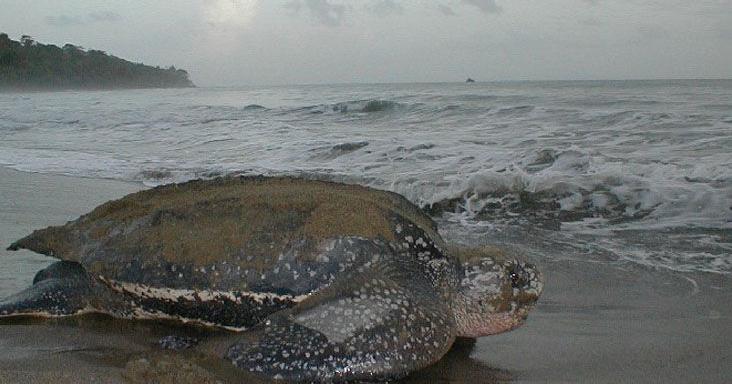
    Across Trinidad and Tobago, critical sea turtle conservation work hangs in the balance as a years-long delay in dedicated environmental funding has left 23 local conservation groups stretched to breaking point. Arlene Williams, president of the Las Cuevas Eco Friendly Association Tours (LCEFAT) – a member of the national umbrella conservation body Turtle Village Trust – has sounded the alarm that the National Environmental Fund, more widely known as the Green Fund, has not released allocated funding to the trust since 2018, bringing core conservation activities to the brink of collapse.

    Created under the 2000 Finance Act, the Green Fund was designed to provide sustained financial support for registered environmental organizations working across reforestation, ecological remediation, public environmental education, and habitat and species conservation work. Established in 2006, the Turtle Village Trust serves as the coordinating non-profit umbrella for every sea turtle conservation group operating across Trinidad and Tobago, currently supporting 23 community-led groups focused on key nesting habitats in locations including Grande Riviere, Matura, and Fishing Pond.

    More than a decade ago, the trust submitted a 7-year National Sea Turtle Conservation Project proposal to the Green Fund, requesting TT $92 million to support its nationwide work. In the years when funding was disbursed, the money covered critical costs: living stipends for volunteer patrols that monitor nesting beaches overnight during nesting season, and the purchase of specialized equipment for population and nesting data collection. Today, with no new funding released, conservation activities across all member groups have fallen off dramatically.

    “Funding was supposed to be released ahead of this year’s nesting season, which kicked off on March 1. We are now well into April, and still no funding has arrived,” Williams explained in an interview with the *Express*. “All of our groups are still turning out whenever we can, doing our best with what we have, but we lack the basic equipment to do the work properly.”

    Williams highlighted the crisis facing her own community group in Las Cuevas, where stretched resources have gutted patrol capacity. “We used to have 10 volunteers patrolling this beach every night during nesting season. Now, without funding, there are only two of us covering the entire stretch of coast,” she said.

    So far, the small dedicated team has managed to ward off poachers from accessing vulnerable turtle nests, but Williams says the team cannot sustain this level of work indefinitely – and is already draining personal finances to cover basic operational costs. “I don’t know how much longer we can keep this up. It’s physically and financially draining, right now we are using our own money to buy even the most basic supplies we need, including batteries for our patrol lights. A single pack of batteries we need for one night of patrols costs $209,” she noted.

    In addition to the funding delay, Williams says conservation leaders have been unable to get a response from government authorities about the impasse. A recent donation of computers from the Ministry of Trade, Investment and Tourism to support digital data storage has done little to address the core staffing and supply crisis, as the understaffed patrol teams are unable to collect the volume of data the new equipment is meant to store.

    If the funding deadlock is not broken quickly, Williams warns, sea turtle conservation across the entire country will suffer severe, irreversible damage. “Every one of the 23 groups across Trinidad and Tobago will be harmed, even the larger, more well-known programs,” she said.

    Beyond unlocking the delayed Green Fund allocation, Williams is calling on three government bodies – the Ministry of Agriculture and Fisheries, the Ministry of Planning, Economic Affairs and Development, and the Environmental Management Authority – to step up enforcement of existing wildlife protection laws for sea turtles. “They post signs up and down the beaches spelling out the rules for protecting turtles, but where are the enforcement patrols? We need regular patrols from game wardens, especially during busy holidays and weekends when visitor numbers surge,” she said, adding that there have been no official government patrols on Las Cuevas beach since this year’s nesting season began.

    When contacted for comment last week, Minister of Planning, Economic Affairs and Development Kennedy Swaratsingh confirmed that he is currently reviewing the funding issue and will issue a formal public statement in due course.

  • Baby born on CAL flight to JFK

    Baby born on CAL flight to JFK

    On a routine Saturday journey from Kingston, Jamaica to New York City, a Caribbean Airlines flight delivered far more than just travelers to its destination: a healthy newborn baby, born unexpectedly mid-flight before the plane touched down at John F. Kennedy International Airport.

    The surprise delivery unfolded on flight BW005, which departed Kingston’s Norman Manley International Airport at approximately 7:12 a.m. local time. As the jet began its approach to JFK, the crew noticed a pregnant passenger had gone into active labor, prompting the pilot to alert air traffic control to the unplanned medical event. In transcribed radio communications released from the exchange, the pilot requested a priority direct routing to the airport to speed arrival, and confirmed that on-ground medical staff would be needed upon landing. Air traffic controllers quickly adjusted the flight’s approach path, cleared it for an expedited landing on runway 04R, and coordinated with airport authorities to have emergency medics standing by at the gate.

    By the time the plane landed at JFK’s Terminal 4 at 11:55 a.m. ET, the baby had already been safely delivered. In a lighthearted exchange after landing, a JFK ground controller joked with the flight crew that the new baby should be named “Kennedy” after the airport, a suggestion the pilot promised to pass along to the new mother.

    Caribbean Airlines confirmed the unplanned “medical event” in an official statement released the following day, noting that both the mother and newborn were immediately evaluated by on-ground medical personnel after arrival and are currently receiving appropriate care. The airline emphasized that its crew followed all established emergency protocols to manage the situation, and commended the team for their calm, professional response that kept all passengers on board safe and comfortable throughout the incident. Notably, no general emergency declaration was needed during the flight, despite the unexpected delivery.

    Out of respect for the family, the airline has requested that the public honor their privacy, and no identifying details about the mother or child have been released to the media.

    This unexpected mid-flight birth is not the first time a baby has been born on a service heading to JFK. In 2005, a passenger named Candy Midtlyng delivered a healthy baby just 10 minutes before landing at the New York airport on a BWIA West Indies Airways flight, a predecessor carrier to Caribbean Airlines. That child was nicknamed “Baby Bwee” by immigration officials after the incident.

    Caribbean Airlines maintains clear, standardized policies for pregnant travelers, which align with guidance from most global commercial carriers. According to the airline’s official website, expectant mothers are permitted to fly without mandatory medical clearance through the end of their 32nd week of pregnancy. However, the airline still recommends that all pregnant travelers carry a doctor’s note confirming their expected due date to avoid boarding issues or entry problems at their destination. Between the 32nd and 35th week of pregnancy, a formal medical clearance certificate confirming a low-risk, healthy pregnancy and estimated delivery date is required to board. After the 35th week of pregnancy, the airline does not permit expectant mothers to travel, out of an abundance of caution for both maternal and fetal health. In all cases, the airline encourages pregnant passengers to consult with their obstetrician before booking air travel.

  • Metro Line 2C extends hours during free trial phase

    Metro Line 2C extends hours during free trial phase

    Authorities at Santo Domingo’s Empresa Metropolitana de Transporte have announced a key adjustment to the newly launched Line 2C metro route, which connects the capital to the neighboring municipality of Los Alcarrizos: an expansion of daily operating hours, implemented as part of the line’s ongoing public free trial period.

    The decision to extend service times was crafted to address growing commuter demand and elevate urban mobility across the greater Santo Domingo area. By expanding the window of available service, officials aim to deliver a more flexible and efficient transit option for residents traveling between the city center and Los Alcarrizos. Throughout the trial phase, all rides on Line 2C remain completely free of charge, and passengers also retain access to the metro system’s integrated transfer network, enabling faster, smoother connections to other existing lines across the city’s transit infrastructure.

    Under the updated schedule that went into effect with the announcement, Line 2C trains will run from 6:00 a.m. to 8:00 p.m. every Monday through Saturday. On Sundays and all officially recognized public holidays, service will start two hours later at 8:00 a.m., retaining the same 8:00 p.m. end time.

    Transit officials are urging all regular and new commuters who use Line 2C to follow the Santo Domingo Metro’s official social media channels and website to receive real-time updates on any further service adjustments, as well as announcements regarding the full, permanent implementation of the Line 2C extension once the free trial period concludes.

  • Abinader orders stronger border measures over Haiti unrest

    Abinader orders stronger border measures over Haiti unrest

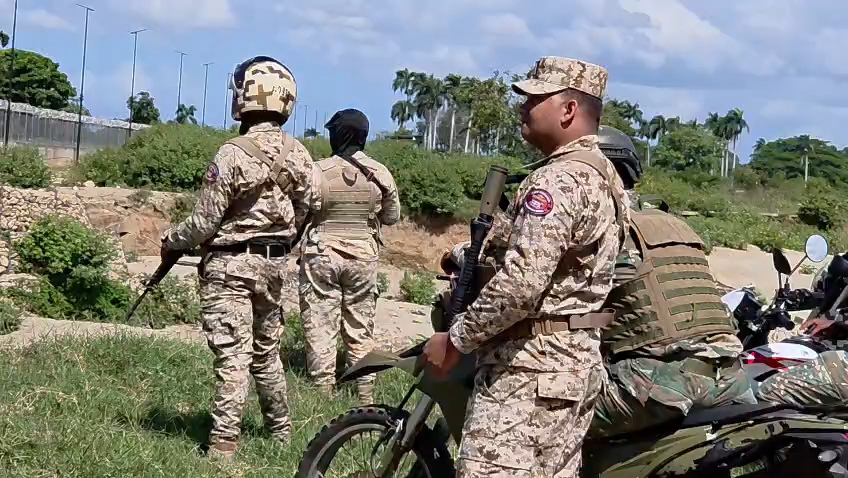
    Escalating gang violence and spreading political instability in neighboring Haiti have prompted the Dominican Republic to implement strict new surveillance measures along their shared border, a response directly triggered by Haiti’s recent declaration of a maximum national alert and the deployment of a UN-supported Gang Suppression Force.

    Following a high-stakes emergency meeting of the Dominican Republic’s National Security and Defense Council, held to evaluate the rapidly deteriorating security situation across the border, President Luis Abinader reaffirmed the country’s unwavering commitment to protecting its sovereignty. In a public statement, Abinader stressed that defending national territory, preserving community safety and upholding public order are “non-negotiable priorities,” confirming that all units of the Dominican Armed Forces are fully deployed and on standby to address any unexpected contingency that may arise.

    On the Haitian side of the border, security officials have enacted their own sweeping emergency measures. The Armed Forces of Haiti issued an order requiring all military personnel to immediately report to their assigned barracks, canceled all ongoing leave, and placed the entire force on highest alert. This order comes in the wake of surging gang-related attacks, including deadly armed clashes and a recent large-scale massacre in Haiti’s Artibonite region that has been linked to the notorious armed faction Grand Grif.

    Haiti’s ongoing security collapse stretches back to 2018, when political fragmentation and institutional weakening allowed armed gangs to seize control of large swathes of territory, including most of the capital Port-au-Prince and its surrounding suburbs. New data from the United Nations Integrated Office in Haiti underscores the severity of the crisis: in 2025 alone, gang violence and counter-violence security operations left at least 5,915 people dead and another 2,708 injured across the country.

    The unfolding chaos has sent ripples of concern across the Caribbean region, with policymakers warning of risks to cross-border security, unregulated migration flows, and broader regional stability. For the Dominican Republic, which shares the entire island of Hispaniola with Haiti, the enhanced border deployment represents a critical proactive step to shield its national security and maintain firm territorial control as the Haitian crisis continues to unfold.

  • Prosecutors file charges in Jet Set collapse case

    Prosecutors file charges in Jet Set collapse case

    Just two months after the deadliest structural disaster in recent Dominican Republic history, the country’s Public Prosecutor’s Office has brought formal criminal charges against the siblings who own the collapsed Jet Set nightclub. The April 8, 2025 tragedy left 231 people dead and more than 80 others injured, when the venue’s roof collapsed amid unchecked structural degradation.

  • St. Kitts and Nevis FM Dr Denzil Douglas arrives in India, strengthening bilateral ties  – WIC News

    St. Kitts and Nevis FM Dr Denzil Douglas arrives in India, strengthening bilateral ties  – WIC News

    On a Sunday marked for diplomatic progress, Dr. Denzil Douglas, the top foreign affairs official of the Caribbean island nation St. Kitts and Nevis, touched down at New Delhi’s Indira Gandhi International Airport Sunday for a high-stakes official visit designed to deepen longstanding cordial relations and unlock new areas of cross-national cooperation between the two countries.

    Dr. Douglas was greeted on arrival by senior ranking officials from India’s Ministry of External Affairs, in a display of warm hospitality that New Delhi extended to the visiting Caribbean delegation. India’s Ministry of External Affairs later shared a first-hand look at the welcome ceremony across its social media channels, publishing a short statement that read: “A warm welcome to FM Denzil Douglas of St. Kitts and Nevis, on his arrival in New Delhi.” Local Indian news outlet ANI also released footage capturing the foreign minister’s arrival at the airport Sunday evening, giving the public a view of the diplomatic reception.

    According to official statements from India’s External Affairs Ministry, this visit is far more than a routine diplomatic exchange: it represents a pivotal milestone in the evolution of bilateral relations between the two nations. The centerpiece of Dr. Douglas’ itinerary is the formal inauguration of St. Kitts and Nevis’ new permanent High Commission in New Delhi, a landmark development that formalizes the growing depth and importance of the partnership between the two countries.

    The establishment of a full-time resident diplomatic mission in India’s capital marks a new chapter in bilateral engagement, reflecting the rising mutual priority both nations place on their relationship. During his stay in New Delhi, Dr. Douglas is scheduled to hold a series of closed-door high-level talks with top Indian government officials, with conversations focused on expanding existing collaborative frameworks and deepening regular diplomatic dialogue.

    Beyond the bilateral context, the visit also highlights India’s sustained diplomatic outreach to small island developing states across the Caribbean, and its ongoing commitment to building mutually beneficial partnerships within the Global South. For decades, India and St. Kitts and Nevis have nurtured friendly, cooperative relations, working in lockstep on shared priorities across multilateral international forums, particularly on issues of sustainable development and global climate action. Both nations share common ground as climate-vulnerable states, making coordinated action on climate change a core area of shared interest.

    Diplomatic observers note that this visit is expected to solidify the foundation of the partnership, opening new avenues for collaboration across sectors ranging from climate adaptation to economic development, trade, and cultural exchange.

  • OPEC+ gaat olieproductie licht verhogen ondanks risico voor trage marktgroei

    OPEC+ gaat olieproductie licht verhogen ondanks risico voor trage marktgroei

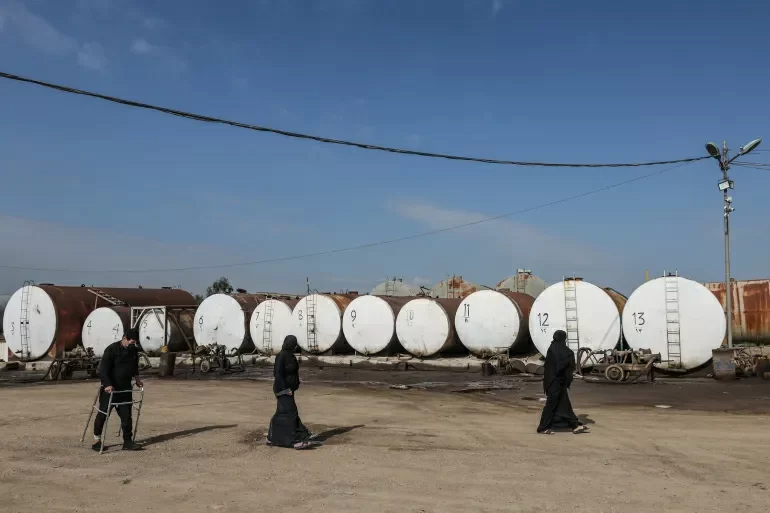
    On a fuel market in Erbil, Iraq, vendors and shoppers move past stacked barrels of heating oil and vehicle fuel, a daily reminder of the uncertainty gripping global energy markets. Against this backdrop, the Organization of the Petroleum Exporting Countries (OPEC) and its partner producers, collectively known as OPEC+, announced a 206,000 barrel per day increase to crude oil production quotas for May, a move widely characterized as largely symbolic given the current geopolitical disruption.

    Since late February, the Strait of Hormuz — the world’s most critical chokepoint for global oil trade, responsible for moving roughly 15% of the world’s total daily crude supply — has been effectively closed to most commercial shipping amid escalating conflict between the United States, Israel, and Iran. This prolonged closure has already choked off oil exports from major OPEC+ producers including Saudi Arabia, the United Arab Emirates, Kuwait, and Iraq. Current estimates indicate the blockade has removed between 12 and 15 million barrels of daily crude from global markets, a devastating supply cut that has sent prices skyrocketing.

    In a joint statement released Sunday, signed by eight core OPEC+ members including Saudi Arabia, Russia, Iraq, the UAE, Kuwait, Kazakhstan, Algeria, and Oman, the coalition reaffirmed its commitment to closely monitoring market conditions and maintaining long-term stability in global energy markets. The participating nations also issued a joint statement expressing deep concern over recent targeted attacks on regional energy infrastructure. Industry analysts note that repairing damaged energy facilities requires extensive time and massive capital investment, which further tightens already constrained global crude supplies.

    While the 206,000 barrel per day production increase for May amounts to less than 2% of the total supply lost to the Hormuz blockade, industry observers say the move sends a clear signal that OPEC+ stands ready to ramp up output as soon as the strait reopens to safe commercial navigation. This planned May increase matches the quota adjustment that the group agreed to implement in April, a consistency held despite the expanding disruptions to global oil trade.

    Geopolitical tensions have already pushed global crude oil prices to a four-year high, with benchmark crude trading near $120 per barrel as of early April. This sharp price increase has directly translated to higher costs for transport fuel for consumers and businesses worldwide. Leading financial services firm JPMorgan has warned that if the Strait of Hormuz blockade continues through mid-May, global benchmark prices could climb above $150 per barrel — a new all-time record for crude.

    In a small sign of potential de-escalation, Iran has granted limited exemptions to allow a small number of regional nations to use the strategic waterway. Iraq is among the countries granted permission to resume limited transit through the strait, and shipping tracking data confirmed an Iraqi crude oil tanker transited the waterway on Monday morning.

    Diplomatic efforts to resolve the blockade are already underway. On Sunday, Oman’s Ministry of Foreign Affairs announced that deputy-level ministerial talks with Iranian officials are being held to explore pathways to restore unimpeded transit for all commercial vessels through the strait. However, diplomatic progress is being overshadowed by rising geopolitical rhetoric: former U.S. President Donald Trump issued a new threat over the weekend, warning that the U.S. will escalate military strikes against Iran, including targeting civilian infrastructure such as bridges and energy power plants, if the strait is not reopened to full traffic by Monday.

  • Arajet adds 14th aircraft named “Salto de Jimenoa”

    Arajet adds 14th aircraft named “Salto de Jimenoa”

    Leading low-cost Dominican airline Arajet has marked a key milestone in its rapid expansion trajectory with the introduction of its 14th aircraft, a Boeing 737 MAX 8 branded “Salto de Jimenoa”. The new jet touched down at Santo Domingo’s Las Américas International Airport this week, boosting the carrier’s growing fleet capacity and expanding its ability to connect the Dominican Republic to global markets.

    What sets this new delivery apart is more than just its addition to operational capacity: the aircraft’s name was chosen to honor one of the Dominican Republic’s most beloved natural treasures, Jimenoa Waterfall, a top ecotourism destination nestled in the mountain highlands of Jarabacoa. This naming convention is part of a deliberate, long-term strategy from Arajet: the airline has committed to naming each plane after a significant natural site across the country, turning every aircraft in its fleet into a flying ambassador for the Dominican Republic’s rich biodiversity and protected natural areas.

    In comments on the delivery, Arajet CEO Victor Pacheco highlighted the dual purpose of the fleet expansion. Beyond increasing the airline’s route network and flight frequency to meet rising travel demand, Pacheco emphasized that the move aligns with the company’s core commitment to advancing sustainable tourism and inclusive economic growth across the Dominican Republic. Every flight operated by the named aircraft helps introduce international travelers to the country’s natural heritage, encouraging more responsible travel practices and supporting the growth of ecotourism economies in regional communities. Industry analysts note that the expansion positions Arajet to capture a growing share of the Caribbean travel market, while its focus on natural heritage promotion sets a new example for how airlines can tie corporate growth to destination sustainability.