博客

  • Legacy of April 3, 1986 : Message from Minister Saint Jean in Haiti

    Legacy of April 3, 1986 : Message from Minister Saint Jean in Haiti

    Four decades after one of the most consequential mass demonstrations in Haitian history, the country marked the National Day of the Haitian Women’s Movement on April 3, 2026, with Pedrica Saint Jean, Minister for the Status of Women and Women’s Rights, delivering a heartfelt tribute to the trailblazing activists who reshaped the nation’s push for democracy.

    On April 3, 1986, thousands of women from every administrative department of Haiti joined together in a historic mobilization that remains etched into the country’s collective memory. Their march through the streets came at a pivotal moment of nationwide political transition, as the nation moved to dismantle long-standing authoritarian rule. The demonstrators gathered not only to condemn generations of systemic violence, gender-based discrimination, and social exclusion, but to claim their full and equal place in Haiti’s political future. They carried with them a rallying cry that retains all its urgency today: “There is no democracy without women.”

    That 1986 demonstration transformed the national conversation, centering women’s demands for recognition as full citizens and legitimate political actors with an equal stake in shaping the country’s trajectory. Beyond protesting injustice, the mobilization laid out a clear vision for a new Haiti: one where women’s practical needs and strategic interests are treated as non-negotiable pillars of an equal, just society.

    For 2026’s commemoration, the anniversary stands as a renewed call to honor the legacy of the 1986 activists and amplify the ongoing work of Haitian women’s rights organizations that continue to advocate, support, and defend gender equity across the country. That same spirit of resistance has sustained Haitian women’s movement into the present day: during the General Assembly on Women’s Political Participation and Electoral Violence held in December 2025, delegates from all 10 of Haiti’s departments forcefully reaffirmed the iconic rallying cry that first united women 40 years prior.

    April 3 remains a powerful symbol of courage, cross-regional solidarity, and unyielding resistance. Every gain made for women’s rights in Haiti over the past four decades has been built on the foundation of that 1986 demonstration. Minister Saint Jean acknowledged that while meaningful progress has been achieved, deep-seated challenges persist. Addressing these barriers, she emphasized, requires coordinated action, unwavering political will, and collective commitment from every sector of Haitian society.

    Against the backdrop of Haiti’s ongoing humanitarian and security crisis, the fight against gender-based violence in all its forms—political, social, economic, and digital—remains a top national priority. The Ministry for the Status of Women and Women’s Rights has reaffirmed its pledge to implement key recommendations emerging from recent National Consultations, focusing on four core priorities: expanding women’s political participation at every level of government; guaranteeing robust protection from violence, particularly surrounding electoral processes; addressing gender-based harassment and abuse across digital social platforms; and cultivating women’s leadership to ensure equal representation in every sector of national life.

    Minister Saint Jean closed by emphasizing that respect for women’s rights is a non-negotiable obligation for any society working to build sustainable democracy, lasting peace, and equal justice. She issued a urgent, unifying call to all segments of Haitian society—public institutions, private industry, civil society groups, religious communities, and individual citizens—to stand in solidarity with women’s movements. Only through collective action can the legacy of April 3, 1986, continue to guide progress and inspire coming generations of Haitian activists.

  • Nippes now has qualified staff and a medical entomology laboratory

    Nippes now has qualified staff and a medical entomology laboratory

    A landmark advancement in Haitian public health infrastructure has been completed in the Nippes department, where local health authorities now boast both a fully trained team of medical entomology specialists and a purpose-built, functional medical entomology laboratory. The milestone comes as a direct outcome of longstanding bilateral health cooperation between Haiti and Cuba, with medical experts from the Cuban Medical Brigade in Haiti leading hands-on training for a cohort of emerging local healthcare professionals.

    Over the course of several months, roughly 10 participating healthcare workers completed a rigorous program of technical and scientific instruction. The training equipped participants with core competencies across every key domain of medical entomology, from accurate species identification and laboratory analysis to the development and execution of targeted vector control strategies.

    This capacity-building initiative aligns with the core public health vision laid out by Haiti’s Minister of Public Health, Dr. Sinal Bertrand, who has prioritized expanding access to high-quality, locally accessible healthcare services for all Haitian communities. The project was executed under the direct leadership of Dr. Esther Ceus Dumont, Departmental Health Director of Nippes, whose ongoing work has centered on strengthening the resilience and operational capacity of the department’s local health system.

    Public health experts emphasize that the new local capacity addresses a long-unmet critical need in Nippes. Prior to this initiative, the department lacked on-site specialized personnel to proactively manage the threat of vector-borne diseases, which remain a persistent public health risk across much of Haiti. Today, the trained team based at Sainte-Thérèse Hospital is fully prepared to detect, respond to, and contain outbreaks of high-burden vector-borne illnesses including dengue fever, malaria, and chikungunya.

    Beyond the certified professional workforce, the project’s most transformative tangible achievement is the newly established entomology laboratory housed within Sainte-Thérèse Hospital. The modern facility is purpose-built to support routine entomological analysis, ongoing regional disease surveillance, continuing professional education for local health staff, and rapid deployment of field intervention teams when vector-borne disease cases are detected.

    With trained staff in place, lab infrastructure fully operational, and a dedicated new public health service ready to serve community members directly, Nippes has crossed a major threshold in its efforts to build a robust, responsive local health system. The project sets a model for bilateral cooperation to address unmet public health needs across other regions of Haiti.

  • Abinader seeks national agreement to address global crisis

    Abinader seeks national agreement to address global crisis

    In the Dominican capital of Santo Domingo, President Luis Abinader has launched a broad national consultation push, tasking core government ministries with opening dialogues across the country’s productive, political, and civil society sectors. The goal of these talks is to hammer out a unified national agreement designed to buffer the nation from cascading global economic instability, particularly the ripple effects of heightened geopolitical tensions in the Middle East. The planned agreement will center on targeted policy measures that keep the Dominican economy on a trajectory of growth while shielding household finances from the worst impacts of international market and security shocks.

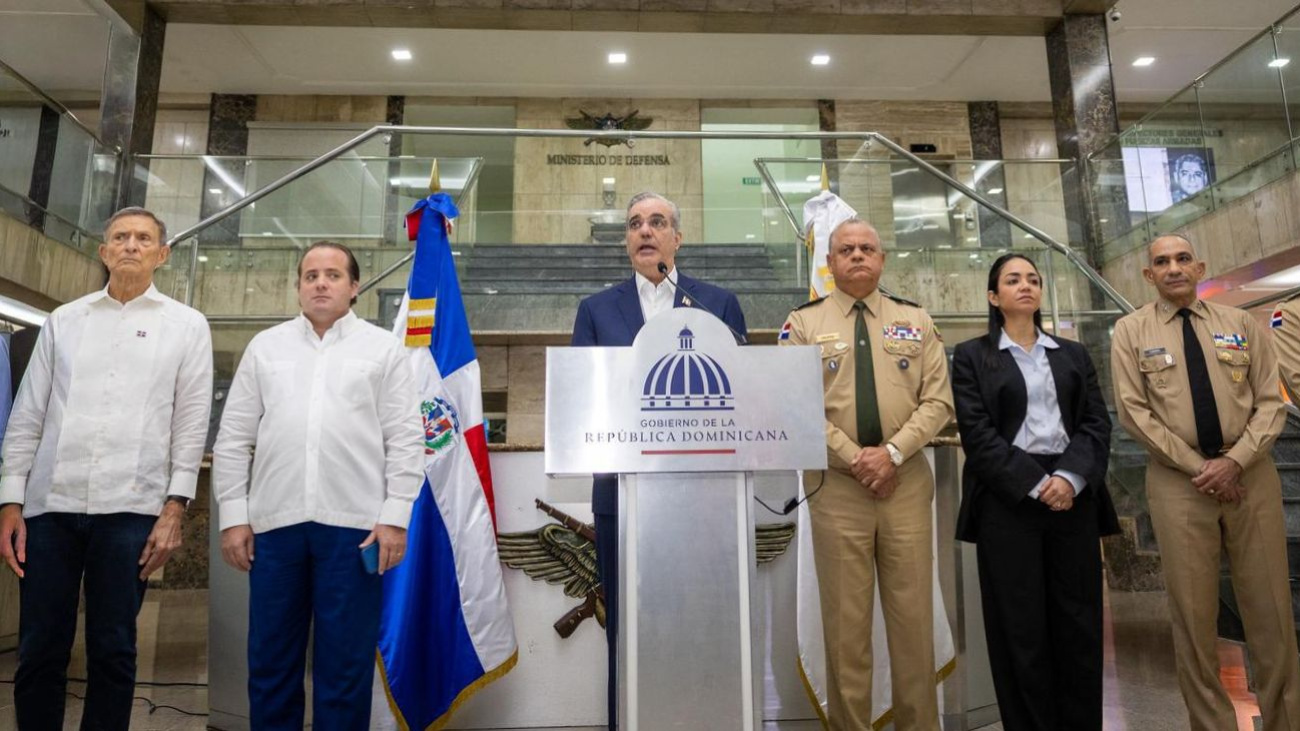
    The consultation mandate came directly out of a high-stakes gathering of the National Security and Defense Council, where top national officials mapped out the shifting global landscape and aligned on coordinated response strategies. One key measure that emerged from the meeting is a planned boost to border surveillance, a move that comes as a United Nations-endorsed Gang Suppression Force deploys to neighboring Haiti to help curb widespread gang violence and restore state authority. President Abinader made clear in remarks following the meeting that three core priorities remain non-negotiable for his administration: national defense, public safety, and territorial integrity. He confirmed that the Dominican Armed Forces are already on high alert to respond to any emerging threats along the shared border with Haiti.

    Beyond regional security and global economic challenges, the president also offered public praise for Dominican residents for their orderly behavior during the recent Holy Week holiday period. He highlighted that the season saw a record-breaking number of domestic trips across the country, and commended the coordinated work of the Emergency Operations Center alongside other rescue, law enforcement, and security agencies that kept holiday travel and gatherings safe. Wednesday’s high-level meeting, hosted at the Dominican Ministry of Defense, brought together the nation’s top military and police leadership to review current operational readiness across all security branches and assess the effectiveness of ongoing public safety initiatives.

  • Crisis in Haiti : Meeting of the Dominican National Security and Defense Council

    Crisis in Haiti : Meeting of the Dominican National Security and Defense Council

    As instability and violence continue to escalate across neighboring Haiti, the Dominican Republic has moved swiftly to shore up its national security defenses, convening a high-stakes emergency gathering of top government and military officials on Sunday, April 5, 2026.

    Called directly by Dominican President Luis Abinader, the meeting of the National Security and Defense Council stretched more than an hour, bringing together the nation’s most senior security leaders. Attendees included Defense Minister Lieutenant General Carlos Antonio Fernández Onofre, Interior and Police Minister Faride Raful, and National Police Director Major General Andrés Modesto Cruz Cruz, all of whom centered their discussions on mitigating risks stemming from Haiti’s rapidly deteriorating security landscape.

    The gathering came just hours after Haiti’s High Command of the Armed Forces (FAd’H) issued a formal announcement activating the country’s highest “Level D” alert status, effective Monday, April 6. The unprecedented alert level was triggered by a sharp surge in gang-related violence and civil unrest that has left much of Haiti in chaos in recent weeks.

    Following the closed-door meeting, Abinader addressed reporters in a brief press briefing to outline the Dominican government’s immediate actions. He confirmed that security forces have already ramped up monitoring and patrols along the 392-kilometer shared border between the two nations, which share the island of Hispaniola. The president also highlighted the integration of newly acquired surveillance technology, much of which supports the Dominican military’s domestically produced armored vehicle fleet, to boost situational awareness along the frontier.

    Abinader stressed that all branches of the Dominican armed forces are now “ready, fully deployed, and on high alert” to respond to any cross-border spillover of violence or displacement that could threaten Dominican national security. As of Sunday evening, government officials had not released detailed information on additional specific policy changes or new operational measures approved during the meeting. However, senior government sources indicated that formal announcements of expanded border security protocols are expected in the coming hours, as authorities work to insulate Dominican territory from the growing fallout of Haiti’s ongoing crisis.

  • Farmer jailed for firearm, ammo, cocaine

    Farmer jailed for firearm, ammo, cocaine

    A 41-year-old Penniston-based farmer has been handed a 39-month concurrent prison sentence by the Serious Offences Court following his guilty plea on illegal firearm, ammunition and cocaine possession charges stemming from a large-scale Royal St. Vincent and the Grenadines Police Force operation.

    Orde McTair was one of three men taken into custody on March 26 during a coordinated anti-crime sweep targeting a known cannabis cultivation site in Bower Mountain, Georgetown. The operation brought together officers from multiple police units, including the Rapid Response Unit, led by Station Sergeant John to search for illicit weapons, ammunition and controlled substances at the remote farm.

    Court documents detail that at approximately 6 a.m. that day, the law enforcement team arrived at a small on-site hut and found three men sleeping inside. After Station Sergeant John woke the group, identified his team as police officers, and notified them of the planned search, one man attempted to flee past responding Police Constable 73 Jack. Jack successfully detained the individual, but an initial search of his person turned up no contraband. When officers searched the bunk bed the man had been sleeping on, they uncovered a Glock 23 pistol wrapped in a multicolored sheet, loaded with 11 rounds of .40 caliber ammunition. A subsequent search of the hut also recovered approximately five grams of cocaine.

    All three men—McTair, 35-year-old plumber Milton Charles of Penniston, and 36-year-old farmer Deiroy Glasgow of Rabacca and Penniston—were arrested and charged jointly with three counts of illegal possession. All three defendants denied any knowledge of the hidden weapons and drugs when cautioned by officers, and declined to provide formal written statements after being transferred to the Central Police Station.

    In a surprising turn of proceedings, McTair entered a guilty plea to all three charges, while Charles and Glasgow maintained not guilty pleas. Prosecuting Inspector Renrick Cato moved to withdraw all charges against the two remaining defendants after accepting McTair’s guilty plea.

    McTair’s defense counsel Grant Connell argued in mitigation for a non-custodial sentence, noting the defendant’s personal circumstances as a working farmer. However, Chief Magistrate Colin John rejected this request, pointing to McTair’s prior criminal conviction for illegal firearm possession as a key factor in justifying a strict custodial sentence. The Chief Magistrate imposed 39-month prison terms for both the unlicensed firearm and unlicensed ammunition charges, alongside a three-month sentence for cocaine possession, ruling that all sentences would run concurrently. The outcome marks a significant conclusion to one of the local police force’s targeted anti-crime operations in the region this year.

  • Youth violence in SVG giving COP ‘headache’

    Youth violence in SVG giving COP ‘headache’

    During a joint press briefing with Minister of National Security St. Clair Leacock, St. Vincent and the Grenadines Commissioner of Police Enville Williams has identified youth violence as the most pressing public safety challenge currently facing the Caribbean nation, pushing law enforcement to pivot beyond traditional arrest-focused strategies toward community-centered prevention.

    The remarks from Williams came shortly after he and Leacock returned from a four-day regional security gathering in Castries, St. Lucia, where Leacock formally assumed the one-year rotating chairmanship of the Regional Security System (RSS), a bloc of eight Caribbean nations focused on cross-border security coordination. At the meeting, member states prioritized developing tailored, jurisdiction-appropriate responses to the growing crisis of youth involvement in violent and antisocial behavior, a concern shared across the entire region.

    Williams explained that in line with National Security Ministry policy that favors preventive “soft force” engagement over reactive enforcement, local law enforcement has already held internal consultations to design alternative strategies that intervene before young people commit crimes. He argued that early community outreach delivers far greater long-term benefits for the entire nation than mass incarceration of youth offenders. “If we engage young people from a community standpoint before they commit a crime, that the outcome is far greater for us as a country as a whole, as opposed to sending a young person to prison,” Williams said, outlining the core philosophy behind the new approach.

    Regional security leaders have collectively restarted their strategic planning process to develop community-focused engagement tactics that go beyond routine arrest and prosecution. Williams outlined that these strategies range from having officers participate in local youth sports activities to deploying police and military bands for casual community performances, all aimed at building positive connections between law enforcement and young residents. The overarching goal, he emphasized, is to shift police-youth interactions away from purely punitive encounters, to help marginalized young people develop a sense of belonging in broader society — a factor Williams says is often missing for young people who turn to antisocial behavior.

    As a successful existing model, Williams highlighted the mentorship program run by the Stubbs Police Youth Club, and called for expanding the initiative to reach young people who are not currently part of the club’s membership, noting that many at-risk youth simply need consistent guidance and a trusted person to talk to. Since taking office as police commissioner in 2023, Williams has also actively reached out to local media outlets, particularly morning radio talk show hosts, to partner on prevention efforts.

    A key point of collaboration Williams is pushing for is changes to radio programming, arguing that the constant stream of violent lyrical content and gang-glorifying music played on popular stations has a measurable subconscious impact on impressionable young people. He noted that regional security leaders have specifically observed that youth involved with two prominent gangs, Sixx and 7even, repeatedly consume music and music videos that glorify gang violence, normalizing harmful behavior before they ever engage in criminal activity. If media outlets agree to reduce the circulation of this harmful content, Williams argued, law enforcement will be far more successful at reaching at-risk youth with positive messaging.

    Williams stressed that while the crisis is urgent, it is not irreversible — but collective, immediate action from all sectors of society is non-negotiable. “I don’t think we have gone too far, but I think we need to step in now. Now is the appropriate time for us to rub shoulders together as a nation and do something for our young people,” he said. As a small island nation, St. Vincent and the Grenadines cannot afford to lose an entire generation to violence, Williams warned, emphasizing that continued inaction would lead to devastating long-term consequences for the country.

  • Holy Week 2026 sets record vehicular flow on Dominican highways

    Holy Week 2026 sets record vehicular flow on Dominican highways

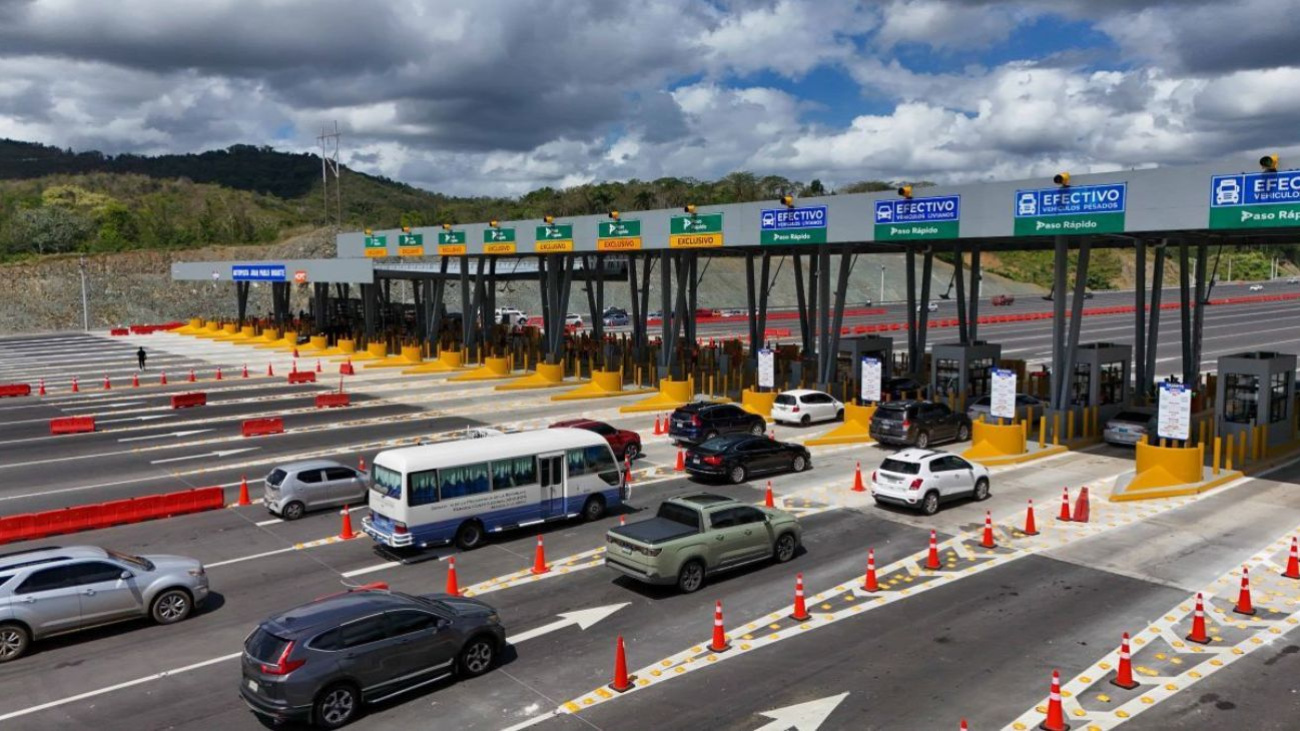
    Santo Domingo – The 2026 Holy Week travel season has cemented its place in Dominican transportation history, after the RD Vial Trust reported a landmark surge in vehicle traffic across all toll roads under its management. From April 1 to April 3 alone, official counts logged 891,601 vehicles passing through toll plazas, marking a dramatic 32.8% jump compared to the same three-day period in 2025. This double-digit growth aligns with a years-long upward trend in domestic mobility across the Dominican Republic’s primary highway network, signaling steadily rising demand for road travel across the country.

    Traffic volumes climbed rapidly in the opening 48 hours of the tracking period, setting the tone for the record-breaking weekend. The first day, Wednesday, saw 357,862 vehicles traverse the network, with volumes climbing even higher to a single-day peak of 366,871 vehicles on Thursday. Combined, these two days already pushed the total to 724,733 vehicles, a figure that outpaced the full three-day totals from every previous Holy Week season. On the third day, Good Friday, national policy waived all toll fees for the holiday, drawing an additional 166,868 vehicles and pushing the final total to the unprecedented historic high.

    RD Vial Trust director Hostos Rizik Lugo explained that the record-breaking traffic flow was managed smoothly thanks to expanded operational capacity rolled out as part of Operation Awareness for Life 2026, a national safety initiative coordinated by the country’s Emergency Operations Center. To prepare for the seasonal travel boom, authorities deployed more than 3,600 trained personnel across 3,200 kilometers of national highways, supported by hundreds of patrol units, ambulances, tow trucks, and mobile maintenance workshops to respond quickly to incidents and keep traffic moving.

    The Paso Rápido electronic toll collection system also emerged as a critical contributor to managing the unprecedented volume, operating across all toll plazas with a 96% operational efficiency rate. The system’s reliable performance cut down on wait times and prevented widespread gridlock, even as traffic volumes far exceeded initial projections. Officials emphasized that the sharp year-over-year increase in traffic is not just a reflection of typical seasonal holiday travel demand. Instead, they noted, it points to a structural, long-term increase in road usage across the country, alongside growing public confidence in the quality and reliability of the Dominican Republic’s national highway infrastructure.

  • Air Force rescues two tourists in emergency evacuation near Pico Duarte

    Air Force rescues two tourists in emergency evacuation near Pico Duarte

    In a display of coordinated emergency response, the Dominican Republic Air Force has pulled off a high-stakes aeromedical evacuation in the rugged terrain near Pico Duarte, successfully extracting two tourists facing life-threatening medical emergencies. The mission was not a solo effort: air force units worked in lockstep with the national Emergency Operations Center and the Directorate of Out-of-Hospital Emergency Services, turning separate institutional capabilities into a unified, effective response that underscores the country’s investment in inter-agency emergency preparedness.

    The rescue operation was launched from a UH1H 3074 military aircraft, with a carefully assembled four-person crew leading the risky mission. At the helm were Captain Pilot Juan Vásquez Ávila and First Lieutenant Pilot Martín Soto Quezada, who navigated the unforgiving mountain topography to reach the stranded tourists. They were backed by Aviation Technical Sergeant Yesther Ciprian Paredes, who managed critical aircraft systems throughout the flight, and aeromedic Second Lieutenant Thomas Camacho Moronta, who provided on-site urgent care to stabilize the injured patients before extraction. Working against challenging geographic conditions that demand extreme precision, the team completed the extraction without further incident, getting the two tourists to care far faster than a ground evacuation could have achieved.

    Once extracted, the patients were flown directly to Professor Juan Bosch Regional Traumatological and Surgical Hospital, a leading facility equipped to handle complex trauma and urgent surgical care, where they immediately began receiving specialized treatment from experienced medical teams. Beyond the successful rescue of two individuals, the operation serves as a public demonstration of the Dominican Republic Air Force’s constant operational readiness. It proves the branch can deploy rapidly and effectively to respond to crises across every region of the country, even in the most hard-to-reach landscapes, protecting both residents and visitors through coordinated, quick action.

  • Region faces structural challenge to dev’t — ECCB governor

    Region faces structural challenge to dev’t — ECCB governor

    At a high-profile launch event this Thursday, Eastern Caribbean Central Bank (ECCB) Governor Timothy Antoine has laid out a bold, decade-long strategic plan aimed at doubling the Eastern Caribbean Currency Union (ECCU)’s total GDP and lifting collective citizen prosperity, centered on an initiative branded “The Big Push: Collective Action for Shared Prosperity in the ECCU”.

    Three years in the making, the plan began as a provocative question Antoine posed to regional stakeholders: what would it take to double the size of the ECCU’s economies over 10 years? Today, that hypothetical vision has transitioned into a concrete, actionable roadmap for transformative change. To deliver meaningful, inclusive growth that residents can actually feel — not just measure on spreadsheets — Antoine argues the region must completely reimagine its long-standing development model, and confront a series of unvarnished, unavoidable structural challenges holding back progress.

    Contrary to framing the region’s stagnation as a temporary, cyclical downturn, Antoine emphasizes that the ECCU’s growth obstacles are deeply structural. He outlined several critical constraints that demand urgent attention: over 80 percent of the food consumed across the bloc is imported, driving exorbitant food import costs and contributing to elevated rates of diet-related disease and mortality. Nearly 90 percent of the region’s energy comes from polluting fossil fuels, pushing up electricity prices for households and businesses and eroding the international competitiveness of local industries. Intra-regional connectivity is another persistent pain point: transport links are so costly and inefficient that it is often cheaper for ECCU residents to travel to major North American hubs like New York or Miami than to neighboring Caribbean nations such as Barbados or Trinidad.

    Additional systemic challenges include stagnant or falling labor productivity across the bloc, paired with ongoing population decline that creates a major headwind for economic expansion. Antoine also highlighted that access to credit for private sector businesses remains far too limited, a gap that stifles entrepreneurship and job creation. “How do you grow and double the size of an economy with a falling population? We have to arrest this issue, folks. We have to wrestle with these issues and we have to solve them,” he stressed.

    Antoine was clear that “The Big Push” is no empty political slogan. Instead, it is a coordinated transformation strategy that relies on cross-regional collaboration and consistent execution, with core priorities of economic diversification, enhanced climate and economic resilience, improved competitiveness, and above all, shared prosperity that puts people first. The plan’s ultimate goals are deeply tied to everyday livelihoods: it aims to create meaningful professional opportunities for young graduates at home, so they do not have to leave their communities to build careers; support local farmers to produce competitively and cut reliance on food imports; and create the conditions for small businesses to expand and generate new local jobs.

    “Taken together, these hard truths are not mere inconveniences. They are structural constraints on our growth, our resilience, and our sovereignty,” Antoine said. He warned that continued inaction on these long-standing issues carries steep costs, noting that “inaction is not neutral; it compounds and accelerates decline” — making delay no viable option for regional leaders and stakeholders.

    The ECCB governor emphasized that the 10-year plan is designed to address these gaps head-on, but stressed that the central bank cannot deliver the initiative alone. “The big push is not a panacea and it is not the responsibility of the ECCB alone,” he explained. “We can choose to either curse darkness or light a candle. This strategic plan lights candles on many of these issues, but we cannot do it alone.”

    Antoine added that while the plan is undeniably ambitious, it is a necessary step forward for the region. The ECCB’s core role is not to generate growth directly, but to create the stable, enabling conditions that make growth possible: maintaining a strong Eastern Caribbean Dollar, safeguarding the regional financial system, and building sustained confidence among investors and residents alike. Collective action across public, private, and civil society stakeholders, he said, will be the key to turning the vision of doubled, shared prosperity into a reality for all people of the ECCU.

  • Adrian Williams Gives His Side Of The Story

    Adrian Williams Gives His Side Of The Story

    For weeks, swirling rumors and secondhand accounts have dominated public conversation around events connected to Adrian Williams, leaving key gaps in the public understanding of what actually unfolded. Now, for the first time, Williams is stepping forward to share his own version of events, pushing back against incomplete narratives that have circulated in mainstream and social media alike.

    In his firsthand account, Williams addresses long-unanswered questions that have fueled speculation, laying out the sequence of events as he experienced them, from the initial triggers that set the situation in motion to the aftermath that has reshaped his public standing. He outlines contextual details that had not been previously reported, explaining how misinterpretations of his actions and statements took root and spread beyond his control.

    Williams’s decision to go public with his side of the story comes amid growing calls for transparency from observers who have only been able to access fragmented accounts from other sources. While his narrative does not resolve all outstanding questions surrounding the situation, it provides a critical missing perspective that allows the public to build a more complete picture of what occurred. Moving forward, Williams indicates he is prepared to answer further questions and engage in any appropriate processes to clarify the facts for all parties involved.