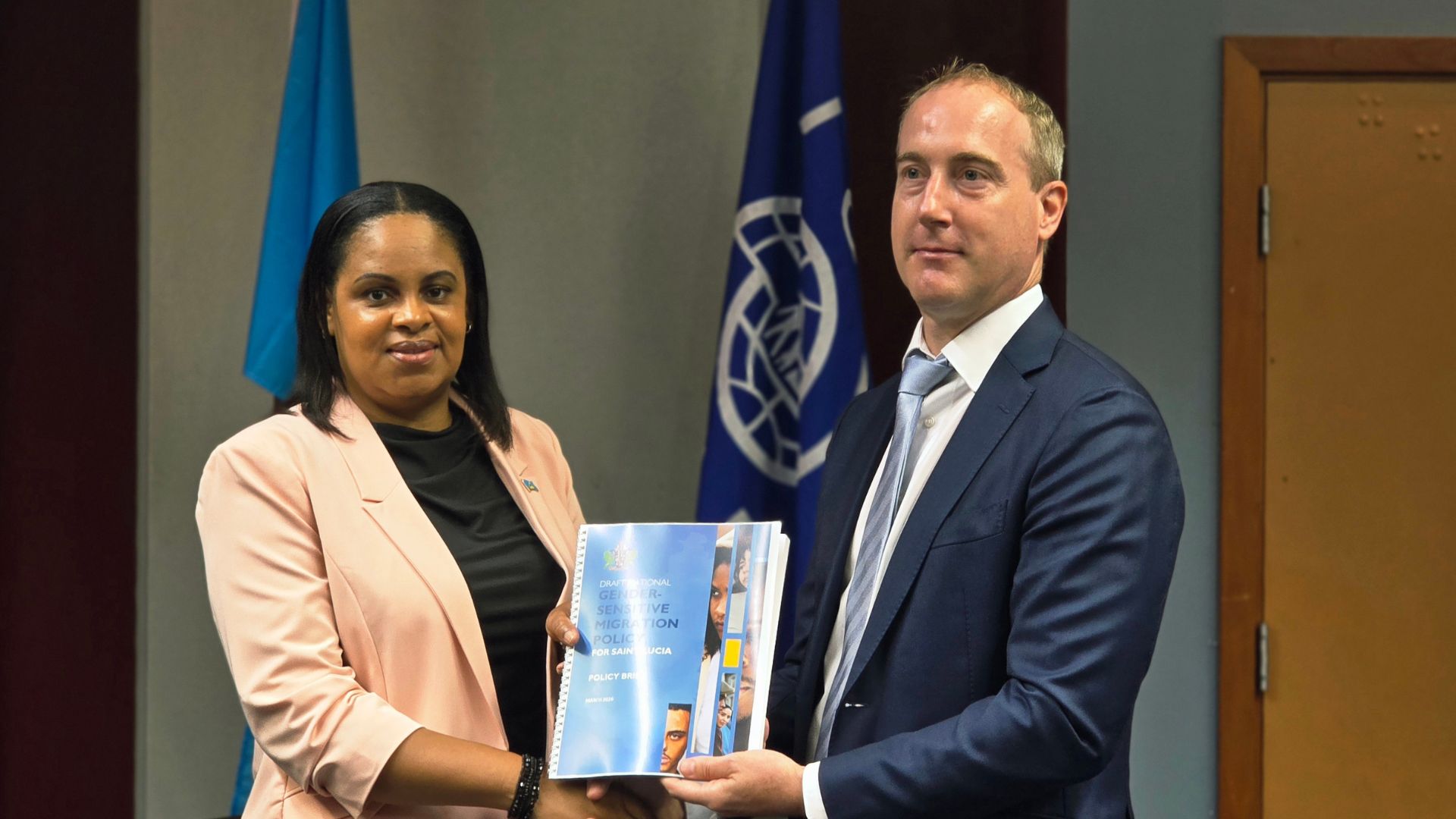
Saint Lucia is grappling with a growing wave of skilled worker emigration, with nurses and teachers departing the Caribbean island nation in large numbers. This exodus has become a key driving force behind the drafting of a groundbreaking new national gender-responsive migration policy, designed to navigate both the risks and opportunities that come with cross-border population movement.
Currently, movement of people in Saint Lucia is governed by existing frameworks including the Immigration Act, the Citizenship Act, and relevant constitutional provisions. However, a combination of emerging global and national shifts has pushed policymakers to pursue a comprehensive, updated policy approach. Climate-driven disasters, plummeting fertility rates, and evolving geopolitical tensions have all created new uncertainty around the country’s long-term demographic and economic trajectory, prompting a re-evaluation of how migration is managed.
Speaking at an official media briefing held to unveil the draft policy, Patrice Quesada, Caribbean Coordinator for the International Organization for Migration (IOM), shared stark demographic data: Saint Lucia is currently recording barely above zero population growth, with its fertility rate already dropping below 1.4 births per woman. This figure is far below the 2.1 birth rate that demographers widely identify as the minimum threshold required to sustain stable population growth without immigration. Paul Kalicharan, a statistician from Saint Lucia’s National Insurance Corporation, has previously flagged these demographic trends, emphasizing that the country will need to import skilled foreign labor to fill critical workforce gaps that will emerge as the native population ages and shrinks.
The briefing brought together a diverse panel of stakeholders, including Quesada, Julian Dubois (Saint Lucia’s Ambassador for Diaspora Affairs), Caron Tobiere (Chairperson of the Coalition of Civil Society Organisations of Saint Lucia), Aiasha Jn Baptiste (Legal Officer at the Ministry of External Affairs), and Ken Charlery (Southern Division Immigration Supervisor).
During discussions, panellists acknowledged a key structural disparity: migrants currently working in Saint Lucia often have access to better professional and economic opportunities than native-born Saint Lucians who have never migrated abroad. Ambassador Dubois noted that the new draft policy creates a critical opening to examine this issue through an objective, balanced lens, allowing policymakers to recalibrate systems to deliver more equitable outcomes.
Officials also stressed that migration is not solely a challenge—it also carries substantial economic benefits for the island nation. One of the most significant advantages is the steady flow of remittances sent back to Saint Lucia by citizens living and working overseas. In recent years, this has shifted the national narrative around migration, repositioning well-managed migration as a tool to advance sustainable development and broader social inclusion.
The draft gender-sensitive migration policy was developed through a collaborative partnership between the government of Saint Lucia and IOM, following extensive consultations with dozens of civil society, security, and social agencies across the country and the broader Caribbean region. Once finalized, the draft will be presented to the national Cabinet for review before official implementation can begin.
The policy outlines eight core priority areas that will guide its implementation:
1. **Labour Migration and Decent Work**: The policy prioritizes the promotion of fair recruitment practices, robust protections for migrant workers, and full economic and social integration to maximize shared benefits for both the national economy and migrant households, while eliminating persistent gender disparities and upholding the rights of all vulnerable migrant groups.
2. **Migration Data, Monitoring and Evidence-based Research**: Policymakers will work to build a comprehensive, gender-responsive data and monitoring framework that can accurately track migration flows, measure policy outcomes, identify vulnerable populations, and assess the real-world impact of the new policy.
3. **Protection, Human Rights and Social Inclusion**: The policy commits to guaranteeing comprehensive support to all migrants, particularly marginalized and vulnerable groups, by expanding access to robust protection mechanisms and ensuring all migrants can access their rights and participate fully in society free from discrimination and stigma.
4. **Migration, Diaspora and Development Synergies**: The new framework seeks to leverage connections between migration, the Saint Lucian diaspora, and national development to drive sustainable economic growth, facilitate cross-border knowledge exchange, and strengthen national resilience, while mitigating the negative side effects of unmanaged migration.
5. **Migration in Crises and Environmental/Climate-related Mobility**: The policy will strengthen institutional preparedness and policy systems to anticipate, reduce the harm of, and manage migration driven by crises and climate change, with a focus on gender equity, protection, and the development of long-term sustainable solutions.
6. **Remittances and Development**: The framework aims to amplify the contribution of remittances to national development by cutting transaction costs, expanding access to financial services for recipients, and supporting the productive, gender-equitable use of remittance income to boost household resilience, expand economic opportunity, and drive sustainable national growth.
7. **Return and Reintegration**: Policymakers will build out comprehensive support systems to support the sustainable economic and social reintegration of Saint Lucians returning to live and work in the country after living overseas, ensuring returnees are treated with dignity and fully included in national life.
8. **Border Management and Safe and Orderly Migration**: The policy will strengthen Saint Lucia’s capacity to implement integrated, rights-based border management, ensuring that migration remains safe, orderly, and regular, while preventing irregular migration and upholding protections for vulnerable migrants.