博客

  • Antigua and Barbuda swimmers add three more medals and records on day two of CARIFTA Aquatics

    Antigua and Barbuda swimmers add three more medals and records on day two of CARIFTA Aquatics

    After a standout opening day of competition at the CARIFTA Aquatics Championships, Antigua and Barbuda’s swimming delegation picked up right where they left off on the second day of finals, capturing three additional medals and smashing five national and age-group records to extend their strong early run at the tournament.

    Building on a three-medal haul from day one, the Caribbean nation’s athletes added a full set of gold, silver, and bronze to their overall tally on day two, with two new national records and three new age-group benchmarks added to their growing list of career and national achievements.

    Teen swimmer Madison MacMillan emerged as the day’s standout performer for the team, taking top honors in the women’s 400 metres individual medley with a final time of 5 minutes 15.85 seconds. Her winning mark not only earned her the gold medal but also reset the Antigua and Barbuda national record, established a new age-group record, and knocked time off her own previous personal best.

    Fellow teammate Anya DeGannes followed closely behind MacMillan in the same 400m individual medley event, claiming the silver medal with a time of 5:27.71. Like MacMillan, DeGannes also walked away from the race with a new age-group record and a new personal best to add to her career highlights.

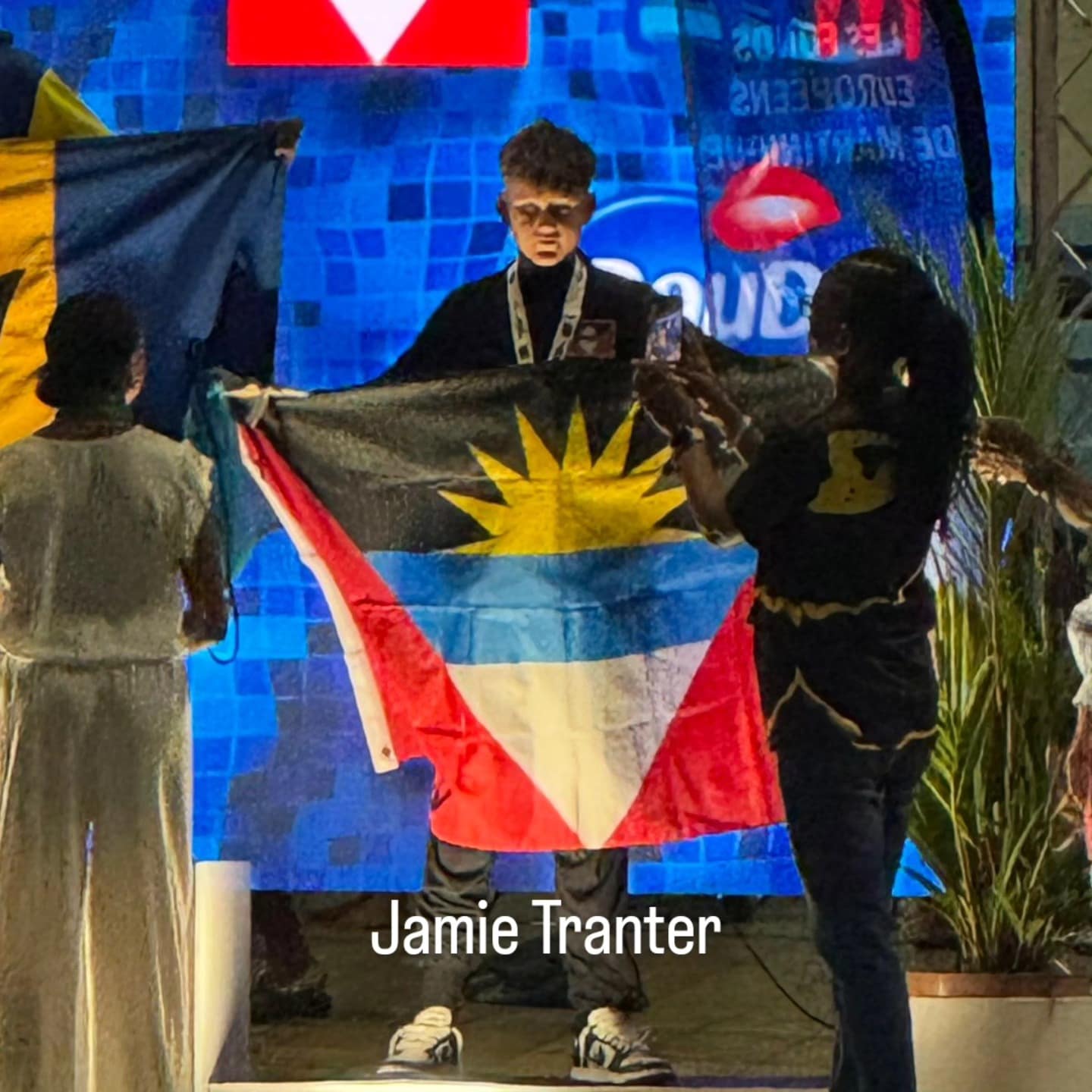
    Jamie Tranter rounded out the day’s medal haul for Antigua and Barbuda, securing the bronze medal in the men’s 50 metres backstroke with a personal best time of 1:03.91.

    While Alessandro Bazzoni just missed out on joining his teammates on the podium, finishing fourth in the men’s 400 metres individual medley with a time of 5:08.89, he still enjoyed a career-defining race. Bazzoni finished just 0.45 seconds off the bronze medal position, but his time set both a new national record and a new age-group record, marking a major milestone for the young swimmer.

    In other day two races, Kaylee Warner notched sixth-place finishes in both the 200 metres freestyle and 50 metres butterfly, posting a new personal best of 2:22.75 in the 200m freestyle event. Alyssa Watkins also posted solid results, earning eighth place in the 50 metres butterfly and 13th place in the 400 metres individual medley.

    The successful second day follows an equally impressive opening day of competition, when Antigua and Barbuda also captured three medals to kick off the championships. DeGannes opened her tournament with a gold medal in the 100 metres butterfly, breaking the age-group record and notching a personal best in the process. MacMillan added a silver in the women’s 800 metres freestyle, while Ellie Shaw claimed another silver in the women’s 200 metres breaststroke to round out day one’s medal haul.

    Several other Antigua and Barbuda swimmers posted strong top-eight finishes on day one outside of the medal round. Tranter finished fourth in the 50 metres backstroke with a personal best, while Christopher Walter placed fifth in the 100 metres butterfly, also hitting a new personal best. Warner secured seventh in the 50 metres backstroke and sixth in the 100 metres butterfly, and Watkins took seventh place in the 100 metres butterfly.

    In a post-competition statement, the Antigua and Barbuda Swimming Federation praised the team’s performance across the first two days of the event. Officials noted that the consistent medal haul and repeated record-breaking swims are clear evidence of sustained growth and progress for the country’s competitive swimming program, highlighting the depth of talent and preparation among the athlete roster.

  • Jaeda Pigott advances to U17 800m final at CARIFTA Games

    Jaeda Pigott advances to U17 800m final at CARIFTA Games

    The 50th CARIFTA Games, a premier regional track and field competition for young Caribbean athletes, has already delivered a mix of breakthrough moments and near-misses for Team Antigua and Barbuda. Leading the team’s successes so far is teenage middle-distance runner Jaeda Pigott, who locked in an automatic qualification spot for the Under-17 girls’ 800 metres final after a standout performance in her preliminary heat.

    Pigott crossed the finish line in 2 minutes 18.03 seconds to claim second place in her heat, a result that met the automatic qualification standard and kept Antigua and Barbuda’s strong early streak on the track alive. The young runner’s consistent pacing and strong final sprint earned her a well-deserved spot in the upcoming final, where she will compete for a regional medal against top runners from across the Caribbean.

    In other preliminary round action for Antigua and Barbuda, Under-17 boys’ 800 metres athlete Lion Samuel recorded a time of 2:07.48 in his opening heat. Meanwhile, the nation’s Under-20 boys’ 4×100 metres relay team posted a solid time of 41.85 seconds in their qualification heat, but fell just short of securing a place in the final. The team finished a hair behind the British Virgin Islands relay squad, which clocked 41.51 seconds to claim the final qualification spot, leaving the Antigua and Barbuda team out of the final round by a narrow margin.

    Following the first day of preliminary competition, the Antigua Barbuda Athletic Association issued a statement acknowledging the team’s efforts, noting that all athletes delivered determined performances against deeply competitive fields. Despite the relay team’s disappointing near-miss, association representatives highlighted that young competitors from the nation have continued to hold their own against some of the best junior runners in the Caribbean, competing at a consistently high level throughout the opening rounds of the games.

  • Joseph, Henry, Pigott among athletes setting personal bests for Antigua and Barbuda at CARIFTA

    Joseph, Henry, Pigott among athletes setting personal bests for Antigua and Barbuda at CARIFTA

    The annual CARIFTA Games, one of the Caribbean’s most prestigious regional track and field competitions for young emerging athletes, delivered a series of standout results for Team Antigua and Barbuda this year, with five local competitors turning in career-topping performances across sprint and distance events.

    The first wave of personal bests came during the competition’s morning session, where two young male sprinters dominated their respective age-group 200-meter races. Delbert Joseph, competing in the hotly contested Under-20 boys’ division, crossed the finish line with an official time of 21.73 seconds, shaving precious milliseconds off his previous best mark to set a new personal standard. Not to be outdone, 17-and-under sprinter Geron Henry recorded his own career best in the same event, stopping the clock at 21.92 seconds in his preliminary outing.

    In the afternoon session, the island nation’s middle-distance competitor Jaeda Pigott matched her teammates’ momentum in the Under-17 girls’ 800 meters. The young runner crossed the line with a final time of 2 minutes and 18.03 seconds, securing a new personal best that capped a successful day of competition for Antigua and Barbuda’s track contingent.

    Two more local distance runners turned in impressive career performances in the Under-17 boys’ long-distance events. Shawn-Ze Joseph finished with a time of 10:25.48, while teammate Elite Thomas crossed the line shortly after at 10:31.62, both hitting new personal milestones in the race.

    In a post-competition statement, the Antigua Barbuda Athletic Association highlighted that the string of personal bests marks encouraging steady progress for the country’s track and field development program. The association noted that the results reflect a consistent upward trajectory for young Antigua and Barbuda athletes, who continue to push their limits and raise their competitive profiles against top regional talent at the tournament.

  • Maliek Francis wins bronze in U20 javelin at CARIFTA Games

    Maliek Francis wins bronze in U20 javelin at CARIFTA Games

    At the recently concluded CARIFTA Games, the Caribbean’s premier annual youth athletics championship, Antigua and Barbuda picked up a new podium finish thanks to rising throwing star Maliek Francis. Competing in the fiercely contested Under-20 boys’ javelin event, Francis delivered a personal best-caliber throw of 60.14 meters, which earned him a well-deserved bronze medal to add to his nation’s overall medal count at the regional tournament.

    The Antigua Barbuda Athletic Association was quick to publicly celebrate Francis’ achievement, lauding the young athlete’s disciplined preparation and competitive composure during the event. In an official statement, the governing body for the sport in the country framed his performance as a masterclass demonstration of raw strength, unwavering focus, and flawless technical execution, emphasizing that the bronze medal was the direct product of months of consistent hard work off the track.

    Beyond the individual accolade, Francis’ standout result at the 202x CARIFTA Games underscores a clear upward trajectory for Antigua and Barbuda’s development in Olympic field events. As one of the Caribbean nation’s highest-performing competitors at this year’s championships, the young javelin thrower has cemented his status as one of the country’s most promising young athletic prospects, pointing toward future success for both Francis and Antigua and Barbuda’s athletics program on regional and global stages.

  • Devil’s Bridge kite tradition marks 21 years of Easter Monday celebrations

    Devil’s Bridge kite tradition marks 21 years of Easter Monday celebrations

    For more than two decades, one of Antigua and Barbuda’s most beloved Easter celebrations has brought communities together across generations, and this year the coastal tradition reaches a meaningful milestone. The annual Easter Monday kite-flying gathering at Devil’s Bridge, a signature cultural event that has become woven into the nation’s holiday identity, is celebrating its 21st anniversary in 2024.

    Held from 9 a.m. to 7 p.m. along the country’s scenic eastern coastline, the event turns the open sky above Devil’s Bridge into a moving canvas of color. Every kite that takes flight is handcrafted by local participants, each bearing unique designs that reflect the creativity and artistry of Antigua and Barbuda’s people. What started as a casual, informal pastime for local residents has gradually grown into a cornerstone of the country’s Easter observances, drawing thousands of locals and visitors alike each year.

    Unlike large-scale commercial festivals, this gathering centers on connection and shared heritage. Multi-generational families travel to the coastline to take part: grandparents pass down kite-building techniques to younger children, friends reconnect over the holiday, and attendees bond over their shared love of this distinctly Antiguan and Barbudan tradition. Organizers note that the 21-year milestone stands as a testament to the event’s lasting, enduring appeal. Far from fading with time, the kite-flying day continues to grow in popularity, remaining one of the most anticipated highlights of the national Easter calendar, balancing lighthearted family fun with a deep, abiding sense of cultural heritage.

  • OP-ED: How did we get here? Let the children play

    OP-ED: How did we get here? Let the children play

    The Caribbean, long celebrated globally for its postcard-perfect coastlines and warm, inviting tropical climate, is grappling with a rapidly growing public health crisis that threatens the long-term well-being of its youngest populations. Data collected by the Caribbean Public Health Agency (CARPHA) in 2025 paints a stark picture: more than 50% of Caribbean adults and 33% of children currently live with overweight or obesity, with the condition affecting every age demographic across the region. If left unaddressed, this widespread public health issue puts the region’s future generations at elevated risk of lifelong chronic illness.

    Under the United Nations Convention on the Rights of the Child, every child holds an inherent right to access the highest attainable standard of health, as well as age-appropriate opportunities for play and recreation. Yet in the Caribbean, these fundamental rights are regularly sidelined by overlapping pressures: intensifying academic demands on young students, rapid urbanization that reshapes daily routines, and the growing influence of global commercial food and beverage marketing. To reverse this damaging trend, public health advocates argue that a rethinking of primary and secondary education systems—especially the role of structured physical education (PE)—is critical to laying the foundation for lifelong healthy habits.

    UNESCO’s International Charter of Physical Education, Physical Activity and Sport has long recognized that upholding children’s right to activity is a cornerstone of both quality education and lifelong population health. To implement effective reform, advocates emphasize the need to draw a clear distinction between traditional athletic coaching and formal school-based PE. While coaching focuses on preparing individual athletes or teams for competitive performance, PE is a universal, curriculum-based subject designed to build core movement skills, social competence, self-confidence, and sustained healthy habits for *all* students, regardless of athletic ability. Public health leaders argue that PE deserves status as a core academic subject, and Caribbean governments should leverage UNESCO’s global guidelines to update outdated national curricula. This distinction is key to unpacking the systemic, interconnected public health challenges facing Caribbean youth today.

    Caribbean public health authorities outline three overlapping systemic drivers of the region’s childhood health crisis:
    – **Chronic physical inactivity**: Fewer than one in three Caribbean teenagers meet the World Health Organization’s recommended 60 minutes of daily moderate-to-vigorous physical activity, creating an immediate public health risk that requires urgent intervention.
    – **Unhealthy dietary shifts**: The rapid proliferation of ultra-processed food products, sugar-sweetened beverages, and meals high in unhealthy saturated fats across local food systems has drastically accelerated the development of obesity and related chronic conditions, demanding prompt policy action.
    – **Lack of accessible public recreation infrastructure**: Most urban centers across the region lack safe, free-to-access public play spaces for children, limiting opportunities for unstructured activity and compounding existing health risks for low-income and marginalized communities.

    Across Caribbean school systems, institutional priorities have pushed PE to the margins, with academic subjects treated as inherently more valuable than physical development. This culture frames play and activity as secondary to test scores and college preparation, creating a systemic imbalance that threatens the holistic development of children. Advocates warn that both extreme academic pressure and passive, unstructured leisure time centered on screen use harm healthy childhood growth.

    Decades of global public health research confirm that regular physical activity delivers wide-ranging benefits beyond physical health: it boosts cognitive function, improves mental health and mood, strengthens social skills, builds self-esteem, and increases resilience to stress. For this reason, PE and daily activity are irreplaceable components of a complete education, and a critical tool to prevent an entire generation from developing preventable chronic health conditions later in life.

    To address the crisis, public health leaders from Healthy Caribbean Youth have outlined a five-point actionable policy framework tailored to the Caribbean context:
    1. **Make PE a mandatory core subject in all schools**: Governments must invest in ongoing training for qualified PE teachers, fund updated equipment and safe facilities, set a legal requirement for a minimum number of weekly PE hours, and regularly monitor participation and health outcomes. Successful reform also requires buy-in from school leaders, parents, and local community partners to sustain long-term change.
    2. **Break down inter-ministerial silos**: Ministries of health, education, and urban planning must coordinate proactively to integrate play and healthy habit formation into every child’s daily routine, rather than treating these goals as the sole responsibility of a single government department.
    3. **Invest in community-centered safe play spaces**: Governments must prioritize the urgent development of free, accessible recreational infrastructure in all communities, with targeted investment in low-income urban neighborhoods that currently lack these resources. This can be achieved through reallocating public budget resources, pursuing global public health grants, and building cross-sector partnerships with local businesses and non-governmental organizations. Local community groups can also play a key role in long-term maintenance of these spaces.
    4. **Restrict unhealthy food access in schools**: Governments must implement a full ban on the sale and marketing of ultra-processed food products in all school facilities, require schools to implement daily structured movement programs, and conduct regular compliance inspections with clear penalties for schools that fail to meet standards. Education authorities must provide immediate administrative support to help schools implement these new rules smoothly.
    5. **Normalize daily activity beyond competitive sports**: The movement advocates for expanding access to all forms of play and physical activity for every child, not just elite athletes, to protect long-term population well-being.

    The urgency of this crisis cannot be overstated: continued delays and policy inaction will lead to irreversible public health outcomes that will impact every sector of Caribbean society, from healthcare costs to economic productivity, far beyond physical health alone.

    Now is the time for collective action from communities, policymakers, educators, and families across the region. Advocates are calling for concrete, binding programs and policies that prioritize children’s health, play, and holistic development above competing political and institutional priorities. Two core measurable targets have been put forward to hold leaders accountable: cutting childhood obesity rates by 10% over the next decade, and guaranteeing that every primary and secondary school in the region provides a minimum of 120 minutes of structured physical activity per week for all students. Public tracking of these clear benchmarks and transparent sharing of progress will help build momentum for collective regional change. Every member of the public can raise their voice to demand that leaders, educators, and caregivers act without delay. The future of Caribbean children depends on immediate, decisive action—this is the moment to champion every child’s fundamental right to play and thrive.

    This commentary was written by Offniel Lamont, a Sports Medicine Physiotherapist and Public Health Youth Advocate affiliated with Healthy Caribbean Youth (HCY), Jamaica Health Advocates – Youth Arm (JHAYA), and Fix My Food Jamaica (a UNICEF Jamaica initiative). The article includes a standard disclaimer noting that the author’s views and claims are his own and do not represent the official positions of Duravision Inc., Dominica News Online, or any of their subsidiary brands.

  • AKMOS: Santokhi gaf ondernemerschap een stem in moeilijke tijden

    AKMOS: Santokhi gaf ondernemerschap een stem in moeilijke tijden

    On April 6, the Association for Small and Medium Enterprises in Suriname (AKMOS) released a statement mourning the passing of former Surinamese President Chandrikapersad Santokhi, celebrating his lasting legacy as a critical bridge between the national government and the country’s business community.

    Throughout his time in office, during a period of severe economic uncertainty for the nation, Santokhi consistently prioritized the needs and interests of small and medium-sized enterprises (SMEs), the backbone of Suriname’s domestic economy. AKMOS highlighted that Santokhi distinguished himself as an approachable leader who prioritized hearing directly from small business owners, even when widespread economic pressure left countless entrepreneurs struggling to keep their operations afloat.

    The most pivotal demonstration of Santokhi’s commitment to SMEs came in the aftermath of the global COVID-19 pandemic, when the survival of thousands of Surinamese businesses hung in the balance. Santokhi’s administration explicitly recognized the urgent need for targeted support and recovery measures, ensuring that the specific concerns of small business owners were not just heard, but integrated into national economic policy.

    A core priority of Santokhi’s SME-focused policy was expanding access to affordable financing and targeted support for small operators. Through public institutions like the National Development Bank and government-backed programs including the SURGE Program and SAMAP, the administration made tangible progress to stimulate entrepreneurship and domestic production. For thousands of small business owners, these initiatives were not just empty policy proposals—they delivered concrete opportunities to keep their businesses operating, invest in expansion, and drive long-term growth. Beyond direct programs, the government also expanded and simplified access to financing lines and credit opportunities for small operators.

    Another key legacy of Santokhi’s tenure was securing permanent, structural representation for SMEs in national decision-making. AKMOS, alongside the Surinamese Business Association and ASFA, gained formal participation in the Tripartite Consultation and the Social-Economic Council, giving SMEs a consistent, institutionalized voice in shaping national socio-economic policy.

    AKMOS acknowledged that challenges for Surinamese SMEs remained throughout Santokhi’s term, including lingering bureaucratic hurdles and calls for faster policy implementation. Even so, the organization emphasized that Santokhi laid critical groundwork for public-private collaboration and economic recovery during one of the most difficult periods in Suriname’s modern economic history.

    With Santokhi’s passing, Suriname has lost a visionary leader who recognized the central role of entrepreneurship in national prosperity and actively worked to include business stakeholders in developing solutions to the country’s challenges, AKMOS said.

    On behalf of AKMOS leadership and all its members, the organization extended its deepest condolences to the Santokhi family and their loved ones, as well as to the entire people of Suriname for the national loss. The statement, signed by AKMOS President Harry Soekhlal, affirms that Santokhi’s contributions to Suriname’s entrepreneurship and SME community will endure for generations to come.

  • Newton claims bronze at CARIFTA Games

    Newton claims bronze at CARIFTA Games

    BASSETERRE, St. Kitts – April 6, 2026 – St. Kitts and Nevis’ delegation to the 2026 CARIFTA Games has already secured its first confirmed medal of the competition, courtesy of a breakout performance from teenage middle-distance runner Kymarni Newton. The 17-and-under athlete delivered a race for the record books in the Boys’ Under-17 800m final, claiming a hard-fought bronze medal while etching two new personal and national milestones into the history books.

    Competing against some of the fastest young runners from across the Caribbean region, Newton crossed the finish line in 1 minute 55.34 seconds to secure the third spot on the podium. Not only did the result mark a new personal best for the rising star, it also shattered the previous national record in the Boys Under-17 800m event, setting a new benchmark for future young middle-distance runners from the Federation to chase.

    The gold medal went to Nahjah Wyatte of St. Maarten, who dominated the race from start to finish to clock a winning time of 1:53.26. Jamaican runner Markland Williams claimed the silver medal with a finish time of 1:53.60, edging out Newton to take second place. Newton’s compatriot Najeeb Kelly also turned in a solid performance in the final, finishing just outside the top four with a time of 1:59.74 to take fifth place overall.

    With Newton’s historic bronze already in hand, all attention now turns to the upcoming 4x400m relay events, where the St. Kitts and Nevis contingent is gearing up to compete for more podium placements and add to its growing medal haul at this year’s regional youth athletics showcase.

  • DIN: Zijn lichaam is ons ontvallen, maar zijn missie leeft voort

    DIN: Zijn lichaam is ons ontvallen, maar zijn missie leeft voort

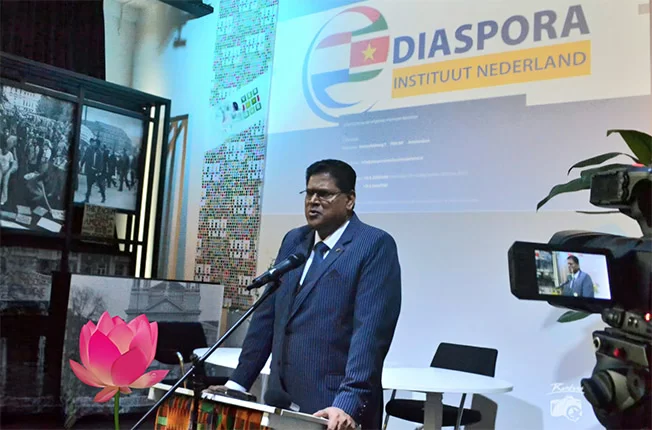
    AMSTERDAM – April 6 – The Diaspora Institute Netherlands (DIN) has released a statement mourning the passing of former Suriname President Chandrikapersad Santokhi, remembering his transformative vision for Suriname’s development through global collaboration with its diaspora community.

    Drawing on an ancient Vedic teaching that frames human death as occurring in three stages — first when a person draws their final breath, second when their body is buried or cremated, and third when all memory of them fades — DIN emphasized that Santokhi will never experience this final passing. His ideas and vision remain embedded in the work of the institution he helped found, and will continue to shape Suriname’s future for generations to come.

    The institute was formally established on September 11, 2021, during Santokhi’s first state visit to the Netherlands. Then-serving President Santokhi installed the organization at the Ons Suriname community center in Amsterdam, after recognizing the untapped potential of the global Surinamese diaspora to drive national growth. It was on this historic occasion that he shared his defining vision in one powerful, memorable statement: “We will build Suriname with 1 million Surinamese.”

    Since that day, Santokhi’s words have formed the foundational inspiration for all of DIN’s work. The organization’s core mission is to connect Surinamese communities spread across the globe, and channel their resources, energy and expertise to accelerate inclusive development in Suriname — a mission that grew directly from Santokhi’s clear, unifying vision. Today, even after his passing, DIN confirms it will continue to advance that mission, with Santokhi’s goal of building a stronger Suriname in partnership with all Surinamese worldwide remaining its guiding north star.

    Santokhi’s ideology lives on in the hearts and actions of everyone who continues to work toward his ideal. As long as his vision is upheld and put into practice, he will remain a lasting presence in Suriname’s future, the statement notes.

    The institute extended its deepest condolences to all Surinamese people around the world who mourn this great loss, while reaffirming its unwavering commitment to carrying forward Santokhi’s work. “His body has left us, but his mission lives on. His voice has fallen silent, but his message echoes onward. Chan will never die. Jai Ho Chan! DIN connects.” the statement concluded.

    The message was signed by the DIN Board: John Brewster, Uriel Sabajo, and Ranjan Akloe.

  • April showers bring crashes

    April showers bring crashes

    After weeks of raging, uncontrolled bushfires that choked skies and disrupted travel across large swathes of Trinidad and Tobago, long-awaited rainfall arrived to dampen the blazes – but it brought a new, deadly hazard in its wake: slick, dangerous road conditions that have sparked a surge in collisions, including the fatal crash that claimed the life of 46-year-old Zeena Joseph of Couva.

    The tragedy unfolded just after 2 p.m. Saturday along Rivulet Road, near the Camden traffic lights. Eyewitness accounts confirm Joseph, driving a westbound Nissan Primera, drifted into the opposite lane directly into the path of an eastbound white Toyota Hilux headed for the nearby highway. The force of the head-on collision left Joseph trapped; by the time first responders pulled her from the wreckage, she could not be saved and succumbed to her injuries on the roadside shoulder.

    Noel Lutchman, the 56-year-old Hilux driver from Maraval, was rushed to San Fernando General Hospital for emergency care. His three passengers – Richard Lutchman, Andy Mitchell and Roger Gills – also sustained non-fatal injuries in the crash. They were first stabilized at the Couva District Health Facility before being transferred to the larger San Fernando hospital for ongoing treatment.

    This fatal collision was far from an isolated incident. In the days before the rain, thick smoke from spreading bushfires had already caused multiple chain-reaction crashes on the Sir Solomon Hochoy Highway, where drivers reported near-zero visibility that left motorists unable to react to stopped traffic ahead. When the rain finally moved in to extinguish the blazes, it transformed road conditions overnight, leaving drivers unprepared for the new risks: greasy pavement, reduced visibility from ongoing precipitation, and unpredictable traction that makes sudden stops or evasive maneuvers far more dangerous.

    Police Road Safety Officer Brent Batson told local outlet *Trinidad Express* in an interview Monday that the Trinidad and Tobago Police Service (TTPS) has recorded a clear uptick in road traffic accidents (RTAs) coinciding with the onset of April’s seasonal rains. Batson explained that even light rainfall creates uniquely dangerous conditions by lifting accumulated motor oil from asphalt, creating a slippery film that drastically reduces tire traction. The only effective countermeasures, he noted, are intentional driver behavior changes: reduced travel speeds, increased following distance between vehicles, and routine pre-trip safety checks.

    Batson issued a series of clear safety recommendations for motorists navigating rainy conditions. He urged drivers to confirm their tires, brakes, and windscreen wipers are in full working order before heading out, and to exercise extra caution at intersections and on curved stretches of road. He added, “Drivers are reminded that it is crucial that they reduce vehicle speed when negotiating corners and approaching intersections, and if visibility is poor, turn on the vehicle headlights to ensure other road users are aware of your presence on the road. Please ensure seatbelts are worn by vehicle occupants and keep alert by staying off your phone when driving.”

    The TTPS echoed this warning in a separate public advisory, reiterating calls for increased vigilance from all road users amid the shift in weather. The recent string of traffic fatalities dates back to the previous Sunday, when two men lost their lives in separate crashes along the Uriah Butler Highway. First, Lopinot resident Michael King died when an out-of-control vehicle crossed the median and collided head-on with the car he was sharing with his wife, Severina Francois, who survived. Just hours later, Randy Siew, a librarian at the University of the West Indies, was also killed in a separate collision on the same corridor.

    In the week between that double fatality and Joseph’s death, at least eight additional crashes have been recorded across the country: Saturday’s fatal incident, two separate collisions involving police service vehicles, and five more crashes over the holiday long weekend. Between Saturday morning and Sunday midday, crash reports were filed across high-traffic corridors spanning the nation, including the Churchill-Roosevelt Highway, Uriah Butler Highway, Tasker Road in Princes Town, multiple stretches of the Sir Solomon Hochoy Highway near Gasparillo and El Dorado, Chaguaramas, and the route near Queen’s Park Savannah. By Monday afternoon, local media received reports of a second crash along the same Rivulet Road where Joseph was killed, where a vehicle veered off the pavement into nearby vegetation. As of press time, full details on injuries and outcomes for that latest crash have not yet been confirmed.