博客

  • VN: Han Zheng legt nadruk op ontwikkeling, multilateralisme en internationale samenwerking

    VN: Han Zheng legt nadruk op ontwikkeling, multilateralisme en internationale samenwerking

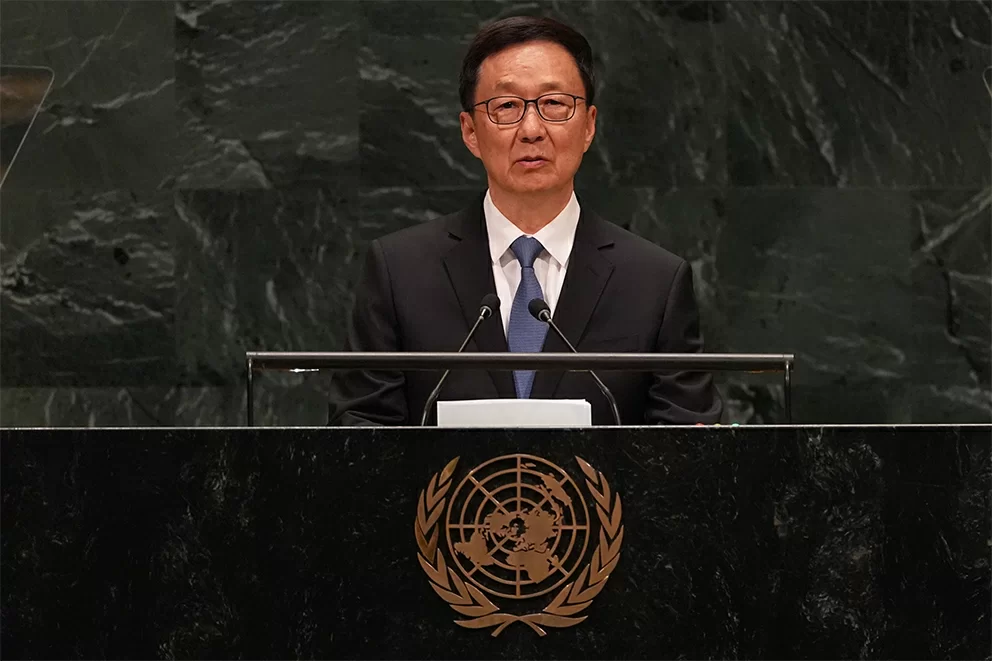
    Against the backdrop of rising global geopolitical divisions and strained multilateral cooperation, Chinese Vice President Han Zheng delivered a key address on behalf of China during the general debate of the 81st United Nations General Assembly at UN Headquarters in New York on Saturday, one day after Chinese President Xi Jinping’s state visit to the U.S. and his meeting with U.S. President Donald Trump.

    Prior to the address, Beijing had confirmed that Han would lay out China’s official positions on global and regional affairs, as well as the country’s vision for the role of the United Nations. Diplomatic sources emphasized that sending Han to represent China at the assembly does not signal a reduced commitment to the UN — the body remains a core platform for multilateral cooperation for Beijing, and Han is far from the first senior Chinese official to stand in for the Chinese president during UN General Assembly week.

    The central theme of Han’s speech was global development. He framed economic and social progress as a fundamental precondition for lasting international peace and stability, and highlighted the priority needs of developing countries in this area. Han pointed to China’s own experience, citing what the Chinese government describes as two domestic “miracles”: decades of rapid economic expansion paired with long-term social stability, as an example of what sustained, targeted development can achieve. This framing is a longstanding core element of China’s official diplomatic narrative, and not an independent assessment by the UN.

    Two of China’s signature global development efforts took center stage in the address: the Global Development Initiative (GDI), launched five years ago to strengthen international development cooperation with a specific focus on the Global South, and the Belt and Road Initiative (BRI), through which Beijing says it now partners with dozens of countries around the world. The BRI has long drawn debate: while Beijing frames it as a vehicle for infrastructure growth and shared development, critics argue the projects also expand China’s economic and geopolitical influence, a tension that remains central to broader discussions of China’s role in the developing world.

    On economic policy, Han issued a clear warning against protectionism, in a nod to the long-running trade frictions that have shaped China-U.S. relations in recent years. “Protectionism produces no winners,” he stated, arguing that no country can achieve robust development in a closed, fragmented international economic environment. The statement aligns with China’s longstanding position opposing trade barriers and unilateral economic measures, and reflects Beijing’s consistent support for the multilateral trading system centered on the World Trade Organization. The timing of the message was notable, coming just days after Xi and Trump’s Washington meeting, where trade and bilateral economic tensions were top agenda items as the two countries work to manage their economic disputes through negotiation.

    Han reaffirmed China’s commitment to multilateralism as the foundation of a rules-based international order anchored in the UN Charter. He called on all nations to resolve disputes through dialogue and diplomacy, and pushed back against unilateral military actions that bypass UN Security Council approval or violate the terms of the UN Charter. This is a core principle of China’s longstanding foreign policy, which holds that international disputes must be addressed through multilateral frameworks with full respect for national sovereignty. The message comes at a moment when the UN is grappling with multiple protracted conflicts and growing geopolitical rifts, echoing a warning issued by UN Secretary-General António Guterres at the opening of this year’s assembly, who highlighted rising global division and growing pressure on international cooperation and international law.

    On tensions involving Iran and the broader Middle East, Han took a measured tone, stating that China insists on full respect for the sovereignty and security of all regional states, including Gulf countries. He called for preserving the post-war international order and warned against Cold War-era mentalities and bloc confrontation. The address did not offer an extended breakdown of China’s position on the ongoing regional conflict, consistent with Beijing’s longstanding approach of framing itself as a neutral supporter of negotiated political solutions to international disputes.

    A notable absence from the speech was any direct reference to Taiwan, a core issue in China’s foreign policy that regularly features in Beijing’s diplomatic statements, particularly in the context of its relations with the United States. While the omission is clear, analysts note its meaning remains ambiguous: without additional official comment from Beijing, it cannot be interpreted as a shift in China’s longstanding Taiwan policy.

    Han also touched on global technological governance, including the fast evolution of artificial intelligence, a top priority for this year’s UN General Assembly, where global regulation of AI has been a central topic of debate. China has pushed for greater multilateral cooperation on AI governance in recent years, and has called for increased representation for developing countries in the process of setting international technological rules. This emphasis aligns with the broader agenda of this year’s assembly, where Guterres has named the rapid advancement of AI as one of the key global challenges that requires coordinated cross-border collaboration.

    Overall, Han’s address offered few departures from China’s existing foreign policy framework, with core priorities of development, multilateralism, respect for national sovereignty, opposition to protectionism, and rejection of unilateral military action that have been consistent in Beijing’s public statements for years. The dual diplomatic events of the past week — Xi’s meeting with Trump in Washington and Han’s address at the UN — underscore Beijing’s parallel diplomatic tracks: active engagement in multilateral institutions alongside direct high-level negotiation with the United States. For China, the UN General Assembly address served primarily as a platform to reaffirm its broader global vision: that lasting international stability can only be built through inclusive economic development, widespread multilateral cooperation, and deliberate efforts to avoid conflict escalation. Whether this approach will deliver concrete progress on ongoing disputes from trade and AI governance to Middle East tensions and U.S.-China rivalry will ultimately depend on the willingness of all involved parties to translate shared stated principles into actionable policy.
  • FIFA to Construct 5,000-Seat Football Stadium in Antigua and Barbuda

    FIFA to Construct 5,000-Seat Football Stadium in Antigua and Barbuda

    In a landmark breakthrough for sports development in the Caribbean, Prime Minister Gaston Browne of Antigua and Barbuda confirmed Saturday that global football governing body FIFA has agreed to construct a new 5,000-capacity football stadium on the islands, with national authorities already securing and allocating the required land for the project.

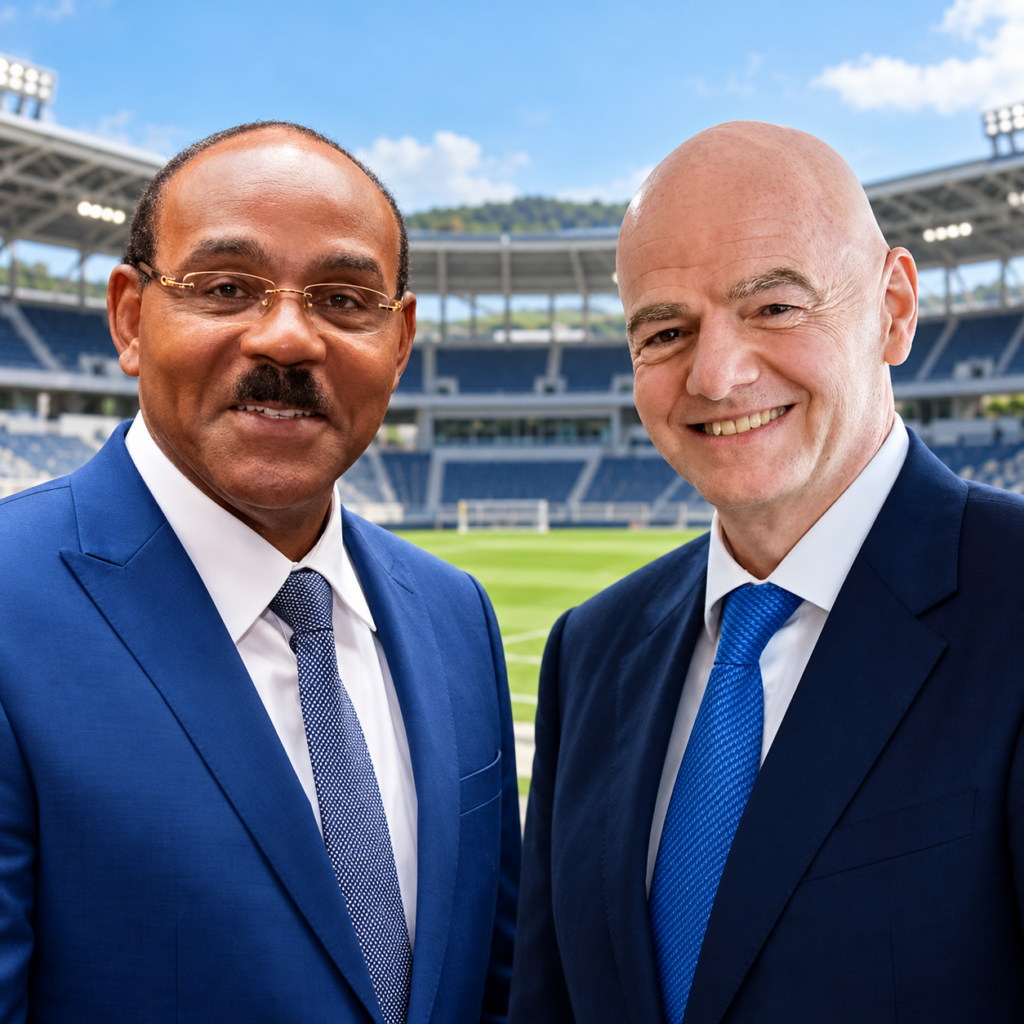
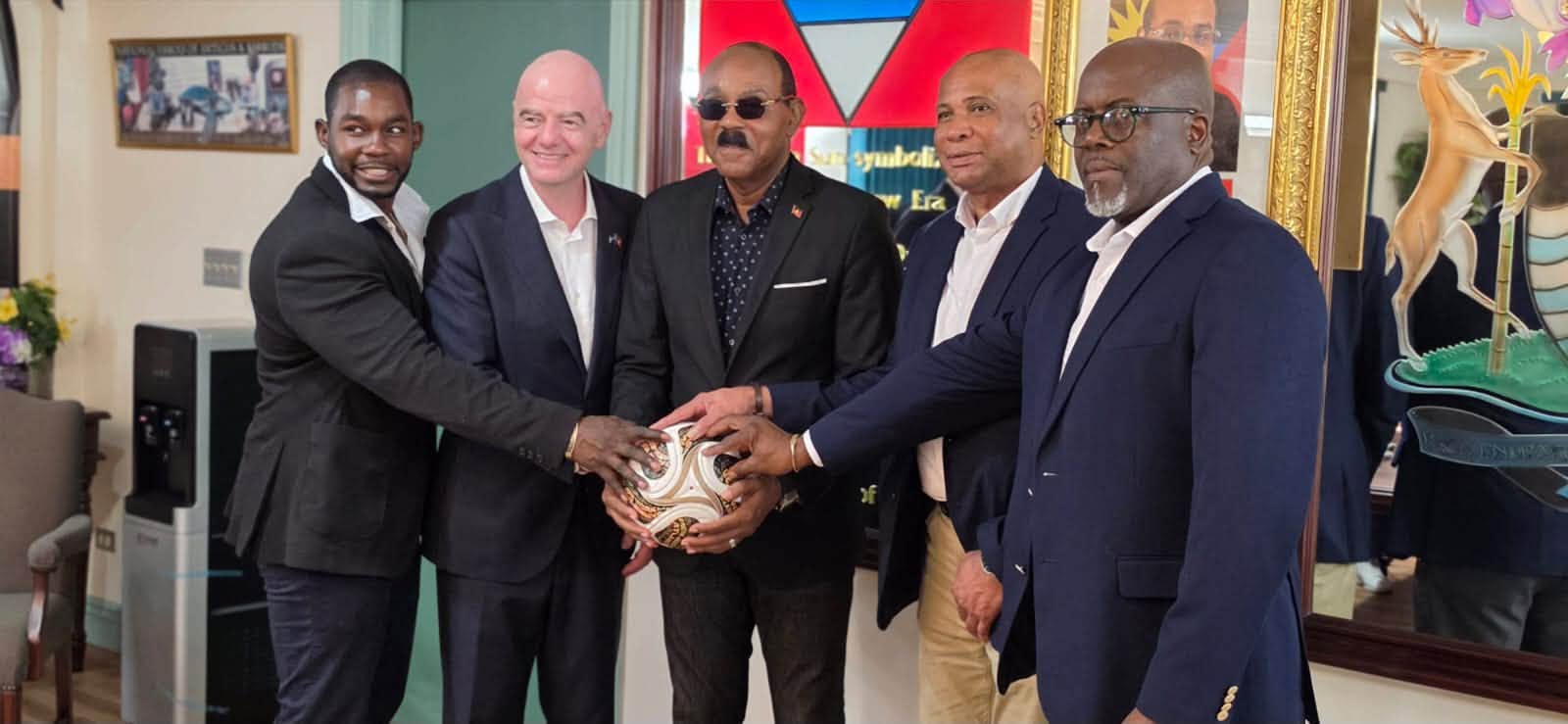
    The binding commitment was finalized during a high-level meeting between FIFA President Gianni Infantino, Prime Minister Browne, Sports and Creative Industries Minister Dwayne George, and senior leadership from the Antigua and Barbuda Football Association (ABFA). The agreement caps off a months-long lobbying campaign by the Antigua and Barbuda government to secure international investment for national football growth.

    Hours ahead of the closed-door meeting, Prime Minister Browne had already signaled his administration’s priorities during an interview on Pointe FM’s *Browne and Browne Show*, noting that he and ABFA officials would meet Infantino specifically to push for expanded FIFA investment in the country’s football ecosystem. For years, Antigua and Barbuda has advocated for FIFA support to build new core infrastructure, upgrade grassroots training resources, and elevate skill development opportunities for young domestic players.

    Once completed, the purpose-built 5,000-seat facility will fill a long-standing gap in the nation’s sports landscape, delivering a modern, dedicated home for Antigua and Barbuda football. It will serve as a central training and competition hub for local domestic players, and provide the country with a certified venue to host regional and international competitive matches. The stadium is also designed to be a core component of a broader, multi-stakeholder football development strategy being co-developed by the Antigua and Barbuda government, FIFA, and the ABFA.

    Speaking on the long-term vision for the partnership, Prime Minister Browne emphasized that the project aligns with the nation’s goal of positioning sports as a key economic export for Antigua and Barbuda. He added that deeper institutional cooperation with FIFA will not only benefit young aspiring athletes but also strengthen the country’s overall sports capacity and public recreational infrastructure.

    As of Saturday’s announcement, key project details including the exact location of the government-allocated land, the total estimated construction budget, and an official timeline for breaking ground and completing work have not yet been released to the public. For the Antigua and Barbuda government, the stadium initiative is a central pillar of its broader agenda to upgrade national sports infrastructure and open new competitive pathways for young domestic athletes to advance to regional and global football stages.

  • Trump Moves to Cancel $810 Million in Funding for Refugee, Immigrant Programs

    Trump Moves to Cancel $810 Million in Funding for Refugee, Immigrant Programs

    WASHINGTON – In a controversial move to slash federal spending that has reignited a decades-long debate over the separation of powers between the executive and legislative branches, the Trump administration has launched an effort to revoke $810 million in congressionally approved spending, with a large share of the cuts targeting programs that support refugees, immigrants and marginalized communities.

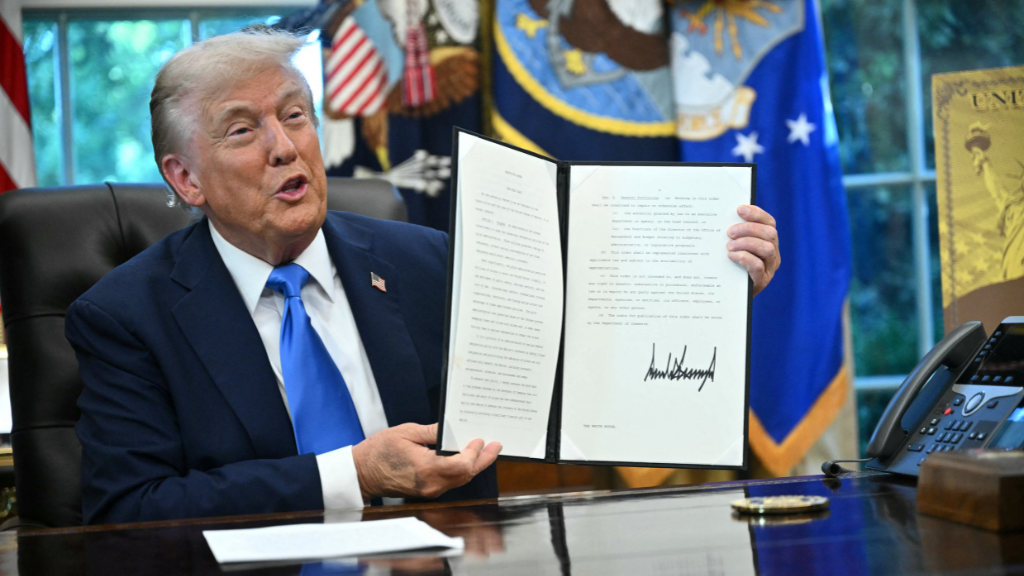
    The White House made the announcement public on Friday, confirming that President Donald Trump is leveraging a little-used procedural tool called a “pocket rescission” to eliminate funding the administration has labeled as unnecessary and wasteful. Among all the proposed cuts, the single largest reduction targets $567 million allocated to Department of Health and Human Services programs that provide critical services to refugees, asylum seekers, unaccompanied migrant minors and other non-citizen groups. Additional cuts will extend to a range of other initiatives, from other immigration-related programs to public education, affordable housing, support for minority-owned small businesses and more.

    In defending the policy shift, administration officials argue that the immigration-focused funding is no longer required, pointing to a sharp recent drop in illegal border crossings as the core justification for the cuts. However, the action has drawn sharp bipartisan and inter-branch criticism, with legal and constitutional scholars, as well as key congressional lawmakers, questioning whether the president has the authority to unilaterally cancel spending that has already been formally approved by Congress without explicit consent from elected lawmakers.

    Senator Susan Collins, a Republican from Maine who serves as chair of the powerful Senate Appropriations Committee, has emerged as one of the most prominent critics of the move. Collins slammed the action as a direct violation of Congress’ constitutionally granted authority over federal spending, noting that legislative branch received the full $810 million rescission package with no advance consultation from the White House.

    The core of the current dispute stems from the timing of the administration’s use of the pocket rescission mechanism. The proposal comes just weeks before the end of the current federal fiscal year, a timeline that leaves Congress with almost no time to review, debate or reject the proposed cuts before the existing funding is set to expire. This is not the first time questions have been raised about the legality of this approach: the nonpartisan Government Accountability Office, Congress’ official independent oversight body, has previously ruled that this type of unilateral rescission is not permitted under the 1974 Impoundment Control Act, the federal law that governs how executive branch can handle unspent congressionally allocated funds.

  • Four Killed, Four Wounded in Bloody Night of Gun Violence in St. Vincent

    Four Killed, Four Wounded in Bloody Night of Gun Violence in St. Vincent

    KINGSTOWN, St. Vincent and the Grenadines — A devastating mass shooting has left four people dead and four others with gunshot injuries in a community just outside Kingstown, with law enforcement officials launching a urgent investigation into what is suspected to be another episode of inter-group violence plaguing the Caribbean nation.

    Local police received emergency calls reporting repeated gunfire in the Green Hill neighborhood of Central Kingstown late Friday, and first responders rushed to the scene to secure the area. Upon arrival, officers found four victims with fatal gunshot wounds, spread across different locations in the community. Acting Commissioner of Police Trevor Bailey detailed the grim discovery: two of the deceased were found lying on a public roadway, a third victim — a woman — was found dead inside a parked car, and the fourth body was recovered on a vacant plot of land adjacent to the shooting site.

    The four injured victims were immediately airlifted and transported to Milton Cato Memorial Hospital, the primary public medical facility in the country. As of Saturday afternoon, hospital officials confirmed that two of the wounded had already received treatment and been discharged, while the remaining two continue to receive care for their injuries, with no update on their current conditions released to the public.

    As of the latest update, no suspects have been taken into custody, and investigators have not yet confirmed a clear motive for the attack. Assistant Commissioner of Police Brenton Smith noted that the investigative team is actively collecting intelligence from local communities and processing evidence collected from the crime scene, and will share updated details with the public once a full picture of the shooting’s circumstances emerges.

    This fatal shooting comes amid growing public and official anxiety over escalating gang-related violence and cycles of retaliatory attacks between rival criminal groups across St. Vincent and the Grenadines, an archipelago nation popular with Caribbean tourists. Commissioner Bailey confirmed that law enforcement has documented a clear pattern of repeated tit-for-tat attacks between competing groups in recent months, and issued a firm rebuke of the ongoing bloodshed.

    With this latest incident, the total number of homicides recorded in the country so far in 2024 has risen to 37, a figure that has raised alarms over public safety across the islands. In response to the shooting, authorities have rolled out enhanced security measures: additional uniformed patrols are being deployed across high-risk communities, targeted search operations are underway to locate illegal weapons and suspects, and cross-unit intelligence sharing protocols have been strengthened to speed up the investigation and help prevent future attacks.

    Commissioner Bailey also issued a direct public appeal to young people across the nation to turn away from lives of crime and violence, emphasizing that destructive cycles of retaliation have no place in St. Vincent and the Grenadines’ society. “Violence has no part in our society,” he stated in an official address following the attack.

  • Former top public servant Erskine Griffith dies

    Former top public servant Erskine Griffith dies

    Following the passing of Erskine Griffith, one of Barbados’ most decorated long-serving public figures, Prime Minister Mia Mottley has honored his decades of dedicated national service with a formal announcement of a state official funeral, in recognition of his extraordinary legacy of commitment to the country. In a public statement released Saturday, Mottley reflected on Griffith’s remarkable life trajectory, which began in humble origins and grew into a decades-long career marked by unwavering integrity, excellence, and consistent devotion to public duty across Barbados’ post-independence era. “Erskine Griffith’s life journey is a powerful testament to what every Barbadian can achieve when they commit themselves fully to serving their community and nation,” Mottley noted in her tribute. “In every post he held over his career, he brought the full breadth of his talent, professional training, and strong personal character to advance Barbados’ national interests.” Griffith’s career spanned nearly half a century of public service, holding a series of senior roles that shaped the country’s economic and governance trajectory. Before his 2000 retirement as Head of the Public Service, he served as Director of Finance and Economic Affairs, and prior to that appointment, he held the position of Permanent Secretary in the Ministry of Finance. In that role, he supported six different Ministers of Finance across multiple administrations: Prime Ministers Tom Adams, Sir Harold St John, Errol Barrow, Sir Lloyd Sandford, and Owen Arthur, as well as senior politician Sir Richard Haynes. Prime Minister Mottley emphasized that Griffith consistently demonstrated profound professionalism and cross-partisan loyalty throughout his tenure, serving both the Barbados Labour Party and Democratic Labour Party administrations with equal commitment and always putting national interests ahead of partisan political concerns. Beyond his domestic governance roles, Griffith also made his mark on the global stage as Barbados’ first ever ambassador to the World Trade Organization, based in Geneva. After completing his diplomatic posting, he returned to Barbados to continue his public service as a government-appointed senator and later as Minister of Agriculture. Mottley highlighted that Griffith’s consistent willingness to step forward and serve the nation “time and again” revealed the depth of his personal commitment to public good. “His decades of service leave an enduring example of the integrity, humility, and unwavering commitment that all of us in public life should strive to emulate, and the high standard that the public deserves from its public servants,” Mottley added. Final arrangements for the official funeral are still being coordinated, with the Cabinet Office set to release full details after concluding consultations with Griffith’s family to honor their preferences for the service.

  • PM Browne Says Antigua and Barbuda May Stockpile Diesel Amid Supply Concerns

    PM Browne Says Antigua and Barbuda May Stockpile Diesel Amid Supply Concerns

    As small island nations in the Caribbean grapple with growing global energy market volatility, Antigua and Barbuda is actively considering a bold pre-emptive measure: building a multi-month strategic reserve of diesel to insulate itself from potential supply disruptions and price spikes. Prime Minister Gaston Browne laid out the government’s ongoing deliberation during an appearance Saturday on Pointe FM’s popular *Browne and Browne Show*, revealing he had already consulted with top energy official Gregory Georges on the feasibility of the plan, which leans on the country’s existing fuel storage infrastructure to accommodate the expanded reserve.

    Browne framed the proposal as a risk-reward calculation that pits short-term fiscal trade-offs against long-term energy security. The core downside of moving forward with bulk purchases now, he acknowledged, is the current elevated price environment. If the government locks in large volumes at today’s high rates and global prices decline later this year, it will be stuck holding overpriced inventory, eliminating the opportunity to pass down future price drops to consumers already stretched by cost-of-living increases. Despite this financial risk, Browne argued energy security must take priority: “We’re better off having diesel at a high price than having none,” he stated.

    The prime minister tied the urgent consideration of stockpiling directly to growing anxiety over potential restrictions on United States diesel exports. Antigua and Barbuda, like most small Caribbean economies, relies almost entirely on imported fuel to power its transportation, electricity grid, and key tourism infrastructure. A sudden cut-off or reduction of US exports would send shockwaves through the local market, leading to shortages and crippling price increases that could disrupt daily life and the national economy. Browne emphasized that he has not confirmed any imminent export ban, only flagged the underlying risk that such a policy shift poses for import-dependent nations.

    Currently, the Antigua and Barbuda government already uses consumer subsidies to offset a portion of rising international diesel prices for residents. Even with this support in place, Browne warned that continued upward pressure on fuel prices would strain both household budgets and government finances, urging local residents to cut back on non-essential fuel consumption wherever possible to reduce overall demand.

    As of Saturday’s announcement, no final decision has been made. Browne did not disclose details including the target volume of diesel for the reserve, the projected total cost of the bulk purchase, or a timeline for when the government will conclude its deliberations and announce a formal way forward.

  • Antigua and Barbuda Stands by Espinosa’s Bid for U.N. Secretary-General, Browne Says

    Antigua and Barbuda Stands by Espinosa’s Bid for U.N. Secretary-General, Browne Says

    The race for the next United Nations Secretary-General has developed a notable regional split in the Caribbean, as Antigua and Barbuda’s Prime Minister Gaston Browne has publicly reaffirmed his government’s unwavering support for Ecuadorian candidate María Fernanda Espinosa, rejecting widespread calls to switch backing to the Caribbean Community’s preferred nominee Carolyn Rodrigues Birkett of Guyana.

    Speaking during an appearance on Pointe FM’s *Browne and Browne Show* Saturday, Browne laid out his administration’s steady stance on the contest, revealing that Antigua and Barbuda recently hosted a high-profile reception for Espinosa during her visit to New York and is actively courting additional pledges of support from other U.N. member states. Despite growing pressure from across the region to pull its endorsement of Espinosa and align with most Caribbean governments that back Rodrigues Birkett, Browne said his small island nation has refused to back down.

    “Under no circumstances,” Browne stated, recalling his blunt response to requests that Antigua and Barbuda withdraw its nomination. “We stand by our candidate.”

    Antigua and Barbuda first formally put Espinosa, a former president of the U.N. General Assembly, forward as a candidate back in May. Rodrigues Birkett, Guyana’s experienced former foreign minister and current permanent representative to the United Nations, joined the race a month later in June. Both candidates are officially recognized and listed on the United Nations’ official register of contenders for the top post.

    Browne also made a significant unconfirmed claim during the interview: he alleged that Washington has already decided it will veto Rodrigues Birkett’s candidacy if she advances through the selection process. If accurate, he argued, this veto intention would clear a path and boost Espinosa’s chances of securing the role. To date, however, there has been no independent verification of Browne’s claim about a potential U.S. veto.

    The Antiguan prime minister acknowledged that even with his country’s backing, Espinosa still needs the support of the Security Council’s five permanent members to move forward in the selection process. He framed Espinosa as a uniquely skilled consensus-builder, capable of forging collaborative connections between nations with divergent interests, adding that her long-standing working relationship with Antigua and Barbuda was the core reason the country chose to nominate her. Browne also noted that representatives from multiple unspecified governments attended the recent reception for Espinosa and offered informal pledges of support, though he declined to name the countries or detail the exact nature of their commitments.

    The U.N. Secretary-General selection process follows a clear established framework: the Security Council is tasked with recommending a single nominee to the full General Assembly, which then votes on the appointment. While Antigua and Barbuda’s continued endorsement keeps Espinosa active in the contest, it does not guarantee she will be the candidate put forward by the Security Council for the final General Assembly vote.

  • Falcons’ CPL Triumph Adds New Stakes to Antigua’s Bid for 2027 Final

    Falcons’ CPL Triumph Adds New Stakes to Antigua’s Bid for 2027 Final

    Fresh off the Antigua and Barbuda Falcons claiming their maiden Caribbean Premier League (CPL) title, the twin-island nation has set its sights on a major milestone: bringing the 2027 CPL championship decider to its home soil. If the bid succeeds, the newly crowned champions would have the once-in-a-lifetime chance to defend their title in front of their own cheering fans.

    Prime Minister Gaston Browne publicly confirmed the bid over the weekend, speaking during an appearance on Pointe FM’s popular local program *Browne and Browne Show*. The announcement came right after Browne extended official congratulations to the Falcons for their historic first championship win at this year’s tournament. “We have formally put forward our bid to host next year’s final, and we are optimistic about our prospects,” Browne noted during the interview.

    This year’s CPL title match was held in Barbados, where the Falcons dominated the Jamaica Kingsmen to secure an eight-wicket victory and lift their first ever championship trophy. Hosting the 2027 final in Antigua and Barbuda would not only be a boon for local cricket fans, who would get to watch the sport’s biggest regional match without traveling abroad, but also create a storybook scenario for the reigning champions. Of course, this dream outcome is conditional on two key steps: first, Antigua and Barbuda needs to win the hosting rights, and second, the Falcons need to fight their way back to the final to defend their crown.

    Notably, Browne declined to share additional details about the timeline of CPL’s host selection process or the specific terms of Antigua and Barbuda’s bidding proposal. To date, CPL’s governing body has not made any official announcement confirming the 2027 final host, nor has it publicly commented on Antigua and Barbuda’s submission.

    For the moment, Antigua and Barbuda can celebrate holding the current CPL trophy. Whether the nation will get to welcome the entire Caribbean cricket community for the 2027 title decider remains a question waiting to be answered.

  • Antigua and Barbuda Seeks FIFA Support for Football Stadium

    Antigua and Barbuda Seeks FIFA Support for Football Stadium

    Antigua and Barbuda Prime Minister Gaston Browne has announced plans to meet with FIFA President Gianni Infantino to lobby for critical international support for a new national football stadium, upgraded sports infrastructure, and targeted youth football development programs in the Caribbean nation.

    Browne made the announcement during a live appearance Saturday on the *Browne and Browne Show*, carried by local radio outlet Pointe FM. He confirmed that senior leadership from the Antigua and Barbuda Football Association, including the association’s president and general secretary, will accompany him to the high-stakes discussions.

    According to Browne, both the national government and the local football governing body have been engaged in ongoing lobbying efforts with FIFA to secure backing for the stadium and additional development assistance. Beyond the construction of a new venue, the prime minister outlined two core priorities for the partnership: expanding and modernizing the country’s overall football infrastructure, and elevating the technical and competitive skills of emerging young players across Antigua and Barbuda.

    “Our long-term vision is to position sports as a key export product for Antigua and Barbuda,” Browne explained during the interview. “A deepened partnership with FIFA would not only deliver first-class facilities for our young people to train and compete, it would also unlock the full potential of our nation in global football.”

    At the time of the announcement, details of the project remain undisclosed. Browne declined to share information on the proposed location of the stadium, projected construction costs, the specific level of financial assistance being requested from FIFA, or a timeline for breaking ground. The meeting with Infantino had not yet been held when Browne spoke to reporters, and no formal commitment of support from the FIFA president has been secured.

    The stadium announcement was one of two major sports updates Browne shared during his Saturday radio appearance. Shortly after congratulating the Antigua and Barbuda Falcons on their recent Caribbean Premier League (CPL) cricket championship, the prime minister confirmed that Antigua and Barbuda has submitted an official bid to host the 2025 CPL final. No additional details about the bid process were shared, and the football stadium initiative and cricket hosting bid remain separate, unrelated projects.

    Browne left the radio broadcast early to attend the scheduled meeting with Infantino.

  • China en Verenigde Staten bereiken acht afspraken tijdens bezoek Xi Jinping

    China en Verenigde Staten bereiken acht afspraken tijdens bezoek Xi Jinping

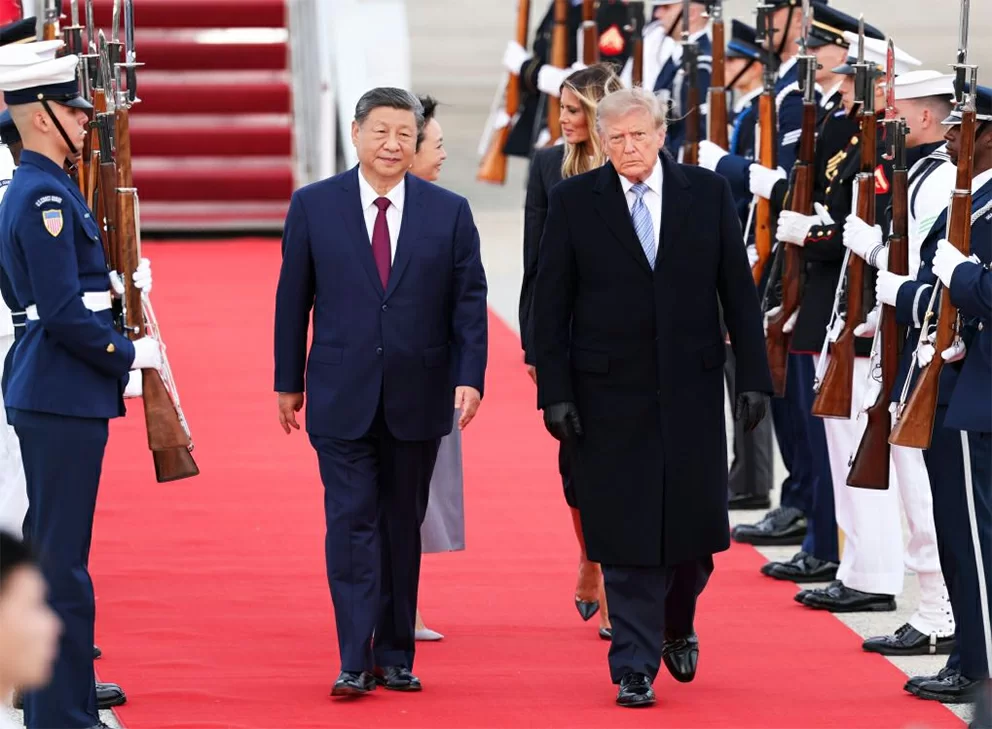
    In a high-stakes diplomatic milestone that has reshaped the trajectory of bilateral relations, Chinese President Xi Jinping touched down at Joint Base Andrews on September 23, 2026, to begin a three-day state visit to the United States, hosted by U.S. President Donald Trump, who personally greeted the Chinese leader on arrival. Over the course of consultations held from September 23 to 25, the two top leaders concluded negotiations that produced eight concrete, actionable agreements spanning economic cooperation, artificial intelligence governance, counternarcotics, military coordination and multilateral engagement, marking one of the most significant breakthroughs in China-U.S. ties in recent years.

    A core guiding principle anchored all discussions: both nations reaffirmed their shared commitment to building a “constructive China-U.S. relationship of strategic stability” rooted in the foundational values of mutual respect, fair dealing and reciprocal benefit. This overarching framework set the tone for all substantive talks on key policy areas.

    On economic and trade ties, one of the most high-priority topics on the summit agenda, the two sides expressed full backing for existing consultation mechanisms between their respective economic and trade working groups, and formally endorsed the outcomes of recent bargaining sessions. Key commitments include advancing the establishment and expansion of a joint Board of Trade and additional cooperative dialogue frameworks, as well as implementing a reciprocal tariff reduction package valued at $30 billion. The leaders also agreed to carry forward previous economic and trade agreements reached during earlier talks in Kuala Lumpur, and issued a formal directive to their economic teams to begin full implementation of all new commitments without delay.

    In the emerging domain of artificial intelligence governance, the two countries announced the creation of a formal, dedicated China-U.S. AI Dialogue. This platform will enable systematic exchanges of information and perspectives on both the transformative opportunities and growing systemic risks posed by advancing AI technologies. The first formal meeting of the new dialogue is scheduled for November 2026, and the sides also agreed to establish a direct communication channel to manage and de-escalate unplanned incidents involving AI systems.

    On military relations, the two nations committed to finalizing a memorandum of understanding on crisis communication and conflict de-escalation as quickly as possible, to reduce the risk of unintended confrontation. They also agreed to continue longstanding cooperative work to recover the remains of U.S. service members listed as missing in action within Chinese territory.

    Counternarcotics cooperation emerged as a standout example of practical collaboration between the two powers even amid broader disagreements. Both sides highlighted the tangible progress of joint law enforcement efforts, noting that Chinese and U.S. authorities have jointly dismantled multiple trafficking networks involving new psychoactive substances and precursor chemicals, leading to the arrest of dozens of suspects across both countries.

    On regional and global issues, the two leaders aligned on the need for Iran to uphold its longstanding commitments to refrain from developing nuclear weapons. They also addressed freedom of navigation on international waterways, with both sides endorsing the principle that no country or international body has the right to impose unauthorized tolls on transit through these global common spaces. The talks also included a reflection on the shared history of China and the United States as wartime allies during the Second World War.

    Looking ahead to multilateral leadership, China and the United States agreed to mutually support each other in hosting upcoming APEC Economic Leaders’ Meeting and G20 summit, with both presidents confirming their plans to attend each other’s scheduled events. This commitment underscores the two nations’ push to sustain high-level diplomatic engagement moving forward.

    In a symbolic gesture designed to warm public sentiment amid years of strained relations, the summit also produced one widely noted cultural agreement: China will loan two giant pandas to Zoo Atlanta, continuing a decades-long tradition of panda diplomacy that has long served as a barometer of the warmth of bilateral people-to-people ties.