博客

  • Saint Lucian boys set for CFU Under-14 Challenge

    Saint Lucian boys set for CFU Under-14 Challenge

    As the 2026 Caribbean Football Union (CFU) Boys Under-14 Challenge Series kicks off this Sunday in Punta Cana, Dominican Republic, the Caribbean island nation of Saint Lucia has finalized its 19-member national youth squad to compete for regional honors. The entire delegation confirmed it would depart for the host venue on Friday, ahead of their opening group stage match.

    For decades, Saint Lucia has built a solid reputation for competitive youth football across the Caribbean, and the Saint Lucia Football Association (SLFA) has expressed high expectations that this new generation of young talent will carry forward that proud tradition in the upcoming tournament. Every player selected to the squad earned their spot through consistent strong performances in SLFA-sanctioned and affiliate league competitions over the past 12 months, including the prestigious LUCELEC/BOSL Youth League, the national SLFA Under-14 Boys Tournament, and the Guardsman Under-16 series.

    Between the posts, Saint Lucia will rely on two promising young goalkeepers: Hasani Eliotte, who hails from Desruisseaux, and Rhyland Joseph of Monchy. Joseph has already emerged as one of the most highly regarded shot-stoppers in his age bracket, after turning heads with standout performances during last year’s Gros Islet Football League Showcase Classic.

    The defensive line is anchored by a mix of talent from across Saint Lucia’s local club circuit. Irvin Peter, who features for both Valley Soccer and Central Castries, leads the unit, joined by Jaden Antoine, Omarhi James of NYAH FC, and Trey Didier from Monchy. Trevohn Edward and Ajani Walker, who both compete for Central Castries/VSADC, round out the defensive roster.

    In midfield, Shem Ishmael of New Generation FC brings red-hot goal-scoring form into the tournament, having notched multiple goals across the LUCELEC/BOSL Youth League and SLFA Zonal competitions over the past year. Ishmael is joined by Mitchel Deterville of Anse La Raye, Leon Vidal of the Saint Lucia Sports Academy, Vijay Edwin of Mabouya Valley, and Kendall Nelson of Monchy. Vidal brings valuable tournament experience to the squad, having been a member of Saint Lucia’s 2024 U14 Challenge Series roster.

    Up front, the Saint Lucia attack is led by prolific scorer Anaj Polius of Monchy United, who earned MVP honors and finished as top goalscorer in multiple local domestic competitions this past season. Polius will line up alongside his club teammate Khari Elibox, while Lyon Griffith of Black Panthers – another consistent leading scorer across SLFA youth competitions – adds further attacking depth. Rounding out the forward group are Dashawn Giddins, Adan Adjodha, and Jaelen McDonald.

    Veteran head coach Stuart Charles Fevrier leads the squad’s full technical and support staff, which includes assistant coach Earl “Ball Hog” Jean, goalkeeper coach Ajani Delice, safeguarding officer Lee Willie, team administrator Stephen Regis, physiotherapist Rebertha Wilfred, and team doctor Mandisa Moncherry.

    The young Saint Lucia side, nicknamed the Piton Boyz, will open their Tier II Group D campaign at 12:00 p.m. local time on Sunday against Grenada. They will follow that opening match with a clash against the United States Virgin Islands at 1:30 p.m. on Monday, before wrapping up group stage play against Suriname this coming Wednesday. Only the top team from each group will advance to the tournament semifinals, scheduled to take place next Friday. Looking ahead to this year’s tournament, the squad can draw on recent experience: during the 2024 edition of the CFU U14 Challenge Series, Saint Lucia secured one win, one draw, and two losses in group play.

  • “Dey Tek It Out!” Father Jeremy’s Tumour Successfully Removed

    “Dey Tek It Out!” Father Jeremy’s Tumour Successfully Removed

    In a hopeful social media update dated August 14, 2026, Father Jeremy Zipple, a priest who has served Belize’s St. John’s College for eight years, confirmed that his scheduled brain surgery to remove a large tumor has been completed successfully. The priest shared that he is currently recovering in a neurointensive care unit, where he expects to stay through at least Sunday.

    Zipple’s golf ball-sized tumor was located near the base of his brain, and was first detected when he was visiting family in the United States, after he began experiencing unexplained, persistent headaches that prompted him to seek medical evaluation. In his candid post, Zipple described the immediate aftermath of the procedure, writing, “I feel like I got run over by a freight train,” noting that communicating via messages remains a challenge as his brain heals.

    Despite the discomfort of his recovery, Zipple made his post first to express profound gratitude to the community that surrounded him through his diagnosis and surgery. “Friends, dey tek it out! Surgery was a success and tumor is out,” he wrote, adding, “Please know how filled up and truly overwhelmed with gratitude I am for the prayers, the encouragement, the messages, THE LOVE. There’s just no way I would have gotten through this without YOU.”

    Beyond sharing his own good news, Zipple used his platform to ask his community to extend the same support they gave him to two other Belizeans currently fighting major health battles. First, he called for special prayers for Billy Maheia, who is currently undergoing treatment for cancer. Second, he highlighted the ongoing struggle of Milagro Garel, a well-known longtime children’s advocate in Belize who suffered a ruptured cerebral aneurysm on July 28.

    Garel remains in critical condition after her medical emergency, and had to be transferred to Guatemala to receive specialized neurosurgical care that is not available in Belize’s domestic healthcare system. Her family launched a GoFundMe crowdfunding campaign to cover the steep costs of emergency medical transport, surgery, ongoing intensive care, and other related medical expenses, with an overall fundraising goal of $85,000. As of the latest updates to the campaign, it has reached 59% of its target, and the fundraiser remains active to collect additional donations to cover Garel’s care.

  • Sewage leaks, water damage plague Grotto housing complex

    Sewage leaks, water damage plague Grotto housing complex

    Residents of the National Housing Corporation (NHC)-managed Grotto housing complex in Barbados have issued a fresh plea for urgent intervention, saying years of unaddressed maintenance failures have left their state-provided homes unsafe, uninhabitable and riddled with persistent health hazards. Tenants who moved into the Beckles Road high-rise development as early as 2017 told local outlet Barbados TODAY that living conditions have steadily deteriorated to an unbearable level, bringing both serious health risks and unplanned financial strain that has upended their daily lives.

    At the core of the crisis are long-standing systemic plumbing failures that repeatedly force raw sewage and contaminated wastewater to back up directly into residents’ living spaces. One second-floor tenant detailed how any water use by upper-floor neighbors – from bathing and flushing toilets to running laundry or washing dishes – results in dirty, hazardous water pooling in her home. She explained that multiple severe flooding events have occurred over the past 12 months alone, leaving her to clean up human waste from her floors on multiple occasions. Just one day before her interview, she woke to find her entire bathroom flooded with murky brown sewage water, with feces and urine spread across the floor.

    The frequent overflows have forced the tenant to miss scheduled work shifts repeatedly to handle emergency cleanups, and even required her to take extreme measures to stop continuous water intrusion. She explained that even turning off her own unit’s water supply does not stop wastewater from backing up, forcing her son to go downstairs and shut off water service for the entire building to halt the flow. “I keep hearing this bubbling in the pipe. When I opened the toilet bowl, the toilet bowl was bubbling and coming over, everything rushing in at me,” she described.

    These upper-floor plumbing failures create cascading hazards for lower-level residents, with leaking water damaging structural elements, triggering electrical fire risks, and destroying personal belongings. A ground-floor tenant has lived with unresolved ceiling damage from chronic leaks since 2019, and said water intrusion from above has destroyed household items and created pervasive mold growth that has harmed her respiratory health. Her ceiling was partially removed for repairs in 2019, but no permanent work was completed until 2024 – and even then, the structure was left improperly sealed and unfinished.

    “The ceiling was damaged, it was partially taken down from 2019 to 2024 or 2025 before anybody did any work or came and checked on it. Then the ceiling was put back up, but it wasn’t sealed or plastered. My TV has been damaged, my blinds, my towels, everything used to soak up the water. You’ve been sick all the time with headaches and sinuses,” she said. Pointing to visible water damage and sewage residue on interior walls, she warned that the saturated structural materials pose a serious fire risk, adding: “This is sewage water on the walls. You can’t live in these conditions.”

    The ongoing crisis comes despite a high-profile promise of urgent action from government officials earlier this year. In April, Minister of Housing, Lands and Maintenance Chris Gibbs announced that the NHC had secured full funding to address all structural failures at the Grotto complex, including leaking roofs and security gaps, and that repair work would begin “almost immediately” after the announcement. Gibbs added that specialized materials had already been ordered for the project.

    But six months on, residents say none of the promised reforms have translated to tangible improvements on the ground. While maintenance technicians occasionally respond to individual emergency calls, tenants say large-scale systemic issues – including the need to upgrade undersized 4-inch drainage pipes to larger 6-inch lines to prevent blockages and overflows – remain completely unaddressed.

    Compounding residents’ frustration is the fact that housing authorities continue to send formal notices for unpaid rent and threaten eviction proceedings, even as tenants are forced to live in squalid, unsafe conditions that violate basic housing standards. “How can you pay when nothing is being done?” the ground-floor tenant asked. “When you were paying, you had issues. If I was renting from a private landlord and you got an issue, they’ll fix it because people want their money. But you can’t live in these conditions.”

    The second-floor tenant echoed this frustration, emphasizing that tenants are not refusing to pay rent out of disregard for their obligations, but simply expect safe, well-maintained housing in exchange for regular payments. “The first thing people are gonna say is about paying. It’s not about paying, it’s about being comfortable. You’re not gonna pay for something that has you uncomfortable. We should not have to be paying rent and still maintaining a home. That’s what rent is for,” she said.

    Residents have exhausted multiple channels to seek redress, including reaching out directly to NHC management, submitting formal written requests for compensation for damaged personal property, and contacting local Member of Parliament Kirk Humphrey. Despite these efforts, no systemic solutions have been implemented to resolve the chronic plumbing and structural issues.

    As leaks, pipe blockages and dangerous structural decay continue to disrupt residents’ lives, Grotto tenants are renewing their call for Minister Gibbs, the NHC and other government officials to keep their April promises, conduct full, independent assessments of the complex, and complete lasting, comprehensive repairs that will restore safe living conditions. Barbados TODAY attempted to contact Minister Gibbs for comment on the ongoing situation multiple times, but received no response ahead of publication.

  • Update: High-Wind Advisory as Tropical Wave nears Barbados

    Update: High-Wind Advisory as Tropical Wave nears Barbados

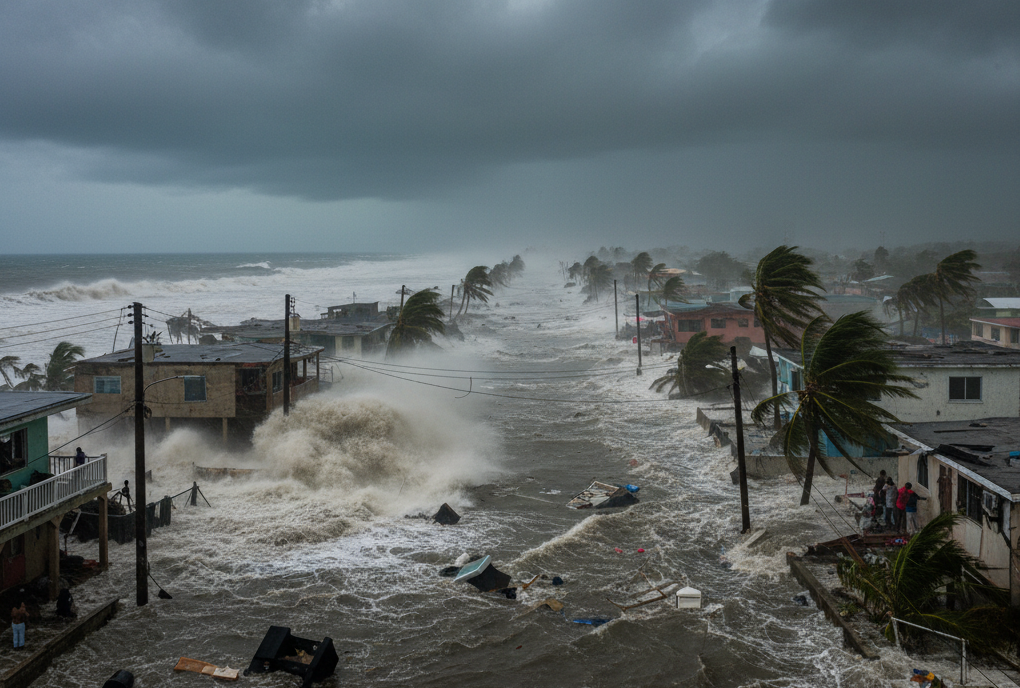
    Barbados has been placed under a high-wind advisory as a tropical wave already battering the island is forecast to gain strength through the rest of the day and into overnight hours. Meteorological officials report the unstable weather system is currently positioned roughly 290 miles, or 500 kilometers, east-southeast of the Caribbean island.

    Alongside the high-wind advisory, two additional warnings remain in force: a Small Craft Warning and a High Surf Warning. The already gusty winds have churned up dangerous conditions for mariners and coastal areas across Barbados, putting small vessels and beachgoers at significant risk.

    According to the Barbados Meteorological Services (BMS), cloudy conditions and shower activity will begin building steadily by late afternoon. The heaviest precipitation is projected to peak overnight, continuing into Saturday. Forecasters also warn that excess accumulated rainfall and severe thunderstorms are likely scenarios, which could prompt the issuance of flash flood watches or warnings and severe thunderstorm alerts as the system moves across the island.

    In a key note of reassurance, the BMS added that the tropical wave has stayed structurally disorganized throughout its approach. At this stage, there is no chance the system will strengthen into a named tropical cyclone during its time impacting Barbados.

  • Who will be 2026’s Carnival King and Queen?

    Who will be 2026’s Carnival King and Queen?

    Carnival excitement is building across Belize as the nation prepares to kick off its most beloved annual cultural celebration, with the highly anticipated 2026 Carnival King and Queen Competition scheduled to take place this Saturday at the Belize City Civic Center. Scheduled weeks ahead of the traditional September main carnival parade, this year’s competition will showcase contestants across two divisions: junior and senior, who are ready to take the stage with their elaborate, vividly colored custom costume creations. The event is proudly sponsored by RF&G Insurance Ltd., which operates under the company slogan “It Pays to Get it Right”.

    Beyond the eye-catching feathers, sparkling glitter, and larger-than-life costumes that will dazzle audience members, competitors and their supporting mas bands have invested weeks of meticulous, labor-intensive preparation and pulled countless late nights to perfect their entries for the two coveted crowns. Samantha Soberanis, band leader of the Collet Reveller Junior Mas Band, opened up about the grueling work that goes into creating competition-winning costumes, explaining that designs often require multiple restarts to get every detail right.

    “Body pieces and smaller head pieces might take less time, but for King and Queen contender costumes, we’re talking hundreds of hours of work,” Soberanis explained. “Every tiny detail matters. You might build a section a certain way, step back to look at the full costume, and realize it just doesn’t work the way you imagined it. When that happens, you have no choice but to pull it apart and start all over from scratch.”

    For attendees hoping to watch the competition, pre-judging of entries is set to begin at 5:00 p.m. local time, with the main stage show kicking off two hours later at 7:00 p.m. Ticket prices are set at $10 BZD for adult attendees and $5 BZD for children, making the event accessible for families and carnival fans of all ages. This year’s pageant is expected to draw a packed crowd of locals and tourists alike, all eager to catch a first look at the top creative works ahead of Belize’s biggest street parade of the year.

  • Electricity conservation measures kick in due to hot weather, increased demand

    Electricity conservation measures kick in due to hot weather, increased demand

    GEORGETOWN, Guyana – August 14, 2026 – Guyanese government officials announced mandatory electricity conservation measures for the Demerara-Berbice Interconnected System (DBIS) Friday, responding to unprecedented peak demand driven by a prolonged extreme dry spell linked to the El Niño weather pattern and rapid growth in the country’s customer base.

    Addressing reporters alongside Prime Minister Mark Phillips and senior energy industry leaders, Public Utilities Minister Deodat Indar confirmed that the DBIS has already hit an all-time high peak demand of 242.46 megawatts (MW) this summer, a nearly 10% jump from the 220 MW peak recorded in 2025. While the grid currently maintains a reliable generation capacity of 256 MW, officials project peak demand could climb as high as 266 MW through the end of October, putting growing strain on the country’s main power network.

    Indar attributed the sharp demand increase to two key factors: persistent unseasonably high temperatures brought by El Niño, which have pushed up cooling use across the country, and a 22% expansion in the grid’s customer base since 2020. From just 204,000 connected customers in 2020, the DBIS now serves more than 250,000 residential, commercial, and industrial users as of mid-August 2026, driven by rapid housing development and growing industrial activity across the Demerara-Berbice region.

    To avoid mandatory rolling power rationing, the government has already begun targeted demand reduction measures. All government buildings have been ordered to cut unnecessary energy use, requiring all non-essential lighting and equipment to be switched off at the end of each workday. Large, unused floodlighting installed at sports and public event grounds will also remain disconnected when no events are scheduled to avoid wasted power.

    Already, three large commercial and industrial energy users – one on the East Bank of Demerara and two in Berbice – have been asked to temporarily disconnect from the grid during daily peak demand windows. Indar confirmed that two additional large users were taken offline Thursday, a move that immediately restored grid stability. Kesh Nandlall, executive lead for Guyana Power and Light (GPL), the country’s main power utility, noted that ongoing dynamic assessments of grid conditions will determine whether additional large consumers will need to be curtailed in the coming weeks.

    Prime Minister Phillips clarified that the country is on track to boost total generation capacity to 280 MW by the end of August, a threshold that will eliminate the need for any form of power rationing once reached. Until that expansion is completed, however, Phillips issued a public appeal for all residents to voluntarily adopt energy conservation habits to reduce strain on the grid.

    “The grid is operating at literally the highest load level it has ever recorded in its history,” Phillips told the press conference. “We are asking every member of the public to do their part to support conservation initiatives.”

    A minor secondary disruption tied to the demand surge was reported Thursday: water service to a portion of East Berbice was interrupted when the local water pump lost power during demand reduction cuts, but service was fully restored within hours, according to Indar.

  • Boxing Association of Grenada is an Endorsed Member of World Boxing

    Boxing Association of Grenada is an Endorsed Member of World Boxing

    In a landmark development for Grenada’s athletic community, the Grenada Olympic Committee (GOC) has officially confirmed that the Boxing Association of Grenada Inc. has secured Endorsed Member status with World Boxing, the global governing body for Olympic-format boxing.

    The milestone approval came during World Boxing’s Executive Board meeting held on April 29, 2026, where the international federation accepted seven new national federation membership applications, including Grenada’s. With this latest round of additions, World Boxing’s total global membership has now reached 175 national federations, broken down into 123 Full Members, 1 Associate Member, and 51 Endorsed Members.

    As an Endorsed Member, the Boxing Association of Grenada gains access to all official World Boxing competitions and developmental activities, provided the organization continues to meet the federation’s eligibility criteria and adheres to all World Boxing regulatory guidelines.

    For Grenada’s boxing ecosystem, this international recognition marks a critical step forward. Under GOC rules, formal recognition by the corresponding international sports federation is a core prerequisite to gain affiliation with the national Olympic committee. With World Boxing’s official endorsement now in hand, the Boxing Association of Grenada has established the foundational requirement needed to formalize its relationship with the GOC, moving forward under the national body’s affiliation standards.

    The GOC has expressed enthusiastic support for the new status, noting that the development paves the way for deeper collaboration between the two organizations. Leaders of the GOC say they are eager to partner with the Boxing Association of Grenada to grow the sport across the country, expand training infrastructure, and create more competitive pathways for Grenadian boxers at local, regional, and international events, including future Olympic Games cycles.

    (Note: This article is a repurposed report based on an official announcement from GOC. NOW Grenada disclaims responsibility for contributor-submitted content, and allows users to report content violations through its official channels.)

  • OECS unveils regional child policy and strategic plan for 2026–2032

    OECS unveils regional child policy and strategic plan for 2026–2032

    On July 15, at the Finance Administrative Centre in Castries, St. Lucia, the Organisation of Eastern Caribbean States (OECS) Commission officially launched a landmark 7-year regional initiative, backed by UNICEF, dedicated to elevating child protection, holistic development and overall wellbeing across 9 Eastern Caribbean territories.

    The launch event drew a diverse cross-section of stakeholders, including senior government officials, multilateral development partners, leading child welfare specialists, educators, youth representatives, students and family representatives, all united around the shared goal of improving childhood outcomes across the region.

    Named the OECS Regional Child Policy and Strategic Plan 2026–2032, the framework was not developed in isolation: its core priorities and guidelines were shaped by direct input from children, parents and community leaders across all participating member states, ensuring it addresses the real, on-the-ground needs of the populations it serves. The plan adopts a holistic “whole-of-the-child” approach, centered on the principle that every child deserves access to protection, a platform to be heard, and equitable treatment, regardless of their gender, ability, migration status, socioeconomic background or any other distinguishing factor.

    The policy sets an ambitious shared vision for 2032: that every child growing up in OECS member states will feel valued, safe, supported, loved, and empowered to exercise their full human rights.

    Speaking at the launch, OECS Director General Dr. Didacus Jules emphasized that the true success of the initiative will not be measured by the content of the policy document itself, but by tangible, meaningful changes to children’s daily lives. “A child does not live inside a document. A child lives in a home, on a street, in a village,” Jules noted, stressing that the strategic framework must be translated into concrete, coordinated action across every sector that touches children’s lives, including public health, formal education, justice systems, child protection services and social safety net programs.

    Sisera Simon, Head of the OECS Human and Social Division, outlined the commission’s commitment to ongoing accountability for the plan’s implementation. The OECS will institute regular monitoring and enforcement mechanisms to ensure responsibility for outcomes is embedded at every level of regional and national governance. “By 2032, it is our collective mandate to ensure that no child in our region is left unseen, unprotected, or unloved. This is our promise, and this is our commitment,” Simon said.

    Maryam Abdu, UNICEF Representative for the Eastern Caribbean, reaffirmed the multilateral agency’s support for the initiative, noting that the plan will expand critical opportunities for children across all nine participating territories: Dominica, Antigua and Barbuda, Grenada, Saint Lucia, Saint Vincent and the Grenadines, Saint Kitts and Nevis, Montserrat, Anguilla and the British Virgin Islands. Abdu emphasized that the core goal of the partnership is to give every child the resources to survive, thrive, learn and fully reach their unique potential.

    The new child-focused initiative aligns directly with OECS Strategic Priority 5, the regional bloc’s long-term framework focused on closing harmful gaps in health, education and social outcomes across member states. In the coming months, the OECS Commission and its implementing partners will begin the critical work of translating the policy’s goals into sustained, on-the-ground action, with the ultimate aim of building safer, more inclusive environments for all children across the Eastern Caribbean.

  • 19 people have died from leptospirosis so far this year in the Dominican Republic

    19 people have died from leptospirosis so far this year in the Dominican Republic

    Leptospirosis, a preventable yet potentially deadly bacterial disease, has claimed 19 lives in the Dominican Republic in the first months of this year, according to leading national epidemiologist Héctor Balcácer. As of the latest public health update, the country has confirmed approximately 260 diagnosed cases of the infection across multiple regions, marking a significant public health concern for local health authorities.

    In a public briefing outlining the current outbreak status, Balcácer detailed the core mechanisms of leptospirosis transmission. The disease spreads when humans come into direct or indirect contact with urine from animals carrying the pathogenic bacterium Leptospira. Contrary to common public misconceptions that only rats and other urban rodents carry the infection, the specialist emphasized that any mammal carrying the bacteria can transmit the disease to humans. This includes domestic animals, livestock, and wild mammals that may come into contact with shared water sources, soil, or food supplies used by local communities.

    Public health officials have urged residents to take proactive precautions, such as avoiding contact with stagnant water in flood-prone areas, practicing proper hand hygiene after handling animals, and sealing food storage to prevent contamination by wildlife. The current case count underscores ongoing challenges in controlling environmental transmission of the disease in tropical regions, where warm, wet conditions can support bacterial survival outside of animal hosts.

  • Why did seven respiratory viruses compete in the Dominican Republic during 2025?

    Why did seven respiratory viruses compete in the Dominican Republic during 2025?

    Leading Dominican epidemiologist Clemente Terrero has framed 2025 as a year defined by widespread viral respiratory infection activity across the Dominican Republic, in an exclusive interview with local newspaper Hoy.

    According to Terrero, the country’s public health landscape grew unusually complex throughout the year, with as many as seven distinct respiratory viruses circulating in the population at the same time. The dominant pathogens driving the surge were influenza, COVID-19, respiratory syncytial virus (RSV), and a range of other common respiratory pathogens, which collectively created a far-reaching public health burden.

    The specialist traced this sharp rise in respiratory virus circulation directly to long-term shifts triggered by the COVID-19 pandemic. During more than two years of widespread social isolation and pandemic mitigation measures, transmission of these common respiratory viruses dropped dramatically, leaving a larger portion of the population with no recent exposure or built-up immunity. Once global and local social activities resumed, the suppressed viruses rebounded rapidly, driving the large-scale surge seen in 2025. Terrero emphasized this rebound effect is not unique to the Dominican Republic, noting the same pattern has been documented in other nations including Spain and China.

    Of all the circulating respiratory viruses, influenza emerged as the most prevalent illness of 2025, with children and young adults bearing the brunt of infections. Co-circulation with multiple other respiratory pathogens pushed up rates of outpatient medical visits and hospital admissions across the country’s healthcare system, placing added strain on public health infrastructure.

    Beyond respiratory infections, Terrero’s analysis outlined a shifting landscape for mosquito-borne disease in the Dominican Republic. The country recorded its worst-ever dengue epidemic in 2023, with more than 27,000 confirmed cases recorded across the nation. But after the 2023 outbreak, driven by dengue virus serotype 3, the virus largely stopped circulating as the population of susceptible people was depleted. Terrero noted that he did not encounter a single confirmed dengue case from January 2025 until just one week before his interview, marking an extraordinary lull after the historic 2023 surge.

    Despite this current pause, Terrero issued a warning that a new serotype, serotype 2, which has not previously circulated widely in the Dominican Republic, could trigger a new large-scale outbreak in the near future. This lull in 2025 also aligns with broader regional trends across Latin America, which saw total dengue cases jump from 2 million to more than 10 million in 2023, marking an unprecedented public health crisis across the region.

    Another growing concern highlighted in Terrero’s analysis is the sharp increase in leptospirosis cases across the Dominican Republic in 2025. The bacterial disease, which spreads through contact with water contaminated with animal urine, disproportionately impacted working-age young adults and rural communities. Both total incidence and mortality rates from leptospirosis exceeded levels recorded in previous years, solidifying its status as one of the country’s most pressing ongoing epidemiological challenges.

    Breaking down the impact of 2025’s disease activity by age group, Terrero explained that respiratory pathogens such as influenza and RSV primarily affected children and young adults, while leptospirosis hit working-age adults hardest. Dengue, by contrast, tends to spread fairly evenly across most demographic groups, though the 2023 epidemic saw a disproportionate impact on children under 15 years old.

    Framing 2025 as a critical period of epidemiological transition for the Dominican Republic, Terrero summarized the year as a mix of shifting threats: respiratory viruses dominated national disease activity, dengue entered an unexpected lull after its 2023 peak, and leptospirosis emerged as a growing risk. To address these dynamic changes, he concluded that the country must prioritize strengthening national epidemiological surveillance systems, expanding environmental prevention measures for vector-borne and waterborne diseases, and sustaining high coverage of immunization for all vaccine-preventable respiratory diseases. “These changes require us to be prepared, because epidemiology is dynamic and viruses always find a way to return,” Terrero emphasized.