博客

  • FIFA President Infantino and PM Browne Agree on Expanded Programme to Develop Football in Antigua and Barbuda

    FIFA President Infantino and PM Browne Agree on Expanded Programme to Develop Football in Antigua and Barbuda

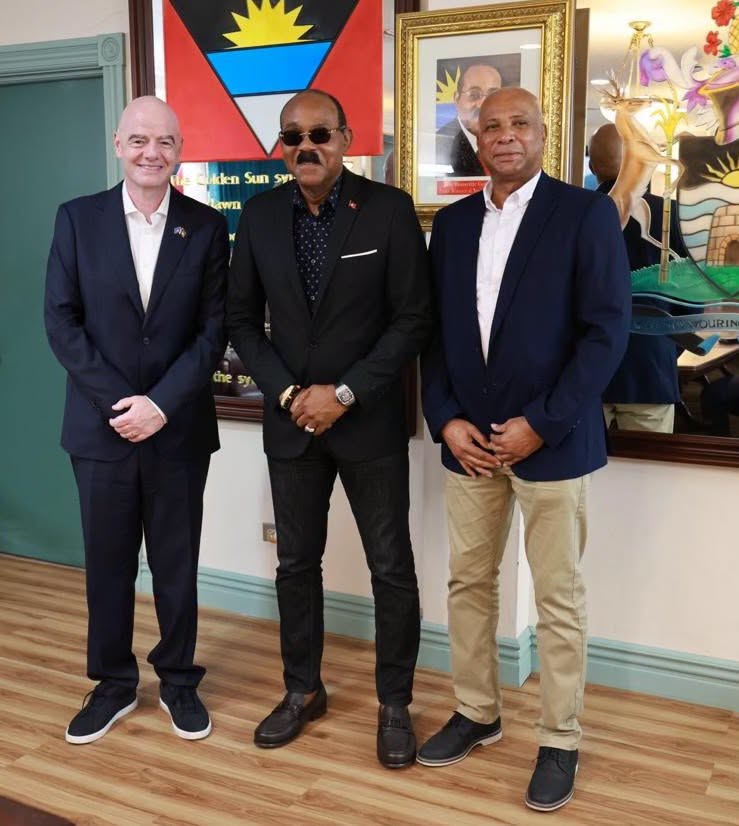
    A landmark set of development agreements has been struck between FIFA and the government of Antigua and Barbuda, following a full day of high-level talks on Saturday that brought together top leadership from both sides. The meeting was attended by Antigua and Barbuda Prime Minister Gaston Browne, FIFA President Gianni Infantino, senior members of FIFA’s executive leadership team, as well as Antigua and Barbuda Football Association (ABFA) President Ickford Roberts and members of the ABFA executive board.

    At the core of the new commitments is FIFA’s agreement to support the construction of a 5,000-seat national football stadium, with the Antigua and Barbuda government taking responsibility for securing and providing the land required for the new facility. Both Browne and Infantino emphasized in post-discussion remarks that standalone infrastructure projects are not enough to grow the sport long-term; sustained investment in human and technical capacity for players, coaches and sports administrators is equally critical to lasting progress.

    Prime Minister Browne stressed that access to elite-level coaching and specialized technical knowledge stands as the most critical factor in lifting the overall standard of football across the twin-island nation. “The most important thing is having technical support to get the type of coaches who can help us to lift our game and help our players to hone their skills,” Browne told Infantino during the talks. Infantino echoed this perspective, noting that Antigua and Barbuda already holds untapped football potential across its young population, and confirmed FIFA is ready to deliver support on both the infrastructure and technical fronts.

    Infantino also clarified the timeline for the two prongs of the development plan: while stadium construction will unfold over months of planning and building, upgrades to technical capacity can launch almost immediately. “To improve the technical expertise, this can be done instantly,” Infantino told attendees, pointing to FIFA’s existing global programs focused on grassroots talent identification, national football academies, and the organization’s widespread Football for Schools initiative that introduces organized football to young students worldwide.

    Browne welcomed the accelerated timeline for technical development, noting that the government’s vision for the sport is a structured pipeline that nurtures talent from grassroots community football all the way through to national, regional and international competitive play. Beyond the pitch, the prime minister framed football development as a public good that supports broader social goals. “We believe this is one of the ways in which we can encourage more of our children to play sport and become more productive and wholesome citizens,” he said.

    During the meeting, Browne also extended an official invitation to FIFA, signaling Antigua and Barbuda’s interest in bidding to host a future FIFA congress or other major global FIFA gathering. The prime minister highlighted the country’s growing track record and reputation for successfully hosting large international conferences, noting that the nation has the infrastructure and experience needed to welcome FIFA stakeholders. “We have the capacity to host you,” Browne said, adding that Antigua and Barbuda would be proud to formalize a bid for a future FIFA event.

    Saturday’s talks mark a deepening of a longstanding partnership between FIFA and ABFA. Previously, FIFA supported the development of the ABFA Technical Centre and national association headquarters through its FIFA Forward development program, the organization’s flagship initiative designed to advance football growth through collaboration between FIFA, national member associations and local public authorities.

    The latest agreements are set to expand that collaboration dramatically, through the new national stadium project and expanded technical assistance programs. Following the productive talks, Browne thanked Infantino and his delegation for the concrete, outcome-driven discussions and pledged the Antigua and Barbuda government’s continued close cooperation with both ABFA and FIFA moving forward. The government’s end goal, he explained, is to build a supportive ecosystem where talented local footballers have access to all the facilities, coaching, competitive opportunities and development pathways they need to reach their full potential. All parties have agreed to maintain regular close communication as the stadium project and other development initiatives move from planning to implementation.


  • WEATHER (6:00 AM, 27 September): Partly cloudy to cloudy with a few showers

    WEATHER (6:00 AM, 27 September): Partly cloudy to cloudy with a few showers

    A complex combination of atmospheric conditions is set to bring unsettled weather to the southern portion of the Lesser Antilles archipelago through the start of this week, with officials warning of potential flood hazards for vulnerable communities. Mid-to-upper levels of the atmosphere are carrying above-average moisture and convective instability, which are interacting with a slow-moving tropical wave passing through the region. This combination is expected to sustain widespread disrupted weather through Monday, bringing scattered periods of rain and bursts of thunderstorms to most affected areas.

    For the island nation of Dominica, forecast models predict mixed partial cloud cover and overcast conditions through the daytime, with only scattered, light showers expected during daylight hours. However, meteorologists are projecting a sharp uptick in precipitation activity starting after midnight local time, continuing through Monday morning. During this window, rain is expected to reach moderate intensity, with periods of heavy downpours and isolated thunderstorm activity across the island.

    In preparation for potential hazardous conditions, local weather authorities have announced that a formal flood watch could be issued as early as this evening. Residents and visitors in low-lying areas, steep hillside zones, and other locations with a history of water-related disasters including flash flooding, landslides, and rockfalls are urged to monitor official weather updates closely, maintain a high state of alert through the overnight period, and take proactive precautions to protect life and property.

    Beyond the rain and flood risk, the region is also facing uncomfortable heat conditions through the forecast period. Light prevailing winds, combined with daytime solar heating, will create conditions that produce sweltering daytime temperatures and unusually warm overnight lows that offer little relief. Health officials are reminding the public to prioritize staying properly hydrated, find cool shelter when possible, and avoid extended outdoor exposure during the midday and early afternoon hours when ultraviolet radiation and temperatures peak.

    Marine conditions across the region are expected to remain relatively calm over the next 24 hours, with overall sea states ranging from slight to moderate. Wave heights will vary by coastline: along the exposed eastern shores of the islands, swells can build to up to 7 feet, while protected western coastlines will see calmer conditions with maximum wave heights around 3 feet.

  • ‘Toxic’ relationship ends in tragedy

    ‘Toxic’ relationship ends in tragedy

    A quiet rural community in southern Trinidad is reeling from a devastating double fatality, after the bodies of 23-year-old Giselle Ougrah and her 27-year-old boyfriend Stefan Khandan were discovered in their rented Penal apartment on Friday night. For both grieving families, the tragedy was not entirely unforeseen: all relatives have confirmed they repeatedly warned the pair about their increasingly unstable, harmful relationship, and made multiple attempts to convince them to separate permanently.

    The couple had lived in their small apartment on Sundarsingh Trace, Batchiya Village, for approximately four months, after they were asked to leave Khandan’s family home due to frequent violent conflicts between the pair. Initial investigative findings from local law enforcement suggest Ougrah was killed by stabbing, with a 10-inch knife recovered as evidence from the crime scene, and Khandan is believed to have died by suicide shortly after. The couple were last confirmed to be alive on Wednesday, two days before their bodies were found.

    Concern grew after Ougrah failed to return home as expected, prompting her older sister and brother-in-law to travel to the apartment to conduct a welfare check just after 8 p.m. on Friday. After getting no response to knocks and calls, one of the pair scaled an exterior wall to look into the unit, spotting Khandan hanging and Ougrah motionless on a bed. They immediately contacted the Penal Police Station, and responding officers forced entry to confirm the deaths.

    Autopsies are scheduled to be carried out at the Forensic Science Centre in Federation Park in the coming days, and official causes of death will be released once examinations are complete. Law enforcement has confirmed that the full circumstances surrounding both deaths remain active under investigation.

    Family accounts have revealed the couple began their relationship roughly one year ago, shortly after Khandan was released from prison where he had served a sentence for robbery and home invasion. Both families spoke publicly to the *Sunday Express* about their repeated efforts to intervene.

    Speaking from her home in Torrib Trace, New Grant, Ougrah’s grieving mother Feroza Ali held a photo of her late daughter and described her as a devout, educated, ambitious young woman who had earned strong marks on her Caribbean Secondary Education Certificate and Caribbean Advanced Proficiency Examination, and had recently enrolled in an entrepreneurship training programme. Ali said she and multiple other family members repeatedly warned Ougrah about Khandan’s history and character, but Ougrah chose to continue the relationship despite their concerns. “Several times they broke up in the past and she knows she always welcomed by me, but then she goes back (to him),” Ali explained.

    Ali recalled that just days before the deaths, Ougrah had moved back home with her belongings after a breakup, but left on Wednesday evening after telling her mother she was going to a mall for dinner, and left with Khandan. Ali did not realize her daughter had not returned home until Friday, when her other daughters raised concerns about Ougrah’s silence. Initially, the elder sister contacted Penal Police to request a welfare check, but was unable to provide the exact apartment address, which is required for police to conduct a check. It was only after the pair drove to the neighbourhood themselves that they found the apartment and made the grim discovery.

    In the wake of losing her daughter, Ali issued a heartfelt warning to other young people about rushing into romantic relationships. “Take time and get to know the individual,” she said. “Do not get into something and then learn about the person. A relationship is not something to rush.”

    Khandan’s family is also grappling with grief, and confirmed they too saw the relationship as dangerous. Tony Khandan, Stefan’s father, said he last saw his son on Monday, when Stefan came to help with home repairs. Tony noticed his son seemed unwell and asked what was wrong, and Stefan told him “I am having real problems with that girl.” Tony asked his son to move back into the family home, but got no response, and Stefan left around 4:30 p.m. that day.

    Tony recalled that the couple fought constantly during the year they were together, and that he often had to step in to break up violent arguments when they were staying at his home in Boucard Trace, Penal. He eventually asked the couple to move out, leading them to rent the Batchiya Village apartment. “My son had his ignorant ways, but I did not expect it to reach so far,” Tony said, adding that Ougrah’s mother was the one who broke the news of the pair’s deaths to him. “I love my son. I love all of my children. I do my best for them.”

    Stacy Ann Khandan, Stefan’s sister, echoed the family’s description of the relationship as “toxic”, saying she had tried to provide counselling and guidance to the pair to help them end the relationship. She recalled that on Monday, just two days before the deaths, she and her brother cooked a meal together for the family, and he gave her a long goodbye hug before he left. “Everyone has faults, but I had a bond with my brother,” she said. “We are in mourning and we lost.”

    Local residents of Sundarsingh Trace said the couple kept to themselves, but were always polite when passing through the neighbourhood. Indrani Bhagoutie, a local resident, said she noticed the couple had not been around for a few days, but spotted Khandan carrying a pizza near her home on Wednesday. “She said she heard nothing from them in the next few days and was shocked to learn of the deaths of the young couple.

  • PoS Prison set to close its gates for good

    PoS Prison set to close its gates for good

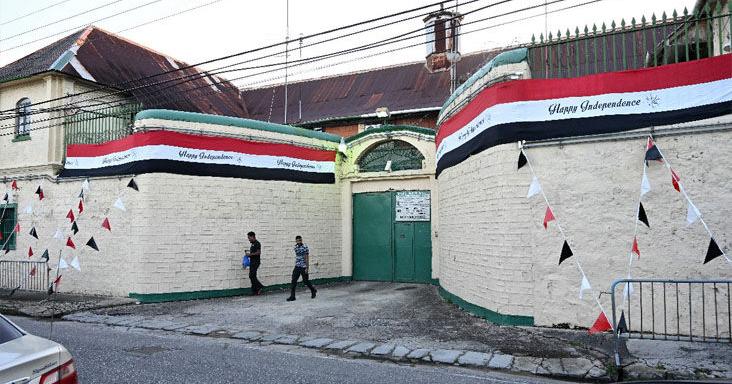
    After standing as a central institution of Trinidad and Tobago’s correctional system for more than two and a half centuries, the aging Port of Spain Prison located on Frederick Street is poised to close its doors permanently, wrapping up a historic chapter of the country’s penal history. The national government has launched a full decommissioning process for the facility, with inmate transfers already in progress and on track to wrap up by the end of November 2024.

    Homeland Security Minister Roger Alexander confirmed the timeline and details of the shutdown in an exclusive interview with the *Sunday Express* on Saturday, noting that the multi-phase transfer operation first kicked off on September 21. The decommissioning project is structured in three distinct phases, and the first step — relocating high-risk inmates from the historic Port of Spain Prison to the country’s Remand Prison — has already been successfully completed.

    The remaining two phases will focus on reconfiguring inmate housing across the country’s correctional facilities to accommodate the full shutdown. Up next, the Remand Prison will absorb inmates currently held at the Extended Remand Facility (ERF), clearing space for death-row inmates from Port of Spain Prison. In the final phase, 150 convicted offenders will be moved from the closing facility to three existing institutions: the Maximum Security Prison, Carrera Convict Prison, and Golden Grove Prison.

    To accommodate the additional inmate population at the receiving facilities, upgrades and adjustments are already underway. At the Remand Prison, which currently has a maximum capacity of 750 inmates, crews are installing new beds and refurbishing cell locks to meet updated safety and security protocols, alongside other critical infrastructure improvements. Alexander confirmed that project leaders have advised the decommissioning will stay on schedule so long as all critical upgrades are addressed as planned.

    According to Alexander, the push to close the outdated facility came directly from Prime Minister Kamla Persad-Bissessar, who directed the government to move forward with the shutdown in a timely manner. “All is well and going smoothly. We look forward to a new beginning for that place. As I said before…the Prime Minister…could not see the continuation of that place. She instructed us to make sure that this happens, and we were trying to do it in a timely manner,” Alexander stated.

    The Prime Minister and her cabinet will lead decisions on the future redevelopment of the prime Frederick Street site once decommissioning is complete. The closure of the old Port of Spain Prison is a core component of the government’s broader correctional system revitalization plan, which also includes constructing a new state-of-the-art correctional facility outside of Port of Spain, an initiative Alexander said he fully supports.

    When asked about widespread public concern that transferring inmates to existing facilities would exacerbate longstanding issues of prison overcrowding, Alexander noted that targeted mitigation measures are already being implemented to improve conditions across the system. Beyond infrastructure adjustments, he emphasized that the broader goal of the reform is to restore the correctional system’s role as a deterrent to crime, a function he said the outdated, mismanaged Port of Spain Prison had lost.

    Acknowledging public conversations about overcrowding, Alexander argued that the most effective long-term solution is discouraging people from committing crimes that lead to incarceration in the first place. “The prison must be a deterrent and the fact is, it is no longer that. The prisons are now like a home, a residential area, where you can do what you want, when you want, how you want, and we are stopping that,” he said.

    Discussions about closing the Port of Spain Prison have circulated among policymakers for decades, but Alexander emphasized that the current administration is the first to turn that decades-long talk into tangible action. He framed the facility as an outdated blight on the capital’s central urban core, saying, “This prison is an eyesore. To me, it has become a public nuisance and it is time for it to go. It is time for something new to be developed into the city.”

    Beyond the decommissioning plan, Alexander addressed two other pressing correctional sector issues during the interview: a recent high-profile incident involving a prison officer and renewed calls from the Prison Officers’ Association to issue firearms to all serving officers. He commended the actions of a prison officer who fatally shot a home invader while defending his family in a recent attack.

    On the question of issuing firearms to correctional officers, Alexander said he supports the idea of granting Firearm User’s Licences to all eligible public safety officers — including firefighters, coast guard members, and prison staff — but added that not all uniformed officers meet the strict integrity requirements for holding a licence. He noted that a small number of officers have abused their positions and access to help criminal actors carry out illegal activity.

    Alexander called on the Prison Officers’ Association to encourage all of its members to uphold high standards of ethical conduct in their roles. “If other persons are paying them outside of the service, well, that’s on them. All I ask is for brave men and women to serve with integrity, dignity, and an understanding that they are there to protect and serve persons, not to protect and serve themselves alone,” he said.

  • Probe into plot to kill Govt minister

    Probe into plot to kill Govt minister

    During a heated Senate debate on the controversial Special Operations Bill 2026 late Wednesday, former Trinidad and Tobago government minister Foster Cummings has dropped a bombshell revelation: 18 heavily armed police officers executed a search warrant at one of his privately owned properties, as part of an investigation into an alleged conspiracy to assassinate a sitting government minister.

    Cummings, who previously served as Minister of Youth Development and National Service under the People’s National Movement administration, told the upper legislative chamber that law enforcement had also compiled a classified file of his personal activities labeled as official intelligence on police letterhead — a document that was later improperly leaked to national media outlets. The former minister stopped short of elaborating further on the document, noting the matter is already under judicial review.

    Recounting the day of the raid, Cummings said he was seated inside the Parliament building when he first received an alert on his mobile phone that armed officers had arrived at his property. Moments later, a sitting government legislator across the parliamentary floor confirmed the news to him directly. “I joked that they probably just wanted to stop by for a drink, but my colleague told me they were there for a far more serious reason,” Cummings told the Senate President.

    He went on to detail the origins of the police action: A high-ranking government official, who did not qualify for enhanced personal security under existing protocols, pushed claims of a murder conspiracy to prompt the police operation. Acting on the unconfirmed intelligence, officers secured a warrant from a court to search his property as part of the probe into the alleged plot. Without naming the minister making the claim, Cummings questioned why the official remained free to carry out official duties amid the allegations, contrasting the situation with the heavy police presence at his property. The country was previously under a national state of emergency when the original assassination claims first emerged publicly.

    The bombshell revelation lines up with an exclusive report published by the *Sunday Express* in July 2026, which detailed allegations that an unnamed ex-government minister offered a self-described gang member $250,000 to assassinate Public Utilities Minister Barry Padarath. According to a sworn statement the detained man gave to Carenage Police Station officers on December 4, 2025 — excerpts of which were obtained by the outlet — the man was seeking high-paying work when he was taken to a club owned by the former minister in McBean in November 2025.

    In the statement, the man claimed the ex-minister told him he had “a bigger job” available: $250,000 to “get rid of” Padarath, whom the former minister described as a talkative “slim Indian fella with a hard face” who “hadda go.” The accuser alleged the former minister offered to supply all necessary weapons, vehicles, and target location details, even providing an upfront $3,000 “sweetener” to secure the deal and pushed for the assassination to be carried out as soon as possible. When asked what “get rid of” meant, the man told investigators it was clearly a reference to killing Padarath, noting the former minister had made a throat-slitting gesture to confirm the order.

    The man, who was already in custody on an unrelated charge when he gave the statement, told police he had never accepted a murder-for-hire job before, though he admitted to prior acts of assault and intimidation for other associates. He added he came forward with the allegations because he feared for his life if he spoke while at liberty, claiming he did not trust some members of the police force due to alleged corruption and links to the plotters.

    Following the July report, Padarath confirmed his security detail had been expanded to include protection from the Trinidad and Tobago Police Service Special Branch. He publicly expressed concern that the former minister implicated in the plot remained at liberty, but emphasized he retained confidence in the national police service and would not alter his daily activities out of fear.

    Cummings used his own experience tied to the high-profile murder plot investigation to frame broader objections to the Special Operations Bill, which seeks to expand law enforcement powers across the country. He warned that if a former legislator with access to parliamentary platforms could be subjected to such a sweeping, intelligence-driven search, ordinary citizens with no ability to speak out publicly would be even more vulnerable to overreach. “I have the privilege of standing in this chamber today to tell the country what happened to me. What happens to the average citizen who has no platform to push back when the state acts against them unjustly?” Cummings asked. Despite his objections and revelations, the Special Operations Bill has already secured passage in both the upper and lower houses of parliament.

  • Vier aanhoudingen en tien vuurwapens bij actie tegen illegale goudwinning Sarakreek

    Vier aanhoudingen en tien vuurwapens bij actie tegen illegale goudwinning Sarakreek

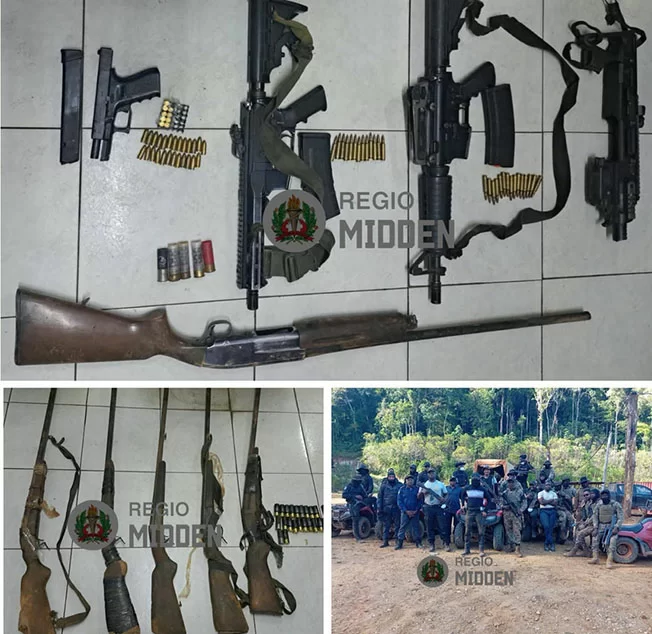
    A sweeping three-day joint operation carried out by Suriname’s Central Region police units and military forces has targeted unregulated illegal gold mining in the remote Sarakreek area, resulting in four suspects taken into custody and 10 illegal firearms seized, local law enforcement announced in late September.

    Authorities had first issued an official eviction order to illegal miners operating in the region more than seven weeks prior to the crackdown. When the group failed to comply with the order to leave the protected area, security officials launched the coordinated large-scale intervention. Over the course of the operation, multiple temporary mining encampments used by the unauthorised prospectors were fully dismantled and cleared from the terrain.

    During searches of the mining sites, security teams encountered multiple foreign nationals among the illegal operators, including citizens of Brazil and China. Preliminary investigation findings indicate these foreign miners were provided with logistical and navigational support by local Surinamese residents with intimate knowledge of the Sarakreek region’s terrain. In exchange for this assistance, the foreign prospectors agreed to cede between 10% and 20% of their total gold yields to their local facilitators, according to initial police accounts.

    As of the initial announcement, law enforcement has not released full details on the total number of people encountered at the encampments or the exact number of mining locations cleared during the operation. The cache of seized firearms included a range of high-powered and personal weapons: two AR-15 assault rifles, five single-shot weapons, one five-shot hunting rifle, one Glock pistol, and one Roni carbine conversion rifle.

    The four detained suspects have been transferred to the Central Region Criminal Investigation Department, which is continuing the ongoing investigation into the illegal mining ring and the origin of the seized weapons. Illegal gold mining has long been a persistent environmental and security challenge in Suriname’s interior rainforest regions, with unregulated prospecting causing widespread deforestation, mercury pollution of water systems, and the spread of unauthorised armed activity in remote border areas.

  • Geoffrey Hanley at UNGA81: St. Kitts and Nevis says there can be no hierarchy of human suffering – WIC News

    Geoffrey Hanley at UNGA81: St. Kitts and Nevis says there can be no hierarchy of human suffering – WIC News

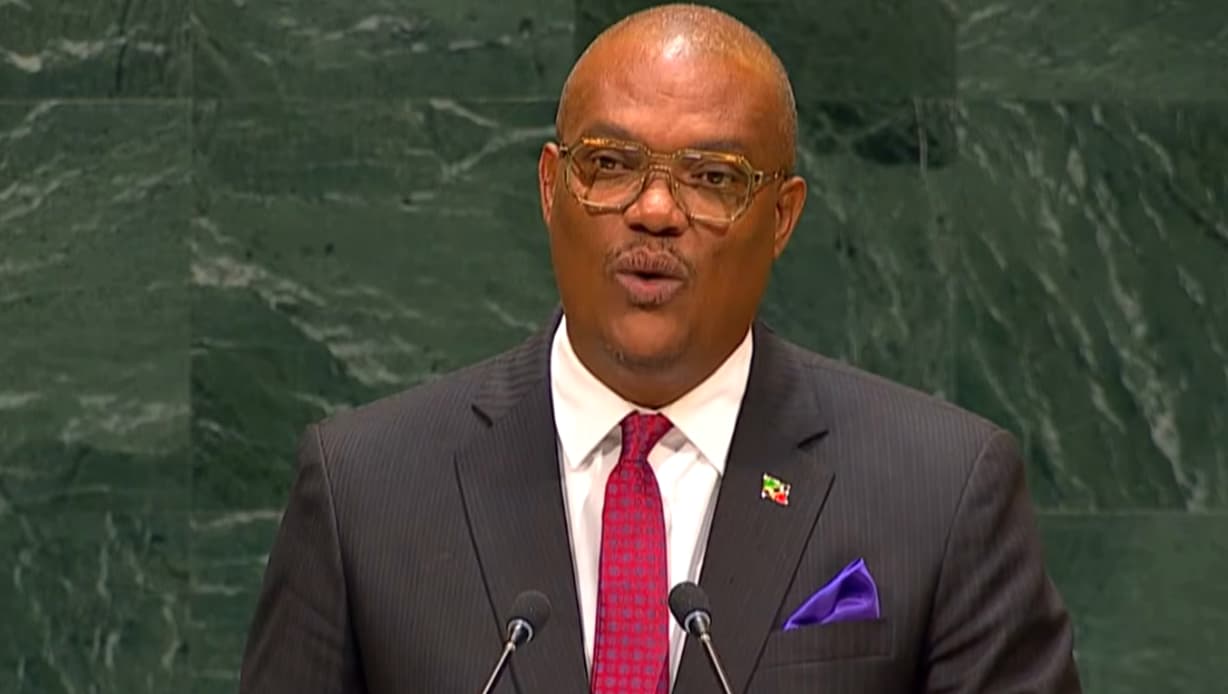
    At the 81st session of the United Nations General Assembly held on September 25, 2026, Acting Prime Minister Dr. Geoffrey Hanley of St. Kitts and Nevis delivered a bold, principle-driven address centered on equity for small nations, consistent application of global rules, and urgent action on longstanding injustices and regional crises.

    Hanley opened by framing Caribbean nations’ approach to global challenges as rooted in unwavering respect for core foundational values: national sovereignty, territorial integrity, consistent international law, and diplomatic dialogue. Reaffirming the regional bloc CARICOM’s longstanding position on ongoing border disputes in the Western Hemisphere, he made clear that the organization endorses the International Court of Justice as the legitimate, peaceful pathway to resolve the ongoing border dispute between Guyana and Venezuela, as well as the existing judicial process addressing territorial differences between Belize and Guatemala.

    Beyond regional territorial disputes, Hanley called for the uniform application of international law across all active global conflicts, including Gaza, Ukraine, Sudan, Yemen, Chad, and the Democratic Republic of the Congo. For small island states like St. Kitts and Nevis, he argued, inconsistent application of global rules creates a dangerous precedent where might overrides right, leaving vulnerable nations at constant risk. “Civilians continue to bear an unconscionable burden” in all these conflicts, Hanley stated, emphasizing that the global community must uphold a single, universal standard for international law, applied consistently rather than selectively, and extend moral conscience evenly rather than for political convenience. “There can be no hierarchy of human suffering,” he stressed.

    On the matter of global leadership representation, Hanley announced that St. Kitts and Nevis joins the full CARICOM bloc in endorsing Carolyn Rodrigues-Birkett of Guyana for the position of United Nations Secretary-General. He framed her candidacy as a landmark step for equitable global representation: as a woman and a leader from a small developing nation, Hanley noted, her candidacy demonstrates that global leadership is defined by vision and integrity, not the geographic or economic size of a candidate’s home country.

    Hanley also highlighted a historic milestone in reparatory justice cooperation between African and Caribbean nations. In March 2026, the African Union’s reparations mechanism and the Caribbean Reparations Commission held their first official meeting, building on the framework of the Addis Ababa Declaration signed during the second Africa-Caribbean summit. Hanley argued that collaboration between the two regions must move beyond shared historical sympathy to tangible action across investment, trade, technology exchange, knowledge sharing, cultural cooperation, and coordinated global diplomacy. He referenced General Assembly Resolution 80/25/250, which formally classified the trafficking and racialized chattel enslavement of African peoples as the gravest crime against humanity, and called for the global movement for reparatory justice to transition from formal recognition of harm to concrete remediation. “Reparatory justice must move from recognition to remedy, and from words to action,” he said.

    Turning to the ongoing humanitarian and security crisis in Haiti, Hanley drew global attention to the deteriorating conditions ahead of the country’s first round of presidential and legislative elections: approximately 1.47 million Haitians remain internally displaced, and nearly half of the national population faces acute food insecurity. He called for the rapid deployment of the UN-authorized multinational gang suppression force, timely renewal of the mission’s mandate, and coordinated international support for Haitian-led recovery and governance efforts.

    Addressing other regional and global priorities, Hanley shared that St. Kitts and Nevis has delivered humanitarian relief to the Cuban people and to St. Kitts and Nevis nationals studying in Cuba, and urged constructive diplomatic dialogue between the governments of Cuba and the United States to resolve longstanding tensions. He also reaffirmed St. Kitts and Nevis’ support for Taiwan’s meaningful participation in international bodies including the World Health Organization and the International Civil Aviation Organization, and called for cross-strait differences to be resolved exclusively through peaceful means.

    Closing his address, Hanley emphasized that trust between nations is built through delivered action, not empty promises. “Let this assembly be remembered not for what was said here but for what was done after,” he concluded.

  • Alle 50 districten van Bangkok tot rampgebied verklaard na dagen van zware regen

    Alle 50 districten van Bangkok tot rampgebied verklaard na dagen van zware regen

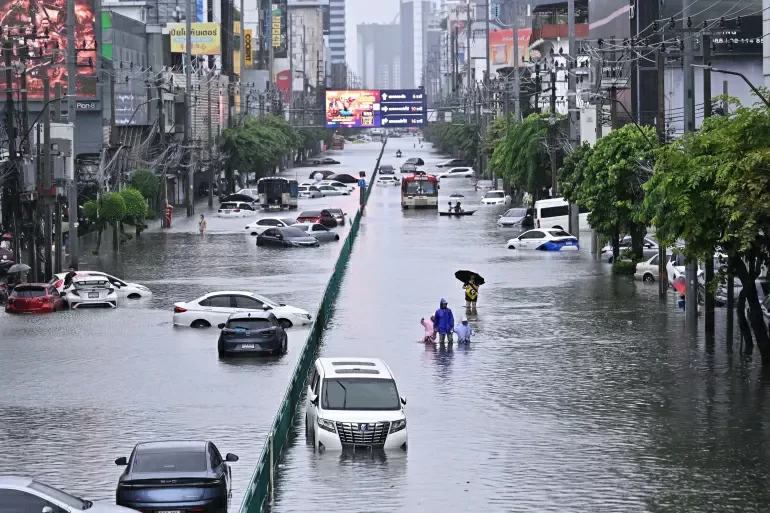
    On September 26, 2026, days of relentless, unprecedented rainfall pushed Thailand’s capital Bangkok to a breaking point, prompting authorities to formally declare all 50 of its administrative districts official flood disaster zones on Saturday.

    The extreme weather event began Thursday afternoon, when non-stop heavy downpours began drenching the city. By Saturday, some parts of Bangkok had recorded nearly 300 millimeters of cumulative rainfall, with the city’s eastern districts bearing the brunt of the impact. Min Buri and Khlong Sam Wa districts alone saw more than 270 millimeters of rain in just over 48 hours. The unprecedented volume of water overwhelmed the city’s network of canals and urban drainage system, pushing both to their maximum operational capacity. Low-lying neighborhoods flooded, forcing mass evacuations of local residents, and major thoroughfares across the capital were left submerged.

    Bangkok Governor Chadchart Sittipunt announced the expansion of the disaster zone declaration from the initial three hard-hit districts to all 50 on Saturday. The official disaster status unlocks expanded authority and resources for national government agencies and local authorities, enabling faster, coordinated disaster response and flood mitigation efforts.

    As of Saturday afternoon, Governor Chadchart reported that flood conditions are beginning to stabilize. If no additional heavy rainfall occurs, he projected that most floodwaters could drain out of the city within two to three days, with the city deploying all available pumping capacity and drainage infrastructure at full operation to speed water removal. However, the threat of further disaster has not passed. Thailand’s meteorological department warns that heavy rain will continue across most of the country through Sunday. A low-pressure system over central Thailand combined with an amplified southwest monsoon increases the risk of additional flooding, sudden flash floods, mudslides, and river overtopping across the region.

    The ongoing flooding has severely disrupted transportation across large swathes of Bangkok. Multiple major roads are partially or fully submerged, leaving dozens of motorists stranded and forced to abandon their vehicles along inundated corridors. The Bangkok Metropolitan Administration (BMA) has advised residents to stay home unless travel is absolutely essential, and has identified Ramkhamhaeng Road, New Phetchaburi Road, Ekkamai Road, Sena Nikhom 1 Road, Lat Krabang Road, and sections of Vibhavadi Rangsit Road as high-risk, impassable zones. To help residents move their vehicles to higher ground, public transit authorities have temporarily opened free park-and-ride lots at MRT stations, a program currently scheduled to run through October 2.

    Across affected areas, authorities have set up temporary evacuation shelters in dry, elevated public facilities including schools and government buildings. All BMA-run public schools will be closed on Monday, and non-essential government employees have been directed to work from home to reduce traffic congestion on already strained, flooded road networks.

    The impact of the flooding extends far beyond Bangkok’s city limits. As of Saturday, more than 84,000 people across 21 Thai provinces have been affected by flood-related disruptions. In canal-side communities across the capital, floodwater has breached residential properties, with emergency response teams prioritizing support for residents in low-lying areas and those dependent on powered medical equipment. Authorities have issued warnings for canal-side communities to remain on high alert, noting that most canals are already operating at full capacity, meaning any new rainfall will quickly trigger additional flooding. Bedridden patients relying on life-support equipment have been advised to relocate to hospitals temporarily if conditions worsen.

    While Bangkok regularly experiences seasonal heavy rain and temporary flooding during the annual monsoon, what makes this event unusual is the uninterrupted duration of rainfall. Unlike typical monsoon downpours that last a few hours, this event has brought near-constant rain since Thursday, leaving drainage systems no time to clear water between storms. A 67-year-old shopkeeper living near a canal told AFP that floodwaters reached her waist, forcing her to close her business for two full days, and compared the conditions to the devastating 2011 Thai floods. Context is key, however: the 2011 disaster was a months-long, nationwide catastrophe that killed over 500 people and damaged millions of homes. While current conditions in Bangkok are severe, they have not yet reached the scale of the 2011 event.

    At the national level, authorities have mobilized to respond to the crisis. Thai Prime Minister Anutin Charnvirakul has cut short an official visit to London to return to Thailand to oversee the flood response. Authorities have stressed that the next 24 to 48 hours will be critical to determining the trajectory of the disaster. If rainfall eases as forecast, floodwaters will gradually recede, but new heavy downpours would once again overwhelm drainage capacity. Until conditions improve, officials are urging residents in hard-hit areas to stay home unless travel is essential, move vehicles to higher ground, and closely follow official emergency warnings.

  • Barbados PM Mottley Calls for Greater Climate Financing for Vulnerable States

    Barbados PM Mottley Calls for Greater Climate Financing for Vulnerable States

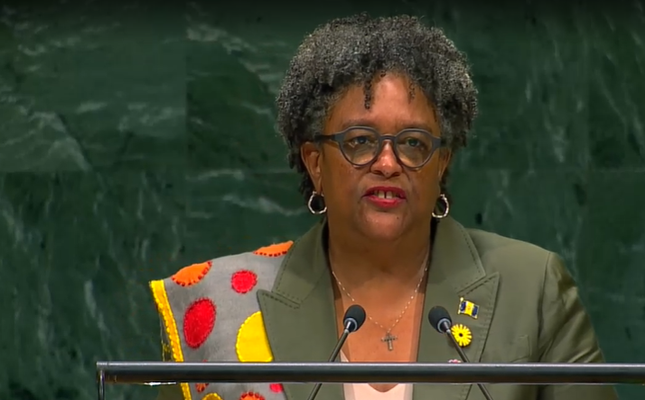
    As world leaders gather for the United Nations General Assembly (UNGA) General Debate in Manhattan, New York, just weeks ahead of the 31st Conference of the Parties (COP31) climate summit, Barbados Prime Minister Mia Mottley is pushing the international community to shift from symbolic goal-setting to tangible, urgent implementation of climate action for climate-vulnerable developing states.

    Against a backdrop of accelerating global climate disruption, marked by record-breaking heatwaves across Europe and growing forecasts of a devastating super El Niño event, Mottley used her UNGA platform to confront developed nations over their unmet commitments to vulnerable economies. As the current president of the Climate Vulnerable Forum (CVF), she emphasized that while reducing carbon dioxide emissions remains the cornerstone of a global energy transition, progress has been far too slow to avoid catastrophic warming. That is why the CVF, backed by 74 member countries, has prioritized methane reduction as a core action item for COP31 — a focus that Mottley argues is particularly critical for small island developing states that face existential threats from sea-level rise and extreme weather.

    Mottley told the assembled audience that during April’s G20 Ministerial Dialogue, finance ministers from participating nations recognized methane cuts are not just an environmental imperative, but also a catalyst for economic growth, fiscal stability, and improved public health outcomes. Where the conversation breaks from past rhetoric, however, is on the issue of climate financing — a gap that Mottley quantifies in stark terms. By 2030, vulnerable countries need approximately $490 billion in annual climate financing to adapt to and mitigate the effects of climate change, but current annual inflows only reach roughly $90 billion. Mottley summed up the disparity with a relatable quip: “As young people in Barbados would say, ‘the math simply ain’t math.’”

    Beyond the overall financing gap, Mottley also drew attention to the unfair disadvantage climate-vulnerable nations face in global borrowing markets. She noted that these countries pay an average of 1.2 percentage points more in borrowing costs than advanced economies, a discrepancy that adds up to more than $62 billion in excess annual interest payments. “This cannot be fair,” she declared, pointing out that these unnecessary costs crowd out critical public investments in climate resilience, healthcare, education, and infrastructure.

    Mottley stressed that vulnerable nations are not waiting for the international community to act; they are already forging solutions through collaborative initiatives laid out in the Bridgetown Initiative, a framework spearheaded by Barbados to reform global climate finance. One key outcome of this work is the Vulnerability to Viability Compact, a partnership between the CVF, G20 nations, and the OPEC Fund for International Development that unites 74 countries and 16 development finance institutions. The compact’s goal is to expand access to low-cost, long-term capital for projects in education, healthcare, and water infrastructure. A second initiative, the Lifeline Fund, was established by CVF-coordinated central bank governors and will soon be operational to provide rapid liquidity support when climate shocks trigger balance-of-payments pressures for vulnerable economies.

    “So we are moving to help ourselves,” Mottley said, explaining that short-term lending cycles of 10 to 15 years make it impossible for vulnerable nations to build critical climate-resilient infrastructure, as high borrowing costs and quick repayment schedules crowd out essential investments. While Mottley celebrated the progress these homegrown initiatives have achieved, she warned that they cannot fix the deep-rooted flaws in the existing international financial architecture on their own.

    For nearly five years, the Bridgetown Initiative has argued that climate resilience, debt sustainability, and access to affordable finance cannot be addressed as separate issues, Mottley reminded delegates. For most vulnerable countries, the core challenge is not just a lack of available capital, but a lack of fiscal space to borrow and invest at reasonable terms that support long-term development and climate action.

  • Canadian duo charged over firearms and ammunition seizure

    Canadian duo charged over firearms and ammunition seizure

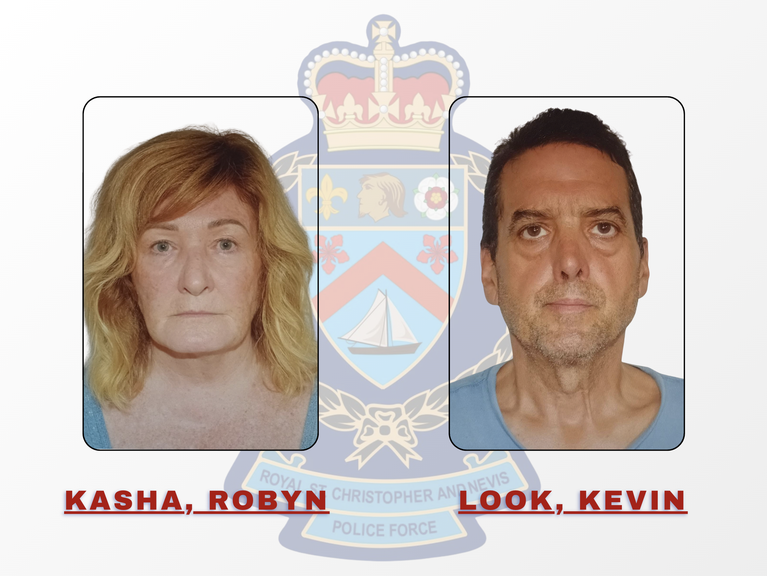
    In a surprising development that has raised questions about inter-departmental communication and administrative oversight in St. Kitts and Nevis, two Canadian citizens who have been residing in Colquhoun’s Estate on the island of Nevis now face four criminal charges each linked to a large seizure of firearms and ammunition from their home earlier this year.

    Robyn Kasha and Kevin Look were formally charged on September 22 during a processing at the Cotton Ground Police Station. The four counts against each individual include illegal importation of firearms, illegal importation of ammunition, unauthorised possession of firearms, and unauthorised possession of ammunition. The legal proceedings stem from a law enforcement seizure that took place on July 9, which immediately sparked public and official debate over how the weapons entered the federation and whether the pair had secured the mandatory legal approval to bring them into the country.

    Shortly after the seizure, Deputy Commissioner of Police Cromwell Henry shared key context during an official press conference, clarifying that the couple had completed and submitted all required paperwork for an import permit before the weapons were shipped to the islands. Their application included full documentation: a complete roster of the firearms with matching serial numbers, official copies of their valid Canadian firearms licences, and verified passport information for both individuals.

    Despite the couple’s proactive completion of the required steps, Henry confirmed that the application was never processed by authorities. The paperwork was submitted via email, and it was accidentally overlooked amid a massive surge in official communications leading up to the annual St. Kitts Music Festival, a major regional event that draws large crowds and generates increased administrative workload for government agencies.

    “Somehow we missed it among the list of emails that we got. It was leading up to the music festival, so we would have had quite an influx of emails. And so, we were not able to process that application before the weapons arrived,” Henry explained in his earlier statement.

    Henry further added another layer of complexity to the case, noting that the couple had fully declared the firearms to the Customs and Excise Department when the shipping container carrying the weapons arrived in the federation. However, that declaration was never relayed from customs officials to the police force. This communication gap led law enforcement to initially conclude that the weapons had been smuggled into the country without any formal approval.

    Based on the full circumstances of the case – including the fact that the couple had submitted all required documentation on time – the police force initially announced that it would not pursue criminal charges against Kasha and Look. The matter was then referred to the Customs and Excise Department to determine whether any charges would be pursued. The recent decision to file formal four counts against the two Canadians marks a sharp reversal of the earlier expectation that no criminal charges would be brought, leaving the case now moving through the St. Kitts and Nevis legal system.