博客

  • Caribbean CIP Countries Ask EU for More Time to Decide on Ending Programmes

    Caribbean CIP Countries Ask EU for More Time to Decide on Ending Programmes

    In a public address over the weekend on the popular *Browne and Browne Show* aired by Pointe FM, Antigua and Barbuda Prime Minister Gaston Browne announced a critical development in the escalating standoff between Caribbean states and the European Union over controversial citizenship-by-investment schemes: the five impacted regional governments have formally requested more time to reach a final decision on phasing out their programmes.

    The EU has ratcheted up pressure on the bloc of five Eastern Caribbean nations, which includes Antigua and Barbuda, Dominica, Grenada, St. Kitts and Nevis, and St. Lucia, in recent months, setting a hard deadline of the end of September for the countries to confirm whether they will agree to end the investor citizenship initiatives. Under updated EU regulations, the continued operation of unaligned programmes can now be used as formal justification to suspend the visa-free travel privileges Caribbean passport holders currently enjoy for the Schengen Area.

    Browne explained that regional leaders are pushing for an extended timeline not to delay negotiations, but to secure unambiguous answers to outstanding questions about the terms of any potential phaseout. “We have said to them, look, we want to know precisely what your conditions are,” the prime minister stated, outlining the key points that remain unresolved. Among the critical unaddressed issues are whether the EU will enforce caps on the number of citizenship applications Caribbean countries can process during any transition period, and whether the bloc will demand that applicants from specific national backgrounds be completely excluded from the programmes ahead of the full phaseout.

    Per Browne’s timeline, a joint technical team representing the Caribbean nations is scheduled to sit down with EU officials in October to hash out these outstanding details. “We need more information in order to make an intelligent decision,” he emphasized, adding that once those technical discussions wrap up and a concrete regulatory framework is established, regional governments will present the final negotiated terms to their domestic publics for transparency.

    The Caribbean nations are also pushing for a lengthy transition window, with Browne noting that regional leaders are seeking a phaseout period of between two and a half to three years before the programmes are fully terminated. The choice facing the countries remains stark: either maintain their citizenship-by-investment initiatives and risk losing Schengen visa-free access, or agree to a gradual elimination of the programmes under a negotiated transition.

    The EU has long held that citizenship-by-investment programmes pose unacceptable transnational security risks, arguing that the schemes can be exploited by criminal networks, money launderers, and individuals seeking to evade international sanctions. A recent EU assessment acknowledged that the five Eastern Caribbean states have taken tangible steps to strengthen their programme safeguards, including upgrading individual security screenings and adopting harmonized regional operating standards. Even so, the bloc has made clear that material security and vetting concerns persist, justifying continued pressure for a full phaseout of the initiatives.

  • Antigua and Barbuda Proposes Seven U.S. Deportees Per Quarter Instead of Seven Monthly

    Antigua and Barbuda Proposes Seven U.S. Deportees Per Quarter Instead of Seven Monthly

    As negotiations continue over a highly controversial migration transfer arrangement between Washington and the eastern Caribbean nation of Antigua and Barbuda, the Caribbean country has formally rejected a United States proposal to accept seven third-country deportees each month, and put forward a far less demanding counteroffer of accepting a maximum of seven deportees every three months. \n\nAntigua and Barbuda’s Prime Minister Gaston Browne revealed his government’s updated negotiating position during an appearance Saturday on the *Browne and Browne Show* broadcast by Pointe FM, explaining that the revised offer came out of the most recent round of diplomatic talks with U.S. officials. \n\n“Just over a week ago, we received the U.S. proposal that we take seven persons per month, and we told them directly that this volume is too high for our country to accommodate. We’ve proposed instead that we will accept seven per quarter,” Browne stated publicly during the interview. \n\nIf the counterproposal is accepted by Washington, the maximum annual number of transferred deportees would stand at 28 people, though Browne emphasized that discussions are still ongoing and no final terms have been agreed upon. \n\nThe prime minister confirmed that Antigua and Barbuda has already sent its counterproposal back to the United States, alongside a series of additional safeguards that outline strict criteria for which individuals can be transferred to the Caribbean nation. \n\nBrowne noted that his administration is working to reach a compromise that upholds Antigua and Barbuda’s sovereign national interests while preserving cooperative relations with the United States. “We are cooperating with our partners, but our priority in these negotiations is to secure the best possible outcome for Antigua and Barbuda under the current circumstances,” he said. \n\nThe counterproposal is now awaiting review and consideration by U.S. government officials. In a move to reinforce transparency, Browne also pledged that any finalized agreement reached between the two governments will be submitted to Antigua and Barbuda’s Parliament for formal approval and opened to full public scrutiny.

  • Radio to Reels: Who Decides What’s a Hit Today?

    Radio to Reels: Who Decides What’s a Hit Today?

    Not so long ago, securing access to your favorite track required more than a few clicks — it demanded patience. Fans would hover beside their radios, blank cassettes cued in the deck, waiting to hit record the second their chosen song began. Mahalia Cummins, a Barbadian music lover, holds vivid memories of this ritual: staying up late to capture radio tracks, hunting for CDs at Cave Shepherd’s iconic Number One Record Shop, and later shifting to digital purchases through Apple’s iTunes platform.

    Looking back, Cummins says physical music ownership carried a unique weight. “Back in the day, when you had to essentially go and buy a physical copy of the music… you would cherish [it] because it was now yours. You owned it,” she shared. Cummins’ six-decade journey through music consumption — from cassettes to CDs, digital downloads to modern streaming — mirrors the sweeping shift in how Barbadians have discovered and enjoyed music since the country gained independence 60 years ago.

    This evolution is the focus of a special national project called BIM@60, launched by the Barbados Museum & Historical Society in partnership with the National Cultural Foundation to mark the island’s 60th independence anniversary through the lens of music. At its core, the initiative asks a deceptively simple question: which songs have defined the Barbadian national story over the past 60 years?

    The project started with a curated shortlist of more than 300 tracks, expanded with public submissions gathered during 60 days of cross-platform radio and television promotion. Now, BIM@60 is calling on all Barbadians — both residents and those living in the global diaspora — to narrow the list down to 60 defining songs that capture the nation’s identity. Far from just another greatest hits countdown, the initiative frames music as a living historical record: it preserves local experiences, collective celebrations, shared struggles, and distinct creative expression, while mapping how Barbadian society has transformed across generations.

    A key part of that transformation is how music reaches audiences, and who holds the power to turn a track into a hit. In the 1960s and 1970s, radio, vinyl records, DJ sets, community dances, and live performances were the primary distribution channels for new music. These platforms carried the sounds of foundational Bajan artists from Jackie Opel and The Merrymen to Sing Out Barbados, and later calypsonians who wove everyday Barbadian life into sharp social and political commentary. While these traditional avenues still exist, they no longer hold a monopoly on audience attention.

    Today, a new track can go viral long before it ever gets airtime on traditional radio: it can spread via WhatsApp group chats, land on thousands of personal streaming playlists, and get attached to hundreds of TikTok and Instagram Reels before traditional gatekeepers even notice. Where listeners once waited for others to schedule their music, they can now search, replay, share, and organically propel songs to fame on their own.

    This new landscape raises a critical question for industry insiders: what actually counts as a Bajan hit in 2024? Veteran producer Nicolas Brancker, who has worked with legendary local acts including Krosfyah, Rupee, Alison Hinds, Square One, RPB and AC, says the definition matters more than ever in an era where viral online hype can make a track seem ubiquitous overnight.

    “I do think we should make a distinction between popular songs based on hype and actual bona fide hits,” Brancker explained. “Some songs are gimmicks, novelties that generate interest, hype and attention but no real economic activity, they are not hits. They are popular.”
    Brancker has watched the entire production process evolve alongside consumption: from the early days of live recordings at Rediffusion and CBC, through decades of multitrack studio recording, to today’s setup where just a microphone, audio interface and laptop can turn any space into a functional recording studio. But even with all this technological advancement, he notes, no tool can guarantee a hit.

    “No one goes into the studio or [uses a] computer to make hits,” he said. “They may want to or even think that they are but they just can’t know. They can make the best thing they think they can make at the time and see what happens.” For Brancker, a genuine hit stands the test of time: it crosses national and demographic borders, and generates sustained commercial value for copyright and master recording owners.

    He argues that the path to that success has shifted dramatically, with a “combination of algorithms and audience engagement” now driving music popularity — giving ordinary listeners a level of influence that was once held almost entirely by traditional industry gatekeepers.

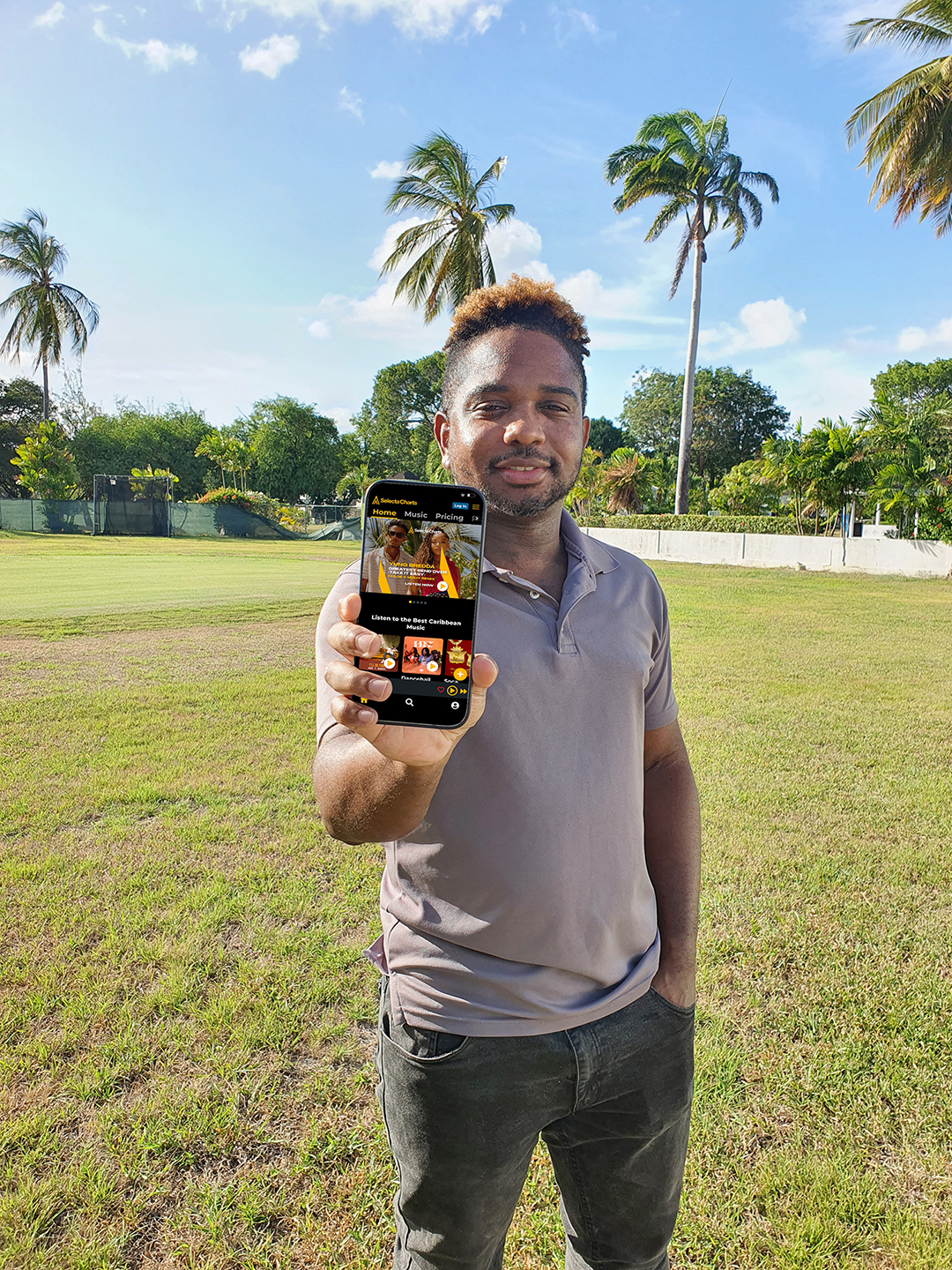
    Paul Husbands, founder of regional music platform Selecta Charts, has watched this shift play out firsthand as technology put more control in listeners’ hands. When Husbands first began developing his platform back in 2011, CDs were still a core distribution method for local music. By the time the platform launched in 2017, he was already urging local artists to pivot to the future of the industry: streaming.

    “Back in the day when you wanted to listen to music… you had to listen to it on the radio or even on TV. So, you had to wait for your favourite song to come out,” Husbands recalled. “With the advent of streaming platforms, you could go and listen to your favourite song on demand. So you can go and hit replay on all your favourite songs all day long.”

    Social media has accelerated that shift even further, giving listeners not just control over when they listen, but the power to spread music organically. “Right now, social media is where music blows up first,” Husbands said. He points to breakout Barbadian artist Lastacia as a perfect example. In 2026, a TikTok video where Lastacia opened up about her personal relationship went viral, drawing massive new attention to her work. She leveraged that momentum to promote her track *Active* — which, remarkably, had already been released two years prior. “She walked into [her success],” Husbands noted. “It was not even an intention because she had made a video speaking about her man [on TikTok] and it went completely viral and so many eyes were on her.”

    Even when viral attention lands, though, it takes more than views to make a song stick. Radio personality Astra Babb says relatability remains the key factor that turns a passing viral trend into a song audiences truly embrace. “Whether it’s about relationship issues, work problems, money problems, releasing stress, we want to see ourselves in the song,” she said.

    Babb points to the genre of bashment soca, which has earned massive local and regional appeal in recent years partly because it offers much-needed escape. “There’s a lot going on in the world right now, and people are carrying enough already. So when they get the chance to put on music, they want to forget about all of that for a little while,” she explained. The genre also fits perfectly into modern social media culture, where listeners are no longer passive consumers: they dance to tracks, create original content, quote lyrics, share songs, and contribute to the viral momentum around a hit.

    “They’re finding it themselves and, in many cases, helping decide what becomes popular,” Babb said. This shift has reshaped radio’s role in the industry, but not eliminated it, she added: “Social media can create the buzz; radio can amplify it and keep that song in people’s ears.”

    Even DJs and live events still hold significant power. Cummins notes that repeated plays at festival events like Crop Over can still turn a track into a widely accepted hit. “If you go to 17 fêtes at Crop Over and somebody plays the same song all the time, at some point it got to be considered a hit, right?” That said, today’s fragmented landscape means a track can be a hit in one community while remaining unknown to mainstream radio listeners: an underground hit can draw massive audiences outside traditional industry channels.

    Six decades after independence, the pathways for music are far more fragmented and unpredictable than they once were. A new track can go from a bedroom studio to a creator’s phone, to a friend’s chat, to a viral Reel, to a fête stage, to radio — or take any other unplanned route. There is no longer a single gatekeeper with the power to anoint a Bajan hit, and as the industry adapts to this new reality, another major shift is already on the horizon: generative artificial intelligence is beginning to reshape both music creation and discovery.

    Cummins hopes AI will remain a tool for human artists, rather than a replacement for the human experience at the heart of music making. “My hope is that if we can’t get away from using AI, generative AI specifically, that it’s used by the artistes and people making music, the music makers, as a tool to assist the art, the organic art of song making,” she said. “If AI is now encroaching on the process of making art… and taking the creativity and the human experience out of it then to me that’s problem.”

    From cassettes to CDs, from downloads to streaming, from radio to algorithmic playlists and viral social media, the infrastructure of music has transformed repeatedly. What comes next is impossible to predict, but Cummins says the core role of music remains unchanged. “Music is the universal language for a reason. It existed from the dawn of time and I think it will exist way past AI.”

    That enduring connection between music, collective memory, and national identity is the heart of BIM@60. As Barbados reflects on 60 years of independence, the public has until October 15 to cast their votes for the 60 songs that best tell the nation’s story. Those interested can participate by visiting the Barbados Museum & Historical Society website, clicking “Learn more” on the project landing page, and logging in via Facebook, Google or LinkedIn to explore the shortlist and vote. Voters can select up to 10 tracks across categories and revise their choices before voting closes. Organizers are encouraging all Barbadians, at home and abroad, to share their musical memories and invite family and friends to take part in shaping the official soundtrack of modern Barbados: 60 Years, 60 Songs, One Nation’s Soundtrack.


  • Shelley Weir remembered as patient advocate, trailblazer, phenomenal woman

    Shelley Weir remembered as patient advocate, trailblazer, phenomenal woman

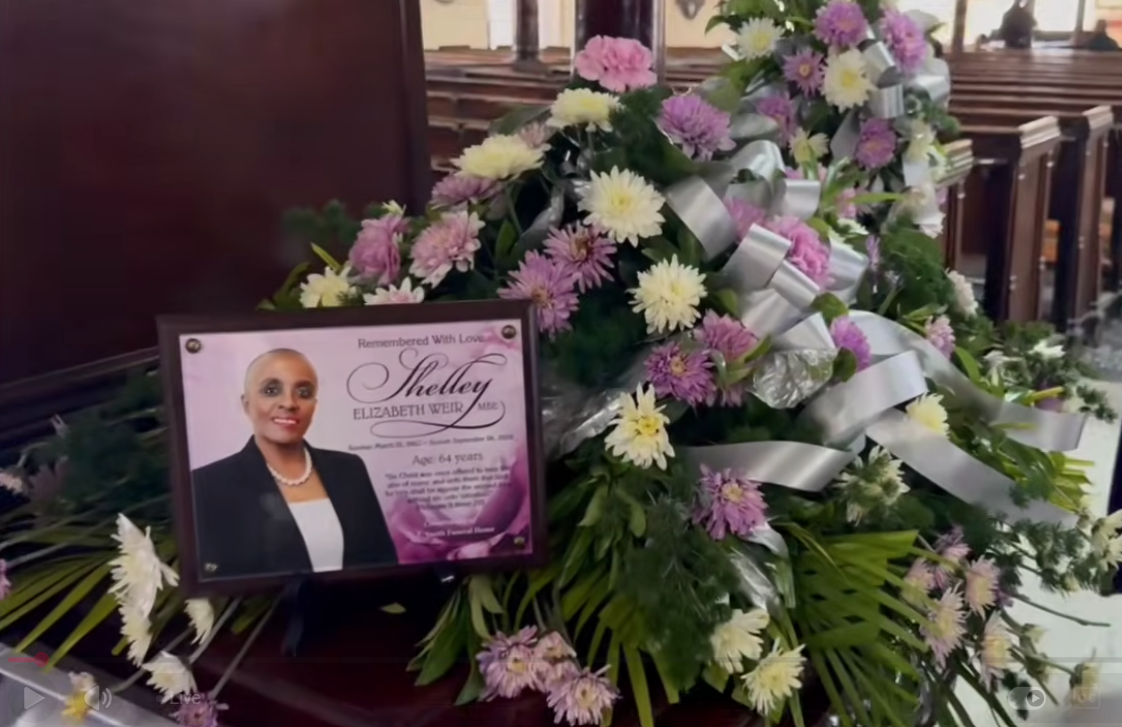
    On a recent Saturday at Bridgetown’s Cathedral Church of St Michael and All Angels, hundreds of grieving family members, close friends, and advocacy colleagues gathered to celebrate and give thanks for the life of Shelley Elizabeth Weir, a pioneering patient rights campaigner and founder of the Hope Foundation, who transformed public understanding of lupus and other chronic autoimmune conditions across Barbados and the wider Caribbean.

    Weir lived with a lupus diagnosis for 36 years before her passing, and tributes delivered throughout the memorial service painted a portrait of a woman who refused to let her illness define her, instead turning her lived experience into a decades-long movement for better patient support, education, and inclusion in global healthcare conversations.

    In her keynote eulogy, which wove together reflections from dozens of people whose lives Weir touched, friend and colleague Maxine McClean described Weir as a complex, uncompromising leader who served as a mentor, advisor, and trailblazer for patient advocacy across the region. “Today we mourn the passing of a friend, someone we knew to be brazen, outspoken, even abrasive when necessary but always honest and sincere. A woman of her word,” McClean told the congregation. “Weir’s 36-year journey with lupus is perhaps testimony to Shelley’s determination and grit.”

    McClean emphasized that Weir’s impact stretched far beyond local awareness campaigns in Barbados. Drawing on a tribute from Dr Amanda King-Greenidge, founder and president of the Saint Lucia Arthritis and Lupus Association, McClean shared: “We have lost a true champion of the cause. Someone who valiantly fought the good fight to the end.”

    A core pillar of Weir’s advocacy was her insistence that patients deserve a seat at the table when healthcare policies and treatment plans are designed. She rejected the longstanding tradition of separating clinicians and patients in medical decision-making, arguing that both groups have critical knowledge to share. “She believed that patients and physicians should learn together, not in separate spaces, but at the same table, each listening to and learning from the other,” McClean explained.

    Weir’s commitment to advancing lupus research and awareness never faded, even in her final months. Her last completed project, *The Lupus Diaries*, stands as a lasting testament to her mission to center patient voices in conversations about chronic illness.

    For close friend Jennifer Hinkson, Weir’s impact as an advocate was matched only by her kindness and loyalty as a friend. “When you needed her, she showed up. You didn’t have to explain anything. You didn’t have to ask twice. She was simply there,” Hinkson shared in her tribute. “Shelley battled her illness for 36 years, and she did so with tremendous courage and grace…. She did not allow her illness to define the life she lived. She lived, she loved, she laughed, she helped others, and she made a difference…. She was an amazing woman with an extraordinary personality. People were naturally drawn to her.” Hinkson added that she would carry Weir’s memory with her in every shared story and laugh, honoring a woman who refused to let illness stop her from fully living.

    Weir’s godson, Jason Butcher, echoed those reflections, remembering “Aunty Shelley” as a woman with a magnetic warmth, unshakable strength, and wholehearted love for the people in her life. “When Aunty Shelley loved you, she loved you completely. She stood by the people she cared about. She believed in them, encouraged them, and made them feel that someone was always in their corner,” Butcher said. “The love and commitment she gave to me as a godmother were the same qualities she gave to many others. To the Hope Foundation and its patients and countless people whose lives she touched.” He added that Weir never hid who she was: “Her personality, her energy, her generosity, her laughter, her compassion, and her commitment to others came from something much deeper — her soul.”

    In his sermon to the congregation, which included attendees joining virtually from across the Caribbean, Rev. Dr Jeffrey Gibson framed Weir as a quiet giant of Barbadian public life, noting that unlike many leaders who command attention with fanfare, Weir’s power came from her persistent, unstoppable love for her community. “Barbados has lost a giant. Many giants arrive with loud footsteps. Shelley came with a quiet, persistent and unstoppable love,” Gibson said.

    Gibson challenged attendees to honor Weir’s legacy by carrying forward the hope she spent her life advancing. “The best tribute that can be paid to Shelley Weir today, is not to say what a wonderful woman she was, though we all know she was…the best tribute to say, ‘the hope she carried I will carry now’,” he said. Addressing the Hope Foundation’s board and members, he urged the organization to continue Weir’s work. To the Barbados Ministry of Health and Wellness, clinicians, and policymakers, he repeated Weir’s longstanding plea: that every Barbadian patient, especially those living with the often invisible burden of lupus, be treated not as a medical case, but as a person with full rights, dignity, and access to hope. Gibson closed by thanking Weir’s family for sharing her with the region for 36 years.

    Following the service, Weir was laid to rest in the churchyard of St Stephen’s Anglican Church.

  • Conch Shell: 4 October

    Conch Shell: 4 October

    After months of public debate and behind-the-scenes political preparation, Grenadian Prime Minister Dickon Mitchell has put a definitive timeline on one of the country’s most pressing political questions: the official date of the next general election will be revealed to the public on 4 October.

    Mitchell shared the news Friday evening at a rally for his ruling National Democratic Congress (NDC) held in Perdmontemps, St David, telling cheering supporters that the official announcement would come during an event in St Mark, where the traditional conch shell — a symbolic call to political action — would be blown. Crucially, the prime minister clarified that 4 October marks the date of the announcement itself, not the date of the general election.

    The announcement arrives at a moment when political parties across Grenada have been ramping up campaign preparations, and public discussion of the election timeline has dominated social media and community conversations across the island nation. The last general election in Grenada was held in June 2022, when 69.49% of registered voters — a total of 60,853 people — cast ballots. In that contest, the NDC secured a majority, winning 9 of the 15 available parliamentary seats, while the long-dominant New National Party (NNP) took the remaining 6.

    Under Grenada’s constitution, parliament serves a five-year term unless dissolved early. The Governor-General has the authority to dissolve parliament, typically acting on the prime minister’s advice, and a general election must be held within three months of dissolution. This constitutional framework has left room for widespread speculation that an election could be called well before the 2027 deadline, a view echoed by senior leaders of smaller opposition parties.

    Deputy Political Leader of the Democratic People’s Movement (DPM) Arley Gill, an attorney who will run as the party’s candidate for St John in the upcoming vote, says the surge in on-the-ground political activity confirms an early election is on the horizon. He points to the growing flood of public and social media discussion focused on when Mitchell will make the long-awaited election date announcement as further evidence of an imminent vote.

    External political analysts, however, have offered a more nuanced reading of the current political climate. Peter Wickham, a respected Barbadian political analyst and pollster, argues that while Mitchell’s inner circle is pushing the prime minister to move quickly to call an election, Dickon Mitchell himself has not shown the same sense of urgency. “I feel that he’s being pushed by all those around him to appear to be ready and to move in that direction… my sense is that I don’t know that there’s a lot of urgency on his part, but I believe that he’s being pushed in that direction,” Wickham told local media outlets earlier this week.

    Wickham also noted that Grenada’s economy is in a weaker position today than it was when Mitchell took office in June 2022, pointing to headwinds from global political instability, including the ongoing conflict in the Middle East, as a major external drag on the island’s economic performance. When assessing the opposition’s prospects, Wickham added that the main opposition NNP faces steep structural challenges heading into the vote, while the newer DPM has a far lower bar to shape the country’s political future. Unlike established parties that need to win a majority to gain power, Wickham argued, the DPM only needs to pose a credible threat to one or two major parties to shift national political conversations.

    On social media, speculation has grown that the NDC could aim to turn its current 9-seat majority into a historic full sweep of all 15 parliamentary seats, though that remains unconfirmed speculation for now. Away from party headquarters and social media threads, ordinary Grenadians hold a wide range of views on the upcoming election, from urgent calls for an immediate vote to total disengagement from politics.

    In informal conversations with everyday residents, perspectives varied widely. One sidewalk vendor said she hoped the election would be called as soon as possible, rooted not in partisan loyalty but in the harsh daily realities of making a living: “It could call tomorrow, please God, because the place tough and bad and rough.” Another vendor shrugged off the question, saying she does not vote, while another resident said he chooses not to participate in politics at all. A passer-by offered a neutral assessment, saying “It’s going good so far. I don’t have any issues. I’m just a neutral guy.” Other residents offered a range of possible timelines, from November this year to early 2025.

    These varied responses underscore the wide spectrum of political engagement across Grenada, from closely tuned partisan followers to completely detached residents who prioritize daily life over electoral politics.

    At his Friday rally, the prime minister officially kicked off his party’s campaign for a second term, framing the election as a choice between going backward or moving forward. He pledged that if returned to power, the NDC would continue its “progressive policies supporting and protecting workers’ rights” and said he wanted his party to return to parliament with greater strength and public confidence.

    Mitchell also added a striking personal dimension to the campaign, sharing his goal to “sanitise” and “redeem” the Mitchell name across Grenada, Carriacou and Petite Martinique. His comments come in the context of the political legacy of his predecessor and namesake, former Prime Minister Dr Keith Mitchell, who has retired from electoral politics. Dr Keith Mitchell stepped down as NNP leader and Leader of the Opposition, with Emmalin Pierre now holding both roles.

    Dickon Mitchell told supporters he wanted to leave no question that there is not just “a good Mitchell” leading the country, but “the best Mitchell,” framing his tenure as a chance to redefine the family name for the next five years. The personal remark adds an extra layer to a campaign that is already shaping up to center on the NDC’s two-year governing record, opposition policy alternatives, and the pocketbook issues that matter most to ordinary voters.

    Now that the date of the election announcement is set, the focus of Grenadian politics is shifting. For the ruling NDC, the immediate task is to solidify its case for a new mandate. For opposition parties, it is to refine their alternative platforms and mobilize their base. For voters, the coming weeks will bring competing visions for the country’s future, once the official election date is revealed.

    After 4 October, when the conch shell blows as promised, the countdown to voting day will officially begin, and the national conversation will shift from when Grenadians will go to the polls to what they will be voting for. The countdown to announcement day is already underway.

  • World Contraception Day: 26 September

    World Contraception Day: 26 September

    As September ushers in a series of global observances focused on sexual and reproductive health — including World Sexual Health Day on September 4 and International Safe Abortion Day on September 28 — reproductive health advocates from Grenada are using this year’s World Contraception Day (WCD) to push for urgent policy change around contraceptive access. This year’s WCD theme, “No Barriers, Just Choices: Contraceptive Access Now,” highlights a long-simmering regional debate that reignited last year over whether teenagers should be allowed to access reproductive healthcare without requiring parental consent. Advocates argue that current policy prioritizes parental control over adolescent well-being, a mismatch that is contributing to devastating public health outcomes across the Caribbean.

    WCD’s core mission is to raise public awareness about the critical importance of reliable contraceptive access, disseminate evidence-based scientific information about different contraceptive options, and counter harmful misinformation that often discourages responsible use. To fulfill that mission, WCD outlines five primary categories of contraception for public education: barrier methods such as condoms and diaphragms; hormonal methods including birth control pills and injections; long-acting reversible contraceptives like intrauterine devices (IUDs) and implants; permanent options such as vasectomy and tubal ligation; and emergency contraception, which can prevent pregnancy up to 72 to 120 hours after unprotected intercourse.

    Advocates emphasize that expanding contraceptive access is a direct solution to reducing abortion rates, because unintended pregnancy is the leading cause of abortion. By increasing consistent contraceptive use, communities can cut rates of unplanned pregnancy and, in turn, reduce the number of abortions. The real public health crisis, they argue, is unplanned pregnancy, not abortion itself — and regional data bears this out. Among women seeking care at Caribbean public health clinics, 80% report that their most recent pregnancy was unplanned, and 37% of those unplanned pregnancies end in abortion. Most alarmingly, 81% of women who have had an abortion reported having their first abortion as a teenager, and 59% of those first abortions occurred before the age of 16 — a statistic that points to high rates of statutory rape in the region.

    These stark numbers expose the failure of current policy around the Age of Civil Legal Responsibility (Amendment) Bill, which currently creates a harmful disconnect between existing law and on-the-ground social reality. Advocates argue that lowering the age of legal access to contraception without parental consent to 16 is merely a first step to closing an absurd legal gap between the age of consent for sexual activity and access to reproductive healthcare. To address the regional reality of early sexual debut, advocates say there should be no age-based barriers to contraceptive access, and policymakers should trust the professional judgment of healthcare workers to provide appropriate care.

    The Caribbean currently faces two of the most alarming reproductive health statistics in the world: it has the highest abortion rate globally and the second-earliest average age of sexual debut. Compounding this crisis is an illogical legal inconsistency: while the law requires parental consent for contraceptive access for anyone under 18, children as young as 7 can be held criminally responsible for their actions in Grenada. Advocates question why there is an 11-year gap between the age of criminal responsibility and the age of civil legal responsibility for accessing reproductive healthcare, calling for immediate action to align law with public health needs.

    This open letter was organized by Dr. Tonia Frame, President of the Grenada Planned Parenthood Association (GPPA), Trustee of the Caribbean Family Planning Affiliation (CFPA), and Assistant Professor in the Department of Public Health and Preventive Medicine at St George’s University, and Dr. Fred Nunes, founder of Advocates for Safe Parenthood: Improving Reproductive Equity (ASPIRE) and advisor to both CFPA and GPPA. The opinions expressed do not necessarily reflect those of NOW Grenada.

  • PM Briceño Touts Falling Poverty, Debt Reduction in UN Address: “Vamos Bien”

    PM Briceño Touts Falling Poverty, Debt Reduction in UN Address: “Vamos Bien”

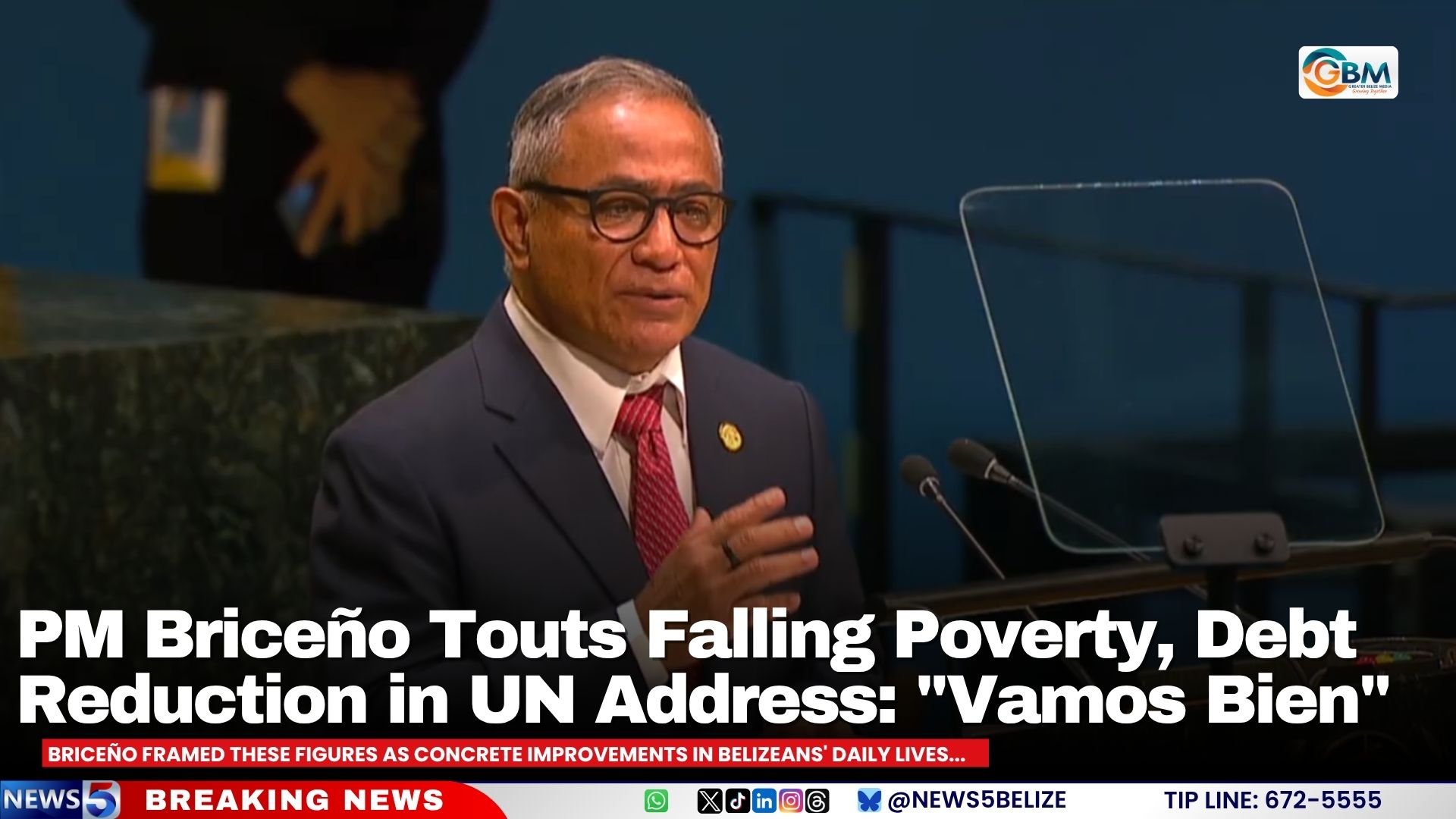
    Speaking before the 2026 UN General Assembly on September 26, Belizean Prime Minister John Briceño delivered an optimistic yet realistic update on his nation’s progress toward the United Nations’ Sustainable Development Goals, pointing to tangible improvements in poverty reduction, employment, and fiscal stability that have lifted quality of life for ordinary Belizeans.

    In his address, Briceño outlined key economic and social indicators that mark significant forward momentum for the small Central American nation. Multidimensional poverty has fallen to 19.1%, while unemployment sits at just 1.9%, and public debt has been trimmed to 66.6% of gross domestic product. Notably, Briceño emphasized that this marks the first time in a generation that Belize’s public debt is on a clearly sustainable trajectory.

    Rejecting the idea that these metrics are merely abstract statistics, Briceño connected the progress to tangible change in Belizean households. “These figures are not abstractions. They are Belizeans at work, families with greater purchasing power, and a government with room to invest in the future,” he told the assembly. Closing his update on current gains with the Spanish phrase “Vamos bien” — “We are doing well” — Briceño acknowledged that the country still has a long path ahead to reach its full development potential.

    To guide the next stage of national growth, Briceño pointed to Plan Belize 2.0, the government’s updated national development framework. The strategy centers on five core priorities: generating sustained new employment opportunities, cutting economic vulnerability for low-income households, reducing national reliance on costly imported energy, protecting Belize’s unique natural ecosystems, and equipping local workers with the skills needed to compete in a rapidly evolving global economy.

    Complementing this domestic strategy, Briceño spotlighted a new landmark bilateral partnership with the United States: the Belize Compact. This grant-based collaboration is designed to advance two critical priorities for Belize: strengthening the country’s energy security by expanding access to affordable, reliable power, and investing in workforce development to prepare young Belizeans for the jobs of the future.

    Despite the positive momentum, Briceño did not shy away from outlining growing threats that could derail Belize’s development progress, most notably escalating climate change impacts. The country, which is regularly hit by Atlantic hurricanes, has seen storms grow more intense in recent years, while shifting weather patterns have made proactive disaster planning far more complex. Adding to these emerging challenges is an unprecedented, widespread influx of sargassum seaweed along Belize’s coastlines — a problem that currently has no simple, established solution.

    Briceño stressed that effectively managing these evolving climate threats requires more than just national action. While Belize is committed to investing in innovation, strengthening institutional capacity, and developing well-funded national strategies, Briceño made clear that even the strongest domestic efforts will not be enough without coordinated, collective action from the international community to address shared climate risks.

  • Cross Street Could Have Used a Little Cross Talk

    Cross Street Could Have Used a Little Cross Talk

    For months, residents living along and around Cross Street have been grappling with a growing list of unaddressed concerns that directly impact their daily lives. From crumbling sidewalks that pose tripping hazards for elderly pedestrians and parents pushing strollers, to persistent traffic congestion that extends morning and evening commute times by more than 20 minutes on average, the street’s problems have gone from minor inconveniences to major community headaches. What has been most notably absent throughout this entire period, however, is the open, constructive cross talk between local residents, city transportation officials, and business owners that could have turned frustration into actionable solutions.

    Many long-time neighborhood locals say they have reached out repeatedly to city hall to request a public town hall focused specifically on Cross Street’s challenges, but their calls have gone unanswered. Small business owners operating along the corridor, who rely on easy pedestrian and vehicle access to draw customers, have also voiced concerns that declining infrastructure and growing gridlock are cutting into their monthly revenue. Without a structured space for all stakeholders to share their perspectives, brainstorm compromises, and align on next steps, tensions have slowly risen in the community. Residents feel ignored by decision-makers, while officials remain unclear on the severity of on-the-ground problems.

    Community organizers note that open dialogue is the foundation of effective local problem-solving. When different groups with competing priorities – from residents prioritizing pedestrian safety to business owners prioritizing parking access – can sit down together, they often craft solutions that work for everyone. In the case of Cross Street, this missing conversation has allowed small issues to fester into larger conflicts, delaying necessary repairs and policy adjustments that could improve the street for everyone who uses it. Many community members still hold out hope that city officials will schedule a public meeting in the coming weeks, finally creating the space for the productive cross talk that Cross Street has needed for so long.

  • Fredrick Sutherland Dies Weeks After Belize City Shooting

    Fredrick Sutherland Dies Weeks After Belize City Shooting

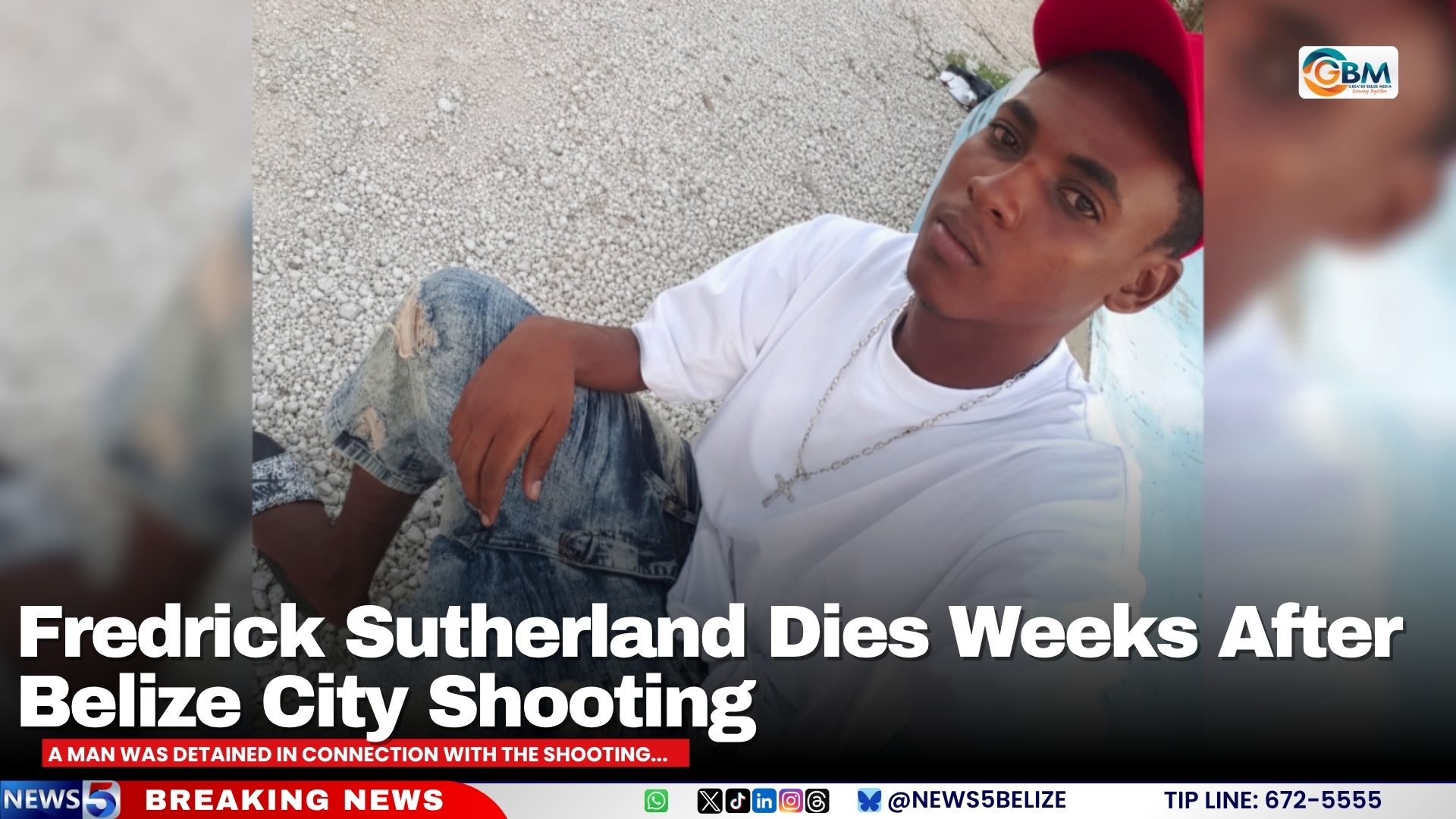
    Nearly a month after a brazen daylight-adjacent shooting in Belize City left him clinging to life, 29-year-old Fredrick Sutherland has died from his critical wounds. The fatal shooting unfolded on the evening of August 28 near the intersection of Banak Street and Amandala Drive, a residential and commercial corridor in Belize District.

    Local law enforcement on routine patrol first received reports of gunfire just before 8:00 p.m. that night. Preliminary investigative accounts confirm Sutherland was riding as a passenger on a motorcycle with a second individual when an unidentified male suspect opened fire on the pair, striking Sutherland severely.

    In the immediate aftermath of the incident, police took a suspect into custody and seized a legally licensed firearm connected to the shooting. The detained man has maintained from the outset that he acted out of perceived self-defense, claiming he reasonably believed his life was in imminent danger when he fired the weapon. As of the latest update, no formal charges have been filed against the suspect, and the investigation remains active.

    In the days following the shooting, Assistant Superintendent of Police Stacy Smith outlined the state of the probe for reporters, noting that investigators had not yet confirmed or refuted the suspect’s self-defense claim. “Our investigation is still ongoing, and what we have confirmed so far is that Sutherland and his companion were on a motorcycle when they were shot by a male suspect,” Smith said at the time, when Sutherland was still hospitalized in critical condition. “We have not taken an official position on the suspect’s claim. The suspect in custody has stated he acted because he felt threatened, but we are still collecting statements from other witnesses who can help bring full clarity to what actually happened that night.”

    Sutherland’s death marks a significant development in a case that has drawn attention to violent crime in Belize City, and investigators are expected to revisit witness testimony and evidence to reevaluate the circumstances of the shooting ahead of any potential legal action.

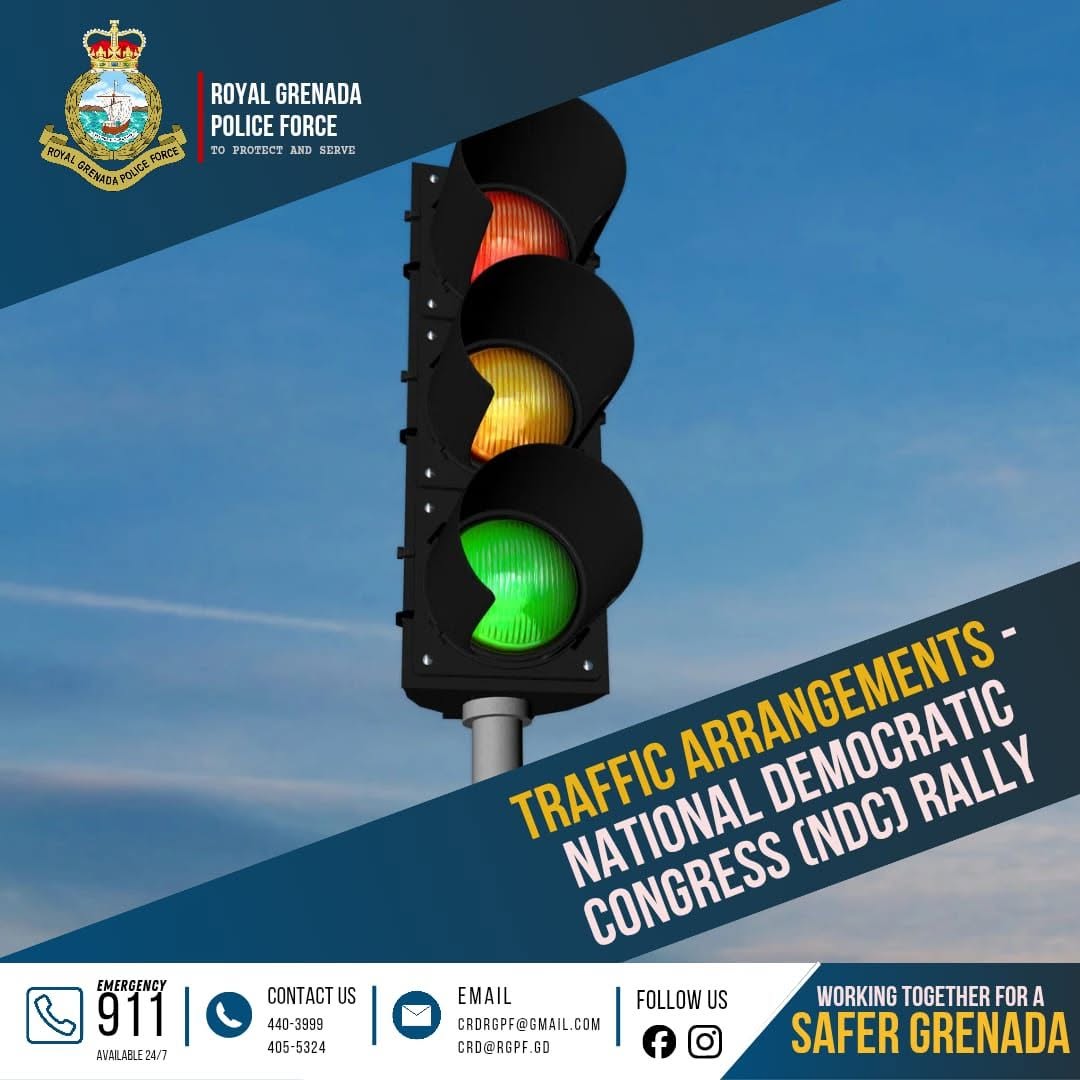
  • Traffic arrangements: Sunday, 27 Sept at St Paul’s

    Traffic arrangements: Sunday, 27 Sept at St Paul’s

    Grenada’s law enforcement agency has announced a series of temporary traffic regulations that will reshape travel patterns around St Paul’s, St George, to accommodate an upcoming political rally organized by the National Democratic Congress (NDC). Scheduled to take place on Sunday, 27 September 2026, the public event will prompt sweeping changes to normal road usage that will last more than eight hours, starting as early as 4 p.m. and remaining in place through midnight.

    The Royal Grenada Police Force (RGPF), which issued the official advisory targeting all motorists traveling through the area, outlined clear, zone-specific rules to streamline crowd movement and prevent transit gridlock during the rally. One of the most impactful changes is a partial closure of St Paul’s Main Road: all vehicles heading north toward the St Paul’s Police Station, starting from the road’s junction with Mardigras public road (also called Greens), will be blocked from accessing that stretch of pavement.

    For affected drivers, the RGPF has established official diversion routes that redirect all through traffic onto either St Paul’s Main Road via Mardigras, or Perdmontemps Main Road. To further organize flow, the segment of St Paul’s Main Road running from the intersection near St Paul’s Police Station back to the Mardigras public road (Greens) junction will convert to a one-way roadway, with all traffic required to travel in the direction of St George’s.

    Additional restricted entry zones have also been put in place to avoid congestion. At the intersection of Good Hope and St Paul’s Main Road, Good Hope will function as a one-way road, permitting traffic only from the direction of Mardigras. At the junction of Mardigras and Good Hope, motorists will be strictly prohibited from traveling along Mardigras Road to exit onto St Paul’s Main Road (Greens).

    To free up roadside space for event attendees and emergency access, the RGPF has also marked multiple no-parking zones that will be enforced for the duration of the traffic adjustments. These restricted areas include the entire stretch of St Paul’s Public Road running from the Mardigras public road intersection through to the La Borie junction; the left-hand side of Mardigras public road facing the direction of St George’s; and the left side of St Paul’s Public Road from the Mardigras public road intersection to the area near St Paul’s Station, heading toward Perdmontemps.

    For attendees planning to drive to the rally, designated parking areas have been set aside to accommodate different groups. Cabinet ministers and other official government attendees will be assigned parking space within the yard of St Paul’s Government School. General attendees and members of the public may park along open roadways outside of the designated no-parking zones, as well as throughout the Hill Crest area.

    In closing its official advisory issued through the Office of Community Relations, the RGPF extended a public apology for any disruptions or delays the temporary arrangements may cause for local residents and regular commuters, and said it expects full cooperation from all road users during the event.

    This advisory was distributed by NOW Grenada, which notes that it does not take responsibility for opinions, statements or third-party contributed content shared through its platform, and provides a channel for users to report any abusive content.