博客

  • Four-Day Hazardous Materials Training Ends

    Four-Day Hazardous Materials Training Ends

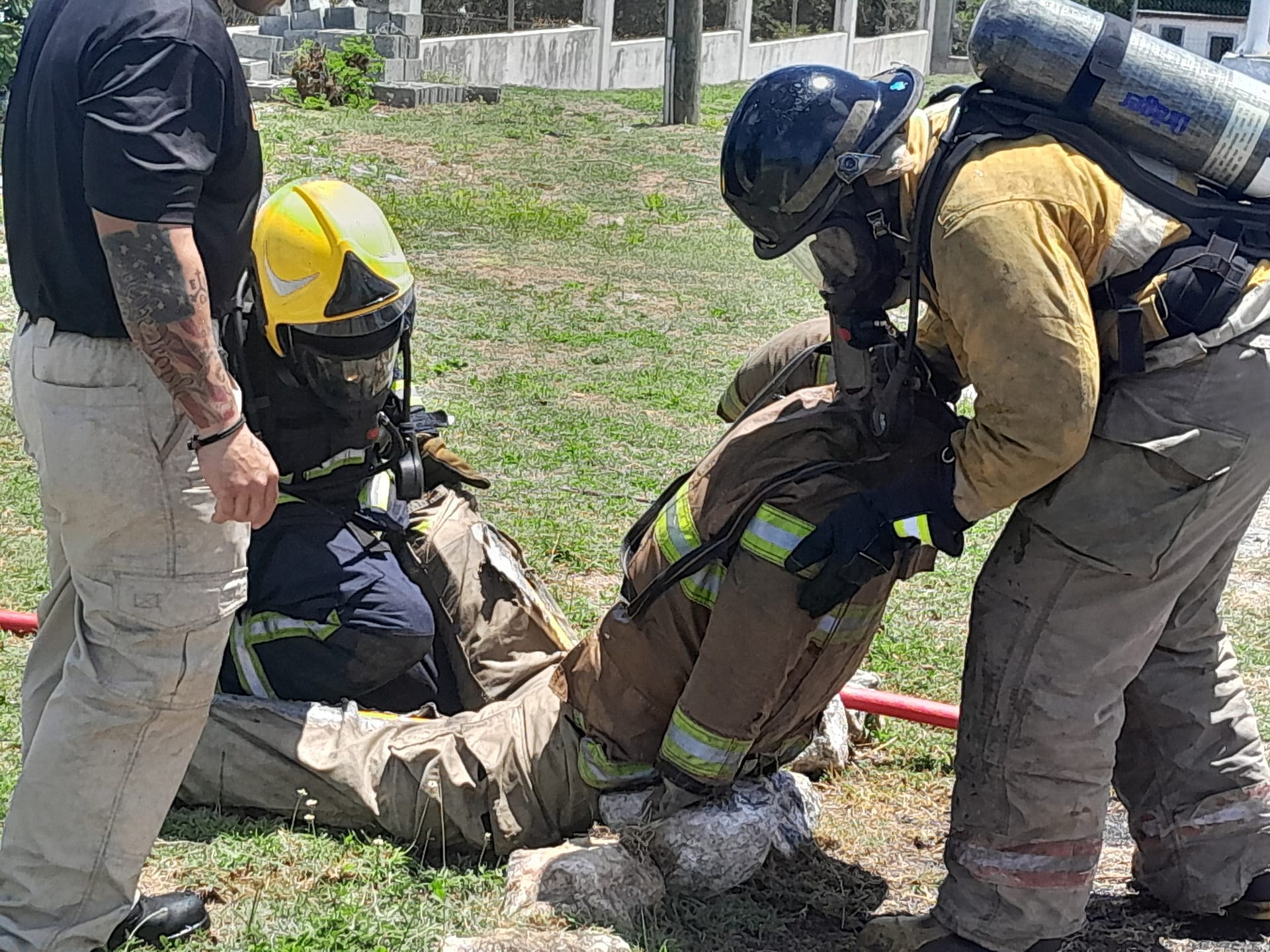
    A four-day intensive professional training program focused on hazardous materials management and emergency response has officially wrapped up this week, bringing together more than 120 frontline practitioners, safety supervisors and emergency response personnel from across the region.

    Organized jointly by the local work safety administration and the national occupational skill development center, the training was designed to address growing gaps in hazardous materials handling capacity amid rising industrial activity across multiple sectors including manufacturing, logistics and energy. The curriculum covered a wide range of critical topics, from classification and identification of hazardous substances, proper storage and transportation protocols, to on-site emergency response procedures for leaks, fires and chemical exposure incidents.

    Participants engaged in a mix of theoretical lectures delivered by industry experts and hands-on simulation exercises that replicated real-world emergency scenarios. Many attendees noted that the interactive training format helped them translate textbook knowledge into actionable skills that can be applied directly to their daily work. At the closing ceremony, organizers issued certificates of completion to all participants who passed the final assessment, and announced that similar targeted training programs will be held quarterly to meet ongoing industry demand for upgraded safety skills.

    Local work safety officials emphasized that strengthening professional training for hazardous materials personnel is a core step in preventing workplace safety accidents and protecting both frontline workers and surrounding community residents. The program comes as part of a broader regional initiative to upgrade overall work safety standards following a series of minor chemical incidents reported in industrial parks over the past year.

  • CARICOM IMPACS: New explosives storehouse to be constructed in Dominica

    CARICOM IMPACS: New explosives storehouse to be constructed in Dominica

    At the opening of a three-day inter-agency security roundtable in Roseau, a senior Caribbean regional security official has outlined a comprehensive multi-part initiative to boost Dominica’s national firearms regulation and explosive management capabilities, with spillover benefits for the entire Caribbean region.

    Callixtus Joseph, acting Assistant Director of Policy, Strategy and Innovation at the CARICOM Implementation Agency for Crime and Security (CARICOM IMPACS), made the announcements during the conference, which ran from April 8 to 10 2026. The gathering was jointly convened by the Government of Dominica’s Ministry of National Security and Legal Affairs, the United Nations Regional Centre for Peace, Disarmament and Development in Latin America and the Caribbean (UNLIREC), and CARICOM IMPACS itself, bringing together cross-sector stakeholders to coordinate regional security action.

    Beyond the planned explosives depot, Joseph detailed a suite of targeted upgrades to Dominica’s law enforcement and firearms control infrastructure. CARICOM IMPACS is already expanding the island’s firearms ballistics testing capacity through direct on-the-ground support and new specialized equipment, he confirmed. The agency is also supplying purpose-built firearm marking tools to the Dominica Police Service, and backing the rollout of a cutting-edge digital system for firearms licensing and registration.

    Joseph stressed that the digital transformation of the licensing regime is far more than a technological upgrade: it lays the foundation for a modern, streamlined, and transparent regulatory framework that aligns with global best practices and updated national legislation. The new system will drastically improve the traceability of illegal weapons, while also simplifying administrative oversight and regulatory enforcement for local authorities.

    On the planned explosives storage facility, Joseph noted that CARICOM IMPACS is working in close partnership with the Dominican government and police service to scout and evaluate appropriate parcels of land for construction. In the near future, the agency will also roll out specialized training alongside partner organization the Mines Advisory Group (MAG), focusing on safe demolition and disposal of decommissioned weapons and unstable expired explosives.

    The security cooperation between CARICOM IMPACS and Dominica extends beyond weapons management, Joseph added. Upcoming joint maritime security operations are already in planning, designed to counter transnational illicit trafficking and strengthen border protection for the island.

    Joseph emphasized that all these combined initiatives are tailored to reinforce national-level preparedness, inter-agency coordination, and enforcement capacity. He noted that Dominican leadership and engagement in these security efforts delivers value not just for the island nation itself, but for the entire Caribbean community. Every incremental improvement to accountability, weapons tracing, record-keeping, inventory marking, storage security, criminal investigation, and enforcement bolsters the region’s collective ability to counter the threat of illicit weapons and organized crime.

    Looking ahead, Joseph confirmed that CARICOM IMPACS remains committed to ongoing collaboration with the Dominican government and all relevant stakeholders to see these initiatives through to successful completion.

  • Staatsolie en Belastingdienst bundelen krachten voor betere controle oliesector

    Staatsolie en Belastingdienst bundelen krachten voor betere controle oliesector

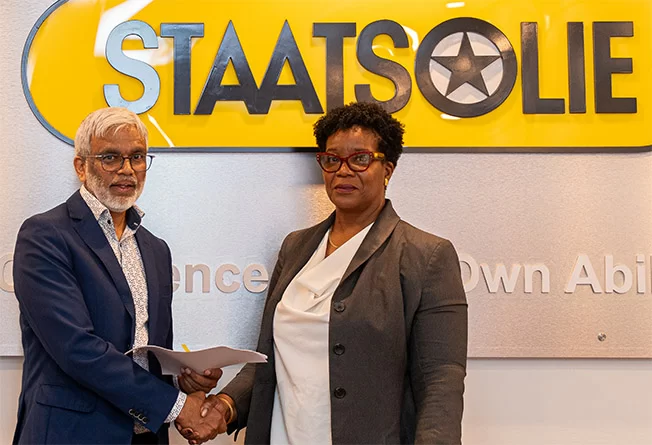
    Suriname’s state-owned oil and gas company Staatsolie has entered into a landmark three-year public-private partnership with the country’s Tax and Customs Administration to upskill government officials working in the rapidly expanding offshore energy sector, a move designed to strengthen regulatory capacity and secure public revenue from one of the nation’s most critical growing industries. The partnership agreement for the Tax Administration Capacity Enhancement Program 2025–2028 was officially signed on Friday, with Staatsolie CEO Annand Jagesar and Tax Director Marita Lautan-Wijnerman marking the occasion to formalize the collaboration.

    As Suriname’s offshore oil and gas industry continues to expand at an unprecedented pace, public regulators face growing pressure to keep up with the sector’s evolving technical complexity and rapid market changes. Stakeholders on both sides of the agreement note that accurate tax assessment, revenue collection and regulatory oversight require specialized, up-to-date expertise that many existing government staff currently lack. Without targeted training, the Surinamese government risks failing to capture the full economic benefits of the country’s natural energy reserves, undermining national development efforts.

    Under the terms of the new program, targeted training will be delivered to tax and customs officers directly engaged with oil and gas sector operations over the three-year timeline. The initiative will prioritize building both foundational technical knowledge and hands-on practical skills tailored to the unique needs of energy sector regulation. Training modules will be rolled out in phases, with most initial sessions hosted within Suriname, and supplementary international knowledge exchanges arranged when advanced global expertise is required.

    This capacity building effort forms part of the lead-up activities for Staatsolie’s 45th anniversary celebration scheduled for December 2025, and aligns perfectly with the company’s core anniversary motto: “empowering communities and institutions.” By investing in stronger government regulatory capacity, Staatsolie aims to ensure that oil and gas revenues are managed transparently and responsibly, channeling returns into inclusive national development that benefits all Surinamese citizens.

  • Fractieleiders eren Santokhi in rouwzitting DNA: Verschillen vallen weg, respect blijft

    Fractieleiders eren Santokhi in rouwzitting DNA: Verschillen vallen weg, respect blijft

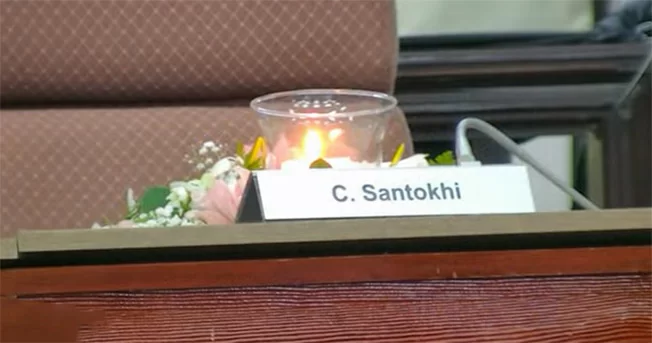
    On a somber Friday session, Suriname’s National Assembly gathered to hold a special memorial sitting honoring Chan Santokhi, a former national president and sitting assembly member who recently passed away. Across nearly all political parties represented in the legislature, faction leaders joined together to pay tribute to Santokhi’s legacy, setting aside longstanding partisan divides to deliver a unified message of respect, recognition, and reflection.

    The most notable absence from the memorial gathering was the entire ABOP faction, which did not attend the sitting. Speaking on behalf of the NDP faction, Rabin Parmessar opened tributes by reflecting on the fragility of life and the importance of collective remembrance. He walked attendees through Santokhi’s decades-long public career, which spanned from his early service as police commissioner all the way to his term as president of the Republic of Suriname, calling his passing a loss felt by every person who knew him.

    Irshaad Fathemohamed of the NPS described Santokhi as a “man of institutions” who left an indelible mark on Suriname’s rule of law and national political landscape. Even across competing political loyalties, Fathemohamed noted, mutual respect between Santokhi and his rivals was always a given. He emphasized that Santokhi’s public identity was defined by a commitment to dialogue, discipline, and unwavering devotion to the Surinamese people.

    Bronto Somohardjo, leader of the PL faction, echoed the call to rise above partisan differences in moments of national loss. He noted that occasions of collective mourning make clear that every elected representative, regardless of ideological stance, serves the nation in their own way. Somohardjo used the tribute to call for greater unity and empathy across Suriname’s political spectrum.

    Ronny Asabina of BEP characterized Santokhi as a multifaceted, transformative Surinamese leader whose leadership and perseverance left a permanent, positive imprint on national society. Asabina stressed that Santokhi never shied away from making difficult, unpopular choices when they served the best interests of the country.

    Steven Reyme, speaking for A20, observed that meaningful leadership always demands sacrifice and is not always widely understood during a leader’s lifetime. He echoed calls for greater mutual respect and political unity, noting that Santokhi’s entire life was centered on selfless service to the Surinamese public.

    For the VHP faction, of which Santokhi was a former leader, chair Asis Gajadien spoke with visible emotion about the loss of both a party leader and revered statesman. Gajadien said Santokhi was not just a colleague, but a constant source of inspiration, known for his unmatched discipline and commitment to public service. He described Santokhi’s legacy as “more than just a memory — it is a mandate” for current leaders to carry forward the work he began.

    Across all the tributes delivered during the sitting, a clear consensus emerged: despite deep political disagreements that often divide Suriname’s parties, Santokhi earned broad, cross-partisan recognition for his lifelong service to the nation. In the words of multiple speakers, moments of national mourning erase partisan dividing lines, leaving only shared humanity and respect for a lifetime of public dedication.

  • Tensions over gang remarks

    Tensions over gang remarks

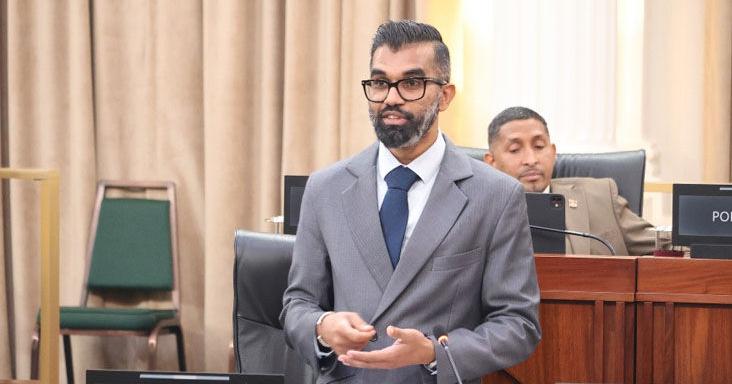
    A fiery confrontation erupted in Trinidad and Tobago’s Parliament on Wednesday, triggered by explosive historical claims from Legal Affairs Minister Saddam Hosein about a former junior housing minister, that ultimately ended with the unanimous approval of a landmark piece of border security legislation.

    During debate over the proposed Advance Passenger Information and Passenger Name Record Bill 2026, Hosein took the floor to frame the critical importance of the new law, which the government says will strengthen border screening and national security through upgraded digital processing systems. Beyond policy, Hosein anchored his argument in a recent corruption and gang affiliation scandal, reviving 2025 allegations against former junior housing minister Adrian Leonce, who once served under ex-housing minister Camille Robinson-Regis, currently a member of the Opposition.

    Citing an investigative report published by *Express* in May 2025, Hosein detailed that Leonce was listed as a co-director of a United Kingdom-registered company incorporated in 2023 and dissolved just 10 months later in July 2024. The report alleged Leonce helped an individual with confirmed gang connections travel to the UK, where the traveler used the address of Leonce’s own grandmother for entry documentation. Hosein added that Leonce has publicly stated he cut all ties with the company immediately after learning of his associate’s alleged corrupt and problematic activities, and that the entire incident remains an open active investigation by local police.

    What particularly ignited the confrontation was Hosein’s note that Leonce held his junior minister post under Robinson-Regis, the current Member of Parliament for Trincity/Maloney. Robinson-Regis immediately rose to a point of order, claiming Hosein had intentionally impugned her reputation by implying she had prior knowledge of improper government contracts awarded to Leonce’s associate.

    House Speaker Jagdeo Singh quickly overruled Robinson-Regis’s objection, stating he had not heard any damaging accusation against her from the government minister. The ruling did little to calm tensions, however, as heated cross-talk erupted between government and opposition benches, with Robinson-Regis repeatedly insisting she would not tolerate the implied attack on her integrity.

    The confrontation escalated further when Singh demanded Robinson-Regis apologize and withdraw unparliamentary, “vile and offensive” remarks she had directed toward Defence Minister Wayne Sturge, the MP for Toco/Sangre Grande. The Speaker threatened to enforce Standing Order 55, which outlines disciplinary actions for parliamentary disorder, repeated interruptions and excessive cross-talk.

    After continued protest, Robinson-Regis issued the required apology under parliamentary rules, though she reiterated her claim that she had been wrongfully impugned. “I apologise and withdraw but I will not be impugned by any member of this House,” she stated. Singh again pushed back, maintaining he had heard no accusation of wrongdoing against Robinson-Regis, and invited Hosein to withdraw any unintended implication and continue his speech.

    Hosein rejected the call for an apology, challenging Robinson-Regis to file a formal privilege motion if she believed her rights had been violated. He doubled down on his claims, arguing that if Robinson-Regis had no knowledge of government contracts awarded to Leonce, she was unaware of core activity within her former ministry. He also referenced a previous Joint Select Committee meeting where Robinson-Regis had herself disclosed that former minister Foster Cummings received millions in state contracts, drawing another rebuke from opposition members. San Fernando East MP Brian Manning interrupted, shouting for Hosein to stop, labeling him a “clown” in the exchange. Hosein shot back, questioning why the opposition bench was so shaken by publicly reported facts.

    Even amid the repeated clashes between government and opposition members, Speaker Singh ultimately ruled Hosein’s remarks relevant to the debate, noting that the minister was justified in establishing a factual context to demonstrate why the new border security legislation is necessary.

    Following the heated confrontation and extended debate, the chamber moved to a vote on the bill, and the outcome defied the earlier tension: the Advance Passenger Information and Passenger Name Record Bill 2026 passed unanimously. All 32 voting members supported the legislation, with no votes against and no abstentions. Minister Hosein emphasized during his opening remarks that the new system is a critical step for Trinidad and Tobago to meet United Kingdom security requirements, a necessary precondition to convince the UK to remove its mandatory visa requirement for all Trinidad and Tobago nationals traveling to the country.

  • A SEA OF BLUE

    A SEA OF BLUE

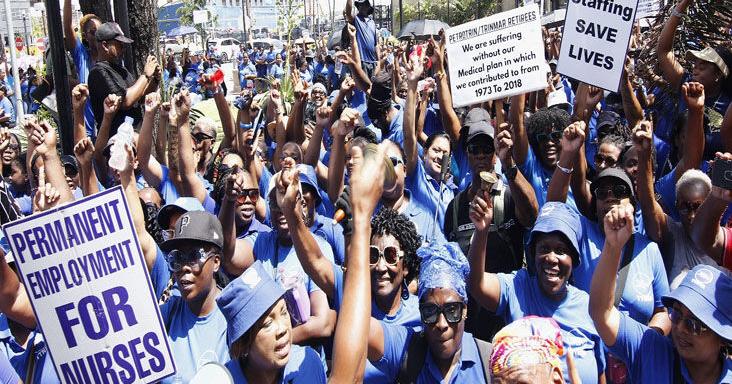
    On a sweltering midday in Port of Spain, a massive crowd of nurses and midwives, dressed uniformly in blue, flooded the capital’s streets to stage a coordinated protest over deeply rooted grievances in Trinidad and Tobago’s public health system. Chanting “BODOE in the building, hiding, hiding, hiding from workers…Bodoe where art thou?”, the demonstrators demanded that Health Minister Dr Lackram Bodoe break his months-long silence and address their unmet demands for better pay, adequate staffing and improved working conditions.

    Beginning just after 11 a.m. from the steps of Port of Spain General Hospital, the procession marched along an approved route to the Ministry of Health’s headquarters at Queen’s Park East, with many protesters using umbrellas to block the harsh tropical sun. The demonstration was officially authorized by the Trinidad and Tobago Police Service (TTPS), even amid the country’s ongoing state of emergency, and a heavy contingent of officers was deployed to monitor the march, reroute civilian traffic, and ensure the event remained peaceful. Passing motorists slowed to observe the “sea of blue” that occupied major city thoroughfares as protesters raised placards and shouted their demands for a 10% wage increase and urgent government intervention to reverse what they described as a steadily collapsing public health system.

    Two core demands anchored the protest: the immediate resignation of North Central Regional Health Authority (NCRHA) chairman Dr Tim Gopeesingh, and sustained accountability from Health Minister Bodoe, whom protesters repeatedly accused of refusing to engage with frontline health workers. Chants grew louder and more forceful as the procession reached the Ministry of Health’s gates, with frustration boiling over at the minister’s repeated refusal to acknowledge the severity of the sector’s crisis.

    Leading the march was Idi Stuart, president of the Trinidad and Tobago National Nursing Association (TTNNA), accompanied by other senior union leaders. Along the route and during a closing address at Independence Square, Stuart emphasized that chronic understaffing has created unsustainable pressure on remaining frontline workers, who are forced to cover excessive patient loads with limited resources. Messages on the protesters’ placards laid bare the depth of their anger and frustration: “Nursing is a profession, not charity work”, “Permanent nurses now”, “Enough is Enough”, “The Struggle is Rough”, and “Does the minister of health care about RHA workers” reflected widespread discontent over insecure employment status and stagnant compensation.

    The protest came just 24 hours after Gopeesingh announced that 61 new nurses would be hired across NCRHA facilities, joining the roughly 1,000 registered nurses already working at sites including the Eric Williams Medical Sciences Complex, Arima Hospital, Mt Hope Women’s Hospital, Caura Hospital and multiple regional health centres. But Stuart dismissed this incremental move as wholly insufficient to fix the systemic gaps plaguing the sector.

    In an interview after the march, Stuart noted that multiple major health facilities experienced significant service disruptions as a result of the protest demonstration. He also lashed out at recent comments Bodoe made in Parliament, where the minister denied that the public health system is facing any crisis. Stuart said the minister’s downplaying of the situation left frontline nurses “infuriated”, and insisted that the crisis is very real, arguing that the general public would not back Bodoe’s dismissal of the issue.

    “I don’t think it was the perception of those persons who were turned away at health centres today. I don’t believe it was the perception of persons who were unable to receive surgery today. I don’t believe those hundreds of persons still in accident and emergency departments across Trinidad and Tobago see it from his perspective,” Stuart said.

    With Parliament convening at 1:30 p.m. the same day, Stuart noted that the union did not have approval to protest directly outside the Red House (Trinidad and Tobago’s parliament building), but suggested that a small group of nurses might still pass by the site to make their presence known. The protest concluded outside the Treasury Building and the Eric Williams Financial Complex, where demonstrators chanted “We want we money, right now” — a clear signal that the union will continue industrial action until the government delivers tangible, measurable changes to address their demands.

    Despite the widespread public demonstration, Bodoe doubled down on his position during yesterday’s parliamentary sitting, continuing to deny that Trinidad and Tobago is facing a national health crisis. Responding to a question from Opposition Leader Pennelope Beckles, who raised the planned protest and called on the government to address a crisis that she said has now entered its third week, Bodoe told the Speaker of the House: “I wish to assure the population that there is no health crisis in our country at this time. Under this government, the healthcare system continues to provide services to thousands of patients on a daily basis.” He closed by thanking all RHA and Ministry of Health workers for their continued diligent service to Trinidad and Tobago citizens.

    Local outlet *Trinidad Express* attempted to reach Gopeesingh for comment on Stuart’s claim that NCRHA facility operations were disrupted by the protest, but he did not respond to phone calls or a WhatsApp message seeking a response.
  • T&T to stay away

    T&T to stay away

    A major rift has emerged within the Caribbean Community (CARICOM) after Trinidad and Tobago announced a full suspension of its participation in all bloc meetings until leadership fulfills its demand for full documentation related to the controversial early reappointment of Secretary-General Dr. Carla Barnett. The twin-island nation has also formally stated it will not recognize Barnett’s second five-year term once her current 2021-2026 tenure expires this August.

    The standoff, which has cast a spotlight on long-simmering concerns about transparency and procedural integrity within the regional bloc, was laid out in an April 9, 2026 letter from Trinidad and Tobago’s Foreign and CARICOM Affairs Minister Sean Sobers to CARICOM Chairman Dr. Terrance Drew. The country followed through on its threat this week, skipping the 25th Special Emergency Meeting of the CARICOM Conference of Heads of Government to underscore the seriousness of its grievances.

    At the heart of the dispute is the way Barnett’s reappointment was handled during a closed retreat hosted in Nevis in February 2026, months before her term expires and ahead of a regularly scheduled full heads of government meeting set for July. Sobers has forcefully pushed back against Drew’s public claim that his absence from the retreat was due to reported seasickness, calling the assertion categorically false. Instead, Sobers confirms Trinidad and Tobago was deliberately excluded from the closed session, and has official correspondence to back this claim.

    Sobers clarified the facts of the retreat to correct repeated misrepresentation from CARICOM leadership: While Prime Minister Kamla Persad-Bissessar attended prior events in St Kitts and Nevis and departed before the retreat, the full Trinidad and Tobago delegation remained through the conclusion of broader conference proceedings on February 27. When the retreat convened, Sobers — who was formally designated as Trinidad and Tobago’s head of delegation for the session — received a last-minute WhatsApp message from the CARICOM Secretariat restricting attendance exclusively to sitting heads of government, a restriction later confirmed by CARICOM’s Chef de Cabinet. This exclusion, Sobers argues, directly violates Article 11 of the Revised Treaty of Chaguaramas, which explicitly permits heads of government to appoint authorized representatives to attend meetings on their behalf.

    Compounding these procedural violations is the complete lack of transparency around the reappointment itself. Sobers notes that the official retreat agenda, grouped under the general heading of “Financing and Governance,” made no mention of the Secretary-General’s reappointment — a major leadership decision that, per longstanding CARICOM precedent, is always listed as a standalone agenda item for full discussion by all member states. Trinidad and Tobago, along with other absent member nations, was not given advance notice that the vote would take place at the retreat, leaving the decision to a small select group of leaders in attendance.

    Sobers also raised pointed questions about the rushed timeline for the reappointment: With Barnett’s term not expiring until August 2026 and a full heads of government meeting already scheduled for July, there was no logical reason to rush the vote five months early. He further pointed to additional red flags, including the omission of the reappointment decision from the official Summary of Confirmed Decisions circulated to all member states on March 2, 2026, and a month-long delay in formally notifying Trinidad and Tobago’s government of the outcome. In response to claims from Guyanese President Irfaan Ali that the 2026 process mirrored the 2021 appointment, Sobers has requested full documentation from the 2021 process to verify this claim.

    Trinidad and Tobago has tabled a detailed 13-point list of specific documentation and clarifications it requires from CARICOM leadership before it will resume participation in bloc meetings. These demands include the full unredacted agenda of the February retreat, a complete list of attendees and invitees, all meeting minutes from the retreat, full performance appraisals of Dr. Barnett, all nomination communications for the Secretary-General role, identification of the officials who authorized advancing the reappointment at the retreat, a formal explanation for the rushed timeline, proof of whether all member states and their authorized representatives were invited, confirmation of whether Chairman Drew ordered the head-of-government-only restriction, justification for deviating from established reappointment precedent, explanation for omitting the decision from the March 2 summary, proof that pre-vote communications were sent to all members as claimed, explanation for the month-long delay in notifying Trinidad and Tobago, and full documentation from the 2021 appointment process for comparison.

    Addressing reporters at a Thursday press conference, Sobers stressed that Trinidad and Tobago remains fully committed to the CARICOM integration project and has no plans to withdraw from the regional bloc. He framed the dispute not as a break with the organization, but as a fight for better governance: The country’s core demand is for full transparency and adherence to the bloc’s own governing rules, rather than allowing critical decisions to be made through opaque, exclusionary processes by a small group of leaders.

  • …Drew: All member states were informed and invited

    …Drew: All member states were informed and invited

    A deepening diplomatic rift has emerged within the Caribbean Community (Caricom) after the bloc’s current chairman has pushed back against claims that Trinidad and Tobago was improperly excluded from a key decision-making meeting that approved the reappointment of Caricom Secretary-General Dr Carla Barnett.

    Dr Terrance Drew, who serves as both Caricom chairman and Prime Minister of St Kitts and Nevi, laid out a detailed timeline of events in an April 8 correspondence addressed to Trinidad and Tobago Prime Minister Kamla Persad-Bissessar. Drew’s account confirms that every member state received full, formal notice of the closed-heads retreat held on Nevis on February 26, a side gathering held during Caricom’s 50th Regular Meeting of the Conference of Heads of Government hosted by St Kitts and Nevis between February 24 and 27.

    Drew clarified that all participating leaders received advance official correspondence laying out the retreat’s date, location and agenda, with additional follow-up communications circulated throughout the main conference week. The full event schedule, which split business into plenary sessions, caucus meetings and the restricted heads-only retreat, was shared with all delegations far in advance. Items on the retreat’s working agenda included updates on global geopolitical shifts and discussions over Caricom’s internal financing and governance — a policy area where Secretariat leadership matters, including Secretary-General reappointments, are routinely addressed.

    Per Drew’s account, Persad-Bissessar departed the host federation on the evening of February 25, a full 24 hours before the retreat was scheduled to begin. Out of a commitment to ensuring Trinidad and Tobago still had representation, Drew reached out to the country’s Foreign and Caricom Affairs Minister Sean Sobers to ask if he would step in to attend in the Prime Minister’s place. According to Drew, Sobers turned down the invitation, citing personal discomfort with the only available transit option to Nevis: a standard local water-taxi service. Drew wrote that Sobers explicitly stated he declined over fears of experiencing seasickness during the crossing.

    It was during that restricted retreat that heads of government reviewed and approved Barnett’s reappointment, a process conducted in full alignment with Article 24 of the Revised Treaty of Chaguaramas, which grants the Conference of Heads of Government full authority over Secretary-General reappointments. Drew noted that Barnett recused herself from the room and was not present for any part of the discussion. Out of respect for absent leaders, heads agreed to delay the public announcement of the decision to give the chair time to notify non-attending leaders first. Drew added that he personally attempted to reach Persad-Bissessar via both email and phone ahead of any public statement, but received no response to his messages and was unable to connect with her directly.

    Drew closed the letter by extending an open offer to discuss the matter further, sharing his direct contact information with the Trinidad and Tobago Prime Minister.

    However, the explanation has done little to resolve the dispute. On the Thursday following Drew’s letter, Sobers publicly rejected the account, saying the chairman’s response to Trinidad and Tobago’s original concerns was inadequate. Persad-Bissessar ordered a formal reply be sent to Drew, with a new letter dated April 9 refuting the claim that Sobers cited water-taxi discomfort as a reason for non-attendance. The rebuttal letter also renewed Trinidad and Tobago’s demand for full answers over what the country says is its improper exclusion from the reappointment process.

  • A village in mourning

    A village in mourning

    A tight-knit Trinidadian community is grappling with unspeakable loss after seven-year-old Angelica Saydee Jogie lost her life in a jet ski collision during a family vacation in Tobago last Wednesday. In the days following the tragedy, relatives gathered at the Jogie family’s Barrackpore home to hold an overnight wake for the young girl, whose sudden death has sent ripples of shock and heartbreak across the entire neighborhood. For Angelica’s loved ones, the tragedy has permanently altered the fabric of their family life.

    When local newspaper the Trinidad Express visited the quiet residential community on the day after the accident, family members struggled to hold back tears as they shared memories of the bright, beloved child. Two relatives, who requested anonymity to grieve privately, spoke of the joy Angelica brought to every person she met, a warmth that makes her passing even harder to accept. One relative said, “This incident has already changed the life of our family forever. Every day from now on, we will carry this grief. Life will never be the same again.” Another added, “This hurt cuts so deep that words cannot capture the pain I feel. All I know is I would never wish this suffering on any other family.”

    Out of their pain, the family is calling for urgent changes to water safety regulations in Tobago’s recreational coastal areas. They say the current system of marking boundaries between swimmer zones and jet ski routes with just a rope is woefully inadequate, putting all beachgoers in unnecessary danger. “A rope is not enough to protect bathers from high-speed jet skis; that is just putting lives at risk,” one relative explained. “We are calling on authorities to either designate a separate, secured area for jet ski operations or ban them entirely from popular swimming beaches. We need action, so no other family has to go through what we are suffering right now.”

    Steven Paul, cousin of Angelica’s father Arnold Jogie, shared that Angelica’s parents were deeply attentive and protective parents, who never let their children out of their sight near water. “The day before the accident, I spoke to Arnold, and he told me he always stayed right beside his kids,” Paul recalled. “The children were never more than an arm’s length away from him, and they only ever entered the water when he was with them. Both parents are so careful with their children.” Paul, who still says he struggles to process the news, added that the entire village has rallied around the grieving family. “When I got the call about Angelica, I started shaking, physically and mentally. I’m still trembling just talking about it now. The whole village is in shock. Since the night the accident happened, we’ve been gathered here to support each other and honor this innocent little girl.”

    In the wake of the accident, Angelica’s father was hospitalized, and relatives say they are holding out hope he will be able to return home to the community soon to grieve with his loved ones. As the family makes arrangements to bring Angelica home for her final services, relatives say they are focusing on lifting each other up, preparing for what they know will be an emotionally devastating homecoming. For the Barrackpore community, the loss of the young girl has left a permanent void that will never be filled.

  • Simons bij rouwzitting Santokhi: Het leven roept ons tot bezinning, maar ook tot voortgaan

    Simons bij rouwzitting Santokhi: Het leven roept ons tot bezinning, maar ook tot voortgaan

    On a solemn Friday session of Suriname’s National Assembly, lawmakers and political leaders gathered for an extraordinary memorial sitting to honor the sudden passing of Chan Santokhi, a respected former national president and sitting member of the legislative body. Opening the tribute, current National Assembly President Jennifer Simons delivered a heartfelt address reflecting on Santokhi’s unexpected death and the legacy he left behind for the Surinamese community.

    Simons opened her remarks by acknowledging the rare and shocking nature of Santokhi’s passing: it is extremely uncommon for a sitting parliamentarian to die suddenly while still active in public service. The sudden loss, she noted, has forced people across the country to confront a harsh, unavoidable truth about the nature of life and mortality.

    In her reflection, Simons articulated what she described as two seemingly contradictory but equally true truths about human existence. On one hand, all human life is inherently temporary; on the other, the impact and contributions a person makes to their community can endure long after they are gone. These ideas have occupied Simons’ thoughts deeply in the days since Santokhi’s passing, she shared.

    The assembly president also shared personal reflections on her long working relationship with Santokhi, whom she collaborated with across multiple stages of their political careers. She first worked with him when he served as a government minister, and more recently as a fellow colleague in the National Assembly. Simons described their working dynamic as consistently professional, rooted in a shared commitment to advancing Suriname’s national interests, with no dramatic conflicts or extreme rifts even when their political views diverged.

    It was precisely that commitment to professional cooperation, Simons emphasized, that allowed the two to work together effectively within the legislative framework despite any political disagreements. She admitted that the sudden absence of someone who was an active, visible participant in national public life just days before remains difficult to process for many in the political community and across the country.

    Even amid the collective grief, Simons called on the Surinamese people and the National Assembly to demonstrate resilience in the face of loss. “Condolences and mourning are right and proper at this time, but we must move forward from this moment as a society,” she stated. “We will carry his memory with us as we continue our work.”