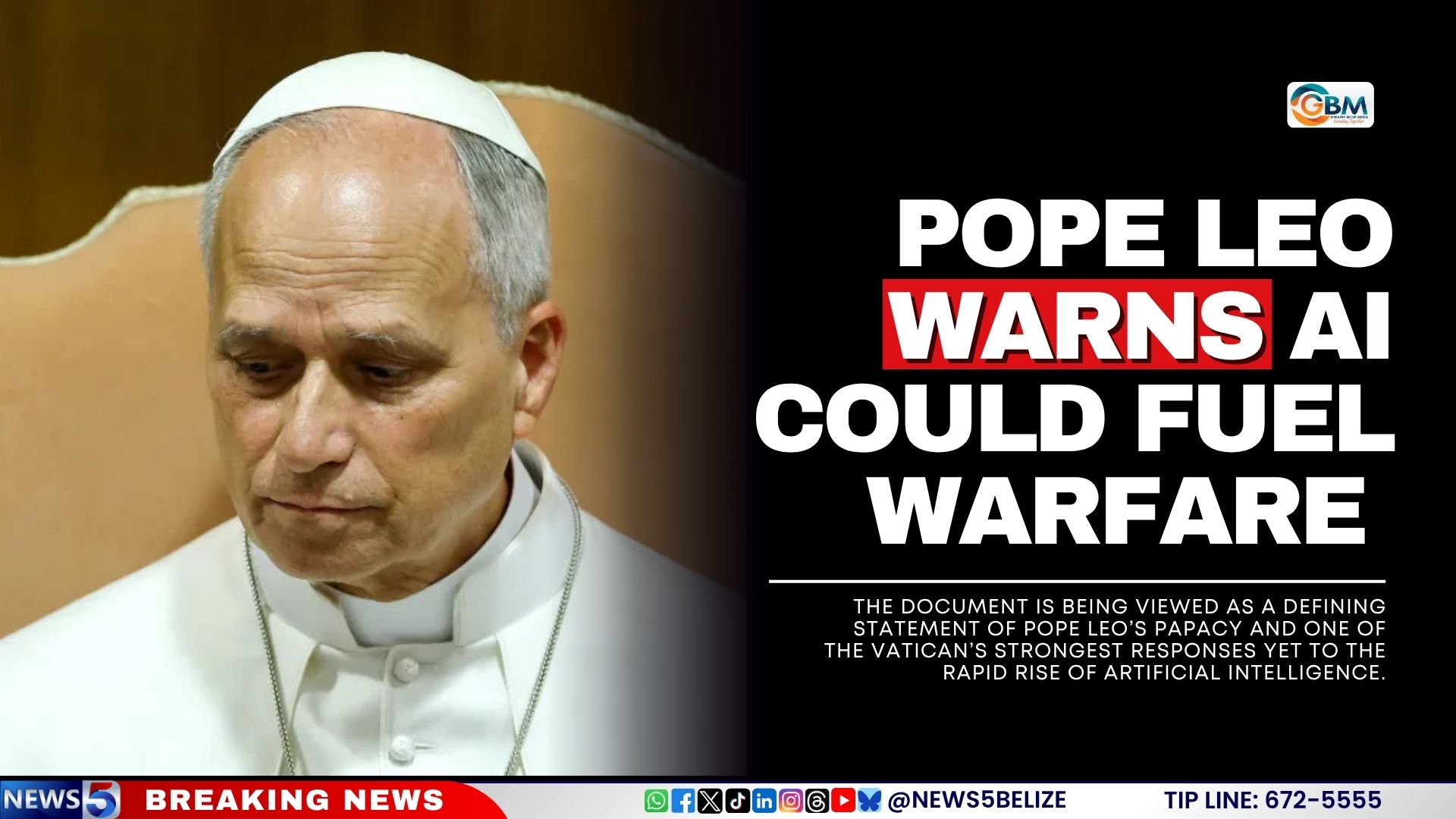
In a landmark first major theological address that marks one of the Vatican’s most forceful engagements with emerging technology to date, Pope Leo XIV has sounded an urgent alarm over the unregulated expansion of artificial intelligence, warning that ungoverned AI development could dramatically escalate global conflict if left to operate without strict ethical oversight.
Released on May 25, 2026, the 235-page encyclical — titled *Magnifica Humanitas*, or “Magnificent Humanity” — lays out a comprehensive framework for governing AI, pushing back against concentrated control of the transformative technology and demanding the strictest possible ethical limits on its use in military applications. The pontiff argues that AI should not remain concentrated in the hands of a small circle of powerful corporate or geopolitical actors, a structure that he says risks exacerbating inequality and raising the stakes of international confrontation.
Beyond AI policy, the encyclical upends long-held religious teaching on armed conflict, declaring that the traditional Christian concept of “just war” is no longer fit for the modern era. Pope Leo stresses that military force may only be justified when used in the strictest definition of self-defense, pointing to the persistent, catastrophic harm that unregulated violence and weapons inflicts on innocent civilian communities worldwide.
The pontiff emphasizes that AI’s influence already extends deep into the fabric of global society, reshaping how individuals make choices and how communities function. Rejecting the common argument that AI is a morally neutral tool, he writes that the technology inherently carries the values, priorities, and biases of the developers and groups that build and control it. To counterbalance these risks, the encyclical calls for a sweeping set of reforms: robust legal oversight of AI development, proactive protections for workers whose jobs are displaced by automation, more equitable distribution of the economic benefits generated by AI, and binding safeguards to protect core human dignity.
Pope Leo also takes direct aim at transhumanist and posthumanist ideologies, which advocate for merging human biology with machine technology or overcoming inherent human limitations through technological innovation. He argues that these movements erode the core value of human life as it exists naturally, a position that aligns with longstanding Vatican teachings on the integrity of the human person.
Political and religious analysts have widely framed the encyclical as a defining statement for Pope Leo’s papacy, cementing the Vatican’s role as a leading moral voice in the global conversation about AI governance amid rapid, often unregulated advances in the technology. The document arrives as policymakers around the world grapple with how to balance AI’s transformative potential for public good against its growing risks to security, equality, and human autonomy.