博客

  • Nieuwe BEP-voorziter Edwin Noordzee: partij versterken met training en beter financieel beleid

    Nieuwe BEP-voorziter Edwin Noordzee: partij versterken met training en beter financieel beleid

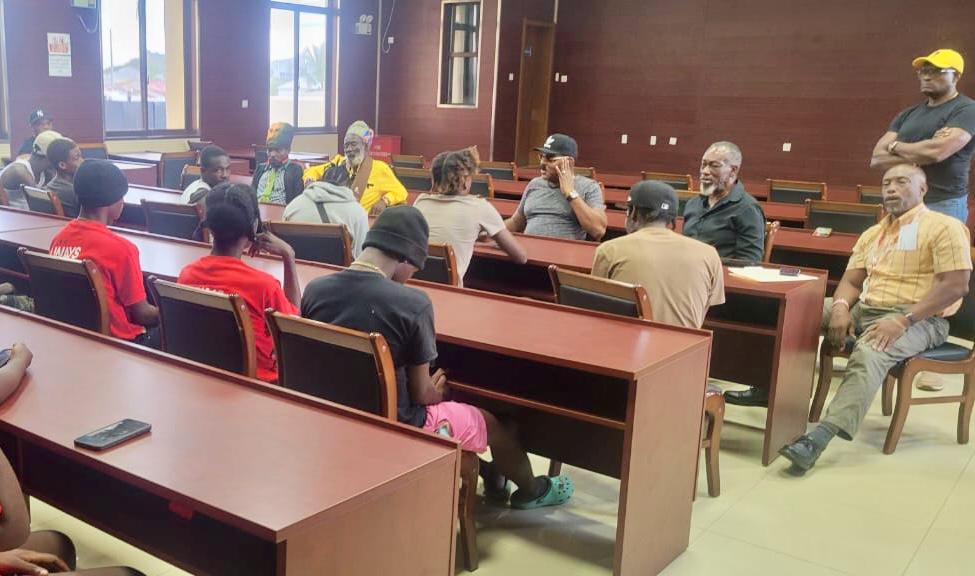
    In a party leadership vote held on September 26 at the Broederschap en Eenheid in de Politiek (BEP) headquarters on Ephraimszegenweg, Edwin Noordzee has been selected as the political party’s new chairperson, succeeding outgoing leader Ronny Asabina who chose not to run for re-election. The vote took place during the BEP’s general members’ assembly, marking a formal transition of leadership for the party that currently holds one seat in Suriname’s National Assembly and serves as part of the country’s ruling governing coalition.

    In a post-election interview with local media outlet Starnieuws, Noordzee laid out his core policy and organizational priorities for the party’s new leadership term, highlighting three key areas of focus: strengthening the BEP’s internal party infrastructure, expanding specialized training for party officials, and overhauling the party’s internal financial and economic governance framework. The new chairperson also emphasized that a top immediate task will be restarting a slate of stalled party projects that have been put on hold in previous months.

    Under Noordzee’s plan, the newly formed party executive board will first draft a comprehensive strategic roadmap to guide the BEP’s work over the coming term. Capacity building for party cadre through structured training and professional development will occupy a central role in this strategy, he noted, alongside targeted reforms to the BEP’s internal financial management. Among the adjustments being considered is a revamped structure for member contributions, with the goal of building a more stable financial foundation that allows the party to consistently deliver on its commitments, programs, and public initiatives.

    “We will first develop a clear, actionable plan,” Noordzee stated. “From that framework, the board will roll out targeted training programs, streamline the collection and management of member contributions, and reactivate stalled projects to move them toward completion.”

    Notably, outgoing chairperson Ronny Asabina will not step away from BEP leadership entirely. He will retain his position as the BEP’s parliamentary group leader in the National Assembly, a role that is formally confirmed on the Suriname parliament’s official website. Per Noordzee’s explanation, Asabina will continue to participate in all meetings of the BEP’s executive board in his capacity as parliamentary group leader, maintaining a critical direct line of coordination between the party’s overall political leadership and its legislative faction in the national parliament.

    Alongside his organizational and financial reform priorities, Noordzee has placed significant emphasis on increasing transparency and collaborative decision-making within the BEP. Speaking during the general members’ assembly after his election victory, he stressed that rank-and-file party members will gain an expanded voice in shaping the party’s strategic direction and key policy decisions going forward.

  • Antigua and Barbuda wants OECS to Pool Electric Vehicle Orders to Cut Costs

    Antigua and Barbuda wants OECS to Pool Electric Vehicle Orders to Cut Costs

    Against a backdrop of volatile global fossil fuel prices and growing regional momentum to transition to clean energy, Prime Minister Gaston Browne of Antigua and Barbuda has put forward a bold collaborative proposal: that all member states of the Organization of Eastern Caribbean States (OECS) pool their demand for electric vehicles to negotiate bulk pricing that would be out of reach for individual nations. The idea was first shared by Browne during an appearance Saturday on the Pointe FM current affairs program *Browne and Browne*, where he detailed outcomes from a recent trip to the United States focused on securing international backing for regional renewable energy projects. During his travels, Browne held discussions with representatives from Octopus, a United Kingdom-based energy firm with growing interests in Caribbean clean energy development, covering electric vehicle deployment across the region. Browne emphasized that small island nations like those in the OECS hold very little individual bargaining power when negotiating large vehicle purchases. A collective bulk order, he argued, would flip the dynamic, giving the bloc far more leverage to lock in reduced per-unit costs. To illustrate the scale of collective impact the initiative could deliver, Browne pointed to a target of roughly 100,000 electric vehicles purchased jointly across the region. Though the prime minister’s remarks were cut off mid-broadcast before he could share additional details, he did not share projected per-vehicle prices or estimates of how much the bloc could save through the collaboration. The 100,000 vehicle figure was framed by Browne as an illustrative example of potential scale, not a formal finalized order for the bloc. As of his public remarks, no participating OECS governments have been confirmed, no framework for financing or procurement has been outlined, no allocation plan for distributed vehicles has been shared, and no timeline for negotiating a regional cooperative agreement has been set. Browne also stopped short of announcing any binding purchase contract with Octopus for the initiative, noting only that the UK firm has provided a small fleet of electric vehicles for an upcoming gathering of regional leaders. No details were shared on the size of that temporary fleet or any long-term supply arrangements between Octopus and OECS states. Browne’s joint EV proposal is just one component of a broader regional push to address longstanding challenges around energy cost and reliability across the Caribbean. He noted that OECS nations are currently actively pursuing international grants and low-interest financing to expand utility-scale solar energy generation and develop untapped geothermal energy reserves across the volcanically active region. The recent steep upward trend in global diesel prices, he added, has created new urgency to accelerate the transition away from imported fossil fuels. For Antigua and Barbuda specifically, Browne confirmed that the government currently maintains consumer subsidies for diesel to offset rising global costs, and has separately explored expanding national fuel reserves to mitigate potential supply chain disruptions. If advanced and implemented, a regional electric vehicle transition would help address the long-term structural challenge of fossil fuel import dependence across the bloc, though Browne offered no clear timeline for when the proposal would be drafted into a formal document for OECS member states to consider. Many regional policy analysts note that collective procurement initiatives have a track record of delivering cost savings for small island developing states, which often face higher import costs than larger economies due to their small market size, making the joint EV plan a promising potential step forward for Caribbean clean energy transition.

  • (Minister Michael Joseph joins AOSIS discussions on COP31 priorities)

    (Minister Michael Joseph joins AOSIS discussions on COP31 priorities)

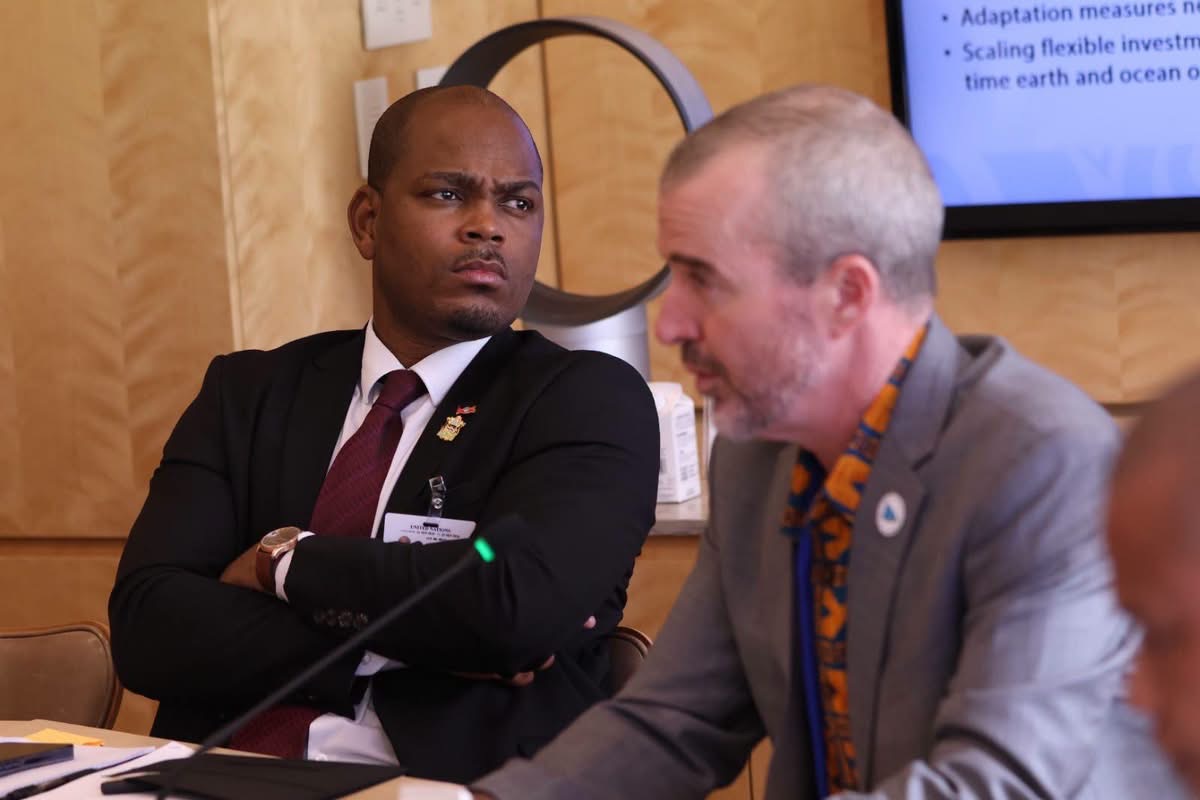
    In high-stakes ministerial talks held by the Alliance of Small Island States (AOSIS) earlier this week, Michael Joseph, the Minister of Health, Wellness, Environment and Civil Service Affairs, has emerged as a leading voice demanding that the global 1.5°C warming limit and the unique vulnerabilities of Small Island Developing States (SIDS) sit at the core of all preparatory work for the upcoming 31st Conference of the Parties (COP31).

    The closed-door discussions covered a wide range of critical climate policy priorities that directly impact low-lying island nations. Participants delved into the design and implementation of the Just Transition Mechanism, a global framework designed to support shifting to low-carbon economies while protecting vulnerable workers and communities. They also debated progress on developing standardized adaptation indicators to track and verify climate resilience efforts, reviewed ongoing work under the Mitigation Work Programme, and explored actionable reforms to expand SIDS access to affordable climate finance — including non-repayable grants and low-interest concessional loans that many small nations have long struggled to access.

    A central theme of the talks was the escalating existential threat that accelerating sea-level rise and unmitigated climate change pose to the basic foundations of island life. Ministers collectively highlighted how shifting weather patterns and rising oceans are already eroding water security, destabilizing local food systems, and destroying artisanal and commercial fisheries that are the primary source of livelihood and food security for millions of people across small island states.

    Minister Joseph threw his full weight behind a coordinated AOSIS strategy calling on all member states to develop concrete, actionable proposals on three core pillars: greenhouse gas mitigation, climate finance reform, and a just transition ahead of the next round of regional pre-COP talks scheduled to take place in Sydney and Fiji. The alliance’s unified push comes as small island nations continue to advocate for greater ambition from major global emitters ahead of COP31, seeking to lock in commitments that prevent catastrophic warming that would render many low-lying island nations uninhabitable.

  • Shuttle Plan for CHOGM Venue in St. John’s

    Shuttle Plan for CHOGM Venue in St. John’s

    As the Commonwealth Heads of Government Meeting (CHOGM) draws closer, Antigua and Barbuda Prime Minister Gaston Browne has revealed a preliminary traffic and parking strategy to accommodate the event at one of its key host venues. Speaking during an appearance on Pointe FM’s popular Browne and Browne Show this past Saturday, Browne addressed a lingering public question about parking access at the site of the former Deluxe building, a structure currently undergoing full conversion into a modern performing arts centre that will double as a CHOGM venue.

    Under the draft plan being evaluated by the national government, all event attendees will park their private and official vehicles at the expansive Rising Sun Grounds location, before boarding organized shuttle buses to transport them directly to the performing arts centre. To strengthen security and streamline movement around the high-level summit venue, Browne confirmed that the immediate perimeter of the site will be cordoned off, with all parking and through-traffic restricted in the adjacent surrounding area.

    At the time of the announcement, the prime minister did not release additional critical details about the plan. No information was provided on the exact shuttle routes that will connect the parking hub to the venue, the maximum vehicle capacity Rising Sun Grounds can accommodate, which local streets will be impacted by the restrictions, or a firm timeline for when the full finalized traffic arrangements will be made public. It also remains unclear whether the parking and traffic limitations will only be in effect during official summit sessions at the performing arts centre, or if they will be enforced for the full duration of the CHOGM event and extended into the pre-summit setup period.

    Beyond laying out the logistics framework, Browne offered an update on the renovation progress at the former Deluxe building, noting that the project has already delivered dramatic transformations to both the building’s interior layout and its exterior facade. He emphasized that the multi-purpose venue is being purpose-built to serve the Antigua and Barbuda community as a permanent performing arts centre long after the international summit concludes.

  • PM Calls on Churches, Parents and Businesses to Help Rehabilitate At-Risk Youth

    PM Calls on Churches, Parents and Businesses to Help Rehabilitate At-Risk Youth

    Antigua and Barbuda’s Prime Minister Gaston Browne is pushing for a collaborative, cross-sector response to youth violence, arguing that harsher criminal sentencing alone cannot reverse the deep-rooted trends driving harm in communities. Speaking during an appearance on Pointe FM’s *Browne and Browne Show* this past Saturday, Browne defended a controversial initiative he launched roughly two years ago, which sought to engage former gang members in a bid to help them exit criminal lifestyles.

    When the program was first introduced, it drew significant public criticism, but Browne stood by his choice to pursue the intervention Saturday. He emphasized that even if the effort managed to help just one person leave violent gang life behind, the work would have been more than worthwhile. “Even if it’s one of them that we would have saved, it would have been worth the intervention,” he told listeners.

    Browne contends that this community-centered approach to reducing violence has proven effective, and now he is calling on every segment of Antigua and Barbuda’s society to share responsibility for steering young people away from harmful paths. He specifically highlighted faith institutions, particularly churches, as key potential partners in the work, extending invitations to parents, private sector businesses, public sector agencies, and civil society organizations to step up and contribute.

    The prime minister stressed that youth violence is a far too complex and widespread challenge to be solved exclusively by the government or law enforcement. What is needed, he argued, is a comprehensive “all-of-society approach” that brings all community stakeholders to the table.

    Notably, Browne offered few concrete details about the original gang intervention initiative during his comments. He did not share data on how many former gang members participated in the program, how many participants have gone on to reoffend, or what specific support services were offered to participants. He also did not announce any new formal programming or dedicated funding to support the expanded community effort he is calling for.

    Browne tied his appeal for broader community participation to a separate core policy priority of his administration: a planned legislative push to introduce longer prison sentences for serious and repeat violent offenders. He explained that extending custodial sentences for high-risk offenders will give correctional authorities more time to deliver meaningful rehabilitation and vocational skills training to incarcerated people before they are released back into communities.

    The ultimate goal of this paired approach, he said, is to ensure that people leaving prison have the tools and support they need to build constructive, law-abiding lives. “We’re not only speaking about the issue of stronger sentencing,” Browne explained. “We’re also pursuing a policy of reform concurrently.”

    Looking ahead, the Browne administration plans to bring new legislation to Parliament that would establish mandatory minimum sentences for gun-related crimes. The prime minister has repeatedly spoken out against what he views as overly lenient sentences for violent offenses, noting that repeat offenders are often released from prison before they can access the support they need to make lasting changes to their behavior.

    Browne also declined to share a clear timeline for the planned in-prison skills training programs, or specific details about what vocational skills the programs would prioritize. His Saturday comments laid out the dual framework of the government’s official response to rising violence: longer periods of incarceration for high-risk repeat offenders, paired with expanded prevention and rehabilitation efforts both inside correctional facilities and across the broader community to reduce recidivism.

  • Column: Twee woorden, meer niet

    Column: Twee woorden, meer niet

    On a quiet morning, before I had fully pulled myself out of sleep, a text notification popped up on my phone with a set of photos from a friend. He lives half a world away in Sri Lanka, and the shots were captured at dawn outside a Buddhist temple in Badulla. The images were soft, serene, steeped in the gentle rusticity of early morning light— the kind of quiet, unassuming beauty that makes you pause your rush and breathe for a moment. I do not know if I will ever stand on that temple ground and see the view with my own eyes. But in that moment of stillness, halfway across the globe, my friend thought of me. He took that quiet beauty and he gave it to me.

    I sent a quick reply thanking him for reaching out and sharing the moment with me. His response was just two short words: “Sharing and caring.”

    No fanfare, no slogan, just two plain words. But they stuck with me, lingering in my thoughts long after the conversation ended, because he meant them fully. He lived them in that small gesture.

    To care is to give of yourself, to hold someone or something in your heart, to invest your attention in another person. To share is to bring what you have, what you experience, what you feel, into connection with someone else. One is an inward movement: attention, commitment, warmth rooted in your own heart. The other is an outward movement: exchange, giving, opening yourself to receive in return. Yet they cannot exist apart from one another. Care that never becomes sharing stays locked away, silent and unfulfilled. Sharing that comes without genuine care becomes an empty, hollow gesture.

    It all starts small, with the way we see the people around us. It starts with noticing the neighbor who moves a little slower than everyone else these days. It starts with recognizing that the colleague who says they are fine has eyes that tell a different, heavier story. It starts with meeting the gaze of a stranger on the street, if only for a split second, before you both move on. Caring begins with seeing— really seeing— the people around you, not just passing them by.

    Sometimes care takes the form of a tiny, intentional gesture: holding a door open for someone carrying a heavy load, helping a stranger cross a busy street, sending a quick check-in message exactly when someone needs it. Sometimes it is a conversation: not the kind where you spend most of the time talking about yourself, but the kind where you ask a question and then sit in quiet, really listening. Sometimes it is even smaller than that: a silent prayer for someone you cannot reach right now, a quiet thought you carry for them that you do not even put into words.

    Caring for one another goes hand in hand with sharing, and sharing is never only about material things. It is about lending an ear to listen, offering a shoulder to lean on, or just giving a warm smile to someone who looks like they need it. Too often in our chaotic, overpacked modern lives, we forget how simple it is to leave a positive mark on another person’s day.

    Over time, this small intention grows larger. Caring is not only for the people who live right next to us, who we see every day. Every one of us has people we care about who are far away: an old acquaintance, a dear friend, a sibling, a parent, a family member we have not seen in years. We care about them, we wish them well, but how often do we turn that wish into action?

    That is the question that lingers. Wishing someone well is not the same as acting on that care. Thinking of someone is not the same as sharing a piece of that thought with them. And yet, it all starts there: with the willingness to hold someone in your heart, even when they are not near you. With the understanding that care does not stop at the edge of your street, your city, or even your country’s borders.

    Sharing is the next step. Decades ago, we would write long letters to keep that connection alive. Today, we shoot off a quick text between meetings, often without stopping to really put our heart into it. But that is exactly where the challenge lies: sharing is not about the tool you use, it is about the effort you put in. It is writing a handwritten postcard, it is typing a text that actually shares a piece of how you feel, it is picking up the phone to call even when it is not the most convenient time. We do it not because we have to, but because we know that love only becomes real when we share it with others.

    Every small act of care can start a chain reaction of kindness. One tiny gesture will not change the whole world overnight, but it sets something in motion that grows far bigger than the person who started it. That is how caring and sharing grow: from one small gesture to a meaningful conversation, from a conversation to a quiet prayer, from a prayer to a larger act of connection.

    I think of that friend who lives half a world away, who I may go months without hearing from, even though he crosses my mind every single day. I think of all the people I miss that I never reach out to. Care feels like a warm blanket I am too afraid to unfold and share. Sharing feels like something I can put off until later, until it is too late.

    And then I think again of those photos from Badulla, of the quiet of that temple, of the early morning light there, of a friend who thought of me while I was still asleep in my bed half a world away. I do not know if I will ever stand in that spot myself. But because he shared it with me, I got to be there, if only for a moment. That is the magic of caring and sharing: it lets you bring someone else to a place they have never been, to let them share a moment they would have otherwise missed.

    Maybe that is what it is all about, in the end. It is not about grand speeches or big, dramatic gestures. It is about the small thing you can do today. A quick phone call. A handwritten card. A photo of a beautiful moment. A silent prayer. We do not do it because we can fix every hard thing in the world. We do it because we refuse to be indifferent to the people around us.

    So I pick up my phone. Not tomorrow. Right now.

  • CARICOM leaders reaffirm support for Guyana’s Rodrigues-Birkett for UN Secretary-General

    CARICOM leaders reaffirm support for Guyana’s Rodrigues-Birkett for UN Secretary-General

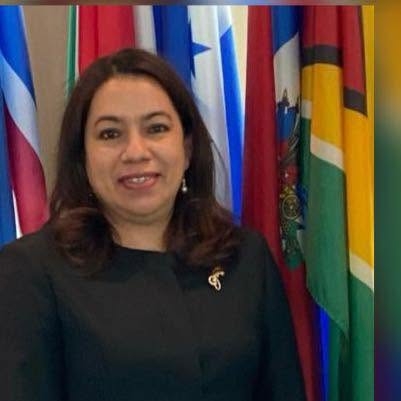
    As the 81st United Nations General Assembly General Debate enters its final stretch in Manhattan, New York, member nations of the Caribbean Community (CARICOM) have come together to publicly reaffirm their unified support for Guyana’s top UN diplomat, Carolyn Rodrigues-Birkett, as the bloc’s official candidate for the position of United Nations Secretary-General.

    Rodrigues-Birkett’s candidacy dates back to July of this year, when CARICOM heads of government formally gave their collective endorsement shortly after Guyana officially nominated her for the role. With a long career in public service, she currently holds the position of Guyana’s Permanent Representative to the United Nations, and previously served as her country’s Minister of Foreign Affairs. This background, regional leaders argue, has equipped her with the deep understanding of global development challenges needed to lead the UN effectively.

    Multiple CARICOM leaders used their speaking time at the General Debate on September 25 to voice their public backing. Deputy Prime Minister Geoffrey Hanley of St. Kitts and Nevis emphasized that his nation was proud to stand alongside CARICOM in endorsing Rodrigues-Birkett. He highlighted that her experience as an Indigenous woman from a small developing state brings a much-needed perspective to global leadership, pushing back against the unspoken norm that top UN roles must be held by representatives of large, powerful nations.

    “Global leadership should never be determined by the geographic size or economic weight of a country,” Hanley noted, adding that Rodrigues-Birkett’s deep grasp of the unique struggles facing developing nations is exactly the kind of leadership the UN requires in this current era.

    Barbados Prime Minister Mia Mottley echoed this sentiment during her address, framing the endorsement as a step toward renewing global faith in multilateral cooperation. “At a moment when the international community is being called upon to renew its faith in multilateralism, we believe that Ambassador Carolyn Rodrigues-Birkett brings to this task the experience, the skills and the understanding to serve the entire membership of this organisation,” Mottley stated.

    Prime Minister Philip J. Pierre of Saint Lucia also added his voice to the chorus of support, while discussing the outgoing tenure of current Secretary-General António Guterres. “Saint Lucia wishes to express its endorsement of the candidate of the Republic of Guyana, Miss Carolyn Rodrigues-Birkett, for the post of Secretary-General,” Pierre said, pointing to her decades-long record of distinguished public and international service. He also reaffirmed Saint Lucia’s commitment to working alongside aligned nations to push for much-needed internal reforms within the United Nations.

    In addition to these three leaders, The Bahamas and St. Vincent and the Grenadines have also formally backed Rodrigues-Birkett, aligning with CARICOM’s collective endorsement of her candidacy.

    The race for UN Secretary-General comes as Guterres’s term concludes at the end of this year, and the selection process has drawn close international attention. If elected, Rodrigues-Birkett would make history as the first Caribbean national to ever hold the top UN post. However, her candidacy is not without controversy: media reports have indicated that the United States may oppose her nomination due to Guyana’s current diplomatic stance on the ongoing Israel-Palestine conflict.

    The 81st United Nations General Assembly General Debate is scheduled to conclude on September 28, the same day this announcement was made public.

  • Caribbean leaders renew calls for Taiwan’s meaningful participation in UN system at UNGA81

    Caribbean leaders renew calls for Taiwan’s meaningful participation in UN system at UNGA81

    Amid the 81st session of the United Nations General Assembly (UNGA) underway in Manhattan, New York, a bloc of Caribbean diplomatic allies of Taiwan have once again thrown their weight behind calls for the island’s meaningful inclusion in the UN system, bringing the long-contested cross-Strait issue back to the center of global diplomatic debate.

    Taiwan has remained locked out of UN bodies and most formal international mechanisms for decades due to firm opposition from the People’s Republic of China, which asserts the island as an inalienable part of its territory. Despite this exclusion, the self-governing island has repeatedly sought to contribute its technological capacity, public health expertise, and other resources to collective global action, according to its supporters.

    Speaking during the General Assembly’s general debate, Geoffrey Hanley, Deputy Prime Minister of the Federation of St. Kitts and Nevis, reaffirmed his nation’s unwavering commitment to its diplomatic partnership with Taiwan and its backing for the island’s meaningful participation across the international community. Hanley recalled that earlier in 2026, St. Kitts and Nevis joined other like-minded nations in supporting Taiwan’s bid to participate as an observer in the 79th World Health Assembly. He added that the Caribbean nation would continue to advocate for Taiwan’s inclusion in the World Health Organization, the International Civil Aviation Organization, and other relevant UN-affiliated mechanisms, while noting that all disputes across the Taiwan Strait must be resolved through peaceful means.

    Philippe Pierre, Prime Minister of St. Lucia, used his address to the assembly to go a step further, stating his country’s explicit support for Taiwan’s full membership in the United Nations. Pierre framed his position as part of a broader push for comprehensive UN reform, arguing that any truly inclusive global body must ensure its decision-making structures accurately reflect the full diversity of the world it exists to serve. He noted that structural reforms, including an overhaul of the UN Security Council, are needed to boost the body’s legitimacy and effectiveness in tackling pressing global challenges and rebuild public trust in multilateral governance.

    For St. Vincent and the Grenadines, Prime Minister Godwin Friday anchored his support in the 45-year history of formal diplomatic ties and people-centered cooperation between his country and Taiwan. “I wish in this August body to recognize our country’s 45 years of diplomatic ties and friendship with Taiwan that has seen us work together in development, in disaster response, education and in public health,” Friday told the gathered leaders. He emphasized that Taiwan has consistently demonstrated that it is ready to act as a responsible stakeholder in the global order, and renewed his call for the island’s inclusion in the UN system and its specialized agencies.

    Belize Prime Minister John Briceño echoed these calls, tying the push for Taiwan’s participation to a broader argument about the importance of centering the voices of small and mid-sized states in global problem-solving. “We hold no illusion that a small state can resolve these crises, but smallness does not relieve us of the duty to speak or voice joins every call for the protection of civilians, for accountability and for the diplomacy,” Briceño said. He reaffirmed that open diplomatic engagement remains an essential foundation for securing lasting, durable peace across all global hotspots.

  • Rechterlijke macht krijgt versterking met benoeming vijftien nieuwe leden

    Rechterlijke macht krijgt versterking met benoeming vijftien nieuwe leden

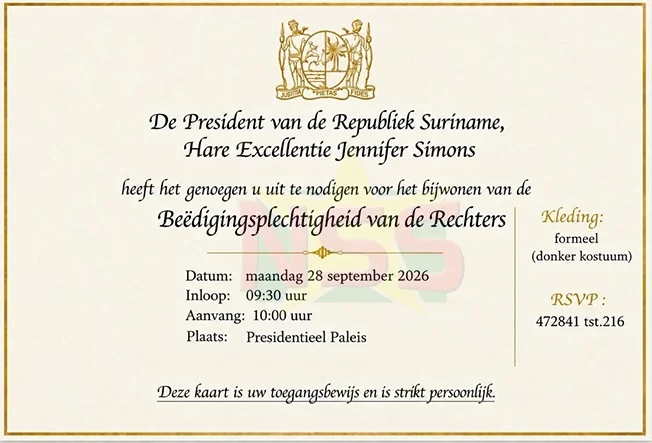
    On September 28, President Jennifer Simons formally swore in 15 individuals as deputy members of the Court of Justice of Suriname during an official appointment ceremony held at the Presidential Palace at 10:00 a.m. local time. According to reporting from local outlet Starnieuws, a secondary swearing-in ceremony will be led by Court President Iwan Rasoelbaks in early October, ahead of the new judicial sitting year that kicks off the same month. The newly appointed deputy judges will immediately begin taking on casework once the new sitting term opens.

    Official documents from the Ministry of Justice and Security of Suriname confirm that the 15 nominees received formal endorsement for their positions as early as March 30, 2026, when the ministry submitted the recommendation to the national government. The 15 newly appointed deputy judges are: Cherida R. Tamsiran-Harris, Genaro L.E. Alpin, Kajal Tahdil, Olton J. Helstone, Vanessa A. Akaamba, Anushka A. Bajnath, Julio Amatoemar, Nathaly N. Amatkarijo, Maytrie Behari, Grasila A.T.T. Sitaram, Shusant R. Mohan, Latoya S. Rozenblad, Stéphanie M. Doelbakir-Kent, Charisma N. Voorburg-Blank, and Negesty Winter.

    This expansion of judicial personnel comes after years of sustained advocacy from the Court of Justice for increased capacity to address growing caseloads. At the opening of the 2025-2026 sitting year, court leadership reported that the institution operated with only 31 active judges to handle all incoming civil and criminal matters, supported by a staff of more than 270 administrative and operational personnel. Court leadership has long prioritized improving the timeliness and accessibility of judicial services for the public, a goal that has been held back by persistent understaffing, making the arrival of a new cohort of judges a critical milestone for the institution.

    The current expansion is the culmination of a multi-year judicial workforce development initiative launched several years ago. Back in January 2023, when the three-year RAIO civil judicial training program opened, 15 candidates were selected out of 75 total applicants to join the training pipeline. At that time, Rasoelbaks projected that after the cohort completed their training, the total number of active judges at the court could rise to 46, accounting for the 15 new additions. He also noted at the time that the final net increase would depend on expected outgoing personnel, most notably judges retiring from service.

    The addition of 15 newly trained deputy judges represents a significant long-awaited boost to the court’s operational capacity, though questions remain about how many additional active judges will ultimately be available for casework after accounting for impending retirements and other personnel departures. Court leadership and justice sector stakeholders have welcomed the appointment as a key step toward reducing case backlogs and improving access to justice for Surinamese citizens.

  • COMMENTARY/TRIBUTE: Sparrow gone, for real this time

    COMMENTARY/TRIBUTE: Sparrow gone, for real this time

    The global Caribbean community is mourning the passing of its most iconic musical voice: Slinger Francisco, better known to the world as The Mighty Sparrow, the undisputed “Calypso King” who shaped the genre for seven decades. He died on Sunday, September 27, at the age of 91 at his home in New York, surrounded by his family after a short illness. Confirmation of his death marked the end of an era, decades after a false rumor of his passing prompted Sparrow to respond in classic calypsonian fashion – penning a satirical track that cemented his reputation for quick wit and cultural commentary.

    Within hours of the official announcement, social media platforms across the Caribbean and the global diaspora flooded with tributes, personal memories, and shared playlists of the legend’s most beloved work, a wave of homage that shows no sign of fading. Born in Grand Roy, Grenada, Sparrow built his legendary career in Trinidad, where he rose through the ranks of calypso performance to claim the coveted Calypso Monarch title eight times and also won eight Road March crowns. Today, both nations claim him as their own, a friendly rivalry that only underscores the depth of his cross-regional impact. Over his decades-long career, Sparrow produced more than 500 original tracks and released over 70 full albums, leaving a sprawling body of work that touched every corner of Caribbean life.

    Beyond his chart-topping hits and carnival victories, Sparrow redefined what calypso – locally called kaiso – could be. For generations, kaiso served as the Caribbean’s living newspaper, open parliament, and public confessional, all set to infectious rhythm. As the genre’s leading voice, Sparrow acted as its chief editor, tackling every topic from Carnival pageantry and cricket matches to regional political federation, systemic inequality, human rights, and the excesses of unregulated capitalism. He did not just comment on the issues that mattered to Caribbean people – he made them dance while he talked, weaving sharp social critique into melodies that still get crowds moving decades later. In recent decades, though, public appreciation for the kaiso artform has waned, a shift that the legend’s passing has brought into sharp relief.

    Veteran Caribbean journalist Julian Rogers, founder of Caribbean Bridges, knew Sparrow personally, having interviewed him multiple times over his media career and watched him perform at countless venues across the region. Rogers witnessed firsthand Sparrow’s decades-long private battle with diabetes, a chronic condition that disproportionately impacts communities across the Caribbean. When Sparrow turned 90, Rogers partnered with colleague Lillian Ceasar to draw attention to both the icon’s milestone birthday and the ongoing diabetes crisis facing the region, chronicling Sparrow’s fight with the disease in an original tribute song. That commitment to raising diabetes awareness has not ended with Sparrow’s passing, Rogers emphasizes.
    “Every family in the Caribbean knows the devastating toll of diabetes. Too many of us have watched loved ones battle the condition, and it deserves far more public attention and action than it currently receives,” Rogers argues. That call to action accompanies a new original tribute Rogers has created, crafted with the help of modern AI tools, that weaves Sparrow’s most iconic song titles – from *Jean and Dinah* and *Carnival Boycott* to *Federation*, *Crown Heights Justice* and *Barack De Magnificent* – into a final farewell that imagines the man who informed the region for 70 years signing off like a veteran news anchor. The full track is published exclusively on the Caribbean Bridges Substack page.

    As the Caribbean community gathers to honor the life and legacy of The Birdie, Dr. Sparrow, Slinger Francisco, Rogers reminds fans that their appreciation for the kaiso tradition should not end with tributes to those who have passed. There are still many working kaiso artists performing, writing, and keeping the tradition alive, playing in seasonal carnival tents that grow quieter and less attended each year. These artists deserve support, recognition, and celebration while they are still here to receive it, Rogers argues – there is no need to wait for the announcement of a death to honor the contributions of those who keep our cultural traditions alive.