博客

  • Vragen in DNA over reactie Hof en OM op nog niet ingediende amendementen

    Vragen in DNA over reactie Hof en OM op nog niet ingediende amendementen

    On August 15, correspondence from the High Court of Justice and the Public Prosecution Service (OM) regarding planned overhauls to Suriname’s judicial structure triggered a spirited debate during a plenary session of the National Assembly (DNA), bringing transparency and inter-branch communication into the spotlight.

    VHP parliamentarian Krishna Mathoera raised the issue during the meeting, noting she had received information that new amendments affecting the judiciary and Public Prosecution Service had been drafted, and relevant letters had been delivered to Assembly Speaker Ashwin Adhin. However, these critical documents were not accessible in the National Assembly’s internal document system. Mathoera emphasized that lawmakers have already been receiving public and stakeholder inquiries about the planned changes, but without access to the full correspondence, they cannot provide informed, substantive responses, and called on Adhin to immediately make the documents available to all elected representatives.

    Adhin confirmed he received the two letters on Friday, and stated the documents have already been forwarded to the Assembly’s clerk’s office and the committee of rapporteurs. He pledged to expedite the process of sharing the full correspondence with all assembly members. The Speaker also clarified that as of the session, he had not yet received any formal draft amendments from either the sitting government or parliamentary sponsors of the reform initiative, noting that multiple stakeholders – including the executive branch, parliamentary initiators, and judicial bodies that have outlined their concerns – are involved in the legislative process.

    Ebu Jones, an NDP MP and the reform initiative’s lead sponsor, questioned the procedural timeline of the correspondence. Jones said he was unaware of any formally submitted amendments that the High Court and Public Prosecution Service could have responded to, raising questions about what exactly the two institutions’ feedback is based on. He stressed that major state bodies should only comment on official, formally tabled proposals, noting that standard procedure requires draft proposals to be submitted to the National Assembly first before being circulated to relevant institutions for public comment. Jones added that he will not be able to form a substantive judgment on the feedback until he has full clarity on the contents of the letters and what specific drafts they responded to.

    Rabin Parmessar, NDP parliamentary group leader and chair of the committee of rapporteurs, confirmed that his committee had also not received any formal amendment documents for review up to the time of the debate. Taking a broader institutional perspective, Parmessar warned against allowing the confusion to escalate into a breakdown of communication between Suriname’s separate branches of government. He emphasized that healthy communication and cooperative relations between state branches are a foundational requirement for a functioning democratic constitutional state, noting that the nation gains nothing when branches of government fail to operate in constructive harmony. Parmessar called on Adhin to directly contact the president of the High Court of Justice to resolve existing communication misalignments.

    Adhin responded that he had already considered direct outreach to judicial leadership, but plans to first conduct a thorough review of the received correspondence before moving forward. He also asked all assembly members to read the letters in full once they are distributed, before the body holds further discussions on the emerging situation. The current debate comes amid ongoing plans for sweeping restructuring of Suriname’s judicial organization, including major proposals to reshape the institutional structure of both the judiciary at large and the Public Prosecution Service.

  • Gouddossier 9: Simons bevriest concessies om grip te krijgen op goudsector

    Gouddossier 9: Simons bevriest concessies om grip te krijgen op goudsector

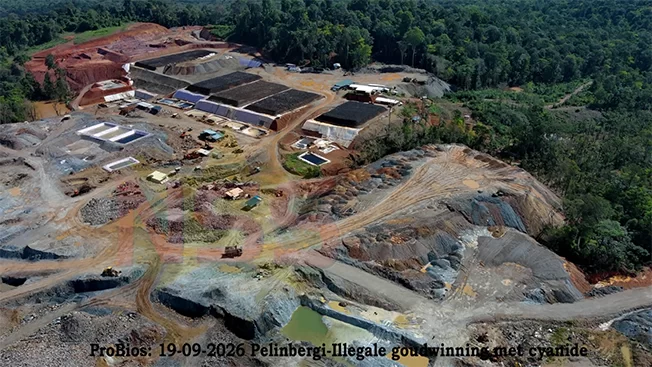
    After weeks of growing public outcry over unregulated illegal gold mining, unclear concession boundaries, widespread ecosystem damage, mass fish die-offs and lax government oversight in Suriname’s interior, President Jennifer Simons has announced sweeping emergency intervention to restructure the country’s troubled gold mining sector.

    The president has ordered an immediate temporary freeze on all new concession issuance, transfers of existing concessions and concession renewal applications. In an exclusive interview with local outlet Starnieuws, Simons clarified that the pause – particularly for renewal requests – will last only a matter of weeks, not months, giving the government time to conduct a full nationwide audit of active mining rights, on-the-ground activities and high-priority conservation areas in need of enhanced protection.

    “It was necessary to hit pause temporarily to get a clear, full picture of what is actually happening across our interior lands,” Simons said. “The situation we face is difficult, and it has only grown more challenging in recent months.” The administration has already dispatched inspection teams to remote mining regions to verify activity reports and document current conditions on the ground.

    ### Multiple Policy Objectives Drive the Freeze
    The temporary hold on concession processing stems from five core policy priorities laid out in a formal written instruction President Simons sent to Minister of Natural Resources David Abiamofo. First, the government seeks to strengthen protection of residential and ancestral lands for Indigenous and tribal communities. Second, it aims to assess and protect other ecologically sensitive areas, including headwater river systems that supply critical drinking water to inland communities. Third, it will complete the first national-scale audit of all existing mining concession areas, including documenting active gold mining operations. Fourth, the government will tighten regulatory and inspection frameworks for chemical use and mining practices to reduce environmental harm. Fifth, it will open formal consultations with existing concession holders to develop industry-wide adoption of more responsible mining technologies.

    Simons also ordered the minister to produce a complete, detailed public register of all active concessions and their holders. The temporary freeze is designed to prevent new changes to concession holdings that would complicate the audit and restructuring process. “We decided to freeze operations during this audit period – which will take a few weeks, no longer – to keep the process moving smoothly,” the president explained.

    ### Addressing Industry Concerns
    The decision to pause concession renewals has sparked anxiety among existing legal concession holders, who worry that expiring rights during the freeze could leave legitimate operations in financial jeopardy. Simons acknowledged these concerns, noting that she held direct talks with gold sector representatives last Friday to discuss the policy.

    “The measure will not be in place for a long period,” she emphasized. “We just need time to gather accurate information, get our house in order, and assess the current situation as it stands right now.” Even before the freeze, concession renewal processing often dragged on for years, so the government will use this period to also review and streamline approval procedures to reduce long-term delays. Beyond the audit, the administration’s core goals are bringing much-needed transparency and accountability to concession management across the sector.

    ### Tackling the Larger Challenge of Illegal Mining
    Simons stressed that the challenges facing Suriname’s gold sector extend far beyond formal, legal concession holders. A large share of current industry problems stem from unregulated illegal mining operations in remote regions where the government has little permanent presence or enforcement capacity. The president acknowledged that this is a far more complex problem to resolve than formal sector governance.

    To address this, the government has launched systematic baseline inventories of inland regions to build consistent, structural data on mining activity, shifting from a reactive response to crises to proactive long-term management. “This is a slow, difficult process, but we have started,” Simons said. A dedicated interagency unit within the President’s Cabinet is already coordinating gold sector restructuring efforts, and legal concession holders are being included in the planning process. The ultimate goal is to build a complete, up-to-date overview of all sector activity step by step.

    Simons urged the public to manage expectations, noting that she cannot promise the government will achieve full control and security across all gold mining regions in the short term. “We are dealing with a very difficult existing situation,” she said. “But I am convinced that through collaboration, and by bringing clarity and transparency to the sector, we can improve conditions step by step.”

    ### Long-Term Restructuring: A New Gold Board for Suriname
    A key centerpiece of the long-term restructuring plan is the creation of a dedicated national Gold Board, a specialized regulatory body that will oversee the purchasing, sale and export of all gold produced in Suriname. Draft legislation to establish the body is currently being developed with input from an international expert, but Simons noted that foreign regulatory models cannot be copied directly and must be adapted to Suriname’s unique economic and social context.

    The president expects the draft legislation to be ready for parliamentary introduction as early as the fourth quarter of 2026, though she added a caveat that the multi-step legislative process may shift the timeline. The administration aims to launch practical implementation of the new regulatory system by 2027 at the latest.

    ### Anchoring Economic Stability While Mitigating Risk
    Simons emphasized that the gold sector remains a critical economic pillar for Suriname, particularly as a source of much-needed foreign exchange. She confirmed that the government is already implementing a policy requiring 35% of all foreign exchange generated by the gold sector to be deposited directly with the Central Bank of Suriname, a measure designed to strengthen the country’s foreign reserve holdings.

    “Gold is extremely important to our national economy, but it also carries a host of significant risks that we can no longer ignore,” Simons said. These risks extend beyond illegal activity and lost government revenue: weak environmental oversight also poses major threats to public health and ecosystems. The administration found significant gaps in the monitoring capacity of the National Environmental Authority, including limited laboratory capacity to test for mining-related water and soil contamination. Going forward, Simons said all these interconnected problems will be addressed in a single unified national plan, rather than through piecemeal, disconnected actions.

    At its core, the temporary concession freeze is far more than a pause on new applications: it is the first step in a broader effort to bring clarity to a sector that has long operated with limited government oversight. For decades, a core unanswered question has hung over Suriname’s gold sector: how can the state regulate an industry when it does not even have a clear picture of who holds what rights, where those holdings are located, and what activity is taking place inside concession boundaries?

    Simons said the temporary freeze gives the government the space it needs to resolve that information gap. For existing concession holders waiting on renewals, uncertainty will be limited to a matter of weeks. But the broader national overhaul – from protecting Indigenous ancestral lands, cracking down on illegal mining, tightening chemical and practice rules, improving environmental monitoring, bringing transparency to concession holdings, and ultimately controlling gold flows from mine to export – is a far larger undertaking that will take years to complete.

  • Commemoration of the 5th anniversary of the August 14, 2021 earthquake

    Commemoration of the 5th anniversary of the August 14, 2021 earthquake

    Half a decade after one of the deadliest natural disasters in Haiti’s recent history, the nation paused on August 15, 2026, to honor the thousands of lives lost to the 7.2-magnitude earthquake that struck the Grand Sud region on August 14, 2021. The quake, centered just 12 kilometers northeast of Saint-Louis du Sud, left a trail of irreversible destruction: official provisional and final assessments confirm 2,248 people killed, more than 12,700 injured, and 329 individuals still unaccounted for, leaving lasting trauma for grieving families and deep scars in Haiti’s collective national memory.

    On this solemn anniversary, Haiti’s General Directorate of Civil Protection (DGPC) led commemorative activities themed “Remember, Recover, Build Resilience.” The agency first paid humble tribute to the victims who perished in the disaster, and reaffirmed its unwavering solidarity with all affected families, communities, and individuals whose lives were upended by the quake.

    Beyond honoring the fallen, the commemoration theme carries a clear forward-looking mandate: to draw critical lessons from the 2021 disaster and advance targeted action to better protect Haiti’s population against future natural hazards. To that end, the DGPC has steadily ramped up its investments in community-level prevention, preparedness, and public risk awareness efforts, all integrated into a broader national strategy to strengthen Haiti’s National Disaster Risk Management System (NDRMMS).

    Key ongoing initiatives include streamlining inter-agency coordination mechanisms, revitalizing the Permanent Risk Management Secretariat, and rolling out the 2024–2027 Three-Year Operational Plan, which translates the long-term goals of the 2019–2030 National Risk Management Plan into actionable, on-the-ground projects. This national framework adopts a multi-hazard, cross-sector approach that prioritizes four core pillars: improved risk knowledge, stronger governance of disaster management, increased investment in resilience, and enhanced preparedness and response capabilities.

    Through public awareness campaigns, school and community risk education programs, and targeted capacity-building for local disaster management stakeholders, the DGPC is working to embed risk-aware culture and emergency preparedness habits directly within at-risk communities. These outreach efforts are paired with upgrades to operational infrastructure and response tools in regions of Haiti that face the highest natural hazard risk.

    Simulation exercises (SIMEX) have emerged as a cornerstone of the DGPC’s preparedness strategy. These drills allow authorities to test existing response mechanisms, strengthen collaboration across local, regional, and national stakeholders, and identify gaps in systems before a real disaster strikes. In September 2025, a national-scale SIMEX held in Haiti’s Southeast region successfully tested operational capacities and coordination protocols for a major seismic event scenario. Building on that success, the DGPC has announced plans to host a new SIMEX in the South region in early September 2026, focused specifically on boosting preparedness for this hazard-prone area.

    The DGPC’s work is guided by a core principle: an informed population is a prepared population, and a prepared population is a resilient population. Five years on from the 2021 earthquake, agency officials acknowledge that the progress made in strengthening disaster resilience is encouraging, but significant unmet challenges remain. Resilience, they emphasize, is not built only in the aftermath of catastrophe — it is cultivated daily through consistent investment in awareness, preparation, anticipatory action, cross-community solidarity, and collective effort.

    On this anniversary, the DGPC reaffirmed its long-term commitment to working alongside local communities, municipal authorities, public institutions, national and international partners, and all disaster management stakeholders to expand Haiti’s national capacity for risk reduction and response. In closing, the agency shared its guiding message for the commemoration: “Remember so we never forget. Rise again to keep moving forward. Build resilience to better protect present and future generations. Together, let us make the memory of August 14, 2021, a strength to build a Haiti that is more aware of its risks, better prepared, and more resilient.”

  • Petition prompts phased rollout of revised curriculum, assessment framework

    Petition prompts phased rollout of revised curriculum, assessment framework

    In a significant shift to Barbados’ education reform agenda, Minister of Education Transformation Chad Blackman has announced a multi-year delay to the planned rollout of continuous assessment for secondary school placement, responding to widespread concerns raised by parents, teachers and education stakeholders.

    The policy change was originally designed to phase out the decades-old Common Entrance Examination (also known as the 11-Plus), a high-stakes, single-sitting test that has long determined secondary school placement for Barbadian students. When first unveiled earlier this year, the government planned to make the cohort of students entering Class Three this academic year the first group to transition to the new model, which would have replaced the one-shot exam with a two-year continuous assessment framework built into primary schooling.

    But that original timeline hit a major roadblock after more than 400 parents and guardians signed a formal petition calling for a more gradual, phased implementation. The parent group argued that starting the new assessment model with incoming Class Three students would leave educators, schools and the ministry itself without enough time to update curricula, deliver required teacher training, refine operational processes and put necessary support systems in place before assessment results carried high stakes for secondary placement. Instead, the petitioners urged the government to launch the new framework with students entering Class One, giving all parties sufficient preparation time.

    In a formal ministerial statement released Friday, Blackman confirmed the ministry had heeded those calls and reset the transition timeline. While continuous assessment practices will be integrated into primary school teaching starting this academic year, the results will not be used to determine secondary school placement for the foreseeable future. The new placement model will not launch until the 2026 academic year at the earliest, when continuous assessment will first be embedded into primary-level learning as a tool to track student progress, identify learning gaps early, deliver targeted support, and build individual learning profiles that follow students through their educational journey.

    Under the revised pathway, the first cohort to move to secondary school via the new continuous assessment model will be students entering Class Two this September, but only if all pre-implementation conditions are fully met by 2029–2030, when that cohort would transition to secondary school. This adjusted timeline gives that group three full years of preparation under the new curriculum framework. Students entering Class One this year will get four years of preparation, while students entering Infants B and Infants A will get five and six years of preparation respectively, ensuring no cohort enters the new model without adequate time to adapt.

    Blackman outlined a clear set of non-negotiable requirements that must be satisfied before the new model goes live for placement purposes. These include comprehensive, ongoing training and professional support for all teachers, clear, consistent and widely understood assessment standards across all primary schools, robust moderation processes to guarantee fairness and consistency in grading, reliable data and information systems to manage assessment records, fully operational quality assurance mechanisms, and sufficient capacity and resources for all schools to implement the new approach successfully. Blackman also emphasized that the ministry will maintain transparent, timely communication with parents, teachers and stakeholders throughout the transition, and will only launch the model once it can prove the new system is fair, equitable and does not disadvantage any student or demographic group.

    For current students further along in their primary education, the existing system will remain in place. Students entering Class Four this September, who are scheduled to sit the Barbados Secondary School Entrance Examination (BSSEE) in May 2027, will still have their secondary placement determined by the traditional Common Entrance Exam. Blackman added that the government will also strengthen the existing placement system during the transition period to make it fairer and more inclusive, continuing to allocate secondary school places based on established criteria of academic performance and residential location to provide certainty, consistency and fairness for families.

    Beyond placement reform, the government is also working to upgrade overall secondary education quality across the country. Blackman reaffirmed the government’s commitment to ensuring every secondary school is a center of educational excellence, where all students receive the challenge, support and inspiration needed to reach their full potential.

    Longer-term plans for national assessment will also expand the scope of standardized testing beyond the current focus on English and Mathematics. Over time, science, Social Studies and citizenship will be added to the national assessment framework, creating a broader evaluation that captures the full range of knowledge, skills and competencies that primary school students are expected to develop. Blackman noted that continuous assessment data will play a key role in this expanded system, helping teachers and schools identify and address student learning needs early before gaps widen and impact long-term progress.

  • Speednet Says No Sale, No Retreat in Telecoms Fight

    Speednet Says No Sale, No Retreat in Telecoms Fight

    On August 14, 2026, Belize’s telecommunications landscape is undergoing a major shift following the collapse of a proposed acquisition of Speednet by incumbent provider BTL, with both players now positioning themselves for a restructured competitive market.

    For months, public discourse in Belize has centered on the potential buyout of Speednet by BTL, a deal that would have reshaped the entire domestic telecom sector. In an official press release issued this week, Speednet confirmed that BTL first approached the smaller provider with an acquisition offer back in 2022, before returning with a second bid in mid-2025. Both rounds of negotiations failed to produce a finalized agreement, a outcome Speednet attributes largely to widespread public pressure. Thousands of Belizean consumers made clear they wanted Speednet to remain an independent alternative to the long-dominant BTL, and that public sentiment ultimately pushed the company to walk away from sale talks.

    With acquisition discussions fully off the table, Speednet says the battle has now moved to securing fair competition in a market it says has been tilted toward BTL for decades. Speednet officials note that BTL has held a 25-year stranglehold on Belize’s telecom market, and that since the Belizean government took ownership of BTL in 2009, regulatory policies have consistently favored the larger provider, leaving Speednet at a significant structural disadvantage.

    But the recent decision by Belize’s Cabinet to block the proposed acquisition has opened the door to new rules of the game, according to Speednet. Going forward, BTL will be required to operate under a far more balanced regulatory framework. One key change mandates that all government telecom contracts be put out to open public tender, ending the longstanding practice of awarding contracts directly to BTL without giving rival providers a fair opportunity to bid.

    This shift follows the Public Utilities Commission (PUC)’s official designation of BTL as a dominant market player, a classification that forces the incumbent to comply with new regulations designed to level the competitive playing field. For Speednet, the most critical changes include the elimination of what it calls unfair surcharges that BTL has long imposed on competing providers. Another landmark requirement mandates that BTL share its existing telecom infrastructure with competitors at cost, with the PUC and national courts granted full authority to enforce compliance and levy penalties against BTL if it fails to adhere to the new rules.

    Speednet has moved quickly to thank the wide coalition of groups that supported its position throughout the acquisition debate, including the Belize Chamber of Commerce, national labor unions, independent media outlets, and broader civil society organizations. The company says this public and institutional backing has solidified its position in the market, and it is not just committed to staying — it is planning aggressive growth. Speednet announced plans for major capital investments in next-generation technology, upgraded network systems, new equipment, and expanded infrastructure, all with the goal of delivering affordable, modern telecom services to Belizean consumers. For the company, this moment marks not the end of acquisition talks, but the start of a new chapter for Belize’s telecom industry, built on fair competition, equal access, and real consumer choice.

    Across the industry, BTL has acknowledged the new reality and is shifting its own strategy. In an internal bulletin sent to all employees Wednesday, BTL Chairman Markhelm Lizarraga confirmed that the company respects the Cabinet’s decision to reject the proposed Speednet acquisition, and that the chapter of merger discussions is now closed. Lizarraga noted that hundreds of hours of work went into evaluating the proposed transaction, but the company is now turning its focus to other avenues of business growth.

    Lizarraga acknowledged that the PUC’s designation of BTL as a dominant market player has fundamentally altered the company’s operating environment, bringing with it increased regulatory obligations, stricter external oversight, and tighter constraints on how BTL can compete, invest, and serve its customer base. Despite these new challenges, BTL is framing the shift as an opportunity to reinvent itself for the modern market. The bulletin emphasized that BTL remains a strong market player, with a dedicated workforce, longstanding trusted relationships with customers, an extensive national infrastructure network, and robust technological capabilities.

    BTL is already in the process of transforming from a purely traditional telecommunications provider into a broader technology and digital services company, with expanding offerings in cloud infrastructure, cybersecurity, managed enterprise services, big data solutions, and other emerging technology sectors. Lizarraga told employees that succeeding in this new, more competitive landscape will require tighter operational execution, a sharper focus on customer needs, more strategic use of the company’s existing assets, and unified teamwork across all departments. He urged staff not to let current market headwinds define the company’s future, stressing that Digi/BTL remains positioned for long-term growth.

    As Speednet celebrates the opening of a new, more competitive era and BTL refocuses its internal strategy for changing market rules, one thing is clear: while the proposed acquisition is dead, the fight to shape the future of Belize’s telecommunications sector is only just beginning.

  • Sounding Off: Belizeans React to BTL’s Buyout Rejection

    Sounding Off: Belizeans React to BTL’s Buyout Rejection

    On August 14, 2026, one day after Belize’s Cabinet announced its formal rejection of Belize Telemedia Limited’s (BTL) planned acquisition of competitor Speednet, local outlet News Five took the conversation out of government boardrooms and union meeting halls to the streets of Belize City, asking everyday mobile and internet users what they think of the high-stakes telecom decision.

    For months, the proposed merger has divided industry stakeholders, political actors and labor groups across Belize. Unions have already celebrated the Cabinet’s call and are now urging BTL’s board of directors to fully rescind its earlier approval of the deal. In his official statement released a day prior, Prime Minister John Briceño explained the government’s reasoning, noting that while the transaction might check out from a pure business perspective, the Cabinet concluded moving forward would only lead to prolonged unconstructive conflict with opposing groups. “It makes the most sense to advise BTL against proceeding with this merger,” Briceño said.

    The core concern raised by opponents of the buyout, including most of the residents News Five spoke to, centers on market competition and consumer choice. The majority of Belizeans who shared their views on the street aligned with the government’s decision, emphasizing that open competition between telecom providers is the only way to keep service quality high and prices accessible for customers.

    One long-time Belize City resident argued that blocking the acquisition was the right outcome because consumers deserve the freedom to pick their preferred provider rather than being forced onto a single network. “You shouldn’t have one option forced on you,” he said, reinforcing his stance that maintaining consumer choice is non-negotiable.

    A second mobile customer told reporters he currently uses SIM cards from both of Belize’s major providers, SMART (owned by Speednet) and Digicell, and values having multiple options. Even so, he noted he would adapt to the change if the acquisition were eventually approved, saying he would follow the government’s final decision regardless.

    For one Belize City resident who relies exclusively on SMART for his telecom service, the prospect of losing Speednet as an independent provider is deeply concerning. When asked how he would feel if SMART ceased to exist as a standalone brand after a buyout, he replied simply, “Bad,” and urged the government to hold firm on its rejection.

    A female consumer echoed this sentiment, saying she also uses SMART regularly at home, and praised the government for listening to public feedback when making its decision. “The government made the right call because it went with what the people wanted,” she said.

    Another resident shared that while he is relieved the acquisition has been halted for the time being, he remains worried that the deal could be revived later. He stressed that maintaining competitive pressure in the telecom sector is critical to preventing a monopoly that would leave consumers with no leverage, saying “We need competition between these companies so we don’t end up with a take-it-or-leave-it situation.”

    A small number of respondents told News Five they had not heard about the proposed acquisition at all before the interview, but also expressed relief after learning the government had blocked the merger. This on-the-ground report from Belize City was compiled by Britney Gordon for News Five.

  • Union Victory? NTUCB Reacts to Cabinet’s Rejection of BTL Proposal

    Union Victory? NTUCB Reacts to Cabinet’s Rejection of BTL Proposal

    On August 14, 2026, the Belizean Cabinet issued a decision rejecting the proposed acquisition of Speednet by national telecommunications provider BTL, a move that has been met with mixed reactions from organized labor groups across the country. While union leaders frame the rejection as a partial victory for grassroots public pressure, they insist the battle for transparency and accountability in national infrastructure decision-making is far from over, and plans for mass planned demonstrations set for next Tuesday remain fully in effect.

    The controversy began months ago, when BTL’s government-appointed board of directors cast votes approving the takeover deal, a move that spurred immediate pushback from the National Trade Union Congress of Belize (NTUCB), the Belize National Teachers Union, and a coalition of other labor and civil society groups. Organizers had already arranged mass street protests before the Cabinet’s ruling, arguing that the merger lacked sufficient public consultation and threatened the interests of workers and consumers across Belize.

    In an exclusive interview following the Cabinet’s announcement, NTUCB President Ella Waight described the decision as a vindication of coordinated labor advocacy and public education efforts. She emphasized that the coalition’s work to inform Belizean citizens about the potential risks of the acquisition was critical to shifting public discourse and pushing the government to reject the deal.

    Waight noted, “It’s a great feeling and it’s justification as to what we do here at NTUCB and partnering with our social partners when it comes to national issues. I think all entities did a very good job in ensuring that people understand why we were saying no to the acquisition.”

    Despite this win, Waight made clear that the proposed acquisition is not yet fully resolved. Because government-nominated BTL board members already voted in favor of the deal, unions are demanding those votes be formally withdrawn to close the door on any potential revival of the merger.

    When asked if she believed the Cabinet’s rejection was final, Waight expressed confidence that the administration would not reverse course, citing the widespread public opposition to the deal and the political risk of backing away from the current ruling. “I don’t think they would want that political backlash. I don’t think they would want a backlash from the social partners and from Belizeans as a whole,” Waight explained. Still, she added, unions remain committed to moving forward with demonstrations to cement the win and push for long-term systemic reform.

    After the Cabinet’s announcement, NTUCB surveyed leaders from its 11 member unions to decide whether to proceed with the planned mass action. In an overwhelming vote, member unions confirmed the protests would go forward as scheduled. The focus of the demonstrations has shifted, however: instead of only opposing the BTL-Speednet merger, organizers will now demand stronger regulatory safeguards, more robust independent oversight of major national business deals, and greater public accountability for government-connected corporate decisions.

    Protests will be held simultaneously in two locations starting at 10 a.m. Tuesday and concluding at 1 p.m. Demonstrators from northern districts including Corozal, Orange Walk, and San Pedro, along with Belize City residents, will gather outside BTL’s headquarters in Belize City. Participants from southern districts including Punta Gorda and Stann Creek, as well as those from the Cayo District, will assemble at the main government administration building in Belmopan. Organizers have arranged transportation from all districts, secured all necessary approvals from law enforcement, and pledged to update the public on any changes via local media and social media platforms.

    Waight urged Belizeans not to treat the Cabinet’s rejection as a final victory, calling for continued public vigilance to prevent the deal from being reconsidered in the future and to push for lasting reform that gives citizens a greater voice in major national decisions. “Don’t take it for granted that, yes, the cabinet said no, we still need to ensure that we show up, right? We show up for ourselves and for country,” Waight said.

  • High-level OAS delegation expected in Haiti

    High-level OAS delegation expected in Haiti

    At a pivotal turning point for Haiti’s ongoing push to reclaim national stability and rebuild governance institutions, the Organization of American States (OAS) is preparing to deploy a high-profile cross-institutional delegation led by Secretary General Albert R. Ramdin, set to visit the Caribbean nation from August 16 to 19, 2026. This four-day mission, composed of senior representatives from more than 10 key regional and global bodies, is designed to turn international pledges of solidarity into tangible progress across five critical priorities: advancing the electoral timeline, strengthening state governance, expanding humanitarian aid, restoring public security, and laying the groundwork for long-term inclusive development.

  • Failed Speednet Deal Puts BTL Board Under Fire

    Failed Speednet Deal Puts BTL Board Under Fire

    Nearly two weeks after the Belizean cabinet formally rejected Belize Telemedia Limited’s (BTL) planned takeover of competitor Speednet, the fallout of the failed deal has shifted focus to the BTL board of directors, who are now facing mounting criticism from former company employees over their endorsement of the ill-fated transaction.

    The Belize Communication Workers for Justice (BCWJ), an advocacy group representing former and current BTL workers, is demanding that the full board publicly answer for its role in advancing the acquisition that was ultimately blocked by national policymakers. BCWJ organizer Emily Turner, a former BTL management staffer, argues that the controversy extends far beyond the collapsed merger, raising fundamental questions about the board’s decision-making judgment, its institutional independence, and whether its leadership is prioritizing the long-term interests of the company and its workforce.

    In scathing comments delivered during a recent on-air interview, Turner called out one senior board member for being dramatically out of touch with on-the-ground realities at the telecommunications provider. “He’s not reading this environment at all because for some reason he believes that he can just proceed with this. And then he changes the statements that he makes every time he is asked something,” Turner said.

    When asked whether the current board has demonstrated a track record of making choices aligned with BTL’s best interests, Turner raised sharp questions about the board’s lack of rigorous oversight of management actions. From her personal experience working inside BTL’s management structure, Turner said the board only reviews corporate proposals at a superficial high level, often missing critical details that are obscured in the materials presented to directors. “I think that the board is not as thorough as I would have wanted them to be when I was there. They basically look at things on a very high level. Maybe it’s intentional how it’s presented. There are many things that in my experience they have missed when management presents it to them,” she explained.

    Turner also called out a questionable board appointment, saying a relative of the BTL chairman was transferred to the board from the country’s Social Security Board (SSB), creating an obvious conflict of interest. She described the appointment as a clear case of nepotism, noting “if conflict of interest was a person, that would be that business bureau guy.”

    The controversy has also spilled over to the SSB, whose directors voted on the Speednet deal. Turner commended the two SSB directors who broke ranks to vote against the acquisition, but noted the remaining eight who supported the transaction are widely seen as political cronies. She is calling on the two dissident directors to publicly disclose their rationale for opposing the deal, to bring greater transparency to the controversial process that has thrown BTL’s governance into question.

    This report is adapted from a transcript of an evening television news broadcast, with original Kriol language comments standardized to written English for publication.

  • Belize, El Salvador Move to Strengthen Regional Ties

    Belize, El Salvador Move to Strengthen Regional Ties

    In a series of diplomatic engagements held this week in San Salvador, Belize and El Salvador have taken concrete steps to reinforce longstanding bilateral bonds and advance collective progress across Central America, with meetings focused on expanding cross-sector collaboration and deepening regional integration.

    The diplomatic schedule kicked off on Tuesday, when Belize’s delegation — led by Oscar Arnold, Chief Executive Officer of Belize’s Ministry of Foreign Affairs and Foreign Trade — joined representatives from the Central American Integration System (SICA) to officially swear in Lina Ajoy as the bloc’s new Secretary-General. Belize’s active participation in the welcoming ceremony underscores the country’s unwavering commitment to regional cooperation frameworks that deliver tangible, inclusive benefits to communities across the Central American region, government representatives noted.

    A day later, on Wednesday, the two nations convened the Third Belize-El Salvador Binational Commission, the highest-level bilateral dialogue platform between the two countries. The Salvadoran delegation was headed by Adriana Mira, Vice Minister of Foreign Affairs of El Salvador, while Arnold again led the Belizean delegation. He was joined in-person by Alfonso Gahona, Belize’s Director of International Affairs, and Tricia Gideon, Deputy Director General for Trade. To ensure comprehensive, whole-of-government input, representatives from four additional Belizean ministries — including Tourism, Immigration, Agriculture, and Education — joined the discussions virtually, expanding the scope of dialogue to cover a wide range of shared priorities.

    During the commission meeting, delegates from both sides held in-depth discussions on cooperation across eight critical areas: trade, public security, migration management, public health, agricultural development, education, tourism, and broader regional integration. Officials emphasized that the biennial Binational Commission serves as a critical space to identify untapped collaborative opportunities, address shared challenges, and refresh the commitment to the deep historical ties that connect the two Central American nations.