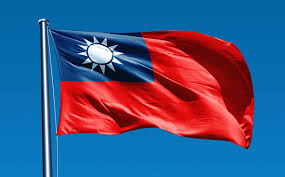
Amid the 81st session of the United Nations General Assembly (UNGA) underway in Manhattan, New York, a bloc of Caribbean diplomatic allies of Taiwan have once again thrown their weight behind calls for the island’s meaningful inclusion in the UN system, bringing the long-contested cross-Strait issue back to the center of global diplomatic debate.
Taiwan has remained locked out of UN bodies and most formal international mechanisms for decades due to firm opposition from the People’s Republic of China, which asserts the island as an inalienable part of its territory. Despite this exclusion, the self-governing island has repeatedly sought to contribute its technological capacity, public health expertise, and other resources to collective global action, according to its supporters.
Speaking during the General Assembly’s general debate, Geoffrey Hanley, Deputy Prime Minister of the Federation of St. Kitts and Nevis, reaffirmed his nation’s unwavering commitment to its diplomatic partnership with Taiwan and its backing for the island’s meaningful participation across the international community. Hanley recalled that earlier in 2026, St. Kitts and Nevis joined other like-minded nations in supporting Taiwan’s bid to participate as an observer in the 79th World Health Assembly. He added that the Caribbean nation would continue to advocate for Taiwan’s inclusion in the World Health Organization, the International Civil Aviation Organization, and other relevant UN-affiliated mechanisms, while noting that all disputes across the Taiwan Strait must be resolved through peaceful means.
Philippe Pierre, Prime Minister of St. Lucia, used his address to the assembly to go a step further, stating his country’s explicit support for Taiwan’s full membership in the United Nations. Pierre framed his position as part of a broader push for comprehensive UN reform, arguing that any truly inclusive global body must ensure its decision-making structures accurately reflect the full diversity of the world it exists to serve. He noted that structural reforms, including an overhaul of the UN Security Council, are needed to boost the body’s legitimacy and effectiveness in tackling pressing global challenges and rebuild public trust in multilateral governance.
For St. Vincent and the Grenadines, Prime Minister Godwin Friday anchored his support in the 45-year history of formal diplomatic ties and people-centered cooperation between his country and Taiwan. “I wish in this August body to recognize our country’s 45 years of diplomatic ties and friendship with Taiwan that has seen us work together in development, in disaster response, education and in public health,” Friday told the gathered leaders. He emphasized that Taiwan has consistently demonstrated that it is ready to act as a responsible stakeholder in the global order, and renewed his call for the island’s inclusion in the UN system and its specialized agencies.
Belize Prime Minister John Briceño echoed these calls, tying the push for Taiwan’s participation to a broader argument about the importance of centering the voices of small and mid-sized states in global problem-solving. “We hold no illusion that a small state can resolve these crises, but smallness does not relieve us of the duty to speak or voice joins every call for the protection of civilians, for accountability and for the diplomacy,” Briceño said. He reaffirmed that open diplomatic engagement remains an essential foundation for securing lasting, durable peace across all global hotspots.