博客

  • Two-year wait for autism assessments strains families

    Two-year wait for autism assessments strains families

    Across Trinidad and Tobago, families raising children with autism spectrum disorder (ASD) are facing an escalating public health and social crisis, marked by crippling delays to critical diagnostic care and widespread systemic gaps that have left nonprofits to shoulder the burden of unmet need.

    For many caregivers, the wait for an initial pediatric autism assessment stretches as long as two years, with some families as far back as 2023 receiving first appointment dates scheduled for 2027. These devastating wait times are just one of the multiple cascading barriers that autistic children and their families navigate daily, according to Dr. Radica Mahase, founder of Support Autism T&T. The advocacy and support organization has spent 11 years filling gaps in national services, born out of Mahase’s own personal struggle to secure a diagnosis and school placement for her autistic nephew. What began as a small, family-led effort has grown into a nationwide provider of support services, caregiver training and community outreach — yet despite its growing impact, the group has never received any government funding. It relies entirely on public donations, grassroots fundraising and contributions from individual supporters and small local businesses to keep its doors open.

    Mahase has long called for a coordinated, cross-ministerial national autism strategy that brings together health, education, social services and labor departments to address the crisis systematically. While formal policies such as the national Inclusive Education Policy already exist on paper, Mahase says they have never been effectively implemented. If the policy were fully put into practice, early screenings would be available at the Early Childhood Care and Education (ECCE) level, every school would have specialized special education teachers and aides, and consistent training for all classroom educators would be standard. None of these provisions are currently available nationwide.

    Access to autism care across the country is deeply unequal, shaped largely by household income. Most therapeutic services are only offered through private providers, with costs that are out of reach for low- and middle-income families. Wealthier households can jump the line by paying for private care, but lower-income families face months or years of waiting, inconsistent access to support, or no access to therapy at all. Even when parents recognize developmental differences early, navigating the pathway from diagnosis to therapy to appropriate school placement is financially crippling, emotionally draining, and confusing. Mahase identifies cost, extreme wait times, fragmented uncoordinated services, and dismissive attitudes from some medical and education professionals as the biggest barriers to care. Many parents are told to wait for evaluation or made to feel they are overreacting to their child’s developmental needs, while widespread social stigma around autism also delays care-seeking.

    Demand for support has risen steadily in recent years, pushing the already strained system to a breaking point. At Support Autism T&T’s Rahul’s Clubhouse, the organization receives constant new requests for help from parents and caregivers, reflecting a national trend of growing unmet need. “For years now, families have been left to struggle, parents have had to fight for every bit of support, and NGOs have been left to pick up the pieces and fill the gaps,” Mahase explains. “We’re reaching a crisis point now with more and more families looking for help, but the systems for diagnosis, therapy, school support, and services for autistic adults are still not strong enough. Autism cannot keep being treated like a side issue or something to talk about only in April (World Autism Awareness Month).”

    Late or missed diagnoses carry severe long-term consequences for autistic children, Mahase emphasizes. Early diagnosis enables early intervention, which creates measurable, life-changing improvements in children’s speech development, communication skills, behavior and learning outcomes, while also helping parents adapt their support to meet their child’s needs. Without timely diagnosis, many children are incorrectly labeled as rude, badly behaved, lazy or difficult, and are denied the targeted support they need to thrive.

    Within the national mainstream school system, the gaps in support are equally stark. Most schools lack specialized special education teachers and classroom aides, and there is almost no access to on-site therapeutic support. Overcrowded classrooms, one-size-fits-all standardized curricula and testing do not accommodate the needs of neurodivergent learners. Autistic students commonly face sensory overload from noisy, fast-paced classroom environments, lack of targeted accommodations, communication barriers, low expectations from educators, bullying and social isolation. Too often, Mahase says, children are punished for behaviors related to their autism rather than adjusting the classroom environment to meet their needs, shifting blame from systemic failures to the child.

    Beyond the strain on children, the crisis places enormous emotional and financial stress on entire families, who must absorb the costs of assessments, private therapy, daily care and the constant work of advocating for their child’s basic rights. To address the growing backlog of undiagnosed children, Mahase is calling for mandatory universal autism screening starting at the ECCE preschool level. Right now, timely diagnosis depends entirely on luck: whether a parent recognizes early signs of autism, can afford private care, or is directed to the right services. “But screening cannot stand alone,” Mahase stresses. “There must be proper follow-up, intervention programmes, and support systems in place so families are not left with a diagnosis and nowhere to turn.”

  • ULP left HLDC in ‘fragile’ financial situation — report

    ULP left HLDC in ‘fragile’ financial situation — report

    Nearly five years after the Unity Labour Party (ULP), which held power in St. Vincent and the Grenadines for 25 consecutive years, was voted out of office in November 2021, new details are emerging about the long-term performance of state-owned enterprises that operated under its tenure. The incoming New Democratic Party (NDP) administration has been conducting a quiet, comprehensive review of these public entities, and early findings from the audit point to widespread mismanagement during the previous Ralph Gonsalves-led government.

    One of the first entities to face scrutiny is the state-owned Housing and Land Development Corporation (HLDC), a decades-old agency that has operated across successive administrations from both major political parties. Founded to drive planning and development of affordable residential and community land and housing for low-income households across St. Vincent and the Grenadines, the agency has been credited with delivering nearly 1,000 homes to vulnerable families over its 50-year history. It also played a key role in post-disaster recovery efforts, including repairing 40 homes severely damaged by Hurricane Beryl in 2024 and the 2021 eruption of the La Soufrière Volcano, and currently has 140 new housing units, including prefabricated units, in the pipeline or earmarked for construction.

    Despite this legacy of public service, the NDP administration’s audit reveals a wide range of critical failures in governance, strategic planning and financial management that have left the HLDC in a fragile position. While the agency’s board of directors meets statutory composition requirements, the report documents persistent underperformance, particularly around meeting attendance. In 2025, board meeting attendance fell far below the average for all state-owned enterprises assessed, with many sessions barely reaching the required quorum to conduct official business.

    Beyond attendance issues, the audit found no evidence that the HLDC has ever adopted formal strategic planning, a core function for public entities delivering long-term public services. The agency also fails to produce required annual work plans, and has never published statutory annual reports detailing its programmatic activities, as required by law. Its role in managing public-funded affordable housing projects has also shrunk steadily over time: most major government affordable housing initiatives, such as the flagship “Lives to Live” program, are now contracted directly to private construction firms and managed through the Ministry of Housing, sidelining the HLDC entirely. Today, the agency operates largely as a project manager for privately built middle-income housing developments, collecting only administrative and professional fees for its services, the report concludes.

    The most serious violation uncovered by the audit is the HLDC’s 14-year gap in completing legally required financial audits. The agency has not published an audited financial statement since 2012, a violation of Act No. 7 of 1976 that the report calls “an adverse reflection on governance, transparency, and financial hygiene.”

    Analysis of the HLDC’s internal management accounts from 2021 to 2025 paints a grim picture of the agency’s financial health. Profitability has swung wildly over the five-year period, with the HLDC posting net losses in three of the five years, and an average negative profit margin of 16% across the full period. Revenue, which is almost entirely generated from project activity, has fluctuated drastically: project revenue hit EC$5 million in 2022, plummeted to just EC$532,000 in 2023, fell to zero in 2024, then rose to EC$7 million in 2025. This volatility drove overall annual revenue from a peak of EC$7.33 million in 2022 to just EC$796,663 in 2024, before recovering partially to EC$4.35 million in 2025. Annual net results mirrored this instability: a EC$240,632 profit in 2021, a EC$61,444 loss in 2022, a EC$652,697 profit in 2023, a EC$813,447 loss in 2024, and a EC$209,675 loss in 2025.

    As of the end of 2025, the HLDC carries EC$6 million in overdue accounts payable, indicating the agency has consistently failed to settle its outstanding bills by their required due dates. The audit also uncovered a EC$9 million balance in deferred interest on a loan restructured with St. Vincent Cooperative Bank back in 2014; under the restructuring agreement, only principal payments have been made, with all interest payments pushed back, leading to the massive accumulated balance.

    While the report notes that the HLDC maintained adequate liquidity over the 2021-2025 review period, with enough current assets to cover short-term obligations, the situation has deteriorated sharply in recent years. By 2025, the agency’s liquidity ratio was barely above the regulatory benchmark, leaving no buffer to absorb unexpected financial shocks. Balance sheet strength has also weakened significantly: shareholders’ equity fell 40% from EC$5 million in 2023 to just EC$3 million at the end of 2025, eroded by annual operating losses and accumulated deficits, leaving taxpayers with a negative return on their public investment.

    The HLDC is not the only state-owned enterprise under review by the NDP administration. While an anonymous source with knowledge of the review process declined to name all entities currently being assessed, the source confirmed that the National Lotteries Authority is also part of the audit, noting that preliminary details about the authority’s performance have already been reported in other local media outlets.

    While the audit acknowledges that the HLDC has made meaningful contributions to socioeconomic progress, expanding affordable housing access and supporting social inclusion for low-income communities across the country over its decades of operation, it also makes clear that urgent structural and financial reforms are needed to restore the agency to functional, transparent public service.

  • Gonsalves knows about changing law to avoid the court — Kay

    Gonsalves knows about changing law to avoid the court — Kay

    A high-profile political dispute has erupted in St. Vincent and the Grenadines over a proposed constitutional amendment, with a former opposition senator bringing forward a years-old allegation of improper legislative maneuvering by current Opposition Leader Ralph Gonsalves and his Unity Labour Party (ULP).

    Kay Bacchus-Baptiste, a former New Democratic Party (NDP) senator and electoral candidate, made the claims while responding to ULP criticism of the sitting NDP government’s plan to amend the constitution to clarify candidate qualification requirements for public office. The controversy comes as the ULP has challenged the eligibility of two sitting NDP politicians — Prime Minister Godwin Friday, who has held a parliamentary seat since 2001, and East Kingstown Member of Parliament Dwight Fitzgerald Bramble, who won re-election to a second five-year term — ahead of the November 27, 2025 general election.

    The ULP’s two petitions, set for a joint hearing from July 28 to 30, argue that Friday and Bramble are disqualified from running for office because they voluntarily obtained Canadian citizenship, a claim that turns on the interpretation of existing constitutional language around candidate eligibility.

    Bacchus-Baptiste acknowledged that the NDP’s amendment proposal comes while the court cases are pending, but pushed back against ULP claims that the change is an improper attempt to influence the legal outcome. To counter the accusation, she recalled a 2000s incident when she and fellow activist Nicole Sylvester brought a legal challenge against a Gonsalves-led ULP government’s EC$1 levy on passengers traveling to the Grenadines via the main ferry terminal.

    At the time, Bacchus-Baptiste explained, the ULP administration imposed the fee without any legal authority to collect the charge. When the legal team prepared to file for an injunction to block the collection, the ULP rushed through a new regulation overnight to retroactively legalize the tax — directly pre-empting the court hearing.

    “When we were preparing to go to court the morning to deal with the injunction that we were applying for, we were presented with this regulation that they woke up the printery and got it done overnight, the minister, and presented it to us, effectively to bar our injunction,” Bacchus-Baptiste told iWitness News.

    The case was appealed to the Court of Appeal but never received a hearing, she said. The fee was eventually withdrawn after Gonsalves faced public pressure to drop the charge, leading Bacchus-Baptiste’s team to withdraw their appeal as the core issue was resolved. Bacchus-Baptiste said the incident proves Gonsalves is fully aware of the tactic of changing legislation to defeat pending court cases — the very action the ULP is now accusing the NDP of taking.

    However, the former senator emphasized that the NDP’s current proposal is fundamentally different from the ULP’s 2000s overnight regulatory change. St. Vincent and the Grenadines’ existing electoral law already requires candidates to hold Commonwealth citizenship to run for office, she explained. The amendment only fills a gap in the constitution’s definition section, rather than changing the existing eligibility rule. The clarification, she argued, has long been needed and is not an attempt to alter the rules of the election mid-stream.

    Bacchus-Baptiste also noted that the NDP’s current position on the constitutional language aligns with the party’s stance in 2009, when it campaigned against the ULP’s proposed constitutional changes. At that time, Gonsalves and his ULP administration campaigned in favor of the amendments, arguing that the changes would enshrine the right of any Commonwealth citizen residing in St. Vincent and the Grenadines to run for public office, a position consistent with the NDP’s current clarification push.

  • Luke would accept if court gives him seat he’s failed to win 4 times

    Luke would accept if court gives him seat he’s failed to win 4 times

    A long-running political dispute over a parliamentary seat in St. Vincent and the Grenadines has taken a new turn, as defeated opposition candidate Luke Browne has publicly stated he is ready to take office if the courts nullify the 2025 general election victory of ruling New Democratic Party (NDP) incumbent Dwight Fitzgerald “Fitz” Bramble.

    Browne, a former senator and health minister from the opposition Unity Labour Party (ULP), has lost four consecutive attempts to win the East Kingstown parliamentary seat, with the 2025 poll marking his poorest performance to date. Held on November 27, 2025, the election saw Bramble secure a second five-year term by a margin of 1,001 votes to Browne’s count. Official vote breakdowns show that while Bramble earned 172 more votes in 2025 than he did in his 2010 debut run, Browne received 582 fewer votes than in the 2020 election, even as total turnout dropped by 405 votes overall.

    Now, Browne and the ULP have filed an election petition arguing Bramble is constitutionally ineligible to hold the seat, because Bramble holds Canadian citizenship. Under St. Vincent and the Grenadines law, candidates who acknowledge allegiance to a foreign power are barred from serving in Parliament, a charge Browne says applies to Bramble, who obtained citizenship through his own voluntary action. The challenge is not isolated: ULP candidate Carlos Williams has filed a parallel petition against Prime Minister Godwin Friday, who defeated Williams to secure a sixth consecutive term in the Northern Grenadines constituency. Friday won that race by a landslide margin of 1,846 votes, earning 2,185 votes to Williams’ 339.

    In an interview broadcast on Hot 97 FM Friday, Browne addressed widespread questions about the legal challenge, confirming he would accept an automatic appointment to the East Kingstown seat if the court rules in his favor, rather than pushing for a new by-election. Browne’s legal position holds that any candidate who was unqualified to run in the first place cannot legally be declared the winner, regardless of election day results. He analogized the situation to Olympic competition: if a race winner is later disqualified for breaking competition rules, the second-place finisher is elevated to champion status by default.

    “There’s a good chance that they will be the automatic seating of Carlos Williams and myself,” Browne said during the interview, noting that he would accept the court’s outcome without objection. When pressed on whether he would feel comfortable taking a seat voters did not explicitly award him on election day, Browne pushed back, arguing that he was the only qualified candidate on the East Kingstown ballot. “The people had a right to vote for any of the qualified candidates on election day. It so happens that I was the only qualified candidate in East Kingstown,” he explained.

    Browne rejected claims that he is relying on technicalities to seize power, insisting his challenge is rooted in upholding existing constitutional rules. He also hit back at the NDP government’s planned constitutional amendment, scheduled to be introduced to Parliament next Tuesday, which would clarify the legal definition of “foreign power or state”. Browne accuses the NDP of rushing to rewrite the rules after the election to protect its two MPs if the court rules against them. “What they are seeking to do is, by any means necessary, change the rules of the game after the fact,” he said.

    The former health minister emphasized that he has always accepted past election outcomes and moved forward, but he is exercising his clear constitutional right to challenge ineligible candidates. He added that if the roles were reversed, the NDP would take the exact same legal action he is pursuing now. The ULP has repeatedly stated that the planned amendment is nothing more than a last-minute insurance policy for the ruling party’s vulnerable elected officials.

  • Required Real Estate Agent Licensing in the Dominican Republic: Proposed Law Still in Discussion

    Required Real Estate Agent Licensing in the Dominican Republic: Proposed Law Still in Discussion

    The Dominican Republic’s real estate sector stands as one of the most robust and dynamic economic forces in the Caribbean, drawing billions of dollars in combined local and foreign investment annually. Yet for all its economic weight, this high-growth industry has operated for years without a unified, comprehensive regulatory framework governing professional real estate practice—a gap that has opened the door to widespread misconduct that endangers investors and undermines market integrity.

    Unqualified, unlicensed practitioners have flooded the unregulated market, bringing with them a rash of deceptive and fraudulent activities. Common bad-faith practices include marketing properties with no valid legal title, launching development projects with false or misleading advertising about amenities, timelines or pricing, and engaging unethical financial arrangements that put both domestic and cross-border investors at severe risk of financial harm. Without formal regulation, buyers and investors have no guaranteed legal recourse when they fall victim to these scams, leaving many to absorb devastating, irreversible financial losses.

    To close this regulatory gap and root out systemic misconduct, lawmakers and industry leaders have advanced a landmark real estate regulation bill that would place all licensed practitioners under the direct oversight of the Ministry of Housing, Habitat and Buildings (MIVHED) through its dedicated Department of Registration, Control, and Real Estate Intermediation.

    According to Alberto Bogaert, president of the Dominican Association of Real Estate Companies and Agents (AEI), the bill has been under active review in both the Senate and Chamber of Deputies since 2023, but has yet to receive a final approval vote. Bogaert notes that three core barriers have stalled the legislation: limited legislative prioritization among other national policy goals, low awareness among lawmakers of the real estate sector’s outsized contribution to the national economy, and insufficient coordinated institutional pressure to advance the bill through the full legislative process. Over the past three years, AEI has held repeated meetings with key legislative committees to emphasize the urgent need for the reform, but it remains classified as a non-priority within the country’s broader national investment regulatory framework, despite open support from government officials for the initiative.

    If ultimately enacted, the bill would enact sweeping changes to market operation, starting with a mandatory national licensing requirement for all real estate agents, promoters and developers. No professional would be allowed to facilitate property transactions or market real estate assets without first securing official authorization from the regulatory body.

    A core focus of the legislation is increasing market transparency, with a formal definition of misleading advertising that covers misleading claims across both digital and traditional media related to a property’s features, availability, pricing, project delivery timelines, and sales terms. Additional provisions prohibit agents from engaging in transactions for properties they do not hold legal rights to, as well as the misuse of client deposit funds—all designed to strengthen consumer protection and rebuild public trust in the sector.

    To enforce compliance, the bill outlines strict penalties for violations, including fines of up to 50 times the national minimum wage and temporary suspension of operating licenses for repeat or severe misconduct. The legislation also explicitly bans a range of unethical practices: unauthorized purchase of properties that an agent has been contracted to sell, artificial manipulation or simulation of offers to inflate or manipulate property prices, and charging hidden fees or unwritten commissions that were not pre-disclosed and agreed to by clients.

    Agents will also face legal liability if they recommend a transaction they know carries significant legal or financial risk without advising their client to retain independent legal counsel, a standard designed to reinforce that professional due diligence is a core requirement of ethical practice. All agents will be required to disclose all relevant terms to clients before initiating any transaction, embedding transparency into every step of the property process. Finally, the law will formalize legal recognition for all documented contracts covering property transfer, lease, and usufruct, including payment, contribution and exchange arrangements, bringing long-overdue legal clarity to real estate transactions across the country.

  • Mexico, Spanje en Brazilië steunen Cubaanse soevereiniteit

    Mexico, Spanje en Brazilië steunen Cubaanse soevereiniteit

    A gathering of left-wing political leaders from across the globe held in Barcelona on Saturday has drawn international attention, after three major regional heads of state issued a joint statement sounding the alarm over the deepening humanitarian crisis in Cuba while reaffirming unwavering support for the Caribbean island’s territorial sovereignty and self-determination.

    Claudia Sheinbaum, President of Mexico, Pedro Sánchez, Prime Minister of Spain, and Luiz Inácio Lula da Silva, President of Brazil, co-authored the statement, which explicitly pushed back against the sustained pressure campaign led by U.S. President Donald Trump that aims to force regime change in Havana. The three leaders committed their administrations to expanding existing humanitarian assistance programs to Cuba to help alleviate ongoing hardship on the island.

    In their formal statement, the trio emphasized that any sustainable resolution to Cuba’s current challenges must center the fundamental right of the Cuban people to shape their own future in full autonomy. They also issued a clear warning against actions that violate established international law as outlined in the United Nations Charter, a direct reference to Washington’s unilateral coercive measures against Havana.

    The United States has maintained a sweeping trade embargo against Cuba since the Cold War era, but the Trump administration has drastically escalated economic and political pressure on the island in recent months. Since January, Washington has banned all imports of Venezuelan crude oil, and has threatened to impose harsh secondary sanctions on any third-party countries that continue to supply fuel to Cuba. This pressure campaign has already triggered severe fuel shortages and widespread rolling power outages across Cuba, exacerbating existing humanitarian struggles.

    Trump has also ramped up rhetorical aggression against Cuban President Miguel Díaz-Canel, recently suggesting that the U.S. could launch military intervention in Cuba once the ongoing U.S.-Israel-Iran conflict is resolved.

    During the Barcelona summit, Spanish Prime Minister Sánchez delivered a sharp rebuke of right-wing populist movements and growing attacks on multilateralism, stopping short of naming Trump directly. The U.S. president responded within hours via social media, attacking Spain for its refusal to allow the U.S. to use Spanish military bases for regional operations and criticizing Madrid’s alleged insufficient defense spending.

    Despite mounting international pressure from Washington, Díaz-Canel maintained a defiant stance during a Thursday address marking the 65th anniversary of Cuba’s socialist revolution. He warned the Cuban public of the rising risk of foreign military aggression and stressed the nation’s obligation to maintain full defensive preparedness to protect its sovereignty.

  • More rain is coming: a trough will intensify downpours starting Thursday

    More rain is coming: a trough will intensify downpours starting Thursday

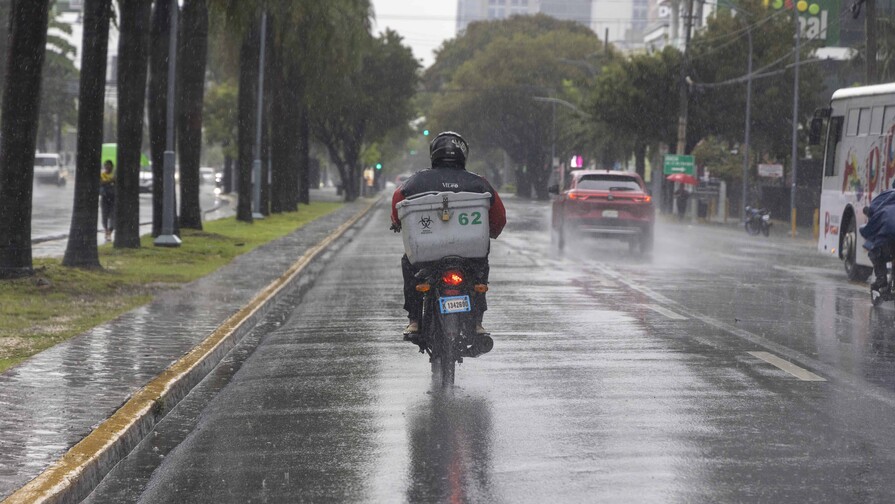
    Residents of the Dominican Republic are bracing for several days of disrupted weather conditions, as a combination of a low-pressure trough and an incoming humid air mass set the stage for heightened rainfall beginning Thursday, according to national meteorological officials.

    Speaking from the Dominican Institute of Meteorology (Indomet), lead meteorologist Cristopher Florian explained that the combined system, paired with the south and southeastward shift of the trough, will drive a sharp rise in atmospheric moisture across the island nation. This uptick in humidity will not be limited to Thursday alone, Florian noted: rainfall will remain a prominent feature through Friday, with intense downpours, thunderstorm activity, and even a measurable risk of small hail in the country’s higher-elevation mountainous regions.

    The unstable pattern will extend across the entire remainder of the week, far beyond just the Thursday-Friday window, forecasters confirmed. Even on Wednesday, conditions already mirror the unsettled trend, as the existing trough maintains its position over the region and is joined by a second trough system, triggering scattered rain events across multiple districts of the country.

    While meteorologists do not project extreme, record-breaking cumulative rainfall totals over the coming days, a key hazard remains: saturated soil from recent precipitation events has left many areas vulnerable to flash flooding and landslides, meaning existing national alert levels will stay in effect for the foreseeable future.

    Forecasters have mapped out a timeline for rain progression on the current day: precipitation will first emerge across the country’s interior regions by early afternoon, with light to moderate showers expected to arrive around 1:00 p.m. in populous provinces including Puerto Plata, Santiago, Espaillat, and Hermanas Mirabal.

    By late afternoon, around 5:00 p.m., rainfall activity is projected to intensify across western, central, and southern provinces including Santiago Rodríguez, San Cristóbal, San José de Ocoa, La Vega, and La Romana. For the capital city of Santo Domingo, cloud cover will begin building by 6:00 p.m., creating conditions that can quickly spawn intense localized downpours across the metro area.

  • The director of Indomet reiterates that the rains will persist for the rest of the week

    The director of Indomet reiterates that the rains will persist for the rest of the week

    Top Dominican Republic meteorological officials have stood by their earlier forecast for a rain-dominated week, confirming that after a 48-hour lull in precipitation, intense downpours will return to much of the country through the weekend.

    Gloria Ceballos, director of the Dominican Institute of Meteorology (Indomet), made the announcement Thursday, noting that the brief reduction in rainfall between Tuesday and Wednesday was only a temporary shift within the broader established weather pattern. She explained that the ongoing combination of elevated atmospheric humidity and warm southeast winds continues to pull moisture-heavy cloud formations inland from surrounding seas, setting the stage for renewed heavy rain starting this Thursday afternoon and continuing into the evening.

    Ceballos specified that this wet weather system will hold steady across the country through Friday, before tapering to lower intensity rain showers that will still persist across the weekend of Saturday and Sunday.

    The heaviest precipitation will be concentrated in the country’s eastern, central and northern regions, as well as along the border zone shared with neighboring Haiti. In response to the forecast, authorities have issued two tiers of weather alerts for affected provinces. A yellow alert, indicating elevated risk of weather-related hazards, is in effect for 14 jurisdictions: Santo Domingo, the National District, San José de Ocoa, Santiago Rodríguez, San Pedro de Macorís, Santiago, Puerto Plata, Monseñor Nouel, La Altagracia, San Cristóbal, La Romana, El Seibo, Hato Mayor and La Vega. A lower-level green alert, calling for continued precaution, has been activated for 12 additional areas: María Trinidad Sánchez, Monte Plata, Duarte (with a particular focus on the Lower Yuna region), Hermanas Mirabal, Samaná, Espaillat, Sánchez Ramírez, Valverde, Montecristi, San Juan, Independencia, and Elías Piña.

    Emergency management officials are urging the public to remain vigilant as the wet conditions extend into the weekend. Juan Manuel Méndez, director of the country’s Emergency Operations Center (COE), reiterated that residents should not drop their guard against potential flood and landslide risks tied to the prolonged rainfall. He specifically warned people living in high-risk zones to avoid attempting to cross swollen rivers, streams and ravines, and emphasized the importance of staying updated on changing conditions through official government bulletins and the national emergency hotlines 911 and 809-472-0909.

  • Parmessar pleit voor versterkte parlementaire samenwerking op IPU-bijeenkomst in Turkije

    Parmessar pleit voor versterkte parlementaire samenwerking op IPU-bijeenkomst in Turkije

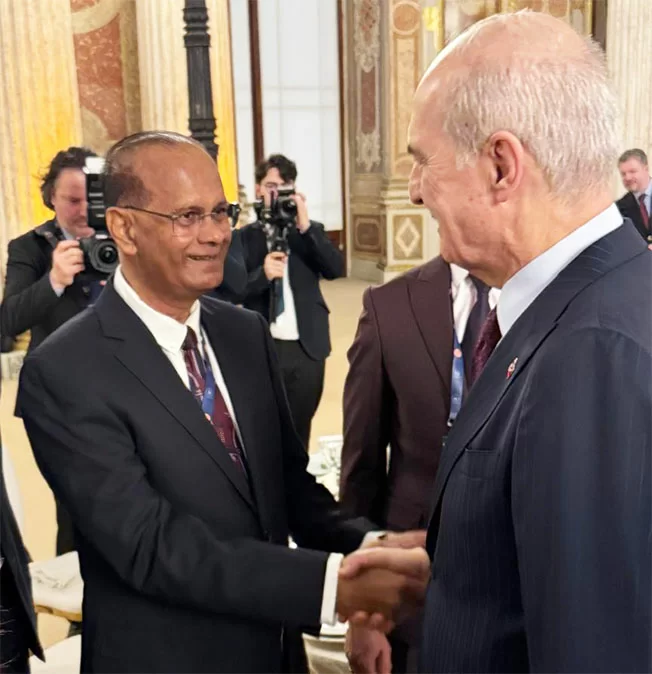
    On Saturday, at the ongoing Inter-Parliamentary Union (IPU) global conference hosted in Türkiye, Rabin Parmessar, leader of the National Democratic Party (NDP) parliamentary faction in Suriname, delivered a landmark address to an assembly of over 1,000 parliamentary representatives from more than 150 countries.

    Parmessar centered his speech on the urgent need for coordinated cross-border parliamentary collaboration to address pressing shared global challenges. Against a backdrop of rising geopolitical friction across multiple regions, he emphasized that robust democratic institutions, unwavering commitment to democratic values, and shared global responsibility are non-negotiable foundations for navigating today’s turbulent international landscape.

    As one of the world’s largest multilateral platforms for parliamentary dialogue, the IPU conference brings together not only elected parliamentarians but also delegates from dozens of international intergovernmental organizations and civil society non-governmental organizations. The summit serves as a critical space for constructive discussion and coordination on core global issues ranging from democratic governance and inclusive sustainable development to international peace and security.

    In his remarks, Parmessar also highlighted the outsized importance of continued active engagement from smaller sovereign nations in global multilateral forums. Specifically pointing to his own country Suriname, he stressed that national parliaments across all states, regardless of size or economic power, play an irreplaceable role in upholding governmental transparency, advancing good governance, and ensuring accountability to citizens.

    Parmessar is leading the three-person Surinamese parliamentary delegation to the conference, joined by Asis Gajadien, parliamentary faction leader of the Progressive People’s Party (VHP), and Ines Pané of the Basic Party for Renewal and Democracy (ABOP). Suriname’s participation in this year’s IPU conference aligns with the country’s broader long-term diplomatic strategy to strengthen its global standing and deepen its contributions to inclusive multilateral cooperation, according to delegation sources.

  • GBB grijpt in bij gronduitgifte Apoera; BV’s ingetrokken en South-Drain opnieuw bekeken

    GBB grijpt in bij gronduitgifte Apoera; BV’s ingetrokken en South-Drain opnieuw bekeken

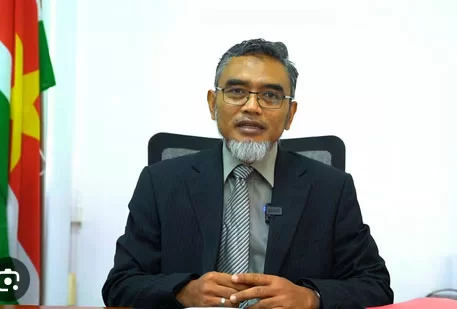
    In an official announcement dated April 19, Stanley Soeropawiro, Suriname’s Minister of Land and Forest Management (GBB), has ordered the revocation of multiple statements of willingness (BVs) for land parcels located along the highway leading to Apoera, following the confirmation of procedural violations during the original allocation process. Simultaneously, a separate land parcel at South-Drain, earmarked for the construction of a new docking pier, has been placed on an accelerated re-evaluation track to resolve outstanding procedural questions.

    An internal ministry audit found that the initial land allocations failed to fully comply with existing regulatory protocols and legal requirements. According to a statement from the GBB, decisive intervention was a necessary step to restore the rule of law in land allocation processes and safeguard public trust in the government’s management of state land resources. The ministry emphasized that it is proactively addressing all confirmed irregularities, with a dual focus on upholding legal certainty and advancing sustainable long-term development across the entire Apoera region.

    Beyond the Apoera road parcels, the South-Drain plot is undergoing a full second review across both legal and administrative dimensions. Internal ministry reports have flagged potential gaps and shortcomings in the original decision-making process that led to the parcel’s allocation, as well as in subsequent administrative actions related to the site. Minister Soeropawiro has issued a formal warning that any legal transactions involving the South-Drain parcel carry significant unaddressed legal risks, and has called on all involved parties to refrain from entering into such agreements until the review is completed.

    The South-Drain parcel is classified as a strategically critical asset for the broader economic and infrastructure development of the Corantijn region, as well as for overland connectivity to Apoera. Because of this strategic importance, the legality and validity of all original decisions regarding the site will undergo a full, comprehensive audit to resolve all outstanding questions.

    The Surinamese state has reserved the right to pursue additional legal action or implement alternative arrangements aligned with the public good if the review finds that further action is necessary. Once the full legal review process is concluded, the Ministry of Land and Forest Management will release a full public update on the findings and next steps.