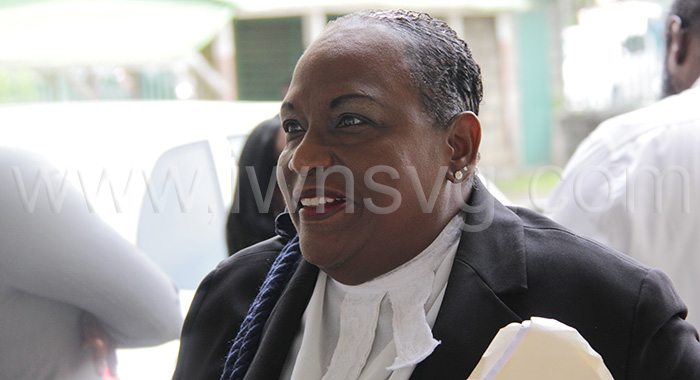
A high-profile political dispute has erupted in St. Vincent and the Grenadines over a proposed constitutional amendment, with a former opposition senator bringing forward a years-old allegation of improper legislative maneuvering by current Opposition Leader Ralph Gonsalves and his Unity Labour Party (ULP).
Kay Bacchus-Baptiste, a former New Democratic Party (NDP) senator and electoral candidate, made the claims while responding to ULP criticism of the sitting NDP government’s plan to amend the constitution to clarify candidate qualification requirements for public office. The controversy comes as the ULP has challenged the eligibility of two sitting NDP politicians — Prime Minister Godwin Friday, who has held a parliamentary seat since 2001, and East Kingstown Member of Parliament Dwight Fitzgerald Bramble, who won re-election to a second five-year term — ahead of the November 27, 2025 general election.
The ULP’s two petitions, set for a joint hearing from July 28 to 30, argue that Friday and Bramble are disqualified from running for office because they voluntarily obtained Canadian citizenship, a claim that turns on the interpretation of existing constitutional language around candidate eligibility.
Bacchus-Baptiste acknowledged that the NDP’s amendment proposal comes while the court cases are pending, but pushed back against ULP claims that the change is an improper attempt to influence the legal outcome. To counter the accusation, she recalled a 2000s incident when she and fellow activist Nicole Sylvester brought a legal challenge against a Gonsalves-led ULP government’s EC$1 levy on passengers traveling to the Grenadines via the main ferry terminal.
At the time, Bacchus-Baptiste explained, the ULP administration imposed the fee without any legal authority to collect the charge. When the legal team prepared to file for an injunction to block the collection, the ULP rushed through a new regulation overnight to retroactively legalize the tax — directly pre-empting the court hearing.
“When we were preparing to go to court the morning to deal with the injunction that we were applying for, we were presented with this regulation that they woke up the printery and got it done overnight, the minister, and presented it to us, effectively to bar our injunction,” Bacchus-Baptiste told iWitness News.
The case was appealed to the Court of Appeal but never received a hearing, she said. The fee was eventually withdrawn after Gonsalves faced public pressure to drop the charge, leading Bacchus-Baptiste’s team to withdraw their appeal as the core issue was resolved. Bacchus-Baptiste said the incident proves Gonsalves is fully aware of the tactic of changing legislation to defeat pending court cases — the very action the ULP is now accusing the NDP of taking.
However, the former senator emphasized that the NDP’s current proposal is fundamentally different from the ULP’s 2000s overnight regulatory change. St. Vincent and the Grenadines’ existing electoral law already requires candidates to hold Commonwealth citizenship to run for office, she explained. The amendment only fills a gap in the constitution’s definition section, rather than changing the existing eligibility rule. The clarification, she argued, has long been needed and is not an attempt to alter the rules of the election mid-stream.
Bacchus-Baptiste also noted that the NDP’s current position on the constitutional language aligns with the party’s stance in 2009, when it campaigned against the ULP’s proposed constitutional changes. At that time, Gonsalves and his ULP administration campaigned in favor of the amendments, arguing that the changes would enshrine the right of any Commonwealth citizen residing in St. Vincent and the Grenadines to run for public office, a position consistent with the NDP’s current clarification push.