博客

  • LETTER: Election Vandalism Sparks Call for Respectful Election Conduct

    LETTER: Election Vandalism Sparks Call for Respectful Election Conduct

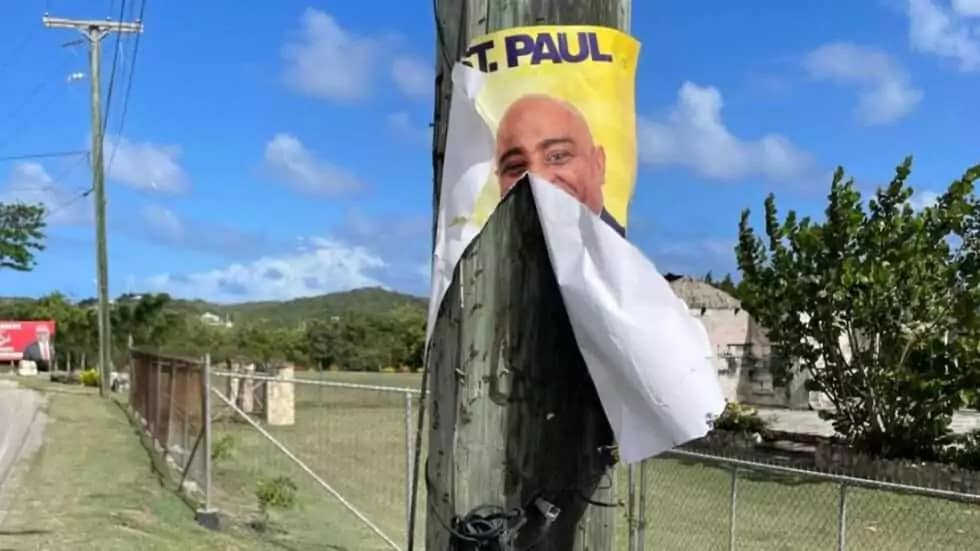
    As pre-election political tensions rise across Antigua and Barbuda, a prominent political figure has sounded the alarm over a recent act of destructive vandalism in Freeman’s Village, calling for immediate, widespread condemnation of the attack on a political billboard. In an open letter addressed to the press, Glenford Peters framed the incident as far more than a minor case of property destruction, arguing that it strikes at the core of the island nation’s long-held democratic values.

    Peters emphasized that acts of vandalism targeting campaign materials, which have become increasingly common during this heated election cycle, pose a direct threat to the fundamental democratic right to free expression. Antigua and Barbuda, he noted, built its national identity on a legacy of resilience, grassroots struggle, and the hard-won right to self-determination. That history, he argued, creates a binding obligation for political opponents to treat one another with basic respect, even when their ideological positions diverge sharply.

    Contrary to the idea that democratic participation demands uniform political alignment, Peters pointed out that the system is built on tolerance, open dialogue between competing camps, and the maturity to accept that other people and groups have every right to hold perspectives that differ from one’s own. What makes the current wave of vandalism so concerning, he added, is that it signals a worrying departure from the tradition of healthy, respectful political competition the nation has worked to build, shifting the political landscape toward open hostility and deep, unnecessary division.

    Destroying opposing parties’ campaign materials, silencing alternative political voices, and intimidating supporters of rival candidates does nothing to strengthen any political cause, Peters stressed. Instead, it erodes the integrity of the democratic process for every citizen, regardless of political affiliation. He called on all political actors and ordinary voters across the country to reject these destructive acts of intimidation, and instead work collectively to build a national political culture rooted in mutual respect.

    Peters argued that it is entirely possible for citizens and politicians to hold firm to their own political beliefs while still upholding the right of others to advocate for their own positions. Disagreement, he noted, is a healthy and inevitable part of democracy, but that does not require personal or destructive conflict between opponents. At this pivotal juncture in Antigua and Barbuda’s national development, Peters urged the entire nation to come together, setting aside conflict in favor of unity, mutual understanding, and a shared commitment to the democratic values that unite all citizens of the country.

  • Pigs Paradise Owner Thanks Public and Authorities After Mosquito Bay Access Restored

    Pigs Paradise Owner Thanks Public and Authorities After Mosquito Bay Access Restored

    After weeks of disrupted access to one of Antigua’s most beloved coastal tourism destinations, the operator of Pigs Paradise Antigua has issued a public statement of gratitude to community members, government agencies, and cross-sector stakeholders following the formal restoration of public entry to Mosquito Bay’s Jolly Harbour North beach area.

    Chantelle Winter, founder and owner of the popular swimming-pig attraction, emphasized that the successful resolution of the access dispute would not have been possible without widespread collective action from Antiguans across the island, who rallied together to highlight how restricted beach access was threatening local livelihoods.

    In her official remarks, Winter shared: “I want to extend my sincere thanks to every single person who contributed to restoring public access to Mosquito Beach. This issue touched far more than just our operation.” Among the groups impacted by the weeks-long access block were local commercial fishermen, regular recreational beach users, and a wide network of tourism-dependent small businesses that rely on visitor traffic to the area.

    Winter specifically credited the grassroots public movement—headlined by a community petition titled “We the People of Antigua and Barbuda”—with creating the momentum needed to resolve the impasse and block further restrictions on public access. The petition, organized by Winter and local supporters, called on developers Albert Hartog and Orange Limited to preserve permanent public access to the coastal area and allow Pigs Paradise to continue operating its popular tourist attraction.

    Winter was clear that the dispute went far beyond the future of her small business, noting the broader ripple effects on the island’s tourism-dependent economy. She explained: “The impact stretched far beyond my team and I. It hurt tour guides, local taxi operators and their industry associations, boat service providers, street vendors, and our cruise line industry partners, all of whom depend on visitor flow to this area.”

    She also extended her gratitude to Antigua’s Ministry of Tourism and other government authorities for their role in mediating the dispute and supporting the relocation of her operation to the restored access point.

    In an effort to clear up widespread public misperception, Winter stressed that the fight for restored access was never rooted in political motivation. Instead, the campaign centered entirely on protecting public right of way to coastal space and safeguarding hundreds of local jobs tied to tourism in the area. “This has never been about politics. This was about protecting access, livelihoods, and ensuring the public space remains available to everybody,” she reaffirmed.

    Winter also addressed separate public criticism that emerged around the attraction, pushing back firmly against unsubstantiated allegations surrounding animal welfare and visitor safety. She confirmed that Pigs Paradise maintains strict operational protocols to uphold both animal care and guest safety standards. “The well-being of our animals and the safety of our guests are of the utmost importance,” Winter said, adding that the attraction retains consistent veterinary oversight and adheres to rigorous national and international operational standards.

    Looking ahead, Winter noted that Pigs Paradise remains fully committed to operating in full compliance with local regulations, continuing to drive inclusive economic growth for Antigua, and maintaining open lines of communication with all stakeholders moving forward. The original petition, which drew thousands of signatures, highlighted that the attraction is a major tourist draw for Antigua that generates critical income for a wide ecosystem of local workers, from taxi drivers and tour guides to small hoteliers and independent small business owners across the island.

  • COMMENTARY: Nation-builder – The life & times of Dominica’s former Chief Cultural Officer Raymond Lawrence

    COMMENTARY: Nation-builder – The life & times of Dominica’s former Chief Cultural Officer Raymond Lawrence

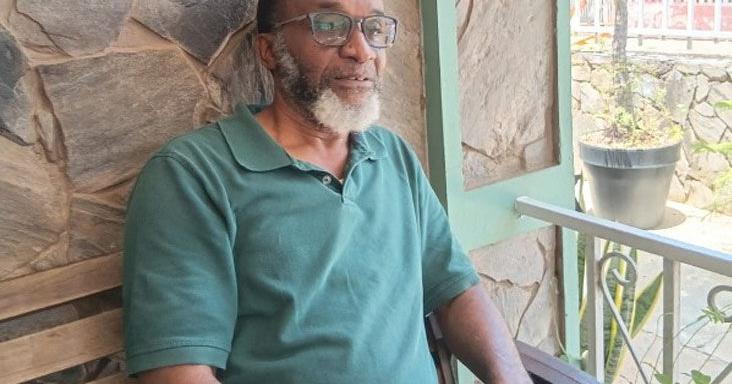
    A new biographical profile of former Dominican Chief Cultural Officer Raymond Lawrence, produced from an in-depth interview held in late March 2026, is being released as part of a critical cultural preservation initiative led by Gabriel J. Christian, a Dominican attorney, author and publisher. This project forms the core mission of Pont Casse Press, the independent publishing house founded in 1992 by Christian and his late collaborator Dr. Irving W. André, a former Canadian Superior Court Judge. Through oral histories, video biographies, and written documentation, the initiative works to capture and preserve the legacies of prominent Dominican figures whose contributions laid the foundation for the modern nation, ensuring these stories remain accessible for future generations as part of the island’s living historical record.

    Born in Roseau, Dominica, in January 1954, Lawrence grew up in a household that prioritized education, entrepreneurial spirit, and artistic achievement. His parents Hugh Lawrence and Doris Durand Lawrence ran a successful local soft drink factory and retail shop at a time when small-scale Dominican entrepreneurship was a core expression of national economic self-determination. The Lawrence home was also steeped in musical tradition: his older sister Jean Lawrence emerged as one of Dominica’s most influential cultural leaders, shaping the island’s choral music scene through her direction of the Siffleur Montagne Chorale, which raised national standards for musical performance and built widespread cultural pride across the country.

    Lawrence’s early academic journey took him through Convent Preparatory School for primary education, followed by the elite Dominica Grammar School, where he honed his academic focus and early sense of civic duty. He completed his sixth-form studies at St. Mary’s Academy between 1970 and 1972, and complemented his classroom learning with service in the Cadet Corps, an experience that instilled lifelong habits of leadership, discipline, and national responsibility. His musical training began early under the tutelage of Lemuel McPherson Christian OBE, the legendary composer who wrote Dominica’s national anthem, grounding Lawrence in the artistic traditions that would define his lifelong career.

    He later expanded his academic training in the United States, earning a bachelor’s degree from the University of Steubenville in Ohio and a master’s degree from the University of North Texas. These international experiences deepened his expertise in communications, performing arts, and cultural administration, equipping him with the skills to lead national cultural policy and development work back home.

    Lawrence’s professional career began in broadcasting, where he worked from 1972 to 1982 at both Radio Dominica and Radio Antilles. The role gave him a national platform to connect with Dominican communities and helped him recognize media’s unique power to strengthen collective national identity. Parallel to his media work, he launched his cultural organizing career in 1971 by co-founding the Waitu Kubuli Dance Troupe alongside fellow cultural practitioners Gwyneth Joseph and Arlington James. Under his early leadership, the group transformed traditional Dominican folk dance into a rigorous, respected national performance art, and brought Dominican culture to regional audiences through tours across Antigua and other Caribbean neighbors.

    Lawrence’s work grew from the foundation laid by an earlier generation of Dominican cultural nation-builders. He joined the ranks of icons like Dr. Alwin Bully, the late playwright, artist, educator and former Chief Cultural Officer who institutionalized theater arts and strengthened Dominica’s national festival traditions; Pearle Christian, the beloved grassroots cultural leader who worked to keep national culture rooted in community life; and Mable Cissy Cauderion, a pioneer who preserved Creole musical traditions that form the backbone of Dominican cultural identity.

    Over his decades of public service, Lawrence would go on to serve with distinction as Dominica’s Chief Cultural Officer, holding the post for 24 years across two tenures: from 1990 to 2014, and again from 2017 to 2021. In this role, he rejected the framing of culture as a narrow category of isolated performance, instead defining it as the complete way of life of the Dominican people. Working alongside fellow cultural administrators Rosalind Paul and Matthew Olivace, he centered his leadership on a clear mission: preserve Dominica’s unique ancestral traditions while nurturing new artistic excellence and innovation.

    One of Lawrence’s most historically significant contributions was his leadership of the revitalization of the Dominica Cultural Centre at the Old Mill, a site with deep, layered historical meaning. The center is built within the surviving stone walls of a 19th-century sugar mill plantation, a relic of the slavery era where enslaved Africans were forced to labor to generate wealth for European colonial powers. Lawrence recognized the critical importance of reclaiming this fraught space as a site of cultural affirmation, rather than leaving it shrouded in historical silence.

    Under his direction, major restoration and preservation work transformed the site. Lawrence organized the transfer and conservation of a historic steam locomotive from the former Bath Estate plantation, implemented specialized conservation techniques to protect the site’s aging historic structures, led the conversion of unused buildings into functional cultural spaces including dance studios, and secured partnership funding for improvements from organizations including UNESCO and the U.S. Embassy. Through this years-long effort, he turned a site born of colonial exploitation into a thriving hub for artistic expression and public historical education.

    Throughout his career, Lawrence consistently argued that culture must serve to strengthen national character. He voiced public concern about eroding social values, and pushed for cultural policy that reinforces dignity, discipline, and mutual respect among younger generations. For Lawrence, culture was never separate from nation-building: it shapes how a people understand their own identity and their collective responsibility to one another.

    Lawrence’s life and career represent far more than a tenure in public administration. It is the story of a cultural patriot who recognized that a nation’s strength depends not only on physical infrastructure and economic growth, but on shared identity, collective memory, and national pride. As a broadcaster, educator, organizer, preservationist, and administrator, he spent decades working to ensure that Dominica’s rich cultural inheritance would remain a living, active force in national life, rather than a forgotten relic of the past.

    In documenting Lawrence’s story, Pont Casse Press advances its core mission to honor the figures who built modern Dominican civilization. Lawrence’s life stands as a testament to the truth that the most enduring nation-builders are those who preserve the spirit of their people. After more than 50 years of relentless service, he has secured his place among the most respected cultural guardians in Dominica’s history. A full biographical video of Lawrence’s story is available for public viewing.

  • COMMENTARY: World Heritage Day Renews Call to Safeguard Heritage Sites Under Threat

    COMMENTARY: World Heritage Day Renews Call to Safeguard Heritage Sites Under Threat

    When the word “heritage” is mentioned, many people picture only ancient stone monuments or dusty museum displays — but the United Nations Educational, Scientific and Cultural Organization (UNESCO) offers a far broader, more meaningful framing. As UNESCO defines it, heritage encompasses all cultural, historical, and social legacies passed between generations, stretching from celebrated historic landmarks and museum collections to living traditional practices and modern artistic expressions. More than just a connection to the past, this collective heritage enriches daily life and lays the foundation for inclusive, innovative, and socially resilient communities around the globe.

    Two core pillars anchor the concept of heritage: passing existing legacies to future generations, and protecting those legacies from harm long enough to be shared. Today, this protection work has become more critical than ever. Safeguarding the world’s cultural and natural heritage, alongside nurturing dynamic creative cultural sectors, is now recognized as a foundational strategy to address the defining challenges of the 21st century, from accelerating climate change and systemic poverty to widening inequality, the global digital divide, and rising interregional conflicts and humanitarian emergencies.

    Each year on April 18, the global community observes World Heritage Day — officially titled the International Day for Monuments and Sites — to honor the cultural legacies passed down through history and reinforce shared responsibility for their preservation for future populations. The annual observance traces its origins back to 1982, when the International Council on Monuments and Sites (ICOMOS) formally established the commemoration on that date.

    The 2024 theme for World Heritage Day, “Emergency Response for Living Heritage in Contexts of Conflicts and Disasters,” shines a spotlight on the growing urgency of protecting and managing cultural and natural sites facing existential threats from climate change, armed conflict, and unplanned rapid urbanization.

    Too often, heritage sites are dismissed as nothing more than revenue-generating tourist attractions. But this narrow perspective must evolve: heritage is a living, evolving force that shapes collective identity and holds shared collective memory for communities across the globe. This year’s theme acts as a timely wake-up call, reminding the world that coordinated global action is urgently needed to protect sites already grappling with damage from war, climate disasters, and other man-made and natural calamities.

    To build a sustainable future for heritage protection, young people must be at the center of efforts, advocates argue. Young generations must be educated on how heritage shapes their own personal and cultural identity, and expanded access to educational visits to heritage sites is a key step forward. As repositories of collective knowledge and centuries of history, heritage sites deserve a permanent place in national education curricula across every region, to ensure the next generation inherits both an awareness and appreciation of these legacy sites.

    The cost of losing unprotected heritage is incalculable. Any destruction or irreversible damage to a heritage site is a loss for all humanity, not just the community or nation that hosts it. For local populations, heritage sites often act as the social glue that fosters collective belonging and intergenerational community bonding. They are also spaces where current generations can connect — or reconnect — with centuries of architectural innovation and master craftsmanship.

    One of the most widely recognized frameworks for global heritage protection is the UNESCO World Heritage Designation. A UNESCO World Heritage Site can be any location — from a single building or entire historic city to a protected natural landscape — deemed to hold Outstanding Universal Value (OUV) for all of humanity. To earn designation, sites must meet at least one of 10 specific cultural or natural criteria, prove their historical authenticity and structural integrity, and present a robust long-term management plan to guarantee sustained protection.

    The Caribbean region is home to a diverse collection of acclaimed UNESCO World Heritage Sites, spanning cultural and natural landmarks across multiple island nations. Key sites include Port Royal and the Blue and John Crow Mountains in Jamaica, Morne Trois Pitons National Park in Dominica, Historic Bridgetown and its Garrison in Barbados, the Pitons Management Area in St. Lucia, Antigua’s historic Naval Dockyard, the Historic Area of Willemstad in Curacao, and Alejandro de Humboldt National Park in Cuba. What makes the World Heritage system unique is its universal mission: all designated sites belong to every person on Earth, regardless of which country or territory they are located in.

    On this World Heritage Day, the global call goes out for nations, communities, and individuals to unite in respect for shared heritage, and to lift up the rich tapestry of global cultural diversity that these sites represent. Preserving monuments, living traditions, and archaeological sites for future generations requires sustained, collective effort from all sectors of society.

    As Nelson Mandela once noted: “Our rich and varied cultural heritage has a profound power to help build our nation.” This commentary was contributed by Wayne Campbell, an educator and social commentator focused on development policies and their impacts on culture and gender equity.

  • Gajadien: Zonder kansen voor jongeren groeit wereldwijde instabiliteit

    Gajadien: Zonder kansen voor jongeren groeit wereldwijde instabiliteit

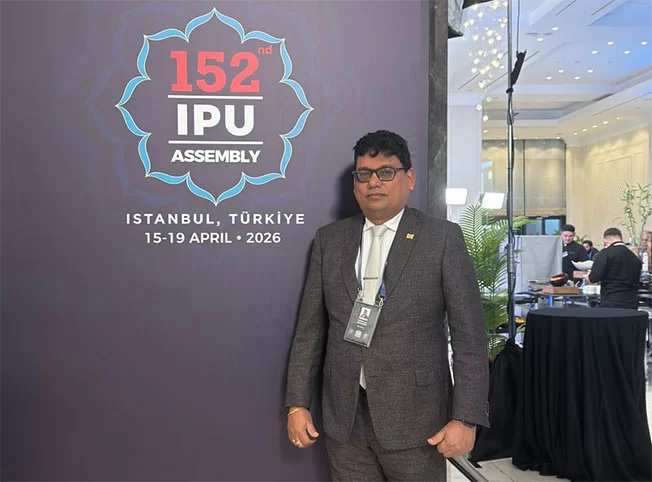
    At the 152nd General Assembly and a working session of the Inter-Parliamentary Union’s (IPU) High-Level Advisory Group (HLAG), Asis Gajadien, parliamentary group leader of Suriname’s Progressive Voters Party (VHP) and member of the Surinamese National Assembly, has urged the global community to launch coordinated, targeted international action to address youth marginalization and the global youth employment crisis.

    Gajadien, who joined the Surinamese parliamentary delegation to the IPU meeting hosted in Turkey, warned that overlapping global crises – from ongoing armed conflicts across multiple regions to widespread post-pandemic economic instability – are eroding the future prospects of young generations worldwide. He emphasized that the persistent lack of sustainable, dignified work for young people does not only harm individual livelihoods; it also fuels simmering social tension, weakens community resilience, and erodes public trust in democratic and governmental institutions.

    The Surinamese lawmaker argued that global policy frameworks must explicitly recognize the interconnected nature of armed conflict, economic disruption, and soaring youth unemployment. He positioned decent work as a core foundation for long-term sustainable peace, arguing that this goal can only be achieved through strengthened, inclusive international cooperation. “A generation robbed of future opportunity is a risk the world simply cannot afford to take,” Gajadien stated during his address.

    Turning to the root causes of terrorism and violent extremism during the HLAG session, Gajadien stressed that these threats cannot be separated from systemic economic inequality, social exclusion, and the lack of long-term perspective for disenfranchised young people. He pushed back against relying solely on repressive security measures to counter extremism, noting that such approaches fail to address the underlying conditions that drive radicalization.

    Instead, Gajadien called for targeted investments in robust public institutions, inclusive economic development, and expanded access to economic opportunity as a long-term, structural solution to prevent radical recruitment. He also drew attention to the growing role of digital platforms in spreading extremist ideology online, highlighting the urgent need for balanced regulatory legislation that protects public safety while upholding fundamental human rights and digital freedoms.

    Across his remarks, Gajadien advocated for a cohesive, integrated global approach to tackling these linked challenges, arguing that security, sustainable development, and the rule of law are inherently interconnected and cannot be advanced independently of one another.

  • Piarco to  merge gates

    Piarco to merge gates

    Starting this Friday, air passengers flying domestic routes through Trinidad and Tobago’s Piarco International Airport will enter departure gates through the same centralized corridor as international travelers, as local aviation authorities advance a wide-ranging modernization project to bring the facility in line with global industry benchmarks.

    In an official statement published Wednesday, the Airports Authority of Trinidad and Tobago (AATT) outlined the core changes to airport operations: the existing ground-floor domestic departure lounge will be permanently closed, and all outbound travelers will be directed to a new integrated “All Gates” system that combines domestic and international departure processing.

    While domestic passengers will gain full access to the airport’s duty-free commercial zone, they will not be eligible to purchase duty-exempt goods. Instead, participating retailers will offer a selection of duty-priced, tax-paid items that domestic travelers can purchase, alongside the expanded food and beverage options that will now be open to all passengers regardless of their route.

    Under the new unified layout, domestic travelers will have access to all concession offerings across the airport’s entire eastern and western concourses, covering Gates 1 through 14. AATT officials noted that the restructured gate system will streamline passenger processing workflows and cut down on redundant checks, creating a far smoother journey from check-in to boarding.

    The gate unification is just one component of a broader multi-phase modernization push to update operations at Trinidad and Tobago’s busiest international airport, a project launched in response to consistent, stable demand for inter-island travel along the high-traffic Trinidad-Tobago airbridge route. AATT emphasized that all changes will be implemented in full compliance with International Civil Aviation Organization standards and recommended industry practices.

    Travelers will also see upgrades to the airport’s centralized security checkpoint, which has been expanded to add extra screening lanes and fitted with new cutting-edge scanning technology designed to reduce crowding and speed up wait times. To keep the new security process moving efficiently, AATT has reminded all passengers to adhere to the global 3-1-1 rule for carry-on liquids: all liquids, gels and aerosols must be carried in containers no larger than 100 milliliters (3.4 ounces), all contained within a single clear, quart-sized resealable plastic bag. The rule applies to beverages, toiletries, spreadable foods and any other pourable, sprayable substances, with standard exemptions granted for necessary prescription medications and baby food.

    The AATT is rolling out the operational changes in close partnership with the Tobago House of Assembly, Caribbean Airlines — the primary operator of the Trinidad-Tobago airbridge — and other key industry stakeholders. Coordination meetings are scheduled for the coming week to work through any transition kinks and ensure the shift to the new system goes off without major disruption for travelers.

    In a separate statement addressing growing public speculation on social media, Varma Khillawan, acting chief executive officer of Caribbean Airlines, pushed back against unfounded claims that the airline planned to reduce service on the airbridge route. Khillawan reaffirmed the airline’s long-term commitment to maintaining consistent, high-capacity service between the two islands, noting that the airline added extra capacity over the recent Easter holiday to move more than 11,000 passengers between Trinidad and Tobago.

    “Caribbean Airlines continues to service the airbridge. We have always serviced the airbridge, and we support Tobago by providing the airlift capacity that connects the two islands,” Khillawan said. “The airbridge service has been stable, and we have not received any customer complaints about the quality of our service. Any concerns that are raised will be addressed promptly. We have already invested heavily in this route, and we can assure the traveling public that we will continue to deliver reliable airbridge service for the foreseeable future.”

  • Siren mystery: who gave  Guevarro the blue lights?

    Siren mystery: who gave Guevarro the blue lights?

    A cloud of uncertainty hangs over the Trinidad and Tobago Police Service (TTPS) following revelations that newly appointed Commissioner of Police Allister Guevarro holds official approval to outfit his privately registered SUV with emergency blue lights and a siren – but key figures at the top of the law enforcement agency cannot confirm who first authorized the rare exemption.

    The controversy traces back to February 18, 2025, four months before Guevarro was confirmed as the nation’s top police officer in June 2025. Licensing Division officers pulled over a close relative of Guevarro who was driving the SUV on the southbound lane of Sir Solomon Hochoy Highway near Gasparillo, acting on suspicions the vehicle failed to meet road-worthiness and window tint regulations. During the stop, officers discovered the hidden emergency lights and siren, which were not in use at the time of the stop. When questioned, the driver produced official approval documentation for the equipment issued by a former Transport Commissioner.

    Multiple law enforcement sources confirm the initial approval rested on a formal request from a former TTPS Commissioner, but the chain of authorization has become muddled in conflicting and incomplete accounts. When the Sunday Express launched its investigation, Transport Commissioner Clive Clarke – who has held his post since 2020 – clarified that his recent extension of Guevarro’s approval only came after he received an official correspondence from then-Acting TTPS Commissioner Junior Benjamin in early 2025. Clarke emphasized he has never granted any other TTPS officer permission to install emergency equipment on a private vehicle during his tenure, and he has no knowledge of what conditions the prior Transport Commissioner set for the original approval.

    Three days after the February traffic stop, Clarke sent a formal letter to Benjamin requesting clarity on three key points: whether Guevarro held the rank of Assistant Superintendent at the time, whether TTPS protocol requires officers of that rank – particularly those assigned to the elite Special Branch intelligence unit – to have emergency equipment on private vehicles, and whether such a requirement applied to Guevarro specifically. In a March 18, 2025 response obtained by the Sunday Express, Benjamin confirmed Guevarro had been promoted to Superintendent and was acting as Senior Superintendent in Special Branch at the time. He noted that TTPS does not mandate emergency equipment for any rank by default, but instead approves such requests on a case-by-case basis at the discretion of the Police Commissioner. Benjamin justified his support for the approval by pointing to the flexible, high-stakes nature of Special Branch intelligence work, arguing Guevarro needed the emergency equipment to respond to rapidly developing situations regardless of whether he was driving his private vehicle or his assigned official police vehicle. He concluded by requesting the approval be maintained to allow Guevarro continued access to the equipment.

    On March 24, 2025, Clarke formalized the two-year approval under Regulations 28(m)(iv) and 49 of the Motor Vehicles and Road Traffic Act, Chapter 48:50. The approval sets strict conditions: the equipment must be removed if the vehicle is sold or transferred; the approval documentation must be kept in the vehicle at all times for inspection by police or transport officials; the lights and siren may only be activated during genuine emergencies; the approval does not exempt the vehicle from compliance with other road traffic laws; and all equipment must be removed if Guevarro leaves his current post. The approval is set to expire on March 27, 2027, or when the vehicle is disposed of, whichever comes first.

    Despite this paper trail, critical questions remain unanswered. When the Sunday Express contacted Junior Benjamin, who was acting Commissioner when the renewed approval was processed, to ask about the original authorization that preceded his 2025 letter, he replied that he could not honestly remember who first recommended the exemption to the former Transport Commissioner. Repeated attempts to get comment from Guevarro himself also failed to resolve the ambiguity. In a brief WhatsApp response to the outlet’s crime reporter, Guevarro only stated he had no issue with the story and would not attempt to block its publication. No further response was provided to follow-up questions about who authorized the original request or what specific justification was provided for the rare privilege.

    Guevarro, a 28-year veteran of the TTPS, has spent the majority of his career in Special Branch, rising steadily through the ranks from junior officer to acting Superintendent of the elite unit before his appointment as Commissioner of Police in June 2025. The lack of transparency around the approval has now sparked ongoing questions about internal protocol and accountability at the highest levels of Trinidad and Tobago’s national police force.

  • PAAC flags Opposition senator’s conduct

    PAAC flags Opposition senator’s conduct

    A high-stakes parliamentary controversy has emerged in the wake of a damning special committee report that calls attention to serious alleged ethical breaches by an opposition senator tied to a government pharmaceutical acquisition inquiry. The Special Report from the Public Administration and Appropriations Committee (PAAC), chaired by House Speaker Jagdeo Singh, was formally tabled in Parliament Friday, and has set the stage for a heated debate on the senator’s conduct scheduled for this week.

    The PAAC launched its ongoing probe to examine the state’s pharmaceutical importation and regulatory approval processes, with a focus on alleged impropriety surrounding government contracts. During public and closed-door hearings, multiple claims emerged against former Health Minister Terrence Deyalsingh, including accusations that he pressured the National Insurance Property Development Company Ltd (Nipdec) to prioritize fast-track payment arrangements for a large pharmaceutical firm. Deyalsingh was subsequently called to submit formal evidence to the committee in response to these allegations.

    According to the PAAC’s findings, digital forensic analysis of a document Deyalsingh submitted on April 8 revealed that tracked edits to the memorandum could be traced directly to Opposition Senator Janelle John-Bates, who currently sits as a voting member of the investigative committee. Metadata from the document further indicates that John-Bates assisted in drafting the entire submission ahead of a critical closed-door PAAC meeting held on March 25. When confronted with this electronic evidence, the senator openly admitted to her involvement in editing and preparing the document, the report confirms.

    The special report argues that John-Bates’ actions violate the core expectation of impartiality required of committee members, and amount to a coordinated conspiracy to commit contempt of Parliament. The committee said it is “concerned and troubled” by John-Bates’ behavior, which has cast a shadow over the integrity of the inquiry’s proceedings. It has formally recommended that John-Bates be immediately recused from the pharmaceutical investigation or replaced entirely on the committee, noting that her admission of making material edits to a witness’s evidence leaves no room for dispute over her involvement.

    Following the revelation of her actions, John-Bates requested additional time to seek formal advice and explore her procedural options, committing to provide a formal response to the committee by April 20, 2026. The committee granted this request and adjourned its regular proceedings, but an emergency PAAC meeting was called just four days later, on April 16, after multiple members raised alarms that confidential closed-door committee proceedings had been leaked to the public—a clear violation of standing orders for both the House of Representatives and the Senate.

    During that emergency session, the committee reviewed the emerging allegations of bias against John-Bates, assessed the public interest implications of the scandal, and mapped out next steps for the inquiry. Ahead of the meeting, on April 15, John-Bates had sent a formal letter to PAAC Chair Jagdeo Singh addressing the alleged disclosure of confidential proceedings, requesting that a full independent inquiry be launched to determine if any standing orders or committee protocols had been broken. She also requested formal notification of the specific breaches she is alleged to have committed, and the exact sections of parliamentary standing orders that are said to apply to her case.

    The PAAC’s majority report confirms that plans are already in motion to remove John-Bates from the investigative committee and replace her with another opposition senator. Beyond her committee seat, the report warns that John-Bates’ continued presence as a sitting member of the Senate could create discomfort among other parliamentary representatives and ultimately erode public trust in the effective functioning of the national legislature. A majority of PAAC members agreed that the senator’s conduct was so “egregious” that it warranted an immediate special report to both chambers of Parliament for full review.

    Not all committee members have backed the majority’s findings, however. Opposition MP Camille Robinson-Regis refused to sign the special report, instead submitting a formal minority report that rejects the majority’s conclusions and harshly criticizes the PAAC’s handling of the entire affair. Robinson-Regis pushes back hardest on the claim that John-Bates’ continued participation in the Senate would disrupt parliamentary work, calling the assertion speculative, unsupported by concrete evidence, and constitutionally invalid.

    “Parliamentary participation cannot be curtailed on the basis of subjective discomfort,” the minority report states, warning that the majority’s reasoning sets a dangerous procedural precedent for future parliamentary misconduct cases. Robinson-Regis also argues that the committee acted prematurely and unfairly by escalating the matter before John-Bates had the opportunity to submit her formal response after seeking legal advice—a request the majority simply ignored, which the minority says constitutes a direct violation of fundamental natural justice principles.

    Robinson-Regis emphasizes that any legislator facing allegations is legally and procedurally entitled to receive clear, specific details of the claims against them and a full opportunity to respond before any binding conclusions are drawn. She also takes the majority to task for its superficial handling of the leak of confidential closed-door proceedings, noting that while the majority acknowledged the breach occurred, its response was “cursory and wholly inadequate.” She criticizes the committee for moving forward with emergency meetings and key disciplinary recommendations without first identifying the source of the leak or assessing its full impact on the inquiry.

    Beyond the John-Bates case itself, the minority report outlines a broader pattern of declining parliamentary standards within the PAAC under its current leadership. Robinson-Regis cites multiple troubling lapses in procedure, including the introduction of material that blurs the line between evidence and partisan advocacy, the chair’s willingness to accept and rely on this unvetted material without following proper procedural rules, questioning of witnesses based on content that has not been formally admitted as evidence, an increasingly adversarial and partisan tone to committee hearings, and the unauthorized disclosure of confidential proceedings by a committee insider.

    Robinson-Regis points to a 2019/2020 precedent set by the Joint Select Committee on National Security, where serious concerns about a member’s impartiality were handled in what she describes as a “disciplined and proportionate” manner. In that case, the committee only recommended removing the member from the specific investigative committee, rather than calling into question their broader right to participate in parliamentary proceedings. While the minority report stresses that improper conduct by legislators should never be excused, it argues that all disciplinary action must adhere to frameworks of fairness, proportionality, and procedural integrity—standards that it says were completely ignored in the handling of the John-Bates case.

    Parliament is expected to take up the debate on the special report and the allegations against John-Bates this week, with partisan tensions already running high over the competing conclusions from the PAAC majority and minority.

  • Guevarro: Deeply troubling discovery

    Guevarro: Deeply troubling discovery

    A grim discovery at a public cemetery in Trinidad has triggered a top-priority criminal investigation, after local law enforcement confirmed 56 bodies – 50 of which were infants – were found dumped in an unauthorised mass grave yesterday morning.

    The find was first reported to police shortly after 10 a.m. by a local resident who was testing an air rifle at his private garden adjacent to Cumuto Cemetery, according to official statements from the Trinidad and Tobago Police Service (TTPS). The witness told investigators he spotted a group of men digging a pit, and when he approached to ask what work they were carrying out, the men admitted they were disposing of children’s remains. As the man neared the site, the workers fled in a silver vehicle, the witness added. Shortly after making his report, the informant accompanied two detained suspects back to the local Cumuto Police Station.

    Police quickly identified the two detained men as employees of a local private funeral home. Investigations so far indicate the pair were acting on instructions from their employer, who told them to dig the grave for what was described as a pauper’s burial. The men dug a pit roughly 1.8 metres by 0.9 metres on the cemetery’s northern perimeter, and dumped dozens of remains including the 50 infants, law enforcement confirmed.

    TTPS Commissioner Allister Guevarro, who formally announced the launch of the investigation, emphasised the case has been assigned the highest possible priority. “This discovery is deeply disturbing, and we fully recognise what profound emotional shock this will cause to affected families and the entire nation,” Guevarro said in an official address. “The TTPS is pursuing this case with urgency, profound sensitivity, and an unwavering commitment to uncover every detail of the truth. Every set of remains must be treated with dignity and handled in full accordance with the law. Any individual or institution found to have violated that fundamental duty will be held fully accountable for their actions.”

    Following the initial report, responding officers immediately secured the discovery site, where specialist crime scene investigators have begun detailed forensic examinations to gather evidence. Police confirmed the breakdown of remains: 50 infants, four adult men, and two adult women. Preliminary on-site assessments found that most adult remains carried official identification tags, with only one adult male’s remains untagged. Two remains – one adult male and one adult female – showed clear evidence of having already undergone post-mortem examinations before being dumped at the site.

    Investigators told reporters that preliminary lines of inquiry point to this being a case of unlawful disposal of unclaimed corpses, though examinations are still ongoing to confirm the full circumstances of the discovery. The TTPS stressed in an official media release that this is an active, evolving investigation, and further forensic testing is currently underway to trace the origin of all remains and identify any violations of law or official burial procedures. Specialised TTPS units including the Homicide Bureau and Northern North Division are leading the ongoing probe.

    Speaking to media on the background of unclaimed body procedures in the country, former health minister Dr Fuad Khan confirmed that the burial of unclaimed remains follows established, formal protocols in Trinidad, even though the practice is rarely discussed publicly due to its sensitive nature. Khan explained that under standard rules, unclaimed bodies are first publicly advertised for multiple cycles in major local newspapers. If no family member or party comes forward to claim the remains, they are either buried by funeral homes or made available for anatomical research at medical schools.

    Khan noted that mass burials for unclaimed paupers are a standard, cost-saving practice, and that without this process, public morgues would quickly run out of storage space for newly deceased people, overwhelming the entire end-of-life care system. “This is a deeply sensitive topic, so details of these burial processes are not normally publicised – it is just carried out as a necessary part of the system,” Khan said. “It reflects the harsh reality that some people face at the end of life, when they have no family or money to cover an individual burial.”

    As of press time, the TTPS has not announced any formal charges, and investigations into how the remains came to be disposed of in an unauthorised mass grave are continuing.

  • Despair and joblessness  haunt Laventille, PoS

    Despair and joblessness haunt Laventille, PoS

    As the United National Congress (UNC) administration prepares to mark its first full year in power, a Sunday Express on-the-ground investigation into Port of Spain’s long-marginalized Laventille and Gonzales districts reveals a landscape of widespread economic stagnation, deep-seated systemic stigma, and growing community hopelessness. Long considered strongholds of the previous People’s National Movement (PNM) government, the districts are currently represented by Members of Parliament Keith Scotland and Stuart Young. During the outlet’s visit two Fridays ago around midday, empty streets and shuttered community spaces painted a stark picture of the area’s current reality.

    When approached at her open-air food stall in East Dry River, Laventille, 33-year-old vendor Kennipher Hector answered the question of where all the locals had gone with a simple explanation: just two days prior, a police-involved shooting had left one man wounded in the leg, and residents had responded by imposing an unofficial curfew on themselves, staying off the streets entirely. “Yesterday, I opened for business expecting the usual stream of regulars, and the whole area was dead silent—you could have heard a pin drop a mile away,” Hector recalled. She added that while shootings are a depressingly common occurrence in the area, this episode’s chilling effect on public life was unprecedented. She suspects the ongoing state of emergency (SoE) amplified fears, with many young men worried police will sweep up innocent residents alongside anyone suspected of criminal activity. That quiet emptiness led Hector to close up early that Friday to tend to cleaning, an unusual break from her normal routine.

    Hector pointed to two interconnected crises at the root of Laventille’s struggles: chronic mass unemployment and persistent violent crime. She explained that without formal work opportunities to support their households, many residents are pushed toward illegal activity to make ends meet. A large part of the employment barrier, she argues, is the pervasive stigma that comes with living in Laventille. “Once you’re from this area, you’re already labeled untrustworthy, so you never get first pick at any job—you have to create something for yourself,” she said. That stigma pushed her to launch her own food venture, but even self-employment comes with crippling challenges: the area suffers from persistent unreliable water access, forcing her to rely on costly, irregular water truck deliveries when her stored water runs low or becomes discolored. Moving her business into central Port of Spain is not a viable option, she says, given exorbitant commercial rent and steep competition for new small business owners. The steady outflow of residents leaving the area for better opportunities has only made it harder for the few remaining local businesses to stay afloat, she added, and the same cycle of stigma and exclusion is already repeating for the next generation growing up in Laventille.

    The sense of abandonment is equally palpable across the hillier Gonzales district, where few residents are seen outside their homes outside of commutes to work, with young people mostly clustering around the local Upper Quarry community centre. Eighty-three-year-old Claudette Lewis, a long-term Gonzales resident who survives on a state pension, said the feeling of hopelessness in the community has grown dramatically sharper since the UNC won last year’s general election. She noted that while her own daily routine has not changed much, young people in the area have been completely cut off from opportunities to live with dignity. “The whole area is dead. Nothing is happening here at all, and it feels like the entire city of Port of Spain is an afterthought for this government,” Lewis said. She issued a direct appeal: “We have a community centre sitting empty right here. The government should come in, reach out to our young people, and get them working on something that matters.”

    Lewis explained that the Community-Based Environmental Protection and Enhancement Programme (CEPEP), once the largest source of local employment for Gonzales youth, has been shut down since the new government took office. Without CEPEP, young people are left with two bad options: travel into central Port of Spain to compete for scarce jobs that rarely hire Laventille locals, or stay home idle. Many end up relying on their grandparents’ pension checks to get by, or pick up occasional informal work cleaning yards or doing small chores for elderly residents like Lewis. “This is no way for young people to build a life,” she lamented.

    Wayne Lewis, Claudette’s 63-year-old son-in-law and a Tobagonian resident, joined the conversation to share his critical perspective on the political shift. He argued that the problems facing the community have actually worsened since the UNC took power, noting that the current administration has failed to deliver on the many campaign promises made by party leader Kamla Persad-Bissessar during her time in opposition and the 2025 election race. “A lot of people bought into what they said, gave them their votes, and now nothing has changed—it’s just gotten worse,” he said. He added that while he is able to fend for himself and cover his basic needs, he is deeply worried for the region’s young people who lack employable skills or formal work experience. He called the full shutdown of CEPEP unnecessary, arguing that the government could have simply replaced unpopular contractors rather than cutting the program entirely that employed hundreds of local workers. The irony, he noted, is that many of the local CEPEP workers who campaigned for the UNC ahead of the election were the first to lose their jobs when the government took office. Wayne also pointed to a sharp decline in water access: before the election, Gonzales had consistent running water seven days a week, with advance notice given for any scheduled outages. Today, the area only has water three days a week: Friday, Saturday, and Sunday.

    During the visit to the empty Upper Quarry community centre, reporters encountered a small group of five young men gathered at a nearby home. Jerry Phillip, the 36-year-old group’s de facto spokesperson, explained that all the residents of their small neighborhood grew up together and consider one another family, with no gang activity in the area. Even so, he said, just having a Laventille address blocks most young men from getting formal work anywhere else. “We don’t have any gangs here, so employers have no reason to write us off, but they do anyway just because of where we live,” Phillip said.

    Phillip acknowledged that formal work was also scarce under the previous PNM administration, but noted that just before last year’s election, local residents were hired to build a much-needed drainage line connecting the community centre to the area’s main staircase. “As soon as the election ended and the government changed, the project was halted immediately after we finished the drain,” he said. “We haven’t gotten any work or any support from the government since. The only time they come around now is to lock men up under the state of emergency.”

    Beyond unemployment, Phillip also highlighted long-running unaddressed infrastructure failures: a major road connecting Gonzales to Morvant, St Barbs, and central Laventille has suffered a significant landslip, and the community’s main drain is completely clogged with garbage. He warned that once the annual rainy season arrives, the road will become completely impassable, a problem that local leaders have promised to fix for more than a decade without any action. “All we ever get is empty promises and lip service, nothing ever changes,” he said.