Nearly five years after the Unity Labour Party (ULP), which held power in St. Vincent and the Grenadines for 25 consecutive years, was voted out of office in November 2021, new details are emerging about the long-term performance of state-owned enterprises that operated under its tenure. The incoming New Democratic Party (NDP) administration has been conducting a quiet, comprehensive review of these public entities, and early findings from the audit point to widespread mismanagement during the previous Ralph Gonsalves-led government.
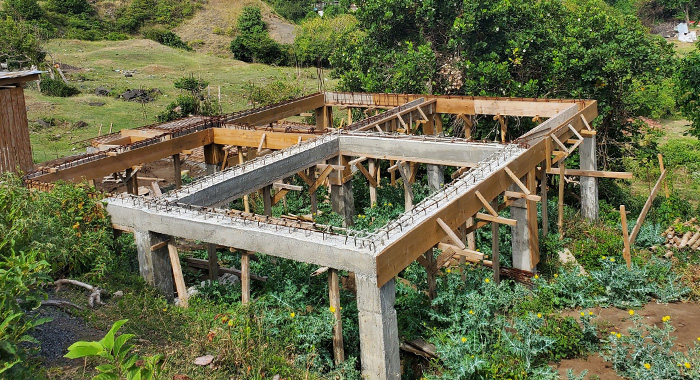
One of the first entities to face scrutiny is the state-owned Housing and Land Development Corporation (HLDC), a decades-old agency that has operated across successive administrations from both major political parties. Founded to drive planning and development of affordable residential and community land and housing for low-income households across St. Vincent and the Grenadines, the agency has been credited with delivering nearly 1,000 homes to vulnerable families over its 50-year history. It also played a key role in post-disaster recovery efforts, including repairing 40 homes severely damaged by Hurricane Beryl in 2024 and the 2021 eruption of the La Soufrière Volcano, and currently has 140 new housing units, including prefabricated units, in the pipeline or earmarked for construction.
Despite this legacy of public service, the NDP administration’s audit reveals a wide range of critical failures in governance, strategic planning and financial management that have left the HLDC in a fragile position. While the agency’s board of directors meets statutory composition requirements, the report documents persistent underperformance, particularly around meeting attendance. In 2025, board meeting attendance fell far below the average for all state-owned enterprises assessed, with many sessions barely reaching the required quorum to conduct official business.
Beyond attendance issues, the audit found no evidence that the HLDC has ever adopted formal strategic planning, a core function for public entities delivering long-term public services. The agency also fails to produce required annual work plans, and has never published statutory annual reports detailing its programmatic activities, as required by law. Its role in managing public-funded affordable housing projects has also shrunk steadily over time: most major government affordable housing initiatives, such as the flagship “Lives to Live” program, are now contracted directly to private construction firms and managed through the Ministry of Housing, sidelining the HLDC entirely. Today, the agency operates largely as a project manager for privately built middle-income housing developments, collecting only administrative and professional fees for its services, the report concludes.
The most serious violation uncovered by the audit is the HLDC’s 14-year gap in completing legally required financial audits. The agency has not published an audited financial statement since 2012, a violation of Act No. 7 of 1976 that the report calls “an adverse reflection on governance, transparency, and financial hygiene.”
Analysis of the HLDC’s internal management accounts from 2021 to 2025 paints a grim picture of the agency’s financial health. Profitability has swung wildly over the five-year period, with the HLDC posting net losses in three of the five years, and an average negative profit margin of 16% across the full period. Revenue, which is almost entirely generated from project activity, has fluctuated drastically: project revenue hit EC$5 million in 2022, plummeted to just EC$532,000 in 2023, fell to zero in 2024, then rose to EC$7 million in 2025. This volatility drove overall annual revenue from a peak of EC$7.33 million in 2022 to just EC$796,663 in 2024, before recovering partially to EC$4.35 million in 2025. Annual net results mirrored this instability: a EC$240,632 profit in 2021, a EC$61,444 loss in 2022, a EC$652,697 profit in 2023, a EC$813,447 loss in 2024, and a EC$209,675 loss in 2025.
As of the end of 2025, the HLDC carries EC$6 million in overdue accounts payable, indicating the agency has consistently failed to settle its outstanding bills by their required due dates. The audit also uncovered a EC$9 million balance in deferred interest on a loan restructured with St. Vincent Cooperative Bank back in 2014; under the restructuring agreement, only principal payments have been made, with all interest payments pushed back, leading to the massive accumulated balance.
While the report notes that the HLDC maintained adequate liquidity over the 2021-2025 review period, with enough current assets to cover short-term obligations, the situation has deteriorated sharply in recent years. By 2025, the agency’s liquidity ratio was barely above the regulatory benchmark, leaving no buffer to absorb unexpected financial shocks. Balance sheet strength has also weakened significantly: shareholders’ equity fell 40% from EC$5 million in 2023 to just EC$3 million at the end of 2025, eroded by annual operating losses and accumulated deficits, leaving taxpayers with a negative return on their public investment.
The HLDC is not the only state-owned enterprise under review by the NDP administration. While an anonymous source with knowledge of the review process declined to name all entities currently being assessed, the source confirmed that the National Lotteries Authority is also part of the audit, noting that preliminary details about the authority’s performance have already been reported in other local media outlets.
While the audit acknowledges that the HLDC has made meaningful contributions to socioeconomic progress, expanding affordable housing access and supporting social inclusion for low-income communities across the country over its decades of operation, it also makes clear that urgent structural and financial reforms are needed to restore the agency to functional, transparent public service.