博客

  • PM’s statement on the passing of journalist Linda Straker

    PM’s statement on the passing of journalist Linda Straker

    The Caribbean nation of Grenada is grieving the loss of one of its most respected media figures, veteran journalist Linda Straker, whose death was announced with deep sorrow by the country’s government.

    In an official statement released by the Office of the Prime Minister, Grenadian Prime Minister Dickon Mitchell paid tribute to Straker’s decades-long legacy as a trailblazer in the country’s media sector. Hailing her as a fearless reporter who formed the backbone of Grenada’s journalistic community, Mitchell highlighted that Straker leaves behind a durable body of work that showcases her sharp intellectual humor, unwavering commitment to sharing accurate information, and unyielding dedication to uncovering the truth. “Her distinctive voice, incisive questioning, and relentless passion for public storytelling will leave a void that will be deeply felt across the nation,” Mitchell added.

    Throughout her career, Straker built a reputation as a thorough and curious researcher, focused intently on both domestic Grenadian issues and broader regional affairs across the Caribbean. She never shied away from sharing her honest perspectives, or from posing challenging, penetrating questions to public officials during press conferences, government briefings, and open public forums, a practice that cemented her status as a watchdog for the Grenadian public.

    Straker’s far-reaching contributions to the advancement of journalism and open public discourse in Grenada will be honored and remembered for generations to come, per the official statement. On behalf of the entire Government and people of Grenada, Prime Minister Mitchell extended sincere condolences to Straker’s children, immediate family, close loved ones, and all members of the local and regional media community who worked alongside her.

    The statement closed with a final tribute: “May her soul rest in eternal peace.”

  • Antigua and Barbuda Delivers Standout Performance in Dominican Republic

    Antigua and Barbuda Delivers Standout Performance in Dominican Republic

    Against the backdrop of Santo Domingo’s bustling sports arena in the Dominican Republic, Antigua and Barbuda’s young table tennis prospects have turned heads across three top-tier regional tournaments, delivering a breakout campaign led by rising stars Stuti Kashyap and Mekhi Simmons that marks a historic turning point for the small nation’s standing in Caribbean table tennis.

    The pair’s impressive run got off to a strong start at the CAC Qualifier, where Kashyap locked in her position among the top ranked players in the Central American and Caribbean region. Simmons, meanwhile, just missed out on a top-four finish, but claimed the first alternate spot — a result that confirms his rapidly growing competitive edge at the regional elite level.

    Next up, the young athletes stepped onto the court of the Senior Central American & Caribbean Championships, testing their skills against far more experienced opponents from across the region. Neither athlete backed down from the challenge: both held their own against seasoned competition, picking up invaluable high-stakes experience and proving that Antigua and Barbuda can compete confidently alongside the region’s top table tennis programs.

    The climax of the tournament trifecta came at the Caribbean Youth Championships, where the Antigua and Barbuda squad surged to claim podium honors in multiple events. Kashyap led the charge, first capturing the highly sought-after U19 Girls Singles national title, before pairing with Shatal Charles of St. Lucia to take home U19 Girls Doubles gold. Her dominant performance across both disciplines cements her status as one of the top young table tennis talents in the entire Caribbean.

    Kashyap and Simmons then joined forces for the U19 Mixed Doubles draw, where the young pairing added another hardware to Antigua and Barbuda’s tally with a bronze medal finish, further underlining the program’s rapid upward trajectory in the region.

    Beyond the immediate medal haul, the campaign has delivered historic long-term success for the nation: Kashyap’s performance has secured her qualification for three major 2026 international tournaments — the CAC Games set for July, the ITTF Youth Pan American Championships in August, and the ITTF Americas Championships in October. This achievement marks an unprecedented milestone for both Kashyap as an individual athlete and for Antigua and Barbuda’s table tennis program as a whole.

    Per the Antigua and Barbuda Table Tennis Association (ABTTA), this standout campaign is far more than a collection of strong results: it is a clear signal of growing momentum for the sport across the nation. With a new wave of talented young players emerging, growing competitive confidence at the regional level, and tangible, consistent results to prove their progress, Antigua and Barbuda table tennis is no longer just showing up to compete — it is steadily climbing the ranks to become a contender to watch in the Caribbean.

  • Suriname en VS plannen veldbezoeken in visserijsector

    Suriname en VS plannen veldbezoeken in visserijsector

    Following a high-level meeting between U.S. Chargé d’Affaires Paul Watzlavick and Suriname’s Minister of Agriculture, Animal Husbandry and Fisheries Mike Noersalim, the two countries have locked in a series of concrete collaborative agreements focused on expanding bilateral engagement in Suriname’s agriculture and fisheries sectors.

    In the near term, the two partners will conduct joint field visits across Suriname, with a particular focus on assessing existing infrastructure and opportunities in the country’s fisheries industry. Beyond the initial site assessments, a dedicated U.S. agricultural mission is scheduled to travel to Suriname to conduct in-depth explorations of untapped potential across the broader agri-food value chain.

    Minister Noersalim emphasized that Suriname maintains an open, welcoming policy toward foreign investors that are committed to partnering with local stakeholders to drive inclusive national development. “We are actively seeking investors that are ready to contribute to every stage of our domestic value chain, from raw material extraction through to finished end products,” Noersalim stated in comments following the meeting.

    Technological innovation in agriculture emerged as a core topic during the bilateral discussions. Watzlavick highlighted how leading U.S. agricultural operations have boosted productivity through advanced mechanization and digital technology, allowing for higher output with optimized staffing levels. The two sides have agreed to pilot these technology-driven agricultural models in Suriname, a move that Noersalim stressed requires sustained openness to foreign investment to succeed.

    Multiple U.S. companies have already expressed formal interest in investing in Suriname’s agricultural sector and establishing demonstration farms to showcase modern production practices, according to Noersalim. Under the framework of these planned investments, the majority of the workforce for any new projects will be hired locally, with joint ventures between U.S. and Surinamese firms positioned as a key structure for collaboration. Local job creation remains a central priority for all planned initiatives, the minister confirmed.

    To prepare for this incoming investment and technological transition, Noersalim noted that Suriname must prioritize investments in skills training and workforce development to equip local workers for roles in modernized agricultural operations. Details of these training programs will be finalized and rolled out in the coming months as collaboration progresses.

    A long-term policy goal underpinning this collaboration is addressing Suriname’s current trade imbalance, where the country imports more agricultural and food products than it exports. Noersalim acknowledged that reversing this trend will not happen overnight, but emphasized that the government is already working to lay the necessary foundational reforms. These steps include strengthening key public institutions, improving internal governance structures within the Ministry of Agriculture, and rebuilding the skilled technical workforce that has been depleted in recent years. “We are already moving forward on these reforms, and we remain optimistic that every challenge can be addressed with targeted solutions,” Noersalim added.

  • NP to THA: $50m to link fuel lines to new terminal

    NP to THA: $50m to link fuel lines to new terminal

    A major infrastructure oversight has emerged at Tobago’s newly constructed ANR Robinson International Airport terminal, with the National Petroleum Company Ltd (NP) confirming that connecting fuel lines from the existing airport site to the new terminal will carry a price tag of $50 million. THA Chief Secretary Farley Augustine recently verified the cost estimate, shedding light on a critical gap in the terminal’s construction: the new building was completed without any on-site fuelling infrastructure at all. In an interview with local media outlet Express, Augustine detailed that discussions with NP several months ago yielded the $50 million projection, adding that the national energy firm is currently debating whether it will absorb the full cost of the project. For Augustine and the Tobago House of Assembly, the project is far more than a basic construction fix: the regional body wants the new terminal to meet modern, efficient, and competitive standards that match or exceed peer airports across the Caribbean and broader global aviation network. The oversight, Augustine explained, is not an unforeseen mistake. He recalled that former THA Infrastructure Secretary Trevor James first flagged the need for integrated fuelling infrastructure back in 2022, when the ruling PNM Cabinet held a gathering in Tobago at the prime minister’s official residence. Despite the early warning, Augustine said, the THA’s input was sidelined, and construction proceeded without including this critical utility. “But of course, as usual, in 2022 the THA was ignored, our thoughts were not considered at the time and the terminal was built without that critical infrastructure there,” Augustine stated. Even with the past disregard for local input, Augustine emphasized that the THA remains committed to collaborating with Trinidad and Tobago’s central government to get the terminal fully and efficiently operational. He framed the airport as a key economic asset for Tobago, rather than just a transit hub for passengers. “Airports in of themselves are potentials for generating income; we have to see the airport as such and not just as a hub for planes to land and pick up people, but as an income-generating facility,” he said. The issue has now gained traction at the national level: Minister of Works and Infrastructure Jearlean John acknowledged the problem in a Monday interview with Express, confirming that the project will require design adjustments to address the fuelling gap. John shared that she shares concerns over the terminal’s current lack of fuelling capacity, and has scheduled a meeting with relevant officials later this week to map out a path forward. The full proposal to resolve the issue will be presented to the national Cabinet for consideration next week.

  • Howai: We hear public frustration

    Howai: We hear public frustration

    A public and industry uproar over new banking fees rolled out by one of Trinidad and Tobago’s largest commercial lenders has pushed the national Central Bank to step in, launching direct talks with Republic Bank just weeks after the rate increases took effect on May 1. The policy change has drawn sharp criticism from business leaders, who warn it will exacerbate existing economic strains on small businesses and ordinary consumers alike.

    Central Bank Governor Larry Howai publicly acknowledged the widespread public frustration sparked by the fee adjustments in an official statement released this week, emphasizing that the regulator does not dismiss the intensity of public anger. “Over the years, we have closely monitored fees and charges of commercial banks, and the data on this remains publicly available on our website,” Howai noted, adding that the regulator’s role is far from passive. “Citizens deserve a financial system that works in their interest, and the Central Bank will continue to advocate for that.”

    The Central Bank clarified the boundaries of its regulatory authority under existing law: Section 44A(1) of the Central Bank Act only grants the institution power to set maximum and minimum caps for interest rates and fees related to loans, advances and other credit facilities. This mandate does not extend to everyday general service fees, including account maintenance charges, in-branch transaction costs and ATM withdrawal fees. For these services, the Central Bank enforces transparency, fair disclosure and consumer protection standards through its 2018 Market Conduct Guideline for licensed financial institutions, which all banks are required to follow.

    To address growing concerns over unjustified fee increases, particularly at a time when domestic commercial banks have posted robust annual profits, the Central Bank confirmed it has recently completed a wide-ranging survey of six of the country’s largest commercial banks. The survey was designed to map out banks’ internal philosophies, governance frameworks and operational practices surrounding fee setting. A final report compiling survey findings and actionable policy recommendations is currently being finalized, and will be shared with the entire banking industry for consultation and implementation once complete.

    Among the key consumer protection tools the regulator highlighted are basic low-cost banking accounts, which all commercial banks have been mandated to offer under the 2021 Simplified Due Diligence Guidelines. These accounts are tailored specifically to low-income individuals and micro-enterprises, requiring minimal documentation and charging reduced or no recurring fees. The Central Bank encouraged consumers and small business owners affected by the recent fee hikes to inquire about these accounts at their local branch. The institution also announced it is actively expanding consumer protection support by reviewing the mandate and scope of the Office of the Financial Services Ombudsman, while ramping up outreach through its National Financial Literacy Programme to help citizens understand their consumer rights and compare banking options effectively. It also urged the public to utilize its free, public online Comparative Schedule of Fees and Charges, hosted on its official website, to make informed banking decisions.

    While the Confederation of Regional Business Chambers (CRBC) welcomed the Central Bank’s intervention, the industry group argued that the regulator’s current actions fail to address the immediate financial harm already being felt by businesses and consumers following Republic Bank’s fee hike. Small and medium-sized enterprises (SMEs) and everyday customers are already grappling with broad-based cost inflation and tight economic conditions, the CRBC noted, making the new bank fees far more than a minor inconvenience. “Increased banking fees directly affect the cost of doing business and the cost of living. For SMEs in particular, banking services are essential to daily operations, making these additional charges unavoidable and burdensome,” the group said in a statement.

    The CRBC made clear it opposes both the timing and the scale of the fee increases, calling for more decisive regulatory action to ensure bank fee structures remain fair, transparent, and aligned with the country’s current economic realities. The group is demanding full transparency from the banking sector to justify the new charges, as well as inclusive multi-stakeholder dialogue between regulators, financial institutions and business representatives to work toward a solution. It also called for targeted relief measures to cushion the blow for SMEs and financially vulnerable consumers, noting that a well-functioning financial system must balance efficiency with equity.

    “The stability and growth of Trinidad and Tobago’s economy depend heavily on the resilience of its business community. Any action that increases the cost of doing business without corresponding value must be carefully reconsidered,” the CRBC said, adding that monitoring and direct engagement, while valuable, are not enough without stronger regulatory action and clear policy direction. CRBC chairman Vivek Charran went as far as to say the fee hike marked a departure from the bank’s long history of supporting small businesses. “This is not the Republic Bank I know and that has held the hand of SMEs for some three generations. This is a different bank,” Charran told local outlet the Express.

    Concerns over the fee increase first emerged on April 27, when multiple chamber of commerce leaders warned that small businesses would bear the brunt of the new charges after Republic Bank first announced the adjustments. At that time, the CRBC argued that the new fees would add overwhelming pressure to SMEs already struggling with high operating costs, limited foreign exchange access and slowing consumer spending. Multiple local industry leaders echoed that concern this week: Chaguanas Chamber of Industry and Commerce President Baldath Maharaj noted that most SMEs operate on extremely thin margins and cannot absorb the extra costs, meaning the fees will likely be passed directly to consumers through higher prices. Greater San Fernando Area Chamber of Commerce President Kiran Singh added that the size and timing of the hike are particularly concerning given the commercial banking sector’s strong profitability, which stands in stark contrast to the ongoing struggles of the small business sector. Tourism Industry Association of Trinidad and Tobago President Lisa Shandilya noted that small tourism operators including guesthouses and independent tour guides are uniquely vulnerable to the new charges, as they rely heavily on regular digital banking transactions. Owners Dealers Association President Reval Chattergoon called the situation worrying, though not unexpected, amid national policy pushes to transition toward a cashless economy.

    As of this week, neither Republic Bank nor Finance Minister Davendranath Tancoo have responded to requests for comment on the controversy. When it first announced the fee increases, Republic Bank stated the changes were “part of our ongoing review of our products and services.”

  • $350M PAYOUT AT T&TEC

    $350M PAYOUT AT T&TEC

    A decades-long industrial dispute has reached a major milestone, as nearly $350 million in long-outstanding cost-of-living allowance (COLA) payments has been released to current and former workers of the Trinidad and Tobago Electricity Commission (T&TEC), Public Utilities Minister Barry Padarath has confirmed. The announcement came during a press interaction at the recent launch of a new solar power system for Angostura Holdings Ltd’s bitters bottling facility in Laventille’s Angostura House.

    Padarath explained that the disbursement fulfills a commitment made by the Prime Minister several months prior to resolve backlogged COLA obligations covering the 2015 to 2025 period, noting that the process is currently moving forward as planned. He added that government officials have maintained consistent, open dialogue with the Oilfields Workers’ Trade Union (OWTU), the primary representative body for T&TEC’s workforce, throughout the settlement process.

    “Over the last couple of months, we have paid out, I would say, close to $350 million in outstanding payments that were owed to T&TEC workers,” Padarath told reporters.

    The minister framed the COLA settlement as a core component of broader government efforts to stabilize industrial relations at the state-owned utility, clear long-standing unpaid obligations, and implement structural restructuring for the organization. Ongoing negotiations are already underway to address bargaining agreements for current and future contract periods, he confirmed, adding that T&TEC’s day-to-day operations remain fully stable amid the changes.

    “Morale is high in T&TEC. There are a lot of changes that are happening there, negotiations for the current period, and the outstanding ones will progress in the very near future. There is a good relationship with the OWTU, who is the majority trade union representative for T&TEC,” Padarath said. “We have seen significant improvements with respect to outstanding COLA and settlement of wages and so on. And therefore, we look towards the future.”

    Contacted for verification, OWTU Second Vice-President Reesa Ramlogan-Jodha confirmed that disbursements are proceeding under a structured phased plan that includes both active T&TEC employees and former workers, including retirees. The rollout began late last year for current staff, with payments continuing through the early months of 2026, she explained.

    “The payment would have been in one or two parts. Each part would have had tranches. So, in December 2025, January and February of 2026, active employees would have received what was outstanding,” Ramlogan-Jodha said.

    Following the completion of payments to current staff, focus has now shifted to former employees, with disbursements scheduled for May, June, and July of 2025. By the end of July, all outstanding COLA obligations will be fully settled, she confirmed.

    The COLA backlog is a decades-long industrial issue that has stretched back more than 10 years, Ramlogan-Jodha noted, explaining that the OWTU had repeatedly pushed previous T&TEC management teams to resolve the unpaid liability over the years. For much of that period, prior management administrations refused to even acknowledge that the payments were owed, a position that caused major delays in reaching any resolution.

    “The then management would not even acknowledge that there was a payment outstanding to workers and former workers who would have fallen within that period. As far as they were concerned, there was nothing owed,” she said.

    The turning point came following a change in government administration and a shift in T&TEC’s leadership, which brought a new, more collaborative approach to negotiations, Ramlogan-Jodha added. The new management team has been far more open to finding mutually acceptable solutions to outstanding worker issues.

    While the COLA backlog is nearing resolution, it represents only one part of a broader set of outstanding industrial issues between the OWTU and T&TEC. Negotiations over wage agreements for the 2015–2017 and 2018–2020 contract periods are still active, Ramlogan-Jodha noted, adding that the union has formally requested to restart discussions and multiple negotiating sessions have already been held. Though no final deal has been reached, both sides have committed to continuing bilateral talks to find common ground.

    For the 2015–2017 period, the Industrial Court previously issued a 0-0-0 wage ruling, which the OWTU appealed; the case is now back before the court. T&TEC has indicated it prefers to resolve both outstanding contract periods through direct negotiation, and if the parties can reach a voluntary agreement, the court case will be resolved accordingly, Ramlogan-Jodha said.

    She emphasized that the union remains optimistic about ongoing talks, citing the marked improvement in collaborative relations with the current T&TEC administration. Progress has also been made on other outstanding collective bargaining issues, including field worker placement and overall employment conditions, with incremental advances recorded since the end of last year.


  • Fire damages Globe City Plaza

    Fire damages Globe City Plaza

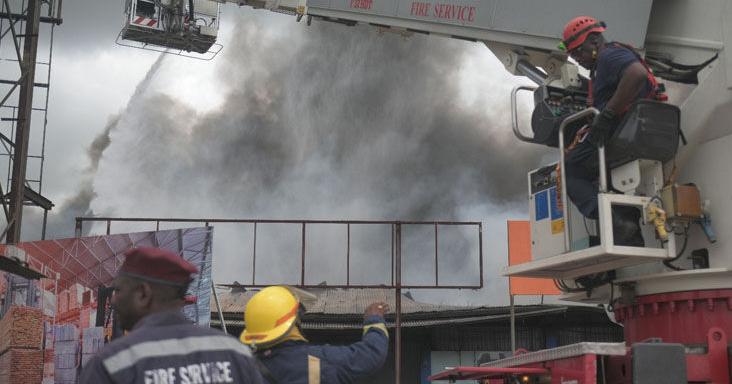
    A large-scale fire broke out at the landmark Globe City Plaza commercial complex in Chase Village, Trinidad on Wednesday, triggering a multi-division emergency response from the Trinidad and Tobago Fire Service (TTFS) that kept the blaze contained to one section of the site but left millions of dollars in estimated damage and disrupted dozens of local businesses.

    The fire ignited just after 9 a.m. local time, starting in a wholesale store located on the eastern side of the sprawling compound, which sits adjacent to the Connector Road highway near the Chase Village overpass. The alarm brought dozens of firefighters from across South and Central Trinidad to the scene, with a total of 35 personnel, five fire tenders, and a specialized Bronco Skylift aerial firefighting unit deployed to tackle the flames, acting Deputy Chief Fire Officer Ansar Ali told reporters.

    By midday, crews had successfully stopped the blaze from spreading to adjacent structures, including a foam factory at the rear of the complex and businesses on the western wing. Ali confirmed that the Water and Sewerage Authority (WASA) provided full support for firefighting operations, with no water supply shortages reported during the response; local media observed at least four truckloads of water delivered to the site within a three-hour window.

    Even after containing the spread, Ali noted that crews would need several additional hours to fully extinguish the fire, as collapsed roofing left smoldering hot spots trapped under debris. Fire teams worked through the afternoon to clear rubble and douse remaining embers. As of Wednesday evening, no fatalities had been reported, though a full sweep of the damaged area was still underway to confirm no one was unaccounted for.

    A preliminary cause of the fire has not yet been determined, with the investigation assigned to the Central Division’s Fire Prevention Investigation team. The full cost of damage is also still being assessed, though Ali gave an early estimated building value of $4 million, with the total value of inventory and commercial contents still unknown.

    The multi-business complex, founded by local businessman RS Jaglal, hosts at least 15 separate commercial operations ranging from retail stores, a hardware outlet, and food service spots to medical clinics, a dental practice, a spa, photo studio, pet supply store, and security firm. A front strip also houses dozens of independent food vendors.

    While two-thirds of the complex was saved thanks to the TTFS response, the incident still disrupted operations across the entire site. One tenant, who requested anonymity, confirmed all power to the plaza was cut immediately after the blaze, leaving all unaffected businesses closed indefinitely with no clear timeline for service restoration. Seven businesses in the fire’s eastern path were confirmed destroyed.

    For some vendors, however, the outcome was far better than expected. The owner of JoJo Gyro, a front-lot food cart, told reporters he was alerted to the fire just 30 minutes after it broke out and rushed to the site, only to find his business completely unharmed. He praised the TTFS for its rapid, effective response, noting crews arrived on scene within an hour of the blaze starting. Local resident Nicholas Britto, who saw thick plumes of smoke rising from his nearby home in Carlsen Field, confirmed the intensity of the fire, saying large flames were visible above the complex as crews worked to bring them under control.

    The heavy smoke from the blaze also triggered major traffic disruptions across the area, prompting authorities to close the Chase Village overpass temporarily. Backups stretched along both northbound and southbound highway lanes as emergency vehicles and onlookers converged on the site. The Ministry of Works and Infrastructure issued an advisory urging motorists to use alternative routes between the overpass and Southern Main Road near Thompson Road for the duration of emergency operations.

    Jearlean John, Member of Parliament for Couva North and the country’s Works Minister, visited the scene Wednesday and expressed deep sorrow for the business owners affected. “I am told that seven businesses were destroyed this morning, which means the loss of property, income, and jobs. It is extremely sad when people sacrifice for their families, for their dreams to lose it all in this terrible and unfortunate event,” John said, adding that she planned to meet with affected workers and business owners to offer support. John noted that senior TTFS leaders commended responding firefighters for their commitment, courage, and dedication, highlighting that their fast action saved roughly two-thirds of the entire complex from damage. Complex owners declined to comment to reporters while emergency operations were ongoing.

  • Analysts call for Al-Rawi’s removal

    Analysts call for Al-Rawi’s removal

    A growing parliamentary controversy in Trinidad and Tobago has two leading political analysts publicly calling for major changes to the People’s National Movement (PNM) opposition bench in the Senate, centered on the fate of veteran Opposition Senator Faris Al-Rawi amid a formal privileges investigation.

    The controversy traces back to last Friday, when Senate President Wade Mark launched a Privileges Committee probe into Al-Rawi and first-term Opposition Senator Janelle John-Bates. The investigation was triggered by a motion filed by Government Minister David Nakhid, who accused the pair of improperly assisting former Health Minister Terrence Deyalsingh draft a witness statement for the Public Administration and Appropriations Committee (PAAC), an act that allegedly constitutes interference with parliamentary committee work.

    Currently, Al-Rawi himself sits as a member of the Privileges Committee, which is chaired by Mark and also includes Attorney General John Jeremie, Government Senator Darrell Allahar, and Independent Senator Michael Simon de la Bastide, SC. Ahead of Wednesday’s scheduled Senate sitting, local newspaper the Express has confirmed that an announcement replacing Al-Rawi on the investigating committee is expected, a standard procedural step given that the probe centers on his own conduct. If the committee ultimately finds the two senators culpable of misconduct, it will submit a formal finding to the full Senate for a vote. Under current Senate Standing Orders, any suspension handed down has no fixed term, with the length determined entirely by a plenary resolution.

    Speaking to the Express, two independent political analysts have laid out stark differing but aligned calls for leadership action from PNM leader Pennelope Beckles, who has so far held off on a final decision regarding the pair’s future on the opposition bench.

    Dr. Winford James, a veteran political observer, argued that Al-Rawi, a former Attorney General and Senior Counsel, should be removed permanently from the PNM’s Senate delegation, while John-Bates—whom he described as a political neophyte—should be granted leniency and spared disciplinary action. James framed the ongoing probe as a symptom of growing tit-for-tat polarization between the ruling government and the PNM opposition, which has already levied accusations of bias against House Speaker Jagdeo Singh. He emphasized that as a veteran political and legal figure, Al-Rawi should have recognized the risk his actions posed to John-Bates’ fledgling career. “He has been around a long time and he’s a senior man in the party and in the law. And he should have known better and not imperilled the political career of Ms John-Bates,” James explained. “I’m not saying that she’s guilty or she’s not guilty of some indiscretion. But I think she should be given a second chance because she represents a younger generation in the PNM.” James added that disciplinary action against John-Bates would likely backfire politically for Beckles, while noting that Al-Rawi has already had repeated opportunities in senior political roles. He also pushed back against claims that Beckles’ delay in announcing a decision is a sign of political weakness, framing it instead as a cautious, deliberate approach. Beyond the core controversy, James also highlighted what he called a persistent pattern of sidelining Tobago-based PNM politicians, pointing to the exclusion of Melanie Roberts-Radgman, who was not put forward for a Senate seat by the PNM Tobago Council.

    In contrast, Dr. Maukesh Basdeo argued that retaining both Al-Rawi and John-Bates on the opposition bench is an untenable position for the PNM, pointing to documentary evidence that he says proves both are culpable. Basdeo noted that tracked changes embedded in Deyalsingh’s draft witness statement link most edits directly to Al-Rawi, a fact that was revealed during debate on the PAAC report, and that John-Bates has openly admitted her role in the process. Basdeo added that there is already a clear pattern of disruption stemming from the controversy: the Joint Select Committee (JSC) on National Security has already refused to sit with John-Bates as a member, and senior Government Minister Jearlean John publicly stated last week that government representatives will not participate in committee work alongside Al-Rawi. “This sets a clear pattern now that the operations of the committee system in Parliament will be affected by the Leader of the Opposition’s delayed response on dealing with this matter,” Basdeo warned. He echoed the procedural justification for Al-Rawi’s immediate removal from the Privileges Committee, noting that it is only natural for the senator to step aside given that the investigation concerns his own conduct.

  • Venezuela maintains ICJ does not recognise court in border controversy; says Spain was responsible for Essequibo

    Venezuela maintains ICJ does not recognise court in border controversy; says Spain was responsible for Essequibo

    On Wednesday, May 6, 2026, during ongoing oral proceedings at the United Nations’ highest judicial body, the International Court of Justice (ICJ), Venezuela doubled down on its longstanding refusal to recognize the court’s authority to adjudicate a decades-long territorial border dispute with neighboring Guyana centered on the contested Essequibo Region.

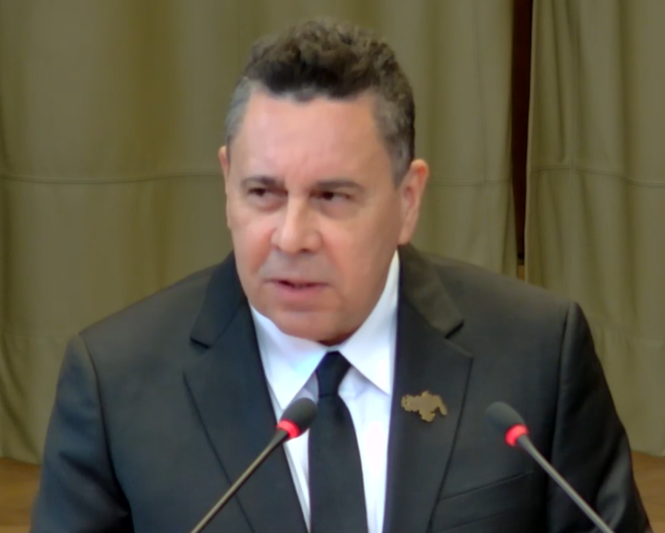
    Samuel Moncada, Venezuela’s designated agent to the ICJ, opened his remarks to the court wearing a lapel pin displaying a map of Venezuela that explicitly incorporates the 159,000-square-kilometer Essequibo Region – a move that has already drawn formal concern from Guyana through the Caribbean Community (CARICOM), the regional bloc of which Guyana is a member. The appearance comes just two days after Guyana presented its case to the ICJ, calling on the court to issue binding orders requiring Venezuela to remove all official maps labeling Essequibo as Venezuelan territory, and to rescind all domestic laws and constitutional amendments passed following a 2023 Venezuelan national referendum that formalized the country’s claim to the region.

    Addressing the court directly, Moncada emphasized that the 2023 popular referendum “unequivocally reaffirmed” Venezuelan voters’ unanimous rejection of the ICJ’s jurisdiction over the long-running disagreement. “That position has not changed. Venezuela has never consented to submitting this dispute to the jurisdiction of any court or arbitral tribunal,” he told the panel of ICJ judges.

    Moncada argued that any ruling by the court that interferes with the 1966 Geneva Agreement – the bilateral pact brokered by the United Nations that frames the dispute – would block any path to a resolution that satisfies both nations. “The only option is to allow the agreement to fulfill its purpose and objective without impediments,” he added. He accused Guyana of deliberately disregarding the terms of the 1966 accord, which was designed to address the colonial-era “fraudulent” 1899 Arbitral Award that first granted Essequibo to British Guiana, the predecessor to modern Guyana. Unlike judicial adjudication that produces a winner and a loser, Moncada noted, the Geneva Agreement mandates a mutually acceptable bilateral solution to overcome the harmful legacy of colonial border drawing.

    Staking Venezuela’s historical claim to the region, Moncada contended that Essequibo was always part of Spanish colonial territory that later became independent Venezuela. He argued that the Netherlands gained control of territory only east of the Essequibo River under the 1648 Treaty of Munster, in which Spain formally recognized Dutch independence and its territorial claims. This position directly contradicts Guyana’s formal submissions to the court, which have included cartographic and historical evidence showing Spanish colonial forces never established a presence in Essequibo, and that most place names across the region trace back to Dutch colonial settlement.

    Carl Greenidge, Guyana’s agent to the ICJ, laid out his country’s historical case during Monday’s proceedings, presenting maps showing the westernmost Spanish colonial outposts sat more than 650 kilometers east of the Venezuelan border, outside the boundaries of Essequibo. Greenidge also submitted a list of 35 existing place names across the region that retain their original Dutch monikers, tracing Guyana’s colonial history back to the first permanent Dutch settlement in 1598. By 1616, the Dutch had formally established the Colony of Essequibo, built Fort Kykoveral along the Mazaruni River as their administrative seat, and began governing territory stretching west to the Orinoco River, Greenidge explained. The Dutch West India Company took over administration of the colony in 1621, before moving the colonial seat to Fort Zealandia in 1744, he added.

    Moncada closed his remarks by reaffirming Venezuela’s commitment to a peaceful resolution of the dispute, while rejecting reliance on great power influence or outcomes from what he called “rigged international arbitrations.” “This is what led to our tradition of not recognizing the jurisdiction of arbitral tribunals or courts of any kind when it comes to matters relating to our territorial integrity,” he said. “This is why Venezuela does not accept the jurisdiction of the International Court of Justice, which was erroneously imposed in the 2020 judgment, it respectfully rejects its jurisdiction to hear and decide on this dispute.”

  • Trump: Tijdelijke pauze voor Amerikaanse operatie in Straat van Hormuz

    Trump: Tijdelijke pauze voor Amerikaanse operatie in Straat van Hormuz

    In a significant shift in US policy amid escalating tensions in the Persian Gulf, former President Donald Trump announced Tuesday that Washington is temporarily halting its military operation to escort stranded commercial vessels through the Strait of Hormuz. The pause, he says, is intended to create diplomatic space for finalizing a comprehensive peace agreement between the United States and Iran.

    Trump made the announcement via his social media platform Truth Social, noting that the temporary suspension was agreed to “at the request of Pakistan and other nations” following what he called “major progress” in negotiations with Iranian representatives. He clarified that while the existing US blockade on Iranian ports remains fully in effect, the escort mission codenamed Project Freedom will be put on hold to allow negotiators to finalize and sign a formal agreement. As of Wednesday, Tehran has not issued an official public response to Trump’s announcement.

    The announcement comes at a moment of rapidly intensifying friction across the Gulf region. In recent days, the US military confirmed it has destroyed multiple Iranian fast attack boats, cruise missiles, and drones. The United Arab Emirates also reported that its air defense systems have intercepted missile and drone attacks launched from Iran for the second consecutive day, while a commercial transiting vessel said it was struck by an unidentified projectile in the strait.

    In parallel to the military escalations, Iran has rolled out new shipping regulations for vessels seeking passage through the strait. Under the new framework, ships receive updated transit rules via email from the newly established Persian Gulf Strait Authority. The Islamic Revolutionary Guard Corps (IRGC) also released a revised map expanding Iran’s declared maritime control area, issuing a warning that vessels must only use Iran-designated shipping corridors or face a “decisive response” if they deviate.

    In Washington, Secretary of State Marco Rubio confirmed that the US has concluded its offensive military campaign against Iran, codenamed Operation Epic Fury. “We will not open fire unless we are attacked first,” Rubio stated, though he stressed that Iran will still face consequences for its attempts to assert exclusive control over the strategic waterway. “The Strait of Hormuz does not belong to Iran. They have no right to close passage, blow up ships, or lay mines,” he said, adding that allowing Iran to collect tolls for transit would set a dangerous precedent that could be replicated by other countries around the globe.

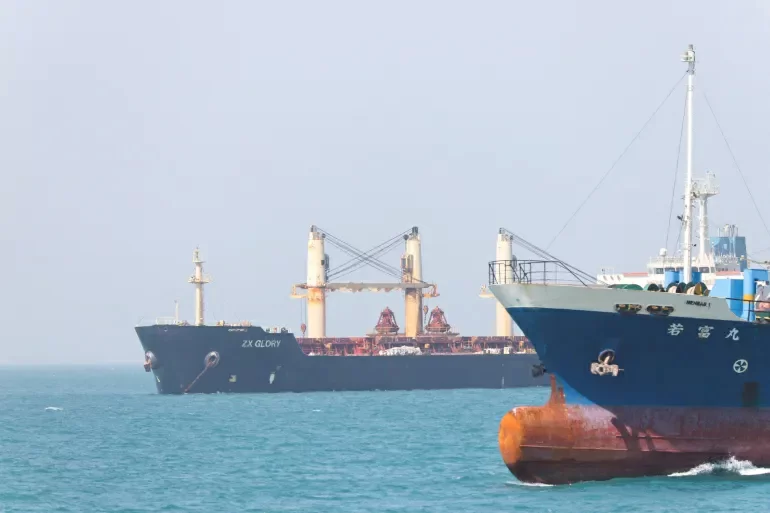
    The Strait of Hormuz is one of the world’s most critical maritime chokepoints, carrying roughly one-fifth of global energy supplies. The waterway has been effectively closed to most commercial traffic since large-scale military operations between the US, Israel, and Iran began on February 28. After a ceasefire took effect in early April, the US imposed its own unilateral blockade to prevent vessels from entering or exiting Iranian ports.

    The closure of the strait has already rippled through global markets, disrupting supply chains, pushing up crude oil and fertilizer prices, and stoking widespread fears of a looming global recession and expanded food insecurity.

    Speaking to reporters earlier Tuesday, Trump argued that the combination of US military pressure and economic sanctions has forced Tehran to the negotiating table, despite its public rejection of talks with his administration. “Iran wants to make a deal,” Trump said. “What I don’t like is they talk to me with a lot of respect privately, then go on television and say they won’t talk to the president. They’re playing games. But let me be clear: they want a deal. Who wouldn’t? Their military capability has been destroyed, we can do whatever we want.”

    Trump, who faces growing political pressure from rising consumer prices ahead of November midterm elections, dismissed Iran’s remaining military capacity as nothing more than the firing of “firecrackers.” When asked what actions from Iran would count as a ceasefire violation, he simply said, “They know what they shouldn’t do.”

    Defense Secretary Pete Hegseth, speaking from the Pentagon, added that the recent outbreaks of violence in the strait do not constitute a breach of the four-week-old ceasefire. “US forces do not need to enter Iranian territorial waters. We are not seeking a fight, but Iran cannot block innocent nations and their cargo in international waters,” Hegseth said. “The ceasefire is holding for the moment, but we are monitoring it very closely.”