博客

  • Internal fighting across Africa continues to destabilize the region

    Internal fighting across Africa continues to destabilize the region

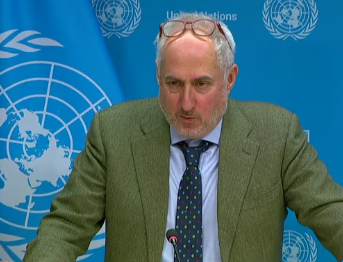
    In a stark press briefing from United Nations Headquarters in New York, senior UN spokesperson Stéphane Dujarric has renewed global warnings over the rapidly deteriorating security and humanitarian landscape driven by persistent internal conflicts spanning multiple African nations. The ongoing violence has sent death tolls climbing, forced hundreds of thousands of people from their homes, and stretched already overburdened local and international aid agencies to their breaking point.

    The crisis in Sudan remains one of the most pressing emergencies, Dujarric confirmed. Recurrent drone strikes targeting critical infrastructure in Khartoum, the Sudanese capital, have paralyzed core humanitarian operations. Just one day after drone attacks targeted Khartoum’s airport and surrounding urban areas, all incoming and outgoing flights remain suspended — a major disruption given the airport’s central role in moving aid workers and life-saving supplies into the country. Dujarric noted that the UN’s on-the-ground team has already resettled in Khartoum to coordinate relief efforts, but the persistent attacks have blocked their ability to deliver support to vulnerable populations.

    Further south in Sudan’s White Nile State, fresh drone strikes hit multiple locations in the city of Kosti, including two fuel stations located in a crowded commercial district, just one day after another fuel station and tanker were hit in the area. The strikes have caused an unconfirmed number of civilian casualties and knocked out critical basic services for local residents. In North Darfur’s El Fasher, the security situation continues to spiral downward: new data from the International Organization for Migration shows that more than 138,000 civilians have fled El Fasher and surrounding rural villages between October 2025 and March 2026 alone, joining the millions of already displaced people across the country.

    Against this backdrop, the UN is reiterating its core demands for all warring parties: an immediate ceasefire, full protection for civilians and civilian infrastructure, and unimpeded, fast access for aid convoys to reach communities in need. “We continue to call for an immediate stop to the fighting; for civilians and civilian infrastructure to be protected, and not be targeted; and for aid to be allowed to reach people swiftly, safely, and without any obstruction,” Dujarric told reporters.

    In the northeastern Democratic Republic of the Congo’s Ituri Province, UN-led humanitarian negotiations have scored a small, long-awaited victory: after months of blocked access caused by surging violence, aid groups have been able to resume life-saving food distributions at the Plaine Savo displacement camp, where more than 71,000 displaced people are sheltering. This marks the first large-scale food delivery to the site since December 2025, when a wave of armed clashes cut off all access to the camp. Ahead of the delivery, UN Humanitarian Coordinator Bruno Lemarquis and OCHA Ituri head Carla Martinez traveled to the camp to meet with displaced families, local leaders, and aid partners to assess on-the-ground conditions, and called on all armed and state actors to guarantee permanent safe access for aid groups.

    Even with the resumption of food aid, the situation in Plaine Savo remains dire. Clashes continue to flare in surrounding areas, leaving displaced families facing acute hunger and constant danger. Local reports confirm that at least 21 displaced residents have been killed since December 2025 while venturing into nearby fields to search for food, underscoring the deadly risk civilians face even within camp perimeters.

    The UN peacekeeping mission in the DRC, MONUSCO, has stepped in to support conflict-affected communities beyond humanitarian aid, recently assisting hundreds of people caught in recent armed clashes and escorting final-year secondary students to sit their national exams. At the request of school administrators, 200 students from three schools in Gina, Djugu territory — the site of recent deadly armed clashes between groups including the Convention for the Popular Revolution (CRP) — were escorted by peacekeepers to the provincial capital of Bunia to take their exams. MONUSCO peacekeepers also rescued nearly 200 civilians trapped under CRP fire during the recent violence. After exams conclude on May 7, the students will be escorted back to Gina under armed guard.

    To the north in Mali, the UN Office of the High Commissioner for Human Rights is sounding the alarm over a sharp spike in coordinated attacks across multiple towns and cities carried out last week. The attacks caused heavy civilian casualties and forced hundreds of additional families to flee their homes, with more civilian deaths reported in follow-up clashes over the weekend. UN High Commissioner for Human Rights Volker Türk has called for an immediate end to all hostilities, urging all parties to adhere to their obligations under international humanitarian and human rights law to protect civilian lives and critical infrastructure. Malian authorities have launched an official investigation into the attacks, which took place between April 25 and 26 2026.


  • ILO report highlights labour rights as critical to protecting journalists on World Press Freedom Day

    ILO report highlights labour rights as critical to protecting journalists on World Press Freedom Day

    To mark World Press Freedom Day 2026 on May 3, the International Labour Organization (ILO) has launched a groundbreaking new report that examines the underrecognized role of core labour rights in protecting journalists and media professionals across the globe. The report delivers a stark assessment of the escalating risks faced by media workers, shedding new light on the systemic threats that have plagued the industry for decades. According to official data published alongside the analysis, more than 1,850 journalists have been killed in the line of duty since 1993. Countless more have been subjected to arbitrary detention, forced disappearance, and routine intimidation. Alarmingly, the ILO confirms that the vast majority of these deadly attacks remain unsolved, allowing perpetrators to act with total impunity.

    Physical violence is not the only threat facing modern media workers, the report emphasizes. Journalists now face a growing spectrum of hazards, from aggressive legal intimidation tactics designed to silence critical reporting to coordinated harassment and abuse across digital platforms. Women journalists, in particular, are disproportionately targeted by gendered digital threats that create a chilling effect on independent media.

    The ILO’s analysis pushes beyond conventional conversations about press freedom, arguing that guaranteeing the safety of media workers requires far more than protecting freedom of expression alone. Instead, the report makes the case that universal access to fundamental labour rights is an equally, if not more, critical component of meaningful journalist protection. Within this framework, the publication explores how established core labour rights, paired with widely accepted international labour standards, can reinforce existing safety frameworks. It also outlines clear pathways for governments, media outlet owners, media worker unions, and industry representative bodies to collaborate on developing more robust, effective safety protocols for newsrooms and field reporting.

    “Journalists are key defenders of human and labour rights,” noted Frank Hagemann, Director of Sectoral Policies at the ILO, in comments accompanying the report’s release. “They are also workers, and labour rights offer an important tool for protecting journalists at work.”

    Beyond this new report, the ILO reaffirmed its longstanding commitment to advancing journalist safety globally through its participation in the United Nations Plan of Action on the Safety of Journalists and the Issue of Impunity. First endorsed in 2012 by the United Nations System Chief Executives Board for Coordination, the cross-institutional initiative was created to coordinate global action to address rising threats to media workers and end the culture of impunity that allows attacks on journalists to go unpunished. The full 588KB report is available for public download to support further industry and policy discussion on this critical issue.

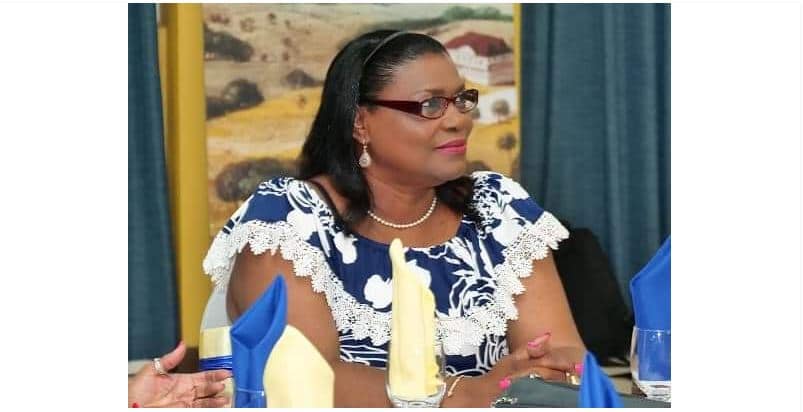
  • Journalist Linda Straker was a voice of professionalism

    Journalist Linda Straker was a voice of professionalism

    The small Caribbean nation of Grenada entered a period of national mourning on May 5 following the death of one of its most distinguished media professionals, Linda Straker. The loss has been deeply felt across the country’s political and media communities, with the Democratic People’s Movement (DPM) joining the nation in grieving the passing of the trailblazing reporter.

    In an official condolence statement released Tuesday, the DPM’s executive leadership, general membership and broader base of supporters shared their collective sorrow over Straker’s death. “Rest in Peace, Linda. Your work, your voice and your legacy will live on,” the statement read.

    A resident of St John parish and an award-winning journalist with rigorous formal training in communications, Straker was also a loving mother and grandmother. Beyond her family ties, she built a decades-long reputation as a paragon of journalistic integrity across Grenada.

    DPM Leader Peter David, who also serves as the Member of Parliament for the Town of St George, praised Straker’s unwavering commitment to the profession. “Linda Straker was a voice of professionalism, knowledge and fearless communication. Her deep understanding of the rules governing Parliament, her dedication to truthful reporting and her passion for informing the public made her a respected figure across the nation,” David said. He added that Straker carried out her work with quiet wisdom and unshakable integrity, consistently prioritizing keeping the Grenadian public informed and engaged with critical national affairs.

    Straker’s journalistic work reached audiences far beyond Grenada’s borders, appearing in local, regional and international media outlets throughout her career. Arley Gill, DPM Deputy Leader and fellow St John parish native, highlighted Straker’s fierce pride in her home nation and her local roots. “She was a proud Grenadian and also very proud of her St John roots,” Gill noted. “Grenada has truly lost a remarkable media personality and national voice. Her contributions will never be forgotten, and her presence will be deeply missed.”

    To close the statement, the DPM extended its deepest sympathies to Straker’s surviving family, close friends, and all those whose lives have been affected by her passing.

  • Three people evacuated from hantavirus-hit cruise ship as local opposition mounts over vessel’s destination

    Three people evacuated from hantavirus-hit cruise ship as local opposition mounts over vessel’s destination

    A hantavirus outbreak on a commercial cruise ship has triggered an emergency response that has spilled into public controversy, as three passengers have been evacuated for medical care while local communities push back against the vessel’s planned itinerary. The incident unfolded after the virus was detected aboard the ship, prompting health authorities to order the immediate evacuation of the three affected individuals to onshore medical facilities for monitoring and treatment.

  • UPP Chair D. Gisele Isaac Claims Election Was Influenced by State Power, Cash Handouts

    UPP Chair D. Gisele Isaac Claims Election Was Influenced by State Power, Cash Handouts

    Weeks after the ruling Antigua and Barbuda Labour Party secured its fourth consecutive term in the April 30 general election, the chair of the main opposition United Progressive Party (UPP), D. Gisele Isaac, has raised explosive allegations that systemic advantages, misuse of state assets, and direct voter bribes skewed the final result.

    In a scathing opinion piece published Tuesday in the Daily Observer, Isaac delivered a damning indictment of the country’s electoral landscape, labeling Antigua and Barbuda’s democracy “plywood-built” – a fragile structure that inherently favors sitting governments through unfair constitutional and institutional advantages.

    At the core of Isaac’s criticism is the argument that incumbent administrations hold an unbeatable advantage thanks to their unilateral control over all state institutions and resources. She specifically named key state bodies including the national Treasury, Immigration Department, Port Authority, Public Works Department, the Antigua Public Utilities Authority (APUA), ABS-TV and even the independent Electoral Commission as entities the ruling party leveraged for electoral gain. Unlike challengers, sitting leaders hold full authority over when, where, and how state resources are deployed during election cycles, creating a fundamentally uneven playing field that opposition groups can never overcome, she argued.

    Beyond institutional bias, Isaac detailed what she claims was widespread and deliberate vote-buying during the recent campaign. She cited direct cash handouts to voters, campaign motorcades that paired promises of road repairs with free gasoline giveaways, and distribution of supermarket vouchers, personal gifts, and free concerts to sway voter sentiment. Isaac framed these tactics as exploitative of widespread economic hardship facing the country, arguing that the ruling party’s short-term inducements undercut opposition plans for long-term economic improvement.

    “To thousands of families, scrunting because of the high cost of groceries and living with termites, the cash in hand and plywood were more attractive than the Opposition’s plans to make life better, healthier and more affordable,” Isaac wrote, acknowledging that widespread economic distress left many voters with little choice but to accept immediate assistance over future policy gains. She added that the cycle of vote-buying perpetuates poverty, leaving voters dependent on ruling party handouts rather than building sustainable economic growth.

    Isaac also openly addressed internal instability that weakened the UPP in the lead-up to the election, confirming reports of high-profile party defections, infiltration by “double-agents” aligned with the ruling party, and internal disagreements over key campaign decisions. Despite these challenges, she defended the UPP’s campaign performance, arguing that the opposition overcame massive resource disadvantages to mount a credible challenge. “Without apology I will say, again, that the Opposition — with its small resources but great goodwill and superior talent — pulled off an election campaign that was A+,” she wrote.

    The veteran political leader also pulled no punches on the outsized role of corporate and private donor influence in national politics. She argued that election outcomes and subsequent government policy are ultimately controlled not by voters, but by wealthy interests that fund political campaigns. “Vote all you want — whether for a political leader or a party; it is those who open the purse — or keep it closed — that determine the outcome,” she wrote.

    Isaac closed her column with a sober warning about the long-term health of Antigua and Barbuda’s democratic system, admitting that she struggles to encourage public trust and electoral participation when the principle of “one man, one vote” does not align with the reality of how elections are run in the country. Her comments represent one of the most high-profile critiques of the island nation’s electoral system from a major opposition leader in recent years, opening new conversation about the need for electoral reform to level the political playing field.

  • New 50/50 assessment system to begin in 2026/2027 school year

    New 50/50 assessment system to begin in 2026/2027 school year

    Barbados’ Ministry of Education Transformation has announced a sweeping overhaul of the country’s primary-to-secondary school transition assessment system, confirming the long-discussed replacement of the traditional common entrance examination will launch in September 2026. The new framework introduces a balanced 50/50 evaluation model that spreads assessments across two final years of primary education, replacing the current system that relies entirely on a single high-stakes exit exam.

    Education Minister Chad Blackman shared the details of the phased transition during a press briefing at Deighton Griffith Secondary School, outlining which student cohorts will follow the old and new rules. Current second-year primary (Class Two) students will be the first group to complete the revised assessment when they move into Class Three next September. In contrast, the current crop of Class Three students will become the final cohort to sit the common entrance exam in its existing format in 2025.

    Under the reformed system rolling out for the 2026/2027 academic year, half of a student’s final transition score will come from work completed during Class Three, with the remaining 50 percent accumulated through assessments in Class Four. This replaces the current model that hinges on a single three-hour sitting testing English, mathematics and composition at the end of Class Four. Blackman explained the core motivation for the shift: the new structure is designed to give students broader opportunities to showcase their full range of abilities, rather than having their entire academic future determined by performance on a single high-pressure day.

    Chief Education Officer Dr. Ramona Archer-Bradshaw broke down the structure of the new evaluation model, confirming 50 percent of the total score will come from ongoing continuous classroom assessment, while the other half will be determined by standardized end-of-cycle testing. She emphasized that the shift to continuous assessment recognizes that students are multifaceted learners whose abilities cannot be accurately captured by a one-off exam. “They should not be judged by one examination, but they should be judged by what they know and what they can do over a period of time,” she noted, adding that in-class continuous assessment allows educators to accurately measure what students can achieve independently, addressing the common issue of over-parental support on take-home assignments that can inflate scores and mask gaps in learning.

    Despite the government’s framing of the reform as a student-centered improvement, the announcement has drawn mixed reactions from local parents, with some expressing immediate skepticism over the phased rollout. Karen Franklin, a parent waiting for her child at Deighton Griffith Secondary, argued that starting the new system mid-sequence rather than building it into the curriculum from the earliest primary years puts the first cohort at an unfair disadvantage. “To me, if you going to do that, you have to start from full circle not in the middle,” she said, calling for a multi-year delay to the implementation so that assessment can be built into student learning from Reception year.

    Another parent, Marisa Bynoe, said she is adopting a wait-and-see approach to the transition — noting that talks of replacing the common entrance exam have circulated for decades — but she remains concerned about persistent social stigma attached to school placement in Barbados. Bynoe pointed out that cultural norms prioritize admission to a small set of elite government secondary schools, leaving students placed at other institutions feeling marginalized, even when zoning plays a role in assignment. She also noted the widespread hidden cost of this elite school culture: many students enrolled at top-tier institutions end up taking after-school lessons at less prestigious schools to keep up with the curriculum, leaving families burdened with extra education expenses.

    Althea Gill, principal of St Bartholomew’s Primary School, pushed back on the cultural focus on elite school placement, emphasizing that the most critical outcome of the transition process is matching each student to a school that fits their unique needs. “Regardless of where your child ends up after this exam, he or she is in a good place,” she said. “I’ve realised that some schools will cater best to what your child is good at, wherever that child ends up is gonna be the best place for him or her.”

    In response to ongoing public questions and concerns about the reform, education officials announced that public town hall meetings are being planned to walk communities through the new model and address feedback. Full details of these engagement sessions are expected to be released to the public in the near future.

  • World Court hears PNC, PPP govts had floated returning parts of Essequibo to Venezuela

    World Court hears PNC, PPP govts had floated returning parts of Essequibo to Venezuela

    On Monday, May 2026, Venezuela presented new archival evidence to the United Nations’ highest judicial body, the International Court of Justice (ICJ), as part of its ongoing argument that the 1966 Geneva Agreement remains the sole valid framework for bilateral negotiation of its long-running border dispute with Guyana over the resource-rich Essequibo region.

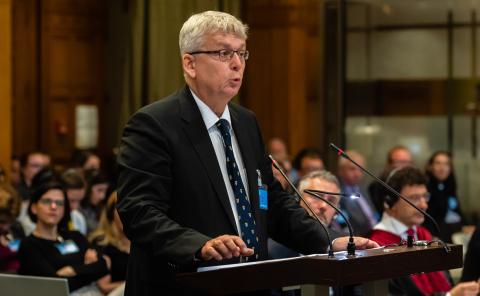
    Leading Venezuela’s presentation of this evidence, international law professor Andreas Zimmermann told the court that Guyana itself had twice, across different ruling administrations, floated proposals to cede partial control of disputed Essequibo territory to Venezuela during past bilateral talks.

    The first documented proposal emerged in 1977, when Guyana was governed by the People’s National Congress (PNC) under Prime Minister Forbes Burnham. During closed-door bilateral negotiations held under the Port of Spain Protocol, a subsidiary agreement to the 1966 Geneva framework, Guyana’s foreign minister tabled a formal proposal to adjust the existing border at Punta Playa, Zimmermann told the court. The proposed change would shift the current border’s orientation from the northwest to the northeast, effectively transferring the affected territory to Venezuelan control.

    “This development confirms that, during bilateral talks conducted under both the Port of Spain Protocol and the Geneva Agreement, Guyana was willing to pursue creative, mutually acceptable solutions and relinquish de facto control over territory that the 1899 Arbitral Award had supposedly assigned to British Guiana,” Zimmermann told the ICJ.

    Decades later, during the 1990s when Guyana was led by the People’s Progressive Party Civic (PPPC) administration, further talks explored even more flexible frameworks for resolving the dispute, the professor added. In 1995, joint discussions between the two countries included serious consideration of returning partial control of the disputed territory to Venezuela, as well as an innovative proposal for a reverse lease arrangement that would have Venezuela hold sovereignty over some areas while Guyana retained day-to-day operational control.

    Zimmermann also cited a 1998 letter written by then-Guyanese President Janet Jagan that reaffirmed the core purpose of the UN Secretary-General’s Good Officer mediation process – a process established under the Geneva Agreement – which Jagan explicitly noted was to “explore all avenues that would lead to the settlement of the border controversy” rather than simply debating the legal validity of the 1899 award.

    The professor added that high-level talks exploring practical solutions date back even further: between 1970 and 1975, Venezuelan President Carlos Andrés Pérez and Prime Minister Burnham held extensive, detailed discussions on the border dispute and mapped out multiple potential pathways to a compromise. Those talks culminated in a 1976 proposal from Burnham himself to resolve the long-running disagreement through expanded cross-border economic cooperation, with Burnham quoted as saying: “I would propose that there should be signed an accord which would lay at rest the border question.”

    Based on this long paper trail of past negotiations and proposals, Zimmermann argued, Guyana has long implicitly recognized that the Geneva Agreement is the proper instrument to resolve the substantive border dispute between the two nations, rather than treating the 1899 Arbitral Award as a final, unchallengeable settlement. The core mandate of Article 4 of the Geneva Agreement, he reminded the court, requires parties to pursue a practical, mutually acceptable solution to the full dispute, which aligns directly with the past actions of successive Guyanese governments.

    The ICJ is currently holding hearings this week and next to consider the merits of the case, which centers on the legal validity of the 1899 Arbitral Award. Guyana has long maintained that the 1899 award represents a full, final and binding settlement of the border with Venezuela, and is expected to deliver its rebuttal to Venezuela’s latest arguments in the coming days.

  • Bank Warns Customers About Surge in Phishing Scams

    Bank Warns Customers About Surge in Phishing Scams

    A leading financial institution has issued a pressing public alert to its customer base, warning account holders to steer clear of potential scammers and take immediate action if they encounter any suspicious activity linked to their accounts. In the official advisory released by the bank, security officials stressed that avoiding interaction with bad actors is the first critical step to preventing financial loss and unauthorized account access. Any individual who suspects they have already shared sensitive personal or financial details with unconfirmed third parties has been given clear guidance on how to proceed: they must reach out to the bank directly using the dedicated customer service phone number printed on the reverse side of their official ATM or debit card. This contact method ensures customers connect with verified bank representatives rather than potential scammers posing as bank staff, cutting down the risk of further exploitation. The bank’s dedicated Fraud Team is the central point of contact for all reports of suspicious activity, with analysts standing by to investigate claims, freeze compromised accounts if necessary, and help customers mitigate potential damage to their finances and credit standing. The advisory comes amid a steady rise in phishing scams, social engineering attacks, and fraudulent outreach targeting banking customers globally, as bad actors adapt new tactics to steal personal data and siphon funds from unsuspecting account holders. Bank security officials have reiterated that maintaining vigilance and reporting unusual activity quickly is the most effective defense against consumer financial fraud.

  • All Saints East & St. Luke MP Thanks Constituents After Election Victory

    All Saints East & St. Luke MP Thanks Constituents After Election Victory

    Fresh off the 2026 general election results, the incumbent Member of Parliament for All Saints East and St. Luke has moved quickly to extend heartfelt appreciation to the voters who delivered him another term in office. In a widely shared public statement following the announcement of poll outcomes, the legislator emphasized that his electoral success was not a personal victory, but a reflection of the deep-rooted trust, sustained backing and shared commitment that define his relationship with the constituency he represents.

    Acknowledging the weight of the mandate handed to him by residents, the MP has pledged to raise the bar for his service moving forward. Contrary to speculation that post-election engagement would taper off, he made clear that his on-the-ground presence and regular outreach to constituents will only grow stronger in the coming term. Centering his policy priorities on accountable, responsive governance, the legislator reaffirmed his commitment to collaborative lawmaking, noting that every decision he advances will be shaped by direct input from the communities he serves.

    Looking ahead, the MP outlined his core overarching goal: to work hand-in-hand with residents of All Saints East and St. Luke to drive inclusive, sustained growth across Antigua and Barbuda. Closing his message, he repeated his sincere gratitude to every constituent who cast a ballot, offered support, or placed their confidence in his leadership ahead of the 2026 poll.

  • ILO report links labour rights to journalist safety and press freedom

    ILO report links labour rights to journalist safety and press freedom

    To commemorate World Press Freedom Day on May 3, the International Labour Organization (ILO) has published a groundbreaking report that centers a long-overlooked angle of journalist protection: the fundamental role of labor rights in safeguarding media workers around the globe. For decades, the global community has debated threats to press freedom through the lens of free expression, but the ILO’s new analysis argues that this framework is incomplete — journalists are first and foremost workers, and their ability to do their jobs safely depends entirely on whether they can access the core labor protections guaranteed to workers in every other sector. Alarmingly, the risks facing media personnel have grown steadily worse over the past three decades. Data from UNESCO’s Observatory of Killed Journalists confirms that more than 1,850 journalists have lost their lives while on the job since 1993. For the vast majority of these killings, no perpetrators have been held to account, leaving a pervasive culture of impunity that emboldens further attacks. Beyond lethal violence, hundreds more journalists today are arbitrarily detained, disappeared, or targeted with sustained threats. Legal harassment, physical violence, and widespread digital and gender-based abuse — which disproportionately harms women journalists — add layers of insecurity that force many to censor their work or leave the profession entirely. The ILO report makes a clear, evidence-backed case: the safety of journalists does not rely solely on protecting freedom of speech. It is inextricably linked to their ability to exercise core labor rights, from fair working conditions to collective bargaining. The analysis explores how the ILO’s own fundamental principles of work rights, paired with established international labor standards, can be leveraged to strengthen existing safety frameworks. It also offers actionable guidance for governments, media outlet employers, labor unions, and journalist associations to build tailored, sustainable protection strategies that address the unique risks the sector faces. “Journalists are key defenders of human and labor rights across the world,” noted Frank Hagemann, Director of Sectoral Policies at the ILO, in comments accompanying the report’s release. “But they are also workers themselves, and the framework of labor rights provides an underutilized, powerful tool to protect them while they carry out their critical work.” The ILO has long been engaged in global efforts to protect press freedom, and it is a core partner in the United Nations Plan of Action on the Safety of Journalists and the Issue of Impunity. That plan, first adopted by the United Nations System Chief Executives Board for Coordination back in 2012, established a coordinated cross-UN approach to tackling rising violence against media workers and ending the cycle of impunity for attacks on journalists. This new report builds on that decade-long initiative, bringing a fresh labor-focused perspective to a growing global crisis that shows little sign of abating.