博客

  • FIFA World Cup 2026 Preparation : Friendly Match Haiti vs New Zealand

    FIFA World Cup 2026 Preparation : Friendly Match Haiti vs New Zealand

    As the 2026 FIFA World Cup rapidly approaches, co-hosted across Canada, the United States, and Mexico from June 11 to July 19, Haiti’s senior men’s national team, nicknamed the Grenadiers, continues its pre-tournament warm-up schedule with two new high-profile friendly matches locked in for early June 2026 in Florida.

    Currently ranked 83rd in the FIFA global rankings, the Grenadiers have already completed two warm-up fixtures to test their form against competitive international opponents. Their first outing ended in a narrow 0-1 defeat to Tunisia, followed by a hard-fought 1-1 draw against Iceland that earned praise from fans and analysts alike for the team’s solid performance. Next up, the side will face 85th-ranked New Zealand at Fort Lauderdale’s Chase Stadium on June 2, kicking off at 8 p.m. local time. Just three days later, on June 5, Haiti will take on 53rd-ranked Peru at Miami’s DRV PNK Stadium for their fourth and final pre-World Cup friendly.

    For the Grenadiers, these warm-up matches are critical preparation for their first World Cup group stage run, where they have been drawn into Group C with three challenging opponents. Haiti will open their 2026 World Cup campaign against Scotland at Boston Stadium on June 13, with kickoff scheduled for 9:00 PM ET. Scotland qualified for the tournament in dramatic fashion, marking their return to the World Cup finals after a 28-year absence, making this opening clash a highly anticipated matchup for both sides.

    The team’s second group stage fixture will see Haiti take on five-time World Cup champions Brazil at Philadelphia Stadium on June 19, kicking off at 8:30 PM ET. Brazil remains the only nation to have qualified for every single edition of the FIFA World Cup, and despite finishing fifth in South American qualifying, the side is expected to enter the tournament with their signature attacking confidence and competitive pedigree.

    Haiti will wrap up their group stage play against Morocco at Atlanta Stadium on June 24, with kickoff set for 6:00 PM ET. Morocco, the surprise semi-finalists of the 2022 Qatar World Cup, has emerged as one of the leading forces in African men’s football, making this final group game a tightly contested matchup with major stakes for both teams’ knockout stage hopes.

  • Nehru Geban Tried to Save a Child, Then Police Locked Him Up

    Nehru Geban Tried to Save a Child, Then Police Locked Him Up

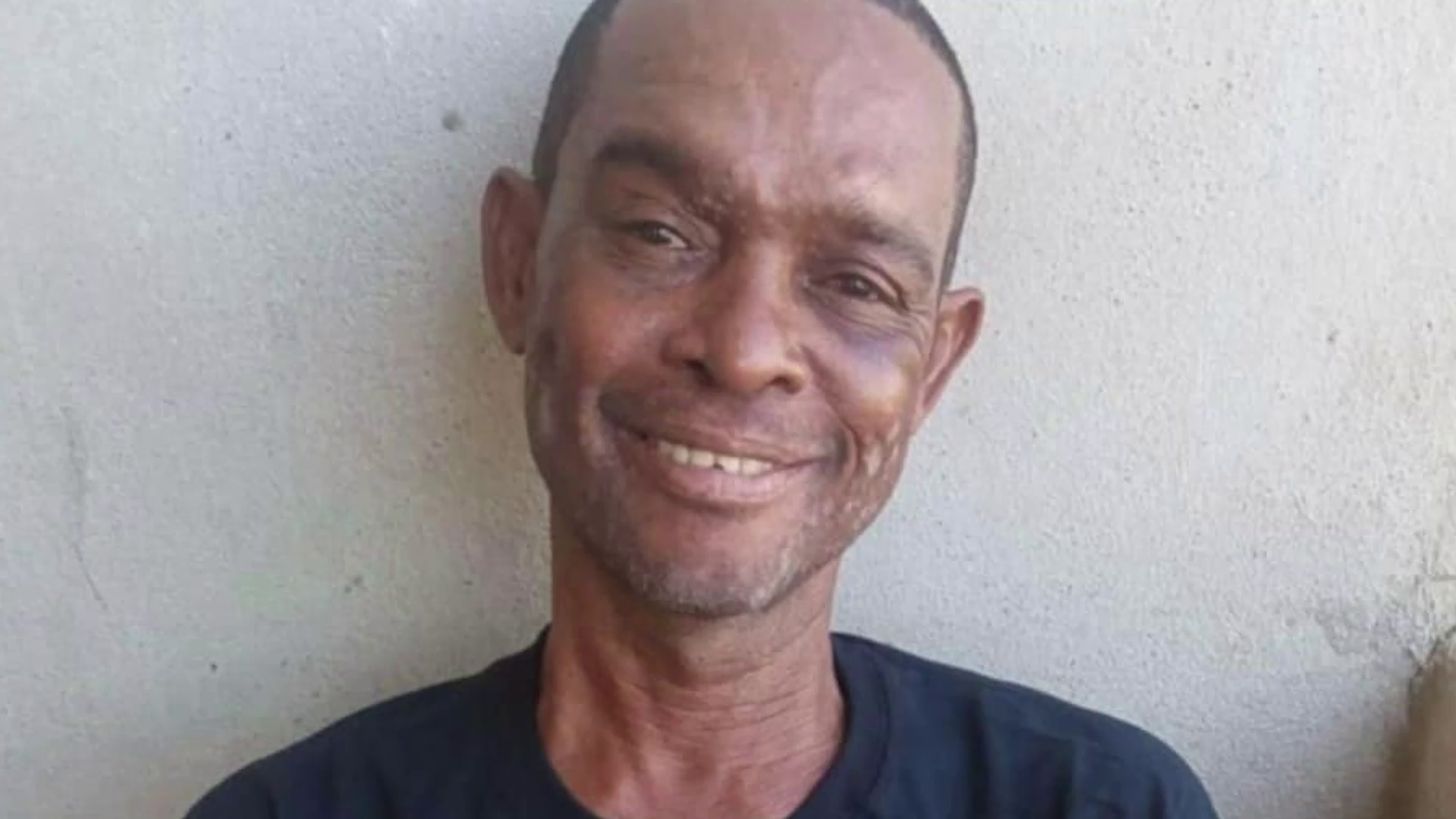
    A Belize City father who stepped forward to protect a child he believed was in imminent danger is now behind bars, raising urgent questions about the risks ordinary citizens face when choosing to act compassionately. The case of Nehru Geban has cast a spotlight on the unexpected consequences of doing good, as the father of three says his split-second decision to answer a child’s cries for help ended with his own arrest, which his legal team calls entirely unlawful.

    Geban shared his account of the incident, explaining that he was moved to act when he heard unusual, distressing screams coming from his neighbor’s home. As a parent himself, he said he could not ignore what sounded like a child in peril. When he went to check on the youngster, the child’s mother reacted with immediate hostility, launching into verbal abuse against him. What followed, however, was a far more alarming escalation that unfolded days later.

    On May 3, Geban was resting at home with his three young sons when two unknown men arrived at his door asking for him by name. One of the men, the child’s father, immediately attacked Geban, accusing him of disrespecting his wife and meddling in his family’s affairs. A physical scuffle broke out as Geban acted to defend himself against the unprovoked assault. Geban noted that his decision to intervene was also shaped by recent news of police violence against a child, which reinforced his belief that citizens have a moral and legal right to step in when a minor’s safety is at risk.

    When law enforcement arrived at the scene, Geban told officers he did not accept that he had committed any crime by protecting the child. According to Geban, police then pressured him to drop his legal claims against the two men who attacked him in his own home. When he refused to back down, citing ongoing fear for his safety, he was taken into custody instead.

    His attorney, Norman Rodriquez, has questioned the logic and legality of the arrest, pointing out that officers found two men aggressing against Geban at his residence when they arrived. Rodriquez emphasized that Geban only acted because the child was in obvious need of intervention, and that the attack on him at his home was the unwarranted escalation of the situation. Rodriquez says there is no justifiable basis for the criminal charges against his client.

    Now, Geban is pushing to clear his name and secure accountability from law enforcement. He and his legal team are reviewing all available legal options to file a lawsuit against the Belize Police Department, seeking compensation for wrongful detention and damages for the violation of his rights. The case has left Geban with a troubling question that resonates far beyond Belize City: If a regular citizen chooses to do the right thing and intervene to protect a child in danger, who will protect that citizen from unjust legal consequences?

  • Sanctions and threats of war: The last stand

    Sanctions and threats of war: The last stand

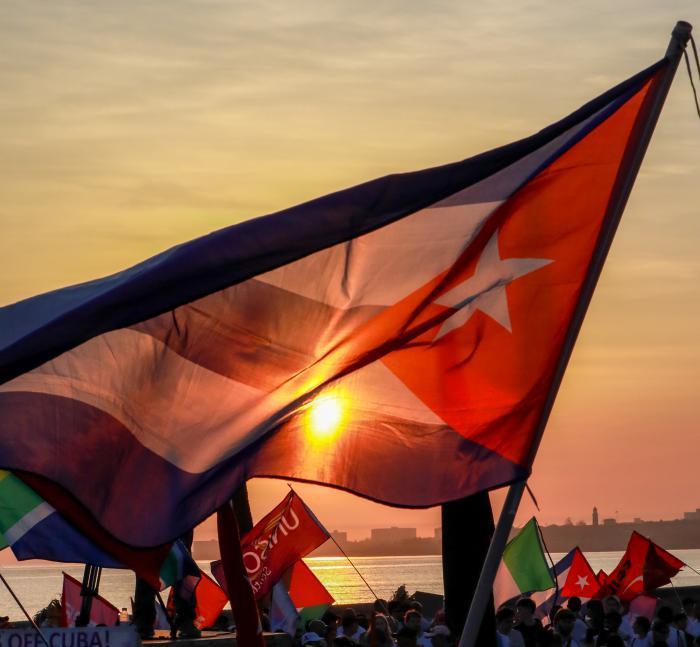
    On May 1, 2026, hundreds of thousands of Cuban citizens gathered in massive, organized demonstrations across the island to voice their unified support for the country’s revolutionary government, a display of popular solidarity that directly pushes back against a years-long campaign of pressure from the United States government. According to analysis from Cuban outlet *Granma*, this open show of national unity poses a unprecedented challenge to a sitting U.S. administration that has long positioned itself as the unchallenged hegemonic power across the Western Hemisphere.

    The reporting, published May 6, notes that the current U.S. policy toward Cuba is heavily shaped by hardline right-wing political interests based in Florida, with key influence exerted by high-profile figures including Senator Marco Rubio and former Inter-American Development Bank president Mauricio Claver-Carone. Cuba’s decision to openly celebrate Labor Day with a public display of grassroots backing for its sovereign system comes as Washington has spent years leveraging harsh economic sanctions to force Havana into political surrender and demobilization.

    Framed by Cuban commentators as a modern David versus Goliath struggle, the Cuban people have refused to be silenced even as the U.S. has used economic pressure to create widespread hunger and hardship to force political change. In a pre-planned escalation following the demonstration, the U.S. president signed a new package of punitive sanctions designed to further subjugate Cuba, while once again openly hinting at potential military intervention to force the country into compliance.

    The new U.S. policy framework relies heavily on falsehood and strategic misinformation to justify tightening the decades-long economic blockade on Cuba. The core goal of this escalating pressure, the report argues, is to force the Cuban people to abandon their hard-won independence and sovereignty, bending to the political demands of extreme opposition factions.

    The entire U.S. approach to supposed talks with Cuba is described as a cynical exercise in coercion: dialogue masked as pressure, mixed with leaks, political blackmail, and non-negotiable ultimatums. What Washington frames as negotiation is in reality a trap, the analysis says: a carefully constructed plan crafted behind closed doors at the U.S. State Department by allies of anti-Castro factions based in Miami, acting on direct orders from top White House national security and diplomatic leaders. These officials take their direction from Florida’s vengeful far-right, which remains committed to restoring a corrupt, annexationist order in Havana.

    The stark contrast between the two nations’ positioning on this year’s Labor Day could not be clearer: While Cuba used the occasion to reaffirm its call for peace and an end to the decades-long U.S. blockade, the U.S. responded with threats of military power and new punitive measures. The massive May 1 demonstration, which drew the equivalent of more than 6 million participants across the country, stands as a collective rebuke to what Cuba describes as a genocidal threat of foreign aggression.

  • New immigration, foreigners, and citizenship laws transform Cuba’s migration system

    New immigration, foreigners, and citizenship laws transform Cuba’s migration system

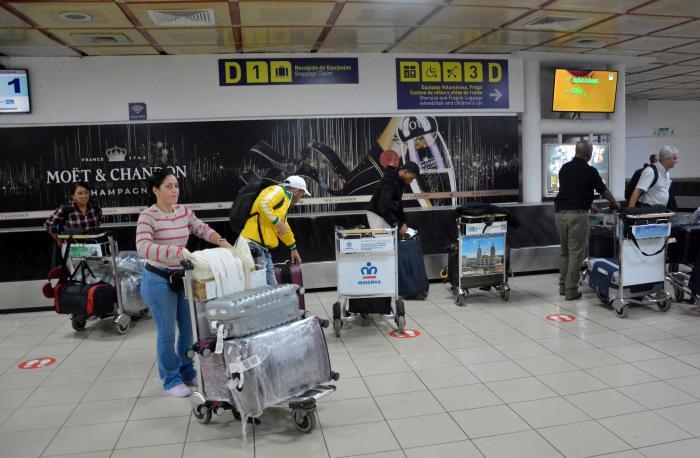
    On May 6, 2026, Cuban officials announced the publication and phased implementation of three landmark pieces of legislation that fundamentally reshape the country’s decades-old immigration framework. Laws 171, 172 and 173, which update rules governing immigration, foreign national residency and Cuban citizenship, introduce a series of user-centric changes designed to align the country’s migration policies with modern global trends and address longstanding concerns of Cubans both at home and abroad.

    Colonel Mario Méndez Mayedo, head of the Ministry of the Interior’s Directorate of Identification, Immigration, and Foreigners Affairs, outlined the scope of the reform at an official press conference. The overhaul represents a massive expansion and update of outdated legal language: the core Immigration Act has grown from just 25 articles to 170, the Aliens Act from 25 articles to 91, and the new Citizenship Act marks the first time Cuba has codified citizenship rules into a standalone law. Supporting regulatory frameworks have also expanded dramatically, with the Immigration Regulations now containing 362 articles and Aliens Regulations 200 articles. This expansion reflects the complexity of modern migration issues and the broad inter-agency consensus built over years of drafting, which included input from 37 government bodies.

    Méndez Mayedo noted that the legislative process was “lengthy and very complex,” with continuous consultation with the Ministry of Foreign Affairs and Cuban consulates worldwide to collect feedback and concerns from the country’s large diaspora community. After being approved by the Cuban National Assembly in July 2024, the laws are now set to enter into force after a 180-day transition period for most provisions. However, one high-priority section — the new immigration status for foreign investors and business actors — took effect immediately upon publication via a separate decree-law, tied to ongoing updates to Cuba’s economic model.

    The most transformative change for Cuban citizens living overseas is the elimination of the controversial 24-month limit on continuous stays outside the country, replaced by a new legal concept of “effective migratory residence.” Under the new rules, Cubans may remain abroad for any length of time they choose, with no automatic loss of residency status. To retain effective migratory residence, individuals only need to have spent a cumulative 180 days in Cuba over the previous 12-month period. Those who do not meet this threshold can still retain their status by proving ongoing formal ties to the country, including immediate family relationships to Cuban residents, active paid employment, registered investments, property ownership, domestic bank accounts, compliance with tax obligations, or other holdings of movable or immovable assets in Cuba. Cubans residing in the country who must stay abroad for extended periods for work, medical treatment, study or other approved reasons also qualify to retain their effective residence status with proper documentation.

    “There is no time limit for being outside Cuba. Cubans can remain abroad for as long as they need, as long as they require, as long as they want,” Méndez Mayedo emphasized. This change will phase out the existing category of “emigrant,” which will gradually shrink as most Cubans living overseas are reclassified to the more flexible and beneficial status of “resident abroad.” Beyond benefiting individuals, the new effective residency framework will also produce more accurate data on Cuba’s actual resident population, supporting more informed public policy and government decision-making.

    Another major reform addresses widespread concerns over property rights for Cuban citizens living overseas, a top issue during preliminary public and parliamentary debates. Article 31 of the new Immigration Law explicitly enshrines that all Cuban citizens residing abroad hold the constitutional right to own, use, and freely dispose of property located in Cuba, in alignment with Article 58 of the Cuban constitution. Méndez Mayedo confirmed that this explicit protection was included to directly resolve longstanding anxieties among the diaspora over their domestic assets.

    For foreign nationals seeking to live in Cuba, the new laws introduce far more flexible residency pathways and expand eligibility for both temporary and permanent status. Previously, permanent residency was largely limited to spouses of Cuban citizens; now, multiple additional categories qualify, including parents of Cuban-born citizens who reside in Cuba, foreign nationals who have lived in Cuba for more than five years with proven deep social and economic ties, skilled professionals with advanced degrees, international recognition or expertise in science, sports, culture or the arts endorsed by Cuban state agencies, foreign individuals holding significant assets or domestic bank accounts in Cuba, and foreign families with established employment, economic or long-term survival ties to the country. The laws also create a formal regulatory framework for humanitarian protection for vulnerable groups that previously lacked clear immigration status, including victims of armed conflicts, people in crisis situations, and insolvent tourists. “This has been happening, but without a regulatory framework; now we are including it in the Law,” Méndez Mayedo explained.

    In closing, the senior official framed the reform as the culmination of extensive public and parliamentary debate, designed to balance the interests of all relevant stakeholders while prioritizing the most beneficial outcomes for Cuban citizens. “Today we are implementing a new immigration system in the Republic of Cuba. This is the greatest demonstration of the fulfillment of the political decision to keep immigration regulations up to date,” he said. The full text of the three laws, along with the immediate decree-law for investors and accompanying financial regulations, are published in Ordinary Official Gazette No. 39 and Extraordinary Official Gazette No. 60 respectively.


  • Nightclub Clash Lands ‘Horse’ Garnett Before Court

    Nightclub Clash Lands ‘Horse’ Garnett Before Court

    A local 44-year-old man is speaking out after a violent weekend altercation outside a popular nightclub that has resulted in criminal charges against him and a forthcoming formal complaint against responding law enforcement. Jermaine Garnett, widely known by his nickname ‘Horse’, is now recovering at his home following the May 2 incident at Shisha’s Night Club that quickly spiraled into conflict.

    Following the confrontation, authorities have charged Garnett with two counts of aggravated assault against on-duty police officers. He made his first court appearance shortly after the incident, entered a formal not guilty plea to all charges, and was released after posting the $4,000 bail set by the judge.

    Garnett’s account of the events contradicts the official narrative laid out in the criminal charges. He maintains that he complied fully with police instructions to exit the nightclub, and that the conflict only erupted once the group moved outside the venue. In his account, officers were the aggressors, using excessive physical force that left him with injuries. He claims he was pushed during the encounter, resulting in the harm he is now recovering from.

    To back up his version of events, Garnett is calling on law enforcement agencies to publicly release full surveillance footage from the area surrounding the nightclub, which he insists will corroborate his claims of excessive force. Moving forward, he has confirmed plans to file an official complaint with the Professional Standards Branch, the independent body tasked with investigating misconduct allegations against police officers.

  • Three People Missing, Vanished Without a Trace in Cayo

    Three People Missing, Vanished Without a Trace in Cayo

    Authorities in Belize are engaged in a time-sensitive search operation for three missing individuals who have not been heard from or seen for more than a month in the Cayo District. The missing people have been identified as Kenia Chan, 15-year-old Ezekiel Montejo, and six-year-old Dorian Montejo. Their last confirmed location was Las Flores Village, a small community located close to Belmopan, the nation’s capital, with the last confirmed sighting recorded back in late March.

    Investigators working on the case have outlined the active missing timeline as running from March 31 through at least April 27, and public concern over the three’s fate has grown steadily as each day passes without new leads. Law enforcement officials are issuing a public appeal for assistance from anyone who may have any information related to the disappearance, even details that seem minor or insignificant.

    Investigators emphasize that even an unremarkable sighting or a passing comment someone may have overheard could prove to be the critical breakthrough that helps locate the three missing people. Members of the public who hold information are able to submit it anonymously through multiple channels: they can call Crime Stoppers’ dedicated tip line at 922, submit information through the official P3 Tips mobile application, or reach out directly to the closest local police station to share what they know.

    This report is a transcript of an evening television broadcast, with all Kriol language dialogue transcribed using a standardized spelling system for accessibility.

  • Deceased Dangriga Man Identified in Ongoing Investigation

    Deceased Dangriga Man Identified in Ongoing Investigation

    In the latest update to an ongoing death probe launched late last week, Belizean law enforcement has officially confirmed the identity of a man previously only documented as John Doe. The deceased individual has been named as 53-year-old Eldon Edward Solomon, a local laborer who resided in Dangriga Town, Stann Creek District. The critical breakthrough in the case came after a member of Solomon’s family contacted investigators to formally identify his remains, closing one of the most prominent open questions that has surrounded the probe since it began.

    While the identification marks a major milestone for investigators, the full circumstances surrounding Solomon’s death remain unconfirmed, and the official inquiry is still active and progressing. Local news outlets will continue monitoring developments in the case and publish new updates as additional details are made public by law enforcement authorities.

    This report is adapted from a transcript of an evening television newscast, which notes that all Kriol language dialogue included in the original broadcast was transcribed using a standardized spelling system for accuracy.

  • Witnesses Say Victim Alive, Died Waiting for Help

    Witnesses Say Victim Alive, Died Waiting for Help

    A fatal road traffic collision between a motorcycle and a passenger vehicle has left one person dead, with witnesses claiming the victim survived the initial impact but lost their life before emergency medical crews could arrive at the crash site. The deadly incident unfolded on the afternoon of May 5, 2026, at the intersection connecting San Juan and Cow Pen Village. Multiple bystanders who were present at the scene immediately after the crash confirmed that the motorcyclist, identified only as the victim, showed clear signs of life in the minutes right after the two vehicles collided. Unfortunately, emergency response teams did not reach the isolated junction in time to intervene, and the victim was pronounced dead before medical care could be administered. As of this evening’s official update, law enforcement authorities have not made any public announcement regarding the identity of the deceased. Investigators are still in the early stages of probing the collision, and no official confirmation has been issued on what factors led to the crash, including whether speeding, impaired driving, poor road conditions, or driver error played a role. This report is adapted from a transcribed evening television newscast, which originally included translated commentary from Kriol-language speakers formatted with a standardized spelling system for public distribution. As the investigation continues, local authorities are expected to release further updates once they have completed their preliminary on-site analysis and witness interviews.

  • Edward Broaster Launches Unique Fuel Protest

    Edward Broaster Launches Unique Fuel Protest

    Against a backdrop of skyrocketing fuel costs squeezing household budgets across Belize, a local opposition political figure has launched an unusual, high-profile protest that mixes direct public relief with pointed political pressure. Edward Broaster, caretaker for the United Democratic Party (UDP) in Belize Rural Central and a former Deputy Commissioner of Police, is set to roll out a one-day fuel subsidy this Friday, stepping in to cover a portion of motorists’ fuel costs at the Northern Gas Station — and publicly challenging Prime Minister John Briceño to match his effort to ease the strain on working Belizeans.

    Broaster is no stranger to public acts of goodwill: he previously earned local attention for serving as a secret Santa for low-income families in Ladyville. Now he’s repurposed that community-focused approach to draw attention to the country’s worsening cost of living crisis, with fuel prices emerging as a top pain point for commuters, delivery workers, and ordinary families alike. Under his initiative, eligible drivers from Belize Rural Central will receive $2 off every gallon of fuel they purchase, capped at 10 gallons per vehicle. The discount will be applied directly at the pump, with Broaster’s team covering the difference to the gas station.

    For Broaster, the initiative is far more than a one-off charitable act — it is a deliberate, peaceful protest aimed at highlighting what he calls the government’s inaction on soaring fuel prices. In comments to reporters, he emphasized that if an individual opposition figure can cut fuel prices for local drivers by $2 per gallon, the national government has the capacity to implement broader relief for the entire public. “Hearing from my constituents that the fuel price is killing them, the cost of goods is killing them, this initiative is a form of protest to show the government that yes you can reduce the price of fuel,” Broaster explained. “If I can cut it by two dollars, you can do the same.”

    He framed the effort as a rebuke of what he calls the government’s hypocrisy around cost of living relief, noting that an administration elected to serve the Belizean people should not refuse to take meaningful action to ease widespread financial strain. When asked how a local opposition caretaker can fund a full day of fuel subsidies for hundreds of expected drivers, Broaster confirmed that the initiative is backed by financial support from unspecified supporters of the UDP, though he declined to name individual donors — leaving open questions about the backers behind the high-profile protest.

    Beyond the one-day pump discount for motorists, Broaster revealed that additional relief efforts are already in planning for bus commuters, a group that has been hit particularly hard as rising fuel costs push up public transit fares across the country. He confirmed that his team is preparing a seven-day relief program specifically for commuters, though he did not release further details about the scope or timing of the upcoming initiative.

    As Friday’s subsidy event approaches, political observers and local residents are divided on the nature of the effort: some see it as genuine, immediate relief for a community reeling from persistent price hikes, while others question whether it is merely a political stunt to gain attention for the opposition ahead of future political contests. Regardless of the motivation, the event is expected to draw long lines of drivers eager to lock in the discount, and will almost certainly amplify national conversations about the government’s handling of Belize’s ongoing cost of living crisis.

  • In New York, Minister Forbin highlights Haiti’s migration reforms.

    In New York, Minister Forbin highlights Haiti’s migration reforms.

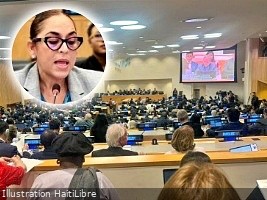
    Against the backdrop of ongoing political and security volatility in the Caribbean nation, Haiti’s top foreign policy leadership has taken the global stage at the United Nations to outline the country’s evolving approach to migration management. From May 5 to 8, 2026, the 2nd International Migration Review Forum is convening at UN Headquarters in New York, with Haitian Foreign Minister Raina Forbin and Minister of Social Affairs and Labor Marc-Elie Nelson leading the country’s official delegation to the high-level global gathering.

    In a series of public remarks and diplomatic engagements throughout the forum, Forbin underscored that migration has risen to the status of a core national priority for the Haitian government, which has maintained consistent, long-term focus on addressing the interconnected challenges of cross-border movement, internal displacement, and citizen protection. She detailed the wide-ranging structural reforms Port-au-Prince has implemented in recent years, centering on overhauls to the national citizen documentation and identification system—an foundational step for formalizing migration governance, enabling access to public services, and reducing vulnerability to exploitation. Beyond administrative reforms, Forbin noted that the government has also ramped up efforts to streamline the regulation of migration flows, shore up border security infrastructure and protocols, and disrupt the operations of transnational criminal networks that profit from Haiti’s unstable security environment.

    Forbin emphasized that these domestic reforms cannot deliver meaningful results without robust backing from the international community. She issued a clear call for global partners to step up their support for Haiti’s efforts to reestablish nationwide security, specifically urging the full, rapid deployment of the UN-backed Gang Suppression Force (GSF). The deployment of this stabilization force, she argued, is the critical first step to creating the secure conditions needed for long-term political stability and the organization of inclusive, credible national elections in Haiti. Forbin also called for coordinated global action to intensify the crackdown on transnational criminal groups that engage in migrant smuggling and human trafficking, criminal enterprises that deliberately exploit the economic insecurity and instability facing millions of Haitian citizens.

    “Our ambition is clear: to ensure that every Haitian is protected and respected, wherever they may be, and to create the conditions so that migration is a choice, not a necessity,” Forbin told forum attendees.

    The foreign minister also added a key priority for Haiti’s migration policy: the humane treatment of Haitian migrants returning to their country of origin. She stressed that all reintegration and return processes must be conducted with full transparency, uphold the inherent dignity of returnees, and prioritize compliance with international standards for fundamental human rights, regardless of the circumstances of their return.