博客

  • Inflation Is Hitting the Bills People Cannot Cut Back On

    Inflation Is Hitting the Bills People Cannot Cut Back On

    As of the first eight months of 2026, Belize is grappling with a lopsided inflation surge that disproportionately impacts the essential expenses households cannot eliminate, placing unprecedented financial strain on working and middle-class families across the country. Unlike discretionary spending that can be trimmed when budgets get tight—such as restaurant meals and leisure outings—the costs that families cannot skip, including public transit, utility bills, and grocery staples, are seeing the fastest price hikes, according to new data released by the Statistical Institute of Belize (SIB).

    Official SIB figures put average overall consumer price growth at 2.9% between January and August 2026, but the increase is far from uniform across spending categories. Essential goods and services have outpaced price growth in discretionary sectors: transport, food, housing, and utility costs are climbing far more rapidly than spending on dining out, healthcare, and education, a gap that leaves families with almost no flexibility to adjust their budgets to absorb higher costs.

    Transportation, a non-negotiable expense for most Belizeans commuting to work, school, and essential services, has seen some of the sharpest increases. SIB statistician Jaime Crespo confirmed that fuel prices have surged across all grades: regular gasoline is up 11.3% year-to-date, premium gasoline has risen 7.2%, and diesel has jumped by a staggering 17.8%. By August, diesel prices had already crossed $13 per gallon, and costs have continued to climb in subsequent weeks. These fuel price increases have rippled through the sector, pushing up fares for public transit and commercial flight tickets as well.

    Housing and utility costs have also climbed at a much faster rate than overall inflation. Residential electricity prices rose 7.7% this year, a change Crespo attributes to two policy adjustments implemented at the start of 2026: a higher base price per kilowatt-hour and updated COPA tariffs. Additional housing-related cost increases include a 1.4% rise in average rent and a 4.1% jump in butane prices for household cooking and heating.

    Grocery staples, another unavoidable monthly expense, have also become significantly more expensive. Overall food and non-alcoholic beverage prices rose 2.2% across the eight-month period, with the sharpest increases concentrated in core household items: meat, sugar, cereal products, instant coffee, and natural juice. Notably, even domestic goods that Belize produces domestically—including sugar and meat, two of the country’s key agricultural outputs—have seen notable price hikes this year, despite the nation’s status as self-sufficient in basic food production.

    Prime Minister John Briceño acknowledged the growing financial pressure on Belizean households during his September 15 State of the Nation address, confirming that the government has heard public concerns about rising costs. “We hear the cries of the Belizean people. We understand what you are going through,” Briceño stated. The prime minister noted that while Belize has reached the milestone of full self-sufficiency in basic food production, allowing the country to reliably feed its population, the broader national economy remains heavily reliant on imported goods and services. Global price shifts for these imports are outside of domestic policy control, he explained, creating ongoing inflationary pressure that the country continues to navigate.

  • What Brazil’s Election Means for the Rest of Latin America

    What Brazil’s Election Means for the Rest of Latin America

    As Latin America’s two-year rightward political shift approaches its most consequential test to date, Brazil’s closely contested 2026 presidential election stands poised to redraw alliance networks across the entire region. With polling indicating a technical deadlock between incumbent 80-year-old President Luiz Inácio Lula da Silva, who is running for a new term, and opposition contender Flávio Bolsonaro – son of former President Jair Bolsonaro, who is barred from the race following a conviction for abuse of power and his role in an attempted coup – most political analysts widely predict the contest will advance to a second-round runoff.

    For regional political observers, the outcome of Lula’s reelection bid carries implications that stretch far beyond Brazil’s borders. Renowned Venezuelan academic and former ambassador Alfredo Toro Hardy told CNN that Lula remains the only Latin American statesman with genuine global clout at a time when most new regional leaders lack substantial international influence. “His eventual departure from the presidency would leave a clear void that no other figure is currently positioned to fill,” Hardy explained.

    Last week, Lula delivered a widely cited address to the United Nations General Assembly that underscored his independent approach to global diplomacy. Directing his remarks at Washington, Lula declared that “Brazil doesn’t fit in anyone’s backyard” – a line that quickly became one of the summit’s most talked-about statements.

    Juan Pablo Scarfi, a political scientist at Argentina’s Universidad de San Andrés, notes that a Lula defeat would rob the region of more than just a single prominent leader, even as he acknowledges that Lula’s influence has waned in recent years amid an increasingly unfavorable international political climate. “If Lula loses, the region would essentially be losing a central figure that has long served as a ideological counterweight to rising right-wing influence,” Scarfi said. “But the current international context is stacked heavily against him.”

    The stakes of this election far outpace those of Brazil’s 2018 contest, when the region’s ideological landscape remained far more mixed. Today, Brazil heads to the polls after nearly two years of unbroken victories for right-wing candidates in major regional elections, many of whom have openly received backing from former U.S. President Donald Trump. Argentine President Javier Milei, one of Washington’s closest regional allies, has publicly thrown his support behind Flávio Bolsonaro, joining Trump in endorsing the opposition bid.

    Toro Hardy argues that a win for Bolsonaro would expand the so-called “MAGA club” of Trump-aligned leaders across Latin America, with implications that extend to global resource competition. Brazil holds vast reserves of rare earth minerals, a sector where the United States currently trails far behind China. A Lula defeat, Toro Hardy contended, would strengthen China’s strategic position across the region.

    Eduardo Gamarra, a political scientist at Florida International University, frames the 2026 election as a potential turning point that could end a 30-year political cycle rooted in trade integration and liberal democracy that began with the 1994 Summit of the Americas. “This makes Lula da Silva, in a way, the last of the presidents who, despite being left-wing, was part of that Latin American vision of cross-regional integration,” Gamarra explained.

    Even so, Gamarra warned that the right’s current winning streak has not delivered the stability its backers promised. “Just as this pendulum reaches its highest point, it enters a deep crisis. The Trumpist coalition in Latin America is very fragile,” he noted.

    When it comes to filling the regional leadership vacuum that would open if Lula loses power, analysts are skeptical that any existing figure can step into his role. Most doubt Mexican President Claudia Sheinbaum will take on regional leadership, as Mexico’s foreign policy remains tightly aligned with its northern neighbor the United States. Milei has worked aggressively to position himself as the public face of the regional right, but Scarfi notes that even a Bolsonaro victory would not bring the same level of pro-Trump alignment that Milei has embraced in Argentina.

    The election’s outcome also threatens to reshape the future of Mercosur, South America’s flagship trade bloc. Scarfi explained that Mercosur was founded during the era of the Washington Consensus but has long served as a counterweight to overly close trade integration with the United States. If Brazil shifts to full alignment with Washington under a Bolsonaro presidency, Scarfi warned that this historic counterweight “could become a thing of the past.”

  • Girls getting a kick out of football

    Girls getting a kick out of football

    Women’s football in the Caribbean nation of Saint Lucia is entering a new era of growth, with targeted investments and programs advancing the sport both on the pitch and in leadership roles off the field. The Saint Lucia Football Association (SLFA) has rolled out a coordinated series of initiatives designed to raise the profile of women’s football and remove barriers to entry for young girls seeking to participate in the sport.

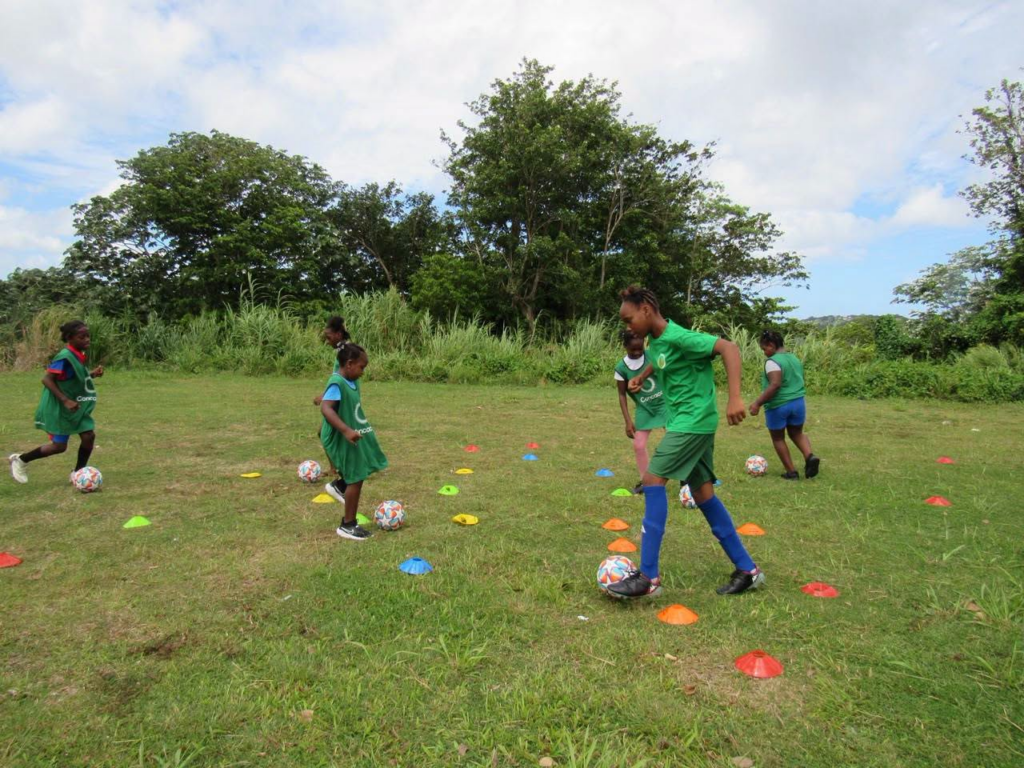
    The first major public event of this push was a community-focused girls’ football festival held last weekend in Babonneau, organized in partnership between the SLFA and the Babonneau Football League. The event brought together more than 30 primary school students from six local campuses, giving young aspiring players the chance to learn directly from seasoned international female football stars. Participating schools included La Guerre, Boguis, Des Barras Combined, Babonneau, Balata, and Fond Assau, with additional support from the country’s Ministry of Education and the local Member of Parliament’s office.

    Led by a team of local sports officials, education representatives, and professional players, the festival combined inspirational talks with hands-on skills training. Krysan St Louis, a veteran international player who earned her university degree through a sports scholarship, shared insights about the life-changing opportunities football can create for girls and women. Joining her was Kayla Polius, Saint Lucia’s current Junior Female Footballer of the Year, who encouraged the young participants to stay dedicated to their goals: “Stay humble, work hard, and believe that one day you can represent your country.”

    After the talks, the girls took to the pitch for structured drills covering core football fundamentals, from dribbling, passing, and shooting to ball control and overall coordination. The day concluded with small-sided exhibition matches that let the young players showcase the new skills they had picked up during the session.

    SLFA leaders including technical director Miran Louis and association president Lyndon Cooper laid out the long-term vision for the Babonneau program: to build sustained participation among local girls, create structured, age-appropriate player development pathways, and connect young talent to formal organized competition. The ultimate near-term goal for the community is to launch a competitive youth girls’ team that can compete in SLFA’s official national Girls and Women’s Competitions. A second phase of the program will retain at least 25 interested girls for ongoing training, ensuring the energy and momentum generated at the festival translates into lasting opportunities rather than a one-off event.

    Beyond youth player development, the SLFA is also working to grow women’s representation in football leadership. Recently, the organization held a capacity-building workshop with the Vieux Fort North Football League at the Grace community centre, focused on integrating women into football administration and equipping them for decision-making roles. The session brought together SLFA representatives, local league leaders, and female stakeholders to discuss barriers, shared aspirations, and priorities for growing the women’s game, ensuring women’s voices remain central to the league’s strategic goals. This workshop followed a July grassroots girls’ development program in the region, laying groundwork for ongoing community programming as part of SLFA’s broader Women’s Development Programme.

    Looking ahead, the SLFA will take another major step next month with a national consultation on a new national Women’s Football Strategic Plan, held in collaboration with global governing body FIFA. Scheduled for Saturday, October 10 at Castries’ Bel Jou Hotel in La Pansee, the consultation will bring a FIFA delegate together with representatives from all 19 of SLFA’s member leagues. Consultants leading the strategic planning process will present the draft plan, walk stakeholders through the document’s core strategic priorities, explain the reasoning behind key decisions, and open discussion about proposed implementation strategies for the multi-year plan.

  • Drivers of fallen shipping container trailers being charged- Traffic Chief

    Drivers of fallen shipping container trailers being charged- Traffic Chief

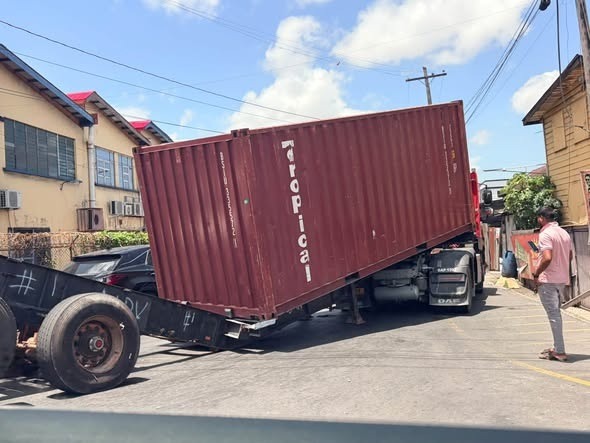
    Georgetown, Guyana – In the wake of another container trailer incident at the intersection of Sussex and Lombard Streets in central Georgetown, Guyana’s law enforcement authorities are taking decisive action to crack down on unsafe haulage practices that put road users at risk. Guyana Police Force (GPF) Traffic Chief Assistant Commissioner Mahendra Singh confirmed Thursday that multiple drivers of container-carrying trailer trucks now face criminal charges related to faulty loading and unsecured container placement.

    In an interview with Demerara Waves Online News, Singh emphasized that many of the recent container trailer incidents, including capsizing events, can be directly traced to dangerous practices by drivers and fleet operators. Common violations include the use of worn, unserviceable locking mechanisms to secure containers to trailer beds, or in the most severe cases, the complete absence of locking pins entirely. Singh noted that this is fundamentally a failure of routine vehicle and equipment maintenance that falls under the responsibility of the driver and operating team.

    Under Guyana’s Motor Vehicles and Road Traffic Act, drivers are legally accountable for ensuring loads are properly packed and secured before operating on public roads. Singh added that investigations into recent capsizing incidents have also uncovered cases where improper maneuvering – such as taking turns that are too sharp or misjudging the vehicle’s turning radius – contributed to containers shifting and toppling. Even when driver maneuvering is a factor, police investigators still examine whether faulty locking or unsecured container placement was an underlying contributing factor to the incident.

    To address the growing issue of unsafe container haulage, the GPF has launched proactive public education and outreach initiatives in partnership with key local industry groups. Sensitization workshops have already been held with the Georgetown Chamber of Commerce and Industry, the Shipping Association of Guyana, and direct representatives of container trailer operators to communicate new enforcement expectations and safety protocols. Public notices outlining the new enforcement crackdown and safety requirements have also been distributed via local newspapers and across social media platforms to raise awareness among both operators and the general public.

    The recent enforcement action follows a string of preventable container-related incidents on Georgetown’s roads, prompting police to step up enforcement to reduce the risk of accidents, injuries, and traffic disruptions caused by unsecured cargo.

  • Cuba: Díaz-Canel assesses social impact of economic changes

    Cuba: Díaz-Canel assesses social impact of economic changes

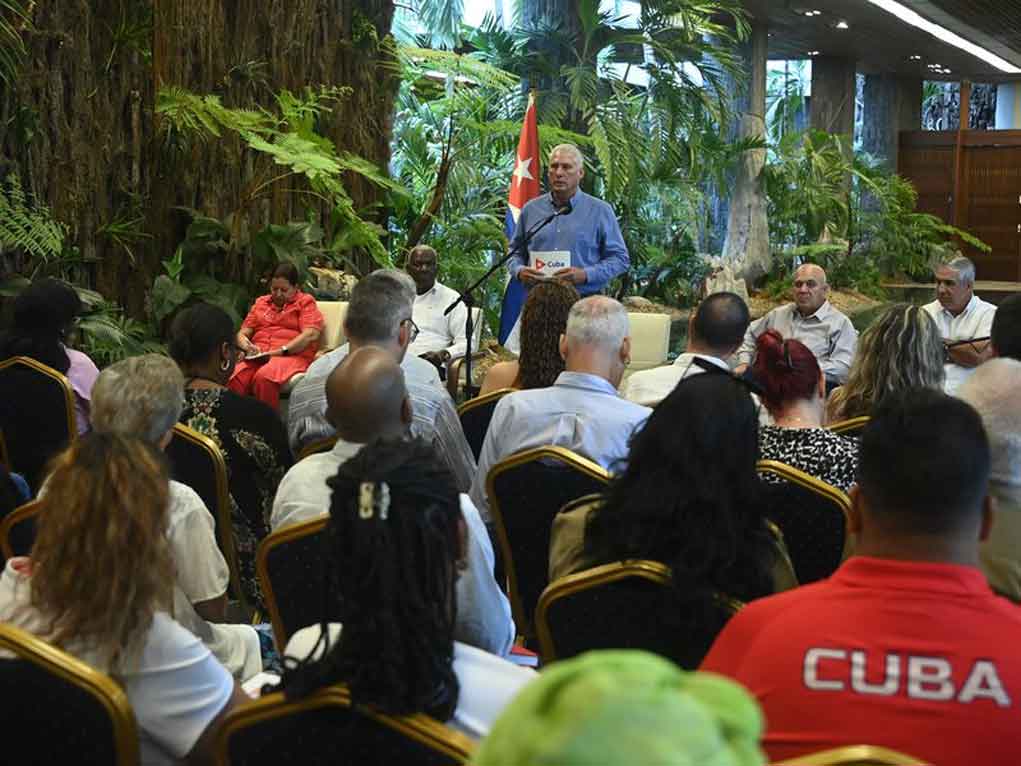
    In an official meeting focused on the country’s ongoing development agenda, Cuban President Miguel Díaz-Canel Bermúdez has reaffirmed the Cuban government’s core governing philosophy: that economic expansion holds no genuine value unless it delivers tangible, broad-based improvements to national social development. The official statement of the meeting was published on the presidency’s official website.

    In his remarks to participants, Díaz-Canel made clear that the accumulation of national economic wealth is an empty goal without two critical conditions: first, that it actively funds and advances widespread social programs that lift up vulnerable communities, and second, that all generated prosperity is distributed in alignment with the principles of social justice. “For us, it makes no sense to generate economic wealth if it does not impact and support social programs—and, above all, if that wealth is not distributed based on the concept of social justice,” he said.

    The president underlined that this unwavering commitment to social justice is what defines the socialist identity of the 176 sweeping economic and social transformation initiatives currently being rolled out across the country. He drew a clear contrast between Cuba’s development model and the free-market shock policies pushed by capitalist systems, noting that these same capitalist governments are the ones responsible for the hostile actions targeting Cuba: including diplomatic attacks, long-standing economic blockades, and a punishing energy embargo that has strained the country’s resources.

    Beyond framing the core ideological foundation of Cuba’s current reforms, the meeting also spotlighted two key pillars for successful implementation of these changes. First, participants emphasized that the Cuban people and their local grassroots organizations hold an irreplaceable, central role in rolling out transformation at the community level. Second, the gathering stressed that all economic actors—both entities managed by the state and emerging non-state business operations—share a collective obligation to uphold social responsibility as part of their operations.

    Díaz-Canel also detailed the inclusive, bottom-up process that has shaped the current wave of reforms. He explained that the transformation planning process began with extensive consultation with members of the Communist Party of Cuba and the Young Communist League, before expanding out to workplaces and residential communities, where neighborhood organizations have played a fundamental role in shaping priorities and ensuring reforms reflect local needs.

  • Orange Walk’s Cosme Duran Turns 108

    Orange Walk’s Cosme Duran Turns 108

    A remarkable life journey spanning more than a century reached a new milestone this week, as long-time Orange Walk Town resident Cosme Duran celebrated his 108th birthday.

    Born in late September 1918 in the small community of Progreso, located in Belize’s Corozal District, Duran spent his childhood and early adolescence rooted in the close-knit village life of his birthplace before relocating permanently to Orange Walk Town, where he has resided for decades.

    In his younger working years, Duran earned his living as a chiclero, a traditional trade centered on harvesting sap from the sapodilla tree to produce natural chewing gum, a role that shaped much of his early adult experience in northern Belize. As he entered his later years, he built a quiet, steady routine in his adopted hometown that his family says brought him deep joy.

    When he turned 105 in 2023, Duran’s relatives shared updates on his day-to-day life: despite losing vision in one eye, he retained the ability to walk unassisted and carry on clear, warm conversations with loved ones. Among his most beloved pastimes, they noted, was trips to Orange Walk’s Central Park, where he would spend hours sitting calmly, watching the world go by and soaking in the familiar sights of the community he called home.

    Three years on from that 105th celebration, Duran has hit another extraordinary marker, joining the tiny global group of people who have lived to see their 108th birthday. Beyond his long life, Duran leaves a legacy as a father to seven children, who gathered with him to mark this latest milestone.

  • Belastingopbrengsten in 2027 geraamd op SRD 46,8 miljard

    Belastingopbrengsten in 2027 geraamd op SRD 46,8 miljard

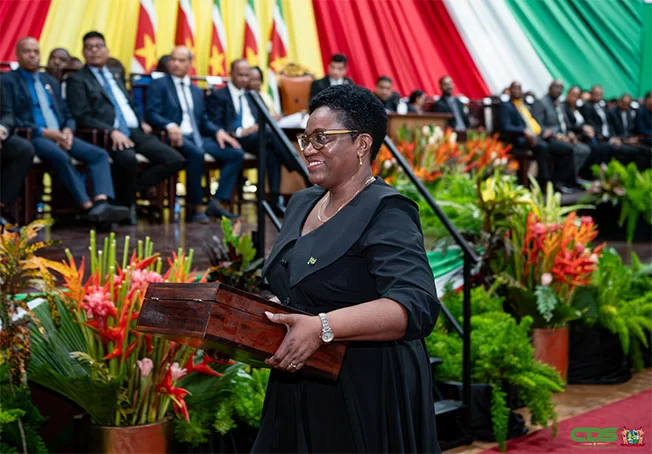
    On October 1, Suriname’s Minister of Finance Adelien Wijnerman delivered the national 2027 budget proposal to President Jennifer Simons in a traditional symbolic ceremony, marking the start of the formal parliamentary process for the government’s next fiscal plan. According to the newly released budget projections, the Surinamese government expects to collect approximately 46.8 billion Surinamese dollars (SRD) in total tax revenue in 2027. This figure marks an increase of more than 4.2 billion SRD compared to the adjusted revenue forecast included in the 2026 amended budget.

    The core of the 2027 tax revenue will come from two major sources: personal and corporate income tax, and value-added tax (VAT). Projections estimate that income tax will generate nearly 20.1 billion SRD in 2027, while VAT is expected to contribute around 11.6 billion SRD. Broken down by tax type, total direct taxes are forecast to hit 22.6 billion SRD, while indirect taxes are projected to raise approximately 24.2 billion SRD.

    Other key revenue streams include import duties, which are expected to bring in more than 6.2 billion SRD, and excise tax on motor fuel, which is projected to generate around 4.1 billion SRD. Beyond tax revenue, the government also forecasts an additional 17.2 billion SRD in non-tax revenue, bringing total projected current revenue for 2027 to roughly 64 billion SRD.

    During her annual address to the nation delivered on Wednesday, President Jennifer Simons emphasized a core principle guiding the government’s new fiscal approach: increasing state revenue cannot continuously rely on imposing heavier tax burdens on existing compliant citizens and businesses. To balance revenue growth and fair taxation, the administration has outlined a set of targeted policy adjustments. Instead of across-the-board tax hikes, the government will prioritize strengthening compliance with existing tax obligations, expanding the overall tax base to include more currently untaxed economic activity, improving tax collection efficiency, and reducing systemic revenue leaks from tax evasion and avoidance.

  • Demon/Diamond’s brother charged with abduction of Surinamese men

    Demon/Diamond’s brother charged with abduction of Surinamese men

    On Thursday, 1 October 2026, a Guyanese man from Vigilance, East Coast Demerara, Jimmol Murphy, was formally charged with the abduction of two Surinamese nationals who have remained missing for more than a month, before being granted bail ahead of his next court hearing.

    Murphy, who is the brother of well-known local figure Mark “Demon”/”Diamond” Cromwell, made his first appearance in the case via a virtual hearing at the Fort Wellington Magistrates’ Court, overseen by Magistrate Shareefah Parks. Court procedure rules state that for this indictable abduction charge, Murphy was not required to enter a formal plea during this initial hearing.

    Following the hearing, Magistrate Parks granted Murphy bail set at 1 million Guyanese dollars (GYD) and ordered him to appear for a subsequent hearing at the Blairmont Magistrates’ Court on 19 October 2026, where the case will progress for further reporting and procedural steps.

    The charges detail that the alleged abduction took place on 29 August 2026 in Rosignol, West Coast Demerara. The two victims are identified as 28-year-old Siegello Lorenzo Van Dalen, who holds residential addresses at both Moustachestraat #29 and Koetaristraat 8 in Saramacca, Suriname, and 29-year-old Derryl Danillo Bont, a resident of Adolfstraat #9 in Wanica, Suriname.

    As of the first court appearance, authorities have not confirmed the location or status of the two missing men, and their whereabouts remain unknown to both Guyanese and Surinamese law enforcement. If Murphy is ultimately convicted on the charge of wrongful, secret abduction and confinement of the two men, he faces a maximum penalty of a GYD 750,000 fine and five years of imprisonment under Guyanese law.

    The procedural timeline leading up to Thursday’s charge shows that Murphy first surrendered to Guyanese police on the previous Friday, before being released on temporary bail. He was required to return to the police station on Thursday, at which point he was taken into formal custody and the abduction charge was officially laid.

    Authorities have also confirmed that Cromwell’s wife, whose personal vehicle is alleged to have been used to transport the two Surinamese victims, has not been charged with any involvement in the case to date. She remains released on station bail as the investigation continues.

    The cross-border missing person case dates back to late August. Joint statements from Surinamese and Guyanese police issued on 19 September confirmed that the two men were reported missing after leaving their Suriname homes on 28 August, traveling in a Toyota Vitz bound for Nickerie, a Surinamese border city. The pair were last confirmed to be seen on 29 August, when they exited the vehicle in Clarasluis (Clara Sluice), Nickerie, to cross the border into Guyana by small boat. No further contact with the men has been made since that date.

  • Grenada’s transport system set for changes

    Grenada’s transport system set for changes

    Grenada is poised to roll out a sweeping three-year modernization of its public transportation system, with a series of interconnected upgrades that include pending bus fare increases, major terminal renovations, cashless fare processing, and new traffic congestion mitigation strategies. Prime Minister Dickon Mitchell confirmed that ongoing talks between the government, the Grenada Transport Commission (GTC), and the National Bus Association have put a bus fare increase close to final approval. Negotiators have already worked through core framework details, and only final points remain on the table: the exact percentage of the fare hike, which service routes will be affected, and the official implementation date. Once a full agreement is reached, a joint public announcement from the government and the bus association is expected in the near future.

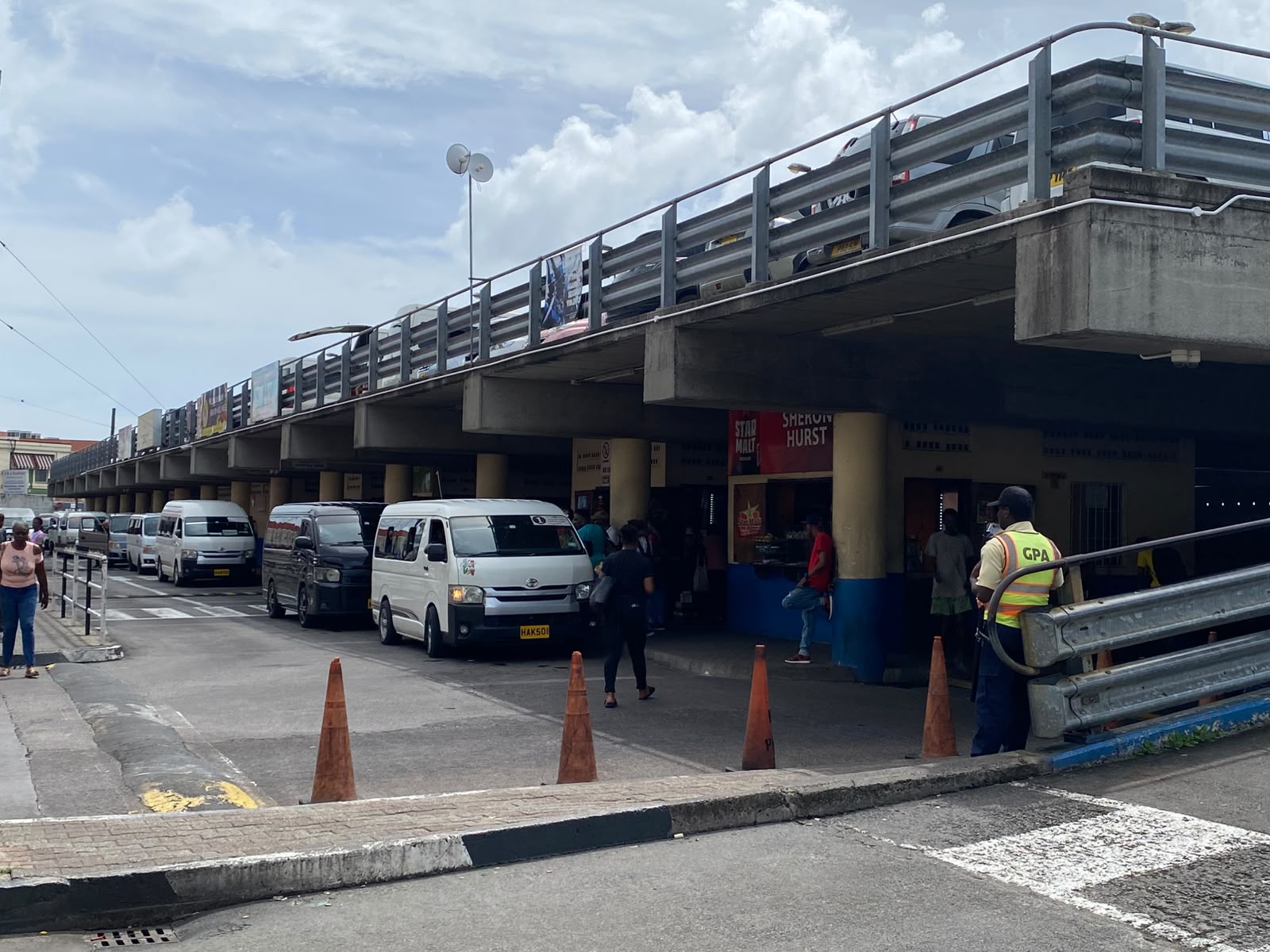
    Terminal infrastructure across the island is also set for major improvements. The national cabinet has already approved the transfer of all existing bus terminals from their current operators to the GTC, including the St. George’s Bus Terminal currently managed by the Grenada Ports Authority. GTC Executive Director Hatuey Campbell outlined that the St. George’s facility is scheduled to undergo comprehensive upgrades starting in 2027, with planned improvements including climate-controlled waiting areas for passengers, real-time digital passenger information systems, covered bus bays to protect passengers from the elements, on-site solar power generation, and purpose-built infrastructure to support the future rollout of electric buses. Upgrades are also planned for terminals in Grenville, Sauteurs, and Carriacou, with renovation work already underway at the Grenville terminal to resolve chronic flooding issues, resurface the facility, and expand parking capacity. Plans for a proposed new terminal in Grand Anse remain on hold, however, as the government continues to evaluate the best approach to meet public transportation demand in that high-traffic area.

    In addition to infrastructure changes, the GTC is working to modernize how passengers pay for their trips. Campbell noted that the commission is currently evaluating proposals from two separate vendors to implement a systemwide cashless fare payment network, with options including reloadable contactless payment cards that would eliminate the need for exact cash change on buses. The government is also moving forward to expand overall public transportation capacity through a new partnership that could bring up to 40 new buses to the national fleet, including 20 large electric buses scheduled to arrive by 2027. A national school transportation program is also in development for a 2027 launch, building on data and lessons collected from the successful SpiceBus pilot program, which tested new operational models and transportation technology that can be scaled across the entire public transit network.

    In the short term, authorities are prioritizing improved traffic management ahead of the upcoming popular VAT-free shopping days. Campbell and Permanent Secretary Isabel Morris confirmed that additional traffic wardens will be deployed to the most congested areas, including Grand Anse, Lagoon Road, and central St. George’s, with close coordination planned with the Royal Grenada Police Force to keep traffic moving. Transportation officials also plan to run public awareness campaigns to encourage carpooling and the use of off-site parking lots outside of the most congested zones to reduce gridlock. Longer-term traffic solutions being considered include timed signalized pedestrian crossings, adjusted traffic flow patterns to reduce bottlenecks, peak-hour parking restrictions in high-density areas, and the development of new community parking lots to spread out vehicle traffic.

    All of these initiatives fall under the GTC’s 2026-2028 strategic implementation plan, which also covers expanded accessibility for disabled passengers, improved road safety standards, comprehensive fare reform, expanded electric mobility adoption, and the modernization of vehicle licensing and inspection processes. Prime Minister Mitchell emphasized that delivering on this ambitious plan will require targeted legislative updates, securing adequate financing, and close collaboration across multiple government agencies and private sector stakeholders. The plan is designed to deliver tangible, visible improvements to Grenada’s transportation network over the next 36 to 48 months, laying the groundwork for a more efficient, sustainable, and passenger-focused public transit system for years to come.

  • Clara Lionel Foundation supports Reach Within’s mission

    Clara Lionel Foundation supports Reach Within’s mission

    For nearly two decades, a Grenadian nonprofit organization has been transforming the lives of vulnerable young people across the island nation. Since its founding in 2005, Reach Within has dedicated itself to advancing the physical, emotional, and social well-being of thousands of children and adolescents who reside in residential care facilities and foster care across Grenada.

    Working hand-in-hand with the island’s Child Protection Authority (CPA), Reach Within delivers a multi-layered portfolio of support tailored to meet the unique needs of young people at every stage of their journey in the care system. For children and teens currently living in care homes, the organization offers accessible, trauma-informed healing activities that range from music and yoga to team sports and creative arts, designed to help young people process adverse experiences and build healthy coping skills. Beyond direct youth programming, Reach Within also provides specialized trauma-informed training for the caregivers and facility staff who work with these vulnerable young people on a daily basis, equipping them with the tools to support long-term healing.

    For young adults who have aged out of the care system and face overlapping challenges including financial instability, housing insecurity, and unaddressed mental health needs, Reach Within extends critical transitional support. This includes one-on-one mentoring and professional counseling, access to food and other essential material supplies, advocacy for affordable housing, and hands-on job training to build employable skills.

    Over the past 12 months, the organization has expanded its impact through innovative skills-building initiatives, including courses in crochet craftsmanship and sustainable hydroponic farming. These hands-on programs double as entrepreneur training, giving young people the opportunity to develop marketable skills that foster independence, economic self-sufficiency, and long-term personal growth. This work not only changes individual lives but contributes to the positive development of Grenada’s next generation, aligning with the core belief that investing in youth is the foundation of a brighter, more innovative future for the entire country.

    Donnet Williams, Reach Within’s Director of Programmes, explained the core mission that drives the organization’s work. “Reach Within’s Self-Regulation and Transitional Living Programmes strive to create positive and meaningful connections and experiences for the children and youth we serve,” Williams said. “We want our young people to learn that they hold the power to dictate how their story unfolds and the direction their lives take, even after experiencing adverse childhood experiences and life’s many adversities.”

    Williams went on to highlight how the organization meets young people where they are, removing barriers to support. “Through our programmes, we meet them where they are, provide them with simple yet impactful tools, skills, resources, and a dependable support system to facilitate resilience,” she said. “Through the generosity of grant funding from the Clara Lionel Foundation, we’re able to deepen our reach and touch many more lives, giving our youth a much-needed chance to learn to thrive.”

    This expanded programming became possible thanks to a new grant partnership between Reach Within and the Clara Lionel Foundation (CLF), a global philanthropic organization dedicated to building thriving, resilient communities by empowering local community innovators to lead grassroots change. CLF funds impactful initiatives across five core priority areas: Arts & Culture, Climate Solutions, Future Generations, Health Access & Equity, and Women’s Entrepreneurship. To date, the foundation has distributed more than $100 million in grants to organizations working in the Caribbean, East Africa, and the southern United States, prioritizing communities that have historically been underserved by mainstream philanthropy.

    For Reach Within, the new funding from CLF not only expands existing programming but opens the door to reaching hundreds more vulnerable young people across Grenada, turning the vision of empowered, self-sufficient youth across the island into a tangible reality.