
For generations, Caribbean communities have cultivated ingrained rituals of preparation for one of the most visible climate hazard: hurricanes. Every June, as storm season kicks off, households across the region automatically spring into action: flashlights are tested, emergency battery stockpiles are topped up, shelves are filled with canned goods and bottled water, trees are trimmed, drainage systems are cleared, and critical documents are secured in waterproof storage. Hurricane preparation has become woven into the cultural identity of the Caribbean. But there is another slow-onset climate threat that has never received the same cultural focus: drought. Unlike hurricanes, drought never arrives with a dramatic, named alert, blaring headlines, or hours of nonstop live coverage. It creeps in gradually, one unusually dry week after another. Rainfall becomes increasingly sparse, regional river levels drop steadily, farmers begin rationing scarce water supplies, and eventually, taps run dry one morning without warning. By the time the public and officials recognize drought as a full-blown crisis, vulnerable communities have already been living with its devastating impacts for months.
博客
-

Dominica’s Sherdina Antoine wins regional climate story competition
Against a backdrop of growing global concern over climate vulnerability in small island developing states, a young writer from Dominica has emerged as the winner of the 2026 Caribbean Community Climate Change Centre (CCCCC) Youth Short Story Competition. Twenty-two-year-old Sherdina Antoine secured first place with her narrative *Weathering Us*, outpacing 172 competing submissions drawn from 14 different CARICOM member states across the Caribbean region.
Notably, Dominica earned a second spot in the competition’s top 10 rankings: another local writer, Kijuana Charity Bruno, earned recognition for her work *The Reef Keepers of Anse Chaudière*, marking a strong showing for the small island nation in this regional creative initiative. The contest, which opened for submissions on July 27, 2026, was specifically designed to invite creative input from young people aged 18 to 25 who are either citizens or residents of CARICOM countries, asking them to craft stories around the theme: “Imagine a climate-secure future for the world. Inspired by the Caribbean.”
Founded to elevate youth voices on critical climate issues, the competition provides a dedicated platform for emerging Caribbean writers to share their perspectives on climate change, community resilience, and the kind of sustainable future they envision for their region. Alongside Antoine’s win, the final results name Priya Ramdeo of Trinidad and Tobago as second place winner for her story *Mas For The Living Sea*, who will take home a tablet as her prize. Third place went to Kaitlyn Griffith of Barbados for *The Coastline of Tomorrow*, with a Kindle awarded as the prize for this placement. Antoine’s first-place prize is a cutting-edge MacBook Neo.
Danelle De Coteau-Campbell, Head of Communications at the CCCCC, highlighted that both the volume and creative quality of this year’s submissions made clear how deeply young people across the Caribbean care about the climate future of their home region. “We were encouraged by the response to this competition, with 173 young people from across 14 Member States sharing their perspectives on what a climate-resilient future could mean for our region,” De Coteau-Campbell shared in an official press statement. “Beyond the number of submissions, what stood out was the thought, creativity, and awareness reflected in the stories. Young people are not only experiencing the realities of climate change; they also have important perspectives on the future we are working to build. Through this competition, we wanted to create a space for those perspectives to be expressed and amplified.”
The full list of remaining top 10 finalists includes four additional writers from Trinidad and Tobago—Rayn Cooper for *A Road Trip of Change*, Priya Jaggernath for *The Panyard that Saved the World*, Aaliyah Bruce for *What I Used To Be*, and Venus Abass for *The Weather in Her Hands*—alongside Jadique Edwards of Barbados for *FEE FI FO FUM* and Philecia Chambers of Jamaica for *A City Beneath The Heat*. All 10 finalists will receive formal recognition, custom certificates, and official CCCCC promotional packages, with their work featured across the centre’s official website and social media channels. The top five stories will receive further distribution: they will be published on the CCCCC’s public platform caribbeanclimate.org and adapted into professionally produced audio versions to expand their reach.
Submissions to the 2026 competition arrived from all 14 participating CARICOM member states: Antigua and Barbuda, The Bahamas, Barbados, Belize, Dominica, Grenada, Guyana, Haiti, Jamaica, St. Kitts and Nevis, Saint Lucia, St. Vincent and the Grenadines, Suriname, and Trinidad and Tobago. To ensure fair and expert evaluation, the CCCCC assembled a diverse judging panel made up of respected figures from Caribbean literature and cultural sectors. Panel members included Barbadian writer and creative producer Ayesha GibsonGill; Cindy Allman, Jamaican book reviewer and founder of #ReadCaribbean Month; Belizean author and educator David Nicolas Ruiz; Dike Noel, Manager of Communications at the CARICOM Secretariat; and Montserratian-Barbadian writer, arts educator and academic Dr Yvonne Weekes.
-

Hodges Bay Resident Calls for Removal of Vehicle Abandoned on Road
A public appeal from Antigua and Barbuda Prime Minister Gaston Browne is drawing attention to a dangerous traffic hazard that has sat along a popular Hodges Bay roadway for nearly a week. The prime minister took to public channels this week to issue a direct request to the owner of the illegally parked, abandoned vehicle, warning that the car’s position poses serious risks to passing motorists and pedestrians.\n\nBrowne clarified in his public statement that the vehicle is not parked in a legal, designated spot, instead sitting partially in the active travel lane — a placement that he says creates unnecessary danger for anyone using the roadway. “This vehicle has been abandoned in Hodges Bay for about a week. It’s parked practically in the middle of the road, representing a traffic hazard,” Browne wrote in his public post.\n\nIn a straightforward, polite appeal, the prime minister called on the registered owner to prioritize moving the vehicle as quickly as possible to eliminate the hazard. “Can the owner please remove this vehicle soonest? Thank you,” he said. The public call to action was accompanied by a photograph that confirms the vehicle’s problematic placement, showing it partially protruding into the roadway right next to a local residential property. Local residents and regular commuters on the route have been quick to echo the prime minister’s concerns, noting that the abandoned car reduces road space and could easily lead to a collision, especially during periods of high traffic or low light conditions.
-

Grenada Co-operative Bank Limited announces demission of office by Director Lisa Taylor, Deputy Chairman
After 16 years of dedicated service to the institution, the Board of Directors of Grenada Co-operative Bank Limited has confirmed that Deputy Chairman Lisa Taylor will step down from her position as a board director, effective September 30, 2026.
Taylor first joined the bank’s board as a director in 2010, and rose to the position of Deputy Chairman in 2021. Throughout her 16-year tenure, she has been widely recognized for making significant, high-impact contributions to the bank’s corporate governance framework and the implementation of rigorous, prudent oversight practices. In her role as Deputy Chairman, she consistently provided robust strategic and operational support to the Board Chair, and was instrumental in strengthening the board’s overall leadership capacity and advancing sound, data-driven decision-making processes across all levels of governance.
Beyond her executive responsibilities as Deputy Chairman, Taylor also chaired several key standing committees of the board, including the Risk and Compliance Committee and the Governance and Human Resources Committee. In these leadership roles, she brought deep expertise to board deliberations on critical organizational priorities, ranging from long-term strategic direction and enterprise risk management to regulatory compliance and ongoing governance refinement.
Current Board Chair Darryl Brathwaite issued a formal statement acknowledging Taylor’s legacy of service, saying, “Lisa Taylor has served this bank with unwavering commitment and exceptional professionalism throughout her tenure, and the entire board is deeply grateful for every contribution she has made. On behalf of the board, senior management, all staff, and our shareholders, I extend our sincerest gratitude to Lisa, and we wish her nothing but success in all her future pursuits.”
The bank has noted that the process to select a new director is already in its early stages, and an official announcement of the appointment will be made once all internal selection protocols and required regulatory approvals have been completed. The board reiterated its thanks to Taylor for her 16 years of exceptional, dedicated service to the organization, and expressed confidence that the foundations she helped build will support the bank’s continued growth and stability for years to come.
-

Belize, Japan Finalise $1.3 Million Donation of Seven Fire Trucks
On October 1, 2026, Belize and Japan marked a key milestone in bilateral cooperation by formalizing a grant agreement that will deliver seven new fire trucks to the Belize National Fire Service. The official signing ceremony was held at the Belmopan Fire Station this Tuesday, capping off a months-long application and review process that began when Belize first submitted its request for emergency infrastructure support.
Valued at approximately 1.3 million Belize dollars, the fleet of new fire response vehicles is scheduled to arrive in the Central American nation by the end of 2026, when a large-scale public handover event will be held to commemorate the donation. Once received, the trucks will be deployed across five of Belize’s districts to fill critical gaps in emergency coverage: Corozal, Orange Walk, Belize District, Cayo, and Stann Creek. Within Belize District, the new vehicles will strengthen response capacity in high-need areas including Belize City, Ladyville, and the popular island destination of Caye Caulker. The trucks allocated to Cayo District will serve the capital city of Belmopan, while the Stann Creek unit will support operations in Dangriga.
Beyond the physical equipment, the partnership includes specialized technical training for Belizean fire personnel, scheduled to take place in January 2027. The training program is designed to equip local first responders with the specialized skills needed to operate and maintain the new vehicles, ensuring the donation delivers long-term value to communities across the country.
Rolando Zetina, Chief Executive Officer of Belize’s Ministry of the Public Service, Disaster Risk Management and Enterprise, emphasized that the agreement extends far beyond the delivery of new equipment. In remarks at the signing ceremony, Zetina framed the donation as a reinforcement of the deep, decades-long diplomatic and cooperative ties between the two nations. “This occasion represents not only the receiving of seven fire trucks but also the strengthening of the longstanding relationship between Belize and Japan, built over more than four decades of diplomatic relations and cooperation,” Zetina said. “Over the years, that partnership has resulted in countless projects and initiatives that have made a tangible difference in the lives of everyday Belizeans.”
Ryōsuke Yamakura, Japan’s Ambassador to Belize, highlighted that the initiative reflects a people-centered partnership between the two nations. “These fire trucks represent an investment in life-saving resources, faster emergency response, and peace of mind for families and local businesses,” Ambassador Yamakura explained. “This is support from the Japanese people to the Belizean people, rather than from the Japanese government to the Belizean government.”
For the Belize National Fire Service, the donation addresses long-standing needs for updated emergency equipment, allowing first responders to cut response times and better protect communities and critical infrastructure across the country. The planned arrival of the fleet by the end of 2026 is expected to markedly improve the service’s operational capacity ahead of the 2027 hurricane season, a high-risk period for the Caribbean nation.
-

Ti Vilaj Kwéyòl-‘Tout Biten Domnik set for October 19-22
Dominica is preparing to host its fifth annual celebration of indigenous Creole heritage this October, when the lush grounds of the Dominica Botanic Gardens will be reimagined as a lively, immersive Creole village for the Ti Vilaj Kwéyòl festival, themed “Tout Biten Domnik”. Running from October 19 through 22, 2026, the four-day cultural gathering will bring every facet of local Dominican life to the forefront, offering attendees a full sensory experience of authentic Creole tradition.
Originally launched in October 2022, Ti Vilaj Kwéyòl was created to replace the long-running annual Creole in the Park (CITP) event, which previously served as the lead-in to the globally acclaimed World Creole Music Festival (WCMF). This year’s iteration is far more than a simple market or performance series, according to event organizers who officially announced the festival details at a media launch held earlier this Wednesday.
Gloria Joseph, Permanent Secretary in Dominica’s Ministry of Labour, Public Service Reform, Social Partnership Entrepreneurship and Small Business Development, framed the 2026 festival as the starting point for a national conversation about Dominican identity, rooted in the island’s cultural touchstones. “Today marks the beginning of an intentional island-wide conversation about who we are as a people through our food or language or music or craft or stories,” Joseph stated during the launch address.
She emphasized that the festival acts as a living showcase of Dominican Creole identity in advance of the World Creole Music Festival, designed to highlight the depth and breadth of the nation’s cultural heritage for both local residents and international audiences. “It is a living, vivid expression of our Dominican identity ahead of the world-renowned World Creole Music Festival, designed to showcase the depth and diversity of our Creole heritage, our culture, to both locals and to the world,” Joseph explained.
Tying the event to Dominica’s broader national independence theme of “Our Journey, Our Legacy, Our Future”, Joseph noted that Ti Vilaj Kwéyòl serves as a communal space to reflect on the nation’s history, celebrate its current vibrant culture, and collectively plan for its future. “As we come here this morning, under the independence theme, our journey, our legacy, our future, Ti Vilaj Kwéyòl becomes a space where we honor our past, celebrate our present and imagine our future together,” she said.
More than 90 local entrepreneurs across a wide range of sectors will have the opportunity to display and sell their handcrafted goods and services at the festival. The immersive village will feature stalls offering traditional Dominican cuisine, locally produced beverages, handmade crafts, fine art, homemade artisanal products, native plants, and dozens of other uniquely Dominican goods. Attendees will also enjoy continuous live music, cultural performances, and hands-on demonstrations of traditional skills throughout the event’s run.
The festival will operate daily from 12:00 noon to 8:00 PM, and Joseph extended an open invitation to all residents and visitors to attend the celebration, encouraging attendees to support local creators and enjoy the full cultural experience. She invited everyone to join in this celebration, “to patronize, to just have a great time.”
-

SVG’s cruise calls set to surge with 100 more calls this season
The Caribbean nation of St. Vincent and the Grenadines is on track to see a substantial surge in cruise ship calls for the upcoming travel season, with officials projecting growth from roughly 250 annual visits to over 350. This uptick comes as part of a broad government-led strategy to upgrade visitor amenities, expand tourism’s economic footprint across all islands, and strengthen the country’s position in the competitive global cruise market.
-

MISSING: Appeal for Help Locating Jemima Morrissey Jackson
Law enforcement officials in Antigua have issued an urgent public appeal for assistance in tracking down Jemima Morrissey Jackson, a woman who has been officially reported missing to local authorities.
According to the official missing person bulletin released by authorities, the last confirmed location of Jackson was at the Sir Lester Bird Medical Centre, the main public hospital on the island. Investigators have released key identifying details to help members of the public recognize Jackson: she stands approximately 5 feet 2 inches tall, and was last documented wearing a pair of bright orange sweatpants paired with a long-sleeve pink plaid shirt.
The bulletin also notes that Jackson lives with bipolar disorder, a detail officials shared to help the public understand any potential vulnerability the missing woman may face while unaccounted for. Notably, the official notice does not include a specific date or time frame for when Jackson was last observed at the medical centre, leaving a key gap in the publicly released details of the case.
Authorities are urging any person who has spotted Jackson in recent days, or who holds any information that could help confirm her current whereabouts, to reach out to local police immediately. Even small, seemingly insignificant tips could help investigators bring the missing woman back to safety quickly.
-

Antigua and Barbuda Government to Permanently Employ 10 Young People From Rastafarian Community
Antigua and Barbuda’s national Cabinet has given formal approval to a full-time government employment scheme for 10 young people from the Nyabinghi Theocracy Community based at Creekside, following in-depth negotiations with the community’s High Priest Ambassador Bongo Sela, Director General of Communications Maurice Merchant confirmed during a post-Cabinet press briefing this Thursday.
Discussions around the initiative grew out of the community’s existing work in the agricultural sector, where members already grow sweet potatoes and a range of other staple food crops. Community leaders told Cabinet that the group is eager to scale up its food production output, while creating opportunities for its younger generation to build hands-on skills in sustainable farming, irrigation management and other agricultural trades. In response, Cabinet agreed to formalize the employment positions, with clear oversight and accountability frameworks in place to guide the programme’s implementation.
Addressing questions from reporters at the briefing, Merchant pushed back against early speculation that the roles would be short-term temporary positions, emphasizing that the 10 young community members will enter permanent full-time public employment. “They’re from the community and employed by government to work within the community,” Merchant explained, confirming that the programme’s focus remains exclusively on legal food crop production, with no provision for marijuana cultivation under the government-funded initiative.
While Merchant acknowledged that some Rastafarian communities across the country hold official licenses for marijuana cultivation as part of their cultural practices, he stressed that this new employment project is strictly focused on boosting national food output. “This program does not include the cultivation of marijuana,” he reiterated. The government’s core goals for the initiative are twofold: to strengthen Antigua and Barbuda’s overall national food security, and to generate sustainable community income that can support further development projects for the Nyabinghi Theocracy Community. Unlike many public sector investment projects, the government does not anticipate receiving direct financial returns from this agricultural pilot.
As talks progressed, Cabinet also addressed a separate proposal to include young people from outside the Nyabinghi community who regularly associate with the group. Cabinet leaders advised the community to pause plans to integrate these external individuals into the initial phase of the programme, citing concerns about unvetted participation. An unstructured recruitment process for outsiders, Cabinet noted, could expose both the community and the agricultural initiative to unnecessary risk, including potential reputational damage if outside actors used the community as a base for illegal or unethical activity.
Instead, Cabinet recommended that the first phase of the programme focus exclusively on youth already embedded within the Nyabinghi community, where the group’s established leadership can provide consistent, effective supervision and accountability. Merchant added that external candidates could be considered for future expansion of the scheme, provided they demonstrate a genuine, long-term commitment to engaging in productive, structured agricultural work.
Looking ahead, Cabinet signaled that similar agricultural employment proposals from other Rastafarian communities across Antigua and Barbuda will be eligible for government support, as part of the nation’s broader national strategy to scale up domestic food production and reduce reliance on imported food staples.
-
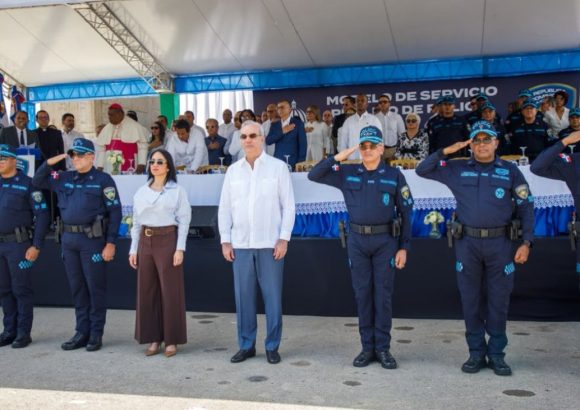
Abinader launches second phase of new police patrol model in La Altagracia
On a Friday ceremony held in the coastal Dominican province of La Altagracia, President Luis Abinader formally inaugurated the second phase of the country’s ambitious Model of Police Service and Patrol (MSPP), a cornerstone initiative of the national government’s ongoing public safety reform agenda. As part of this expansion, 990 newly trained and fully equipped police officers have been deployed to the province, where local law enforcement operations have been reorganized into 84 geographic quadrants and 39 patrol corridors covering seven key population centers: Verón, Higüey, Villa Cerro, La Otra Banda, El Hoyo de Friusa, Bayahibe and San Rafael de Yuma.
The rollout in La Altagracia marks a major milestone in the government’s broader police modernization program, which has set a target of rolling out the new patrol model across all 24 national police departments by 2026. Unlike traditional policing models that rely on reactive response, the MSPP framework leverages granular territorial crime data, standardized operational protocols, specialized officer training and ongoing performance oversight to strategically deploy personnel where and when they are most needed.
Speaking at the launch, Interior and Police Minister Faride Raful highlighted the proven effectiveness of the new model in the four regions where it was first implemented. Official ministry data shows that between January and July of this year, reported robbery incidents dropped by 35% across those pilot departments, translating to 1,046 fewer criminal cases than the same period prior to the reform.
Raful emphasized that expanding the program to La Altagracia carries unique strategic importance, noting the province’s rapid population growth and its status as one of the Dominican Republic’s core hubs for tourism and commercial activity. A visible, well-trained, and responsive police presence is critical to supporting continued economic growth and protecting both residents and visitors, she added.
As part of the national initiative, more than 1,000 officers have now completed training through the Basic Police Tactical System (SITAB), a curriculum designed to modernize policing practices. Coursework focuses on core competencies including constructive community engagement, standardized tactical response, evidence-based decision-making, proportional use of force, and officer mental and physical resilience.
Beyond training and reorganization, the new model also conducts targeted needs assessments for each patrol territory to address gaps in personnel, mobility and equipment, directly strengthening local operational capacity. According to government officials, the ultimate goal of this expansion is to embed the principles of police reform into the daily lives of Dominican citizens by building a police service that is more organized, more accessible to communities, and better prepared to address public safety needs, all while upholding constitutional protections, human rights and individual dignity.