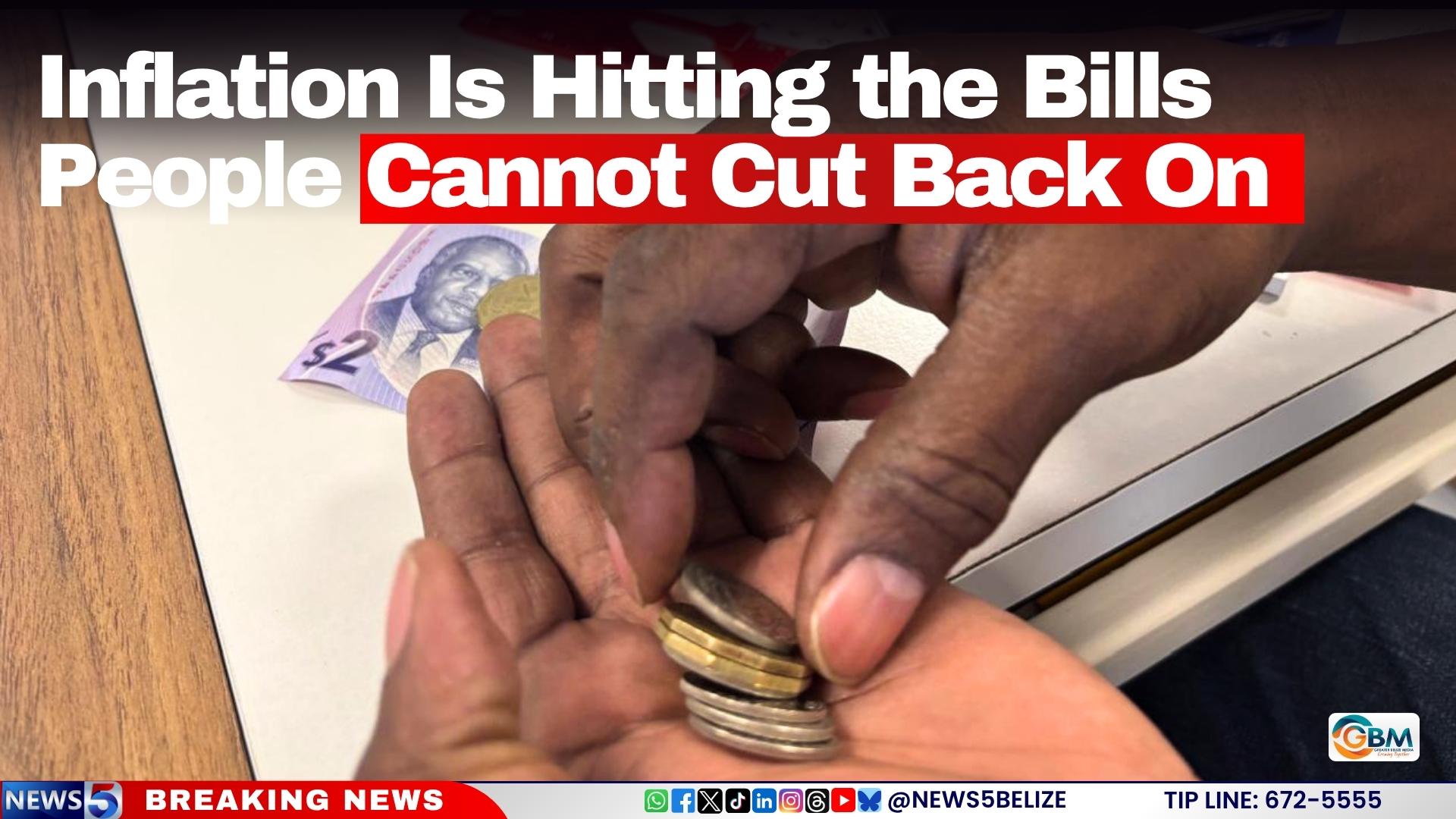
As of the first eight months of 2026, Belize is grappling with a lopsided inflation surge that disproportionately impacts the essential expenses households cannot eliminate, placing unprecedented financial strain on working and middle-class families across the country. Unlike discretionary spending that can be trimmed when budgets get tight—such as restaurant meals and leisure outings—the costs that families cannot skip, including public transit, utility bills, and grocery staples, are seeing the fastest price hikes, according to new data released by the Statistical Institute of Belize (SIB).
Official SIB figures put average overall consumer price growth at 2.9% between January and August 2026, but the increase is far from uniform across spending categories. Essential goods and services have outpaced price growth in discretionary sectors: transport, food, housing, and utility costs are climbing far more rapidly than spending on dining out, healthcare, and education, a gap that leaves families with almost no flexibility to adjust their budgets to absorb higher costs.
Transportation, a non-negotiable expense for most Belizeans commuting to work, school, and essential services, has seen some of the sharpest increases. SIB statistician Jaime Crespo confirmed that fuel prices have surged across all grades: regular gasoline is up 11.3% year-to-date, premium gasoline has risen 7.2%, and diesel has jumped by a staggering 17.8%. By August, diesel prices had already crossed $13 per gallon, and costs have continued to climb in subsequent weeks. These fuel price increases have rippled through the sector, pushing up fares for public transit and commercial flight tickets as well.
Housing and utility costs have also climbed at a much faster rate than overall inflation. Residential electricity prices rose 7.7% this year, a change Crespo attributes to two policy adjustments implemented at the start of 2026: a higher base price per kilowatt-hour and updated COPA tariffs. Additional housing-related cost increases include a 1.4% rise in average rent and a 4.1% jump in butane prices for household cooking and heating.
Grocery staples, another unavoidable monthly expense, have also become significantly more expensive. Overall food and non-alcoholic beverage prices rose 2.2% across the eight-month period, with the sharpest increases concentrated in core household items: meat, sugar, cereal products, instant coffee, and natural juice. Notably, even domestic goods that Belize produces domestically—including sugar and meat, two of the country’s key agricultural outputs—have seen notable price hikes this year, despite the nation’s status as self-sufficient in basic food production.
Prime Minister John Briceño acknowledged the growing financial pressure on Belizean households during his September 15 State of the Nation address, confirming that the government has heard public concerns about rising costs. “We hear the cries of the Belizean people. We understand what you are going through,” Briceño stated. The prime minister noted that while Belize has reached the milestone of full self-sufficiency in basic food production, allowing the country to reliably feed its population, the broader national economy remains heavily reliant on imported goods and services. Global price shifts for these imports are outside of domestic policy control, he explained, creating ongoing inflationary pressure that the country continues to navigate.