博客

  • PM Briceño Pushes $73M BEL Share Purchase as Strategic Move

    PM Briceño Pushes $73M BEL Share Purchase as Strategic Move

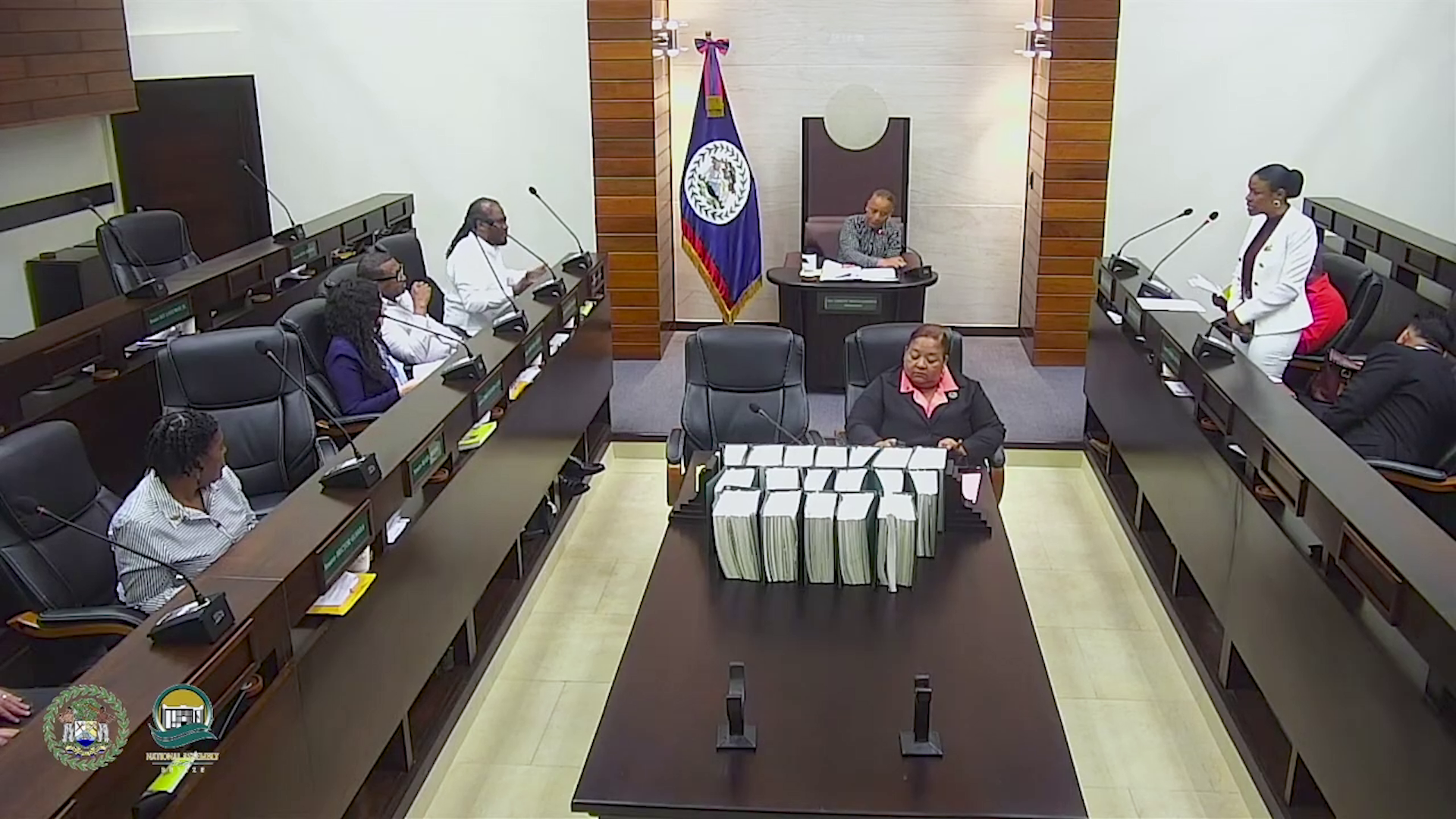
    On June 4, 2026, as public tensions played out in the streets outside Belize’s National Assembly, a high-stakes strategic economic policy debate was unfolding inside the chamber, centered on a transformative proposal from Prime Minister John Briceño’s administration. The government is seeking legislative approval to allocate $73 million from the country’s consolidated revenue fund to acquire a majority stake in Belize Electricity Limited (BEL), the nation’s primary power provider, in a move the prime minister frames as a cornerstone of the government’s broader energy sovereignty agenda.

    Under the terms of the legislation tabled before lawmakers, the government will purchase just over 8.1 million non-voting preferred shares at a price of $9 per share. The share price breaks down into a $2 par value per share and a $7 share premium per security. If approved, the bill will authorize Belize’s Financial Secretary to complete the transaction through a formal subscription deed, which outlines binding pre-conditions that both parties must meet before the acquisition can be finalized.

    Per the deed’s requirements, the Government of Belize must first align all relevant domestic legislation to accommodate the expanded state ownership of the utility. On BEL’s side, the company is required to submit all required corporate documentation, including updated board memoranda, audited annual financial statements, and secure all necessary regulatory approvals from national energy oversight bodies before the transaction closes.

    Prime Minister Briceño emphasized the long-term strategic value of the move during debate on the bill, framing the acquisition as a key step forward for the administration’s core policy goal of expanding domestic national ownership and state influence over Belize’s critical energy infrastructure. “This bill represents another step in the government’s broader policy objective of increasing national ownership and influence within Belize’s electricity sector,” Briceño told lawmakers, noting that greater state control over the power supply will strengthen the country’s energy security and align the utility’s operations more closely with national public interest priorities.

    This report is adapted from a transcript of an original evening television news broadcast.

  • National Security Tightened Amid Fears of Criminal Infiltration

    National Security Tightened Amid Fears of Criminal Infiltration

    In a landmark move aimed at shoring up Belize’s domestic security architecture, Prime Minister John Briceño has announced sweeping new defensive measures to block criminal groups from infiltrating critical national systems, responding to rising alarms over evolving internal and external threats. Speaking before the House of Representatives on June 4, 2026, Briceño outlined a first-of-its-kind legislative framework that will introduce mandatory, stringent background vetting and mandatory polygraph testing for all personnel within the National Defense Directorate who hold access to sensitive classified information.

    Briceño emphasized that the threat landscape facing Belize has shifted dramatically in recent years, with domestic and transnational criminal networks no longer limited to small-scale street activity. Today, these groups possess significant financial resources, stockpiles of illegal weapons, and the capacity to bribe public officials and insiders to obtain sensitive security information and facilitate their illegal operations, which include drug trafficking and weapons smuggling. Local gangs have evolved into sophisticated, well-resourced networks that actively seek to exploit gaps in national security screening, Briceño noted, making proactive reform critical.

    The proposed reforms are part of a broader government effort to restructure and strengthen the National Security Directorate and the National Security Council – the government’s central advisory body responsible for shaping policy on national sovereignty, public safety and overall national defense. Administration officials have stated the new rules are designed to close existing vulnerabilities before criminal actors can exploit them, and to root out systemic corruption that enables or actively supports transnational criminal activity.

    This initiative marks the first time polygraph testing has been mandated for national security personnel in Belize, underscoring the current government’s public commitment to cleaning up corrupt practices that have put the country’s security at risk. In remarks to the legislature, Briceño confirmed that the government has already made significant progress in restructuring the country’s national security governance, and the new legislative framework is the next critical step to entrench those gains and protect the public from growing criminal threats.

  • Briceño Administration Faces Heat Over Vacant Ombudsman Post

    Briceño Administration Faces Heat Over Vacant Ombudsman Post

    As of June 2026, Belize has been left without a sitting Ombudsman for five full months, triggering growing opposition criticism of the John Briceño-led administration over the unfulfilled constitutional oversight role.

    The key anti-corruption and public accountability post has remained vacant since former Ombudsman Major Gilbert Swaso’s term expired at the start of December 2025. To date, no permanent appointee has been named, and even the required interim appointment mandated by existing law has not been arranged, leaving the public without access to a formal recourse body for administrative grievances against government agencies.

    The vacancy was thrust into the national political agenda during recent legislative sessions, when opposition figures raised pointed questions about the delay alongside confirmation debates for other oversight body appointments. During a House sitting, Opposition Leader Tracy Panton pressed the government to explain the prolonged hold-up, while United Democratic Party (UDP) Senator Sheena Pitts amplified the criticism during a Senate debate on the re-appointment of Maria Arthurs as Contractor General. The Senate ultimately approved Arthurs’ re-appointment, but the Ombudsman vacancy remains entirely unresolved.

    Pitts emphasized that the Ombudsman post is a constitutionally enshrined role designed to deliver critical checks and balances for Belizean citizens. Citing Sections 3 and 7 of the Belize Ombudsman Act, she noted that legislation explicitly requires an acting office holder if no permanent appointment is made, a requirement the government has failed to meet five months after the previous incumbent’s term ended. “The Belizean public is left without such an office for which it could go for recourse for administrative review of government departments,” Pitts stressed.

    In response to opposition pressure, Prime Minister Briceño defended the delay by framing it as a side effect of a broader institutional transition: the government is currently working with international partners including the European Union to restructure the existing Ombudsman’s Office into an expanded national human rights body. Briceño acknowledged the process is more complicated than initially expected, admitting “we are biting more than we can chew” as the administration works through required legislative changes to formalize the new institutional structure. Under the revised framework, the head of the expanded body must be a formally trained attorney, adding new qualification requirements that did not apply to the previous Ombudsman role.

    The Prime Minister also sought to ease public concern, noting that despite the absence of a top appointee, existing staff at the Ombudsman’s Office remain on duty to continue accepting and processing public complaints. As of June 2026, however, the Attorney General’s office is still reviewing the draft legislation needed to formalize the restructuring, and the government has not released any public timeline for when a new Ombudsman will ultimately be appointed, even after initial assurances earlier that the vacancy would be advertised publicly.

  • Pattern Emerging? Pitts Silenced Again, Senators Question Limits on Debate

    Pattern Emerging? Pitts Silenced Again, Senators Question Limits on Debate

    Belize’s Senate has found itself at the center of a growing debate over legislative free speech after a top opposition senator was cut off mid-speech for a second time in months, reigniting questions about the government’s commitment to open democratic debate. The incident unfolded on the evening of June 4, 2026, during proceedings centered on the reappointment of the Contractor General.

    Sheena Pitts, opposition senator from the United Democratic Party (UDP), took the floor to push ruling government leaders over a months-long vacancy in the constitutionally mandated role of Ombudsman. The post, which offers Belizean citizens an independent channel to file appeals against administrative overreach by government departments, has sat empty since the previous ombudsman’s contract expired on December 31, 2025.

    When Pitts attempted to draw a connection between the vacant Ombudsman position and the Contractor General reappointment motion before the chamber, Senate President Carolyn Trench-Sandiford interrupted her mid-statement and ordered her to stick strictly to the agenda topic. Transcripts of the exchange show Trench-Sandiford acknowledged the institutional link between the Ombudsman, Contractor General, and Integrity Commission as core guardians of good governance, and noted she had already permitted limited discussion of the vacancy in context. Still, she ordered Pitts to end her remarks on the Ombudsman issue immediately, cutting off the senator before she could finish laying out her argument.

    Following the interruption, Pitts concluded her remarks by reiterating her concern over the unfilled Ombudsman post, before confirming the UDP’s support for the reappointment of the incumbent Contractor General. But the incident has already stirred unease among multiple sitting senators, who warn that increasingly tight restrictions on floor debate pose a direct threat to freedom of expression in the legislature.

    Critics point out this is not an isolated incident. Back in March 2026, Pitts was also locked out of Senate debate after Trench-Sandiford moved to close discussion while the senator stepped out briefly for an unplanned break. The repeat occurrence has led many political observers to question whether a pattern of silencing opposition voices is emerging in Belize’s upper legislative chamber, at a time when key oversight institutions designed to hold government accountable already stand incomplete.

  • Judges’ Pension Bill Debate Turns Senate into Late Night Sitting

    Judges’ Pension Bill Debate Turns Senate into Late Night Sitting

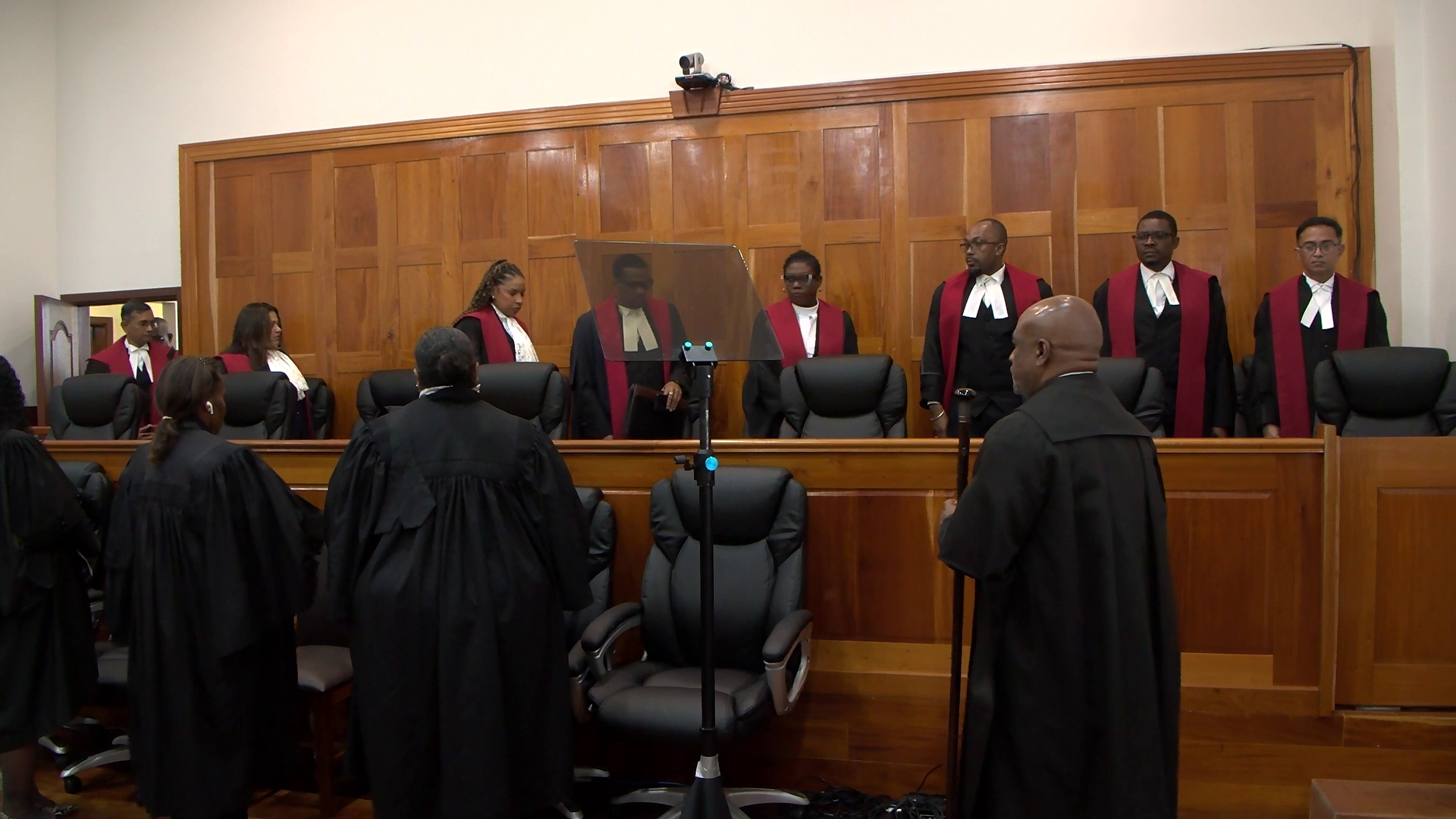
    In a dramatic late-night sitting that stretched well past 10 p.m. Wednesday, the Senate passed a deeply contentious judges’ pension reform bill by a razor-thin 7-6 margin, capping hours of tense, closed-door debate that left public observers locked out of live proceedings. The contentious legislation, fast-tracked ahead of the upcoming retirements of two senior judges – Justice Antoinette Moore in August and a second jurist the following month – has sparked sharp disagreement over its generosity, unclear wording, and departure from existing parliamentary pension standards.

    The narrow passage relied on a surprise party defection: independent Church Senator Louis Wade broke with his usual bloc to back the government’s proposal, swinging the outcome in the bill’s favor. Unlike public Senate sessions that are broadcast via livestream for public transparency, Wednesday’s key negotiations shifted off-camera, leaving members of the public unable to follow the granular debates over the bill’s core provisions – specifically vesting periods and monthly payout rates.

    In a post-vote phone interview, Union Senator Glenfield Dennison outlined his caucus’s opposition to the final version of the legislation. Dennison explained that lawmakers compared the proposed judges’ pension framework to the existing Parliamentary Pensions Act, which clearly outlines contribution requirements and vesting timelines in explicit terms. In contrast, Dennison argued the new bill offers far more generous benefits than the existing scheme for elected officials, going beyond what opposition lawmakers viewed as reasonable.

    Opposition members pushed for expert consultation to refine the bill’s language and provisions, Dennison said, but lawmakers faced pressure to pass the legislation quickly to accommodate the approaching judicial retirements. Over hours of negotiations, opposition called multiple divided votes to work through contested clause-by-clause details. After the government processed all of its proposed amendments and the bill advanced to its third reading, Dennison called for a recorded division to formalize the opposition’s objection, noting the union caucus could not support the bill in its current form. He added that vague wording in the final text will almost certainly require future corrective amendments to clear up confusion for administrators and beneficiaries.

    The report is a transcribed version of an evening television newscast, with phonetic spelling applied for Kriol-language speaker quotes where used. As of publication, the online report has garnered 52 views from readers, with public comment open via the outlet’s Facebook integration.

  • Key Labor Issues Dominate Gov’t–Union Meeting

    Key Labor Issues Dominate Gov’t–Union Meeting

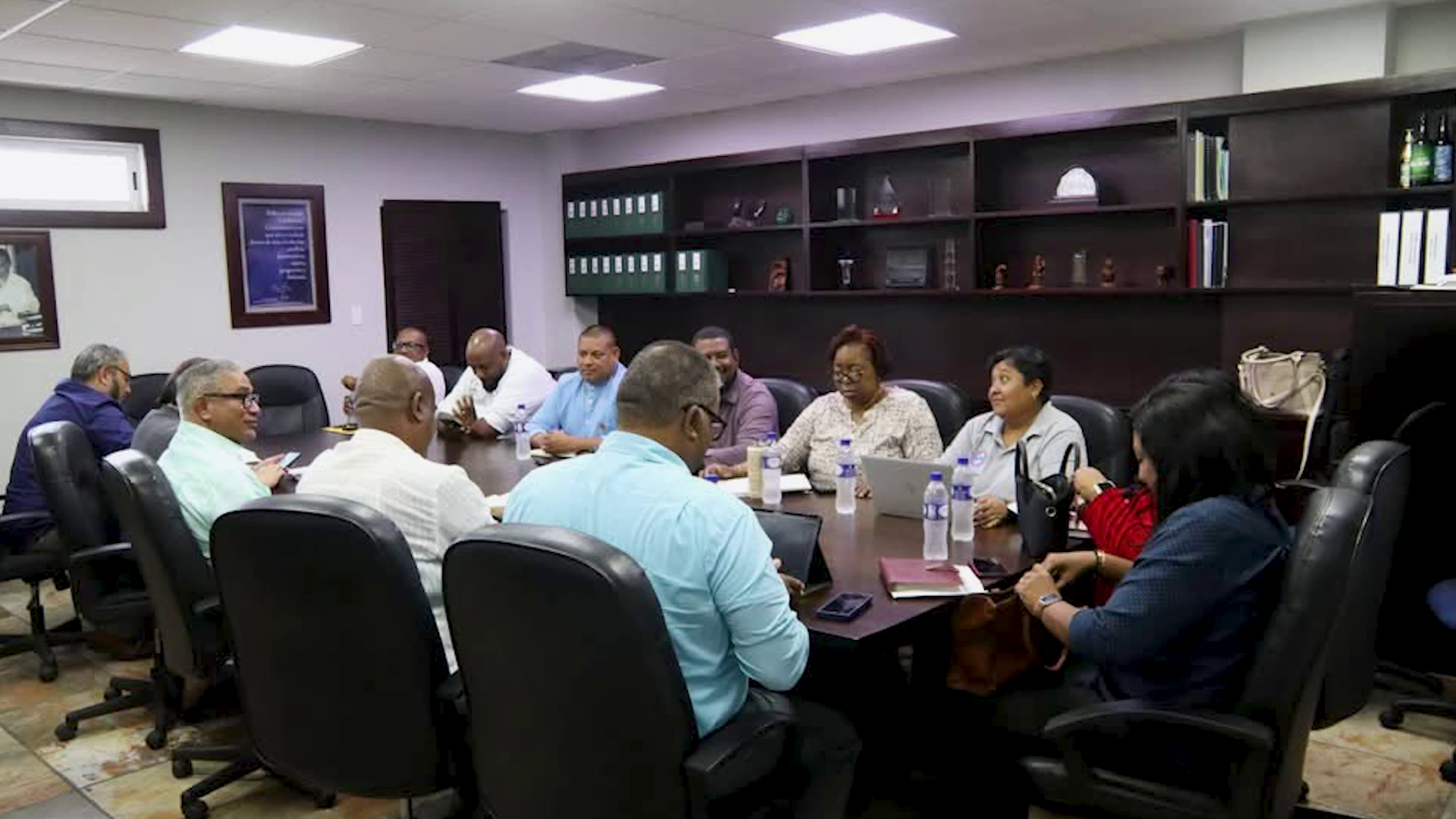
    On a Wednesday session in 2026, Belizean Prime Minister John Briceño led a high-stakes meeting between the Government’s Union Consultation Team and senior delegates from the National Trade Union Congress of Belize (NTUCB), continuing ongoing dialogue on priority labor reforms and key national policy matters.

    Joining Prime Minister Briceño on the government delegation were Deputy Prime Minister Cordel Hyde, along with cabinet ministers Kareem Musa and Henry Charles Usher. The meeting structure was designed to center union voices, giving representatives dedicated space to outline pressing concerns impacting workers across their respective membership bases.

    Both government and union leaders engaged in constructive, solution-focused discussion, working collaboratively to map out practical strategies to address the raised issues and identify clear pathways to eventual resolution.

    When contacted for comment by reporters, NTUCB President Ella Waight stated that the union’s executive body would first convene to brief the organization’s general council before releasing any official public statement on the meeting’s outcomes.

    Confirmed topics on the meeting’s agenda included two widely debated labor policy initiatives: the long-delayed Occupational Health and Safety Bill and a widely anticipated overhaul of the national pension system. Both measures have been flagged as urgent priorities for Belizean labor groups, which have pushed for faster legislative progress to improve working conditions and retirement security for workers across the country.

  • BermudAir Charts New Route from North Carolina to Belize

    BermudAir Charts New Route from North Carolina to Belize

    As the global travel and tourism sector continues to adjust to post-pandemic market shifts, a new air connectivity development is poised to expand access to one of Central America’s most popular tropical getaway destinations. Caribbean-based premium carrier BermudAir has publicly announced plans to launch a new twice-weekly nonstop seasonal route connecting Raleigh-Durham International Airport in North Carolina to Belize, with service scheduled to debut in December 2026. The route is tailored specifically to meet high seasonal demand from North American travelers seeking to escape frigid winter temperatures, with flights operating from December 20 through May 2 of each travel season.

  • PSU President Charged After Belmopan RTA

    PSU President Charged After Belmopan RTA

    A controversial traffic collision in Belmopan has sparked public scrutiny of local law enforcement’s investigative process, after one involved driver accused police of inconsistent conclusions and improper pressure to take blame for the May 1 crash on the city’s Ring Road.

    The crash, which occurred more than a month before charges were filed, has put President of the Public Service Union (PSU) Dean Flowers at the center of a public dispute, with opposing claims from the other driver, Cory Middleton, over who bears legal responsibility for the incident.

    Middleton, who sustained injuries in the collision and is still recovering, told reporters this week that he initially accepted the first account of fault police provided to him, given his impaired ability to recall details of the crash immediately after impact. But inconsistencies in the investigation led him to push for a formal review of the case, he said.

    According to Middleton, after launching a second review, a senior police investigator concluded based on on-scene measurements and physical evidence that Flowers was entirely responsible for the collision. Despite this initial finding, the case was later reclassified as inconclusive, and both drivers were ultimately charged with related traffic offenses. Middleton claims that during the investigation, police repeatedly pressured him to accept fault and resolve the matter privately through insurance claims.

    “I can not simply accept fault when my vehicle sustained all the damage from the collision,” Middleton said in his public statement. “I have everything on recording if anyone wants to verify what investigators told me. We both entered pleas of not guilty, and I’m only calling for full transparency and a fair legal process to resolve this.”

    Flowers, however, has rejected Middleton’s version of events entirely, putting all blame for the crash on Middleton’s reckless driving. In his response to reporters, Flowers claimed Middleton caused the crash by speeding and making a dangerous overtake at the intersection where the collision occurred. He also confirmed that Middleton initially filed a statement accepting blame, before withdrawing the admission days later.

    Flowers added that he is grateful no one was killed or suffered life-threatening injuries in the crash, and that he is prepared to let the court system make a final ruling on responsibility for the incident.

    This report is adapted from a transcribed evening television newscast, with all statements translated and formatted for online publication.

  • Garifuna Activists Demonstrate Against Disrespectful Statement

    Garifuna Activists Demonstrate Against Disrespectful Statement

    On the morning of June 4, 2026, a distinctive peaceful demonstration unfolded on the waters of Belize’s Sittee River, where Garifuna community activists sailed by boat from the nearby village of Hopkins to push back against what they characterize as discriminatory and disrespectful comments made during a recent village boundary negotiation meeting.

    The protest was sparked by heated discussions over the preceding weekend, during which a group of foreign expatriate property owners publicly challenged the Garifuna community’s long-held claims to traditional land rights in the coastal Sittee River region. For the Garifuna activists, these questioning remarks do more than dispute legal ownership—they erase the community’s centuries-deep historical and cultural connections to the land, and threaten to stoke dangerous social division between local groups.

    Maurice Herrera, a prominent Garifuna activist who led the demonstration, emphasized that the action was never targeted at long-term residents of Sittee River. Instead, it is a response to outside efforts to erode Garifuna cultural identity and weaken community unity. “We saw it necessary to nip this issue in the bud before it escalated,” Herrera explained in comments following the protest. “We could not let discriminatory, disrespectful rhetoric go unchallenged, especially from people who do not even know the full history of the Garifuna people. We chose to respond peacefully, to make our position clear that this fight is not with Sittee River locals—those are our neighbors, our friends, fellow Belizeans just like us.”

    Herrera went on to call out the double standard he says foreign expats bring to the region: “When we travel to their home countries, we are treated harshly, as less than human. Now they come to our land and try to sow division between our people. That is unacceptable. We are ready to defend our community, our language, our culture, our traditions and our spirituality—we will give everything to protect what is ours. Most of all, we want Sittee River residents to know: we will not let outsiders turn us against each other. We love this community and our neighbors here.”

    While the National Garifuna Council confirmed that the demonstration was not an officially organized event sanctioned by the organization, it stated that it endorses any peaceful, legal action taken by Garifuna community members to raise concerns about this land rights dispute.

    This report is a transcribed excerpt from a televised evening newscast, with all comments reproduced accurately per standard transcription protocols.

  • Government Rolls Out Ambitious Plan to Transform Sports Facilities

    Government Rolls Out Ambitious Plan to Transform Sports Facilities

    Belize is pushing forward with a transformative initiative to reshape its national sports ecosystem, combining large-scale infrastructure upgrades with a renewed focus on homegrown athletic development. Announced in June 2026 by the country’s Ministry of Sports, the multi-pronged plan aims to elevate local competitive sports to international standards while creating accessible public recreational spaces across all regions of the nation.

    At the core of the infrastructure project is the creation of a countrywide network of four high-performance training centers, with one hub planned for each of Belize’s northern, southern, western, and central regions. Work is already underway at the flagship site: the comprehensive redevelopment of the existing Marion Jones Sporting Complex, which will be rebranded as the country’s first official high-performance center. Minister of Sports Anthony Mahler confirmed that site preparation, including large-scale land clearing, is already complete, with major construction and upgrade work set to begin imminently.

    Several other facility upgrades are already in advanced stages of completion across the country. The Mexican Center redevelopment is nearly finished, with specialty sports courts and equipment already ordered and en route to the site. A full master plan for the entire Marion Jones compound outlines ambitious amenities, including an Olympic-standard swimming pool, dedicated rock climbing facilities, two professional tennis courts, a synthetic football pitch developed in partnership with the Football Federation of Belize (FFB), and mixed-use spaces that serve both elite competitions and general public recreation. A second synthetic pitch is planned for a site in Santa Elena, while the MCC Grounds will retain a natural grass playing surface. Separately, long-overdue repairs and upgrades are also progressing at the People’s Stadium in Orange Walk, a project accelerated after widespread public criticism of the facility’s poor condition spread across social media.

    Beyond infrastructure, the ministry is restructuring its athlete funding model to prioritize long-term local development over unfocused support for international travel. Mahler explained that the new policy requires all national sports federations and associations to submit three-year strategic plans that outline performance targets for international competition, eliminating last-minute funding requests that lack clear performance goals. Under the new framework, public funding for international travel will only be allocated to athletes who meet established performance benchmarks, a change designed to eliminate what Mahler called wasteful spending on underprepared competitors.

    To replace unfocused international travel spending, the ministry and the National Sports Council are launching a new elite domestic competition, the Super National Tournament, set to kick off this summer. Currently, Belize’s structured competitive sports pipeline is centered on primary and secondary school-level district and national competitions. The new tournament will bring together the top-performing athletes across all districts in four core sports: basketball, football, track and field, and volleyball. It will also serve as the foundation for a national scouting program designed to identify promising young talent early and nurture them from grassroots levels to elite international standard.

    Mahler emphasized that the integrated approach — combining modern training infrastructure with a structured domestic development pipeline — will create sustainable growth for Belizean sports, rather than short-term, low-impact spending that fails to deliver long-term results.