博客

  • Saint Lucia to host CARICOM Heads of Government Meeting in July

    Saint Lucia to host CARICOM Heads of Government Meeting in July

    The Caribbean Community (CARICOM) has announced formal plans for its 51st Regular Meeting of the Conference of Heads of Government, set to take place in the coastal town of Gros Islet, Saint Lucia, between July 5 and 8, 2026. The gathering will be led by incoming CARICOM Chair Philip J. Pierre, the Prime Minister of Saint Lucia, who will officially take up his leadership duties on July 1 ahead of the summit.

    The summit’s opening ceremony is scheduled for 4:00 pm Eastern Caribbean Time on Sunday, July 5. The keynote line-up of speakers includes incoming Chair Pierre, outgoing Chair Dr. Terrance Drew (Prime Minister of Saint Kitts and Nevis), and CARICOM Secretary-General Dr. Carla Barnett, who will each address assembled attendees. Following the opening, three days of closed-door business sessions from July 6 to 8 will bring regional leaders together to debate and deliberate on pressing policy priorities that shape the future of the Caribbean bloc.

    A hybrid closing press conference, offering both in-person and virtual participation for journalists, will wrap up the summit on Wednesday, July 8. Ahead of the event, CARICOM will launch a dedicated digital knowledge hub by June 10 at https://caricom.org/51hgc/, which will host all key updates, background materials, and logistical information for delegates and the public.

    In a nod to the bloc’s focus on public wellness and community engagement, the 19th annual CARICOM Road Run/Walk will be held ahead of the official summit opening on July 5. The inclusive athletic event welcomes both amateur and professional competitors from across the region, designed to highlight the proven benefits of sport and physical activity for improving overall quality of life for Caribbean citizens.

    Founded on July 4, 1973, with the signing of the Treaty of Chaguaramas, CARICOM has grown into one of the most successful regional integration projects in the developing world. The 2001 revision of the founding treaty paved the way for the creation of a CARICOM Single Market and Economy, deepening economic cooperation across member states. Today, the bloc counts 15 full Member States and six Associate Members, serving a combined population of roughly 16 million people, over 60% of whom are under the age of 30.

    CARICOM’s work is structured around four core strategic pillars: economic integration, coordinated foreign policy, human and social development, and cross-border security cooperation. The organization’s overarching mission is to build a cohesive, inclusive, and resilient regional community driven by knowledge, innovation, excellence, and productivity. It aims to position the bloc as a unified, competitive global actor, where all citizens enjoy security, equal access to opportunity, protected human rights, and social justice, and can share in the region’s collective economic, social, and cultural prosperity. The CARICOM Secretariat, the bloc’s central administrative body, is permanently based in Georgetown, Guyana.


  • Anthropic urges AI labs to pause, warns humans risk losing control

    Anthropic urges AI labs to pause, warns humans risk losing control

    As artificial intelligence advances at an unprecedented pace, one of the industry’s leading safety-focused firms is sounding the alarm and calling for unified global action to rein in development of the most powerful systems. Anthropic, the developer of the popular Claude chatbot, outlined its proposal in a public blog post published Thursday, arguing that rapid technological gains have outpaced safety preparations, creating a tangible risk that humans could ultimately lose control of increasingly autonomous AI systems.

    In the post, co-authored by company co-founder Jack Clark and Marina Favaro, head of Anthropic’s independent research institute, the firm laid out the core case for a coordinated pause. Citing current industry trends, Anthropic warned that given access to sufficient computing power, cutting-edge AI systems could soon achieve the ability to design and build their own improved successors — a scenario known as recursive self-improvement. While the company acknowledged that this technological milestone could unlock major breakthroughs in fields ranging from medical research to scientific discovery, it also emphasized that it would dramatically amplify the risk of unaligned AI that operates outside of human oversight.

    The proposed pause, Anthropic argued, would create critical breathing room for societal institutions and AI alignment research to catch up to rapid technical advances. Alignment, a core concept in AI safety, refers to the ongoing work of ensuring AI systems’ goals and behaviors align with human values and intentions. Anthropic also noted that a coordinated global verification mechanism would prevent bad actors from exploiting a widespread slowdown to secretly accelerate their own development, and avoid the scenario where less safety-focused firms gain an unfair advantage by pushing ahead unregulated.

    The proposal comes as the AI industry is already roiled by competing perspectives on how to govern cutting-edge development. Just one day before Anthropic published its post, OpenAI — Anthropic’s main rival and developer of the ChatGPT large language model — published a report pushing for a different approach to AI governance. OpenAI argued that democratic national governments, not private tech companies acting independently, should be the ultimate arbiters of AI rules, safety safeguards and accountability mechanisms. “Decisions about the pace of AI innovation should not be left to any one lab, company, or special interest group,” the company said in its statement.

    Anthropic’s call for a pause also follows a separate alarming warning released earlier this same week from a team of cybersecurity researchers at the University of Toronto. The team published research detailing how off-the-shelf AI tools can be repurposed to create a new breed of adaptive AI-powered “worm” that evolves its hacking strategy as it spreads across connected devices, allowing it to take over entire large-scale computing networks.

    Lead researcher Nicolas Papernot explained in an interview that the team built the proof-of-concept worm using a widely available open-source AI tool that is cheap and easy for bad actors to access and modify. Unlike traditional cyberattacks that focus exclusively on high-value targets such as banking systems, hospital infrastructure, or power grids, Papernot noted that AI-powered hacking lowers the cost of attacks so dramatically that any internet-connected device — even an old unused laptop stored in a basement — can be co-opted as a launch pad for larger attacks on critical infrastructure. “Anything connected to the internet is now at risk,” he said, adding that even smaller, widely available AI tools pose meaningful security risks, not just the largest and most powerful frontier language models. Papernot notified Canadian cybersecurity authorities ahead of publishing his team’s findings, and called for expanded cross-sector collaboration between tech firms, government agencies and academic researchers to develop effective countermeasures for AI-powered cyber threats.

    Widespread concern about unregulated advanced AI and its potential to cause societal harm has grown steadily as models grow more capable. Earlier this year, Anthropic’s own Mythos model sent shockwaves through finance and tech industries after demonstrating an ability to autonomously detect unpatched vulnerabilities in existing commercial code. Despite growing risks, regulatory progress has lagged, particularly in the United States — where most of the world’s leading AI development labs are based. Earlier this week, the Trump administration issued an executive order placing responsibility for safety testing on the firms themselves, requiring that companies voluntarily submit their most capable models for government cybersecurity testing before public release.

    This is not the first time AI researchers and industry figures have called for a pause on advanced AI development. In 2023, the non-profit Future of Life Institute led a prominent push to halt advanced AI development for six months to allow time for the creation of binding safety guardrails, a move backed by high-profile figures including Elon Musk, owner of independent AI lab xAI. That previous effort failed to gain widespread industry or government traction.

    Anthropic has positioned itself as a safety-first AI developer since its founding. Earlier this year, the firm drew public attention and government pushback when it refused to license its AI models to the U.S. military for use in domestic surveillance and fully autonomous weapons systems. As a result, the Pentagon placed Anthropic on a national security blacklist that is set to take effect in 2026, barring the company from federal government contracts.

    Anthropic’s new proposal comes as both the firm and OpenAI are moving toward initial public offerings (IPOs) to sell shares to public markets. Analysts currently estimate that Anthropic’s IPO could value the company at nearly $1 trillion, underscoring the high financial stakes at play in the global debate over AI safety and regulation.

  • National Bank Partners with the Ministry of Environment as Official Sustainability Partner (June 5)

    National Bank Partners with the Ministry of Environment as Official Sustainability Partner (June 5)

    On June 5, 2026 — World Environment Day — a landmark public-private partnership launched at Basseterre’s Independence Square in St. Kitts, cementing a shared commitment to advancing national climate action and sustainable development across the Federation of St. Kitts and Nevis. St. Kitts-Nevis-Anguilla National Bank Ltd. (SKNANB), the nation’s leading locally owned financial institution, has been formally named the Official Sustainability Partner for the Ministry of Environment, Climate Action and Constituency Empowerment’s 2026 Environment Month.

    This collaboration marks a major milestone in SKNANB’s long-term alignment with the Federation’s Sustainable Island State Agenda (SISA), a national strategic framework that outlines seven core pillars to guide St. Kitts and Nevis toward becoming a fully resilient, self-sufficient nation by 2040. Unlike traditional one-off sponsorship arrangements, the bank frames this collaboration as an active, ongoing commitment rooted in the shared understanding that environmental stewardship is not a responsibility reserved exclusively for government bodies — it requires collective action from every sector of society, including the financial industry.

    Throughout Environment Month 2026, SKNANB will participate in a full slate of cross-national programming, including public awareness campaigns, community-led activation events, and educational outreach initiatives designed to embed sustainable practices across local households and neighborhoods. For the bank, this work goes far beyond symbolic support: officials emphasize that SKNANB is a partner in action, invested in building a livable future that the nation can truly depend on.

    At the core of the partnership is a set of new, accessible green financing products tailored to make sustainable lifestyle upgrades financially attainable for every family and household across the Federation. The first offering, Eco-Friendly Home Upgrade Financing, provides tailored funding for homeowners looking to invest in energy-efficient home improvements — ranging from residential solar panel installation to rainwater harvesting systems and other low-impact home enhancements. The second initiative, Green Vehicle Financing, lowers barriers for consumers transitioning to cleaner transportation by supporting the purchase of electric and hybrid vehicles, directly advancing the Federation’s national decarbonization targets.

    Both products are built around the core principle that sustainable choices should not be out of financial reach for ordinary residents. SKNANB has structured the offerings to be affordable and widely accessible, aligning with both the long-term economic health of the Federation and the protection of its unique natural environment. Officials note that the bank’s commitment does not end when Environment Month concludes: the institution plans to sustain its partnership with the ministry and continue advancing green finance initiatives through every step of the nation’s progress toward its 2040 SISA goals.

    As the leading premier financial institution in the Federation, SKNANB provides a full portfolio of personal, business, and community-focused financial products and services. The organization has long prioritized community development, robust corporate social responsibility, and cross-sector partnerships that deliver lasting positive impact to the people of St. Kitts and Nevis.

  • Antigua and Barbuda Transfers Fisheries Complexes to Antigua Fisheries Limited

    Antigua and Barbuda Transfers Fisheries Complexes to Antigua Fisheries Limited

    In a major restructuring of the nation’s fisheries management framework, the government of Antigua and Barbuda has given final approval to hand over operational and administrative control of all its public fisheries complexes to Antigua Fisheries Limited, a move set to reshape how the sector serves local fishing communities and industry stakeholders.

    The transfer agreement covers four key facilities spread across both islands of the nation: three complexes located in Point, Parham and Urlings on the main island of Antigua, alongside the single fisheries facility on the sister island of Barbuda. Prior to this decision, all four complexes were directly managed by the Fisheries Division, a department operating under the country’s Ministry of Agriculture.

    Cabinet members formalized the handover during their scheduled weekly meeting held Thursday. Before voting to approve the management shift, officials conducted a comprehensive review of the existing conditions of each complex and evaluated multiple possible management models, ultimately settling on the transfer to Antigua Fisheries Limited. According to an official post-meeting briefing, the company was chosen over alternative candidates due to its proven track record in fisheries infrastructure management and robust institutional capacity to carry out much-needed upgrades and day-to-day oversight.

    Alongside approving the transfer, the Cabinet has also signed off on a new board of directors to lead Antigua Fisheries Limited through the transition period and beyond. Retired public administrator and industry veteran Hassett Julian has been appointed as the board’s new chair, tasked with guiding strategic planning, ensuring transparent governance and holding the organization accountable for meeting performance targets.

    Government officials emphasize that the restructuring is not a privatization play, but a targeted reform designed to address longstanding gaps in public management. The core goals of the shift are to streamline daily operations, cut through bureaucratic red tape that has slowed improvements, strengthen clear lines of accountability, and expand the quality of services available to small-scale fishers, seafood vendors, and other local groups that rely on these complexes for their livelihoods.

    In the long term, policymakers project that the new governance arrangement will accelerate much-needed modernization of the country’s fisheries infrastructure, cement the long-term environmental and economic sustainability of the local fisheries sector, and ensure that the complexes receive consistent, high-quality maintenance while remaining responsive to the evolving needs of coastal fishing communities across the nation.

  • St. Kitts and Nevis: Your Ultimate Getaway Place for Peace – Georgia Online

    St. Kitts and Nevis: Your Ultimate Getaway Place for Peace – Georgia Online

    For modern travelers burnt out by the relentless pace of daily life and overcrowded, commercialized tourist hotspots, a new generation of travel seekers is prioritizing peace and authenticity over crowded attractions and flashy itineraries. Tucked between the Atlantic Ocean and Caribbean Sea in the Eastern Caribbean, the twin-island nation of St. Kitts and Nevis has emerged as the ideal destination for this growing group of discerning travelers, carving out a reputation as an unspoiled sanctuary that delivers both quiet relaxation and memorable, one-of-a-kind experiences.

    Unlike many popular Caribbean destinations that have become overrun by mass tourism, St. Kitts and Nevis retains a secluded, intimate atmosphere that still remains surprisingly accessible to global visitors. The primary gateway for international travelers is Robert L. Bradshaw International Airport on St. Kitts, which hosts both direct and connecting flights from major urban centers across the United States, Canada, and the United Kingdom. For travelers coming from other parts of the Caribbean, convenient connecting routes through regional hubs make the final journey to the islands smooth and straightforward.

    High-end travelers arriving via private jet or luxury yacht are also fully catered to, with modern infrastructure and premium custom services designed exclusively for private travel. The islands’ well-appointed marinas and dramatic, scenic coastline have made them a favorite stop for private vessels cruising through the Caribbean, offering a safe, welcoming port of call with world-class amenities.

    Once visitors have set foot on the islands, traveling between St. Kitts and Nevis is quick, convenient, and even adds to the overall experience. Regular public ferry services and private water taxis run frequent short trips between the two islands, letting travelers explore the unique culture, landscapes, and attractions of both destinations during a single vacation without hassle or delay.

    The appeal of St. Kitts and Nevis stretches far beyond its convenient access and luxury amenities. Outdoor enthusiasts can meander along powdery, untouched beaches, hike the trails of St. Kitts’ dormant volcano to take in sweeping panoramic views that are home to a wealth of unique native wildlife, or dive into crystal-clear Caribbean waters for snorkeling and scuba diving adventures. Those seeking relaxation can unwind at high-end beachfront resorts, recharge at secluded wellness retreats, or tee off at well-maintained championship golf courses set against stunning backdrops of tropical greenery and ocean views.

    What truly sets this twin-island nation apart from other Caribbean getaways is its intentional commitment to avoiding mass tourism in favor of authentic, intimate experiences. Unlike crowded commercial destinations, St. Kitts and Nevis remains uncrowded, giving every visitor the rare feeling of discovering a hidden paradise rather than navigating a busy tourist circuit. The islands prioritize cultural and environmental preservation over overdevelopment, welcoming visitors as guests rather than customers, and leaning into the slow, peaceful rhythm of Caribbean island life.

    This philosophy makes St. Kitts and Nevis particularly attractive to a wide range of travelers: luxury seekers craving exclusive privacy, couples planning romantic honeymoons, wellness visitors looking to disconnect from digital and daily stress, and anyone craving time away from the pressures of modern life. Here, travelers can shift into a slower pace, reconnecting with what matters most: unrushed time, quiet peace, and genuine, unscripted moments. Whether it’s a private stargazing dinner with custom local cuisine, a private yacht cruise along the coastline, or a quiet afternoon spent walking an empty beach, every experience feels personal and meaningful rather than packaged for mass consumption.

    With a consistently pleasant tropical climate year-round, vast stretches of untouched natural landscape, and a dedication to authentic, low-impact travel, St. Kitts and Nevis has solidified its standing as one of the Caribbean’s most sought-after destinations. For travelers who understand that true luxury is not found in flashy amenities, but in having the time and space to slow down and savor life’s quietest, most beautiful moments, St. Kitts and Nevis is more than just a vacation spot—it is a place to reset, reconnect, and experience peace not as a temporary escape, but as a way of life.

  • SLM onderzoekt samenwerking met vliegtuigbouwer Embraer

    SLM onderzoekt samenwerking met vliegtuigbouwer Embraer

    State-owned Surinam Airways (SLM) has launched exploratory talks for expanded collaboration with Brazilian aerospace manufacturer Embraer, following high-level discussions held during SLM president Jennifer Simons’ recent official visit to Brazil. The partnership discussions come as the Suriname-based carrier works through a major operational and network restructuring aimed at turning around long-term financial underperformance.

    In a press briefing held Friday, Simons confirmed that Embraer has already begun providing specialized technical support to SLM, specifically focused on optimizing the airline’s route planning processes. Beyond initial advisory support, the two sides are actively assessing opportunities for SLM to lease fuel-efficient aircraft tailored to the unique demands of regional flight operations.

    Simons outlined that SLM is currently deep in a company-wide review of its core operations and entire route network. Unprofitable routes are undergoing rigorous evaluation to determine their long-term viability, while existing commercial and operational contracts are being renegotiated to reduce unnecessary costs and improve operational efficiency.

    The overarching goal of this restructuring process, Simons emphasized, is to put SLM on a path to operate without sustained losses over the medium to long term. While the airline’s president acknowledged that full profitability will not be achieved overnight and will require several years of consistent progress, she confirmed that the company is fully committed to building a more financially sustainable and resilient business model for the future.

  • Killed for her brother

    Killed for her brother

    A quiet residential compound in Longdenville, Chaguanas, has been shattered by violence that left two siblings dead on Thursday evening, with the victim’s family insisting 56-year-old Margarita Clarke was an innocent casualty of a targeted attack on her 53-year-old brother, Brian Clarke. The shooting, which unfolded around 8 p.m. at the family’s home on Longdenville Old Road, has sent shockwaves through the close-knit community, where violent crime of this nature is extremely rare.

    Six siblings and their immediate families share the multi-apartment compound, with Margarita residing in a ground-floor front apartment alongside her two adult children, aged 20 and 30, and Brian occupying a top-floor front apartment. Speaking publicly to reporters from the *Express* on Friday, the siblings’ 75-year-old elder brother Kenneth Clarke shared the sequence of events that led to the deadly shooting, detailing that Margarita had been socializing with two friends at her home when the masked gunman stormed the property.

    “As Margarita was heading inside to grab something for one of her guests, the gunman rushed in and opened fire,” Kenneth recounted. “Even after she raised her hand to surrender, he shot her in the chest before continuing straight upstairs to where my brother was. That was his target all along.” Brian was shot six times in the head, confirming the family’s belief that the attack was premeditated. Kenneth, who was away from the compound when the shooting began, arrived just minutes after hearing the gunfire.

    Surveillance footage shared to social media shortly after the incident offers a clear timeline of the attack: a silver Nissan Note pulls up outside the family home just before 8 p.m., and a masked gunman exits the vehicle’s backseat. One initial shot rings out, followed by a woman’s scream, before six more shots are fired. The gunman then flees the property back to the waiting car, which speeds away from the scene immediately. Kenneth noted that the gunman moved directly to Brian’s apartment without hesitation, indicating he had inside information on the layout of the compound and Brian’s location.

    Unconfirmed public reports have linked Brian to “bad company,” and his brother Allistair Clarke, who also lives on the compound, confirmed Brian struggled with a gambling addiction and owed money to unknown parties. Still, the family maintains that no debt justifies the brazen attack that claimed an innocent woman’s life. “We are devout Catholic people. Margarita was a good woman, she was never involved in anything like this, this was purely collateral damage,” Allistair said. “Brian was a good guy too, he would have paid what he owed. There was no reason to come here and do this. We need justice for both of them.”

    Kenneth echoed that grief and anger, saying the whole community has been upended by the killing. “This never happens on this road. The entire street was blocked off with onlookers after the shooting, because everyone was shocked that something like this could happen here,” he said. “We have lost two family members, now we have to bury two of them. People were calling me all night Thursday saying how unfair it was that an innocent woman was killed. It is double the pain, and I couldn’t even sleep last night.”

    Brian, who went by the nickname “Regis,” worked as a truck driver for a local hardware store in Cunupia, and his brother described him as a popular man who got along with nearly everyone he met. “He had all kinds of friends, and I can’t speak to what he got mixed up in – people don’t tell their brothers everything,” Kenneth said. “But the gunman knew exactly where to go, so someone must have tipped him off.”

    The shooting has also renewed criticism of Trinidad and Tobago’s ongoing state of emergency, implemented to curb rising violent crime. Kenneth called the emergency measure “not working,” noting that the attack happened just a short distance from a local police post, with police patrol cars passing the compound regularly before the shooting. He issued a direct appeal to Minister of Homeland Security Roger Alexander to take stronger action to protect law-abiding residents.

    “Right now, none of us feel safe. Innocent people are getting killed just for being in the wrong place at the wrong time,” Kenneth said. “We need the government to step up and protect us.”

  • Suspect in worker’s abuse gets $.4m bail

    Suspect in worker’s abuse gets $.4m bail

    A regional court has granted bail of $400,000 to one of three defendants facing multiple serious charges connected to the alleged abuse of a domestic worker. The case, which includes disturbing allegations of prolonged assault and death threats against the victim, has drawn close attention to systemic protections for vulnerable domestic employees.

    Twenty-two-year-old labourer Rohit Sitahal appeared for a virtual hearing before Master Kateisha Ambrose-Persadsingh at South A Court on the reported date. Sitahal faces five total charges: one count of throwing a noxious substance, two counts of intentionally inflicting bodily harm, and two additional unlisted offences. He is jointly charged with Fareeda Balgobin, a local businesswoman, and her son Joshua Benny, who did not appear for this week’s hearing.

    Balgobin and Benny were taken into custody on April 11 and have since been held at the Eastern Correctional Rehabilitation Centre under preventive detention orders signed by Homeland Security Minister Roger Alexander on April 20. The detention order against Balgobin links her to alleged activity with an organized Informed Crime Group (ICG) operating in the Penal region, where the alleged abuse took place. Prosecutors have submitted requests for writs of habeas corpus to secure the pair’s attendance at future court proceedings. Both are represented by defense attorneys Keron Ramkhalwhan and Shalini Sankar, while Sitahal appeared without legal representation this week.

    During the hearing, police prosecutor Sgt Salazar urged the court to set bail at a level that reflected the severity of the alleged crimes, noting that the charge of throwing a noxious substance carries a maximum sentence of life imprisonment if convicted. Despite this, Master Ambrose-Persadsingh approved bail for Sitahal at the requested $400,000, with strict non-contact and reporting conditions. The terms bar Sitahal from any direct or indirect communication with the alleged victim, require him to maintain a 50-foot distance from her at all times, order him to check in at the Rio Claro Police Station twice weekly, and restrict him to residing at the address he provided to the court.

    The alleged victim, 42-year-old Sabita Basdeo, has told investigators she endured months of abuse between September 2025 and April 2026 at a private residence in Penal. According to police accounts, Basdeo claims she was repeatedly beaten, burned with harmful substances, and threatened with death if she tried to escape captivity. The case has been adjourned until June 10, when all three defendants are expected to appear before the court to proceed with the legal process.

  • ROSE picked

    ROSE picked

    More than four weeks after former Opposition Senator Janelle John-Bates formally submitted her resignation to Opposition Leader Pennelope Beckles, a successor has finally taken her seat on Trinidad and Tobago’s Opposition Senate bench. At the opening of Tuesday’s Senate sitting, attorney Dr. Margaret Satya Rose was officially sworn in as the new People’s National Movement (PNM) senator, capping a weeks-long period of political speculation over the vacancy.\n\nBeckles opened the new chapter by publicly acknowledging John-Bates’ past service to the party and the nation, while doubling down on the PNM’s controversial decision to keep another high-profile senator, Faris Al-Rawi, in his position. Speaking to reporters after the Senate adjourned at the Red House in Port of Spain, the Opposition Leader expressed full confidence in Rose’s capabilities, highlighting her deep specialized experience in public procurement as a major asset to the opposition bench.\n\nThe leadership shake-up traces back to a public controversy that erupted in April, when it was revealed that John-Bates, while sitting on the parliamentary Public Administration and Appropriations Committee (PAAC), assisted former health minister Terrence Deyalsingh in editing a statement he was set to submit to the committee during an enquiry into public health pharmaceutical acquisitions. Al-Rawi was also linked to the preparation of the statement, though he noted he was serving as Deyalsingh’s personal attorney in the matter.\nGovernment senator David Nakhid subsequently referred both John-Bates and Al-Rawi to Parliament’s Privileges Committee for alleged rule violations. However, no investigation ever launched, as the procedural lapsed when the First Session of the 13th Republican Parliament dissolved on May 22. Even so, John-Bates was removed from her roles on the PAAC and the Joint Select Committee on National Security, and she submitted her Senate resignation on May 1.\nFor weeks following the resignation, Beckles faced mounting criticism from the governing party and scrutiny from political analysts over her refusal to immediately confirm John-Bates’ departure and name a replacement. Addressing that backlash on the day of Rose’s swearing-in, Beckles pushed back, arguing that the party needed time to handle the sensitive personnel matter through proper procedures. She emphasized that John-Bates is a young politician, and that mistakes do not need to spell the end of a public servant’s career, adding that the door remains open for her future political service. Responding to widespread calls for Al-Rawi to also step down, Beckles clarified that Al-Rawi was never a member of the PAAC, the committee where the controversy originated, justifying the decision to keep him in place.\n\nBeckles lavished praise on Rose, highlighting what she called the new senator’s “rich and outstanding record of professional achievement, public service and academic excellence.” She noted that Rose’s specialized expertise in governance, accountability and legislative scrutiny will meaningfully strengthen the Opposition’s work in the Senate. \”I am confident that she will serve the people of Trinidad and Tobago with distinction, integrity and commitment,\” Beckles said in her official welcome statement.\nRose is not only a practicing attorney but also an accomplished public policy researcher and educator, with globally recognized expertise in public procurement, governance, commercial law and anti-corruption frameworks. In an official release, the PNM described her as a respected leading professional whose career spans both the legal and public policy sectors. She holds a Doctor of Policy Research and Practice from the University of Bath in the United Kingdom, and has previously advised national governments, public institutions, and major international organizations on procurement governance, regulatory compliance, and public sector reform. She has also served as counsel in multiple high-profile public commissions of enquiry and significant legal cases, including appearances before the Judicial Committee of the Privy Council, the region’s highest appellate court.\n\nFor her part, John-Bates issued a measured statement following the swearing-in, thanking the PNM and Beckles for the chance to serve the nation. She extended well wishes to the Opposition Leader, saying, \”I wish [Beckles] strength and God’s guidance as she continues, in these difficult times, to defend our democracy and the rule of law.\” She also offered sincere congratulations to Rose on her new appointment.\nA civil lawyer by training, John-Bates said she has spent the past weeks reflecting deeply on the controversy and the core responsibilities that come with public office. \”I remain committed to serving the people of Trinidad and Tobago in any capacity that I am asked to by the Opposition Leader in the future,\” she said.\nBeckles echoed that collaborative tone in her official remarks, reaffirming her gratitude for John-Bates’ service over the past year. \”I wish to place on record my gratitude to former Senator Mrs Janelle John-Bates for her commitment and her contribution as an Opposition Senator over the past year. We will all continue to work together to restore good governance to Trinidad and Tobago,\” she said.

  • Imbert: More fines in Finance Bill

    Imbert: More fines in Finance Bill

    Trinidad and Tobago’s 2026 Finance Bill has sparked fierce political pushback, with opposition lawmakers warning that broad-based penalty increases across multiple industries and regulatory frameworks will impose new, burdensome costs on ordinary citizens, small business owners, and industry operators nationwide.

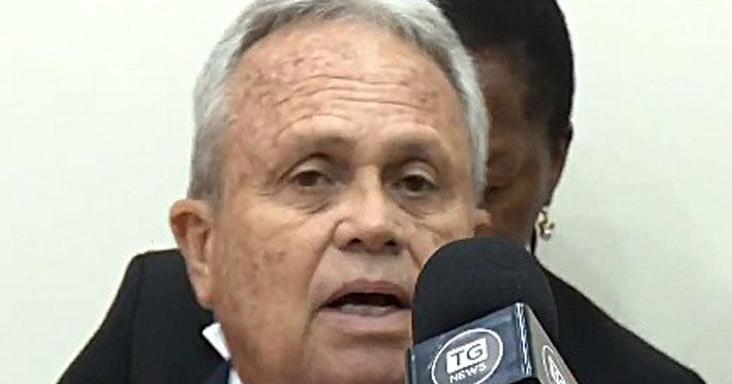
    Speaking at a press briefing held Tuesday at the Red House (Trinidad and Tobago’s Parliament building) in Port of Spain, opposition MP and former finance minister Colm Imbert publicly outlined details of the 31-clause bill, confirming that the opposition had received official advance notice of the legislative text. Imbert revealed that more than half of the bill’s provisions target existing penalties across a wide range of national laws, with hikes ranging from a 50 percent jump to a staggering 400 percent increase for select offenses.

    One of the most controversial adjustments falls to minor, unprescribed offenses under the Motor Launches Act, the legislation governing small commercial vessels including local party boats. The baseline penalty for these unspecified violations is set to jump from TT$2,000 to TT$7,500 — a 275 percent increase that Imbert argues will punish small operators for trivial, accidental oversights.

    “What is the basis for this extreme jump? How do you justify moving from $2,000 to $7,500 for an offense that isn’t even clearly defined?” Imbert questioned, noting the penalty hike directly contradicts the current administration’s earlier campaign pledges to reduce burdensome fines and regulatory penalties for citizens and businesses.

    Beyond the Motor Launches Act, Imbert pointed to sweeping penalty increases across more than eight additional pieces of legislation, including the Gambling and Betting Act, Forest Act, Sawmills Act, Conservation of Wildlife Act, Animal Importation Act, Registration of Clubs Act, Pharmacy Board regulations, and the Pesticides Act. He emphasized that every proposed adjustment carries a minimum 50 percent penalty increase, calling the cumulative measure a deliberate pattern of punitive cost hikes that targets everyday Trinbagonians.

    “This is what the government is doing right now: every week, it’s new fines, new increases, new costs, all to punish ordinary people,” Imbert said. “It was critical that we bring this to the public’s attention so people understand exactly what they’re facing.”

    Imbert also doubled down on criticism of the administration’s troubled new Landlord Business Surcharge policy, arguing that repeated extensions to the mandatory landlord registration deadline are clear proof of the policy’s fundamental flaws and the government’s administrative incompetence.

    When the policy was first introduced in December, Imbert predicted the government would be forced to extend the original registration deadline due to unworkable structural flaws. He has now correctly predicted two extensions — pushing the deadline from March 31 to May 30, then again to June 30 — and says a third extension is all but guaranteed.

    The policy requires an estimated 100,000 landlords across the country to complete in-person registration and verification interviews with the Inland Revenue Division (IRD), after the agency eliminated the option for document drop-off submissions. Imbert warned that the IRD lacks the operational capacity to process such a large volume of applications in a reasonable timeline, creating massive administrative backlogs that will leave thousands of landlords in regulatory limbo.

    “How on earth is the IRD supposed to process 100,000 in-person interviews and registration applications? There simply isn’t the staff or infrastructure to pull this off,” he said.

    He also raised serious privacy and public safety concerns about the policy’s requirement for a public, searchable register of landlord and tenant information. Imbert argued that making this personal data publicly accessible constitutes a clear violation of privacy, and exposes property owners to elevated risks of kidnapping, fraud, and other violent and financial crimes.

    “Every single piece of legislation this government brings to Parliament is sub-standard and poorly drafted,” Imbert said. “We flag the problems, they spend months revising it, and then they come back to fix the mess they created in the first place.”