博客

  • Finance Bill proposes tax relief, tougher penalties

    Finance Bill proposes tax relief, tougher penalties

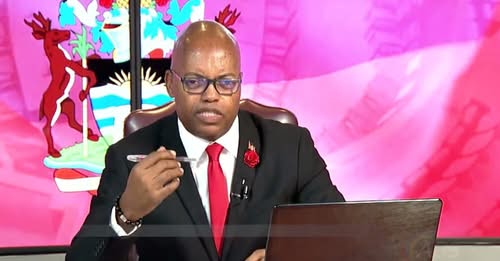
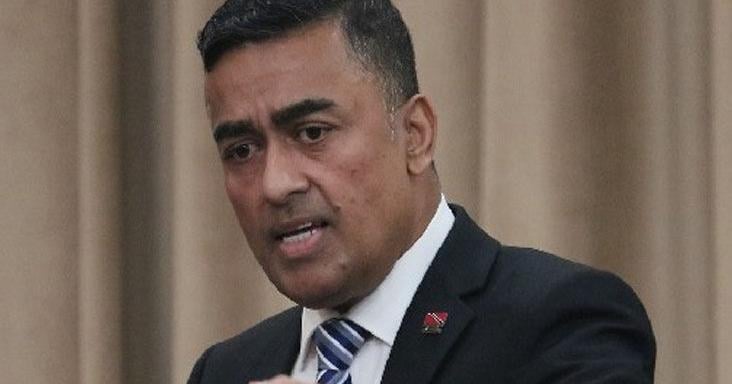
    A sweeping new piece of fiscal and regulatory legislation that will reshape multiple sectors of Trinidad and Tobago’s economy and legal framework is set for parliamentary debate next week, after Finance Minister Davendranath Tancoco formally introduced the 2026 Finance Bill to the House of Representatives this week.

    Spanning 31 clauses and requiring amendments to more than 30 existing laws, the bill integrates a diverse set of policy priorities aligned with the current government’s core goals, spanning tax reform, pension adjustments, energy sector investment stimulation, and a nationwide crackdown on regulatory and criminal non-compliance.

    One of the bill’s most impactful tax reforms centers on retirement security for local residents: it proposes full elimination of income taxes on earnings generated by government-approved pension fund plans and deferred annuity plans. To support property owners and stimulate the rental market, the legislation also introduces a new tax credit for individuals and businesses subject to the Landlord Business Surcharge, allowing claimants to offset the full surcharge amount against their annual income tax obligation, up to their total tax liability.

    To incentivize philanthropic giving, the bill also outlines new tax deduction rules for contributions to government-authorized public funds established under the Exchequer and Audit Act. Individual donors can claim deductions equal to up to 20% of their annual income or $20,000, whichever is lower, while corporate donors are eligible for deductions capped at 15% of chargeable profits or $100,000.

    A key economic stimulus measure targets the country’s critical energy sector, designed to unlock new investment in underdeveloped marginal marine gas fields. Eligible fields — defined as offshore assets with total reserves of 300 billion cubic feet or less and an internal rate of return below 15% — will qualify for a reduced 8% royalty rate and a generous 130% enhanced capital allowance on qualifying capital expenditures spread over a five-year period.

    The bill also delivers long-awaited pension reform for the country’s protective services, including prison officers, police officers and firefighters. Under the new provisions, retiring officers who served continuously in a higher-ranking position for at least one year before reaching compulsory retirement will have their final pensions and gratuities calculated based on the salary of that higher office.

    Administrative modernization is another core focus of the legislation, with a series of reforms proposed for the Registrar General’s Department. These changes include expanding mandatory electronic filing of official documents, requiring standardized identification and supporting records for all submissions, and creating a new voluntary process for companies to apply to be struck off the corporate register.

    In line with the government’s public commitment to reducing crime and strengthening regulatory enforcement, the bill includes sweeping increases to fines and criminal penalties across a wide range of offences, alongside targeted regulatory updates. A notable new provision adds a nationwide ban on the importation of any goods produced through forced labour, aligning local trade rules with global ethical standards.

    Reforms to gaming and liquor regulations expand the maximum number of permitted amusement machines on certain licensed premises from 20 to 33, introduce a quarterly gaming tax structure, and raise penalties for regulatory breaches. A new offence for exceeding the permitted number of gaming machines carries a $25,000 fine, up to one year of imprisonment, and potential revocation of the premises’ liquor licence.

    The steepest penalty increases are applied to tobacco-related offences under the Tobacco Control Act. First offences will now carry fines as high as $150,000, while serious offences tried in the High Court can result in fines up to $600,000 and three years of imprisonment. These enhanced sanctions apply to violations including selling tobacco products to minors, illegal public display of tobacco products, and other breaches of public health regulations.

    Other notable penalty hikes include a $150,000 maximum fine for illegal timber removal under the Forests Act, a matching $150,000 fine for unlicensed sawmill operations under the Sawmills Act, and a $150,000 maximum fine for offences under the Conservation of Wild Life Act. Additional increases apply to violations across areas including animal health, shipping, motor launches, pesticide and toxic chemical regulation, and spirits manufacturing.
  • Govt seeks $2.93b wage boost

    Govt seeks $2.93b wage boost

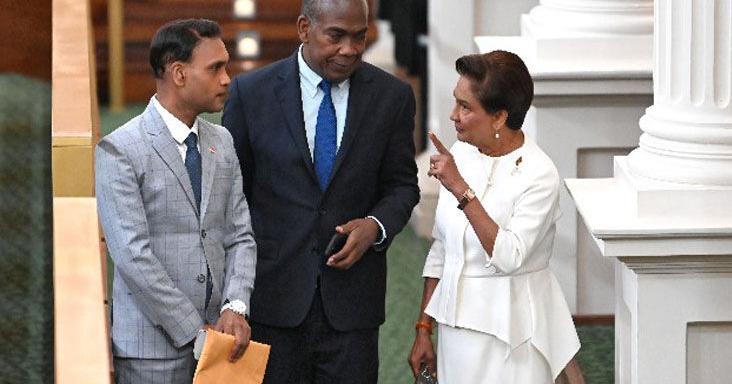
    Addressing the opening of the 13th Republican Parliament’s second session yesterday, Prime Minister Kamla Persad-Bissessar unveiled a major government funding request alongside a sweeping update on the country’s economic recovery, job creation progress, and upcoming legislative priorities.

    At the core of the administration’s immediate parliamentary business is a request for an additional TT$2.93 billion in supplementary funding for the 2025/2026 fiscal year. Of this total, $2.83 billion is earmarked as recurrent expenditure to cover newly negotiated wage increases for more than 62,000 public sector workers across multiple unions and government agencies. The Prime Minister detailed the breakdown of workers set to benefit: 18,000 from the Public Services Association (PSA), 20,000 from the National Union of Government and Federated Workers (NUGFW), 15,000 teachers, 6,000 Trinidad and Tobago Defence Force members, 1,300 from the Amalgamated Workers Union, 900 contract workers, and 850 from the West Indies Group of University Teachers (WIGUT). Persad-Bissessar emphasized that the government has committed to securing the necessary funds to honor the wage agreements, noting she felt “very proud and humbled” to deliver long-awaited salary adjustments to tens of thousands of public employees.

    The timeline for parliamentary consideration of the funding request is already set: the 2026 Finance Bill, which gives legal effect to measures outlined in the 2025/2026 national budget, will be tabled in the House of Representatives next Wednesday, June 10 at 10:30 a.m. The Standing Finance Committee will convene on June 12 at 1:30 p.m., followed by full debate on the Supplementary Appropriation Bill—dubbed the mid-year budget review—on June 15. The original 2025/2026 budget, presented by Finance Minister Davendranath Tancoo last October, projected total planned expenditure of $59.232 billion, based on benchmark prices of US$73.25 per barrel of oil and US$4.35 per mmbtu of natural gas. The budget projected total revenue of $55.367 billion, resulting in an initial projected fiscal deficit of $3.865 billion.

    Beyond the wage funding request, Persad-Bissessar highlighted the current administration’s progress in reversing economic stagnation left by the previous People’s National Movement (PNM) government. She claimed the PNM’s 10-year term left the country in a precarious fiscal position, with national debt nearly doubling from $75.4 billion in 2015 to $144.7 billion in 2015. She added that economic output contracted by 20%, foreign exchange reserves were cut in half, and billions of dollars were withdrawn from the country’s national savings funds over the PNM’s tenure.

    In contrast, the Prime Minister asserted that the current administration has turned the tide in just one year in office, pointing to both domestic economic gains and renewed international credibility. Domestically, official data from the Central Statistical Office shows 8,000 new jobs were created in the final quarter of 2025 alone, with youth unemployment dropping sharply from 12.2% to 7.7%. Between April 2025 and April 2026, the government delivered 14,080 new jobs across 18 cabinet ministries. Upcoming infrastructure and industrial projects are projected to add thousands more: proposed housing developments will create over 4,000 new positions, the first phase of the government’s Blueprint Revitalisation Plan will generate another 4,000 jobs, and a planned 500-acre expansion of the Plipdeco industrial estate at Point Lisas—paired with three upcoming projects (two in metals manufacturing, one in food production)—will expand employment in the industrial sector. The government is also advancing development of a 256-acre Special Economic Zone in Picton, near the University of the West Indies South Campus, dedicated to hosting data center operations.

    On the international stage, Persad-Bissessar highlighted three key wins that signal restored confidence in Trinidad and Tobago’s economy and governance: the country’s recent election to a two-year term on the United Nations Security Council, the World Bank’s decision to open a permanent World Bank Group office in Port of Spain—one of the most significant votes of confidence in the country’s economy in recent decades—and the European Union’s decision to remove Trinidad and Tobago from its tax blacklist, a move that reaffirms the country’s status as a credible, responsible, and competitive investment destination. The administration also recently completed a successful US$1 billion sovereign bond issuance, which was oversubscribed 2.5 times by 140 global investors, demonstrating strong international demand for Trinidad and Tobago’s debt.

    The Prime Minister also outlined the government’s ongoing support for vulnerable populations, noting that over the past year, more than 117,000 elderly citizens received $3.8 billion in public pensions, 25,602 people living with disabilities received $520.3 million in disability grants, 13,869 low-income vulnerable households received $216 million in direct financial support, 12,614 food-insecure citizens received $75.7 million in food assistance, and 2,808 people affected by disasters received support through 1,232 individual disaster relief grants.

    For Tobago, Persad-Bissessar reminded lawmakers that the island received its largest-ever central government allocation in the 2025/2026 budget, totaling $3.724 billion, which accounts for 6.3% of the entire national budget. She added that the central government will partner with the Tobago House of Assembly to advance long-overdue legislative and administrative reforms, including fixing long-standing structural anomalies in the THA Act.

    Looking ahead to the second session of Parliament, the Prime Minister laid out a broad legislative agenda that addresses a wide range of policy priorities. Key bills scheduled for debate include legislation to establish a dedicated medical malpractice court, implement a national no-fault compensation system, create regulatory frameworks for cannabis and advance agricultural diversification, amend the Education Act to modernize the country’s education system, develop a national Parental Responsibility framework to address school violence, raise the minimum age limit for legal consumption of marijuana and alcohol and for participation in gambling, enact a new Victims’ Rights Act, establish the position of Chancellor for the Judiciary, amend the Firearms Act to strengthen gun regulation, create legislation to regulate gated residential communities, implement new social media regulations to protect children under 12 years of age, and reform local government processes for construction and building approvals to cut red tape.

    As she concluded her address, Persad-Bissessar struck an optimistic tone, updating a promise she made in April that “better days were coming.” “I now say, Mr Speaker, better days are here and they will continue to get brighter,” she said.

  • VN: Oorlog tussen VS en Iran bedreigt miljoenen mensen met voedselcrisis

    VN: Oorlog tussen VS en Iran bedreigt miljoenen mensen met voedselcrisis

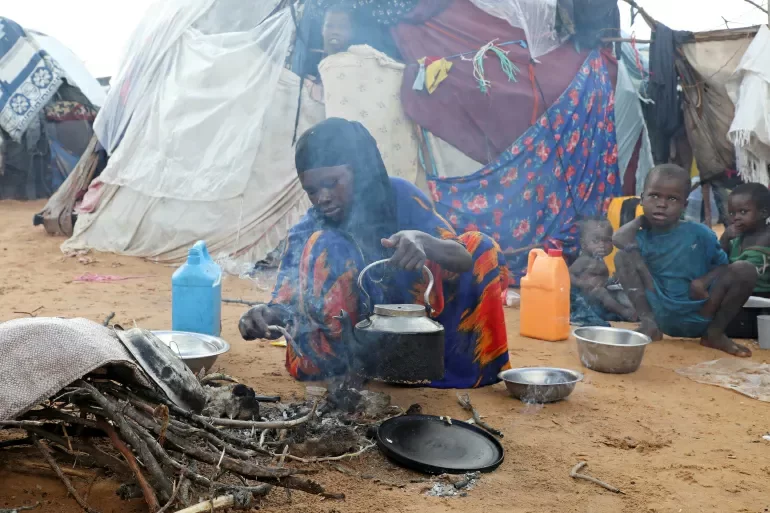
    The United Nations World Food Programme (WFP) has issued a stark warning that the ongoing conflict between the United States and Iran is pushing millions of vulnerable people across the globe into an acute food security emergency, with the crisis already unfolding as earlier predictions warned.

  • Minister of Health Tours Key Healthcare Infrastructure Projects

    Minister of Health Tours Key Healthcare Infrastructure Projects

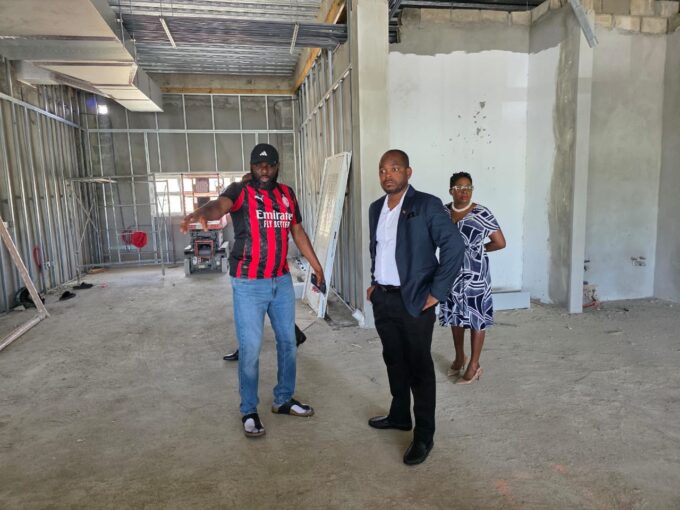
    In a proactive push to evaluate the resilience and future readiness of Antigua and Barbuda’s national healthcare network, Honorable Michael Joseph – the country’s Minister of Health, Wellness, Environment and Civil Service Affairs – launched a full-day tour of key medical facilities and ongoing infrastructure projects on Wednesday.

    Accompanying Minister Joseph on the inspection tour were senior government stakeholders, including Permanent Secretary Stacey Gregg-Paige, Head of Infrastructure Gary Thomas, and Telly Cornelius, a designated representative from the Ministry of Works. The interagency delegation kicked off their itinerary at the Grays Farm Dental Clinic, where Dr. Derek Marshall, head of the national Dental Unit, greeted the team and led a detailed walkthrough of the clinic’s existing operational spaces.

    During talks held after the tour, participants centered their conversation on two core priorities: examining the potential for expanding the clinic’s physical footprint, and evaluating whether adding new specialized oral health services would be practical and sustainable for the facility. The on-site visit allowed officials to gather first-hand data on the clinic’s current service capacity, laying the groundwork for targeted upgrades that align with both the public’s immediate oral health needs and the ministry’s long-term strategic development goals.

    Following the stop at the dental clinic, the delegation moved to inspect the government’s new morgue facility, where they received up-to-date briefings on the pace of ongoing construction works. The team closely reviewed the infrastructure’s progress, as the facility is purpose-built to bolster national pathology services and support related medical testing operations.

    The tour’s next stop was the new renal care facility currently under development. Once construction wraps up and the facility opens to patients, it is projected to dramatically transform renal care delivery across the country, creating more comfortable treatment environments and expanding access to life-sustaining dialysis services for patients in need.

    Officials also received progress updates on the construction of the new CARE Project facility, a flagship government initiative focused on expanding care and support services for children living with special needs.

    Speaking after the conclusion of the tour, Minister Joseph emphasized that these on-site inspections are not isolated events, but rather part of a cross-sector nationwide program of engagement and evaluation across Antigua and Barbuda’s health sector. He underlined that the government’s top priority is ensuring all public healthcare facilities are properly resourced with cutting-edge equipment, developed in line with long-term strategic planning, and fully equipped to meet both the current and future healthcare demands of the population.

    To date, the Ministry of Health, Wellness, Environment and Civil Service Affairs has reaffirmed its unwavering commitment to expanding and modernizing the country’s healthcare infrastructure, with the end goal of improving equitable access to high-quality medical services for every resident of Antigua and Barbuda.

  • PM Adds Final Touches to CHOGM 2026 Bottle Cap Mural

    PM Adds Final Touches to CHOGM 2026 Bottle Cap Mural

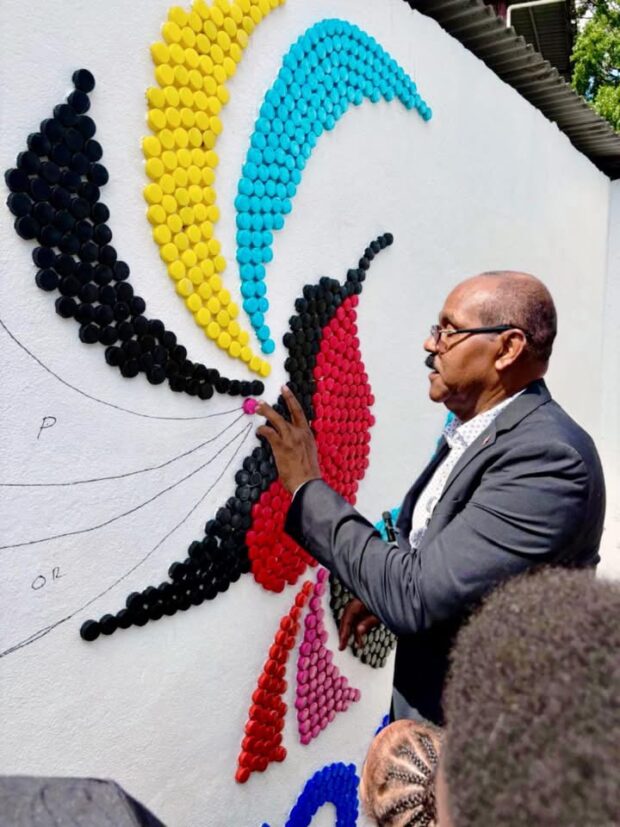
    As Antigua and Barbuda moves ahead with preparations to welcome global leaders for the 2026 Commonwealth Heads of Government Meeting, Prime Minister Gaston Browne made a hands-on contribution to a unique community-focused sustainability project this Thursday. The national leader stood alongside young learners from Villa Primary School and key project stakeholders to add pieces of recycled bottle caps to a large-scale public mural, an initiative designed to tie the upcoming major diplomatic summit to local environmental and community action.

    The innovative public art project is coordinated by the official CHOGM 2026 Secretariat, with creative direction led by established artistic leaders Calvin Pilgrim and Stacy Russell. Unlike traditional murals that rely on paint and canvas, this work is constructed entirely from repurposed plastic bottle caps, turning everyday waste into a meaningful piece of public art that carries a clear message. The core goals of the project are twofold: to raise global and local awareness of sustainable development practices, and to encourage cross-sector community participation in the lead-up to one of Antigua and Barbuda’s largest international diplomatic events in recent years.

    Scheduled to take place from November 1 to November 4, 2026, the upcoming CHOGM will gather heads of state, senior government representatives, and official delegates from all 56 member nations of the Commonwealth. The gathering presents Antigua and Barbuda with a key opportunity to showcase its commitment to global cooperation, climate action, and community-led sustainability on an international stage, with the bottle cap mural serving as a visible, accessible symbol of these priorities ahead of the summit.

  • Antigua and Barbuda Basketball Association names training squad for FIBA Men’s Qualifiers

    Antigua and Barbuda Basketball Association names training squad for FIBA Men’s Qualifiers

    The Antigua and Barbuda Basketball Association (ABBA) has officially lifted the curtain on its training roster, which will prepare the Caribbean nation for next month’s FIBA AmeriCup 2029 CBC Pre-Qualifiers set to take place in Georgetown, Guyana.

    The five-day tournament, scheduled to run from July 8 to 12, will split 10 competing Caribbean nations into two seeded groups for the opening round of competition. Antigua and Barbuda have been drawn into Group A, where they will go head-to-head with tournament hosts Guyana, as well as fellow regional sides Dominica, Turks and Caicos, and Bermuda. Group B, by contrast, brings together five other contenders: Barbados, Haiti, Grenada, the Cayman Islands, and St. Vincent and the Grenadines.

    The opening pre-qualifier stage will follow a standard round-robin format, meaning every team will play one match against each other opponent within their group. When all group stage matches conclude, only the first-place team from each group will earn the right to progress to the next phase of FIBA AmeriCup 2029 pre-qualification, which is currently slated to kick off in November 2026.

    ABBA’s selected training squad brings together a diverse mix of domestic league talent and overseas-based players plying their trade at high school, collegiate, and professional levels across the United States and Europe. The full roster includes: Adonis Humphreys (EZ Fit Flyers), Kareem Edwards (Cuties Ovals Ojays), Cohen Desouza (JSC Red Hawks), Steven Matthew (Lava Elite Stingerz), Javonte Daley (EZ Fit Flyers), Lopez Adams (JSC Red Hawks), T-Shawn Lewis (Da Project), Jaleyle Joseph (Cuties Ovals Ojays), Takeem Martin (All Saints Slam), Danny Perez (Daryll Matthew Ottos), Daniel Perez (EZ Fit Flyers), Tajahron Davis (Cuties Ovals Ojays), Craig Massiah Jr. (AB7 Academy High School, USA), Sadiq Phillip (Da Project), Daleonte Phillip (Da Project), Devonte Carter (Nova Southeastern University, USA), Raheem Sawyer (Navigators), Alexis Jackson (Lava Elite Stingerz), Jabari Williams (Castill de Gorraiz Valle de Egues, Spain), Jaden Andrew (Emory & Henley College, USA), Jamine Charles (Lava Smoke Elite Stingerz), Seth Joseph (Lava Smoke Elite Stingerz), Xavier Spencer (Lindenwood University, USA), Preston Merrick (Harvard University, USA), Keon Armstrong (USA), Myles Miller (Archbishop Molloy High School, USA), and Shamoi Tonge (USA).

    Organized on-court preparation for the squad will get underway on Monday, June 8, giving players just under a full month to build chemistry and fine-tune their game plans ahead of the tournament opener in Guyana.

  • National Accreditation Board Announces Fee Increases Effective July 1

    National Accreditation Board Announces Fee Increases Effective July 1

    The Antigua and Barbuda National Accreditation Board (ABNAB) has officially confirmed upcoming adjustments to its mandatory service fees, with the revised pricing schedule set to go into effect starting July 1, 2026. According to the regulator, the updated fees are designed to sustain its core day-to-day operations, which include regular institutional evaluations, program accreditation reviews, and ongoing quality assurance work that underpins the credibility of the nation’s higher education sector. This maintenance of rigorous standards is critical to preserving the international recognition of Antigua and Barbuda’s academic and professional credentials, a key asset for students and workers seeking opportunities abroad. To avoid confusion for service applicants, ABNAB has outlined a clear transitional policy for processing submissions: any requests for institutional registration, academic program accreditation, or foreign credential evaluation that are submitted on or before June 30, 2026, will be charged at the existing lower rate. Only applications received after the June 30 deadline will be required to pay the new, higher fees. The board also issued a reminder to all clients about its approved payment protocols: all outstanding fees must be settled either via direct bank transfer to ABNAB’s official account, or through in-person cash payments made directly at the board’s central office. No other payment methods are authorized for processing accreditation and evaluation requests. In closing, ABNAB reaffirmed its long-term commitment to strengthening and refining Antigua and Barbuda’s national framework for higher education and professional accreditation, a system that supports both local educational institutions and workers seeking professional recognition. The organization encouraged any clients with questions or concerns about the upcoming fee changes to reach out to its administrative office directly for personalized clarification.

  • CABINET NOTES: June 4th 2026

    CABINET NOTES: June 4th 2026

    On June 4, 2026, Australia’s federal Cabinet convened for its scheduled quarterly closed-door meeting, where senior government ministers gathered to deliberate on a range of pressing national policy priorities. These high-stakes gatherings serve as the central decision-making forum for the country’s executive branch, where cabinet ministers hash out legislative proposals, coordinate cross-departmental initiatives, and assess emerging national challenges before policies are brought before full Parliament for debate.

    While official Cabinet notes are typically kept confidential under the Australian government’s cabinet confidentiality principle to enable open, unfiltered debate among ministers, preliminary off-the-record briefings to major media outlets confirm that the meeting centered on three core policy areas: post-pandemic economic resilience, climate adaptation infrastructure investment, and national health system reform. Ministers reportedly reviewed updated economic data showing persistent inflationary pressures in the housing and energy sectors, and discussed targeted regulatory adjustments to ease cost-of-living burdens for low- and middle-income households.

    Another key agenda item was the rollout of the government’s 10-year national renewable energy corridor project, with ministers approving the final allocation of $15 billion in federal funding for transmission network upgrades connecting new wind and solar farms in regional areas to population centers on the east coast. The meeting also included a detailed briefing from the Department of Health on rising demand for aged care services, with ministers advancing draft legislation to increase funding for at-home care packages and raise minimum staffing requirements for residential aged care facilities.

    Cabinet is expected to present the finalized versions of these policies to Parliament for its next sitting period, which begins in mid-July 2026. Government sources indicate that the Albanese administration is prioritizing these initiatives to deliver on key election promises ahead of the next federal election scheduled for late 2027.

  • Oproep voor openluchtcrematieoord in Commewijne bij herdenking Hindostaanse immigratie

    Oproep voor openluchtcrematieoord in Commewijne bij herdenking Hindostaanse immigratie

    On June 6, communities across Suriname gathered in multiple districts including Paramaribo, Nickerie, Saramacca and Commewijne to mark the 153rd anniversary of Hindostani immigration to the South American nation. The commemorative events, which centered on honoring the legacy and contributions of early immigrant ancestors, also shone a spotlight on a longstanding local request: the development of a dedicated open-air cremation ground in Commewijne.

    Local residents and business owners have turned to the Hindostani Immigration Memorial Foundation (SHI) to advance this initiative, which caters to the religious and cultural traditions of Suriname’s large Hindostani community. SHI chairperson Ramon Jawalapersad confirmed that private entrepreneurs have already stepped forward to cover the full cost of constructing the facility. The only outstanding requirement from the national government is a formal allocation of a suitable plot of land for the project. The request for support has officially been forwarded to Suriname President Jennifer Simons, who led the main commemorative ceremony in the capital Paramaribo.

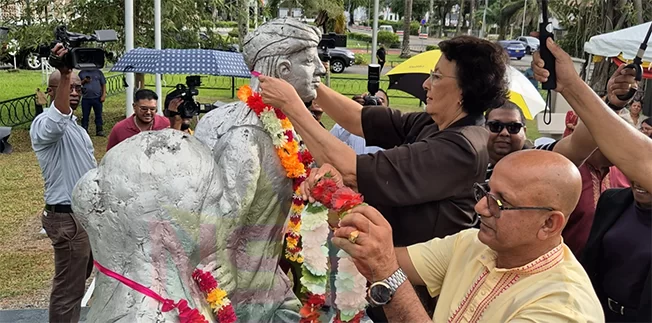
    During the Paramaribo event, President Simons carried out the traditional wreath-laying ritual at the iconic Baba and Mai monument, a national memorial erected to honor the first Hindostani immigrants who arrived in Suriname. She made history as the first head of state to place sacred mala garlands around the monument’s two figures, in a symbolic gesture of recognition for the immigrant community’s journey.

    Multiple speakers at the ceremony reflected on the outsized impact the Hindostani community has had on Suriname’s national development, emphasizing that this history is an inseparable core of the broader Surinamese national story. President Simons echoed this sentiment in her address, noting that Hindostani influences are visible across every sector of Surinamese life. She explained that the community’s contributions extend far beyond economic growth, shaping the nation’s cultural, spiritual and moral fabric for generations. “The values of hard work, family honor, discipline, education and faith that the community brought with it have shaped generations of Surinamese, and those values remain visible across our society today,” Simons said. She even highlighted the community’s impact on national cuisine, joking, “I cannot go a week without masala.”

    The president also stressed that Suriname’s full national history cannot be separated from the experiences of the nation’s Indigenous peoples, whose presence on the land predates all immigrant communities. “No matter how we all came to live together here, we must never forget that everyone who arrived encountered the Indigenous peoples who have called this land home for centuries,” she said. “We also must never forget the sacrifices made by all of our ancestors, from every background.”

    While much of the ceremony focused on reflecting on the past, President Simons emphasized that the day’s remembrance must also serve as a foundation for collective future progress. “For me, this remembrance does not end with the story of how we all came together here,” she said. “That story is just the beginning of how we will continue to move forward together. We already know our shared history; now our work is to build our shared future.”

    President Simons did not offer an official substantive response to the open-air cremation ground request during the event, but Jawalapersad remains optimistic that the project will move forward. “It will happen yet,” he said. “Commewijne has plenty of available land, and we actually do not need very much to build this facility. Private entrepreneurs are still fully willing to cover all the necessary investment. The only thing we need is the land allocation.”

    Jawalapersad explained that a plot of land was previously approved and allocated for the cremation ground years ago, and environmental impact studies were even completed for the project. But in a final twist, the allocated parcel was ultimately reissued to a different third party, leaving the initiative stalled. Community organizers now hope this renewed call during the 153rd immigration commemoration will help move the project across the finish line.

  • Brandstofprijs kost overheid maandelijks circa SRD 300 miljoen

    Brandstofprijs kost overheid maandelijks circa SRD 300 miljoen

    Suriname’s government is currently allocating roughly 300 million Surinamese Dollars (SRD) each month to cap rising consumer diesel prices, President Jennifer Simons announced during a public press briefing held Friday.

    The head of state explained that the policy of artificially holding down fuel prices is a temporary measure, designed to cushion the blow of global crude oil price hikes for local households, transportation service providers, and the country’s domestic production sector. Since March 18, Suriname has enforced fixed maximum prices for common fuels: diesel is capped at 53.27 SRD per liter, while regular unleaded gasoline carries a ceiling price of 48.32 SRD per liter.

    Simons pointed to ongoing international conflicts and geopolitical tensions as the core force roiling global energy markets, noting that even though Suriname maintains its own domestic crude oil production, the small nation remains extremely vulnerable to unforeseen shifts on the world energy market.

    Crucially, the president issued a clear warning that the government cannot sustain this costly price intervention indefinitely. The future of the policy will remain contingent on two key external factors: the trajectory of international oil prices, and the duration of the current geopolitical frictions that have disrupted global energy supplies.

    To address growing concerns over economic stability and rising inflation, Simons confirmed that administration officials are holding continuous consultations with Suriname’s national oil company Staatsolie and the Ministry of Finance. The ongoing coordination is aimed at minimizing spillover risks to the country’s broader economy and curbing upward pressure on consumer prices, according to the president.