博客

  • CHTA Announces Barbados as Host Destination for 2027 Caribbean Travel Marketplace

    CHTA Announces Barbados as Host Destination for 2027 Caribbean Travel Marketplace

    The Caribbean Hotel and Tourism Association (CHTA) has officially unveiled that Barbados will serve as the official host destination for the 2027 edition of Caribbean Travel Marketplace, one of the region’s most influential annual travel industry gatherings. The announcement marks a key milestone in the Caribbean’s ongoing efforts to strengthen its position as a top global tourism destination, while also highlighting Barbados’ growing reputation as a premier venue for international business events.

    Caribbean Travel Marketplace has long served as a critical networking hub, bringing together thousands of tourism stakeholders including hotel operators, travel agents, airline executives, cruise line representatives, and tourism board officials from across the region and beyond. The annual event facilitates thousands of business-to-business meetings, fosters new partnership opportunities, and drives billions in projected tourism revenue for the host nation and the broader Caribbean region.

    In a statement accompanying the announcement, CHTA leadership emphasized that Barbados was selected for its world-class tourism infrastructure, proven track record of hosting large-scale international events, strategic geographic location, and unwavering commitment to sustainable tourism growth. Industry analysts note that hosting the 2027 marketplace is expected to deliver significant economic benefits to Barbados, including increased pre-event tourism visibility, new business investments, and long-term growth in international visitor arrivals.

    Barbados’ tourism authorities have already welcomed the decision, noting that they are already beginning preparations to deliver a seamless, impactful event that showcases the island nation’s unique hospitality, cultural attractions, and advanced tourism facilities to global industry leaders. The announcement comes as the Caribbean tourism sector continues its steady recovery from the impacts of the COVID-19 pandemic, with regional stakeholders working collectively to boost visitor numbers, expand industry partnerships, and build more resilient, sustainable tourism economies across the area.

  • Antigua and Barbuda Faces High Shipping Costs as Caribbean Freight Rates Outpace Global Routes

    Antigua and Barbuda Faces High Shipping Costs as Caribbean Freight Rates Outpace Global Routes

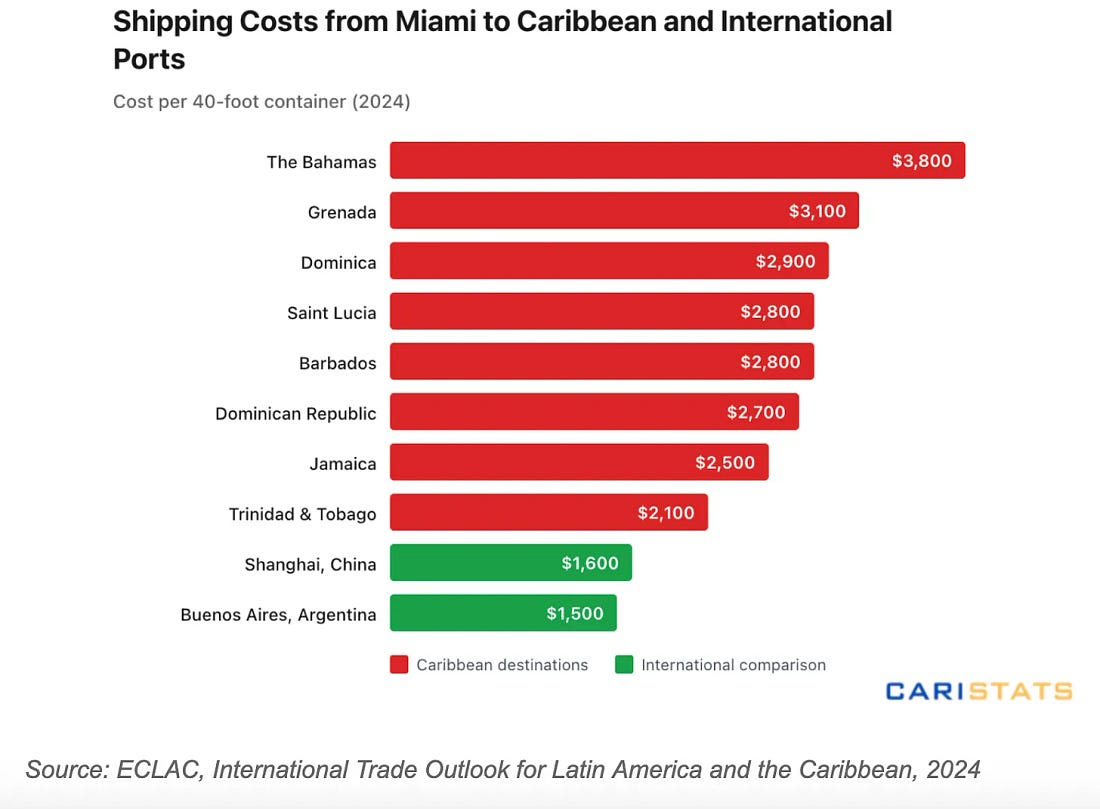
    A counterintuitive pricing trend uncovered in the 2024 Economic Commission for Latin America and the Caribbean (ECLAC) International Trade Outlook has laid bare deep structural flaws in the Caribbean’s maritime logistics network: shipping costs to nearby island nations from major North American hubs are often far higher than freight charges for far-flung global ports thousands of kilometers away.

    Consider this staggering example: moving a standard 40-foot container from Miami, Florida to The Bahamas – a journey of just 144 kilometers – comes with a price tag of $3,800. That is more than double the $1,600 it costs to ship the exact same container all the way to Shanghai, China, a port located nearly 15,000 kilometers across the Pacific Ocean. ECLAC analysis shows this lopsided pricing pattern is not an isolated anomaly; it plagues nearly all port facilities across the Caribbean region, with only a handful of exceptions.

    Multiple interconnected structural challenges drive this so-called Caribbean maritime paradox. First, decades of underinvestment have left most regional port infrastructure ill-equipped to handle the larger, modern container vessels that dominate global trade today. Limited annual cargo volumes at smaller Caribbean ports push per-unit operational costs sharply higher, as carriers are forced to spread fixed expenses across far fewer shipments. Second, infrequent shipping routes – most small island nations only receive weekly service at best – make it impossible to efficiently consolidate cargo, a particular problem for regional exporters of perishable agricultural goods who cannot wait for larger loads to fill available container space.

    This gap in global connectivity is confirmed by the United Nations Liner Shipping Connectivity Index, which shows nearly all Caribbean nations rank well below average for regional maritime infrastructure, with only Jamaica and the Dominican Republic bucking the trend. Compounding these issues is extreme market concentration: just a small handful of major shipping lines control most regional routes, allowing carriers to keep prices artificially high. Many of these routes also see ships returning north to North American hubs empty after dropping off cargo, meaning carriers must charge higher import fees to offset the lost revenue from the return leg of the journey.

    In the most extreme cases, ECLAC estimates that freight costs from Miami to some small Caribbean destinations can reach four times the cost of shipping the same container to Argentina, Uruguay, or even mainland China. The ripple effects of these inflated shipping costs extend far beyond the logistics sector, hitting everyday consumers hardest. ECLAC links these elevated transport costs directly to the Caribbean’s status as the region with the world’s highest cost for a nutritionally adequate diet, where the average daily cost to access healthy food hits $5.16 per person.

    To address this decades-long crisis, regional governments are moving forward with a landmark infrastructure intervention: a joint Barbados-Guyana regional food distribution hub, currently under construction and scheduled for completion in 2026. The project aims to consolidate cargo flows across the region, improve route efficiency, and create enough volume to drive down per-unit shipping costs for food imports and regional exports alike. As of 2024, this hub stands as the most ambitious coordinated effort to untangle the structural knots that have left the Caribbean facing its counterintuitive and economically damaging pricing paradox.

    This analysis draws on data from CARISTATS, a free public data archive that draws on ECLAC’s 2024 trade outlook report. CARISTATS operates on a voluntary support model, inviting readers to pledge future subscriptions to sustain its work, with no charges levied until payment systems are formally activated.

  • Nation’s Brightest Students Honoured at 40th National CSEC Awards

    Nation’s Brightest Students Honoured at 40th National CSEC Awards

    On Thursday, Antigua and Barbuda’s most exceptional secondary school graduates took center stage as the Ministry of Education, Science and Technology hosted the 40th National CSEC Awards Ceremony, a milestone event celebrating standout performance in the 2025 Caribbean Secondary Education Certificate (CSEC) examinations.

    Organized under the forward-looking theme “Architects of Tomorrow,” the ceremony drew a cross-section of attendees: celebrated students, proud family members, dedicated educators, and senior government officials, all gathered to recognize the young people who earned extraordinary exam scores and regional-level distinctions. The annual event does more than honor individual success—it also highlights the collective work of educators and guardians that underpins student achievement, a mission it has carried forward for four decades.

    Topping the 2025 leaderboard was Kaylei John-Baptiste, a student at Antigua’s Baptist Academy, who claimed the prestigious title of National CSEC Student of the Year. Her historic academic feat included passing all 20 registered subjects, with 18 of those results earning the highest possible Grade One mark. Following closely behind in the national rankings was Kha-lique Harris of St. Joseph’s Academy, who secured second place, while Nayima Lewis—another Baptist Academy student—took third place after notching 16 Grade One passes across her 20 subjects.

    Beyond national honors, the ceremony also spotlighted students who earned spots on the Caribbean region’s overall merit lists for individual subject areas. Standout regional performances included Asia Roberts of Antigua Girls’ High School, who claimed second place across the entire Caribbean for English A; Anwar Stilston of St. Joseph’s Academy, who ranked first regionally in Music; and Khaliq Harris, who secured second place in Industrial Technology.

    Dozens more graduating students were recognized with tiered awards—Platinum, Gold, Silver, and Bronze—handed out based on the number of Grade One passes each student earned, aligned with eligibility criteria set by the Ministry of Education.

    Clare Brown, the nation’s Director of Education, delivered the keynote address to the assembled group, where he commended the awardees for their relentless dedication and persistent effort through the examination cycle. “Your performance in the 2025 CSEC examinations has earned you a place among our nation’s finest scholars,” Brown told the honorees, urging them to maintain their commitment to excellence in all future academic and professional pursuits.

    He also emphasized that strong academic results must be paired with unwavering personal integrity and strong moral character, noting that the long-term trajectory of Antigua and Barbuda will be defined by the choices these young leaders make and the contributions they offer to their communities and the nation in the coming years.

    As the 2025 ceremony wrapped up, organizers reflected on the 40-year legacy of the National CSEC Awards Programme, which has grown alongside Antigua and Barbuda’s education system to consistently celebrate academic excellence and honor the shared investment of students, teachers, and families in advancing national educational success.

  • Antigua And Barbuda Spotlighted At CTO’s Caribbean Week In New York

    Antigua And Barbuda Spotlighted At CTO’s Caribbean Week In New York

    The Caribbean Tourism Organization (CTO) has brought the twin-island nation of Antigua and Barbuda into the global tourism spotlight during its annual Caribbean Week event held in New York City. This high-profile gathering, which brings together tourism industry leaders, travel media, business investors and hospitality stakeholders from across the globe, serves as a critical platform for Caribbean destinations to showcase their unique offerings to the $1.1 trillion North American travel market.

    During the event, Antigua and Barbuda’s delegation highlighted the nation’s 365 pristine white-sand beaches, world-class luxury resorts, vibrant cultural heritage and newly expanded sustainable tourism initiatives. Delegates held a series of productive meetings with major tour operators, airline executives and potential investors, outlining new investment opportunities in eco-lodges, adventure tourism infrastructure and digital visitor experience upgrades. The nation also used the platform to promote its recently updated entry requirements, which now offer fully visa-free access for travelers from 108 countries, making it more accessible than ever for North American visitors.

    Industry observers note that Caribbean Week in New York comes at a key moment for regional tourism, as the Caribbean works to solidify its post-pandemic recovery and position itself as a leading destination for high-value, low-impact travel. For Antigua and Barbuda, the spotlight at the event is expected to drive a significant increase in visitor arrivals from the U.S. and Canada, while attracting long-term foreign investment that supports the nation’s goal of becoming a carbon-neutral tourism destination by 2030. The CTO has highlighted Antigua and Barbuda’s community-focused tourism model as an example for other small island developing states, emphasizing how balanced growth can benefit both local economies and natural ecosystems.

  • Derde helft WK 2026: Zuid-Korea knokt zich langs Tsjechië 2 – 1

    Derde helft WK 2026: Zuid-Korea knokt zich langs Tsjechië 2 – 1

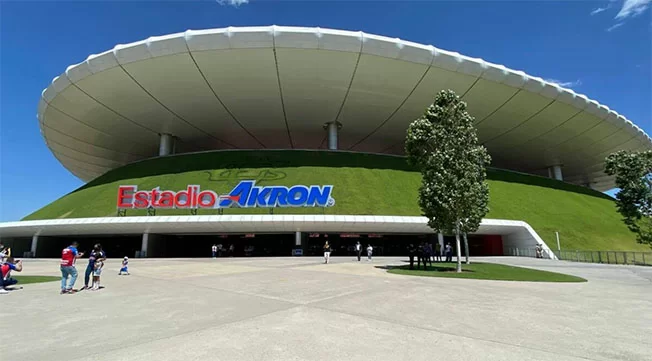
    The 2026 FIFA World Cup delivered its first dramatic comeback story on matchday one of Group A, as South Korea fought back from a second-half deficit to secure a crucial 2-1 victory over Czech Republic at Guadalajara’s Estadio Akron in Zapopan. The thrilling result leaves Group A’s qualification race wide open, with South Korea level on points with tournament hosts Mexico at the top of the standings.

    The opening 58 minutes of the clash was a tightly contested, cagey affair, with both sides prioritizing defensive solidity over reckless attacking risk, resulting in few clear-cut goal-scoring opportunities for either camp. That stalemate was finally broken in the 59th minute, when Czech defender Ladislav Krejčí found the back of the net to put the European side ahead. The goal looked set to give Czech Republic a momentum-shifting opening win, as they held their advantage comfortably for most of the second half.

    But South Korea refused to let the game slip, upping their intensity and pressing high to turn the tide of the match. Just eight minutes after Krejčí’s opener, Hwang In-beom found the equalizer for the Asian side, injecting a massive dose of confidence into his squad that pushed Czech Republic further and further onto the back foot. The full turnaround was completed in the 80th minute, when substitute Oh Hyeon-gyu slotted home the winning goal, capping a dominant second-half performance that saw South Korea seize complete control of the tie.

    While Oh grabbed the decisive goal, all eyes remained on South Korean captain and star forward Son Heung-min, who turned in a match-defining display despite failing to score. Son was constantly available for passes, used his blistering pace and intelligent movement to stretch the Czech defense, and created multiple dangerous chances throughout the 90 minutes. The Tottenham Hotspur attacker had multiple clear opportunities to find the net, but was denied by solid Czech defending and a streak of bad finishing luck. Despite the lack of a goal, Son’s influence on the comeback was undeniable, and he was substituted midway through the second half after putting in a hard-working shift to set up the win.

    Group A also includes hosts Mexico and South Africa, who faced off earlier in the matchday. Mexico kicked off their tournament with a 2-0 win over South Africa, putting them top of the group on goal difference, with South Korea sitting just behind in second place, both holding three points from one match.

    The next round of group stage matches is already set to deliver high-stakes drama. South Korea will face off against hosts Mexico in a clash that could well decide who claims the group’s top spot and advances to the knockout stage. For Czech Republic, their next match against South Africa is a must-win: they need to pick up full points to keep their own hopes of progressing alive.

    For South Korea, this opening comeback victory marks a promising start to their 2026 World Cup campaign. The side proved they have the resilience, tactical quality and attacking firepower to fight back from adverse situations – attributes that could take them far in the tournament as the knockout rounds approach.

  • Column: Van wie is het WK nog?

    Column: Van wie is het WK nog?

    The biggest global sporting spectacle on the planet, the FIFA World Cup, kicked off on Thursday, drawing an audience of billions across every continent. Public squares fill with cheering crowds, bars work around the clock to serve thirsty fans, and for a few weeks, the world feels like it has transformed into one giant, interconnected football family. This unifying power has defined the World Cup for nearly a century: it is one of the rare global events that brings together people from every nationality, language, religion and political background, all bound by a shared love for a single game played with a round ball.

    Yet long before the opening whistle of the first match, an uncomfortable question has once again loomed over this year’s tournament co-hosted by the United States, Canada and Mexico: who does football truly belong to in the modern era?

    The recent controversy surrounding Somali referee Omar Abdulkadir Artan, who faced major barriers entering the United States despite holding an official appointment from FIFA, is far more than an isolated bureaucratic incident. It has become a powerful symbol of a shifting dynamic that has been unfolding for decades. While the World Cup brands itself as a celebration of global equality, behind the scenes, nationality, power, geopolitics and money still dictate access and opportunity.

    This pattern is nothing new. Past tournaments have been marked by persistent tension: debates over exorbitant stadium construction costs in South Africa, mass public protests against billion-dollar infrastructure investments while basic public services were underfunded in Brazil, arguments over geopolitical influence surrounding the Russia World Cup, and widespread scrutiny of migrant working conditions and human rights abuses in Qatar. This year, the core tension centers on immigration policy, border controls, visa restrictions and unequal access for participants and fans alike.

    Time and again, the World Cup proves it cannot exist separate from the problems of the wider world: it is a mirror that reflects global inequality, power imbalances and political divisions. That is why the long-held idea that sport and politics can remain completely separate may be a comforting myth, but it no longer matches reality. Today, the World Cup is a sprawling global enterprise that caters to the competing interests of national governments, international bodies, multinational sponsors, media conglomerates and billion-dollar corporate partners.

    Once, the World Cup was first and foremost a celebration for ordinary fans. Now, it increasingly caters to the needs of sponsors, marketing firms, broadcast rights holders and commercial partners. No one expects a tournament of this scale to run for free; organization and infrastructure require massive investment. But the slow shift has transformed what was once a people’s festival into an exclusive commercial product, priced out of reach for millions.

    For any fan traveling to the United States to cheer on their national team this year, the total cost amounts to a small fortune. Hotel prices have skyrocketed across host cities, domestic airfare has surged to record levels, and match tickets are already among the most expensive in the history of the tournament. On top of that, fans must cover the cost of ground transportation, travel insurance, food and accommodation, pushing the total even higher.

    For millions of supporters across Africa, Asia, Latin America and even low-income regions of Europe, a trip to this World Cup is now financially impossible. The same is true for many fans from the Caribbean and Suriname, communities that have long contributed to the growth of global football. Millions of fans who helped turn the sport into the global phenomenon it is today can only watch from their living rooms on television.

    Even fans watching from home cannot escape the grip of the World Cup’s massive commercial machine. Broadcasters pay billions of dollars to secure exclusive broadcast rights, while sponsors pour hundreds of millions into attaching their brand to the tournament. Every goal, every replay, every press conference is built around a revenue model designed to generate profit for corporate stakeholders.

    For decades, the modern World Cup has not been just about football. This shift is not just disappointing – it carries real risks. Football’s enduring power has always come from its accessibility: you do not need expensive equipment, an exclusive club membership or luxury accommodation to play. All you need is a ball and a patch of open ground. That is what made football the game of workers, students, farmers, children and neighborhood communities across the entire world. Now, the world’s biggest football celebration risks drifting further and further away from the ordinary fan that built the sport.

    Even with all this criticism, billions of people across the world will spend the next four weeks cheering, laughing, groaning and dreaming alongside their favorite teams. An unexpected upset victory by a small underdog nation will still bring an entire country to a standstill in collective euphoria. A last-minute winning goal will still stir raw, genuine emotions that no sponsor can buy and no governing body can manufacture. That unchanging magic of football is still alive.

    But precisely because football holds such enormous, often inspiring power over billions of lives, we cannot shy away from asking these hard questions. Why does access to the tournament remain out of reach for so many? Why do debates over origin, migration and unequal treatment keep resurfacing at every edition? Why do commercial interests grow larger and more central with every World Cup?

    There is no question that the World Cup remains the most beloved sporting event on the planet. But it is long past time for FIFA, host organizers and participating national governments to step back and ask what ordinary fans actually want from the tournament. It is not just bigger stadiums, more expensive hospitality packages and higher revenue streams – it is a tournament that is actually open and accessible to people from every walk of life.

    We can only hope that the inherent beauty of the game will ultimately prove stronger than the politics that surround it and the money that is made from it. Because if the World Cup is supposed to be about anything, it should not be about power or profit – it should be about people.

  • High Court’s criminal case backlog reduced significantly

    High Court’s criminal case backlog reduced significantly

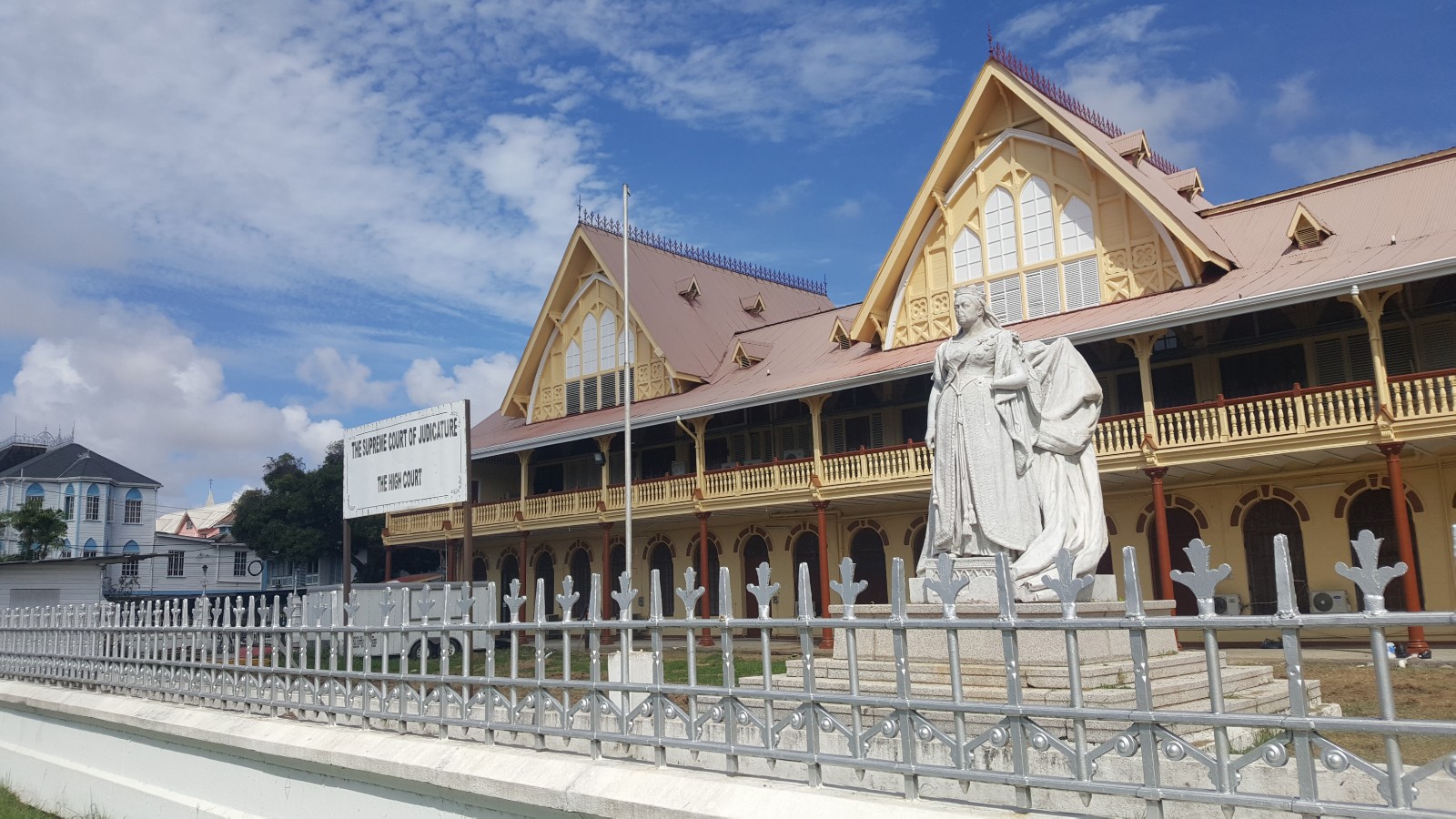
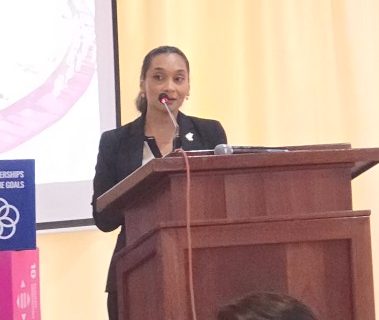
    On June 11, 2026, Guyana’s Director of Public Prosecutions Shalimar Hack announced major progress in clearing the country’s long-standing High Court criminal case backlog, crediting targeted support from the Partnership of the Caribbean and European Union (PACE) Justice Project for the transformation. Speaking at the opening ceremony of a two-day joint training workshop for members of the Guyana Police Force and DPP Chambers, Hack detailed how multi-faceted assistance from the UNDP-implemented, EU-funded initiative has driven systemic improvement in the nation’s criminal justice sector.

    Between 2020 and 2024, the High Court’s criminal assizes division regularly carried a docket of roughly 300 pending cases. As of 2025, that number has fallen to just over 100, a reduction of two-thirds that Hack called a remarkable milestone for the justice system. This progress came after the PACE project invested in specialized professional training, upgraded forensic infrastructure, and delivered new information technology hardware and software to DPP Chambers and law enforcement agencies.

    Beyond clearing the existing backlog, Hack emphasized that the DPP is implementing permanent procedural reforms to prevent case backlogs from reaccumulating, with a core goal of guaranteeing timely trials for all defendants. As evidence of the new system’s efficiency, she noted that a murder trial for an offense committed only two years ago is set to begin next week, while defendants accused of crimes committed in 2025 have already completed their trials.

    A key procedural change driving ongoing improvement is the adoption of the new paper committal system, which Hack said will allow her office to manage residual backlogged cases and new incoming caseloads simultaneously. Beyond streamlining court proceedings, the reform is expected to reduce Guyana’s pre-trial prison population, complementing government investments in new prison facilities that are designed to hold inmates in more humane, comfortable conditions while they await timely adjudication of their cases.

    Dhiraj Singh, officer in charge of the United Nations Development Programme (UNDP) Guyana, outlined the broader scope of the PACE Justice Project, which centers on reducing case backlogs and expanding equitable access to justice across the Caribbean region. The European Union, the project’s primary funding partner, has allocated approximately €9.75 million (equivalent to US$11.4 million or GYD$2.3 billion) to support criminal justice administration improvements across eight Caribbean nations, including Guyana.

    Singh added that the Guyana Police Force has reaped substantial benefits from the initiative’s capacity-building components. In addition to receiving upgraded IT equipment, senior police officers have taken part in regional investigative training hosted in Barbados, while two senior leaders completed a professional study visit to Spain and Italy, where they observed cutting-edge investigation techniques and technological applications. Singh noted that these trained officers will now cascade their new skills and knowledge to broader ranks of the national police force, lifting the overall investigative capacity of Guyana’s law enforcement sector for long-term systemic improvement.

  • Permanent training of police needed, amid numerous constitutional rights lawsuits

    Permanent training of police needed, amid numerous constitutional rights lawsuits

    GEORGETOWN, GUYANA – 11 June 2026 – As Guyana grapples with a steep rise in civil lawsuits alleging constitutional rights violations by law enforcement, the country’s top legal leadership is pushing to establish a permanent, mandatory training program for all ranks of the Guyana Police Force (GPF) to strengthen legal compliance and operational accountability.

    The announcement was delivered Thursday by Deputy Solicitor General Shoshanna Lall during the opening ceremony of a specialized joint training initiative between the GPF and the Office of the Director of Public Prosecutions (DPP). This event falls under the Partnership of the Caribbean and European Union (PACE) Justice Project, a regional development effort co-funded by the European Union and the United Nations Development Programme (UNDP).

    Lall told attendees that Attorney General Anil Nandlall has already initiated preliminary discussions with DPP Director Shalimar Hack and senior UNDP representatives to formalize the permanent training framework. Unlike one-off workshops, the proposed program will focus exclusively on practical legal topics critical to daily police work: core criminal practice and procedure, constitutional law principles, updates to existing and newly enacted statutes, legislative amendments, proper protocols for traffic offense ticketing, the balance of civilian constitutional rights and freedoms during police operations, identification of repealed legislation, and analysis of binding case law precedents.

    Lall emphasized that this targeted training fills a long-unaddressed gap in local law enforcement capacity building. While she publicly acknowledged the invaluable, wide-ranging “yeoman service” the GPF provides to Guyanese communities, she underlined that consistent, up-to-date legal knowledge is non-negotiable for ethical and effective policing.

    Citing official data from the Attorney General’s Chambers, Lall confirmed that lawsuits against the GPF for alleged constitutional rights breaches have become one of the most frequent legal matters the chambers handles. “From my personal vantage point at the AG Chambers, when police – not all officers, by any means – fail to uphold these protected rights and freedoms, civil proceedings are immediately filed,” she explained. “Defending these police actions makes up the single largest portion of our court work. Constitutional challenge claims are filed almost every other day, requiring our team to continuously respond to litigation tied to police operations.”

    Looking ahead, Lall noted that additional cross-sector training will be required later this year, when the judiciary formally launches new criminal code rules. This upcoming regulatory shift will require updated training not only for police officers, but also for prosecutors, judges, and practicing defense attorneys across the country to ensure uniform implementation of the new legal framework.

    The push for permanent training comes as Guyana’s legal system continues to adapt to growing public demand for greater law enforcement accountability, with international development partners backing efforts to strengthen judicial and policing capacity across the Caribbean region.

  • Díaz-Canel explains priorities designed to overcome current difficulties

    Díaz-Canel explains priorities designed to overcome current difficulties

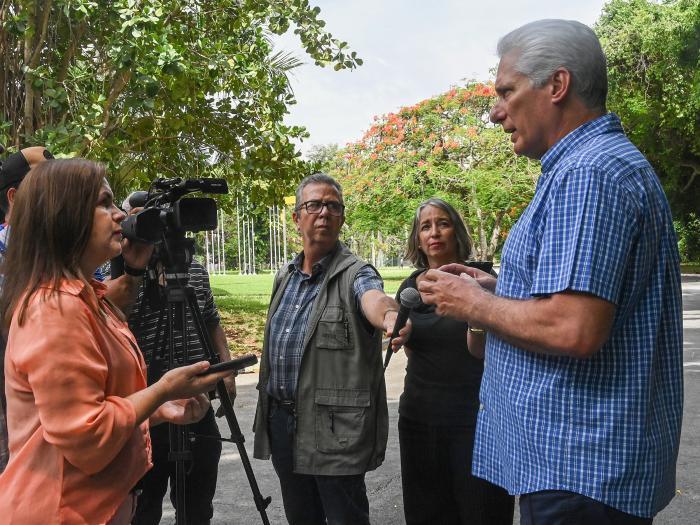
    In an exclusive address to the press corps of the Cuban Presidency published on June 12, 2026, Miguel Díaz-Canel Bermúdez, First Secretary of the Central Committee of the Communist Party of Cuba and President of the Republic, laid out a comprehensive strategy to sustain national development and overcome the long-standing, punitive U.S. imperial blockade that has strained every sector of Cuban life.

    Díaz-Canel opened his remarks by invoking a core principle from the era of revolutionary leader Fidel Castro: that in times of unprecedented complexity, a relentless passion for development and creative problem-solving is non-negotiable. Framing the U.S. blockade as a multidimensional, interventionist act of aggression that has disrupted daily life for every Cuban family and created deep systemic stress across the national economy, he emphasized that the resilience of the Cuban people has already defied Washington’s expectations.

    “A failed state could not have survived even a few weeks of the pressure we have endured for decades,” Díaz-Canel noted, pointing out that the continued existence of the Cuban Revolution and the functioning of the Cuban state directly contradicts repeated U.S. claims of imminent collapse. Drawing on Castro’s teachings, he stressed that crises must be seized as opportunities for growth, and that collective unity and popular will will carry the nation through current challenges.

    To meet this moment, the Cuban government has established two overarching national priorities. The first is robust defense preparedness. Díaz-Canel detailed ongoing work to strengthen the country’s territorial defense system, leveraging weekly Defense Days to refine operational plans, adapt to new lessons learned, and expand civilian participation and protection within a people-centered defense strategy.

    The second, and most transformative priority, is the implementation of the 2026 Cuban Economic and Social Program, a set of sweeping reforms that emerged from months of nationwide public debate. Díaz-Canel explained that public input broadened and strengthened the initial policy framework, with experts refining proposals through comparative analysis of socialist transition experiences in China and Vietnam, and even leveraging artificial intelligence tools to test policy outcomes. The final version of the program is now being finalized for approval by the Communist Party Political Bureau and the National Assembly of People’s Power, after which a nationwide public outreach campaign will begin to ensure broad buy-in for the changes.

    The reforms target more than 20 key areas of economic and governance transformation, starting with a restructuring of the national economic management system to resolve long-standing tensions between central planning and productive incentives. Díaz-Canel emphasized that the core goal of all proposed changes is to drive national production, generate shared wealth, and distribute that wealth through principles of social justice — a necessary step to expand social programs and address growing inequalities and community vulnerabilities exacerbated by the blockade.

    A central pillar of the reform agenda is expanding autonomy to two key drivers of growth: municipal governments and state-owned enterprises. Díaz-Canel argued that national strength grows from strong local governance, proposing that municipalities gain full authority to manage their own economic ecosystems, approve local investments, facilitate partnerships between economic actors, and engage directly in import and export activity, including managing foreign direct investment and projects with Cubans residing abroad. These powers, he stressed, do not conflict with national priorities, but reinforce them by unlocking untapped local endogenous potential.

    For state-owned enterprises, the reforms grant sweeping operational autonomy free from unnecessary bureaucratic interference. Enterprises will be able to set their own size, design worker-centered salary systems, control the use of their profits, engage directly in import and export activity, retain a share of foreign currency earnings for expansion, form partnerships with any domestic or foreign economic actor, and choose their own clients and suppliers. They will also gain direct access to the national foreign exchange market, putting them on an equal competitive footing with non-state economic actors, a long-called-for change by sector stakeholders. Díaz-Canel added that state enterprises will be permitted to open foreign currency bank accounts, removing a major barrier to operational flexibility.

    The reform package also includes a major restructuring of the state and party apparatus, with a draft bill already published for public comment on the National Assembly website that will cut the number of ministries and senior administrative positions significantly. The resulting budget savings will be redirected to support social programs and long-overdue salary reform, particularly for budget-dependent public sector workers, while eliminating bureaucratic bloat to create a more agile, responsive governance system.

    To revitalize Cuba’s critical agricultural sector and advance toward food sovereignty, the reforms grant new powers to streamline land use, putting idle land into production by transferring plots to producers with a demonstrated track record of output. All producer categories — state, cooperative, private, and foreign-invested — will be able to access input markets in both national and foreign currency, form cross-sector partnerships, and benefit from reduced bureaucratic red tape to speed up project approval.

    Foreign trade will also be liberalized: mandatory intermediation for import and export activity will be eliminated, with lower tariffs applied to imported inputs and raw materials than to finished goods that can be produced domestically. Policymakers are also evaluating permitting foreign trade entities to hold overseas bank accounts, while the scope of allowed activities for non-state economic actors will be expanded, with only a limited list of prohibited activities remaining. MSME approval processes will be expedited, with authority delegated to municipal governments to speed up processing, and foreign direct investment will be incentivized through streamlined approval timelines, clearer property rights, and improved access to banking. Cubans residing both on the island and abroad will be able to participate in investment on equal terms with other economic actors.

    Other key priorities outlined in the program include a rapid expansion of renewable energy to reduce dependence on imported fossil fuels, which have been severely disrupted by the blockade — Díaz-Canel noted that only one oil tanker has arrived in Cuba in the past five months. The country will also expand electric mobility, phase out universal product subsidies in favor of targeted subsidies for the most vulnerable households, restructure fiscal policy to end public financing of inefficient state enterprises, strengthen the banking and financial system, and liberalize restrictions on vehicle imports with preferential treatment for electric vehicles powered by solar energy.

    For tourism, a sector hit particularly hard by the U.S. blockade and pressure on international chains to withdraw from Cuba, Díaz-Canel called for new approaches that open the sector to new non-traditional actors to leverage existing tourism infrastructure. Domestic trade will be modernized through nationwide electronic invoicing and expanded use of digital retail platforms, while targeted incentives will protect young skilled workers, retaining domestic human capital by offering competitive wages that give young Cubans the opportunity to contribute to national development without relocating abroad.

    Closing his address, Díaz-Canel called for national unity, noting that Cuba has not ground to a halt under blockade pressure, but is pursuing deliberate, strategic reform. He denounced ongoing U.S. psychological warfare designed to force Cuban surrender, but emphasized that the vast majority of the Cuban people remain committed to defending their revolution and retaining sovereignty over their national development path, rejecting external interference that runs counter to the revolutionary vision of a just, independent Cuba. Open discussion of all reform proposals will continue, he added, with all constructive ideas welcome as the country moves forward together.

  • AZP-directie weerspreekt code zwart, maar zorgen over druk op SEH blijven bestaan

    AZP-directie weerspreekt code zwart, maar zorgen over druk op SEH blijven bestaan

    A leaked internal document from the emergency department (SEH) of the Academic Hospital Paramaribo (AZP) in Suriname has sparked public debate over strained acute care capacity, even as hospital leadership insists no formal “code black” has been declared for the emergency wing.

    The controversy erupted after a draft document prepared by SEH management began circulating among medical specialists before being leaked to the public. The internal note outlined specific scenarios where the department would be forced to temporarily stop accepting new patients, triggered by persistent staffing shortages, limited overall capacity, and unresolved logistical bottlenecks. In the document, these extreme, full-capacity conditions were explicitly labeled a “code black” situation for the SEH.

    Once the document’s content became public, AZP’s executive board issued an internal circular to medical specialists clarifying that the draft had never been discussed with or approved by senior hospital leadership. Per hospital management, the text was merely a working draft created as part of ongoing interdepartmental discussions to develop contingency protocols for future scenarios where care capacity could be pushed to its breaking point.

    Fauzia Poese, head of the SEH, later confirmed to the Suriname Communication Service (CDS) that no code black has been enacted for the general public, and that the emergency department continues to operate its services as normal. Poese emphasized that the document was only an internal preparedness exercise to plan for potential worst-case outcomes if maximum capacity is ever reached in the future.

    However, official reassurances have not fully alleviated concerns among frontline medical staff. In interviews with Starnieuws, multiple practicing physicians at AZP confirmed that the SEH and other critical care departments are already operating under significant, unsustainable pressure. These clinicians pointed to long-running staffing shortfalls, soaring patient demand for care, and limited capacity to accommodate severely ill patients as ongoing, daily challenges. They noted that the scenarios outlined in the leaked draft are not hypothetical: they reflect the very real barriers that care teams confront every day at the hospital.

    Even AZP’s executive board acknowledged in its circular that the current operating environment for the hospital is extremely challenging. Leadership confirmed that the institution is actively working on a series of interventions to ease strain on the emergency department, including expanding available bed capacity and improving patient flow through the facility to reduce bottlenecks.

    Ultimately, the debate sparked by the leak is less about the technical question of whether a formal code black has been declared, and more about the underlying message of the document: frontline care providers are already being forced to plan for emergency contingency plans because existing capacity is under unprecedented, sustained strain.