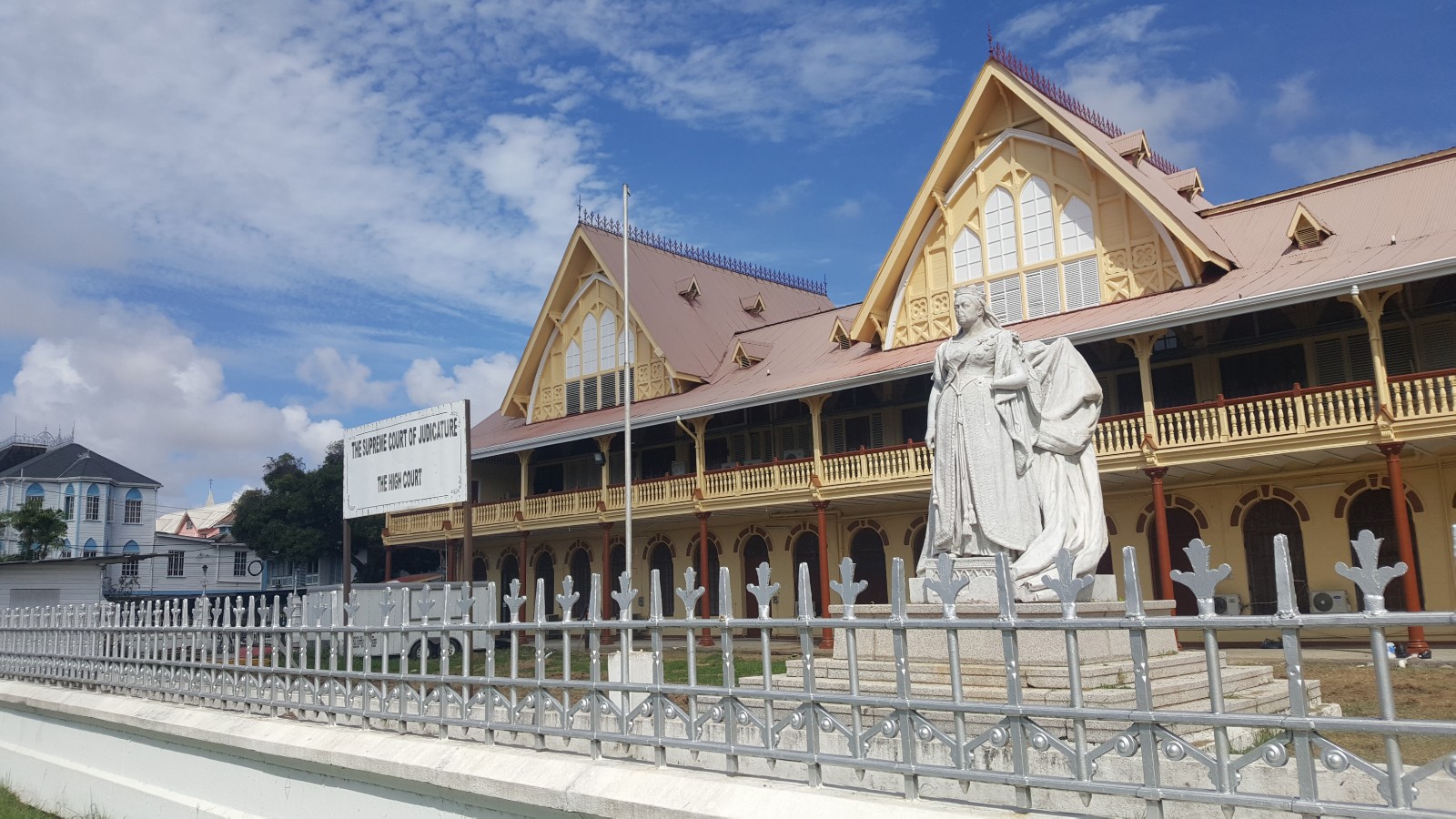
On June 11, 2026, Guyana’s Director of Public Prosecutions Shalimar Hack announced major progress in clearing the country’s long-standing High Court criminal case backlog, crediting targeted support from the Partnership of the Caribbean and European Union (PACE) Justice Project for the transformation. Speaking at the opening ceremony of a two-day joint training workshop for members of the Guyana Police Force and DPP Chambers, Hack detailed how multi-faceted assistance from the UNDP-implemented, EU-funded initiative has driven systemic improvement in the nation’s criminal justice sector.
Between 2020 and 2024, the High Court’s criminal assizes division regularly carried a docket of roughly 300 pending cases. As of 2025, that number has fallen to just over 100, a reduction of two-thirds that Hack called a remarkable milestone for the justice system. This progress came after the PACE project invested in specialized professional training, upgraded forensic infrastructure, and delivered new information technology hardware and software to DPP Chambers and law enforcement agencies.
Beyond clearing the existing backlog, Hack emphasized that the DPP is implementing permanent procedural reforms to prevent case backlogs from reaccumulating, with a core goal of guaranteeing timely trials for all defendants. As evidence of the new system’s efficiency, she noted that a murder trial for an offense committed only two years ago is set to begin next week, while defendants accused of crimes committed in 2025 have already completed their trials.
A key procedural change driving ongoing improvement is the adoption of the new paper committal system, which Hack said will allow her office to manage residual backlogged cases and new incoming caseloads simultaneously. Beyond streamlining court proceedings, the reform is expected to reduce Guyana’s pre-trial prison population, complementing government investments in new prison facilities that are designed to hold inmates in more humane, comfortable conditions while they await timely adjudication of their cases.
Dhiraj Singh, officer in charge of the United Nations Development Programme (UNDP) Guyana, outlined the broader scope of the PACE Justice Project, which centers on reducing case backlogs and expanding equitable access to justice across the Caribbean region. The European Union, the project’s primary funding partner, has allocated approximately €9.75 million (equivalent to US$11.4 million or GYD$2.3 billion) to support criminal justice administration improvements across eight Caribbean nations, including Guyana.
Singh added that the Guyana Police Force has reaped substantial benefits from the initiative’s capacity-building components. In addition to receiving upgraded IT equipment, senior police officers have taken part in regional investigative training hosted in Barbados, while two senior leaders completed a professional study visit to Spain and Italy, where they observed cutting-edge investigation techniques and technological applications. Singh noted that these trained officers will now cascade their new skills and knowledge to broader ranks of the national police force, lifting the overall investigative capacity of Guyana’s law enforcement sector for long-term systemic improvement.