博客

  • Government Defends Status Quo as Court Battle Over Ombudsman Heats Up

    Government Defends Status Quo as Court Battle Over Ombudsman Heats Up

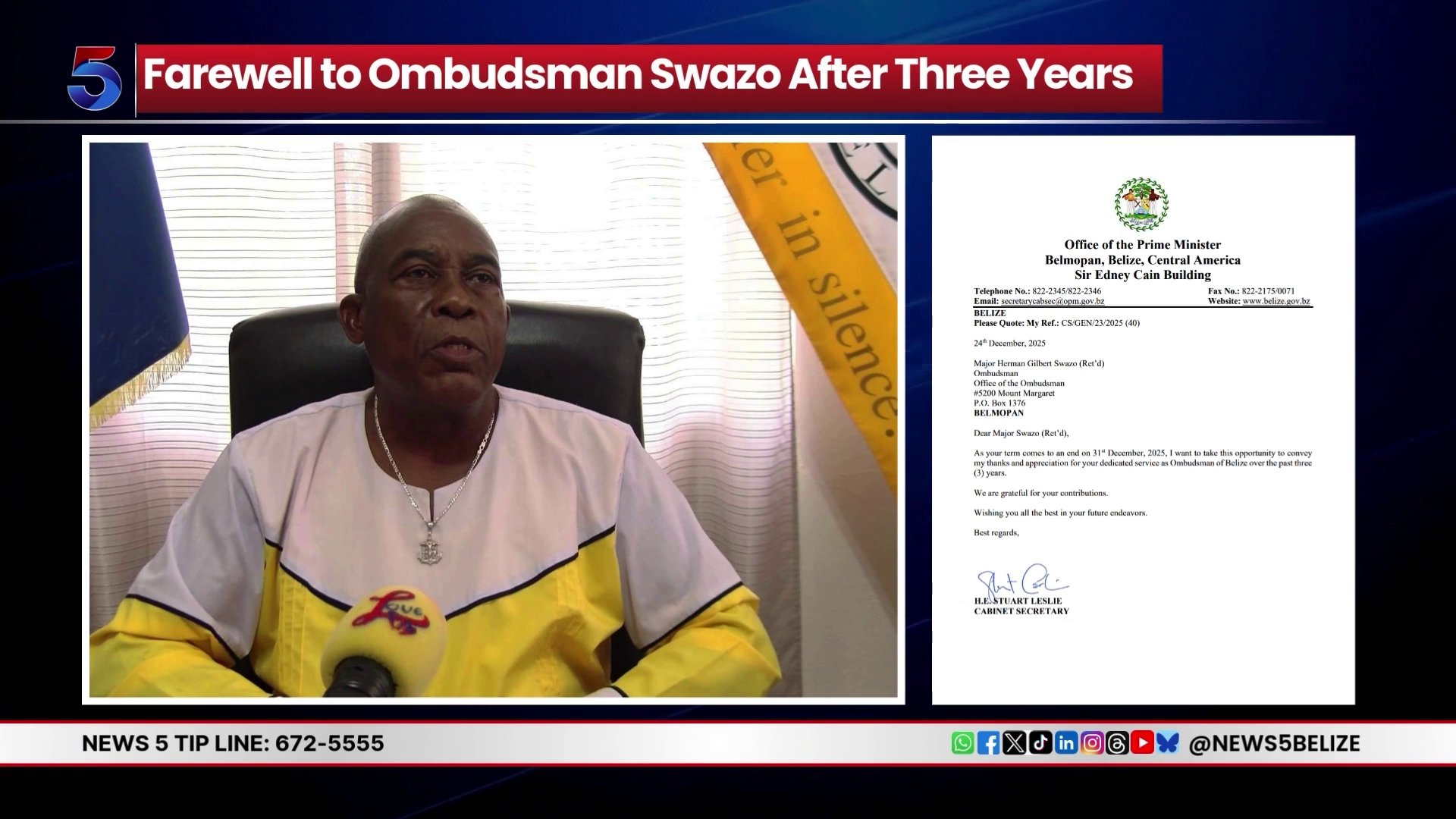
    As a high-stakes legal confrontation approaches next week, a fundamental debate over public accountability and government oversight has taken center stage, pitting the nation’s former top ombudsman against the sitting government over a six-month vacancy in the critical public watchdog role.

    Former Ombudsman Gilbert Swaso has launched a court challenge against the administration, arguing that the prolonged lack of a permanent appointee to the post has systematically eroded the office’s ability to check government maladministration and protect citizen rights. At the core of Swaso’s legal complaint is a longstanding structural flaw: the ombudsman’s office currently lacks an independent legal team and autonomous budget, forcing it to rely on the Attorney General’s office for legal support — even when the government itself is the subject of investigations or challenges. Swaso warns that this dependency leaves the watchdog completely paralyzed when its own decisions are contested, leaving the public without a dedicated defender against official overreach.

    But Attorney General Anthony Sylvestre, defending the government’s approach in a press briefing, pushed back on claims that the status quo undermines oversight, explaining the vacancy is tied to an ambitious planned reform: integrating a new National Human Rights Institute into the ombudsman’s existing mandate. The merger will more than double the office’s existing responsibilities, which currently center on investigating citizen complaints against administrative misconduct, requiring changes to the position’s qualification requirements and overall institutional structure.

    Sylvestre noted that the appointment delay, while regrettable, stems from a deliberate, collaborative restructuring process rather than negligence. A cross-sector working group with representatives from private industry, civil society, and multiple government ministries has been convened to design the new framework, and the panel is set to hold its next working meeting this coming Monday to formalize structural details. The Attorney General emphasized that rushing through an appointment before the institutional restructuring is complete would risk creating a flawed body that cannot deliver on its expanded mandate.

    When pressed on the current lack of independent legal support for the office, Sylvestre clarified that the ombudsman’s office, as an independent parliamentary body rather than an executive government department, already has the authority to secure its own independent counsel. The process for allocating funding for legal support runs through the Clerk of the National Assembly, who forwards requests to the Financial Secretary — a process Sylvestre says poses no inherent barrier to the office accessing the legal support it needs. He added that he has no advance knowledge of whether independent counsel has already been retained for the upcoming court case, and expects the issue to be addressed directly in court next week.

    Sylvestre also stressed that despite the vacancy, the office remains operational with existing staff continuing to process citizen complaints. Critics, however, argue that the absence of a permanent or acting ombudsman has left the watchdog without leadership and independent legal authority, stalling ongoing high-stakes investigations and eroding government accountability. The upcoming court hearing is expected to force a public resolution to the question of whether the government’s restructuring efforts amount to a deliberate weakening of public oversight in the name of reform.

  • Attorney General Explains Hold-Up on Occupational Safety Law

    Attorney General Explains Hold-Up on Occupational Safety Law

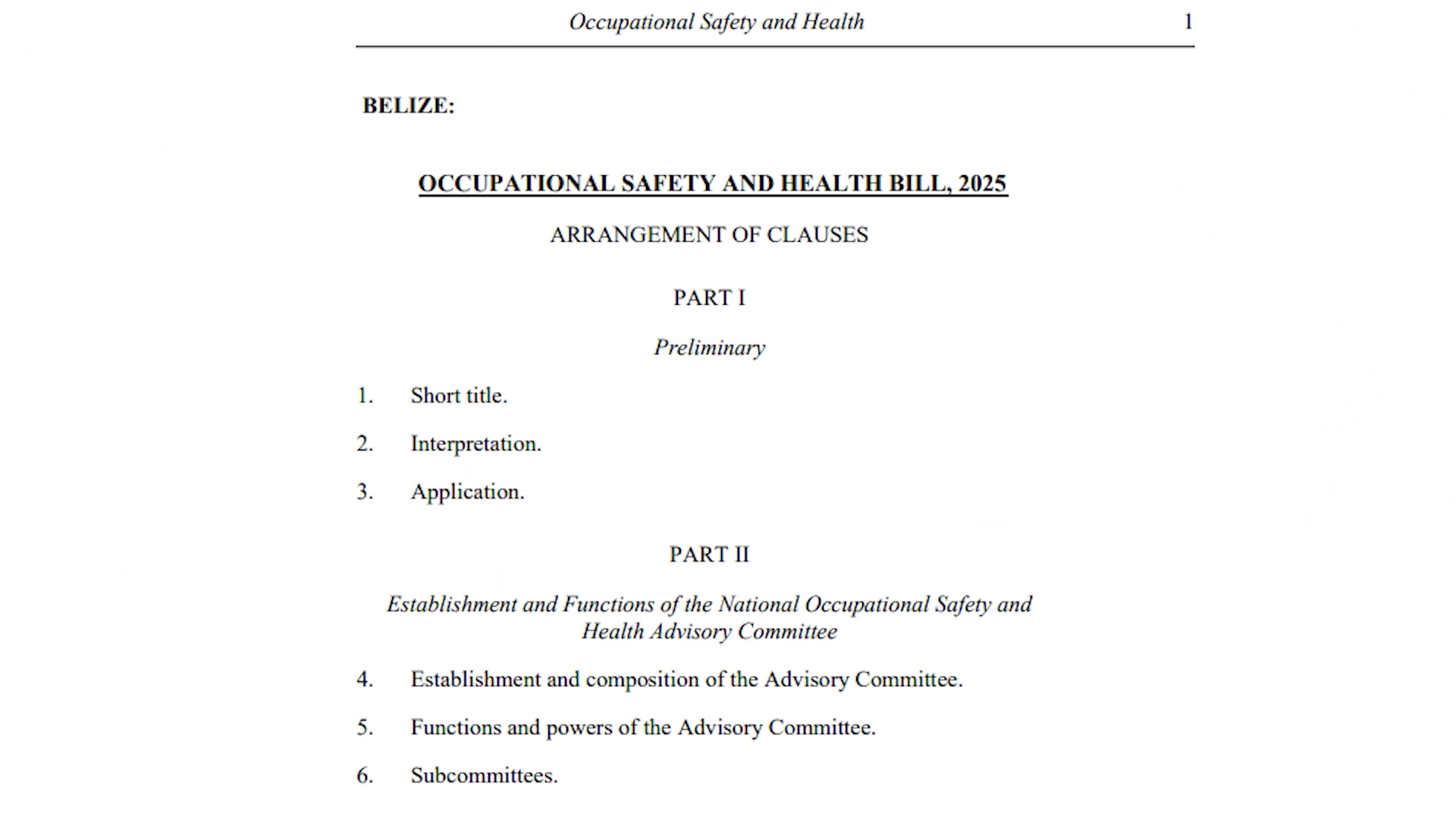
    For more than 14 years, Belize has been working to update its workplace protection framework through a new Occupational Safety and Health (OSH) Bill, but the long-awaited legislation has hit a major deadlock in the country’s Senate, leaving the future of worker protections uncertain.

    The bill successfully cleared the House of Representatives in February 2026, but just weeks after that milestone, it encountered unresolved disagreements over core policy provisions that have halted its progress. Senate lawmakers have pushed back against advancing the bill in its current form, arguing that it still contains critical flaws and internal contradictions that require revision before it can be enacted into law.

    The prolonged delay has sparked growing concern among advocates for worker safety, who warn that every additional setback leaves thousands of Belizean workers vulnerable to unregulated on-the-job hazards without access to modern, comprehensive legal protections. Despite these concerns, social partners involved in the legislative process have maintained that taking the time to craft a well-designed, functional law is a better approach than rushing flawed legislation into effect.

    To clarify the barriers moving the bill forward and the government’s position on the delay, local reporters pressed Attorney General Anthony Sylvestre for details on the impasse. Sylvestre, the government’s top legal advisor, explained that the hold-up centers on a controversial policy provision that would extend OSH regulations to domestic workers, placing private households that hire domestic staff under the same regulatory scrutiny and legal liability requirements as large, established business operations.

    Sylvestre emphasized that the government does not oppose extending protections to domestic workers, but argues the current framework of the bill creates unworkable practical burdens for ordinary private employers. “The reality is that it may be difficult for a person who hires a domestic to be able to meet that same standard,” he told reporters, noting that the government’s current position is not an impulsive decision, but the result of more than a decade of careful deliberation among stakeholders. “That is a sensible approach,” he added of the push to revise the problematic provision before moving forward.

  • PUP’s Belize City Mayoral Contest Intensifies Ahead of Deadline

    PUP’s Belize City Mayoral Contest Intensifies Ahead of Deadline

    As the nomination deadline for the People’s United Party (PUP) Belize City mayoral candidacy closes, the once predictable contest has rapidly transformed into a tightly contested showdown, turning what looked like a guaranteed path to victory for one candidate into a wide-open race.

    For weeks, political insiders widely viewed Deputy Mayor Eluide Miller as the unchallenged front-runner. With solid institutional backing from both the PUP party leadership and the sitting Belize City Council, Miller was positioned as the clear establishment favorite, with no serious opponents expected to enter the fray. That narrative changed entirely when veteran city councilor Allan Pollard confirmed his last-minute entry into the nomination contest, injecting new energy and uncertainty into the race.

    Pollard brings a distinct campaign profile that sets him apart from the establishment-backed Miller. Unlike the deputy mayor’s party-aligned support structure, Pollard has built his political standing over years of on-the-ground community work, granting him deep grassroots popularity and widespread name recognition across Belize City. Political analysts note that this existing base of local support could upend Miller’s expected lead, forcing the front-runner to adjust his campaign strategy to compete for voter attention.

    June 11, 2026 marks the final day for candidates to submit their nomination papers, and political observers warn that the field of candidates could still shift before the close of nominations. Party insiders across Belize City are closely monitoring developments, keeping an eye out for additional last-minute entries or unexpected withdrawals that could further reshape the race. While the final lineup of candidates remains uncertain one hour ahead of the deadline, one thing is already clear: the fight for the PUP’s mayoral nomination has become far more competitive and unpredictable than anyone forecast just weeks ago.

    This report is adapted from a transcript of an evening television news broadcast, which included transcribed Kriol language content formatted with a standardized spelling system for publication.

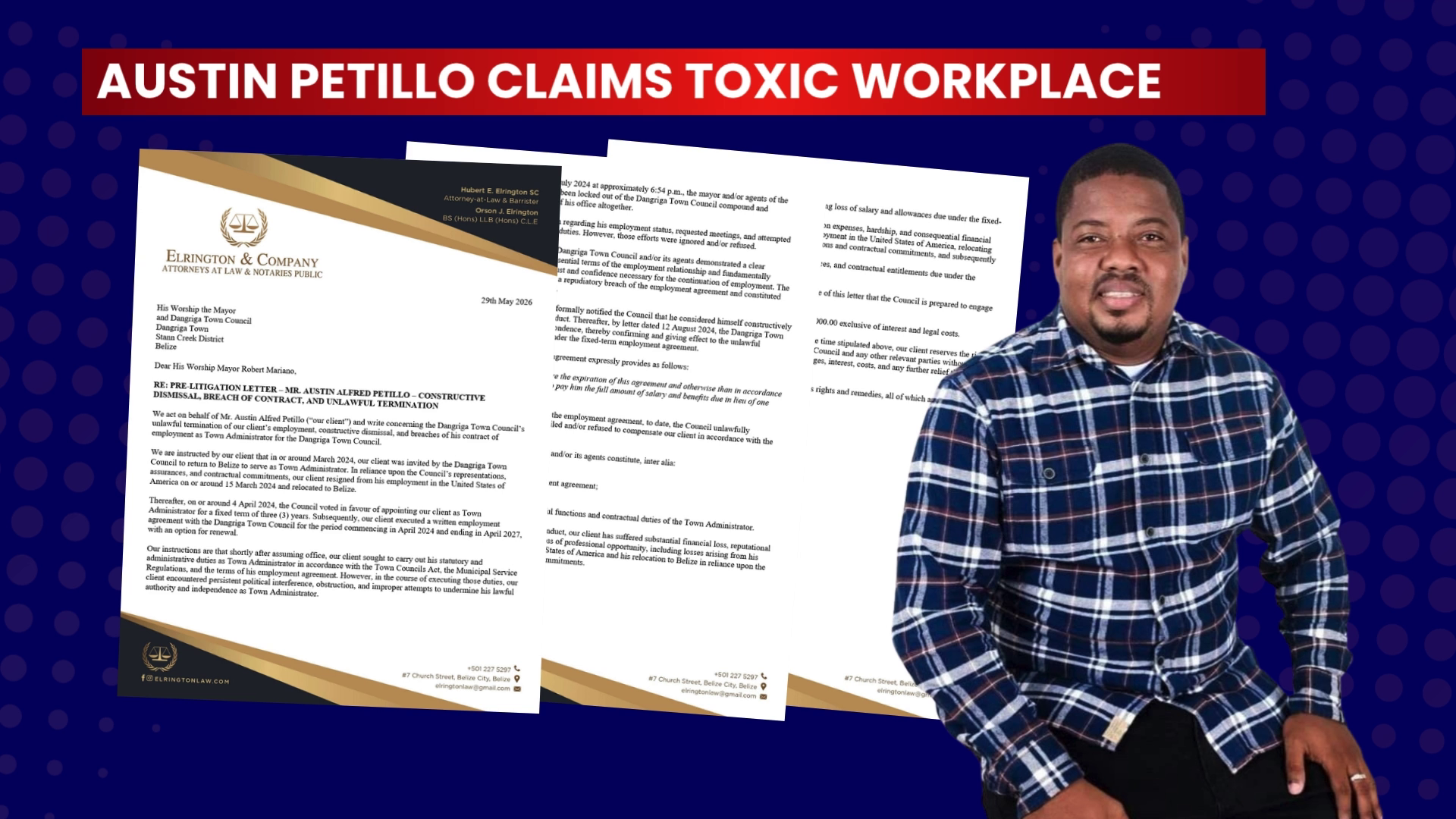
  • Austin Petillo Challenges ‘Unjust’ Dismissal by Dangriga Council

    Austin Petillo Challenges ‘Unjust’ Dismissal by Dangriga Council

    A high-stakes local government legal dispute in Belize’s Dangriga District took a major turn this week, as former Town Administrator Austin Petillo has formally initiated court action against the Dangriga Town Council over what he calls an unlawful, premature termination of his employment.

    The conflict first emerged in public reports this past Wednesday, and new developments have now brought the underlying disagreements into sharp focus. According to Petillo’s legal team, the terminated administrator was recruited by the council from his previous residence in the United States, specifically brought on to bring professional administrative reforms to the local governing body. After joining the role, Petillo signed a fixed-term contract that guaranteed his position through April 2027.

    However, tensions flared quickly after Petillo began implementing standardized governance procedures to ensure compliance with council rules. His attorney, Orson “OJ” Elrington, confirmed that Petillo faced repeated political interference from actors within the local government as he pushed forward with rule-abiding reforms. Eventually, the council issued a formal termination letter, effectively forcing Petillo out of the role in what Elrington describes as a constructive dismissal.

    Before turning to the courts, Petillo attempted to resolve the dispute through direct, informal negotiations with council leadership, seeking an out-of-court settlement without legal representation. Those talks failed to produce any meaningful resolution, Elrington says, leaving formal litigation as the only remaining option.

    Under Belize’s legal framework, all employment disputes require a mandatory pre-litigation notice step before a case can proceed to court. Elrington confirmed that this formal notice has already been delivered to and received by the Dangriga Town Council, and Petillo’s legal team is currently awaiting the council’s formal response. The council, for its part, has already begun consulting its own legal advisors to map out its next moves in the growing conflict.

    This report is adapted from a transcript of an evening television news broadcast, with all quoted content verified from the original on-air recording.

  • AG Warns Landmark Case Could Cost Taxpayers Millions More

    AG Warns Landmark Case Could Cost Taxpayers Millions More

    BELIZE CITY — A recently upheld appellate court decision granting more than $6 million in compensation to a southern Belize Maya community has sparked urgent warnings from the country’s top legal official, who says the ruling could upend decades of land rights governance and impose overwhelming unplanned costs on national taxpayers.

    In a public briefing following the Court of Appeal’s June 2026 judgment upholding the award for the Maya village of Jalacte, Attorney General Anthony Sylvestre outlined deep government concerns that the verdict creates a problematic dual framework for calculating land compensation in Belize, splitting rules between private and communal land holdings.

    The appellate court crafted a unique valuation standard to assess damages for the alleged unlawful deprivation of Jalacte’s communal land, a metric that differs substantially from the long-standing process used to calculate compensation for private property claims. According to Sylvestre, this disparate framework sets a precedent that could open the floodgates for hundreds of additional overlapping land claims across the country, most notably in southern Belize’s Toledo District, where boundaries between private third-party holdings and claimed communal land have remained ambiguous for generations.

    “There are aspects of that decision which the court made an award with respect to deprivation of land. In this case, it was in respect to communal land, and the court crafted its assessment of compensation for land using a metric which is not used when determining and assessing compensation for other land or private land,” Sylvestre explained during an on-camera interview for local broadcast. “What we fear is that you will have two regimes for compensation of land in the country — one for private non-communal land, and one for communal land. That creates a concrete potential for serious issues, particularly in the Toledo District, where you have third-party private land interests that may potentially be subsumed or reclassified as communal land.”

    While the court rejected the government’s challenge to the classification of the contested land as communal — a challenge centered on the lack of formally established formal boundary surveys for the community’s holding — Sylvestre confirmed the government’s primary concern rests with the unprecedented compensation standard and its long-term fiscal impact. When asked if the core remaining dispute centered on the total monetary award, Sylvestre affirmed, “Yes. Yes.”

    Sylvestre added that the government intends to bring the dispute before Belize’s highest court to seek clarity on whether the dual compensation standard will remain the binding law of the land going forward. “It is very necessary for us to at least have and know if this will be the case moving forward that will be the stated law,” he said. “There is wisdom in approaching the highest court, the appellate court of last resort, and saying, ‘Look, this is the position. Two regimes with respect to compensation for land now seems to be the state of law in the country. Tell us, is this the case or is this not the case?’ That certainly would be extremely helpful and beneficial to all stakeholders.”

    The landmark ruling has already reignited long-simmering tensions over indigenous land rights in Belize, where Maya communities have fought for decades to formalize communal holdings that were gradually encroached on by private development and state acquisition over the 20th century. Legal analysts note that a ruling upholding the differential compensation standard could result in billions of Belize dollars in new claims, a cost that would ultimately fall to public coffers.

  • Launch of the 2026-2027 Budget Preparation Work in Haiti

    Launch of the 2026-2027 Budget Preparation Work in Haiti

    On June 11, 2026, Haitian national authorities officially kicked off the drafting process for the 2026-2027 fiscal year state budget during a dedicated working session that brought together all key public bodies involved in the country’s budget cycle. The launch was led jointly by the Ministry of Planning and External Cooperation (MPCE) and the Ministry of Economy and Finance (MEF), with senior representatives in attendance from core revenue and administrative institutions, including the General Customs Administration (AGD), the General Directorate of Taxes (DGI), and multiple technical departments and directorates from both lead ministries.

    This budget development initiative is rooted in the Haitian government’s overarching vision to deliver a budget framework that is pragmatic, trustworthy, and actionable, designed to tackle the nation’s most pressing ongoing challenges while advancing core national policy priorities.

    In her opening address to participants, Sandra Paulemon, Haiti’s Minister of Planning, highlighted that the 2026-2027 budget is being developed against a backdrop of profound interconnected security, economic, and social crises that demand deliberate, rigorous, and strategic stewardship of limited public resources. Paulemon underscored the central coordinating role her ministry plays in aligning long-term development planning, programming public investment projects, and harmonizing development interventions that draw on both domestic national resources and international cooperation funding.

    Minister Paulemon emphasized that all public investments included in the upcoming budget must be directed toward high-impact initiatives that deliver measurable, tangible improvements to the daily lives of Haitian citizens. She clarified that all selected projects must align with the priorities outlined in the National Pact for Stability and the Organization of Elections, as well as the government’s established sector-specific policy roadmaps.

    Top priority areas for budget allocation include initiatives that strengthen the security of civilian lives and private property, raise national living standards, build stronger public institutions, support logistical and administrative preparation for upcoming elections, drive broad economic recovery, and rehabilitate critical public infrastructure that serves communities across the country.

    Paulemon also outlined the formal project selection criteria adopted by the MPCE to vet proposed investments. These criteria include alignment with core government priorities, consistency with existing national and international state commitments, the urgency and strategic relevance of the proposed work, the technical readiness of the project to move forward, the completion of all required project documentation, and the proven implementation capacity of the public institution leading the initiative.

    Reaffirming the government’s commitment to delivering tangible outcomes for the Haitian public, the minister called on all sectoral ministries, Planning and Development Units, and public agencies to adhere to the formal procedures and strict deadlines laid out for budget preparation, and to work closely with technical teams from both the MPCE and MEF throughout the drafting process.

    In closing, she restated that thoughtful public investment programming is a foundational strategic decision that will shape Haiti’s long-term future, urging all participating public institutions to uphold standards of responsibility, rigor, and collaborative partnership. This collective effort, she noted, will ensure the final 2026-2027 budget accurately reflects the government’s priorities and supports national stabilization, the successful organization of key democratic processes, and accelerated inclusive development across the country.

    For his part, Serge Gabriel Collin, Haiti’s Minister of Economy and Finance, laid out the core guiding principles that will shape the new budget. Collin stressed that the budget must prioritize sustaining and expanding ongoing national security efforts, particularly through sustained resourcing for the Haitian National Police (PNH) and the Armed Forces of Haiti (FAd’H), as well as strengthened border security infrastructure and operations.

    Collin also underscored the urgent need to reverse a years-long trend of economic contraction and return to positive GDP growth, noting that Haiti has faced seven consecutive years of negative economic expansion. He expressed strong support for fiscal policies designed to achieve zero net cash flow as a mechanism to curb persistent high inflation, and called for targeted policies to drive broad-based economic development, protect domestic Haitian production, and implement continuous improvements to public financial management practices across all government bodies.

  • Prime Minister Skerrit says the international airport progressing well across the board

    Prime Minister Skerrit says the international airport progressing well across the board

    Dominica’s Prime Minister Roosevelt Skerrit has provided a positive mid-construction update on the country’s high-stakes Wesley International Airport project, confirming that work across multiple key segments of the development is progressing on track to expectations. Speaking at an official press briefing held on Wednesday, Skerrit broke down the current completion rates for core components of the infrastructure project, noting that site-wide progress remains solid. According to the prime minister, preliminary earthworks and culvert installation are now roughly 78% finished, while construction of the airport’s main runway and connecting taxiways has hit the 60% completion mark. Equally notable progress, he added, is being recorded on other mission-critical facilities that will enable the airport’s full operation, including the main passenger terminal building, dedicated cargo handling complex, air traffic control tower, and on-site fuel storage farms. Beyond construction timelines, Skerrit moved to address lingering public concerns surrounding the project’s raw material sourcing operations, stressing that all aggregate extraction and processing activities are being carried out in full alignment with the Commonwealth of Dominica’s existing national laws and regulatory frameworks. The prime minister underlined that the administration remains unwaveringly committed to upholding all required environmental protection standards throughout the construction period. In a further clarification of regulatory approvals, Skerrit confirmed that the Physical Planning Division formally granted the necessary operating permits for the Stonefield Aggregate Site and Stonefield Crushing Plant in May 2026. To clear up widespread local speculation about potential mineral extraction, Skerrit explicitly rejected unconfirmed reports of copper mining or other non-construction related mining activity taking place in connection with the airport project. “I want to reiterate that there is no mining operation taking place and no plans for copper mining or any similar activity,” he said, adding that the Stonefield quarry exists for one purpose only: to produce the construction-grade aggregate required to complete the airport build. Skerrit added that the government continues to adhere to all formal regulatory processes for the project, including mandatory environmental impact assessments and ongoing independent oversight by relevant national agencies. Framing the infrastructure development as a generational investment for Dominica, Skerrit described the new international airport as one of the most transformative public works projects in the island nation’s modern history. Once completed, the facility is expected to deliver widespread economic benefits, including immediate job creation during construction, expanded stimulus for local business activity, and a long-term foundation for growth in tourism, cross-border trade, and foreign direct investment – opportunities that will benefit Dominican communities for decades to come. “We remain confident in the progress being made, and we will continue to keep the public informed as works advance,” the prime minister added.

  • Indian Creek Conflict Grows Over Forest Material

    Indian Creek Conflict Grows Over Forest Material

    On June 11, 2026, a seemingly minor local disagreement over harvesting forest materials has erupted into open conflict in Indian Creek Village, laying bare long-simmering rifts within the small community that were previously hidden beneath routine daily life.

    The dispute centers on a local villager who secured formal approval for his harvesting project from two separate relevant parties: the private owner of the land where the bush sticks (raw timber to be used as house construction materials) are located, and the national Forestry Department. Having finalized all required authorization, the resident arranged for village chairman Domingo Choc to transport the harvested materials to his own property, where he planned to use them as rafters for a new residential building.

    What was expected to be a routine, legally compliant logistics operation quickly turned confrontational when local community leaders blocked the transport. According to Choc, who spoke to reporters via phone, the village alcalde attempted to seize the entire stock of bush sticks, arguing that the national Forestry Department’s permit held by the resident was not legally valid in this case. In a development that escalated the conflict further, a spokesperson for the local Member of the Legislative Assembly (MLA) was on site during the standoff and openly backed the alcalde’s position. Choc told reporters that he and his transport crew were detained at the site for roughly two hours, unable to leave with the approved materials.

    “This situation escalated because they attempted confiscate material that had been obtained under a valid Forestry Department permit,” Choc explained in his interview. After hours of tense negotiation, the MLA’s team ultimately conceded to allow the resident to take the timber rafters and proceed with his house construction, but the confrontation left community divisions fully exposed.

    Local MLA spokesperson Christina Coc has confirmed that she will share the elected official’s full perspective on the conflict with local outlet News Five in an interview scheduled for Friday. This report is a transcribed excerpt from the outlet’s evening television broadcast, with all non-standard language rendered consistent with a standardized spelling system for accessibility. The full broadcast is available to view on the outlet’s digital platform.

  • Blame Game Grows as Belize’s Redistricting Process Stalls

    Blame Game Grows as Belize’s Redistricting Process Stalls

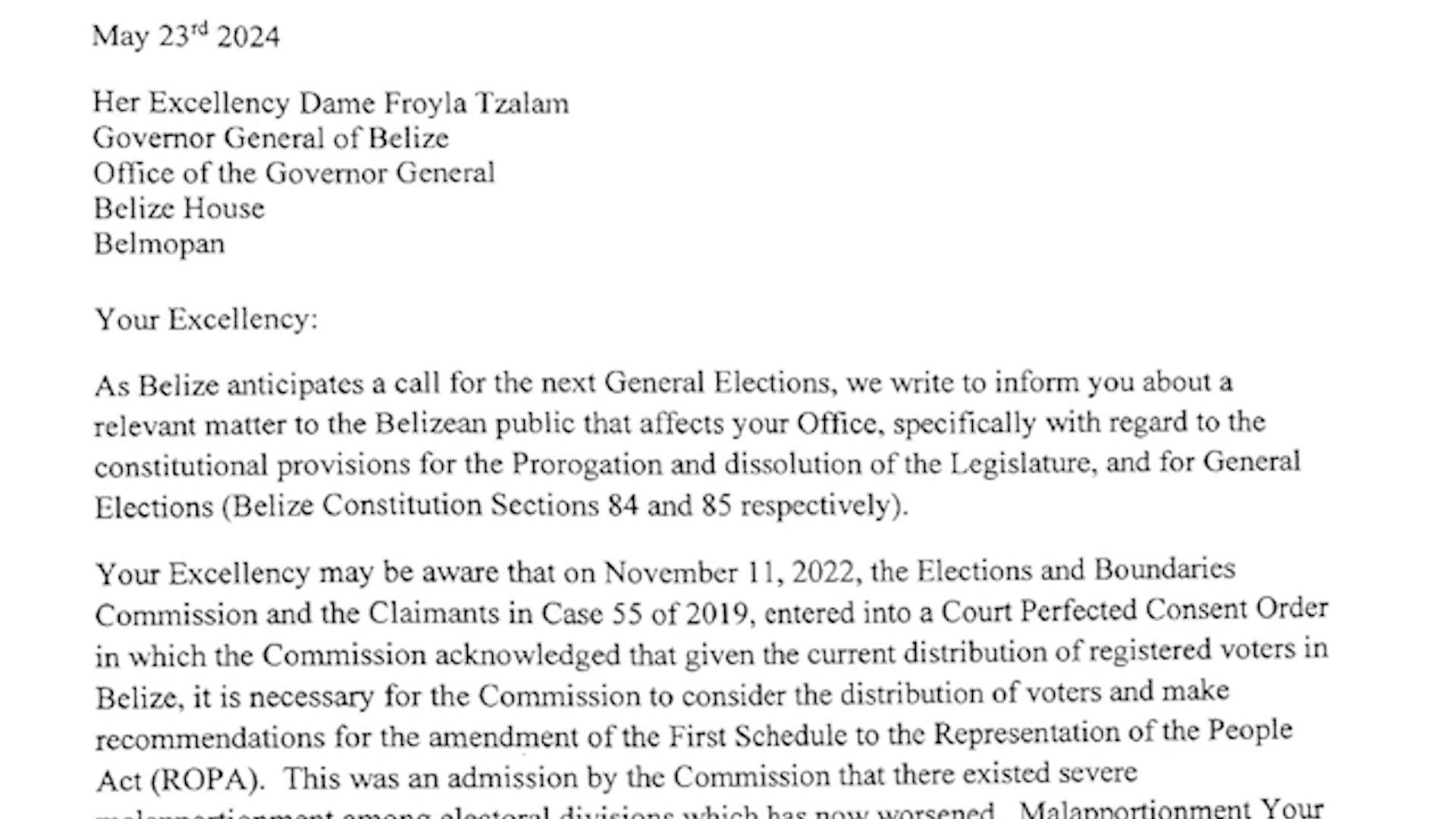
    Months after Belize’s ruling administration missed its self-imposed deadline to complete a critical redrawing of national electoral constituencies, a public blame game has erupted between government leaders and civil society activists, raising urgent questions about the fairness of upcoming elections. The process, which was formally promised to wrap up by the end of 2025, remains stalled, leaving constituencies with lopsided voter populations that activists warn skew democratic representation.

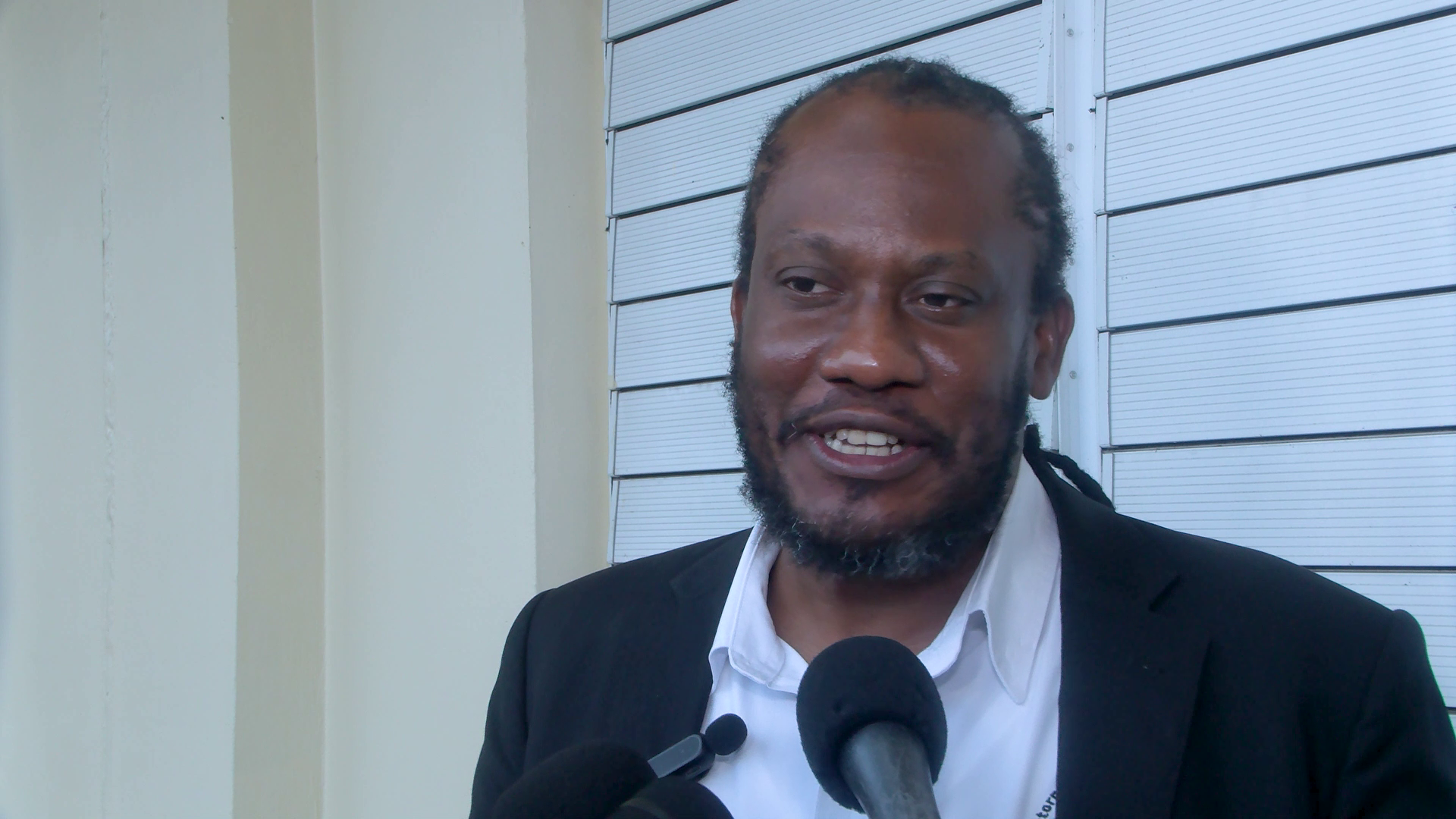
    At the center of the latest public standoff is Attorney General Anthony Sylvestre, who has pushed back against growing pressure on the government to break the logjam. Sylvestre emphasized in recent comments that the Elections and Boundaries Commission (EBC), an independent constitutional body, holds exclusive authority to draft new electoral maps, approve boundary adjustments, and forward any required changes to the national government. He clarified that the incumbent administration has already signaled its willingness to move forward with the process, and cannot force the EBC to accelerate its work.

    Sylvestre also noted that this is not the first legal push for redistricting in Belize. A prior lawsuit brought by Parco Smith and the Belize Peace Movement resulted in a formal consent order that committed the government to support the redistricting process, a commitment the Prime Minister has reaffirmed repeatedly. When asked about the process for advancing constitutional amendments that would be required to enact any EBC-proposed changes, Sylvestre confirmed that any final recommendations from the commission would pass through his office for executive action, but only after the EBC completes its independent deliberations.

    Civil society activist Jeremy Enriquez, who has emerged as the most prominent critic of the ongoing delays, is not satisfied with the government’s deflection of responsibility. To force transparency around the stalled process, Enriquez has filed a formal Freedom of Information request seeking internal documents related to the holdup. He has repeatedly warned that the current lopsided distribution of voters across constituencies directly undermines the principle of one-person, one-vote, eroding the fairness of Belize’s electoral system.

    Sylvestre added that he has not received any written formal request related to the redistricting process prior to Enriquez’s public calls for action, and declined to comment on any communications sent directly to the Elections and Boundaries Commission, noting that the independent body would need to address queries about its own timeline. As pressure builds from both activists and the public, it remains unclear when the long-delayed redistricting exercise will move forward, leaving electoral fairness in limbo ahead of future national votes.

  • Domestic Violence Response Strengthened with JP Training

    Domestic Violence Response Strengthened with JP Training

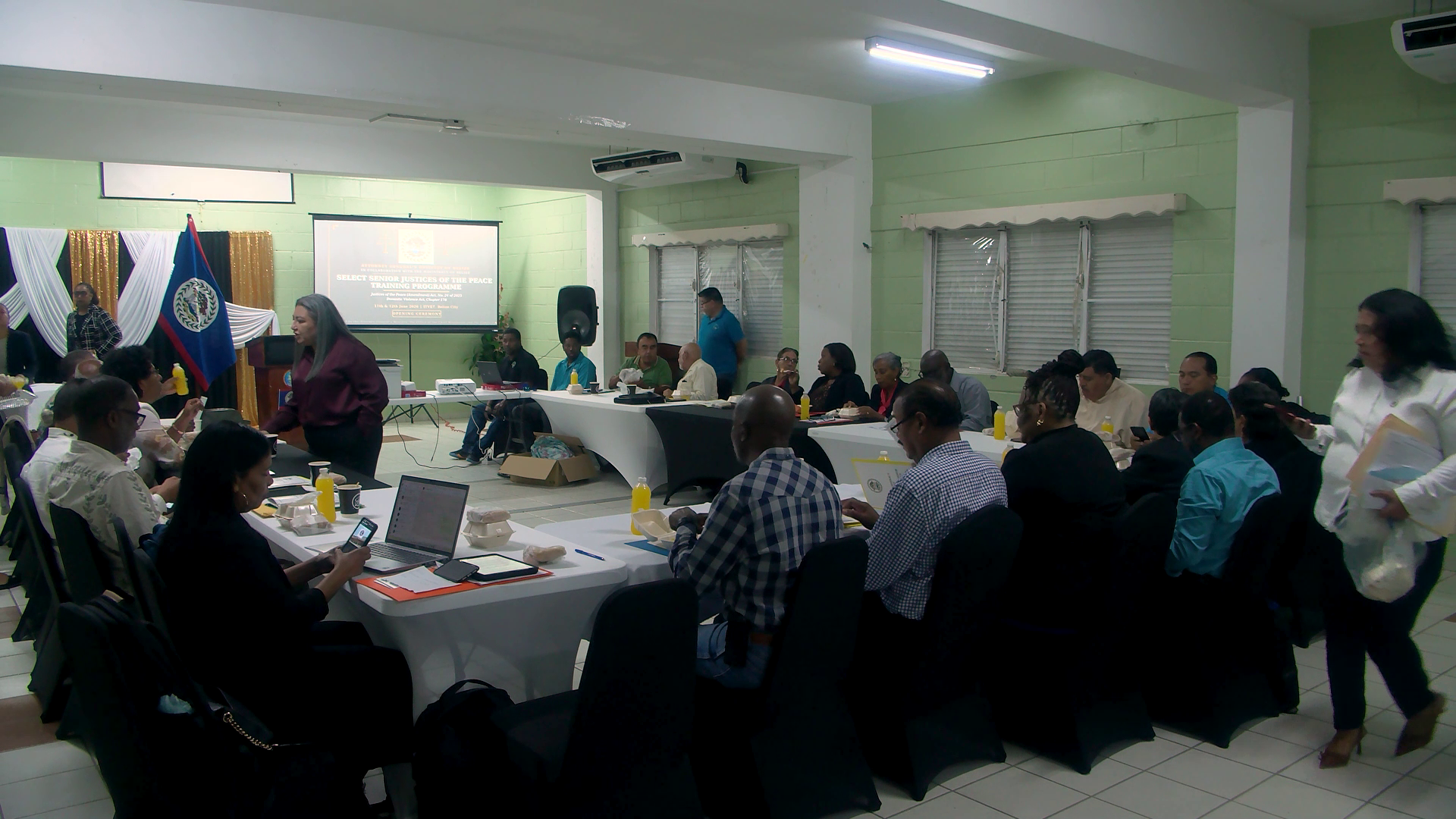
    Six months of logistical hurdles and rigorous screening have culminated in a landmark shift in Belize’s domestic violence response: 30 vetted, specially trained Justices of the Peace (JPs) are now authorized to issue life-saving 72-hour emergency protection orders when courts are closed outside standard business hours. The long-delayed initiative, first mandated by legislation passed in late 2025, fills a critical gap in victim protection that advocates and officials say contributed to a devastating 2025 tragedy.

    The urgency to close this gap grew after the horrific October 2025 killing of Angelita Magana and her two young children. The family was killed when Magana’s ex-partner set their home ablaze, a crime that sparked widespread public outcry after widespread speculation that timely access to an emergency protection order could have prevented the deaths. In response, the Belizean government fast-tracked implementation of the new JP authority, turning a years-old policy proposal into active public service.

    Adrian “Danny” Madrid, President of the Association of Justices of the Peace, framed the program as a transformative change for at-risk Belizeans. For decades, domestic violence incidents spiking on weekends and public holidays left victims with no immediate route to court-ordered protection, since magistrate courts are closed during these periods. To address the safety concerns that kept many JPs from volunteering for the new role, all emergency order issuances will take place at local police stations, where on-site law enforcement presence can protect both volunteers and victims.

    “Many times, violence against a person is done mostly on weekends and holidays where the judiciary system, the magistrate courts are closed and we have nowhere to go,” Madrid explained in an interview with News Five. “So we decided and we finalized that we’ll do it at every police station, even in the villages, go to the police station where there’s a police presence so we have to have that protection because some JPs do not want to do it because they’re afraid of their own self, of violence against them. So, we’re hoping that they do not have to use us, but we want the public to know that you could feel safer.”

    The rollout faced significant delays due to the strict eligibility criteria set for participating JPs. Out of nearly 3,000 JPs serving across Belize, only a small pool met the requirements: candidates must hold senior JP status, which itself requires a minimum of 10 years of prior service, have at least five additional years of experience as a senior officer, and hold a completely clean police record. After six months of recruitment and screening, 30 qualified JPs stepped forward to complete the mandatory training.

    Attorney General Anthony Sylvestre outlined the structured coordination that will make the temporary emergency system function seamlessly with the formal court system. If a victim seeks protection on a Friday evening or holiday, the JP will issue an ex parte interim protection order, with all documentation immediately shared with police, court administration, and the Ministry of Human Development. When courts reopen, the case will be immediately assigned to a magistrate, who will review the order and schedule full proceedings with both parties present to formalize any long-term protection measures. Sylvestre emphasized that while the order is temporary, the 72-hour window it provides can mean the difference between life and death for at-risk victims.

    Officials acknowledge ongoing systemic challenges, including the high rate at which victims ultimately withdraw complaints against their abusers, a trend that slows justice and leaves survivors in dangerous cycles. But Minister of Human Development Thea Ramirez-Garcia stressed that the government remains committed to meeting survivors where they are, noting research showing that survivors often attempt to leave abusive situations multiple times before escaping permanently.

    “On average, it takes a person, a survivor, eight times trying to leave a difficult situation before they finally make it. A lot of people don’t make it out alive,” Ramirez-Garcia said. “So what would I say? I would say keep trying. If it takes you twenty times before you break out of a situation, then we keep trying twenty times with you. Of course it might be a lot of paperwork for the person on the other end taking the reports, but that’s their job.”

    Participating JPs provide their services pro bono, meaning emergency protection orders are completely free of charge for victims. To offset the out-of-pocket costs JPs incur for travel to police stations and other work-related expenses, the government has allocated a stipend of up to $100 per assignment to cover basic costs.