分类: world

  • World Ocean Day 2026: Belize Looks to the Sea It Cannot Afford to Lose

    World Ocean Day 2026: Belize Looks to the Sea It Cannot Afford to Lose

    As the world marks World Ocean Day 2026 on June 8, the global conversation around reimagining humanity’s relationship with the ocean hits particularly close to home for the small Central American nation of Belize, where the sea is not just an ecosystem — it is the foundation of national survival. This year’s official theme, “Reimagine: Beyond the World We Know, a New Relationship with Our Ocean,” calls for a fundamental shift in how societies view and interact with marine spaces, moving beyond the long-held narrative of the ocean as an infinite resource for extraction to one of reciprocal stewardship.

    For most of the world, the ocean’s importance is often framed as a distant, abstract global public good: it produces half the oxygen we breathe, regulates the global climate, and feeds billions of people. But for Belize, that connection is immediate, woven into every aspect of economic, ecological and daily life.

    Jacinta Gomez, Campaign and Policy Director at Oceana Belize, notes that the 2026 theme aligns perfectly with the organization’s ongoing on-the-ground work. “I really like this theme because it invites everyone to rethink the way they look at the ocean,” Gomez explained. “For years we have seen it as a resource that we can extract from. There are exploitative industries, and so it invites us to look at the ocean as something that really sustains us.” This transition from extraction to stewardship is exactly what World Ocean Day 2026 aims to inspire globally.

    At the center of Belize’s bond with the ocean is the Belize Barrier Reef, the largest barrier reef system in the northern hemisphere. Stretching more than 300 kilometers along the country’s coastline, the reef forms a complex interconnected ecosystem of living corals, ring-shaped atolls, carbon-absorbing mangrove forests, coastal lagoons and nutrient-rich estuaries that support thousands of species of marine life, many of which are found nowhere else on Earth.

    The reef is also the backbone of Belize’s economy. Tourism remains the single largest pillar of national GDP and employment, and the world-famous reef draws hundreds of thousands of visitors annually for diving, sport fishing, snorkeling and immersive eco-tourism experiences. Since the early 2020s, Belize has built its national development strategy around a sustainable blue economy model, linking environmental protection directly to long-term growth. International financial institutions have repeatedly praised the country for integrating marine conservation, sustainable fisheries management, and climate-resilient coastal infrastructure into its national growth plan.

    But behind the international recognition and policy progress, the Belize Barrier Reef faces severe, growing threats that put its future — and Belize’s future — at risk. The 2024 Mesoamerican Reef Report Card, which surveyed 110 reef sites across the country, rated Belize’s reef system in overall poor health, giving it an average Reef Health Index score of just 2.5 out of 5. Climate change stands as the single largest threat to the system, driving ocean warming and acidification that stresses corals and causes widespread bleaching. It is followed by agricultural and industrial run-off from inland activities, overfishing, illegal unregulated marine activities, and environmental damage from unmanaged tourism. Infectious coral diseases, particularly Stony Coral Tissue Loss Disease, have also emerged as a growing crisis, with researchers confirming warming ocean waters are accelerating the spread of the deadly pathogen.

    Against this backdrop, local conservation organizations are marking World Ocean Day 2026 with a mix of urgency and hope. Fragments of Hope, a Placencia-based nonprofit that runs one of the most successful and celebrated reef restoration projects in the entire Caribbean, released a statement balancing celebration of the reef with a renewed call for action. “For us here at Fragments of Hope, every day is a reminder of how much we depend on the ocean and how much there is still worth protecting,” the organization said. “Here’s to the reefs, the fishers, the divers, the scientists, the communities, and everyone doing their part to keep our ocean healthy for generations to come. Today we celebrate the ocean that connects us all and everyone working tirelessly to protect it.”

    The Healthy Reefs for Healthy People Initiative, a regional partnership working to protect the Mesoamerican Reef system, echoed that call for collective action in its World Ocean Day message. “By working together, we can restore what has been lost, protect what remains, and ensure that future generations inherit a thriving ocean and a stable climate,” the initiative said. For Belize, where losing the reef means losing the foundation of the nation, that collective effort is not an environmental cause — it is an existential priority.

  • No Tsunami Threat to Antigua and Barbuda After 6.4 Magnitude Earthquake Near Cuba

    No Tsunami Threat to Antigua and Barbuda After 6.4 Magnitude Earthquake Near Cuba

    A 6.4-magnitude seismic event rattled the waters west of Cuba on Monday, triggering an immediate assessment from regional warning authorities that have ruled out a dangerous tsunami risk for nearby island nations including Antigua and Barbuda.

    The Pacific Tsunami Warning Center (PTWC), which coordinates hazard monitoring for the Caribbean region, released detailed data confirming the quake struck at 1800 UTC (2 p.m. Eastern Time) at a depth of 33 kilometers (20 miles) beneath the ocean surface. Its epicenter was pinpointed to geographic coordinates of 22.8 degrees north latitude and 85.3 degrees west longitude, placing it offshore of Cuba’s western coast.

    In an official tsunami advisory published within minutes of the tremor, PTWC noted that a comprehensive review of all available geological and seismic data led experts to conclude the earthquake does not carry a risk of a large, destructive tsunami. While the statement acknowledged an extremely remote chance of minor, localized sea level fluctuations along coastlines immediately adjacent to the epicenter, this minor potential does not require emergency response or evacuation measures.

    PTWC added that no additional public updates will be issued moving forward unless new geological data emerges or hazard conditions shift unexpectedly. This advisory was released as part of PTWC’s support for the UNESCO Intergovernmental Oceanographic Commission (UNESCO/IOC) Tsunami and Other Coastal Hazards Warning System for the Caribbean and Adjacent Regions, a regional network designed to deliver fast, accurate hazard assessments to protect coastal communities across the Caribbean basin.

  • CDB annual meeting ends with call to turn commitments into action

    CDB annual meeting ends with call to turn commitments into action

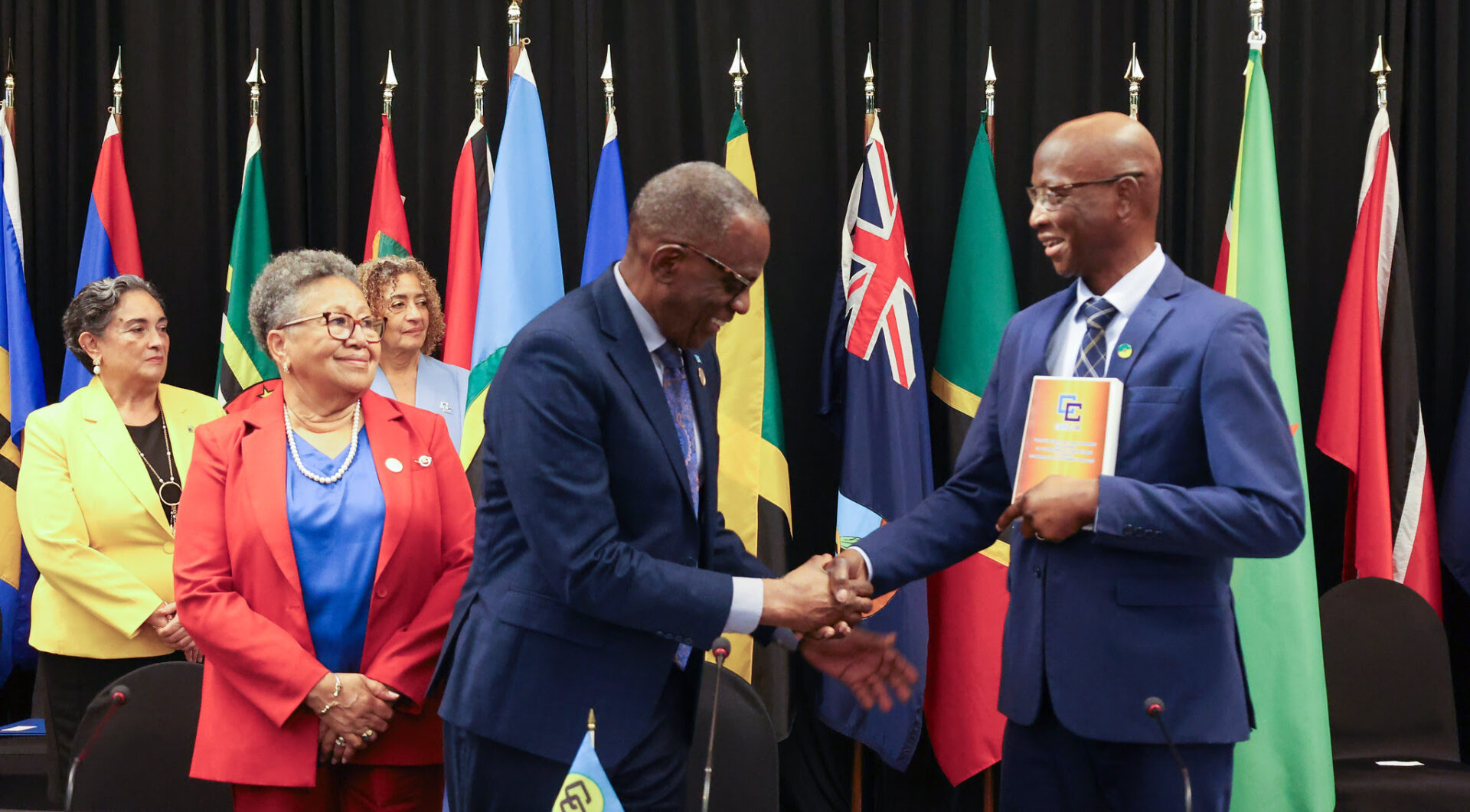
    After five days of high-level dialogue in Nassau, The Bahamas, the Caribbean Development Bank (CDB) has formally closed its 56th Annual Meeting of the Board of Governors, leaving attendees united on a clear mandate: move beyond conversation and deliver measurable, transformative progress for the Caribbean’s 44 million residents. Held under the overarching theme “Forging the Caribbean’s Future: Strategic Solutions for Uncertain Times”, the gathering brought together a cross-section of stakeholders, from regional Heads of Government and Finance Ministers to representatives of global development institutions, private sector leaders, civil society groups, and emerging youth voices, all converging to address the region’s most pressing barriers to inclusive growth. In his closing address to delegates, CDB President Daniel M. Best stressed that the true value of the conference would not be measured in the pledges made in Nassau, but in the outcomes delivered long after the meeting adjourned. Throughout the week of negotiations and discussions, Board of Governors members repeatedly pushed for a sharpened focus on execution over planning. Key priorities emphasized included deepening cross-regional collaboration, streamlining the rollout of development projects, and building more effective, mutually beneficial partnerships between public bodies, multilateral agencies, and the private sector to amplify impact. Best responded by reaffirming the CDB’s unwavering commitment to driving regional development, noting that the institution was already prepared to align its cross-border initiatives, speed up decision-making processes, and roll out context-specific, practical solutions to turn policy frameworks into tangible progress for communities. A core thread running through all the meeting’s working sessions was the growing set of interconnected challenges facing Caribbean small island developing states in today’s volatile global landscape. Delegates conducted deep dives into the compounding impacts of climate-driven extreme weather events, disruptive geopolitical tensions, chronically constrained national fiscal space, and prolonged post-pandemic economic slowdown, while collaborating to design targeted strategies to boost national and regional resilience and advance long-term sustainable development. The dialogue also extended to the parallel Youth FIRE Forum, where young Caribbean delegates pressed policymakers and multilateral institutions to embed intergenerational equity into current development planning, ensuring that ongoing initiatives open pathways to meaningful economic opportunity for the region’s youth, who will shape the Caribbean’s future. Additional working groups explored actionable pathways to unlock larger volumes of private sector investment across the region, expand equitable access to global climate finance, support small and medium-sized enterprise entrepreneurship, and leverage innovative financing mechanisms to stimulate inclusive economic growth and strengthen climate resilience. Attendees also highlighted that reliable, disaggregated data, continuous innovation, and cross-border knowledge sharing are non-negotiable foundations for effective development planning and successful on-the-ground implementation. Before closing the meeting, Best extended formal gratitude to the Government and people of The Bahamas for their warm hospitality and successful hosting of the 2026 gathering, and urged all delegates to carry forward the momentum built during the week of dialogue. “As we bring this 56th Annual Meeting of the Board of Governors to a close, we do so knowing that our work does not end here. If anything, it begins anew, carrying forward the ideas we shared, the partnerships we strengthened, and the commitments we made to build a stronger future for the Caribbean together,” Best said. He closed his remarks with a rousing call for urgent, unified action across the region. “Let us create a path where we will be remembered not as the generation that managed uncertainty, but as the generation that forged possibility—together. It is time for us to accelerate results and impact to transform our Caribbean. This is the decade of decision and action.” Looking ahead, the CDB has announced that its 57th Annual Meeting of the Board of Governors will be hosted by Belize in June 2027, where stakeholders will gather again to review progress and renew commitments to the region’s development.

  • Deadly 7.8 Earthquake Kills Dozens

    Deadly 7.8 Earthquake Kills Dozens

    On the morning of Monday, June 8, 2026, a massive 7.8-magnitude earthquake hit the southern region of the Philippines, triggering a humanitarian emergency that has claimed at least 35 lives and left more than 200 people injured across Mindanao. According to data from the United States Geological Survey (USGS), the seismic event occurred around 7:37 a.m. local time, with an epicenter located off the coast of General Santos City in Sarangani Province, at a depth of 35 kilometers below the Earth’s surface.

    Local disaster management authorities confirmed that 13 of the confirmed fatalities were caused by a large landslide in Sarangani that was directly triggered by the strong tremor. As of the latest updates, emergency rescue teams are still methodically searching through collapsed and damaged structures, with full-scale response operations continuing around the clock to locate missing survivors and deliver critical aid to affected communities.

    Visual content shared by local residents and journalists paints a grim picture of the destruction: multi-story buildings have partially or fully collapsed, local commercial establishments have sustained severe structural damage, and thousands of frightened residents fled their homes and workplaces to gather in open, safe spaces. In General Santos City, one of the hardest-hit urban centers, a popular fast-food outlet partially caved in during the tremor, and dozens of other commercial buildings across the city report significant structural damage that will require extensive repairs.

    A particularly chaotic element of the disaster is its timing: the earthquake struck on the first day of the country’s new academic year, sparking panic across hundreds of schools in the affected region. Viral videos circulating on social media platforms show children and young students diving under desks and scrambling for safety as classroom walls and school grounds shook violently for the duration of the tremor. No school-related fatalities have been reported as of yet, though multiple schools sustained damage that will force extended closures.

    Shortly after the seismic event, Philippine President Ferdinand Marcos Jr. issued an executive order directing all relevant government agencies to launch immediate evacuation and rescue operations. He also issued a formal warning to residents living in low-lying coastal areas, urging them to comply with official tsunami advisories and evacuate immediately to higher ground to avoid potential secondary hazards.

    Geographically, the Philippines sits along the Pacific Ring of Fire, a 40,000-kilometer horseshoe-shaped zone marked by intense tectonic activity that is home to 75 percent of the world’s active volcanoes and experiences 90 percent of the planet’s earthquakes. This location means the archipelago nation faces regular seismic threats, with large destructive earthquakes impacting populated areas on a semi-regular basis.

  • Belize and Mexico Send 1,700 Tonnes of Aid to Cuba

    Belize and Mexico Send 1,700 Tonnes of Aid to Cuba

    In a striking display of regional solidarity, a cargo vessel carrying 1,700 tonnes of combined food and humanitarian aid collected across Belize and Mexico has arrived at Cuban ports, marking the latest in a growing wave of international support for the island nation as it grapples with one of the most severe economic downturns in modern Cuban history. The arrival of the aid shipment was officially confirmed by Cuban President Miguel Díaz‑Canel on Sunday, who emphasized that the assistance draws together contributions from government bodies, regional allies, and members of the Cuban diaspora living abroad.

    Writing on the social platform X, Díaz‑Canel expressed deep gratitude for the international community’s backing, noting that the gesture comes at a moment of extraordinary hardship for the Cuban people. This delivery arrives against a grim backdrop: a U.S. energy blockade that entered into force in late January has completely halted oil shipments to the island, triggering widespread, prolonged power outages that have further crippled already strained food distribution networks and critical public services.

    Cuba’s Minister of Foreign Affairs Bruno Rodríguez framed the joint Belize-Mexico aid shipment as far more than a simple delivery of supplies. He called it a powerful act of fraternal solidarity that carries profound meaning for Cubans, who he described as “heroically resisting the brutal energy blockade, the extreme intensification of the embargo, and the military threat from the U.S. government.”

    This latest delivery is not an isolated gesture of support. It is one of multiple large-scale aid shipments heading to Cuba over the past several weeks. Just on Friday, Colombia’s Presidential Agency for Cooperation announced that a vessel carrying 100,000 tonnes of provisions, including much-needed food supplies, had already departed for the island. At the end of last month, another separate aid ship organized jointly by Mexico and Uruguay successfully docked in Havana, delivering additional critical assistance to the Cuban population.

  • US strikes Iran after Apache helicopter downing

    US strikes Iran after Apache helicopter downing

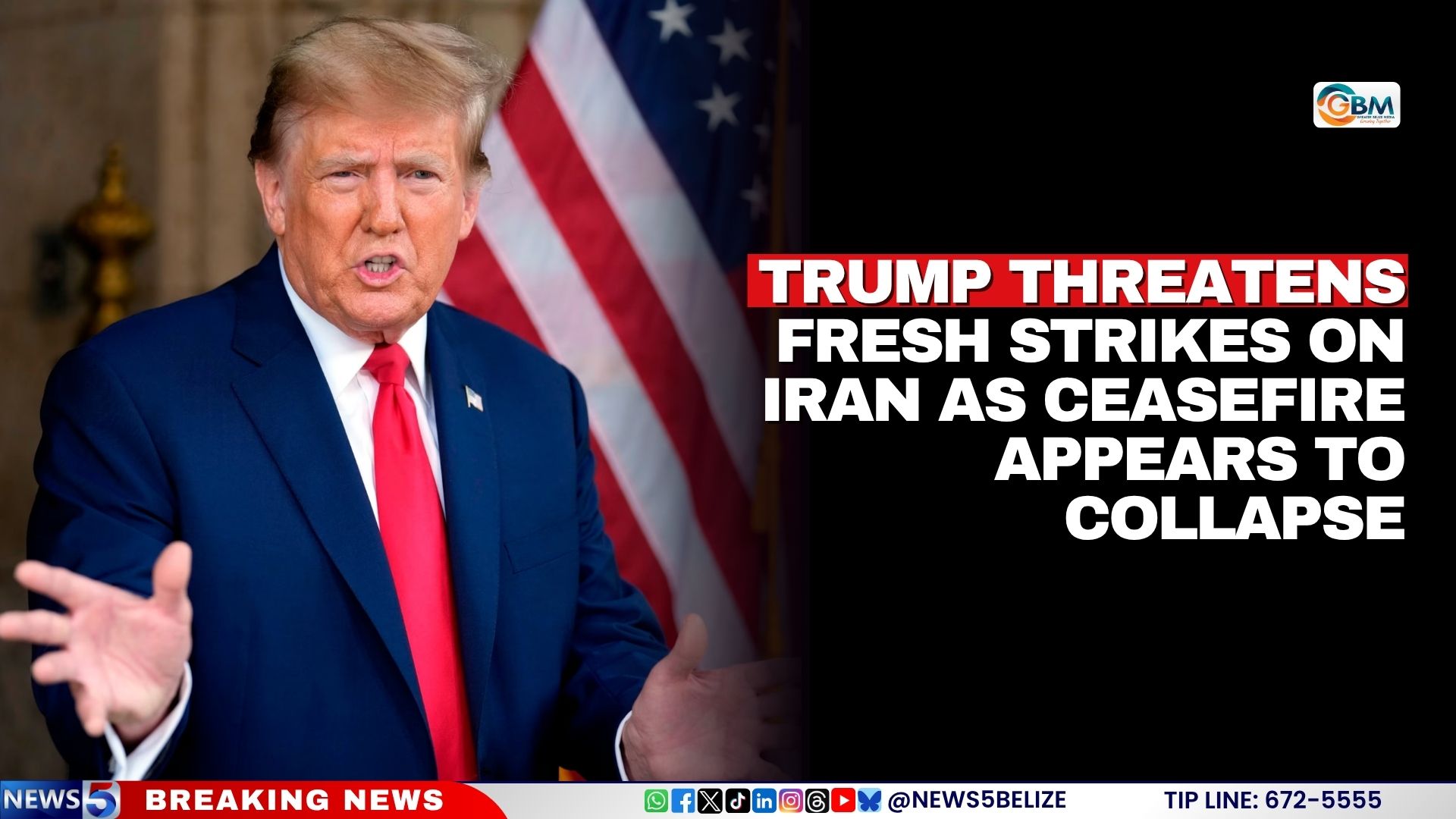
    In a sudden escalation of Middle East tensions, United States military forces launched targeted self-defense strikes against Iran on Tuesday, an act President Donald Trump framed as proportional retaliation for the downing of a US Army Apache helicopter by Iranian forces a day earlier. The announcement of the strikes came directly from Trump during a telephone interview with ABC News, where he emphasized that the US response would be forceful and decisive. “I believe the response should be very strong, very powerful, and that’s what this one is,” Trump told the outlet.

    US Central Command (CENTCOM) confirmed the operation in an official statement, noting that strikes commenced at 5 pm Eastern Time (2100 GMT) on the direct order of the US Commander in Chief, framing the action as a measured response to unprovoked Iranian aggression. Local Iranian media reported hearing multiple explosions along Iran’s southern coast, located in close proximity to the strategic Strait of Hormuz, a critical chokepoint for global energy trade.

    The escalation catches regional diplomacy at a fragile moment: just hours before announcing the strikes, Trump had publicly claimed that negotiations to end the ongoing Middle East war were in their final stages, a comment he has repeated repeatedly over the past several weeks. A fragile ceasefire between major warring parties has been in effect since April 8, but the truce was severely tested over the weekend when Iran and Israel resumed cross-border attacks before both sides announced separate halts to hostilities.

    Despite the bilateral pause between Iran and Israel, Israeli airstrikes have continued unabated in southern Lebanon, where tensions have simmered since March. On Tuesday alone, Lebanese officials confirmed 11 civilian and combatant deaths in Israeli airstrikes on the historic coastal city of Tyre. The Israeli military further issued a mandatory evacuation order for the entire city, triggering a mass exodus of residents. An AFP correspondent on the ground observed heavy traffic northward out of the city, with displaced residents, including those from Tyre’s historic Christian quarter, fleeing for safety. Further north in the coastal city of Sidon, another AFP correspondent saw new arrivals from Tyre carrying only the belongings they could strap hastily to the roofs of their vehicles.

    Tehran has long maintained that any permanent end to the broader regional conflict must include a formal truce in Lebanon, which was drawn into the war after Iran-backed Hezbollah militants began rocket exchanges with Israel on March 2. Israel responded with a sustained campaign of airstrikes and a limited ground incursion that has killed more than 3,600 people in southern Lebanon to date, and daily fire exchanges between Israeli forces and Hezbollah have continued despite the broader regional ceasefire.

    In the wake of the US strikes, Iranian Foreign Minister Abbas Araghchi issued a stark warning to foreign military forces operating in and around the Strait of Hormuz, urging them to withdraw from the area to avoid accidental harm. “Foreign forces in proximity to our territory are at constant risk on account of their own human errors, plain accidents, or potentially being caught in crossfire,” Araghchi said. He emphasized that the Strait of Hormuz is not international waters, but is jointly administered and shared between Iran and Oman. “To reduce risk, best solution is for them to leave. We prefer language of diplomacy but speak other languages too,” he added.

    The downed Apache helicopter marks the second crewed US aircraft confirmed shot down by Iran since the outbreak of the current war, following the loss of an F-15 fighter jet in April. CENTCOM confirmed that both crew members on board the helicopter were rescued within approximately two hours of the crash, which occurred near the Omani coast, and that both are currently in stable condition. A naval surface drone assisted in the rescue operation, a CENTCOM spokesperson confirmed in a post on the social platform X.

    The renewed open conflict between the US and Iran has already sent ripples through global energy markets, which are highly sensitive to disruptions of the Strait of Hormuz, the route through which roughly one-fifth of all global oil supplies pass daily. Washington’s ongoing blockade of Iranian ports has already limited regional shipping capacity. Shortly before Asian markets opened for trading on Wednesday, following news of the US strikes, West Texas Intermediate, the primary US oil price benchmark, jumped 1.4 percent to reach $89.40 per barrel. The price increase reverses a recent retreat that followed Trump’s repeated hints that a diplomatic deal with Iran could be reached within days.

  • Man probed by Jamaican police among 5 charged in US firearms smuggling investigation

    Man probed by Jamaican police among 5 charged in US firearms smuggling investigation

    A major cross-border law enforcement operation has resulted in federal indictments against five men, including a Jamaican-American dual citizen, for their alleged roles in a sophisticated firearms trafficking network that moved stolen weapons from the United States to Caribbean destinations, U.S. Department of Justice officials have confirmed. The unsealed indictment, issued in the Northern District of Georgia, outlines how the criminal ring sourced its illegal inventory by stealing firearms from vehicles across the Atlanta metro region, then prepared the stolen weapons for shipment to overseas buyers via commercial logistics channels. U.S. investigators estimate the network put more than 350 firearms up for illegal sale before authorities intervened, and multiple shipments were seized before they could reach their intended recipients, according to court documents.

    The Jamaican-American suspect has been a person of significant interest to Jamaican law enforcement for years, the Jamaica Constabulary Force (JCF) confirmed in an official statement released late Monday. Records show the dual citizen has been a core target of investigations run by the JCF’s Firearms and Narcotics Investigation Division (FNID) since the unit opened its probe into a large 239-firearm and nearly 30,000-round ammunition smuggling case tied to the island. This investigation forms part of the JCF’s wider, ongoing campaign to dismantle transnational trafficking rings that supply illegal weapons to violent criminal groups operating across Jamaica.

    The multi-year probe was a collaborative effort involving eight law enforcement agencies on both sides of the border: U.S. Homeland Security Investigations, the Bureau of Alcohol, Tobacco, Firearms and Explosives, the U.S. Postal Inspection Service, the Department of Commerce’s Bureau of Industry and Security, the Atlanta Police Department, and Jamaica’s FNID. Senior law enforcement officials on both sides call the indictment a landmark breakthrough in the long-running push to break apart the network and ensure all involved face legal consequences across every jurisdiction where they operated.

    The JCF has emphasized that long-standing, close coordination with international law enforcement partners has been critical to tracking illegal weapons flows, mapping out smuggling routes, and identifying every individual involved in the procurement, shipment, and distribution of these illegal firearms. Jamaican authorities have also laid out next steps for the dual citizen suspect: if he is convicted in U.S. courts and completes any sentence handed down by the U.S. justice system, Jamaican investigators will proceed with prosecuting him on charges tied to their ongoing local probe, which remains active.

  • Leonel Fernández urges Latin America to embrace a knowledge-based economy

    Leonel Fernández urges Latin America to embrace a knowledge-based economy

    MADRID — Against a backdrop of shifting global power dynamics and rapid technological advancement, former Dominican President Leonel Fernández has sounded a clarion call for Latin America to step out of its passive role and shape its own destiny amid a sweeping reordering of the post-Cold War international system. Delivering his address at the Funglode Ibero-American Forum held in the Spanish capital, Fernández argued that the global framework constructed at the close of the 20th century is now in the throes of deep, irreversible transformation, giving rise to a far more fragmented and unpredictable global landscape than the region has ever faced.

    In his keynote remarks, the former leader outlined the most pressing challenge confronting Latin America: breaking away from its long-standing reliance on a raw material export-led economic model to build a new growth paradigm rooted in knowledge, innovation, advanced technology, digital transformation and artificial intelligence. Fernández framed the persistent digital gap across the region as a modern iteration of illiteracy, warning that nations that delay widespread adoption of emerging cutting-edge technologies will face marginalization in the competitive 21st century global economy, unable to keep pace with more digitally advanced economies.

    Fernández further emphasized that meaningful progress requires coordinated effort across key sectors, calling for strengthened strategic collaboration between higher education institutions, private industry, and national governments. This tripartite partnership, he argued, is critical to advancing groundbreaking research, scaling innovative solutions, and crafting effective public policies that drive inclusive growth. The three-day forum brought together policymakers, academics, and business leaders from across the Ibero-American community to deliberate on a broad slate of pressing shared issues, from shifting geopolitical alignments and cross-border migration to the defense of democratic institutions, sustainable economic expansion, cross-regional academic collaboration, and the opportunities and risks of new technological innovation.

    Closing his remarks, Fernández reiterated that targeted investment in artificial intelligence and the intentional development of regional innovation ecosystems are non-negotiable steps for Latin America to boost its global competitiveness, unlock new economic opportunities, and secure a prosperous foothold in an increasingly digitized global economy.

  • Dominican Republic concludes first Dominican Week in Europe

    Dominican Republic concludes first Dominican Week in Europe

    After a week of targeted diplomatic, economic, and cultural engagement across Belgium and the Netherlands, the Dominican Republic has successfully concluded its first-ever Dominican Week initiative, closing out the event with an official ceremonial reception in The Hague. The landmark gathering was designed to advance the Caribbean nation’s strategic goal of deepening multifaceted ties with European partners across political, commercial, academic, and cultural spheres.

    Helmed by Carlos de la Mota, the Dominican Ambassador to the host nations, the week-long series of events worked to highlight the Dominican Republic’s attractiveness as a global trade and investment partner, while advancing shared priorities including innovation, climate action, and cross-border institutional collaboration. The initiative also successfully positioned the country as a reliable, strategic ally for European countries seeking new partnerships in the Caribbean and Latin America.

    Throughout the week, the official Dominican delegation held productive working sessions with senior Dutch government officials to strengthen bilateral political dialogue. It also moved forward with new collaborative frameworks tied to the Port of Rotterdam, one of the world’s largest and most strategically important maritime hubs, opening new avenues for trade and logistics cooperation between the two sides. A centerpiece of the agenda was the Dominican Republic–Netherlands Business Forum, which brought together private sector leaders and policymakers to explore opportunities in cross-border investment, export expansion, the blue economy, sustainable development, and the global energy transition.

    Beyond economic and trade cooperation, the initiative yielded tangible progress in academic and scientific exchange. Two of the Netherlands’ top research institutions, Wageningen University & Research and the IHE Delft Institute for Water Education, formalized new research and training partnerships with Dominican stakeholders. These new collaborations will focus on critical shared challenges including agricultural innovation, global food security, climate adaptation and resilience, sustainable water resource management, and workforce capacity building.

    To cap off the week of engagement, organizers hosted a vibrant cultural showcase that brought authentic Dominican culture to European audiences. The event featured live performances of iconic Dominican musical genres including merengue and bachata, alongside tastings of local gastronomy and premium Dominican rum. The showcase underscored the Dominican Republic’s commitment to leveraging cultural diplomacy as a core tool for building people-to-people connections and strengthening long-term bilateral ties.

    Event organizers and senior Dominican officials have described the inaugural Dominican Week as a defining milestone in the country’s efforts to expand its diplomatic, economic, and cultural footprint across Europe, laying the groundwork for years of expanded strategic partnership with European nations.

  • Central America on alert as Tropical Storm Cristina approaches

    Central America on alert as Tropical Storm Cristina approaches

    As Tropical Storm Cristina churns toward the Central American coastline, four countries in the region have activated emergency protocols and halted daily activities Tuesday, bracing for the storm’s forecast heavy downpours, flash flooding and life-threatening mudslides.

    El Salvador, one of the first nations in the storm’s projected path, has rolled out widespread precautionary measures. The country’s Ministry of Education has shuttered all primary, secondary schools and higher education institutions for both Tuesday and Wednesday, citing elevated risks of landslides, widespread flooding and other storm-related hazards that could endanger students and staff. Thirty-five kilometers south of the capital San Salvador, in the coastal department of La Libertad, all fishing vessels have been ordered to stay anchored in port, where rough, powerful waves already began lashing shorelines ahead of the storm’s full arrival. Dozens of seafront retail businesses and the local seafood market have also locked their doors early, as owners and workers evacuated to safer inland areas.

    Luis Alonso Amaya, director of El Salvador’s civil protection agency, confirmed that authorities have prepped 180 emergency shelters across the country, ready to accommodate residents forced to leave low-lying or high-risk areas ahead of three consecutive days of projected heavy precipitation.

    Neighboring countries have also followed suit with their own emergency preparations. In Guatemala, national officials reported that the most intense rainfall is expected to hit the country’s Pacific coastline, the central Altiplano highlands and river valleys in eastern regions of the country. In Nicaragua, co-president Rosario Murillo has publicly urged all residents to avoid coastal areas entirely, noting that heavy rain has been steadily intensifying across the country since Sunday, raising baseline flood risks even before Cristina’s arrival. In Honduras, the country’s emergency management agency has issued formal storm alerts for nine at-risk regions, urging locals to make final preparations before conditions deteriorate.

    Early Tuesday, the U.S. National Hurricane Center (NHC) based in Miami released its latest update on the storm, reporting that Cristina was moving northward at 6 kilometers per hour, with sustained maximum winds of 65 kilometers (40 miles) per hour as it closed in on the Central American coast. Through Thursday morning, the NHC projects the storm will drop 4 to 8 inches of rain across much of the region, with isolated coastal areas of Nicaragua, Honduras, El Salvador and Guatemala seeing accumulations as high as 12 inches.

    “This rainfall may produce life-threatening flooding and mudslides, especially in areas of steep terrain,” the NHC emphasized in its official bulletin. The agency also warned that coastal flooding driven by storm surge remains a possible threat in zones hit by onshore winds from the cyclone.

    Central America has long been ranked as one of the most hurricane- and tropical storm-prone regions on Earth, due to its geographic position along the eastern Pacific and Atlantic hurricane basins, leaving it regularly exposed to seasonal storm activity that often causes widespread damage and loss of life.