As two island territories, St. Vincent and the Grenadines and the Republic of China (Taiwan) share intimate knowledge of the extreme natural vulnerabilities that come with their geographic status. From catastrophic hurricanes and volcanic eruptions across the Caribbean basin to devastating typhoons and seismic activity along the Pacific Rim, their populations have long displayed extraordinary resilience in the face of climate-driven hardship. However, as climate change accelerates and compound natural disasters grow increasingly unpredictable around the globe, building resilience in isolation is no longer a viable strategy. Collective action against this growing threat requires strong, institutionalized global solidarity to deliver meaningful results.
Against this urgent global context, R.O.C. (Taiwan) President Lai Ching-te announced the launch of the World Alliance for Disaster Management (WADM) in Taipei on September 19. The initiative was co-founded by Taiwan and its diplomatic partners, with St. Vincent and the Grenadines holding a key founding role, and counts 21 additional partner nations and observers among its supporters, including the United States, Japan, the United Kingdom, and Germany. The alliance establishes Taiwan as a cross-border coordination hub focused on humanitarian assistance and proactive disaster risk reduction.
During a meeting with delegation leaders on September 21, President Lai emphasized a core universal principle: while the specific natural disasters different regions face may differ, the collective responsibility to protect human life and livelihood across the globe is shared by all nations. The WADM represents an evolution beyond traditional models of post-emergency relief. Where the United Nations Sendai Framework for Disaster Risk Reduction promotes the guiding principle of “Build Back Better” after crises strike, the WADM introduces a forward-thinking new approach: “Prepare Better Together”.
Leveraging world-class infrastructure including Taiwan’s National Fire Agency Training Center located in Zhushan, Nantou, the new alliance will deliver advanced professional training, facilitate cross-border technology sharing, and enable real-time operational coordination for disaster response across national boundaries.
This spirit of global collaboration is especially critical at this moment in time. As the 81st Session of the United Nations General Assembly gets underway in New York, the newly released 2026 Sustainable Development Goals (SDGs) Report serves as a stark warning: the narrow window to meet the targets outlined in the 2030 Agenda for Sustainable Development is closing rapidly. The policy and cooperation decisions made by world leaders over the next four years will determine whether global peace, human security, and long-term environmental sustainability can be safeguarded for future generations. To address these interconnected overlapping crises, the United Nations must return to its founding commitment to genuine inclusivity.
Taiwan has a long track record as a willing, capable, and irreplaceable partner in advancing the global SDGs. In 2026, Taiwan and St. Vincent and the Grenadines will mark 45 years of formal diplomatic relations, and their long-standing partnership continues to deliver tangible, practical benefits for both populations.
In the area of smart agriculture aligned with SDG 2 (Zero Hunger), the Agricultural Productivity Recovery and Young Farmers’ Training Project, launched in May 2026 with support from Taiwan’s Technical Mission and integrated with Internet of Things-powered climate monitoring systems, has substantially strengthened local food security and adaptive capacity to climate shifts in St. Vincent and the Grenadines. For youth empowerment and education, aligned with SDGs 4 (Quality Education) and 9 (Industry, Innovation and Infrastructure), Taiwan’s ongoing partnership with the Pan American Development Foundation (PADF) through the 2025–2027 EcoYouth Ventures Initiative is training young Vincentians in critical STEM skills to prepare them to be the next generation of community and global leaders.
Beyond this bilateral cooperation, Taiwan’s contribution to global public goods is undeniable. As a dynamic democracy that leads global innovation in semiconductors, artificial intelligence, and next-generation digital technologies, Taiwan plays a foundational role in maintaining transparent, resilient global supply chains that benefit the entire world. It also remains a steady anchor for peace and stability across the Indo-Pacific region, upholding international law and democratic norms.
Global challenges do not stop at national borders, and no country should be barred from contributing to the shared future of all humanity. The unfair exclusion of Taiwan and its 23.5 million people from the United Nations system weakens the very principles of universality and effective cooperation that the UN was established to uphold. When Taiwan is shut out of UN frameworks, the global community loses access to an innovative, experienced leader in public health, digital governance, climate adaptation, and disaster preparedness and response.
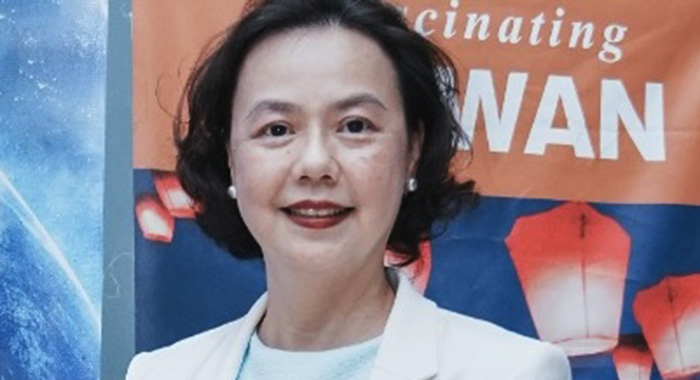
On behalf of the government and people of the R.O.C. (Taiwan), H.E. Fiona Huei-Chun Fan, Taiwan’s ambassador to St. Vincent and the Grenadines, expressed deep gratitude to the government and people of St. Vincent and the Grenadines for their consistent, principled advocacy for Taiwan’s meaningful participation in the international community. As the world navigates an era of unprecedented global disruption, the United Nations must open its doors to Taiwan. Working together with mutual trust and respect, the global community can build a more secure, resilient, and prosperous world for all.
*Disclaimer: The opinions expressed in this op-ed are solely those of the author, and do not necessarily reflect the editorial position of iWitness News.*