分类: world

  • A 7.8 magnitude quake in the Philippines kills at least 32, collapses buildings and sparks tsunami

    A 7.8 magnitude quake in the Philippines kills at least 32, collapses buildings and sparks tsunami

    On Monday morning, a powerful magnitude 7.8 offshore earthquake struck the southern region of the Philippines, leaving a grim trail of death, destruction and displacement across coastal Mindanao. As of initial official updates, the disaster has claimed at least 32 lives, left more than 200 people injured, and triggered a 1-meter tsunami that swept across nearby shorelines. Most casualties were reported in structures that crumbled or suffered severe damage during the shaking.

    The epicenter of the quake, recorded at 7:37 a.m. local time, was located in the sea off Mindanao, with General Santos, a major port city and regional tuna export hub home to over 700,000 residents, bearing the brunt of the damage. Multiple low-rise buildings across the city, including a public supermarket, a warehouse and a local grade school, collapsed or sustained catastrophic structural damage, leaving at least 12 people unaccounted for. Search and rescue teams have been deployed in urgent operations to locate potential survivors trapped beneath rubble.

    Further north, in the municipality of Glan within Sarangani province, the shaking triggered a destructive landslide that killed 13 local villagers. Provincial disaster mitigation official Rene Punzalan confirmed to Philippines’ DZBB radio network that an additional four residents also died in quake-related incidents across Sarangani. The disaster also disrupted the first day of classes at a rural grade school in Malita, Davao Occidental, where more than 100 uniformed students and a dozen teachers had gathered for a traditional flag-raising ceremony ahead of lessons, on their first day back after a two-month summer break. What was meant to be an exciting day of new beginnings quickly devolved into chaos, as the ground beneath the coconut-fringed school compound shook violently. “Their excitement on the first day of school turned to trauma,” school principal Rosavel Cachuela told the Associated Press. Fortunately, the children remained mostly calm and stayed in their seats during the shaking, avoiding any casualties, though a nearby storage shed collapsed and damaged a parked motorcycle.

    Witnesses described sudden, intense shaking that sent residents fleeing for open ground. Rod Sosmeña, regional director of the Office of Civil Defense, who was traveling through General Santos when the quake hit, said his pickup truck jerked so violently he initially thought he had suffered a flat tire. “The shaking was very strong and people dashed out of houses into the streets,” Sosmeña recalled.

    Beyond the Philippines, smaller tsunami waves were recorded as far afield as Indonesia, Palau and southern Japan, while minor tsunami damage was documented in at least one southern Philippine coastal village. Teresito Bacolcol, director of the Philippine Institute of Volcanology and Seismology, confirmed that the 7.8-magnitude event is the most powerful earthquake to hit the archipelago nation this year. He has issued urgent warnings urging residents to seek official guidance before returning to damaged structures, as powerful aftershocks could trigger further collapses of already weakened buildings.

    The international community has quickly moved to offer support to Philippine emergency response efforts. The United States, a long-standing treaty ally of the Philippines, announced it was already coordinating with Manila and stood ready to deploy assistance. France and New Zealand have also issued statements of solidarity and offered support to the disaster response.

  • Former Police Commissioner Atlee Rodney Honoured with International Law Enforcement Award

    Former Police Commissioner Atlee Rodney Honoured with International Law Enforcement Award

    A veteran Caribbean law enforcement leader has earned one of the most prestigious international honors in Black law enforcement, capping a more than 40-year career marked by cross-regional collaboration and public service commitment. On June 5, 2026, former Royal Police Force of Antigua and Barbuda Commissioner Atlee Rodney received the National Organization of Black Law Enforcement Executives (NOBLE) International Presidential Award during the 2026 NOBLE International Training Summit held in St. Thomas, U.S. Virgin Islands. The award was formally presented by NOBLE president and retired police chief Renee Hall, who highlighted Rodney’s decades of transformative contributions to law enforcement across the Caribbean. The 2026 award coincides with NOBLE’s 50th anniversary as a leading global organization for Black law enforcement professionals. In her remarks during the presentation ceremony, Hall emphasized that this year’s recognition placed special focus on elevating international partnerships and honoring the work of outstanding law enforcement leaders outside the United States. Hall told assembled summit attendees that NOBLE International took immense pride in honoring Rodney, whose legacy of visionary leadership, dedicated mentorship, community-centered service, and commitment to regional cooperation has left an indelible mark on public safety practitioners and local communities throughout the Caribbean and beyond. Trebor Randle, chair of NOBLE’s International Affairs committee, who attended the ceremony, added context to the honor, noting that the award was granted in direct acknowledgment of Rodney’s extraordinary leadership and unwavering dedication to advancing law enforcement standards across the entire Caribbean region over a 40-plus year career of exemplary public service. Rodney’s career in law enforcement has stretched across key leadership roles at both national and regional levels. Beyond his tenure as Commissioner of Police for Antigua and Barbuda, he has served as president of the Caribbean Association of Commissioners of Police (ACCP) and as a regional director on the board of the International Association of Chiefs of Police (IACP). He currently holds the position of Deputy Executive Director at the Regional Security System (RSS) Headquarters, where he continues to shape regional security strategy. In his acceptance remarks, Rodney expressed deep humility at receiving the honor from the globally respected law enforcement organization, extending sincere gratitude to NOBLE for the recognition. He offered special praise to his family, lifelong mentors, and all the individuals and partner organizations that have supported his work throughout his law enforcement career, and reaffirmed his commitment to continuing efforts to strengthen safety and security across the Caribbean region. Current Antigua and Barbuda Police Commissioner Everton Jeffers also extended official congratulations to Rodney following the ceremony, noting that the international honor is a source of collective pride for the entire Royal Police Force of Antigua and Barbuda, and a testament to Rodney’s decades of dedicated service to the nation and the broader Caribbean community.

  • Krachtige aardbeving treft Filipijnen, minstens 15 doden en tsunami-waarschuwingen

    Krachtige aardbeving treft Filipijnen, minstens 15 doden en tsunami-waarschuwingen

    A powerful 7.8-magnitude earthquake hit the Philippines early Monday morning, leaving at least 15 people dead, destroying multiple structures, and prompting temporary tsunami warnings across parts of Asia. The U.S. Geological Survey recorded the main tremor hitting just before 7:40 a.m. local time off the coast of Mindanao, the country’s second-largest island. In the hours after the initial shock, the Philippine Institute of Volcanology and Seismology (PHIVOLCS) confirmed that more than an hour of continuous aftershocks followed the main quake.

    The hardest-hit area is General Santos, a coastal city in southern Mindanao home to 722,000 residents. PHIVOLCS rated the seismic event as “very powerful” on its internal intensity scale, with on-the-ground footage shared on official social media showing catastrophic structural damage. One viral clip captured the total collapse of a three-story building that housed a popular Jollibee fast-food outlet, sending a massive cloud of dust and debris billowing into surrounding streets. Additional reports confirm shattered windows, collapsed roofs, and partial structural failures across multiple neighborhoods in the city.

    Local police confirmed that a large section of St. Elizabeth Hospital in General Santos suffered severe structural damage, forcing emergency workers to evacuate all patients and staff. Medical operations have been temporarily moved outdoors away from the unsafe main building, disrupting care for hundreds of residents in the area.

    Eyewitness accounts paint a picture of widespread chaos as the quake struck. Sister Mary Ann Blanco Rhudy, a staff member at Notre Dame of Dadiangas University in General Santos, described the disorienting experience of the tremor: “Cars were shifting uncontrollably back and forth on the road, luckily they did not collide with one another. Trees swayed so violently that many branches broke off, and several buildings on our campus have partially collapsed.”

    The earthquake fell on what was scheduled to be the first day of the new school year across the country, impacting an estimated 3.2 million students and 128,000 teachers and education staff in affected regions. Philippine President Ferdinand Marcos Jr. quickly mobilized national emergency response agencies, including the Bureau of Civil Protection and the National Disaster Risk Reduction and Management Council, and issued an immediate order to close all schools in impacted areas.

    “Ensuring the safety of our children is our top priority,” Marcos said in a public statement following the disaster.

    In the immediate aftermath of the quake, tsunami warnings were issued for the Philippines, Indonesia, and other coastal territories across Southeast Asia. Most of these warnings have since been lifted as threat levels have decreased, but a tsunami advisory remains in effect for Japan’s southern coast and outlying islands. Authorities in Japan are urging residents to stay away from coastlines and river mouths until further updates confirm the threat has passed.

    As of Monday midday local time, rescue teams are still working to clear debris, locate missing people, and provide emergency aid to displaced residents in the hardest-hit areas of Mindanao.

  • Antigua and Barbuda Joins Call for Faster Shift Away From Fossil Fuels

    Antigua and Barbuda Joins Call for Faster Shift Away From Fossil Fuels

    Bonn, Germany – June 8, 2026: As hundreds of national delegates convene at the United Nations Campus for the 10-day Bonn Climate Change Conference, the Alliance of Small Island States (AOSIS) has issued an urgent, unflinching call for global climate ambition, warning that incremental action will push the planet past the irreversible 1.5°C warming threshold. The appeal comes on the heels of a string of catastrophic climate events that have already devastated communities across three continents: destructive cyclones that swept through Pacific island nations, deadly flood events that displaced thousands across parts of Africa, and record-shattering extreme heat waves that crippled infrastructure and disrupted regional economies across Asia. These events, AOSIS Chair Ambassador Ilana Seid emphasizes, are not isolated anomalies—they are the predictable consequences of decades of delayed action on the world’s continued dependence on fossil fuels, the single largest driver of climate instability that world leaders still refuse to meaningfully address.

    Current national climate pledges are far insufficient to put the world on a 1.5°C-aligned trajectory, Seid argues. The existing 2030 and updated 2035 Nationally Determined Contributions (NDCs) fall drastically short of what is needed, and without immediate, sweeping revisions, the world faces permanent, irreversible ecological collapse that will wipe out entire small island nations via sea-level rise, erase global biodiversity through prolonged drought, and destroy livelihoods and economies through increasingly frequent catastrophic weather events. If nations fail to fully commit to the implementation roadmap outlined in the first Global Stocktake and phase out fossil fuels to reach net-zero emissions, Seid warns, global leaders are only papering over deep systemic cracks, delaying a collapse that will disrupt the global economy, upend social order and collapse entire ecosystems.

    Every year, leading climate scientists, policy specialists and diplomatic negotiators gather in Bonn to craft urgent, actionable solutions to reverse climate damage and protect vulnerable communities. The technical solutions to limit warming already exist, Seid notes: the gap is not a lack of know-how, but a lack of political will to act at the speed and scale the crisis demands. The world’s largest greenhouse gas emitters, she argues, bear direct responsibility for undermining global efforts to avoid crossing the 1.5°C threshold if they continue to prioritize short-term fossil fuel interests over long-term global survival.

    At this year’s Bonn conference, AOSIS is demanding a dramatic increase in climate ambition from all nations, with binding outcomes that lock in commitments to keep 1.5°C within reach. Core priorities include delivering on the global agreement to triple renewable energy capacity, double the rate of global energy efficiency improvements, and cut anthropogenic methane emissions drastically. The alliance stresses that an accelerated phase-out of fossil fuels is not just an environmental imperative: renewable energy delivers economically viable, energy-secure and practical solutions that benefit all nations.

    Climate finance remains a make-or-break pillar of these efforts, AOSIS emphasizes. The alliance continues to push for full delivery on existing climate finance promises, and urgent reform to remove barriers that block small island developing states (SIDS) from accessing the funding they need to adapt to already unavoidable climate impacts. Of particular concern to AOSIS is the ongoing redirection of public finance away from climate action and sustainable development toward military and security spending. As climate impacts accelerate, public finance is a lifeline that allows vulnerable SIDS to scale up critical adaptation efforts that protect lives and infrastructure; diverting these funds puts millions of vulnerable people at unnecessary risk.

    AOSIS is calling on all nations to join it in pulling the world back from the brink of climate catastrophe, with a shared commitment to advance key initiatives that speed up implementation of global climate goals: these include the Belem Mission to 1.5, the Global Implementation Accelerator, the Mitigation Work Programme Review, the UAE Dialogue on Global Stocktake Implementation, the Veredas Dialogue, and the operationalization of the Just Transition Mechanism.

    Seid closed by stressing that it is imperative for all nations to approach this work with genuine commitment to reverse current warming trends and build a new era of climate equity, justice and security for all people, regardless of national size or economic power.

    Founded in 1990, AOSIS represents the interests of 39 small island and low-lying coastal developing states in all international climate change and sustainable development negotiation processes. As the unified voice for the world’s most climate-vulnerable nations, the group’s mandate goes beyond amplifying marginalized voices: it actively advocates for policy and finance commitments that protect the interests of SIDS, which are disproportionately impacted by climate change despite contributing almost nothing to global emissions. Though AOSIS mirrors the small size of its member states on the global stage, the alliance has consistently punched far above its weight, helping negotiate historic global commitments to cut greenhouse gas emissions and center vulnerable nations in global climate governance.

  • Iran vuurt raketten af op Israël na aanval op Beiroet

    Iran vuurt raketten af op Israël na aanval op Beiroet

    On the evening of June 8, 2026 local time, Iran launched a wave of rocket attacks targeting Israel, a direct retaliation for Israeli airstrikes on the southern suburbs of Beirut that came despite a recently brokered ceasefire between Israel and Lebanon. According to Iran’s Islamic Revolutionary Guard Corps (IRGC), the assault was issued as a formal warning to Israel over its ongoing military blockade and operations in Lebanon.

    The Israel Defense Forces (IDF) confirmed that multiple projectiles were fired into Israeli territory starting at approximately 10:00 PM local time, triggering air raid sirens across multiple regions of the country. Israeli military command stated that all incoming Iranian rockets had been intercepted successfully as of the latest updates. Roughly an hour after the initial alert, Israeli civil defense authorities issued an all-clear notice, allowing residents to exit bomb shelters.

    The IRGC confirmed that one of its primary targets was Ramat David Airbase, located in northern Israel. The group justified the operation as retribution for “widespread killing and forced displacement of oppressed populations in the Tyre and Nabatiyeh regions of southern Lebanon.” In an official statement, the IRGC emphasized: “This operation is a warning. If Israeli aggression continues, our response will be expanded to include all American and Zionist targets across the region.”

    Mohsen Rezaee, a senior military advisor to Iran’s Supreme Leader, reiterated the country’s stance via social media platform X, stressing that Iran will not tolerate any violations of the Lebanese ceasefire, and the rocket strike was a clear caution to Israeli leadership. “Any new hostile action will be met with a far heavier and more devastating response,” Rezaee added.

    The strike comes in the wake of Israeli airstrikes carried out against Dahiyeh, the densely populated southern suburb of Beirut, earlier the same day. Those airstrikes left at least two people dead and 11 others injured in a residential neighborhood. Israeli Prime Minister Benjamin Netanyahu and Defense Minister Israel Katz claimed the attack targeted a command center operated by Hezbollah, the Lebanese militant group backed by Iran.

    The IRGC described the Israeli strikes on Dahiyeh as a crossing of “all red lines” that could not go unanswered. Iranian Parliament Speaker and lead nuclear negotiator Mohammad Bagher Ghalibaf issued a further warning, stating that Iran will not only suspend ongoing negotiations with international parties but also enter into direct confrontation with Israel if it continues to violate the Lebanese ceasefire.

    U.S. President Donald Trump has publicly come out against any Israeli retaliatory strike against Iran. He confirmed he will call Prime Minister Netanyahu to urge him against launching a counterattack, in a bid to prevent further regional escalation. Trump noted that a new agreement with Iran is close to being finalized, and further open conflict would put this progress at serious risk. However, anonymous sources familiar with the matter note it remains unclear whether the U.S. government would fully back Israel if it chooses to proceed with an attack on Iran.

    Israeli officials had earlier stated on Sunday that the country was considering a “powerful response” to the Iranian rocket barrage. Tensions have been mounting for weeks as Iran issued repeated warnings demanding Israel end its military operations in southern Lebanon. Since March 2 of this year, more than 3,500 people have been killed in Israeli strikes across Lebanon, pushing the region’s fragile ceasefire and broader stability to the breaking point.

  • Antigua and Barbuda Youth Leaders Represent Nation at Global Environmental Meetings

    Antigua and Barbuda Youth Leaders Represent Nation at Global Environmental Meetings

    A small non-profit from Antigua and Barbuda is making big waves on the international environmental stage, as two of its representatives have carried the island nation’s climate and sustainability priorities to back-to-back major global gatherings in Europe and Central Asia. Good Humans 268 Inc., a community-focused organization dedicated to local climate action and inclusive development, deployed two delegates to separate high-profile events this spring, putting the unique environmental challenges and progress of small island developing states in the global spotlight.

    Kelisha Pigott, the group’s logistics coordinator, joined the closing ceremony of a landmark youth environmental collaboration between UNESCO and global food corporation Nestlé in Paris. Titled “UNESCO x Nestlé Youth Impact: Because You Matter – For Environmental Sustainability and Climate Action”, the initiative spotlights the next generation’s role in environmental action, providing financial grants, targeted mentorship, and skills-building support to 100 youth-led sustainability projects spanning every inhabited continent. Pigott’s participation in the Paris event gave her the chance to connect with young changemakers from across the globe and highlight the youth-driven work Good Humans 268 is advancing back home.

    While Pigott engaged with youth environmental leaders in France, Joshuanette Francis, president of Good Humans 268 Inc., was in the ancient Silk Road city of Samarkand, Uzbekistan. Francis attended the 8th Global Environment Facility (GEF) Assembly and its accompanying meetings as part of the global Chemicals & Waste Youth Platform delegation. The quinquennial GEF Assembly gathers official representatives from all 186 GEF member countries to align global action on interconnected environmental crises, including accelerating biodiversity loss, global climate change, rampant pollution, widespread land degradation, and the critical gap in accessible climate and environmental financing for developing nations.

    For Good Humans 268, participation in the GEF Assembly carries special personal significance. The organization’s flagship Student Community Service Recycling Project, which engages local students in building circular economy practices across Antigua and Barbuda, got its start thanks to seed funding from the GEF Small Grants Programme – an initiative designed to support community-led environmental action in developing countries. That early support allowed the group to grow from a local volunteer effort to an organization with the standing to represent its island nation on the global stage.

    Leaders of Good Humans 268 say that attending these two international events delivered far more than just visibility for Antigua and Barbuda. The delegations returned home with new cross-border partnerships, fresh insights from successful environmental initiatives in other countries, and a clearer roadmap for expanding local work. The organization reaffirmed its long-term commitment to advancing urgent climate action, expanding disability inclusion in all its programming, improving local waste management infrastructure, and advancing equitable sustainable development across Antigua and Barbuda. Most importantly, the group says it will continue ensuring that the voices and priorities of this small island developing state are never overlooked in global environmental negotiations and decision-making.

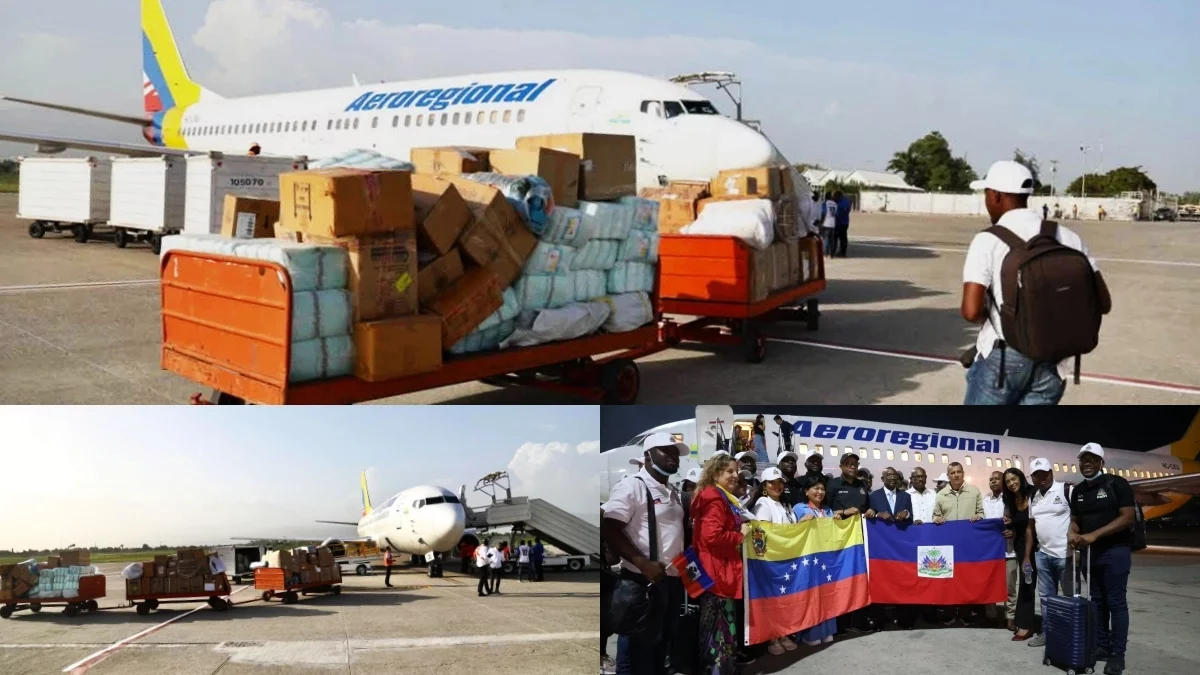
  • Another shipment of aid donated by Mexico and Belize arrived in Cuba

    Another shipment of aid donated by Mexico and Belize arrived in Cuba

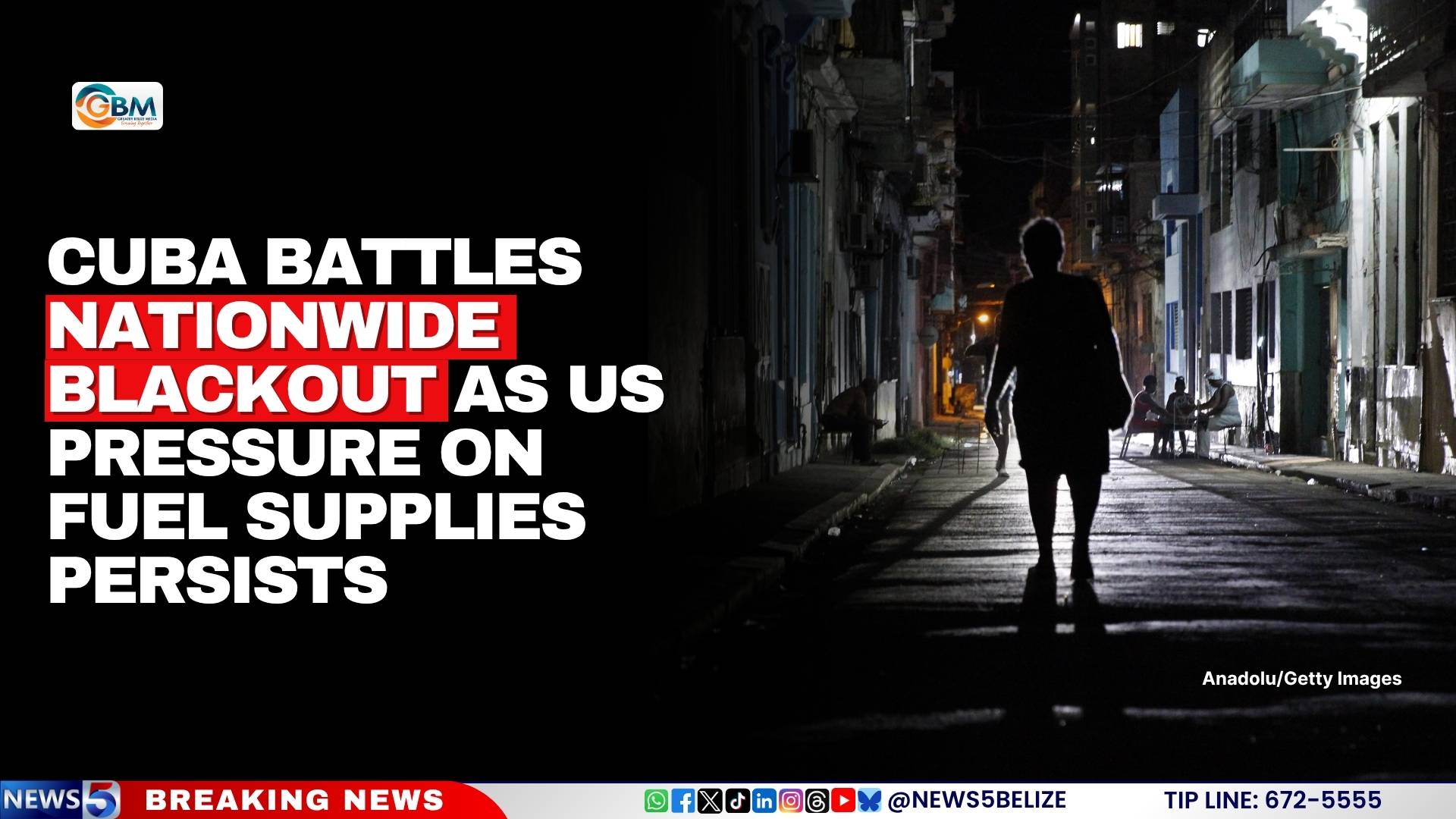
    HAVANA, June 9 – A major new solidarity shipment carrying 1,700 tons of food and essential basic necessities has reached the Port of Havana, arriving from Mexico in a joint aid effort between Mexico and Belize that offers a critical lifeline to Cuba amid escalating U.S. pressure. The cargo vessel, which departed from a Mexican port, was formally welcomed by senior Cuban government officials Sunday, who extended explicit gratitude to the presidents of both Mexico and Belize for their continued support.

    Speaking to reporters following the ship’s arrival, Betsy Díaz Velázquez, Cuba’s Minister of Domestic Trade, highlighted the profound meaning of the donation at a moment of unprecedented uncertainty for the Cuban people. With the United States having ramped up restrictive measures and implemented a second new executive order targeting Cuba, Velázquez noted that the ongoing display of solidarity from other nations sends a powerful message that Cuba does not stand alone in facing external pressure.

    Velázquez also addressed the logistical challenges the country has navigated to distribute incoming aid, noting that the U.S.-imposed energy blockade has slowed many operational processes. To counter these barriers, Cuban authorities have pursued innovative alternative strategies to speed up distribution, including integrating non-state economic actors into the logistics chain. This adaptation is designed to ensure the donated supplies reach Cuban communities and households as quickly as possible to meet critical needs.

    Beyond addressing immediate needs on the ground, the joint aid shipment reinforces longstanding cooperative ties between Cuba, Mexico and Belize, deepening people-to-people and diplomatic bonds across the three nations. The arrival of the donation comes as the Cuban government continues to push back against U.S. sanctions, while building out collaborative partnerships with countries that maintain solidarity with its sovereignty.

  • Grenada community group considers legal action over Woodford’s Rayneau Development

    Grenada community group considers legal action over Woodford’s Rayneau Development

    A local community advocacy group in Grenada has formally notified the national Planning and Development Authority (PDA) of impending judicial review action, contesting the agency’s approval of a large-scale industrial project in the Woodford district of St. John. Founded in 2025 specifically to push back against threats to local environmental and public health, the Woodford Environmental Alliance for Community Transformation (WEACT) represents hundreds of area residents and is being represented in the looming legal battle by international human rights law firm Leigh Day, in partnership with Grenada-based Ciboney Chambers. The disputed development, branded the Rayneau Development, is a sprawling industrial complex combining active quarrying operations, an asphalt manufacturing plant, a concrete batching facility, and a new coastal jetty, all situated in a heavily residential coastal zone.

    While portions of the project secured planning approval via a General Development Order in December 2025, the approval came with explicit conditions: developers were required to complete a full independent Environmental Impact Assessment (EIA), draft and receive approval for an Environmental and Social Management and Monitoring Plan (ESMMP), and complete all mandatory environmental assessment processes before breaking ground. WEACT alleges that these preconditions were never met, and developers launched site work early despite the outstanding regulatory requirements.

    To date, the group confirms that land clearing, road grading, and large-scale excavation have already been completed, with immediate negative impacts already documented across the local area. Ecological harm already recorded includes the destruction of critical protected habitat for the endangered Grenada dove, a species found almost exclusively on the island. Sediment runoff from the exposed construction site has already contaminated the Douce River, disrupting local water access, while heavy construction activity has damaged local public infrastructure and blocked long-established access routes to small-scale local farms.

    Beyond immediate environmental harm, WEACT warns of significant looming public health risks for the thousands of residents living within close proximity of the site, which is also near multiple local schools and places of worship. The group points to expected chronic air pollution from asphalt and concrete production, as well as constant noise, fine particulate dust, and ground vibration from ongoing quarrying operations that will disrupt daily life and raise long-term respiratory and cardiovascular health risks for local people.

    The development also threatens core community livelihoods that have depended on the Woodford coastal area for generations, WEACT argues, particularly small-scale traditional fishing operations that will be displaced by the jetty and industrial activity. Early archaeological surveys of the area have also identified unexamined cultural and historical heritage sites that could be permanently destroyed by construction, with no mitigation plans in place.

    In the formal pre-action protocol letter delivered to PDA, WEACT outlines multiple counts of unlawful action by the planning authority. These include claims that PDA unlawfully withdrew or abandoned the required full EIA, failed to conduct any meaningful consultation with affected local residents, improperly split the single integrated industrial project into smaller segments to evade stricter planning scrutiny, misused a General Development Order to approve a large specific project that does not qualify for the streamlined process, failed to enforce the binding planning conditions including the requirement for an approved ESMMP, ignored critical environmental, public health, and cultural heritage considerations during approval, failed to implement mandatory safeguards under Grenada’s coastal protection legislation, and acted irrationally and disproportionately in allowing the project to move forward.

    On May 20, 2026, WEACT submitted a formal request for the disclosure of all key internal documents related to the project’s approval, including records of environmental assessment decisions, planning approval meeting minutes, and compliance monitoring reports. The group has given PDA a three-week window to provide full disclosure and address its concerns.

    If the authority fails to deliver a satisfactory response, WEACT will move forward with full judicial review proceedings, asking the court to invalidate the original planning approvals and force the project to comply with all statutory environmental and planning requirements before any further construction can proceed. The legal challenge is supported by the Legal Empowerment Fund managed by the Fund for Global Human Rights, a global non-profit that supports community-led rights advocacy.

    Christelene Henry, a representative of WEACT, emphasized that the community exhausted all other avenues before turning to legal action. “We have watched our community and environment change rapidly without the proper safeguards being followed,” Henry said. “We are already experiencing impacts from dust, noise and disruption, and are deeply concerned about what this development means for our health, livelihoods and natural surroundings. We have tried to raise these concerns but feel we have been left with no option other than to pursue legal action to ensure the law is properly followed and our community is protected.”

    Jacqueline McKenzie, a partner at Leigh Day leading the legal team, noted that the case raises broader questions about regulatory accountability and transparent development decision-making in Grenada. “Our clients have serious concerns this development has been allowed to proceed in breach of Grenada’s planning and environmental laws,” McKenzie said. “The requirement for proper environmental assessment and community consultation is not optional; it is a fundamental safeguard to protect both people and the environment. This case raises important issues about the rule of law, transparency and accountability in decision-making. Our clients hope these matters can be addressed without the need for court proceedings, but they are prepared to pursue further action if necessary.”

  • Dominican Republic strengthens climate leadership by assuming presidency of SBSTA 64

    Dominican Republic strengthens climate leadership by assuming presidency of SBSTA 64

    In a landmark moment for Caribbean and small island state engagement in global climate governance, the Dominican Republic has secured the chairmanship of the 64th session of the Subsidiary Body for Scientific and Technological Advice (SBSTA 64), a core subsidiary body of the United Nations Framework Convention on Climate Change (UNFCCC). This appointment marks an unprecedented milestone in the country’s decades-long participation in international climate diplomacy.

    The critical leadership role will be filled by Dr. Carol Franco, a seasoned technical advisor to the Dominican Republic’s Ministry of Environment and Natural Resources. A leading specialist in ecosystem services, climate adaptation and nature-based solutions, Dr. Franco will steer all technical discussions and multilateral negotiations for the UNFCCC body during the upcoming session to be held in Bonn, Germany.

    International climate policy observers and Dominican officials alike frame the appointment as a formal international recognition of the Dominican Republic’s expanding leadership and growing technical proficiency in global climate negotiations. As one of the UNFCCC’s two primary permanent subsidiary bodies, SBSTA carries a foundational responsibility: it provides evidence-based scientific, technical and methodological guidance on a full spectrum of core climate issues, ranging from adaptation and greenhouse gas mitigation to technology development, climate action transparency, and global climate research collaboration.

    Dominican Environment Minister Paíno Henríquez emphasized that the designation underscores the country’s long-standing commitment to centering science-driven solutions in climate action, while also amplifying the nation’s voice in shaping the future of international climate governance. Henríquez added that the appointment also serves as a global acknowledgment of the Dominican Republic’s skilled technical workforce and the meaningful contributions national experts have already made to global efforts to counter the accelerating climate crisis.

    As the official national focal point for UNFCCC engagement, the Dominican Ministry of Environment will lead the country’s delegation to not just SBSTA 64, but also the 31st Conference of the Parties (COP31), scheduled to take place this November in Antalya, Türkiye. Throughout both events, the Dominican delegation will prioritize advancing action on a set of core priorities aligned with the needs of climate-vulnerable small island developing states: scaled-up climate adaptation, sufficient and accessible climate finance, robust action transparency frameworks, equitable technology transfer to developing nations, targeted capacity building support, and full implementation of national Nationally Determined Contributions (NDCs) under the Paris Agreement.

    Senior Dominican officials note that holding the SBSTA 64 presidency further solidifies the country’s active presence in global climate governance forums and reinforces its ongoing commitment to advancing collaborative, inclusive international solutions to the shared challenge of climate change.

  • Major quake off Philippines kills at least 35, dozen still missing

    Major quake off Philippines kills at least 35, dozen still missing

    A massive 7.8-magnitude offshore earthquake that struck the southern Philippines on Monday has killed at least 35 people, injured 134 more, and left a dozen others missing, local and national disaster officials confirmed. The quake, which hit south of General Santos – a coastal city home to roughly 720,000 residents – triggered immediate tsunami warnings across the wider Southeast Asia-Pacific region and reduced multiple buildings to rubble.

    Within just two hours of the initial shock, the United States Geological Survey recorded a string of powerful aftershocks across the affected area, with the strongest registering a magnitude of 6.5, prolonging danger for local communities. In General Santos, the local command center has recorded 12 fatalities so far, with rescue efforts stretched thin across the disaster zone.

    As darkness fell on the city, Agence France-Presse reporters on the ground witnessed rescue workers digging through the collapsed concrete of a well-known local grocery chain with their bare hands, locked in a desperate race to reach two employees trapped under the debris. For 35-year-old security guard Morphy Angcad, the waiting has been agonizing: his sister is one of the two missing workers. Refusing an offered hotel room to stay at the site, he told reporters, “I don’t want to leave this site until I see the body of my sister… (but) I’m hoping against hope that she is still alive.”

    Dioslinda Deluvio, mother of the second missing employee Joey, shared her grief with AFP. Weeks before the disaster, her son had visited her and asked, “Ma, what is your plan for your life? Are you OK?” Now, she said, “All I can do is cry now, imagining the good things he did in the world.”

    A few kilometers from the collapsed grocery store, hundreds of residents who fled their damaged structures prepared to spend the night out in the open, terrified of further aftershocks that could topple unstable buildings. “I’ll be sleeping here outside even if it’s uncomfortable, because I’m scared there will be an aftershock,” 34-year-old sales clerk Johnson Alerta told AFP. “I feel safer here.”

    In Sarangani province, one of the hardest-hit local government areas, disaster chief Rene Punzalan reported that 14 people alone died in the coastal municipality of Glan, where a landslide triggered by the quake buried homes at the base of a mountain. “The landslide happened immediately after the earthquake, so many lives were lost,” Punzalan explained, adding that many remote communities have not yet been able to report casualty numbers. Outages have disrupted communication across large parts of the affected region, slowing the flow of information and complicating rescue coordination. “The greatest challenge is communication. The power was cut, so it’s hard to get updates,” he said.

    Social media videos verified by AFP have captured the full scale of the destruction: a busy General Santos shopping center housing a popular Jollibee fast food outlet completely flattened, an empty school building crumpled into a heap of concrete, and young schoolchildren screaming as they clung to their teachers while the ground violently swayed during the quake.

    After the quake struck, the Pacific Tsunami Warning Center issued an advisory warning that hazardous tsunami waves could reach coastlines across the Philippines, Indonesia, Palau, Taiwan, and Papua New Guinea. Philippine President Ferdinand Marcos Jr. immediately ordered an evacuation of all at-risk coastal communities, suspended classes across Mindanao – which was supposed to mark the first day of the school year Monday – and urged residents to prioritize safety over property. “Move to higher ground now. Do not wait,” he said. “Your life is more important than anything left behind.”

    By mid-afternoon Monday, all tsunami warnings had been canceled across the region. More than 2,000 people who evacuated their coastal homes following the advisory remain in evacuation centers, awaiting official clearance to return to their properties as authorities continue to assess structural and geological safety risks.

    The Philippines experiences near-daily seismic activity due to its location on the Pacific “Ring of Fire”, a seismically active arc that stretches from Japan through Southeast Asia across the entire Pacific basin. This latest major quake follows a string of deadly seismic events in recent years: in October 2023, two back-to-back quakes of 7.4 and 6.7 magnitude hit eastern Mindanao, killing at least eight people, just days after a 6.9-magnitude quake in central Philippines’ Cebu province claimed 76 lives.