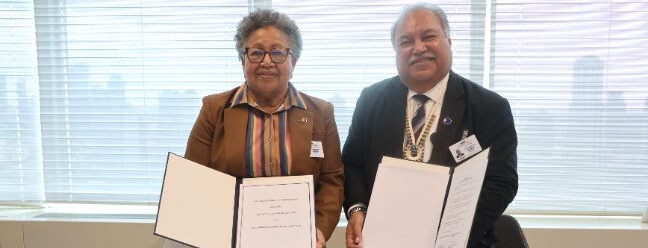
Two of the world’s most prominent regional blocs representing small island developing nations have taken a landmark step to deepen collective advocacy and cross-regional cooperation, formalizing a new strategic partnership on the sidelines of the 81st United Nations General Assembly in New York. On September 23, 2026, Baron Divavesi Waqa, Secretary-General of the Pacific Islands Forum (PIF), and Dr. Carla Barnett, Secretary-General of the Caribbean Community (CARICOM), put pen to paper on a landmark Memorandum of Understanding (MoU), cementing the new collaboration between the Pacific and Caribbean regions.
This agreement does more than just formalize diplomatic ties: it establishes a structured, actionable framework for expanded collaboration that centers the shared policy priorities of Small Island and Low-Lying Coastal Developing States (SIDS), a grouping of climate-vulnerable nations that have long pushed for greater recognition of their unique challenges in global governance.
In comments following the signing, Waqa framed the new partnership as a critical milestone in building a closer, more organized relationship between the two regions. He emphasized that enhanced coordination will unlock the ability for Pacific and Caribbean nations to speak with one unified voice on issues that shape the lives of their current populations and determine the trajectory of their future development. By aligning their efforts, the blocs can advance shared SIDS priorities and ensure these concerns remain at the top of the agenda in key international decision-making processes.
For Barnett, the MoU marks a meaningful advance in South-South cooperation between CARICOM and the PIF. She highlighted the overlapping existential vulnerabilities that bind the two regions together, from the accelerating, devastating impacts of anthropogenic climate change to intensifying global economic pressures that disproportionately harm small, open island economies. Formalizing the institutional relationship, Barnett explained, will not only strengthen joint advocacy on the global stage but also raise the global profile of SIDS’ core priorities, while creating tangible, on-the-ground avenues for cooperation that deliver direct benefits to communities across both regions.
Under the terms of the new MoU, the two organizations will collaborate across three core pillars: amplified collective advocacy for SIDS interests, cross-sharing of specialized knowledge and technical expertise, and practical project-based cooperation in areas of mutual concern. A core overarching goal of the agreement is to strengthen the collective bargaining power and global influence of SIDS in multilateral processes, where small island nations have historically struggled to compete with larger, wealthier economies.
For context, the Pacific Islands Forum is a 18-member regional bloc encompassing both sovereign countries and territories across the Pacific basin, with its permanent headquarters based in Suva, Fiji. CARICOM, by comparison, is a longstanding regional integration movement made up of 15 full Member States and eight Associate Member States, headquartered in Georgetown, Guyana. Together, the two blocs represent dozens of SIDS, giving their unified alliance far greater weight in global climate negotiations, development financing discussions, and other key multilateral venues than either could wield alone.