分类: world

  • US-Iran truce hangs in balance as war flares in Lebanon

    US-Iran truce hangs in balance as war flares in Lebanon

    The newly reached two-week ceasefire between Washington and Tehran, a fragile diplomatic breakthrough meant to de-escalate spiraling tensions across the Middle East, faced imminent collapse on Wednesday, as Iran issued stark threats to resume hostilities following Israel’s massive bombardment campaign against neighboring Lebanon.

    Just 24 hours after the truce was finalized, forged under a tight deadline set by former U.S. President Donald Trump to end a months-long conflict that has claimed thousands of lives and disrupted global economic stability, both sides had initially celebrated the agreement as a victory, paving the way for scheduled negotiations in the coming days. However, cracks in the deal emerged almost immediately when Israel launched its most intense wave of strikes on Lebanon since the Iran-aligned militant group Hezbollah entered the conflict in early March. The bombardment targeted multiple locations across the country, including densely populated neighborhoods in central Beirut.

    Lebanon’s Ministry of Public Health confirmed that by the end of Wednesday, at least 182 people had been killed in the attacks, with nearly 900 more sustaining injuries. Since Israel expanded its military operations to include airstrikes and a ground invasion of southern Lebanon last month, local Lebanese officials report the death toll from the campaign has surpassed 1,700.

    Israeli officials quickly asserted that their offensive against Hezbollah falls outside the scope of the U.S.-Iran truce, a position that was echoed by U.S. Vice President JD Vance, who is set to lead upcoming negotiations with Iranian delegates in Pakistan in just a few days. “If Iran wants to let this negotiation fall apart… over Lebanon, which has nothing to do with them, and which the United States never once said was part of the ceasefire, that’s ultimately their choice,” Vance stated Wednesday.

    But Iran’s top parliamentary speaker, Mohammad Bagher Ghalibaf, pushed back against this framing, warning in a post on X that the core foundation for upcoming talks had already been broken, rendering continued diplomatic engagement “unreasonable.” Compounding the uncertainty, a senior U.S. administration official confirmed that the 10-point framework Iran has publicly outlined for the ceasefire does not match the terms the White House had previously agreed to, deepening rifts between the two sides.

    Iran’s Revolutionary Guards issued a fresh warning Wednesday, promising that the country would “fulfil our duty and deliver a response” if Israel does not immediately halt its strikes on Lebanon, while Hezbollah reiterated that it retains an “absolute right” to retaliate for the attacks. U.S. Secretary of Defense Pete Hegseth mirrored the belligerent tone, saying American military forces remain on high alert and fully prepared to respond if the broader conflict reignites.

    The diplomatic drama unfolded just days ahead of the high-stakes negotiation session scheduled to kick off Friday in Islamabad. As part of the preliminary ceasefire deal, Iran had agreed to temporarily reopen the strategic Strait of Hormuz, a critical chokepoint for global oil supplies, after Trump threatened military action if the waterway remained closed. Commercial vessels did traverse the strait earlier Wednesday, but multiple regional reports later indicated Iran had shut down the waterway again despite the ceasefire agreement, prompting the White House to issue an urgent demand that Tehran “immediately, quickly and safely” reopen it.

    In a further blow to hopes that the truce would hold, Iranian state media announced Wednesday that the country had launched new “missile and drone attacks” targeting Gulf Arab states that are allied with the United States. The strikes were framed as retaliation for recent airstrikes against Iranian oil facilities, adding yet another volatile layer to an already rapidly deteriorating situation across the region.

  • Russia returns bodies of 1,000 soldiers to Ukraine

    Russia returns bodies of 1,000 soldiers to Ukraine

    In a rare gesture of cooperation amid years of open conflict, Russia transferred the remains of 1,000 deceased Ukrainian soldiers to Kyiv on Thursday, a Russian source part of Moscow’s negotiation team confirmed to journalists. In a reciprocal exchange, Ukraine returned the bodies of 41 fallen Russian troops to Russia, the source added.

    This exchange marks one of the only consistent channels of collaboration between the two nations, more than four years after Russia launched its full-scale offensive into Ukraine — a conflict that has already claimed the lives of hundreds of thousands of military personnel on both sides. Regular exchanges of war dead have become an established, if somber, practice throughout the ongoing hostilities.

    Footage of the handover was published by Ruptly, Russia’s state-controlled video agency. The footage shows crew members clad in white protective overalls and blue disposable gloves, moving sealed white body bags from the back of a transport truck to a second vehicle for onward transfer. Individuals wearing overalls marked with the Red Cross emblem, indicating their role as independent observers, were also visible in the footage.

    As of Thursday evening, Ukrainian officials have not issued any public statement confirming the details of the exchange. Last month, the International Committee of the Red Cross announced that it currently facilitates the transfer of roughly 1,000 fallen soldiers’ remains between the two parties every month. The organization also noted that thousands more bodies of fallen troops remain unaccounted for and unidentified across conflict zones.

    Russia’s full-scale invasion of Ukraine in February 2022 ignited the most destructive and deadly conflict on the European continent since World War II. Beyond the military death toll, the war has forced millions of people to flee their homes as displaced persons or refugees, and has resulted in widespread civilian casualties on both Ukrainian and Russian territory.

  • Nieuwe aanvallen in Golfregio ondanks afgesproken staakt-het-vuren tussen VS en Iran

    Nieuwe aanvallen in Golfregio ondanks afgesproken staakt-het-vuren tussen VS en Iran

    Just days after a landmark two-week ceasefire agreement was reached between the United States and Iran, the fragile truce in the Persian Gulf region has been shaken by a wave of coordinated drone and missile attacks targeting three Gulf monarchies. The United Arab Emirates (UAE), Kuwait, and Bahrain have all confirmed that the incoming strikes originated from Iranian territory, marking a sharp escalation that tests regional and international hopes for de-escalation.

  • Miami woman killed in hit targeting Trinidadian businessman

    Miami woman killed in hit targeting Trinidadian businessman

    The idyllic Caribbean vacation destination of Sint Maarten has been rocked by a brutal premeditated double shooting that left a 29-year-old American tourist dead alongside a local businessman authorities believe was the intended target of the attack.

    Denisha Delancy, a Miami native who had traveled to the island to celebrate her birthday with her sister and a group of friends, became an unintended casualty of the targeted plot on March 2. The young woman had spent her trip relaxing on Sint Maarten’s famous beaches and exploring the island’s vibrant nightlife before the violent tragedy unfolded, just after she and 44-year-old Trinidadian businessman Quincy Damon Sylvester left a popular local nightclub.

    As the pair pulled away in their vehicle on Arlet Peters Road, unidentified attackers ambushed them, opening fire on the car. Both Delancy and Sylvester were killed instantly, and first responders pronounced both dead at the scene shortly after arriving.

    Investigators from Sint Maarten’s Major Crimes Team have since pieced together key details of the attack, drawing on surveillance footage captured from the nightclub. The video clearly shows multiple unknown individuals monitoring Sylvester’s movements in the hours leading up to the shooting, confirming the assault was carefully pre-planned. Law enforcement officials confirmed Delancy had no known connections to criminal activity, leading them to conclude she was simply in the wrong place at the wrong time, caught in the crossfire of an attack meant solely for Sylvester. Public records identify Sylvester as the owner of a local PVC pipe business.

    Two days after the shooting, on March 4, authorities took one suspect into custody: a Trinidadian national identified only by the initials A.H. But the investigation remains far from closed, as the primary perpetrator and other co-conspirators believed to be involved in the plot are still at large. The case also underwent an official reclassification by the Major Crimes Team, which initially misidentified the incident as a traffic collision before upgrading it to a double homicide as evidence emerged.

    Investigators are now urging any members of the public who visited the area on the night of the attack, or who have any information related to the suspects or the planning of the shooting, to contact law enforcement immediately to help move the case forward.

  • Dominica government and UNLIREC host senior-level inter-agency roundtable to strengthen firearms regulation and public safety

    Dominica government and UNLIREC host senior-level inter-agency roundtable to strengthen firearms regulation and public safety

    Against a backdrop of growing regional concern over illicit weapons trafficking and violent crime, the Commonwealth of Dominica is set to convene a landmark three-day inter-agency roundtable from April 8 to 10, 2026, focused on cracking down on illegal firearms and the armed violence they fuel. The event, organized by Dominica’s Ministry of National Security and Legal Affairs in partnership with the United Nations Regional Centre for Peace, Disarmament and Development in Latin America and the Caribbean (UNLIREC) and the CARICOM Implementation Agency for Crime and Security (CARICOM IMPACS), brings together a cross-sector coalition of senior stakeholders to align national action with regional safety goals.

    According to an official press statement from the security ministry, the roundtable forms a core part of Dominica’s sustained commitment to advancing the Caribbean Firearms Roadmap, a coordinated regional framework that targets illicit weapons flows, cuts rates of violent crime, and uplifts public safety standards across all Caribbean nations. Unlike isolated policy efforts, this gathering is designed to break down bureaucratic silos, bringing high-level representatives from sectors as diverse as national policing, justice administration, foreign affairs, gender equity, and performance monitoring and evaluation to the same table.

    Over the course of the three-day program, attendees will engage in a structured schedule of cross-national policy exchanges, technical deep dives, and collaborative working sessions. The agenda is tailored to three core outcomes: strengthening institutional coordination across domestic agencies, shoring up national firearms control regulatory frameworks, and accelerating implementation of Dominica’s National Action Plan, which was developed under the umbrella of the Caribbean Firearms Roadmap.

    Key discussion topics will span the full lifecycle of illicit weapons in the region: tracing the routes of cross-border firearms trafficking, updating national legislative measures to close regulatory gaps, enhancing systems for weapons marking and traceability, improving secure storage and management of authorized firearms and ammunition, preventing legal weapons from being diverted to black markets, and leveraging data-driven insights to guide more effective policy decision-making.

    Beyond advancing domestic policy, the roundtable also functions as a strategic platform to deepen partnership between national Dominican authorities, regional bodies like UNLIREC and CARICOM IMPACS, and broader international partners. Organizers have emphasized the need for a unified, whole-of-government approach to tackle the transnational challenge of illicit firearms, a problem that cannot be resolved by any single agency or nation acting alone.

    Funding for the initiative has been provided by the Government of the United States of America, enabling the convening of cross-sector stakeholders and the delivery of technical programming for the event. Opening remarks will be delivered by Dominica’s Minister for National Security and Legal Affairs, Honourable Rayburn Blackmoore, alongside senior officials from the Dominican government and leadership representatives from both CARICOM IMPACS and UNLIREC.

    By the close of the three-day roundtable, participants are expected to reach consensus on priority national action items, define clear roles for local civil society organizations in supporting firearms control efforts, and map out opportunities for long-term technical assistance. The overarching end goal of all discussions is to advance safer communities and support inclusive, sustainable development across Dominica.

  • UK–Caribbean Partnership on Clean Energy

    UK–Caribbean Partnership on Clean Energy

    For most people, the Caribbean is synonymous with idyllic postcard vistas: golden sun stretching over turquoise coastlines, mist-wreathed lush mountains, and steady trade winds that cut through tropical heat. What fewer recognize is that these very natural features — sun, wind, tidal water, and geothermal heat — add up to an underutilized global renewable energy powerhouse, waiting to be activated.

    The United Kingdom, through its Foreign, Commonwealth and Development Office, has emerged as a key strategic partner to Caribbean nations, working to unlock this latent potential and convert abundant natural assets into reliable, affordable clean energy that can drive inclusive, resilient, long-term sustainable growth across the region.

    The resource potential is staggering. Multiple Caribbean islands have the natural capacity to generate 100% of their domestic energy needs from renewables, with surplus production to export clean power to neighboring countries. Some regional economies could even go a step further, converting excess renewable electricity into transportable low-carbon fuels including green hydrogen, ammonia, and methanol for global markets.

    Despite this extraordinary natural advantage, the region remains overwhelmingly dependent on fossil fuels. Data shows that roughly 87% of the energy mix across the Caribbean Community (Caricom) still comes from carbon-intensive fossil sources, a legacy that has driven cripplingly high energy costs for households. On average, Caribbean families pay between two and three times more for electricity than households in most other regions, and this dependence on imported fossil fuels has created systemic economic vulnerability, ballooned public debt burdens, and left the region chronically energy insecure.

    The UK has positioned itself as a long-term partner in Caricom’s clean energy transition, having committed $39 billion in funding to regional energy initiatives since 2015. To date, UK support has spanned a wide range of critical projects: advancing geothermal resource development, rolling out large-scale solar photovoltaic installations, funding energy efficiency retrofits for public buildings, delivering technical training programs to build local capacity across the Eastern Caribbean, and laying critical early groundwork for a regional offshore wind energy market.

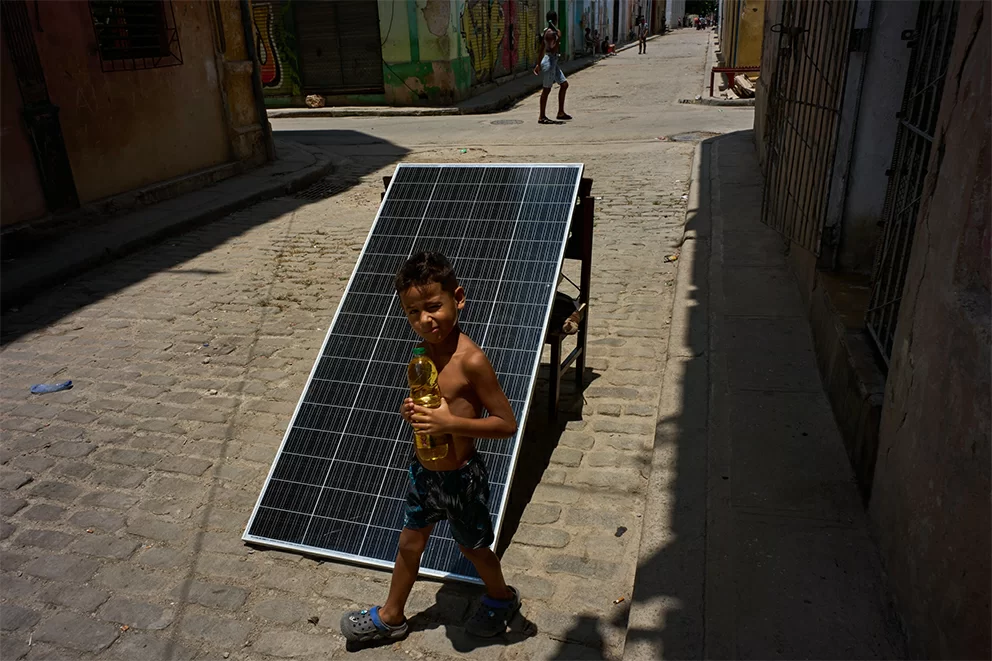
    One standout success story of this partnership is the geothermal development project in Dominica, where UK de-risking funding covered the high upfront costs of exploratory drilling, giving private sector investors the confidence to commit to the project. After years of coordinated collaboration between the Dominican government, UK development teams, and multiple partner organizations, the country is set to commission the first utility-scale geothermal plant in the English-speaking Caribbean in April 2026. The plant is expected to deliver transformative change for Dominica’s economy and energy security, and UK teams are now working to replicate this success with ongoing geothermal projects in Grenada and St. Lucia.

    Additional UK-backed projects have already delivered tangible benefits across the region. In St. Vincent and the Grenadines, support for energy-efficient street lighting and a new solar photovoltaic plant at the country’s international airport has saved the government millions of dollars in energy costs and cut hundreds of tonnes of annual carbon dioxide emissions. Early work to map offshore wind potential across the Caribbean, while still in its early stages, is already showing significant promise for large-scale future development.

    Even with these wins, the road to full energy transition remains uneven. Back in 2013, Caricom set an ambitious regional target of reaching 47% renewable electricity generation by 2027. As of 2023, the region has only hit roughly 13% renewable penetration, meaning the pace of transition will need to accelerate dramatically to meet the 2027 goal.

    Progress has also been highly uneven across member states: a small number of leading countries have made meaningful strides in scaling solar, wind, and geothermal capacity, while many others have lagged far behind. As a region of mostly Small Island Developing States (SIDS), the Caribbean faces structural barriers that have slowed deployment: small, constrained national grid sizes, prohibitive upfront capital costs, limited local technical capacity, and fragmented national markets that make it impossible to capture economies of scale. Many countries also lack the modernized grid infrastructure and updated regulatory frameworks required to integrate variable solar and wind generation into existing energy systems.

    Despite these challenges, the region is now at a defining moment of opportunity, with clear, actionable solutions ready to be deployed. Regional pooled procurement and aggregated project pipelines can drive down per-unit costs and attract large-scale global institutional investors. Modernizing outdated grid infrastructure and updating regulatory frameworks can clear the way for greater private sector participation. Blended finance and concessional lending can help governments overcome the steep upfront costs that have blocked large projects to date. And investing in local engineering and technical training can ensure that transition projects deliver long-term, sustainable benefits for local communities.

    All the natural resources the Caribbean needs to become a global clean energy leader are already within its borders, and experts say there is no time to delay. With decisive national action, coordinated regional leadership, and strategic international partnerships, the region can turn its natural abundance into universal energy security, lower household electricity bills, and a more climate-resilient future for all Caribbean people.

    The UK has reaffirmed its commitment to standing with the Caribbean through this transition. Via the Global Clean Power Alliance, the UK and regional partners have agreed to a concrete 2026–2028 Caribbean action plan, which will provide on-demand access to UK private sector capital and technical expertise to address key barriers and attract the billions in investment needed to scale up clean energy deployment across the region.

    The resources are here. The moment for action is now.

  • Half of Haiti’s Gangs Made Up of Children

    Half of Haiti’s Gangs Made Up of Children

    As a multinational security force approved by the United Nations begins deploying to Haiti to crack down on rampant gang violence, a devastating new statistic has emerged that lays bare the scale of the country’s humanitarian and security crisis: children now account for roughly 50 percent of all members of armed gangs across the nation.

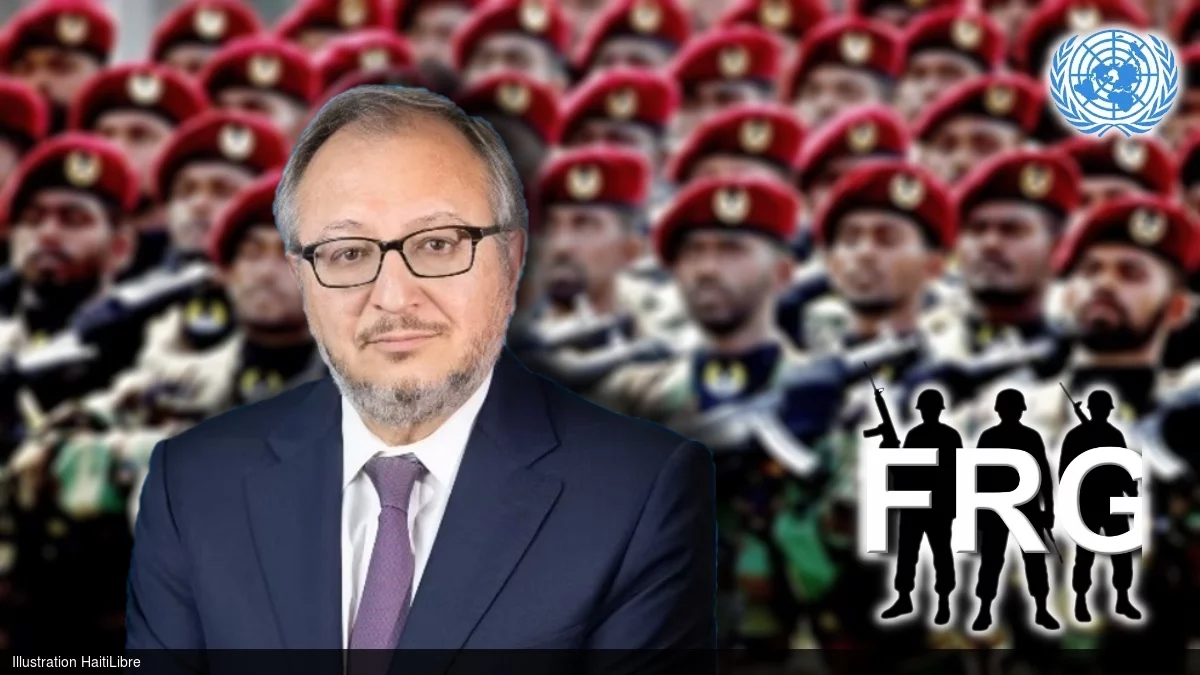
    Data compiled by monitoring groups shows that at least 302 minors were recruited by gangs in 2024 alone, and the vast majority of these underage recruits are thrust directly into frontline combat roles. The newly arriving UN-authorized Gang Suppression Force (GSF) is set to eventually field up to 5,500 personnel, with a core mandate to support overstretched Haitian national police in retaking territory controlled by armed groups.

    UNICEF’s latest assessment reveals that gang recruitment of children skyrocketed by 200 percent in 2025, a surge driven by three overlapping root causes: widespread systemic poverty, mass youth homelessness, and coordinated social media campaigns that deliberately glorify gang culture to lure vulnerable young people. Many children are enticed into joining with basic promises of regular meals, safe shelter, and steady cash payments. Others face forced conscription at the hands of gang recruiters, and some are even handed over to gangs by families pushed to desperation by extreme economic hardship. UN field research found that payments to families or child recruits themselves range from $100 to $700, depending on the dangerousness of the role the child is expected to fill.

    International humanitarian organizations have issued urgent warnings that the expansion of security operations against gangs will likely lead to underage recruits being deliberately pushed to the frontlines by gang leaders, putting thousands of children at immediate risk of death or serious injury. Human rights experts have also raised grave alarms about the treatment of detained children with alleged gang ties, documenting that dozens of minors accused of gang affiliation have been extrajudicially killed since 2022.

    In response to the crisis, UNICEF is calling on Haitian authorities and deploying GSF personnel to adhere to a UN-endorsed handover protocol that requires any captured or surrendered underage recruits to be transferred to child welfare agencies, rather than being detained or punished like adult criminal combatants. The agency notes that its existing community-based reintegration program has already supported more than 500 former child gang recruits to transition back to peaceful civilian life, offering a proven model for addressing the crisis if supported by international and local stakeholders.

  • Trump Says “A Whole Civilization Will Die Tonight”

    Trump Says “A Whole Civilization Will Die Tonight”

    On April 7, 2026, a sharp escalation of tensions between the United States and Iran sent shockwaves across global geopolitics and energy markets, after sitting U.S. President Donald Trump issued an unprecedented, catastrophic threat to wipe out Iran’s entire civilization if Tehran did not reopen the blocked Strait of Hormuz by 8 p.m. Eastern Standard Time that same day.

    In a public post shared to his social media platform Truth Social on Tuesday, Trump issued a dire warning: “A whole civilization will die tonight, never to be brought back again. I don’t want that to happen, but it probably will.” This chilling statement followed escalating rhetoric Trump delivered a day earlier at a White House press briefing, where he told reporters that Iran could be completely “taken out in one night.” He doubled down on existing threats that he would order strikes on Iranian energy infrastructure and key river crossings if the strategic waterway remained closed to international traffic.

    Trump also claimed credit for a previous strike that took out one of Iran’s tallest bridges, a critical transit link that connected two major Iranian cities, an attack carried out last Thursday, though independent confirmation of the strike’s attribution has not yet been released.

    Iran’s response came swiftly from the Islamic Revolutionary Guard Corps Navy, which declared Monday that the Strait of Hormuz will never return to its pre-crisis status of unrestricted access for U.S. vessels and Washington’s allied military and commercial shipping.

    The 21-mile-wide waterway is one of the world’s most critical chokepoints for global energy trade, with approximately 20% of all globally traded crude oil passing through its waters every day. The ongoing closure has already triggered immediate volatility in global energy markets, pushing fuel prices sharply upward in every region. Even in Belize, a small Central American nation thousands of miles from the Persian Gulf, consumers saw their third fuel price hike of the month on Easter Sunday, a tangible sign of the conflict’s global ripple effects.

    In recent weeks, a number of Asian nations have moved to negotiate separate arrangements to secure safe passage for their commercial vessels through the strait. Pakistan, India, and the Philippines have all finalized bilateral agreements with Iran to allow their ships to transit the waterway, while China has publicly confirmed that its commercial vessels continue to use the channel amid the standoff.

    As of Tuesday morning local time, no diplomatic agreement had been reached between the U.S. and Iran to de-escalate the crisis, and there was no path toward an immediate ceasefire or de-escalation in sight.

  • Boat carrying cow and babies: 11 migrants charged

    Boat carrying cow and babies: 11 migrants charged

    A major maritime interception off the coast of Erin, Trinidad and Tobago has led to criminal charges against 11 Venezuelan migrants caught entering the country illegally, in the latest high-profile border enforcement action highlighting the country’s ongoing challenges with unauthorized migration. The accused, ranging in age from 19 to 44, include eight men and three women, who were taken into custody during a coordinated operation on Friday. Of the 11, nine face a single charge of illegal entry, while two additional defendants face the extra allegation of aiding and abetting the unauthorized crossing, according to official details.

    The operation unfolded after Trinidad and Tobago’s Radar Center detected the suspicious vessel and relayed real-time information to the Trinidad and Tobago Coast Guard’s mother ship, which dispatched teams to intercept the craft. Shortly after 1 a.m. that same day, the Coast Guard intercepted the boat carrying a total of 13 Venezuelan nationals in a fishing zone near Erin — the two additional people on board were infants aged one year and two months old, who have not been charged in the case.

    Beyond the human passengers, law enforcement officials also discovered a number of unusual contraband items aboard the intercepted vessel: a live black cow, plus large stockpiles of cheese, alcohol and sausage. This seizure of unregulated food and livestock echoes a similar incident from earlier this March, when local police arrested two other undocumented Venezuelan migrants in Santa Flora during a routine traffic stop. That case also resulted in seizures of uncustomed goods, including alcoholic beverages, pepper sauce, clothing, footwear and a container of cheese.

    Local media outlet the Express attempted to secure comment from Minister of National Security Roger Alexander on the string of recent unauthorized migrant arrests, but as of publication has not received a response. In an official public statement regarding the 11 charged migrants, the Trinidad and Tobago Police Service (TTPS) confirmed that it is maintaining close coordinated work with multiple relevant government stakeholders to strengthen border security and crack down on repeated incidents of illegal entry.

    The TTPS also issued a public reminder in its release: assisting or facilitating any form of illegal entry into Trinidad and Tobago qualifies as a serious criminal offense under the country’s laws, and any individuals found to be involved in such activity will face full prosecution and legal consequences.

  • Iran hits Gulf states after agreeing ‘fragile’ truce with US

    Iran hits Gulf states after agreeing ‘fragile’ truce with US

    Just hours after the United States and Iran announced a temporary 14-day ceasefire that halted weeks of open regional conflict, new missile and drone strikes targeted US-allied Gulf nations on Wednesday, underscoring just how precarious the hard-won truce remains. US Vice President JD Vance emphasized the fragility of the agreement during remarks in Budapest, warning that the success of upcoming negotiations hinges entirely on Iran’s willingness to negotiate in good faith.

    The ceasefire, brokered at the eleventh hour after US President Donald Trump issued an ultimatum threatening the annihilation of Iran if it did not reopen the strategic Strait of Hormuz, went into effect this week. The waterway, which carries roughly one-fifth of the world’s daily oil trade, was closed by Iran in retaliation for a joint US-Israeli airstrike in late February that killed Iran’s supreme leader Ayatollah Ali Khamenei, the attack that ignited the full-scale regional war.

    By Wednesday morning, two commercial vessels — a Greek-owned bulk carrier and a Liberia-flagged ship — had successfully transited the strait, marking the first confirmed commercial passage since the closure, according to maritime tracking service Marine Traffic. Trump has credited Pakistani and Chinese mediation for pushing Tehran to agree to the temporary truce, and both the US and Iran have publicly claimed victory in the lead-up to formal peace talks scheduled to begin this Friday in Islamabad.

    Despite the celebratory rhetoric from both sides, deep divides remain on all core issues that separate the two nations. Iran’s publicly released 10-point negotiating framework includes maximalist demands that directly contradict long-standing US positions: the permanent lifting of all US economic sanctions, international recognition of Iran’s full control over the Strait of Hormuz, a complete withdrawal of US military forces from the Middle East, and international acceptance of Iran’s sovereign right to uranium enrichment. The US has said Iran’s uranium enrichment program must be restricted as part of any permanent deal, with Trump claiming Iran is close to developing a nuclear weapon — a claim that has not been verified by the United Nations nuclear watchdog or most independent global observers.

    Even as the ceasefire was announced, fresh violence erupted across the region. Iranian state media confirmed it launched new missile and drone attacks against Kuwait and the United Arab Emirates, retaliating for earlier airstrikes on Iranian oil infrastructure. Kuwait reported significant damage to its oil facilities, power plants, and desalination plants after hours of sustained strikes, and issued an immediate demand for Iran to halt all offensive operations. The UAE confirmed it was intercepting incoming attacks, while Bahrain reported strikes targeting its capital Manama. For weeks, Iran has launched regular attacks on these Gulf states, citing their hosting of US military forces, and has upended the region’s long-held reputation for stability and security.

    Fighting also continued unabated in Lebanon, where Israel launched what it described as its largest coordinated strikes across the country on Wednesday. The Lebanese armed group Hezbollah, backed by Iran, had announced it had ceased all offensive operations ahead of the ceasefire, but Israeli Prime Minister Benjamin Netanyahu clarified that the US-brokered truce does not apply to Israel’s campaign in Lebanon. Local Lebanese authorities report that more than 1,500 people have been killed in the Israeli operation to date, and state media reported strikes targeting central Beirut and its suburban areas Wednesday. The White House has said Israel agreed to the ceasefire terms, but Netanyahu’s comments have cast further uncertainty over the broader regional truce.

    Global financial markets reacted sharply to the news of the temporary ceasefire: international oil prices plummeted more than 17 percent, European natural gas prices fell 20 percent, and Asian stock markets posted strong early gains Wednesday, as investors breathed a sigh of relief over the easing of global energy supply risks. Iran’s closure of the Strait of Hormuz had sent energy prices soaring in recent weeks, sparking fears of a full-blown global energy crisis.

    In comments to AFP, Trump described the ceasefire as a “total and complete victory” for the United States, and said US negotiators are “very far along” in reaching a permanent agreement with Iran, calling Tehran’s 10-point proposal “workable.” But Vance warned Wednesday that if Iran does not negotiate sincerely, Trump will not hesitate to resume hostilities. “If not, they’re going to find out that the President of the United States is not one to mess around. He’s impatient to make progress,” Vance said.

    Iranian officials have struck a far more cautious tone, stressing that the ceasefire does not mark the end of the conflict, and that the war will continue unless Tehran’s core demands are met in formal negotiations. The Islamic Revolutionary Guard Corps, Iran’s most powerful military force, said Wednesday it has “no trust” in US promises, and warned that its “finger is on the trigger” to resume hostilities at any moment. In Tehran, residents remained on edge Wednesday, with most shops closed and streets far quieter than usual after weeks of anxiety over potential large-scale US attacks.

    The international community has widely welcomed the ceasefire, with global leaders including Pope Leo calling for a full end to the conflict that has already killed thousands of people and roiled global markets. Egyptian leaders praised efforts to “give diplomacy a chance”, while Omani officials called for negotiations that would resolve the crisis “at its roots”. British Prime Minister Keir Starmer, who is preparing for an upcoming visit to the Gulf, pledged Wednesday that the UK will do everything in its power to help turn the temporary truce into a lasting, permanent peace agreement that guarantees the permanent reopening of the Strait of Hormuz.